
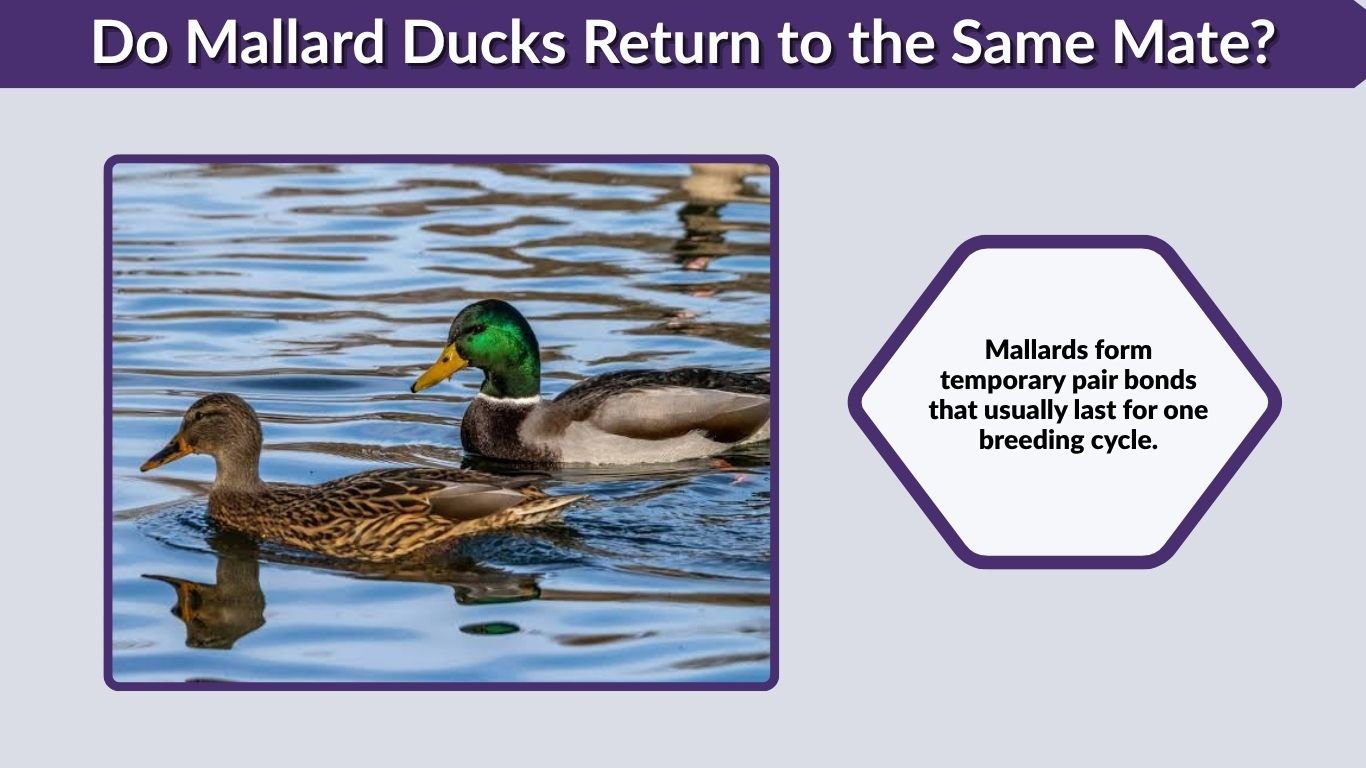
Mallard ducks are among the most familiar waterfowl, often seen swimming together in ponds, lakes, and wetlands. Their close companionship during breeding season raises an interesting question: do Mallard ducks mate for life? Unlike some birds that maintain lifelong partnerships, Mallards form temporary pair bonds that usually last for one breeding cycle. These seasonal relationships involve courtship displays, mate protection, and reproductive activities. Understanding how Mallards choose partners, how long they remain together, and what happens after nesting reveals the fascinating mating behavior of these widespread wild ducks.
Do Mallard Ducks Mate for Life?
No, Mallard ducks (Anas platyrhynchos) do not typically mate for life. Instead, they practice seasonal monogamy, meaning males and females establish pair bonds for a single breeding season. These relationships usually begin months before nesting and eventually end as the female starts incubating her eggs. Both wild and domesticated Mallards generally follow this reproductive pattern.
Are Mallard Ducks Monogamous?
Mallard ducks are considered seasonally monogamous because one male and one female normally maintain a social partnership during the mating season. The male accompanies his partner, guards her from competing males, and helps protect access to feeding areas.
However, seasonal monogamy does not mean complete sexual exclusivity. Extra-pair mating occurs, and males sometimes pursue females already paired with other drakes. Their reproductive behavior differs considerably from birds that maintain stable lifelong partnerships.
How Long Do Mallard Ducks Stay Together?
Mallard pairs generally remain together for approximately six to eight months. Courtship commonly begins during autumn or early winter, and established pairs often remain together throughout winter migration and their arrival at breeding grounds.
Their relationship gradually weakens once nesting begins. The male may remain near the female during egg laying and early incubation but typically leaves before the eggs hatch. Consequently, the partnership ends well before the next breeding season.
How Do Mallard Ducks Choose Their Mates?
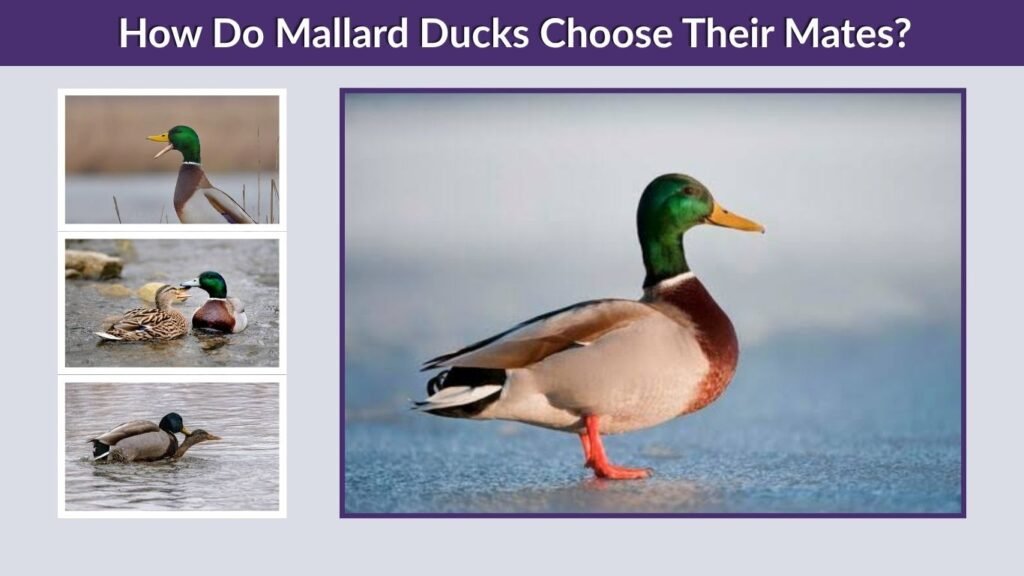
Mallard ducks use elaborate courtship displays to attract partners and establish seasonal relationships. Unlike many birds that begin courtship shortly before spring nesting, Mallards often select mates during autumn and winter. Their courtship involves synchronized movements, vocalizations, and displays of colorful plumage, particularly the male’s iridescent green head.
Mallard Duck Courtship Behavior
Male Mallards, also called drakes, perform several distinctive displays to attract females. These include head bobbing, tail shaking, wing movements, and brief whistles. Several males may gather around one female, each attempting to attract her attention.
Female Mallards evaluate potential partners and may respond through head movements or swimming toward a preferred male. Once a pair bond forms, the ducks often swim, feed, and rest together. These interactions help strengthen their seasonal relationship.
When Do Mallards Start Pairing?
Mallards commonly begin forming pair bonds between October and December, although timing varies by location and population. Many females already have partners before the end of autumn, while others pair later during winter.
Early pairing offers several advantages. Females receive protection from competing males and may gain better access to feeding areas. For males, securing a partner early improves their chances of participating in successful reproduction when spring arrives.
What Happens to Mallard Pairs After Mating?
Although Mallards establish close seasonal relationships, their responsibilities change once the female begins nesting. Males primarily contribute through courtship, mate guarding, and protection before incubation. Females assume responsibility for egg incubation and raising ducklings. This division of parental duties explains why Mallard pairs usually separate before their offspring hatch.
Why Do Male Mallards Leave Their Mates?
Male Mallards typically leave their partners during incubation. As the female becomes increasingly occupied with her nest, the original pair bond weakens. The male may join other drakes or seek additional breeding opportunities.
After separation, males eventually undergo their annual molt. During this period, they temporarily lose their flight feathers and develop duller eclipse plumage. They seek protected wetlands where they can avoid predators until their new flight feathers grow.
Do Female Mallards Raise Ducklings Alone?
Yes, female Mallards handle egg incubation and duckling care without assistance from their original mates. They usually lay around 8–12 eggs, although clutch sizes vary. Incubation generally lasts approximately 26–30 days.
After hatching, ducklings can walk, swim, and find small food items almost immediately. Their mother leads them toward suitable feeding areas, protects them from threats, and helps them find shelter. Ducklings commonly remain under maternal care for approximately 45–60 days.
Do Mallard Ducks Return to the Same Mate?
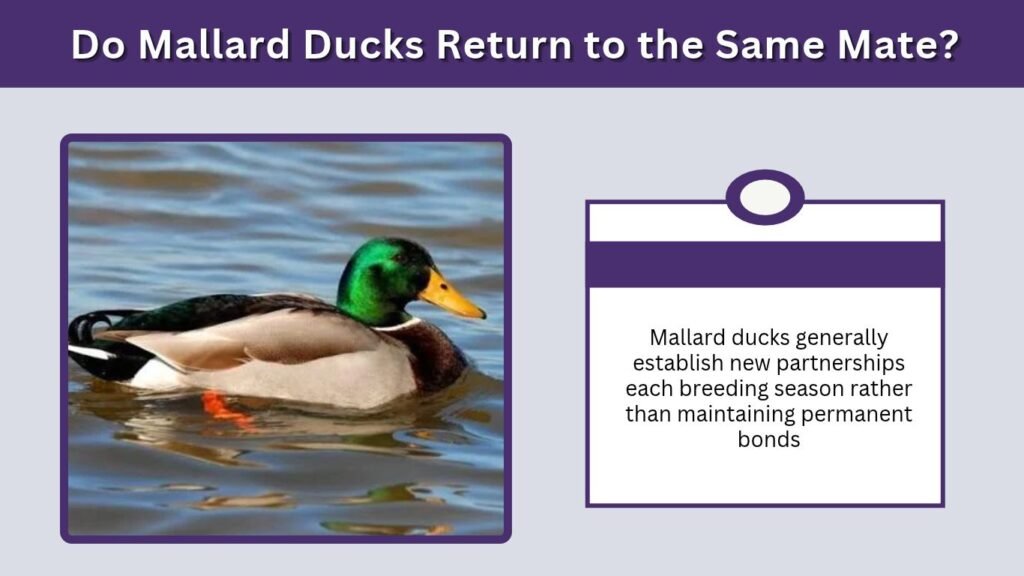
Mallard ducks generally establish new partnerships each breeding season rather than maintaining permanent bonds. Their annual reproductive cycle encourages repeated courtship and mate selection. Nevertheless, the exact mating behavior of individuals may vary depending on survival, available partners, and local environmental conditions.
Can Mallards Reunite With Previous Partners?
A Mallard might encounter a former partner in a later breeding season, particularly if both birds return to the same habitat. However, repeated pairing with the same individual is not the usual mating strategy described for this species.
Female Mallards often return to familiar nesting areas, especially places where they previously reproduced successfully. This behavior is called breeding-site fidelity. Returning to the same nesting location does not necessarily mean returning to the same mate.
What Happens if a Mallard Loses Its Mate?
If a Mallard loses its partner before nesting, it may form another pair bond when an available mate can be found. The likelihood depends on the timing of the breeding season and the availability of unpaired birds.
Mallards do not generally remain permanently without partners after losing a mate. Unlike some geese and swans, which can maintain long-term partnerships, Mallards typically select new companions during subsequent mating seasons.
Mallard Ducks vs. Other Waterfowl Mating Habits
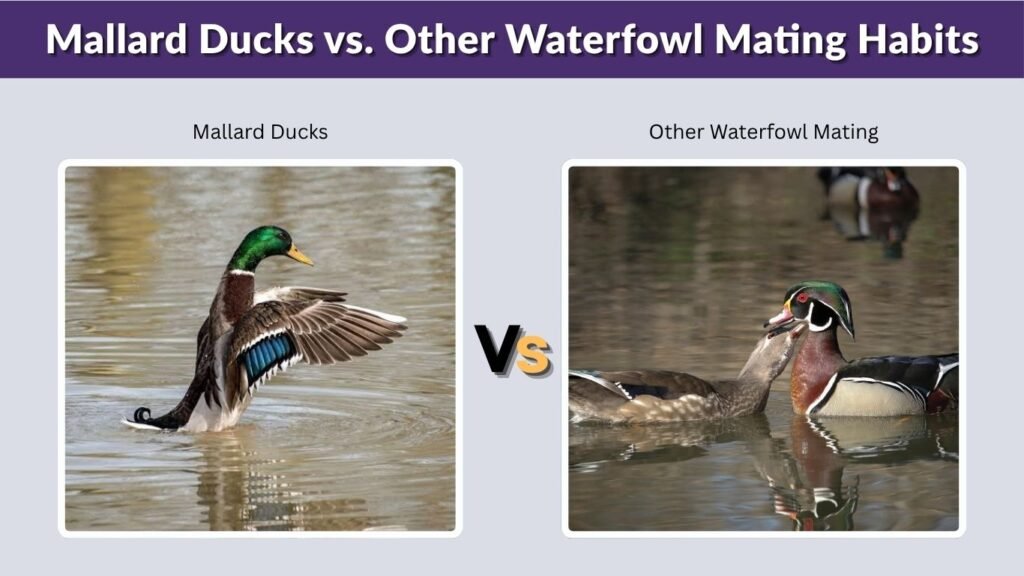
Different waterfowl species maintain different types of relationships. Mallards are seasonally monogamous, while many geese and swans form long-term partnerships. These differences influence parental care, breeding behavior, and how individuals respond when a mate disappears. Understanding these distinctions helps explain why not all ducks and waterfowl follow the same mating pattern.
Mallard Ducks vs. Geese
Mallards usually form temporary pair bonds lasting one breeding cycle. Male Mallards generally leave during incubation, leaving females responsible for raising ducklings.
Many goose species, including Canada Geese, establish long-lasting pair bonds that may continue for several years or for life. Male geese often remain near their partners during nesting and participate in protecting their young.
Mallard Ducks vs. Swans
Mallards select new partners annually, whereas many swan species develop enduring social relationships. Swan pairs may remain together across multiple breeding seasons and cooperate in defending nesting territories.
However, lifelong pairing is not absolute even among swans. Some pairs separate, and surviving birds may find new partners after losing a mate. These variations demonstrate the diversity of reproductive strategies among waterfowl.
FAQs
1. Do Wild Mallard Ducks Mate for Life?
No, wild Mallard ducks generally do not mate for life. They form seasonal pair bonds that typically last six to eight months. These partnerships begin during autumn or winter and usually end during the nesting period. Most Mallards select new partners for the following breeding season.
2. Do Mallard Ducks Keep the Same Mate Every Year?
Mallard ducks do not normally keep the same mate every year. Their partnerships are temporary, and annual mate selection is part of their natural reproductive behavior. Although former partners may occasionally encounter one another again, Mallards generally establish fresh pair bonds during subsequent breeding seasons.
3. Do Male Mallard Ducks Stay With Their Babies?
Male Mallards normally do not stay to raise their ducklings. They usually separate from females during incubation and eventually join other males for molting. Female Mallards independently incubate eggs, guide newly hatched ducklings toward water, and protect them while they develop their ability to fly.
4. Do Mallard Ducks Get Sad When Their Mate Dies?
Mallards may display changes in behavior after losing a partner, such as increased calling or searching, but scientific evidence does not establish that they experience grief in the same way humans do. They can form new pair bonds, particularly when the loss occurs before the breeding season is complete.
5. What Ducks Mate for Life?
Most familiar North American dabbling ducks, including Mallards, form seasonal rather than lifelong partnerships. Long-term pair bonds are more characteristic of many geese and swans. Some other waterfowl also maintain extended relationships, but mating systems vary by species, so it is inaccurate to assume that all ducks mate for life.