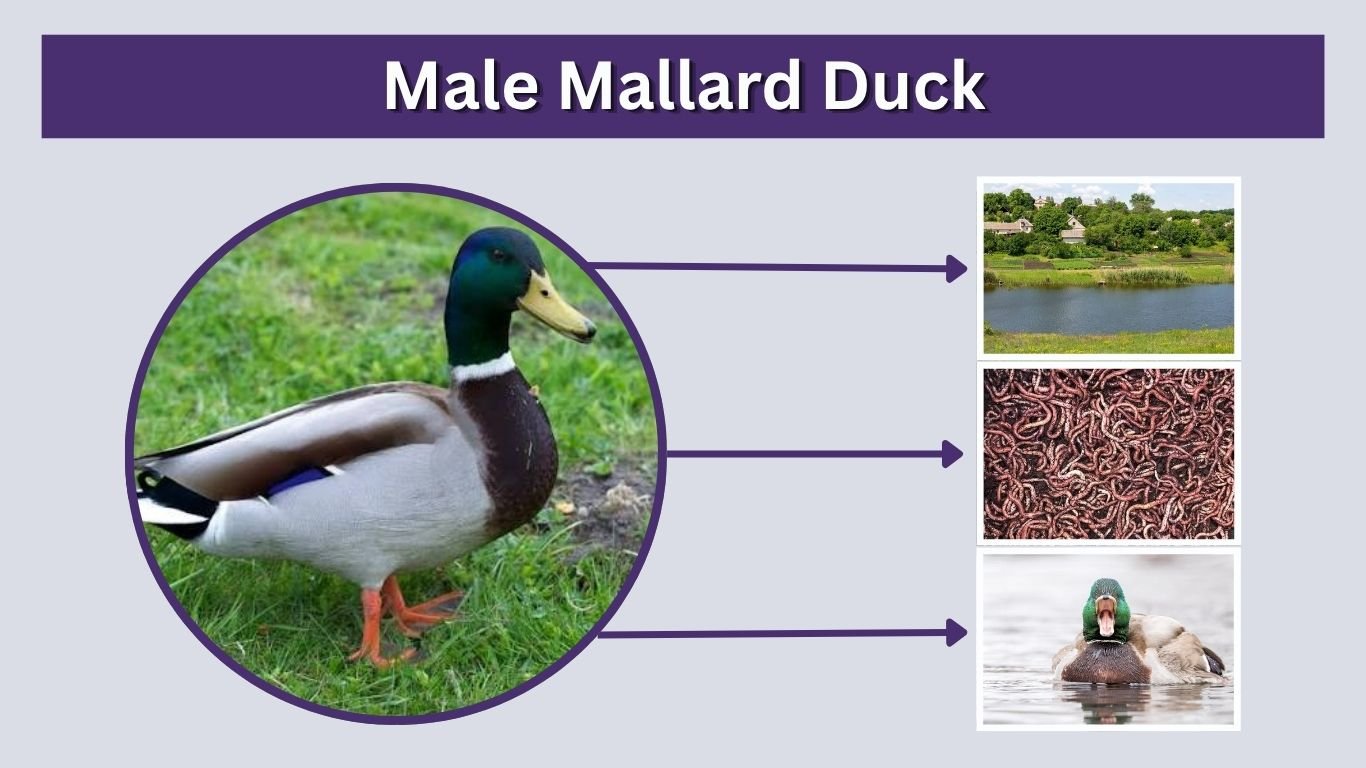
The male Mallard duck is one of the most recognizable waterbirds, famous for its glossy green head, bright yellow bill, and rich chestnut-brown chest. Commonly called a drake, this colorful duck is found in ponds, lakes, wetlands, and rivers across much of the world. Unlike female Mallards, which have mottled brown feathers, adult males display striking breeding plumage that makes identification relatively easy. However, their appearance changes throughout the year, and young males can resemble females. Understanding male Mallard identification, behavior, calls, and breeding habits reveals what makes these ducks unique.
What Is a Male Mallard Duck?
A male Mallard duck is called a drake. It belongs to the species Anas platyrhynchos, one of the world’s most widespread dabbling ducks. Adult males are especially noticeable during the breeding season because of their colorful feathers, while females have more subdued plumage. Both sexes share similar habitats, feeding behaviors, and general body shapes.
Male Mallard Duck Identification
- Common Name: Male Mallard Duck
- Scientific Name: Anas platyrhynchos
- Male Name: Drake
- Head Color: Iridescent emerald green
- Bill Color: Bright yellow
- Neck: Thin white collar
- Chest: Rich chestnut brown
- Body: Mostly gray with dark rear feathers
- Wings: Blue speculum bordered with white
- Feet: Orange
- Body Length: Approximately 19.7–25.6 inches
- Wingspan: Approximately 32.3–37.4 inches
These characteristics are most noticeable when males display their full breeding plumage.
Male vs. Female Mallard Duck: Key Differences
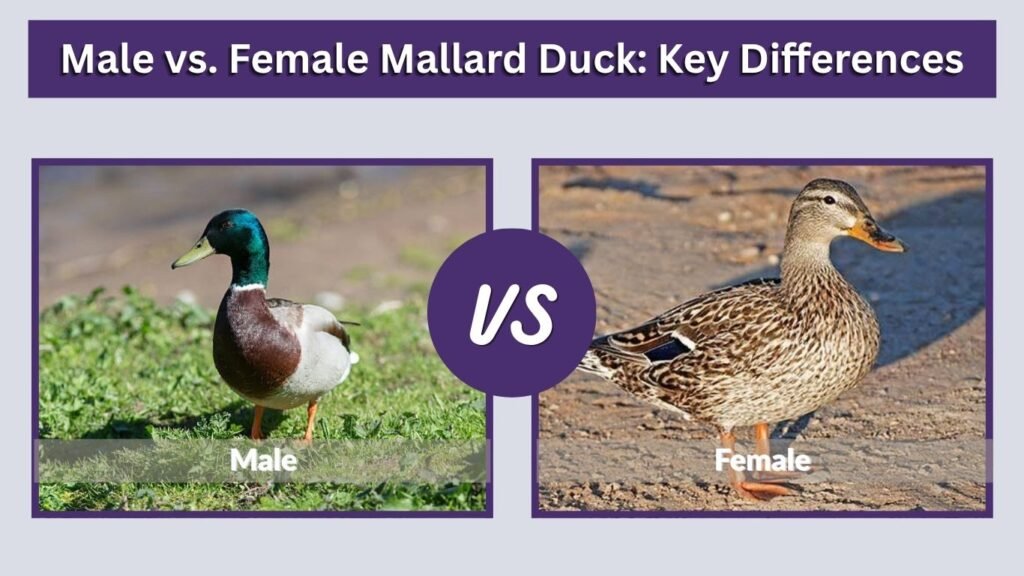
Male and female Mallards look noticeably different during much of the year. This difference in appearance is known as sexual dimorphism. Males have colorful feathers that play a role in courtship, while females have brown patterns that provide camouflage around nests. However, seasonal molting can make male Mallards temporarily resemble females.
Physical Differences Between Male and Female Mallards
| Feature | Male Mallard | Female Mallard |
| Common name | Drake | Hen |
| Head color | Green during breeding plumage | Mottled brown |
| Bill color | Usually yellow | Orange with dark markings |
| Chest color | Chestnut brown | Brown with darker streaks |
| Body color | Gray and brown | Mottled brown |
| Wing patch | Blue with white borders | Blue with white borders |
| Vocalization | Quiet, raspy call | Loud, familiar quack |
| Nesting role | Does not incubate eggs | Incubates eggs and raises ducklings |
How to Tell Male and Female Mallards Apart
The easiest way to identify a breeding male Mallard is to look for its green head and yellow bill. Females generally have mottled brown feathers covering their heads and bodies.
Another useful feature is the voice. Female Mallards produce the familiar loud quacking sound, while males make quieter, raspier calls.
During the eclipse molt, however, identifying males requires closer attention to their bills, tails, and remaining plumage patterns.
Why Do Male Mallard Ducks Have Green Heads?
The green head of a male Mallard is produced by microscopic structures within its feathers that interact with light. This phenomenon is called structural coloration. Unlike ordinary feather pigments, structural coloration can create brilliant iridescent effects that change depending on the viewing angle and lighting conditions.
How Does Green Head Coloration Work?
The feather structures reflect light in a way that creates a metallic green appearance. In bright sunlight, the head may look emerald green, while in shadows it can appear dark green or nearly black.
The colorful plumage is particularly important during courtship because it contributes to the male’s appearance during breeding displays.
Do All Male Mallard Ducks Have Green Heads?
No, male Mallards do not always have green heads. Young males initially have brown juvenile plumage, while adults temporarily lose much of their bright coloration during the summer eclipse molt.
Domestic Mallards and hybrid individuals may also have different color patterns. Therefore, a brown-headed Mallard is not necessarily female.
Juvenile Male Mallard Duck Identification
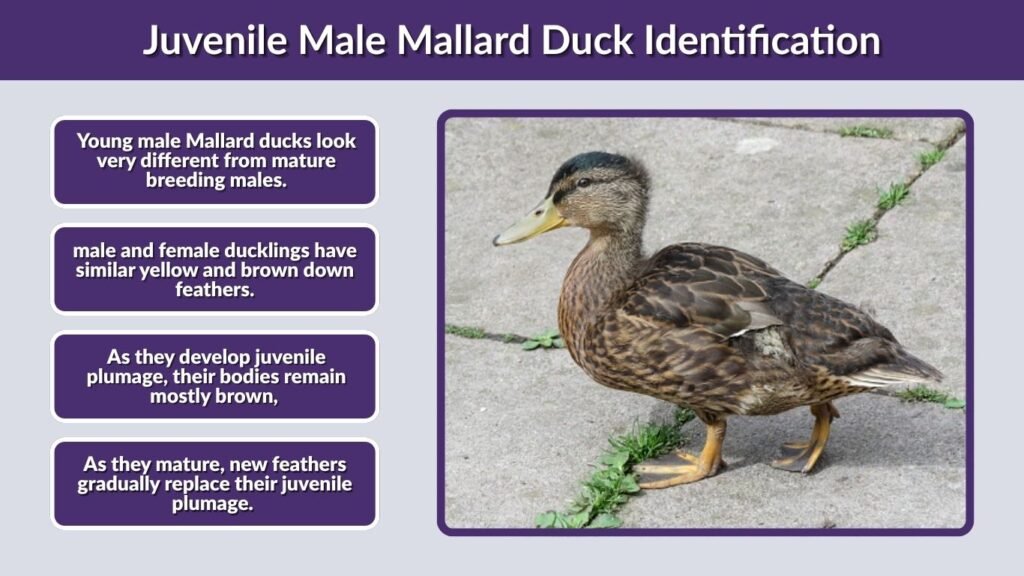
Young male Mallard ducks look very different from mature breeding males. During their earliest weeks, male and female ducklings have similar yellow and brown down feathers. As they develop juvenile plumage, their bodies remain mostly brown, making visual identification difficult.
What Does a Young Male Mallard Look Like?
Juvenile males generally have mottled brown feathers resembling those of females. Their head feathers are less colorful, and their bills may not yet have the bright yellow appearance seen in mature drakes.
As they mature, new feathers gradually replace their juvenile plumage. Their green heads, chestnut chests, and gray body feathers become more noticeable during their first autumn or winter.
When Do Male Mallards Get Their Green Heads?
Many young male Mallards begin developing recognizable breeding plumage during their first autumn.
By their first winter, they often display the characteristic green head and other adult male colors. The exact timing varies depending on hatching date, development, and seasonal molting patterns.
Do Male Mallard Ducks Change Colors?
Yes, male Mallards change their appearance during seasonal molts. After the breeding season, they temporarily replace their colorful plumage with duller brown feathers. This stage is called eclipse plumage and helps them become less conspicuous during a vulnerable period when they cannot fly normally.
What Is Eclipse Plumage?
Eclipse plumage occurs during the postbreeding molt, usually in summer.
During this period, males can resemble females because their heads become brownish and their bodies lose much of their contrasting coloration.
However, they often retain identifying characteristics such as yellowish bills, darker tails, and traces of green head feathers.
When Do Male Mallards Regain Their Colors?
Male Mallards typically regain their colorful breeding plumage during autumn as new feathers develop.
Their green heads, brown chests, and gray bodies become more pronounced before the following breeding season.
During their annual molt, Mallards also replace their flight feathers and may be unable to fly for approximately three to four weeks.
Male Mallard Duck Behavior and Sounds
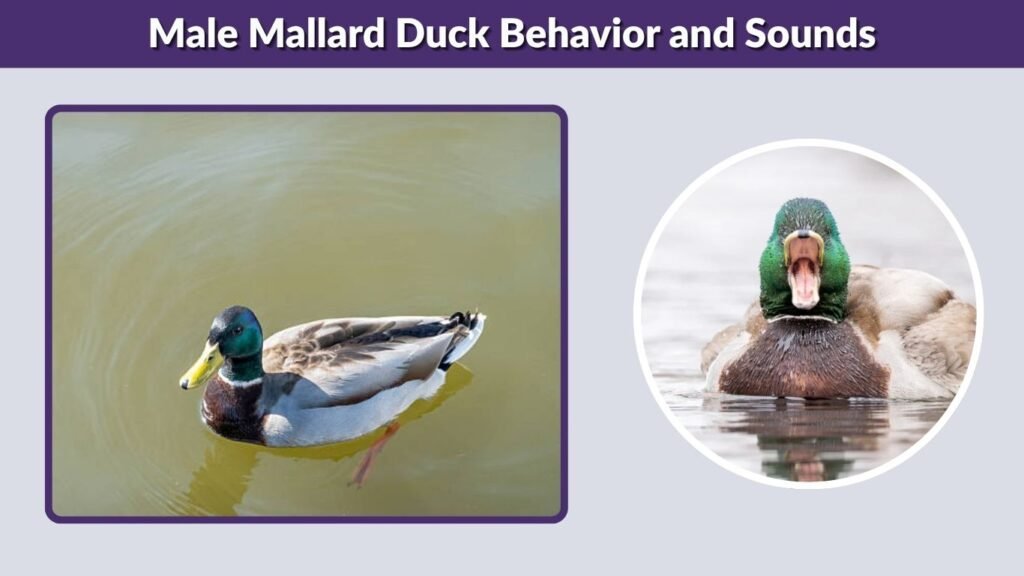
Male Mallards are social waterbirds that frequently gather in groups, swim across shallow wetlands, and forage alongside other ducks. Their behavior changes during the breeding season, when males become more focused on courtship and pair formation. Outside this period, males commonly gather in groups, especially while molting.
What Sounds Do Male Mallard Ducks Make?
Male Mallards produce softer, raspier sounds than females. Their calls may include low, nasal notes, quiet whistles, and short vocalizations during courtship.
The familiar loud duck quack is primarily associated with females.
Males also produce sounds during courtship displays, sometimes rubbing their bills against their feathers.
Male Mallard Courtship Behavior
Male Mallards perform several displays to attract potential mates.
- Head bobbing: Males move their heads rhythmically during courtship.
- Bill dipping: They lower their bills into the water before lifting their bodies.
- Tail raising: Males elevate their tails during certain displays.
- Wing movements: They adjust their wings and posture while interacting with females.
- Courtship calls: Quiet vocalizations accompany some displays.
Mallard pairs often form during autumn or winter before the spring breeding season.
Do Male Mallard Ducks Help Raise Ducklings?
Male Mallards generally do not participate directly in incubating eggs or raising ducklings. After pairing and mating, the female takes responsibility for nesting, incubation, and caring for the young. Males often leave their mates during the nesting period and join other males in groups.
Do Male Mallards Sit on Eggs?
No, female Mallards incubate the eggs. A typical clutch contains approximately 7–13 eggs, with incubation lasting around 23–30 days.
The female usually builds a concealed ground nest using vegetation and her own down feathers.
Male Mallards may remain near their mates during the early nesting period, but they do not normally incubate the eggs.
Why Do Male Mallards Leave Their Families?
Male Mallards do not usually remain with their mates throughout chick-rearing.
After breeding, males undergo their annual molt and often gather in sheltered areas where they can replace their flight feathers.
Female Mallards lead their ducklings to feeding areas and protect them until they become more independent.
What Do Male Mallard Ducks Eat?
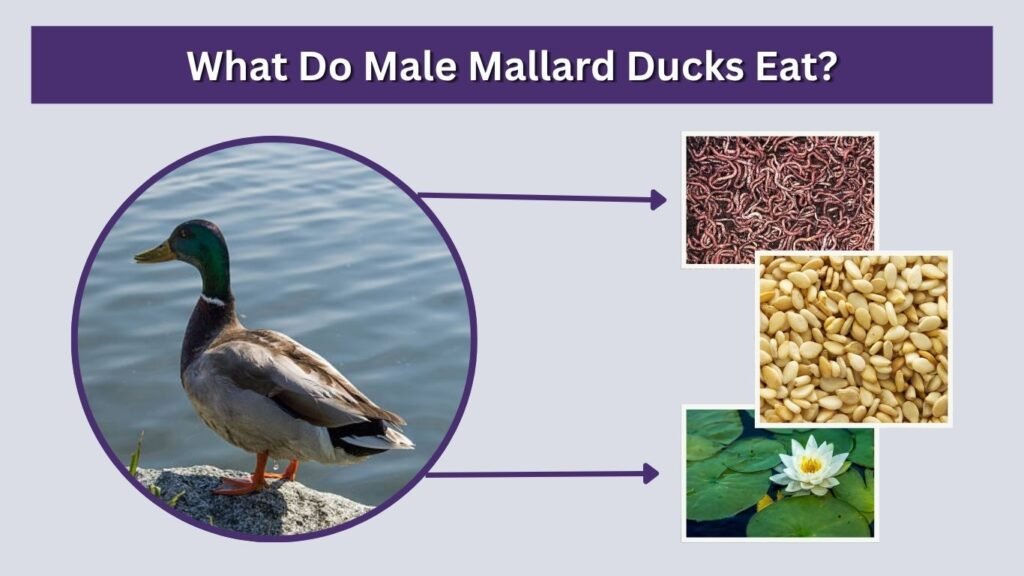
Male Mallards are omnivorous dabbling ducks that consume both plant and animal matter. They commonly feed by tipping their bodies forward in shallow water, allowing them to reach underwater plants and small aquatic organisms. Their diets change according to habitat, season, and food availability.
Common Foods of Male Mallards
- Aquatic plants: Leaves, roots, and stems of wetland vegetation.
- Seeds: Seeds from grasses and aquatic plants.
- Grains: Corn, rice, wheat, and other agricultural grains.
- Insects: Aquatic insects and their larvae.
- Crustaceans: Small freshwater crustaceans.
- Snails: Small aquatic mollusks.
- Worms: Earthworms and other soft-bodied invertebrates.
Mallards also forage on land, particularly around agricultural fields and grassy areas.
FAQs
1. What is a male Mallard duck called?
A male Mallard duck is called a drake. Adult breeding drakes are recognized by their glossy green heads, yellow bills, white neck rings, chestnut-brown chests, and gray bodies. Females are commonly called hens and have mottled brown plumage.
2. Do all male Mallard ducks have green heads?
No, male Mallards do not always have green heads. Juvenile males initially have brown feathers, while adult males temporarily lose their bright coloration during the summer eclipse molt. They typically regain their green heads during autumn.
3. Do male Mallard ducks quack?
Male Mallards make quieter, raspy calls rather than the familiar loud quacking associated with females. Their vocalizations can include short nasal notes and soft calls during courtship. Females produce the more recognizable series of loud quacks.
4. Do male Mallard ducks take care of their babies?
Male Mallards generally do not incubate eggs or care for ducklings. The female handles nesting, incubation, feeding guidance, and protection of the young. Males usually leave during the nesting period and undergo their seasonal molt.
5. How can you tell a juvenile male Mallard from a female?
Juvenile male Mallards initially resemble females because both have mottled brown feathers. As young males mature, their bills become more yellowish and distinctive male plumage gradually develops. Green head feathers become more noticeable during their first autumn or winter.