
Mallard duck eggs are fascinating because of their pale colors, relatively large size, and carefully timed hatching process. Female Mallards (Anas platyrhynchos) typically lay around 8–13 eggs in a nest hidden among grasses, shrubs, or other vegetation. Their eggs range from creamy white to grayish or greenish buff and usually hatch after 23–30 days of incubation. Unlike many other birds, Mallards generally begin incubating once their clutch is complete, allowing the ducklings to hatch around the same time. Understanding their egg-laying season, nest locations, incubation behavior, and hatching process helps explain how these ducks reproduce successfully.
What Do Mallard Duck Eggs Look Like?
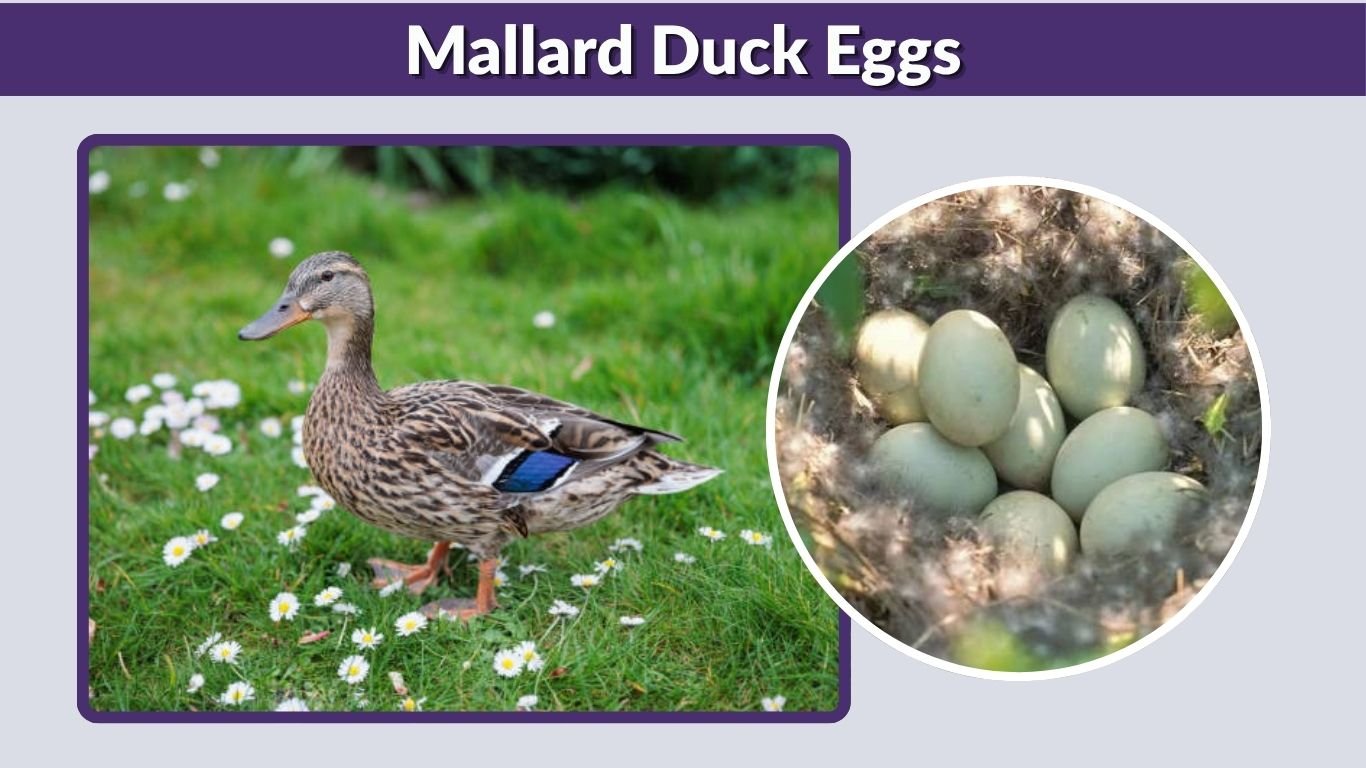
Mallard duck eggs are oval-shaped, smooth-shelled, and slightly larger than typical chicken eggs. Their appearance varies naturally between individual females, with subtle differences in color, size, and shape. Most eggs have a pale, uniform surface without noticeable spots or patterns, making them relatively easy to recognize when found inside a Mallard nest.
What Color Are Mallard Duck Eggs?
Mallard duck eggs commonly appear creamy white, pale green, grayish buff, or light olive. Their exact color depends on natural variation among females and the pigmentation deposited during egg formation.
Some eggs appear almost white, while others have a noticeable greenish tint. Unlike many wild bird eggs, Mallard eggs usually lack dark spots or speckles.
These pale colors blend with the dry grasses, leaves, and down feathers lining the nest, providing some camouflage.
Mallard Duck Egg Size and Weight
Mallard eggs typically measure approximately 2.1–2.5 inches (5.3–6.4 cm) in length and 1.5–1.8 inches (3.9–4.5 cm) in width.
A typical egg weighs around 50–60 grams, although individual measurements vary. Mallard eggs are generally larger than average chicken eggs in length, but their dimensions overlap with those of eggs produced by some domestic chicken breeds.
When Do Mallard Ducks Lay Eggs?
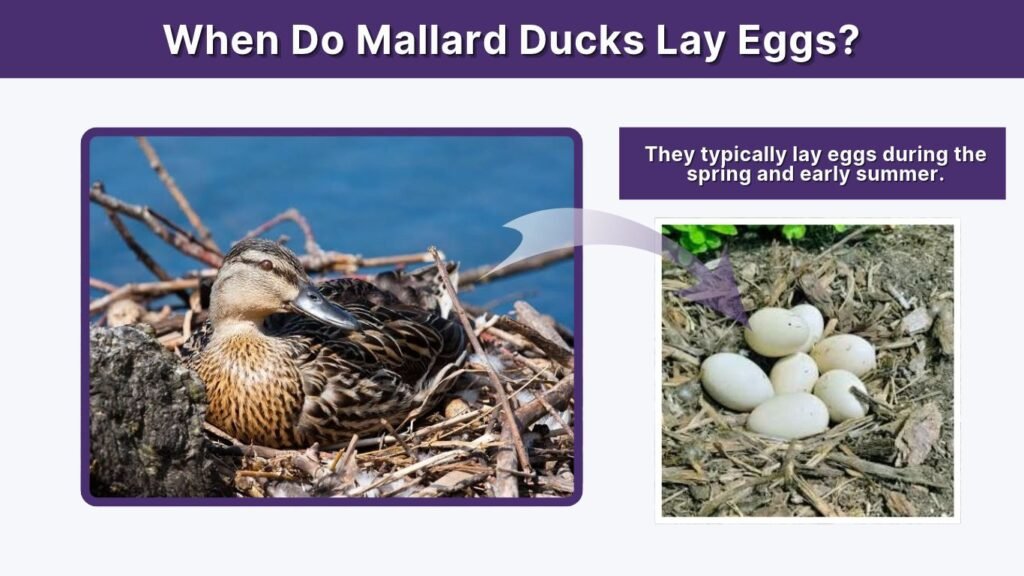
Mallard ducks usually lay eggs during spring and early summer, when temperatures become warmer and suitable nesting habitats are available. The exact breeding season depends on geographical location, weather, and local environmental conditions. Females select concealed nesting locations before depositing their eggs, while males usually leave once incubation begins.
Mallard Duck Egg-Laying Season
In many parts of North America, Mallards begin nesting between March and May. Egg laying may continue into June or later, particularly when a female must replace a failed nest.
Mallards living in warmer regions sometimes begin nesting earlier than birds breeding in colder northern environments.
Most wild Mallards follow a seasonal reproductive cycle rather than laying eggs throughout the year. Domestic ducks descended from Mallards may have different laying patterns under managed conditions.
How Many Eggs Do Mallard Ducks Lay?
Female Mallards commonly lay approximately 8–13 eggs per clutch. However, smaller or larger clutches occur depending on the female’s age, physical condition, and environmental circumstances.
A clutch is the complete group of eggs laid during one nesting attempt.
Mallards normally produce one successful brood annually, although females may attempt another nest if their original eggs are destroyed.
A nest containing an unusually large number of eggs may sometimes be used by more than one female.
How Long Does It Take Mallard Duck Eggs to Hatch?
Mallard duck eggs generally hatch after 23–30 days of incubation, with approximately 28 days being typical. The incubation period begins when the female starts regularly warming her completed clutch rather than when the first egg is laid. This timing helps synchronize embryonic development so most ducklings emerge within a relatively short period.
Mallard Duck Egg Incubation Period
Female Mallards are responsible for incubating their eggs. They sit on the nest for much of the day, using body warmth to maintain suitable temperatures for developing embryos.
The female periodically leaves to feed, drink, and maintain her feathers. Before departing, she often covers the eggs with down feathers and surrounding vegetation.
Incubation generally takes about four weeks. Temperature conditions, individual variation, and interruptions can influence the precise hatching date.
Mallard Duck Eggs Hatching Process
As hatching approaches, the developing duckling begins communicating through faint sounds from inside the egg. It uses a temporary structure called an egg tooth to break through the shell.
This process, known as pipping, may take several hours before the duckling fully emerges.
Because incubation begins around the same time for the entire clutch, viable eggs typically hatch close together.
Newly hatched Mallard ducklings have downy feathers, open eyes, and the ability to walk and swim shortly after emerging.
Where Do Mallard Ducks Lay Their Eggs?

Mallards usually build nests on the ground in concealed locations, often relatively close to freshwater habitats. Their nesting sites provide protection from predators while allowing newly hatched ducklings to reach water. Females use nearby vegetation and their own down feathers to create comfortable nesting areas that help protect developing eggs.
Common Mallard Duck Nesting Locations
Mallards nest in various environments, including:
- Tall grass: Conceals eggs and nesting females.
- Wetland vegetation: Provides shelter near ponds and marshes.
- Shrubs: Creates protective cover from predators.
- Agricultural fields: Offers nesting opportunities among crops.
- Gardens and backyards: Sometimes used in urban areas.
- Planters and flowerbeds: Occasionally selected near buildings.
The female generally forms a shallow depression and lines it with plant material. Down feathers provide additional insulation and concealment.
Do Male Mallard Ducks Sit on Eggs?
Male Mallards do not normally incubate eggs. Their main reproductive roles involve courtship, mating, and guarding their partners before incubation begins.
Once the female settles into regular incubation, the male usually leaves and eventually joins other drakes.
The female independently protects and incubates the clutch. After hatching, she guides the ducklings toward water and continues caring for them until they become more independent.
What to Do With Abandoned Mallard Duck Eggs

Finding Mallard eggs without an adult nearby does not necessarily mean they have been abandoned. Female Mallards often leave their nests temporarily, especially before the clutch is complete or during short feeding breaks. Recognizing normal nesting behavior is important because unnecessary handling or interference can reduce the chances of successful hatching.
How to Tell if Mallard Duck Eggs Are Abandoned
A female Mallard may visit her nest only briefly each day while laying eggs. Once incubation begins, she usually spends much longer sitting on the clutch.
Temporary absences are normal and should not be mistaken for abandonment.
If a nest appears unattended, observe it discreetly from a distance rather than approaching repeatedly. Prolonged inactivity may indicate a problem, but determining genuine abandonment can be difficult without professional assessment.
Can You Hatch Mallard Duck Eggs Yourself?
Fertile eggs from legally kept domestic or captive-reared Mallards can be hatched in a suitable incubator. General duck incubation guidelines commonly recommend approximately 99.5°F (37.5°C), carefully controlled humidity, and regular egg turning before the final hatching stage.
However, wild Mallard eggs should not be collected for home incubation. In the United States, wild Mallard nests and eggs are federally protected, with collection generally requiring authorization.
Contact a licensed wildlife rehabilitator or appropriate wildlife agency if you believe a wild nest is genuinely abandoned.
FAQs
1. Do Mallard Ducks Lay Eggs Every Day?
Female Mallards generally lay approximately one egg per day while completing a clutch, although intervals of up to two days may occur. After producing the full clutch, the female begins regular incubation. Wild Mallards do not typically continue laying eggs every day throughout the entire year.
2. How Many Times a Year Do Mallard Ducks Lay Eggs?
Wild Mallards usually raise one brood per breeding season. However, females may lay another clutch when an earlier nesting attempt fails because of predation, flooding, or other disturbances. Producing replacement eggs does not necessarily mean successfully raising multiple broods in one year.
3. Can You Eat Mallard Duck Eggs?
Eggs from legally kept, healthy domestic Mallards can be eaten when properly handled, stored, and thoroughly cooked. However, collecting eggs from wild Mallard nests is generally prohibited in the United States without authorization. Wild nests should be left undisturbed to protect developing ducklings.
4. Do Mallard Ducks Move Their Eggs?
Mallards do not normally transport their entire clutch to another nesting location. Females may reposition eggs within the nest while turning and incubating them. If a nesting site becomes unsafe, the female may abandon it and establish a new nest rather than physically moving the original eggs.
5. How Can You Tell if Mallard Duck Eggs Are Fertile?
Fertility may be assessed through candling, which involves shining a suitable light through an egg to observe developing blood vessels and embryos. This technique is appropriate for legally obtained captive-bred eggs. Wild Mallard eggs should not be handled or removed from their nests for candling.