
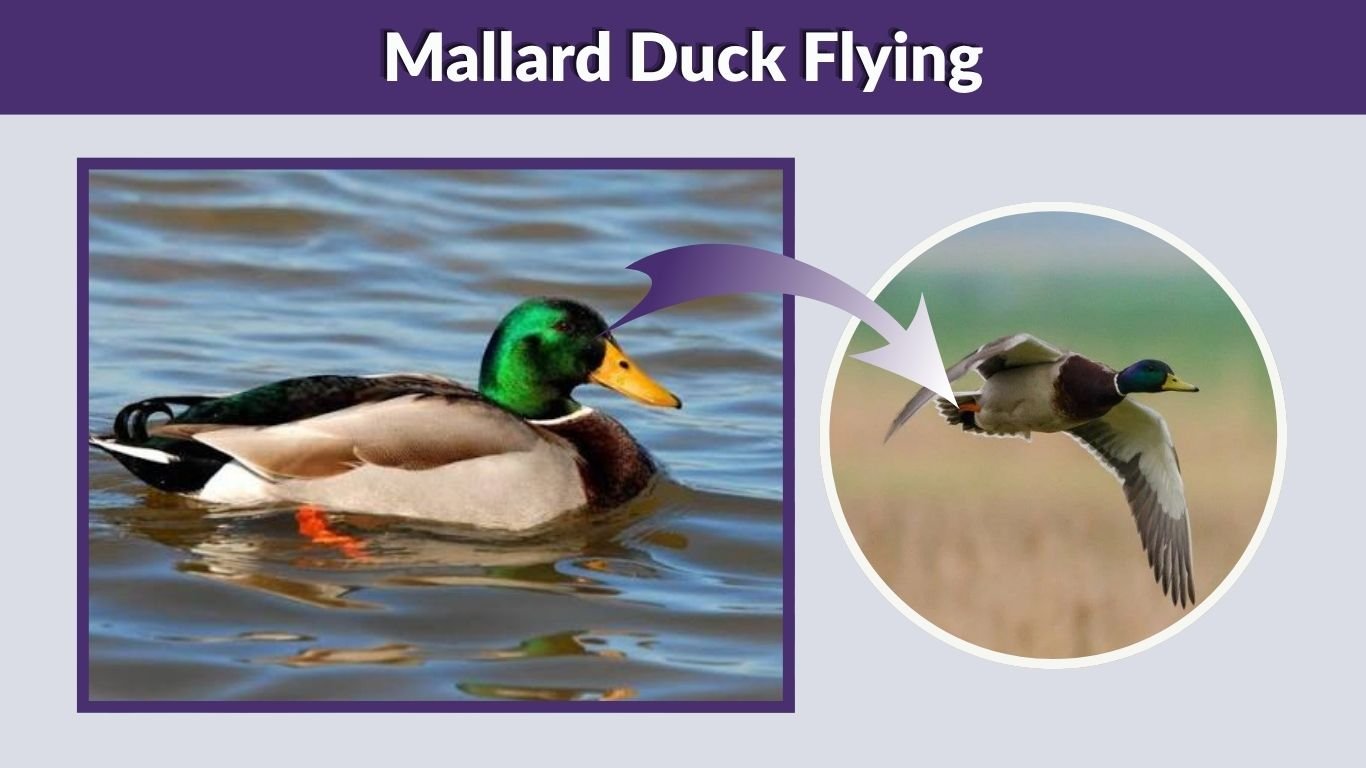
Mallard ducks are powerful and agile fliers, capable of traveling long distances during seasonal migration. Known for their colorful feathers, rapid wingbeats, and impressive aerial movements, these common waterfowl can reach flying speeds of approximately 55 miles per hour. Both male and female Mallards fly efficiently, using their strong wings to escape predators, locate food, and move between wetlands. However, young ducklings cannot fly immediately after hatching. Understanding Mallard duck flying behavior, including speed, distance, altitude, migration, and flight development, reveals how these adaptable birds survive in different environments.
Can Mallard Ducks Fly?
Yes, Mallard ducks (Anas platyrhynchos) are strong fliers capable of traveling considerable distances. Unlike heavier domesticated duck breeds, wild Mallards have relatively lightweight bodies and powerful flight muscles. Their wings allow them to take off directly from water, fly quickly over landscapes, and land accurately on ponds, lakes, and wetlands.
How Do Mallard Ducks Fly?
Mallards use rapid, continuous wingbeats to generate lift and move through the air. Their pointed wings and strong chest muscles provide the power necessary for sustained flight.
Unlike some large birds that rely heavily on soaring, Mallards predominantly use active flapping flight. Their streamlined bodies reduce air resistance, while their tail feathers help maintain stability and control during turns and landings.
Mallards can launch into flight directly from water without requiring a lengthy running start. This ability helps them escape predators and respond quickly to disturbances.
Male vs. Female Mallard Duck Flying
Male and female Mallards share similar flight abilities, although their appearance differs considerably. Males have glossy green heads, chestnut-colored breasts, and grayish bodies, while females display mottled brown feathers.
Both sexes have distinctive blue-purple wing patches bordered with white, called speculums. These markings are often visible when the birds spread their wings.
Although males are generally somewhat heavier, both sexes are capable of strong flight. Females also undertake seasonal migrations and fly regularly between feeding and nesting habitats.
How Fast Can a Mallard Duck Fly?
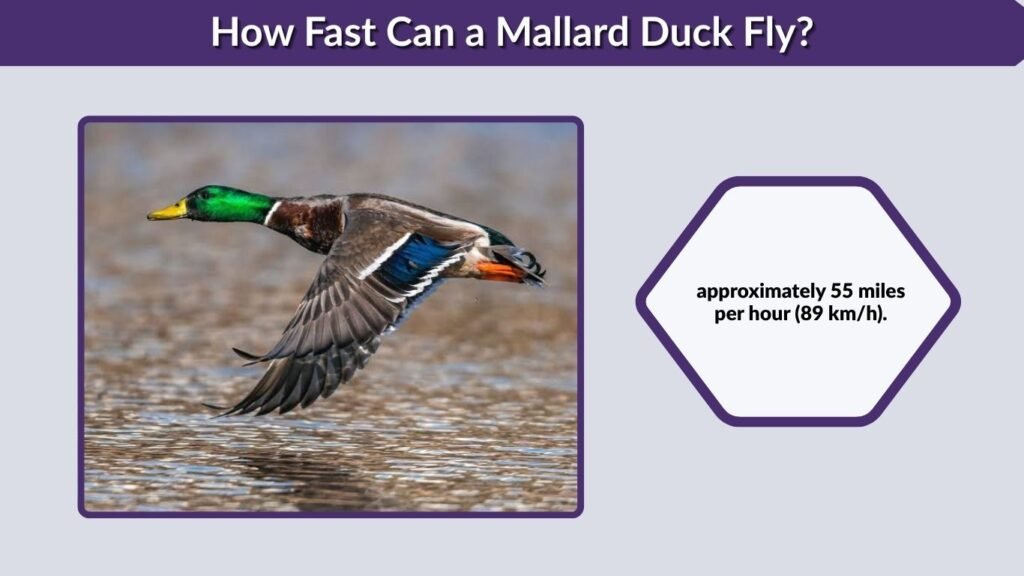
Mallard ducks are among the faster-flying common waterfowl. Their normal flight speed depends on wind conditions, migration activity, and the distance being traveled. Strong winds can significantly influence their speed over the ground, allowing migrating flocks to cover substantial distances in relatively short periods.
Mallard Duck Flying Speed
Migrating Mallard flocks have been estimated to travel at approximately 55 miles per hour (89 km/h). However, their exact speed varies according to weather and flight conditions.
Many waterfowl travel at speeds of approximately 40–60 miles per hour during active flight. Mallards can maintain substantial speeds because of their aerodynamic bodies and powerful wing muscles.
Favorable tailwinds may increase their speed across the ground, while headwinds can slow their progress. Consequently, a Mallard’s recorded ground speed does not always equal its actual speed through the surrounding air.
Why Can Mallard Ducks Fly So Fast?
Mallards possess several physical adaptations that support fast and efficient flying.
- Powerful flight muscles: Generate strong wingbeats.
- Pointed wings: Help reduce aerodynamic drag.
- Streamlined body: Allows smoother movement through the air.
- Lightweight skeleton: Supports efficient flight.
- Strong feathers: Provide lift and maneuverability.
Together, these characteristics allow Mallards to accelerate rapidly and maintain controlled flight. Their flying abilities are especially important when escaping predators or traveling between distant wetlands.
How Far and High Can Mallard Ducks Fly?
Mallard ducks can fly impressive distances during seasonal migration. Although they commonly make short trips between nearby ponds, feeding grounds, and resting areas, migrating individuals may travel hundreds of miles. Flight distance and altitude depend on weather, available food, geographical conditions, and migration requirements.
How Far Can Mallard Ducks Fly?
Mallards regularly travel short distances between local feeding and resting locations. However, their seasonal migrations may cover hundreds or even thousands of miles.
In one satellite-tracking study, Mallards traveled an average of more than 730 miles during spring migration and nearly 875 miles during fall migration.
An exceptionally long flight involved a tracked Mallard traveling more than 900 miles in a single day. Such journeys demonstrate the species’ impressive endurance, although they are not representative of everyday movements.
How High Can Mallard Ducks Fly?
Mallards commonly fly at relatively low altitudes when traveling between nearby habitats. During migration, they may climb considerably higher to take advantage of favorable winds.
Waterfowl migration frequently occurs between approximately 200 and 4,000 feet above the ground, although actual altitudes vary.
One extraordinary Mallard was documented after striking an aircraft at approximately 21,000 feet. This was an exceptional record rather than a normal flying altitude for the species.
When Can Baby Mallard Ducks Fly?
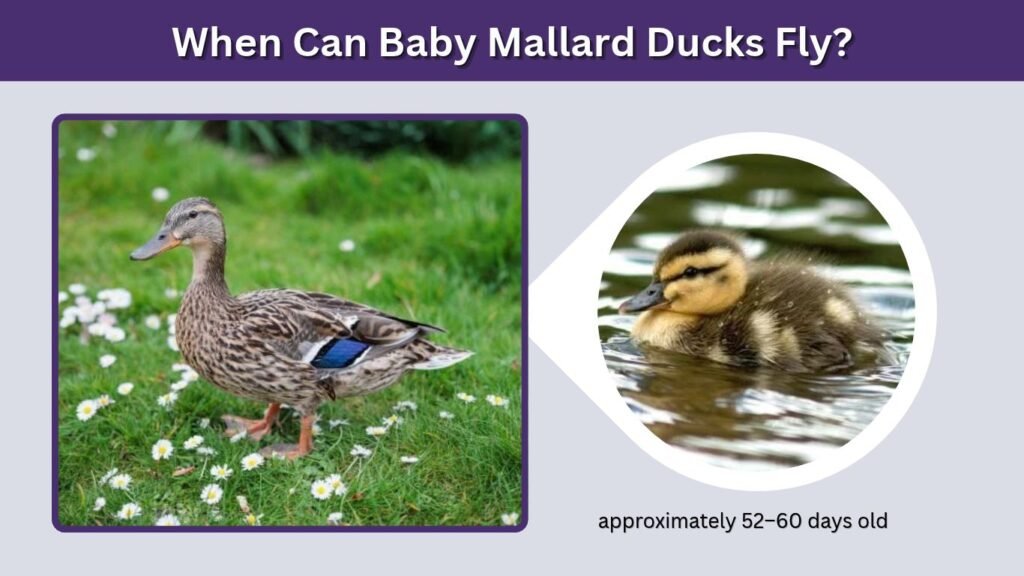
Baby Mallards hatch with soft down feathers and can walk, swim, and feed themselves shortly after leaving their eggs. However, they cannot fly immediately because their flight feathers and muscles are not fully developed. Their flying ability emerges gradually as they grow and become stronger.
At What Age Do Mallard Ducks Start Flying?
Mallard ducklings typically begin flying when they are approximately 52–60 days old, or around seven to nine weeks after hatching.
During their first weeks, they remain close to their mother while developing feathers and gaining strength. Their wings gradually increase in size as juvenile flight feathers replace their soft down.
By approximately eight weeks, many young Mallards can perform their first successful flights. Development varies among individuals, and some require additional time before becoming confident fliers.
Why Are Some Mallard Ducks Unable to Fly?
Not every Mallard can fly at every stage of its life. Ducklings are initially flightless, while adults temporarily lose their flying abilities during their annual wing molt.
During molting, Mallards replace their primary flight feathers simultaneously, making them unable to fly for several weeks.
Injuries, illness, and developmental problems can also prevent flight. Domestic ducks descended from Mallards may have limited flying abilities because selective breeding has produced heavier bodies.
Mallard Duck Flying and Migration Patterns
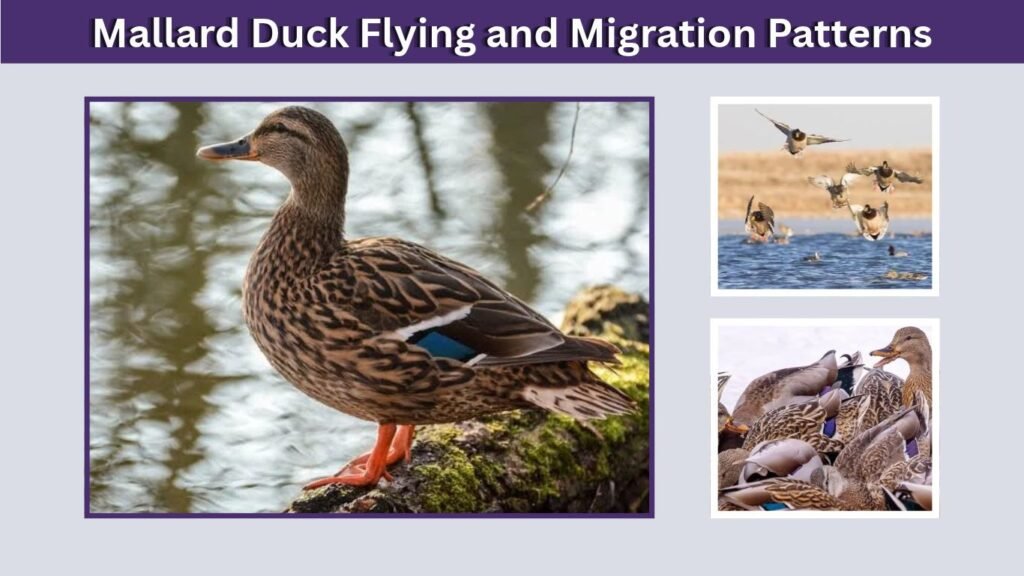
Mallard ducks are partly migratory, meaning some populations travel seasonally while others remain in suitable habitats throughout the year. Their movements are influenced by temperature, food availability, and wetland conditions. Migration allows many Mallards to escape frozen habitats and find more favorable feeding environments.
Do Mallard Ducks Fly South for Winter?
Many wild Mallards migrate south during autumn and early winter. Birds breeding in Canada and the northern United States may travel to warmer regions where ponds and wetlands remain unfrozen.
However, not all Mallards migrate. Some populations remain year-round in areas with reliable food supplies and open water.
Migration often occurs when freezing temperatures reduce access to feeding habitats. As conditions improve in spring, migratory Mallards generally return north toward their breeding grounds.
Do Mallard Ducks Fly at Night?
Yes, Mallards frequently fly at night, especially during migration and movements between feeding and resting locations.
They may also become particularly active near dawn and dusk. Flying during cooler periods can provide favorable conditions for longer journeys.
Mallards sometimes travel in loose groups, lines, or V-shaped formations. Flying together can improve coordination, and certain formations may reduce the energy required during long-distance journeys.
FAQs
1. Can Domestic Mallard Ducks Fly Away?
Yes, domestic Mallards that retain the body proportions and flying abilities of wild birds may fly away from their enclosures. However, heavier domestic duck breeds often cannot sustain flight. Owners should provide secure housing and suitable outdoor enclosures rather than assuming their ducks will remain nearby.
2. Do Mallard Ducks Fly in a V Formation?
Mallards can fly in V-shaped formations, particularly during migration, although they also travel in irregular groups and other formations. Flying in organized groups can help conserve energy and maintain visual contact. The familiar V formation is especially noticeable among larger migratory waterfowl.
3. Can Baby Mallard Ducks Fly?
Newly hatched Mallard ducklings cannot fly. Although they can walk and swim shortly after hatching, their wings require several weeks of development. Most young Mallards gain flight ability at approximately 52–60 days old, when their feathers and flight muscles become sufficiently developed.
4. Why Is My Mallard Duck Not Flying?
A Mallard may temporarily stop flying during its annual wing molt, when flight feathers are replaced. Young ducklings and heavy domestic breeds may also be unable to fly. If a normally flight-capable adult suddenly cannot fly, injury or illness may be responsible and veterinary assessment is advisable.
5. Will Mallard Ducks Fly Away From Home?
Wild Mallards naturally move between wetlands and may migrate seasonally. Domestic Mallards with strong flight abilities can also leave their home environment, especially when frightened or attracted to nearby water. Secure, predator-resistant enclosures help keep domestic birds safe and prevent accidental escapes.