
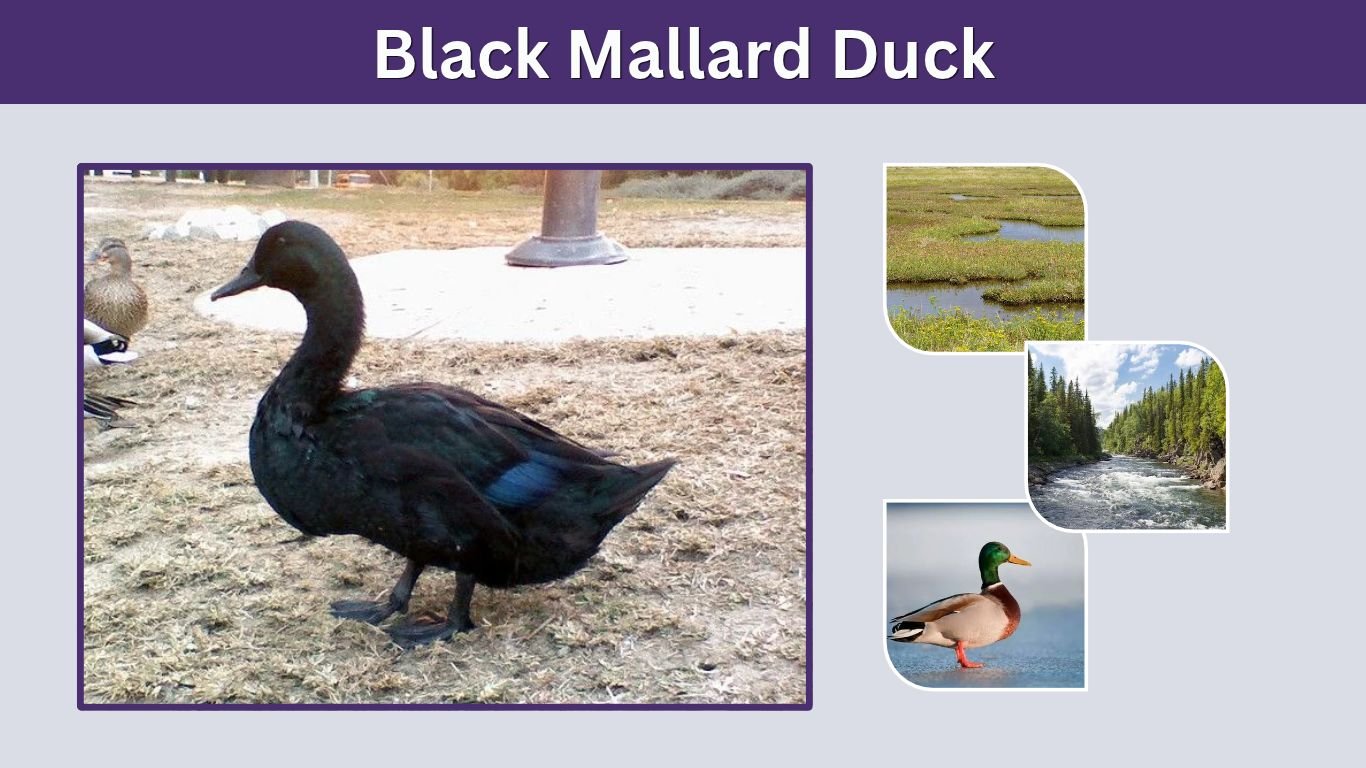
A black Mallard duck can look unusual compared with the familiar green-headed drakes and brown females commonly seen in wetlands. However, not every dark-colored duck is a true Mallard. Some are American Black Ducks, while others may be Mallard hybrids or domestic ducks with unusually dark feathers. These birds often share similar body shapes, making identification challenging. Their bill colors, wing markings, body patterns, and habitats provide important clues. Understanding the differences between black Mallards, American Black Ducks, and related species helps birdwatchers identify these fascinating waterfowl more accurately.
What Is a Black Mallard Duck?
A black Mallard duck is an informal description for a Mallard (Anas platyrhynchos) with unusually dark plumage. It is not a separate officially recognized wild species. Dark-colored ducks resembling Mallards may result from domestic breeding, pigmentation differences, or hybridization with related species. Some birds described as black Mallards are actually American Black Ducks (Anas rubripes).
Black Mallard Duck Identification
An unusually dark Mallard may retain several recognizable Mallard characteristics despite its different feather color.
Important identification features include:
- Body: Dark brown, blackish, or unusually dusky feathers.
- Head: May appear dark brown, black, or greenish.
- Bill: Yellow, olive, or orange with dark markings, depending on sex and ancestry.
- Wings: Often display an iridescent blue-purple speculum.
- Tail: Some males retain characteristic curled central tail feathers.
- Feet: Usually orange or reddish-orange.
- Size: Generally similar to an ordinary Mallard, although domestic birds can be larger.
Color alone cannot reliably identify a black Mallard because several related duck species have similar appearances.
Why Are Some Mallard Ducks Black?
Dark plumage can develop for several reasons. Melanism, a condition involving unusually high amounts of dark pigment, can make some birds appear much darker than normal.
Domestic breeding is another important explanation. Many domesticated duck breeds descended from Mallards have black or nearly black feathers. For example, Cayuga ducks have glossy dark plumage with greenish iridescence.
Hybridization can also produce unusual color patterns, especially when Mallards breed with American Black Ducks.
American Black Duck vs. Mallard
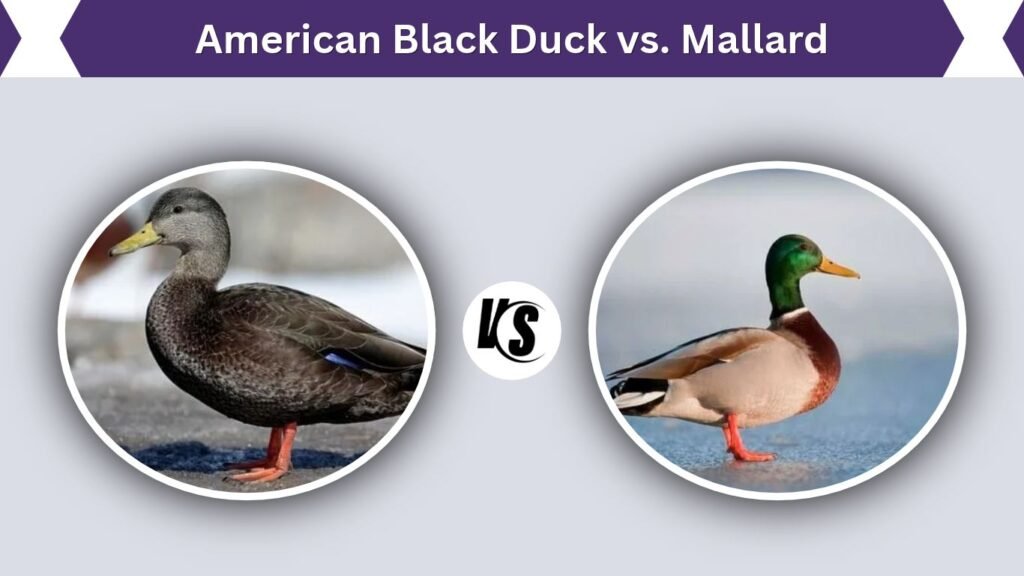
The American Black Duck and Mallard are closely related waterfowl with nearly identical body shapes. However, their coloration differs significantly. American Black Ducks typically have much darker bodies, pale gray-brown heads, and less prominent white borders around their wing patches. Mallards generally display lighter plumage and more contrasting feather patterns.
Key Differences Between American Black Ducks and Mallards
| Feature | American Black Duck | Mallard |
| Scientific name | Anas rubripes | Anas platyrhynchos |
| Body color | Dark chocolate-brown | Gray, brown, or mottled |
| Male head | Pale brown with dark crown | Glossy green in breeding plumage |
| Female body | Dark brown | Lighter mottled brown |
| Male bill | Yellow to olive | Yellow |
| Wing patch | Purple, usually without white borders | Blue-purple with white borders |
| Distribution | Primarily eastern North America | Widespread across North America and elsewhere |
These differences are particularly useful when observing ducks together in the same wetland.
Female Mallard vs. American Black Duck
Female Mallards are commonly confused with American Black Ducks because both have brown feathers and relatively plain heads.
However, female Mallards usually have lighter, more strongly patterned bodies. Their bills are frequently orange with dark markings, and the blue wing speculum has noticeable white borders.
Female American Black Ducks have darker bodies, paler grayish heads, and dull olive-colored bills. Their purple speculum normally lacks the prominent white borders found on Mallards.
American Black Duck Mallard Hybrid
American Black Ducks and Mallards can interbreed naturally, producing hybrid offspring with characteristics of both parent species. These hybrids are particularly associated with eastern North America, where the two species share wetlands and breeding habitats. Their appearance varies considerably, making identification more difficult than recognizing typical adults of either parent species.
Black Duck Mallard Hybrid Identification
A Mallard–American Black Duck hybrid may display a combination of dark body feathers and greenish head coloration.
Common possible characteristics include:
- Head: Dark green patches mixed with brown feathers.
- Face: Pale cheek markings contrasting with a darker crown.
- Body: Darker than a typical Mallard but variable in appearance.
- Bill: Yellow, olive, or intermediate coloration.
- Wing patch: Blue-purple with variable white edging.
- Tail: Some males retain curled Mallard-like feathers.
Some hybrids closely resemble American Black Ducks, while others look more like ordinary Mallards. Advanced-generation hybrids may be especially difficult to identify confidently without genetic testing.
Why Do Mallards and Black Ducks Hybridize?
Mallards and American Black Ducks are closely related species that sometimes occupy the same breeding and wintering habitats.
When their populations overlap, individuals may form mixed-species pairs and successfully reproduce. The resulting hybrids can be fertile, allowing some hybrid descendants to breed again.
Hybridization has attracted considerable conservation attention because of concerns about genetic mixing. However, research indicates that the long-term genetic consequences are complex and cannot be explained by hybridization frequency alone.
Black Mallard vs. Mottled Duck
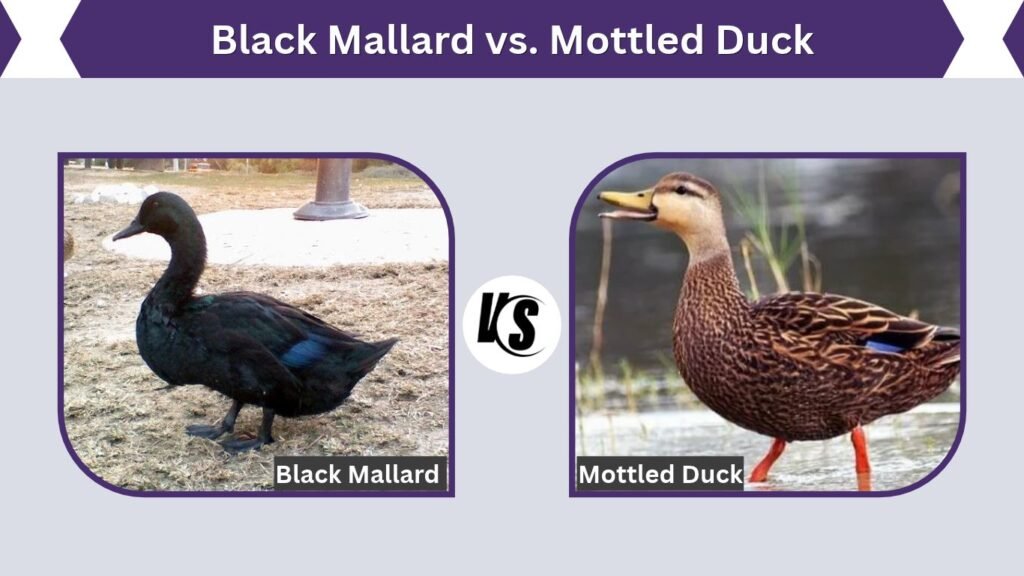
Mottled Ducks (Anas fulvigula) are another species frequently confused with female Mallards and American Black Ducks. These ducks have dark brown bodies and pale brown heads but occupy a different geographical range. Identifying them requires close attention to facial markings, wing colors, and bill characteristics.
How to Identify a Mottled Duck
Mottled Ducks typically have a buff-colored face, dark eye stripe, and dark brown body feathers.
Their wing speculum usually appears blue-green or purple-blue without the strong white borders typical of Mallards.
A particularly useful identification feature is a small dark spot near the base of the bill, where the upper and lower mandibles meet.
Mottled Ducks primarily inhabit wetlands in Florida and along the Gulf Coast. American Black Ducks are much more strongly associated with eastern and northeastern North America.
Where Do Black Mallard Ducks Live?
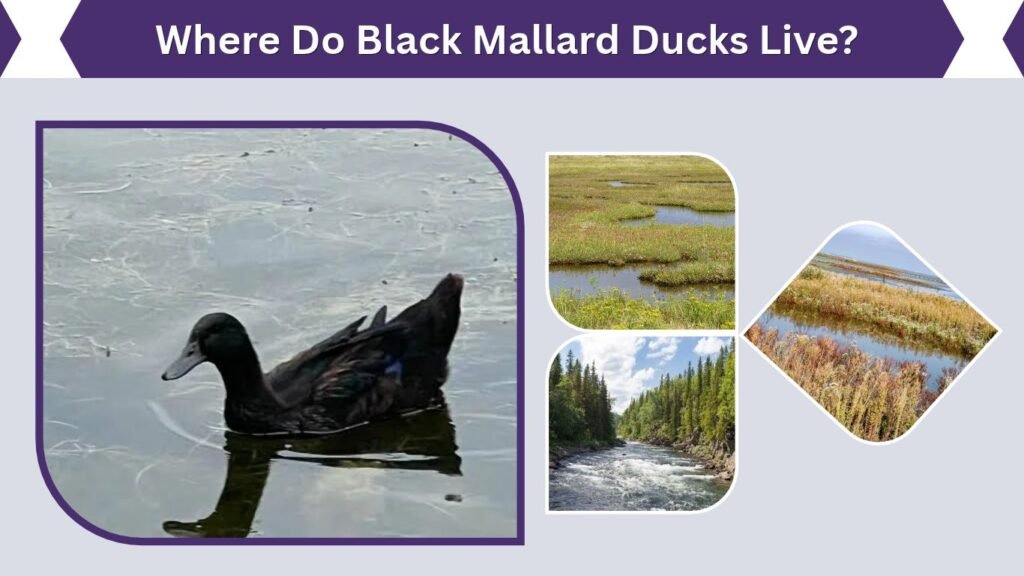
The habitat of a black-colored Mallard depends on whether it is a wild Mallard, domestic duck, American Black Duck, or hybrid. All commonly use aquatic environments, including freshwater ponds, marshes, rivers, and sheltered wetlands. However, their geographical ranges and tolerance of human environments can differ.
American Black Duck Habitat and Distribution
American Black Ducks are native to eastern North America, including parts of eastern Canada and the northeastern United States.
They inhabit freshwater wetlands, coastal marshes, forested swamps, ponds, and sheltered bays.
During winter, many move toward coastal regions and wetlands farther south. They may also gather with Mallards in mixed waterfowl flocks.
Can Black Mallards Live With Regular Mallards?
Yes, unusually dark Mallards and domestic Mallard descendants may live alongside normally colored Mallards.
American Black Ducks also frequently associate with Mallards, particularly during migration and winter.
These ducks share similar feeding behaviors, including dabbling for aquatic vegetation, seeds, and small invertebrates. Their overlapping habitats create opportunities for mixed flocks and, in some circumstances, hybridization.
FAQs
1. Are Black Mallard Ducks Rare?
Unusually black wild Mallards are less commonly observed than normally colored birds. However, dark-colored domestic Mallard descendants are not necessarily rare. Some ducks identified as black Mallards are actually American Black Ducks or hybrids. Their frequency depends on geographical location, breeding history, and local duck populations.
2. Is an American Black Duck a Mallard?
No. The American Black Duck (Anas rubripes) and Mallard (Anas platyrhynchos) are recognized as separate species. They are closely related and share similar body shapes, feeding habits, and habitats. Although they can interbreed and produce fertile hybrids, they remain distinct species with different typical plumage characteristics.
3. Can a Mallard Duck Be Completely Black?
Yes, domestic ducks descended from Mallards can develop almost entirely black plumage. Cayuga ducks are a familiar example. Unusually dark wild Mallards may also occur, although a black appearance alone does not confirm melanism or species identity. Examining body structure and wing markings is essential.
4. What Is a Black and White Mallard Duck?
A black-and-white Mallard-like duck is often a domestic duck or a bird with domestic Mallard ancestry. Some domestic varieties have dark bodies with white chest patches, sometimes called bibs. These patterns are not characteristic of typical wild Mallards and may indicate domestic breeding or unusual pigmentation.
5. How Can You Tell a Black Duck From a Mallard?
Examine the body color, head, bill, and wing markings. American Black Ducks generally have darker bodies, pale gray-brown heads, and purple wing patches without prominent white borders. Female Mallards are lighter and have blue-purple speculums bordered by white. Hybrids can display intermediate features, complicating identification.