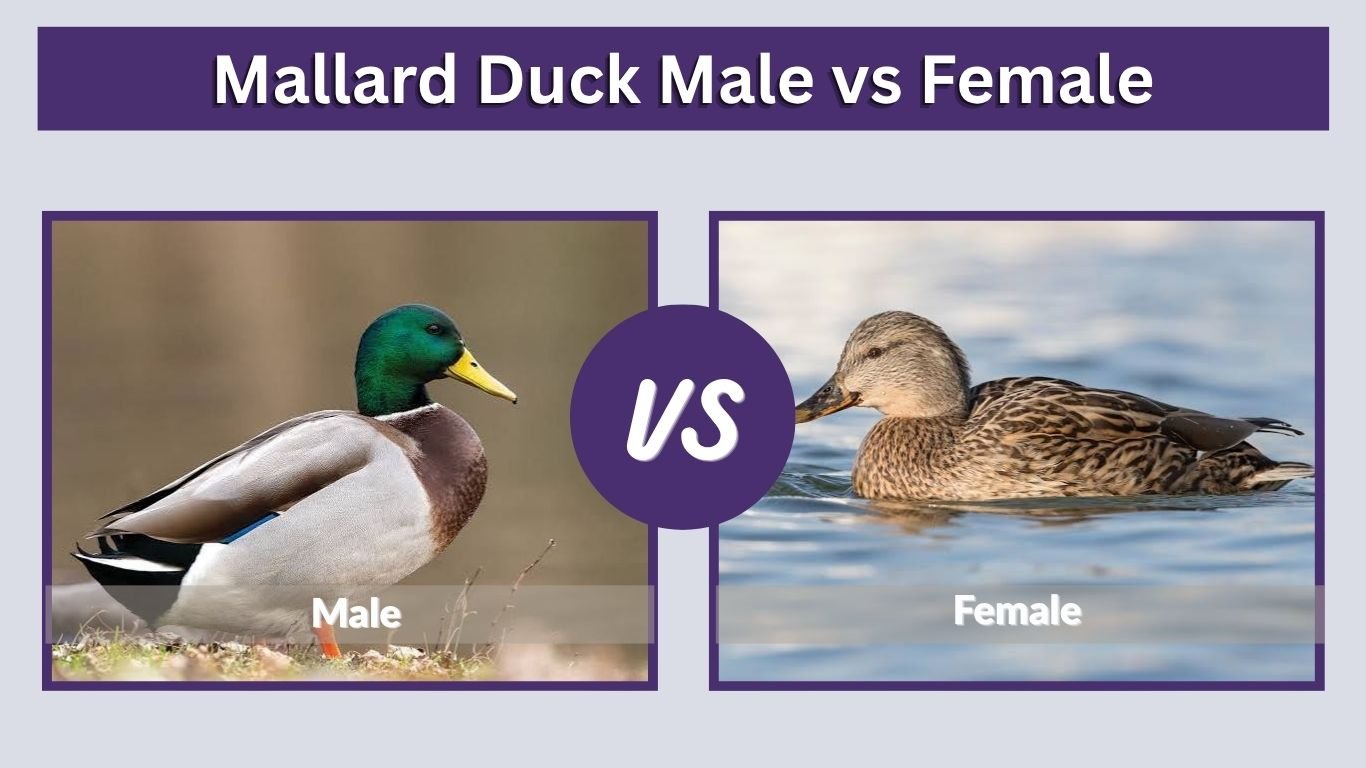
Male and female Mallard ducks have noticeably different appearances, making them relatively easy to identify during most of the year. Male Mallards are famous for their glossy green heads, yellow bills, and colorful feathers, while females display mottled brown plumage that provides excellent camouflage. However, these differences become less obvious during summer molting or when identifying young ducks. Understanding Mallard duck male vs female characteristics, including size, sounds, behavior, and seasonal plumage, can help birdwatchers recognize both sexes accurately.
Male vs. Female Mallard Duck: Quick Comparison
The Mallard (Anas platyrhynchos) is one of the most familiar duck species in North America, Europe, and parts of Asia. Male Mallards are called drakes, while females are called hens. Their distinct appearances are an example of sexual dimorphism, meaning males and females have different physical characteristics. The following comparison highlights their most recognizable features.
| Feature | Male Mallard (Drake) | Female Mallard (Hen) |
| Head color | Glossy green | Mottled brown |
| Body feathers | Gray, chestnut, black | Brown with dark patterns |
| Bill color | Yellow to olive-yellow | Orange with dark markings |
| Neck | Thin white collar | No white collar |
| Tail | Often has curled black feathers | Usually straight |
| Voice | Soft, raspy calls | Loud, familiar quacking |
| Size | Generally larger | Slightly smaller |
| Wing patch | Blue with white borders | Blue with white borders |
7 Key Differences Between Male and Female Mallard Ducks
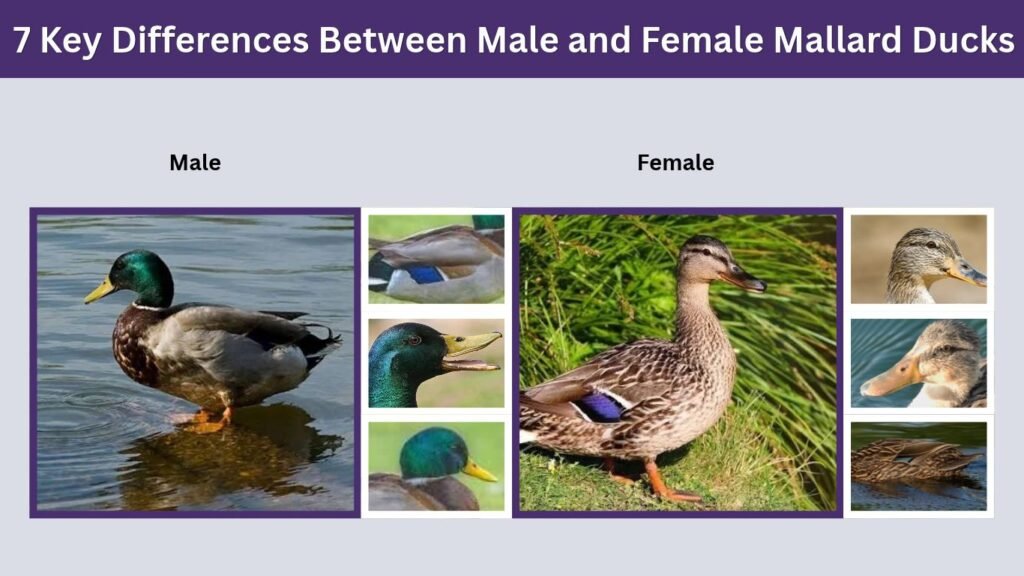
The most obvious differences between male and female Mallard ducks involve their plumage, bill color, body size, and vocalizations. However, these features can change as ducks mature or molt. Learning several identifying characteristics rather than relying on a single feature makes identification more reliable, especially when observing Mallards in large flocks.
1. Head Color and Feather Patterns
Male Mallards have iridescent green heads that can appear blue or almost black depending on lighting. Their heads contrast with a narrow white neck ring and rich chestnut-brown breast.
Female Mallards have brown heads with darker streaks around their eyes. Their feathers blend into grasses, reeds, and vegetation, helping conceal them from predators while nesting.
2. Body Color and Plumage
Male Mallards display grayish bodies, dark rear sections, and white outer tail feathers. Their colorful appearance is particularly noticeable during the breeding season.
Females have mottled brown plumage with buff and dark markings across their backs and sides. These patterns provide camouflage and help them remain hidden while incubating eggs.
3. Bill Color and Shape
The male Mallard usually has a bright yellow or olive-yellow bill. Its broad, flattened shape helps the duck collect aquatic plants, seeds, and small invertebrates.
Female Mallards generally have orange bills with dark brown or black patches. Bill patterns vary between individuals, but color is often a useful identification feature.
4. Body Size and Weight
Male Mallards are typically heavier than females, although their measurements overlap. Adult drakes commonly weigh approximately 2.6–2.8 pounds.
Females often weigh around 2.3–2.5 pounds. Both sexes are generally 19.7–25.6 inches long, so size alone cannot reliably distinguish them.
5. Tail Feathers
Breeding male Mallards often have one or more curled black feathers near the upper tail. These distinctive curled feathers are useful identification clues.
Females have straighter tail feathers without the characteristic drake curls. However, younger males or males undergoing molting may not show obvious curled feathers.
6. Wing Color and Markings
Both male and female Mallards have an iridescent blue or violet-blue patch called a speculum on each wing. White borders make these patches particularly noticeable during flight.
Because both sexes share this feature, the blue wing patch is more useful for identifying Mallards as a species than determining whether an individual is male or female.
7. Voice and Quacking Sounds
Female Mallards produce the loud, familiar quacking sounds commonly associated with ducks. Their calls often begin loudly and become progressively softer.
Male Mallards produce quieter, rasping calls rather than the classic loud quack. Listening to their voices is particularly helpful when males have brown summer plumage.
Why Do Male and Female Mallards Look Different?
Male and female Mallards have different feather patterns because their coloration serves different purposes. Bright male plumage is associated with courtship and sexual selection, while females benefit from camouflage during nesting. Their contrasting appearances are most noticeable during the breeding season, when adult males display their characteristic green heads.
Male Mallard Breeding Plumage
Male Mallards develop colorful breeding plumage that includes a green head, white neck ring, and chestnut breast.
These features help make drakes visually distinctive during courtship. Males also perform head movements and other displays when interacting with potential mates.
Female Mallard Camouflage
Female Mallards rely on their brown feather patterns to blend into nesting vegetation.
Because females incubate the eggs and care for ducklings, their subdued coloration helps reduce visibility to predators while they remain close to the nest.
Do Male Mallard Ducks Look Like Females in Summer?
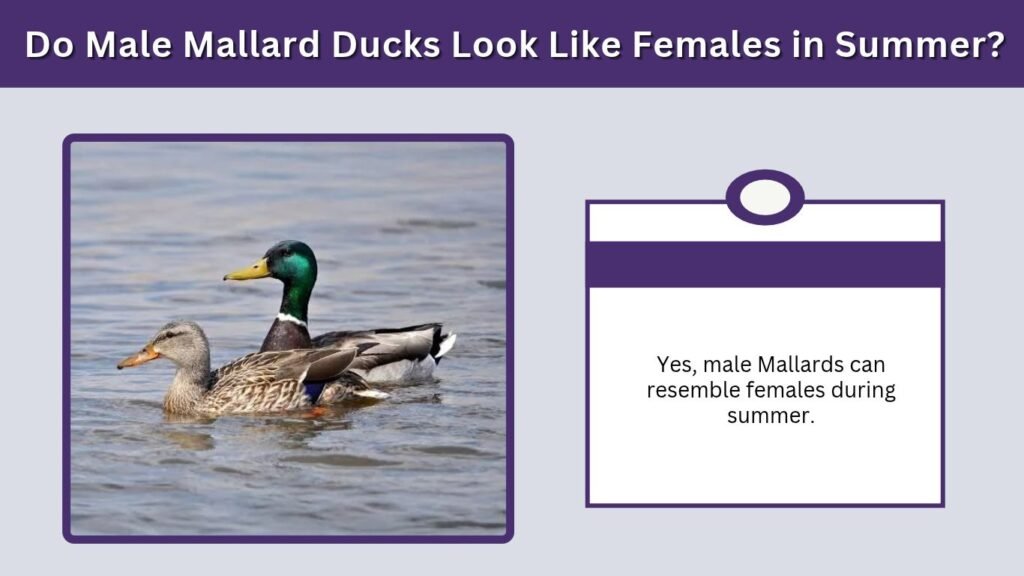
Yes, male Mallards can resemble females during summer. After the breeding season, males undergo a molt that temporarily replaces their bright feathers with a duller pattern called eclipse plumage. This change helps them remain less conspicuous while replacing their flight feathers, a period when they temporarily cannot fly.
| Feature | Breeding Male | Eclipse Male |
| Head | Bright green | Mostly brown |
| Body | Gray and chestnut | Mottled brown |
| Bill | Yellow | Usually yellowish |
| Tail | Curled black feathers | Some male markings may remain |
| Identification | Usually easy | Can resemble female |
How to Identify an Eclipse Male Mallard
An eclipse male often has brown feathers similar to those of a female, but its yellowish bill may remain distinctive. Some also retain darker tail markings or traces of green feathers.
During this period, observing several features together is more reliable than depending on body color alone. Males gradually regain their colorful breeding plumage later in the year.
Male vs. Female Baby Mallard Ducks
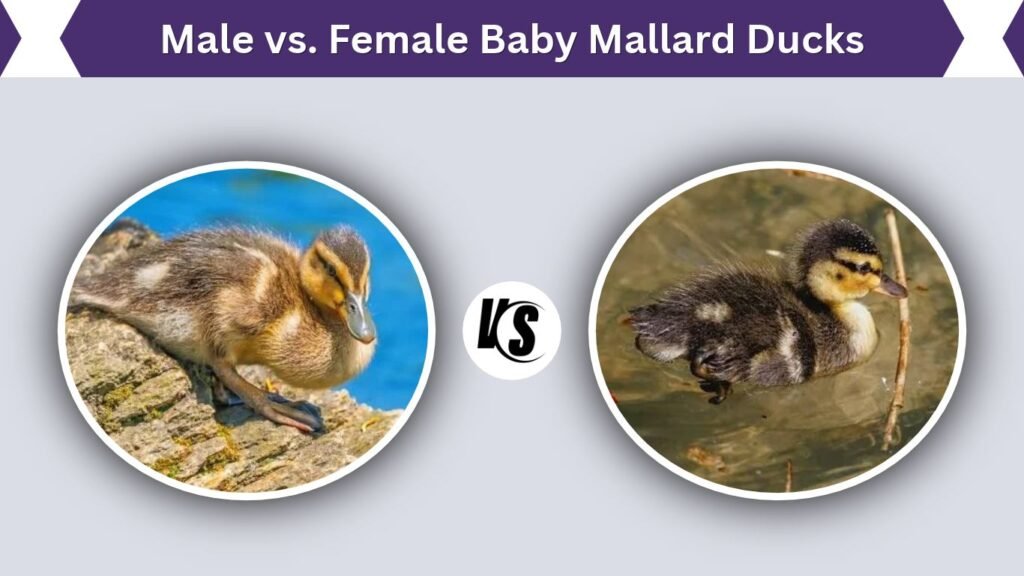
Baby Mallard ducks, called ducklings, look remarkably similar regardless of sex. They usually have yellow and brown downy feathers, dark eye stripes, and small bills. Their adult plumage develops gradually as they grow. Because young males do not immediately develop green heads, identifying male and female ducklings through appearance alone can be difficult.
How to Tell Male and Female Ducklings Apart
| Feature | Young Male | Young Female |
| Down color | Yellow and brown | Yellow and brown |
| Early size | Similar | Similar |
| Juvenile feathers | Mostly brown | Mostly brown |
| Voice as they mature | Develops raspy calls | Develops stronger quacks |
| Adult plumage | Develops colorful male feathers | Retains mottled brown appearance |
When Can You Tell a Male Mallard From a Female?
Sex differences become easier to recognize as young Mallards develop their adult voices and plumage. Female-type quacks and male-type raspy calls may provide clues before adult feather patterns are fully established.
Young males gradually develop distinctive male plumage during their first autumn and winter. However, the timing varies, and some immature individuals remain difficult to identify visually.
Male and Female Mallard Duck Behavior
Male and female Mallards share many behaviors, including swimming, dabbling for food, and gathering in flocks. However, their reproductive roles differ significantly. Mallard pairs commonly form during autumn or winter, and courtship may continue before the spring breeding season. Females are responsible for incubation and most direct care of young ducklings.
Courtship and Pair Bonding
Male Mallards perform courtship displays involving head movements, body postures, and vocalizations. Females may respond through their own movements and calls.
Although Mallards commonly form seasonal pair bonds, they do not necessarily remain with the same partner for life. Males may also pursue females outside their established pairs.
Nesting and Duckling Care
Female Mallards build ground nests, incubate eggs, and guide newly hatched ducklings toward food and water.
Males usually leave the female during the nesting period and do not normally participate in raising ducklings. Therefore, an adult Mallard swimming with small ducklings is most likely their mother.
FAQs
1. Which Mallard Duck Is More Colorful, Male or Female?
The male Mallard is usually more colorful, with a glossy green head, white neck ring, and chestnut breast. Females have mottled brown feathers that provide camouflage. However, male Mallards temporarily lose much of their bright coloration during summer molting.
2. Can a Male Mallard Duck Have Female Coloration?
Yes. Male Mallards develop brown, female-like eclipse plumage after the breeding season. Young males may also resemble females before developing adult feathers. Bill color, vocalizations, and tail markings can help distinguish these birds from female Mallards.
3. Do Male and Female Mallard Ducks Stay Together?
Mallard pairs commonly form before the spring breeding season, often during autumn or winter. However, the male typically leaves during nesting, while the female incubates eggs and raises ducklings. Mallards generally form seasonal rather than lifelong pair bonds.
4. Are Male Mallard Ducks Bigger Than Females?
Male Mallards are generally slightly larger and heavier than females. Adult drakes often weigh around 2.6–2.8 pounds, while females average approximately 2.3–2.5 pounds. Because individual sizes overlap, body size should not be the only identification method.
5. How Can You Tell if a Mallard Duck Is Male or Female?
Look at the head, bill, tail, and overall feather pattern. A breeding male usually has a green head, yellow bill, and curled tail feathers. A female has mottled brown plumage and a patterned orange bill. Vocalizations also provide helpful identification clues.