
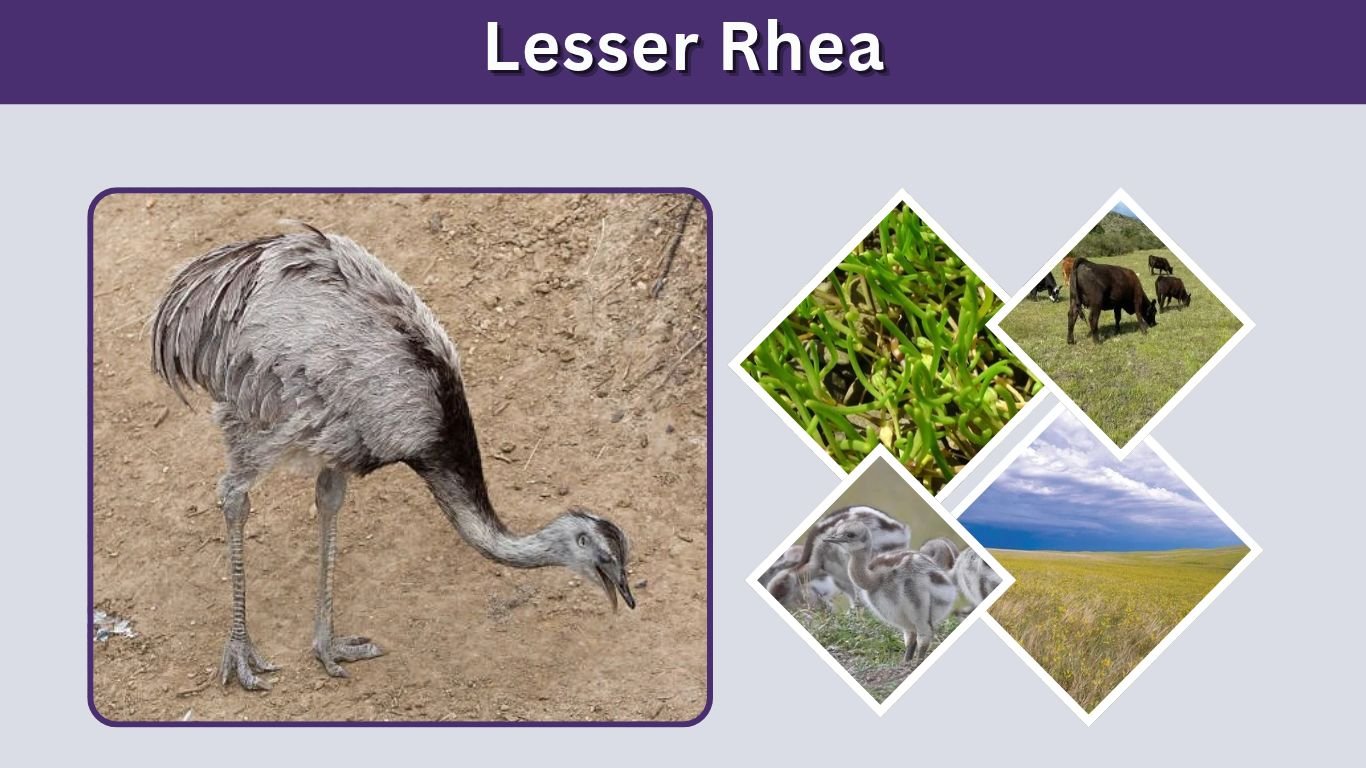
The Lesser Rhea (Rhea pennata), also known as Darwin’s Rhea, is a large flightless bird native to South America. Found mainly in the open grasslands of Patagonia and parts of the Andes, this remarkable bird is known for its strong legs, impressive running speed, and unique breeding behavior. Although smaller than the Greater Rhea, it is well adapted to surviving in harsh environments. Understanding the Lesser Rhea’s size, habitat, diet, behavior, and reproduction reveals what makes this unusual bird so fascinating.
What Is a Lesser Rhea?
The Lesser Rhea belongs to the family Rheidae, a group of large, flightless South American birds. It is closely related to the Greater Rhea and shares several characteristics with ostriches and emus. These birds have long necks, strong legs, and relatively small heads. Unlike flying birds, Lesser Rheas spend their entire lives on the ground, relying on speed and alertness to avoid predators.
Lesser Rhea Appearance
The Lesser Rhea has brownish-gray plumage decorated with white markings. Its feathers provide natural camouflage against the dry grasslands and scrublands where it lives.
Its body is rounded, while its long neck and muscular legs create a distinctive appearance. The bird has three toes on each foot, helping it maintain balance while running.
Unlike ostriches, Lesser Rheas have feathers extending down their thighs and upper legs. Their relatively large wings are useful for maintaining balance during sudden turns.
Lesser Rhea Size and Weight
Adult Lesser Rheas typically measure approximately 90–100 cm (35–39 inches) in height and weigh around 15–25 kg (33–55 pounds).
Males and females have similar appearances, although males may be somewhat larger. Their relatively compact bodies make them noticeably smaller than Greater Rheas.
Despite their smaller size, Lesser Rheas are powerful runners capable of covering open ground quickly when threatened.
Where Do Lesser Rheas Live?

Lesser Rheas inhabit open landscapes across southern and western South America. Their distribution includes Argentina, Chile, Bolivia, and Peru. They prefer grasslands, shrublands, and sparsely vegetated environments where they can move freely and detect approaching predators. Some populations occupy cold, windy Patagonian plains, while others survive in high-altitude Andean environments.
Lesser Rhea Habitat in Patagonia
Patagonia is one of the most recognizable habitats of the Lesser Rhea. Its wide grasslands, low shrubs, and open plains provide feeding opportunities and space for running.
These birds commonly inhabit dry steppes where grasses, seeds, and small invertebrates are available. Their brownish feathers help them blend into the surrounding vegetation.
Although the region experiences strong winds and cold winters, Lesser Rheas are adapted to living in these demanding environments.
Lesser Rheas in the Andes
Some Lesser Rhea populations inhabit high-altitude regions of the Andes, where vegetation is sparse and temperatures can change dramatically.
They occur in open highland grasslands and shrublands, sometimes at elevations reaching approximately 4,500 meters.
Their ability to tolerate cold conditions and feed on available vegetation allows them to survive in environments unsuitable for many other large birds.
What Do Lesser Rheas Eat?

The Lesser Rhea is an omnivorous bird that feeds primarily on vegetation while occasionally consuming insects and small animals. Its diet varies depending on location, season, and available resources. These birds spend considerable time walking across open landscapes, searching for edible plants and other food items. Their broad diet allows them to adapt to environments where food availability changes throughout the year.
Plants and Seeds
Plant materials make up most of the Lesser Rhea’s diet. Common food sources include:
- Grasses and tender shoots
- Seeds from native plants
- Leaves and green vegetation
- Roots and other plant parts
- Seasonal fruits and berries
Lesser Rheas obtain some of their moisture from vegetation, helping them survive in relatively dry habitats.
They also swallow small stones or grit, which assist the muscular digestive system in breaking down food.
Insects and Small Animals
Although vegetation dominates their diet, Lesser Rheas also eat insects and other small animals when available.
Beetles, grasshoppers, and various invertebrates provide additional nutrients. Occasionally, they may consume small vertebrates.
This flexible feeding behavior is particularly valuable in regions where plant resources fluctuate with seasonal changes.
How Fast Can a Lesser Rhea Run?
Lesser Rheas are exceptionally fast runners despite being unable to fly. They can reach speeds of approximately 60 km/h (37 mph) over short distances. Their muscular legs, long strides, and excellent balance allow them to escape predators across open terrain. Instead of relying on flight, these birds use rapid movement and sudden changes in direction to avoid danger.
Running Speed and Adaptations
Lesser Rheas have strong leg muscles that support powerful running movements. Their three-toed feet help maintain stability on uneven ground.
Their wings act as balancing structures during turns. By extending or adjusting their wings, they can change direction quickly while escaping threats.
These adaptations make running their primary defensive strategy.
How Lesser Rheas Escape Predators
Lesser Rheas rely on keen eyesight and alert behavior to detect approaching predators. When threatened, they may run in zigzag patterns or change direction suddenly.
Their brown feathers also provide camouflage when they crouch among low vegetation.
Predators can include pumas, foxes, and large birds of prey, particularly when young birds or eggs are vulnerable.
Lesser Rhea Breeding and Reproduction
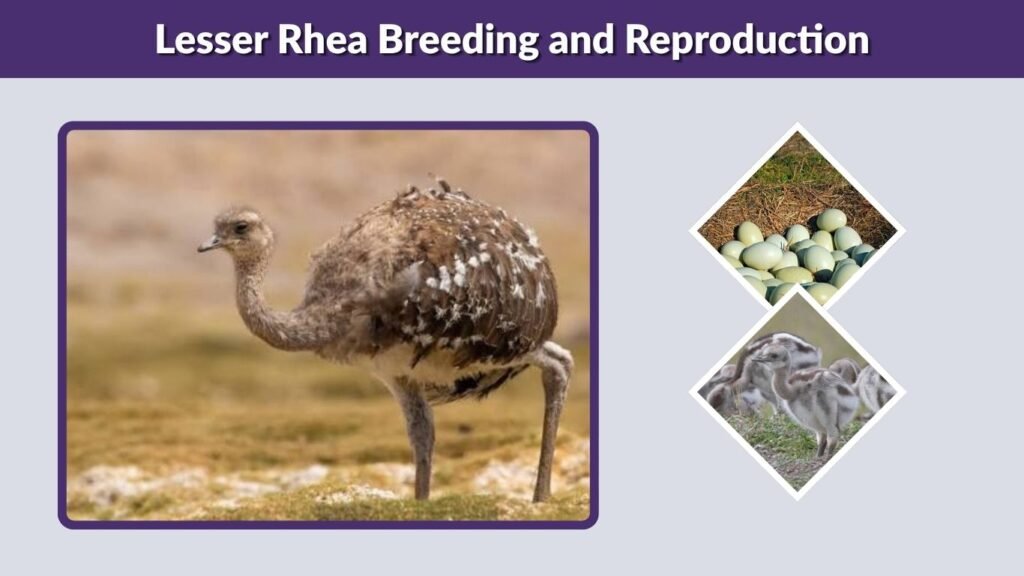
Lesser Rheas have an unusual reproductive system in which males take primary responsibility for incubating eggs and raising chicks. During the breeding season, males establish territories and perform courtship displays to attract females. Several females may lay eggs in one male’s nest, resulting in a relatively large clutch. This behavior distinguishes rheas from many other bird species.
Lesser Rhea Nest and Eggs
Male Lesser Rheas prepare shallow ground nests, often using vegetation to provide some cover.
Several females may contribute eggs to the same nest. A completed clutch commonly contains around 13–30 eggs, although numbers vary.
The eggs are initially olive-green or yellowish-green and gradually become paler. Incubation usually takes approximately five to six weeks, with some variation between populations.
Male Lesser Rhea Parental Care
Male Lesser Rheas incubate the eggs and protect the nest from potential threats. They may become particularly defensive during this period.
After hatching, the chicks can walk and follow their father within a short time. The male leads them to feeding areas and protects them from predators.
This extensive paternal care is one of the most interesting characteristics of Lesser Rhea reproduction.
Greater Rhea vs. Lesser Rhea: Key Differences
The Greater Rhea (Rhea americana) and Lesser Rhea (Rhea pennata) are closely related flightless birds native to South America. Although they have similar body shapes and feeding habits, they differ in size, appearance, and geographical distribution. The Greater Rhea is generally taller, while the Lesser Rhea has a more compact body and distinctive white feather markings.
| Feature | Lesser Rhea | Greater Rhea |
| Scientific name | Rhea pennata | Rhea americana |
| Height | Around 0.9–1.0 m | Around 1.3–1.7 m |
| Weight | 15–25 kg | Often 20–36 kg |
| Plumage | Brown with white flecks | Mostly grayish-brown |
| Habitat | Patagonian and Andean grasslands | Grasslands and open plains |
| Flight ability | Flightless | Flightless |
| Parental care | Male incubates eggs | Male incubates eggs |
Both species are strong runners and feed primarily on plant materials. However, their geographical ranges and physical characteristics help distinguish them in the wild.
Lesser Rhea Conservation Status and Threats
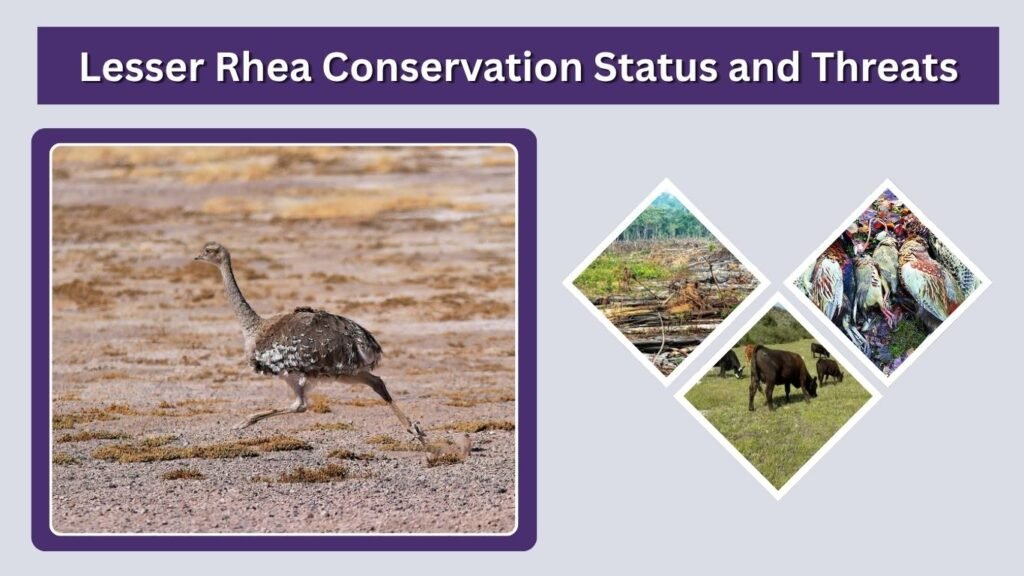
The Lesser Rhea is currently classified as Least Concern on the IUCN Red List, but its population trend is decreasing. Habitat modification, hunting, and other human activities threaten populations across parts of its natural range. Protecting open grasslands and reducing unnecessary disturbance are important for maintaining healthy wild populations.
Major Threats to Lesser Rheas
Several factors can affect Lesser Rhea populations, including:
- Habitat loss: Agricultural expansion changes natural grasslands.
- Hunting: Birds may be hunted for meat, feathers, or other products.
- Egg collection: Removing eggs reduces reproductive success.
- Human disturbance: Activities near breeding areas can disrupt nesting.
- Livestock pressure: Intensive grazing may alter available vegetation.
The severity of these threats differs between regions.
How to Protect Lesser Rheas
Protecting natural grasslands and maintaining suitable breeding habitats are important conservation priorities.
Monitoring wild populations, managing hunting activities, and reducing disturbance around active nesting areas can support their survival.
Public education and cooperation with local communities also help promote the conservation of these remarkable South American birds.
FAQs
1. Can Lesser Rheas Fly?
No, Lesser Rheas are flightless birds. Although they have relatively large wings, their bodies are not adapted for powered flight. Instead, they use their strong legs to run quickly and their wings to maintain balance during sudden turns.
2. How Fast Can a Lesser Rhea Run?
A Lesser Rhea can reach speeds of approximately 60 km/h (37 mph) over short distances. Its powerful legs and ability to change direction quickly help it escape predators across open grasslands and other relatively flat terrain.
3. Are Lesser Rheas Endangered?
The Lesser Rhea is currently listed as Least Concern on the IUCN Red List. However, its overall population is considered to be decreasing. Habitat loss, hunting, and other human activities remain important concerns in parts of its range.
4. What Is the Difference Between a Lesser Rhea and an Ostrich?
The Lesser Rhea is considerably smaller than an ostrich. Rheas also have three toes on each foot, while ostriches have two. Lesser Rheas are native to South America, whereas wild ostriches occur naturally in Africa.
5. How Long Do Lesser Rheas Live?
Lesser Rheas can live for many years, although their lifespan varies according to environmental conditions and individual circumstances. Some accounts suggest they may survive for around 20 years in the wild, with longer lifespans possible in captivity.