
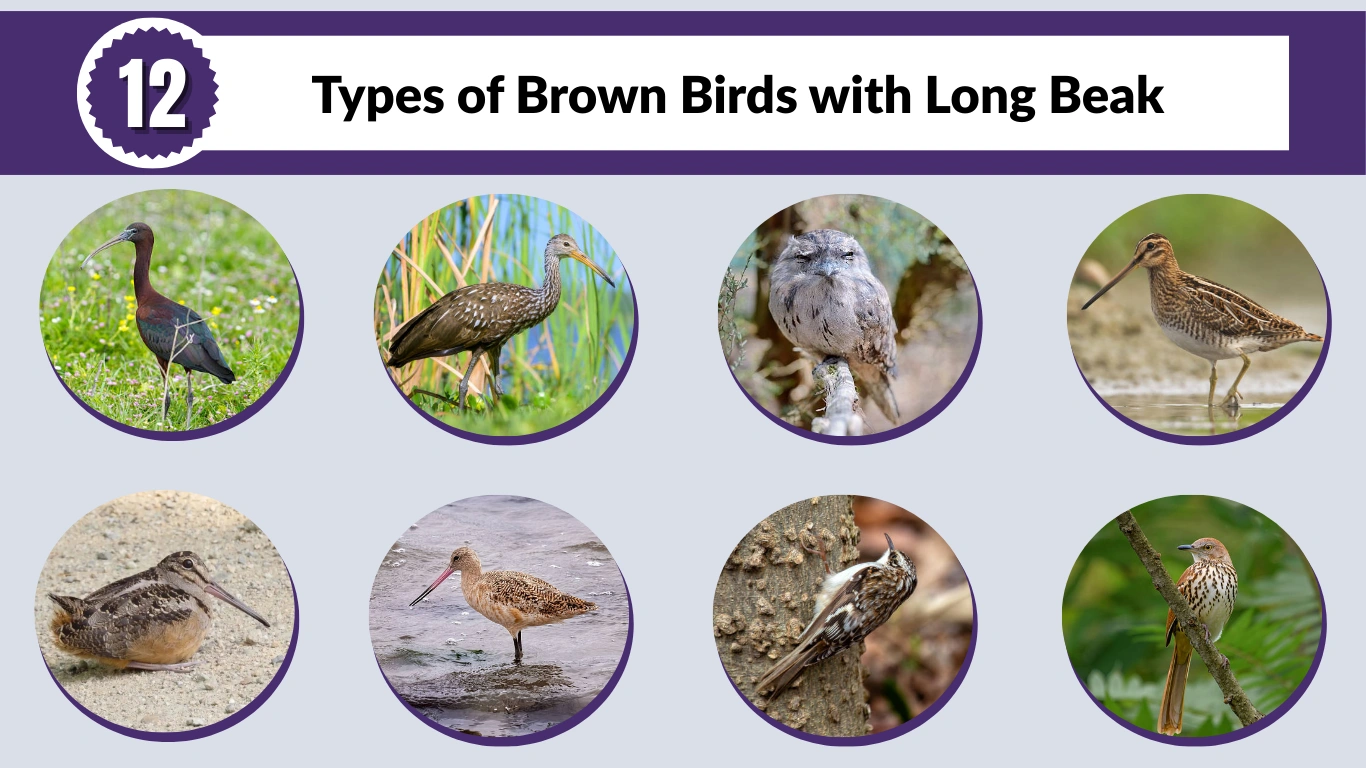
Brown birds with long beaks are some of the most fascinating and diverse birds found across forests, wetlands, grasslands, and coastal areas. Their extended bills are perfectly designed for probing soil, mud, tree bark, and shallow water in search of hidden prey. From shy woodland species like the Brown Creeper to tall wading birds such as curlews and ibises, these birds show how beak shape directly reflects lifestyle, feeding habits, and habitat preferences in the natural world.
1. Brown Thrasher
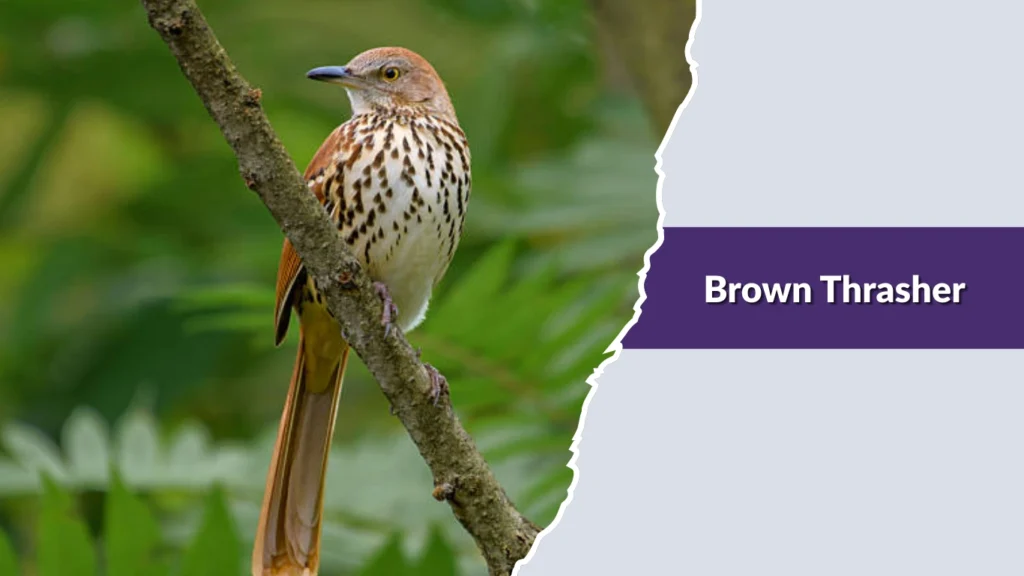
The Brown Thrasher is a medium-to-large songbird best known for its rich brown upperparts, heavily streaked white chest, and noticeably long, slightly curved beak. Found mainly across North America, this secretive bird prefers dense shrubs and woodland edges, where it forages on the ground for insects, seeds, and fruits while using its long bill to dig and probe.
Identification
- Long, slightly curved yellowish beak
- Reddish-brown back and wings
- White underparts with bold dark streaks
- Long tail, often held slightly cocked
- Bright yellow eyes
Habitat
Brown Thrashers are commonly found in thickets, hedgerows, forest edges, and overgrown fields. They prefer areas with dense low vegetation that provide both food sources and protection from predators.
Diet
Their diet is omnivorous, consisting mainly of insects, earthworms, snails, berries, nuts, and seeds. The long beak helps them flip leaves and probe soil while foraging on the ground.
Behavior
This bird is famous for its powerful voice and ability to mimic other birds. Brown Thrashers are often shy but can be aggressive when defending nests, sometimes chasing away much larger animals.
Size and Appearance
Adults measure about 9–12 inches long, with a wingspan of around 11–13 inches. Their sleek body, long tail, and strong beak give them a distinctive thrush-like silhouette.
Interesting Fact
The Brown Thrasher can sing over 1,000 different song variations, making it one of the most versatile vocalists in the bird world.
2. Long-billed Curlew
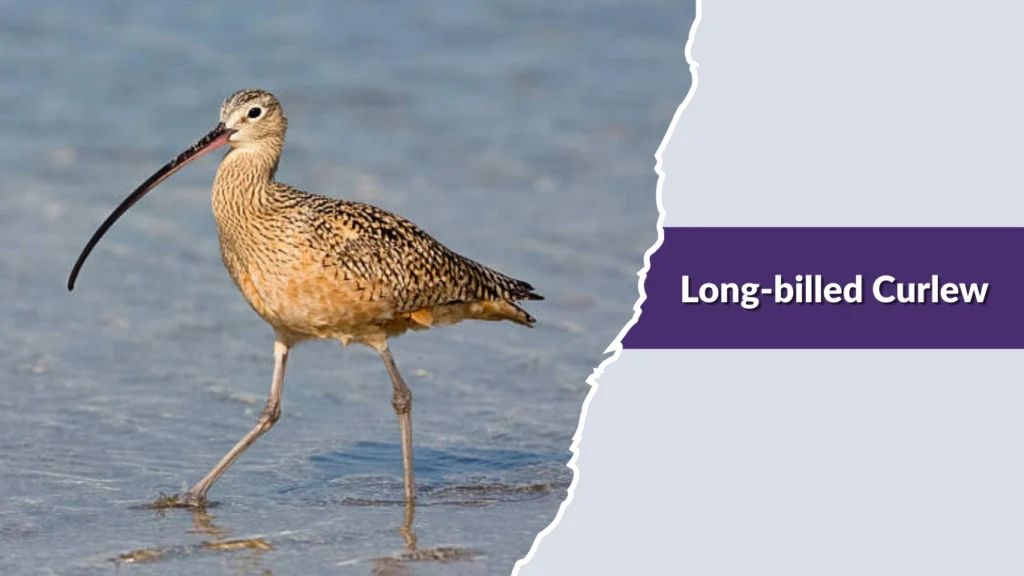
The Long-billed Curlew is a large brown shorebird famous for having the longest beak of any North American bird. Its warm cinnamon-brown body, long legs, and extremely long, down-curved bill make it easy to recognize. This species is commonly seen in open grasslands, coastal mudflats, and wetlands, where it uses its long beak to probe deep into the soil for food.
Identification
- Very long, slender, downward-curved beak
- Cinnamon-brown to buff body color
- Long bluish-gray legs
- Dark streaking on the crown and back
- Graceful, long-necked appearance
Habitat
Long-billed Curlews prefer open environments such as prairies, grasslands, coastal marshes, mudflats, and agricultural fields. During the breeding season, they are more common inland, while in winter they move toward coastal and southern wetland areas.
Diet
Their diet mainly includes insects, earthworms, crabs, small mollusks, and other invertebrates. The long beak allows them to reach prey buried deep in sand or soft soil that shorter-billed birds cannot access.
Behavior
These birds are cautious and alert, often giving loud, clear calls when disturbed. They usually forage by slowly walking and probing the ground. During the breeding season, they can become highly territorial and protective of their nesting areas.
Size and Appearance
Long-billed Curlews are among the largest shorebirds, measuring about 19–26 inches in length. Their extremely long bill, especially in females, is their most striking feature and a key adaptation for feeding.
Interesting Fact
The female Long-billed Curlew has a noticeably longer beak than the male, which helps reduce competition for food by allowing each to target prey at different soil depths.
3. Eurasian Curlew
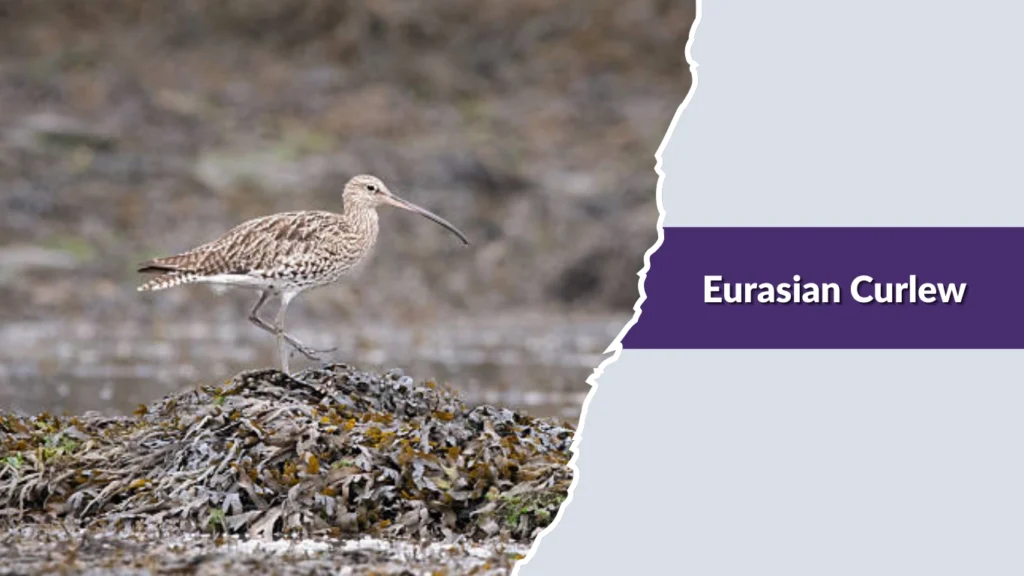
The Eurasian Curlew is a large, brown wading bird recognized for its very long, downward-curved beak and haunting, fluting calls. It has a mottled brown body, long legs, and a slightly hunched profile. This species is widely distributed across Europe and Asia, where it inhabits coastal wetlands, mudflats, moorlands, and open countryside.
Identification
- Extremely long, down-curved beak
- Mottled brown plumage with darker streaks
- Pale underside with fine markings
- Long grayish legs
- Slender neck and rounded head
Habitat
Eurasian Curlews are found in coastal mudflats, estuaries, salt marshes, wet meadows, and open moorlands. They breed mainly in open inland habitats and migrate to coastal areas during the non-breeding season.
Diet
Their diet consists of worms, crustaceans, insects, small mollusks, and occasionally small fish. The long beak is used to probe deep into mud and sand to extract hidden prey.
Behavior
These birds are often seen slowly walking along shorelines, rhythmically probing the ground. They are social outside the breeding season and may gather in large flocks, producing their distinctive, echoing calls.
Size and Appearance
Eurasian Curlews typically measure 20–24 inches long, making them the largest wading birds in much of their range. Their long bill and earthy brown tones provide excellent camouflage in muddy environments.
Interesting Fact
The Eurasian Curlew’s call is so distinctive that it is often used in nature documentaries to represent wild, open landscapes.
4. Whimbrel
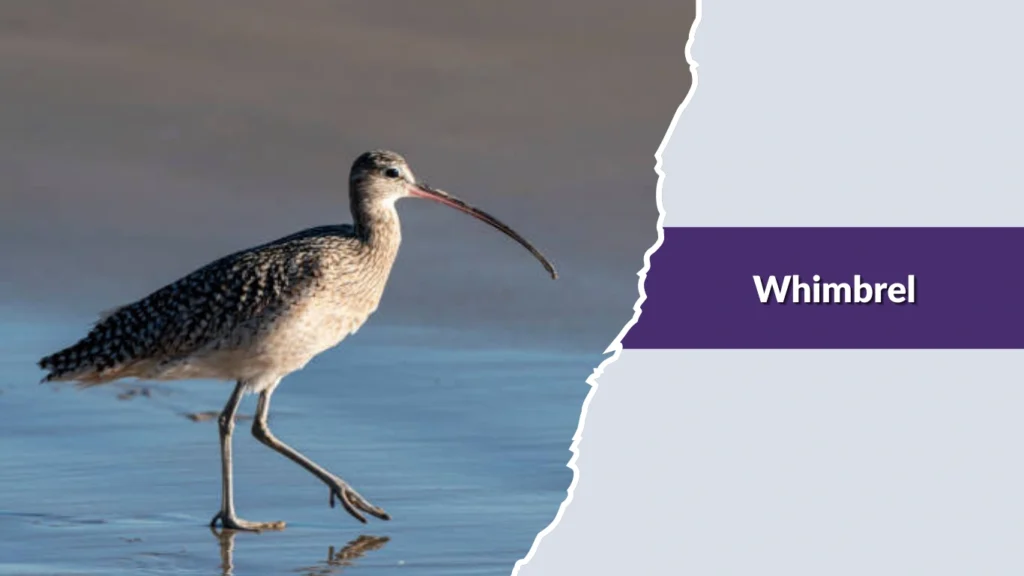
The Whimbrel is a medium-to-large brown shorebird with a long, gently curved beak and a distinctive striped head pattern. Compared to curlews, its bill is shorter but still clearly elongated. Whimbrels are strong migrators, traveling vast distances between breeding grounds in the Arctic and wintering areas along tropical and temperate coastlines.
Identification
- Long, gently down-curved beak (shorter than curlews)
- Brown mottled body with fine streaking
- Bold dark-and-light stripes on the head
- Long bluish-gray legs
- Slim, streamlined shape
Habitat
Whimbrels inhabit tundra regions during breeding season and move to coastal mudflats, sandy beaches, estuaries, and wetlands during migration and winter. They are commonly seen along shorelines probing the wet sand.
Diet
They mainly feed on crabs, insects, worms, snails, and small crustaceans. Their long beak is ideal for pulling prey from burrows and crevices in mud and sand.
Behavior
Whimbrels are alert, fast-moving foragers that often feed in small groups. They produce a rapid, bubbling call, especially when flying in flocks or when disturbed.
Size and Appearance
Adults average about 15–18 inches in length. Their striped crown and eye-lines help distinguish them from other long-billed brown shorebirds.
Interesting Fact
Whimbrels are capable of nonstop ocean flights spanning thousands of miles during migration.
5. Marbled Godwit
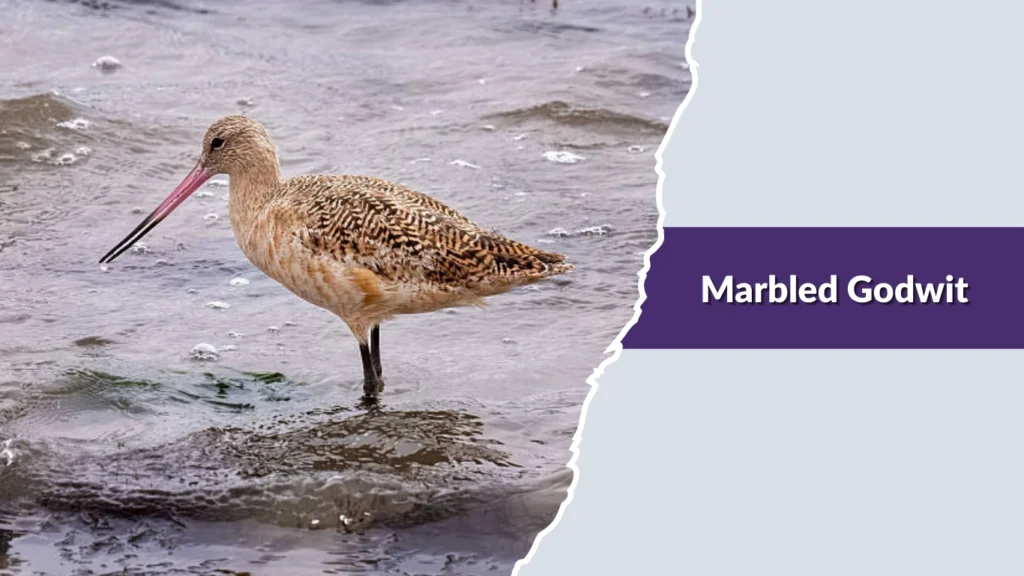
The Marbled Godwit is a tall, elegant shorebird with a long, slightly upturned beak and warm brown, marbled plumage. It stands out for its long legs and gentle two-toned bill, which is pink at the base and dark at the tip. This bird is commonly seen wading through shallow coastal waters and mudflats.
Identification
- Long, slightly upturned beak with pink base
- Warm brown, marbled body pattern
- Long bluish-gray legs
- Pale underparts with fine barring
- Large, graceful shorebird shape
Habitat
Marbled Godwits live in prairies and wetlands during the breeding season and move to coastal mudflats, estuaries, beaches, and shallow lagoons in winter. They prefer open areas where they can wade and probe easily.
Diet
Their diet includes marine worms, small crabs, insects, mollusks, and aquatic invertebrates. They sweep and probe their long beak through soft mud and shallow water to locate prey.
Behavior
These birds often feed by slowly wading and probing, sometimes using a side-to-side motion. They are social outside the breeding season and may gather in loose flocks along shorelines.
Size and Appearance
Marbled Godwits measure around 16–20 inches long, with long legs and a proportionally long bill that gives them a tall, elegant profile.
Interesting Fact
Marbled Godwits have one of the longest beaks among North American shorebirds, perfectly adapted for deep probing in mud.
6. Willet
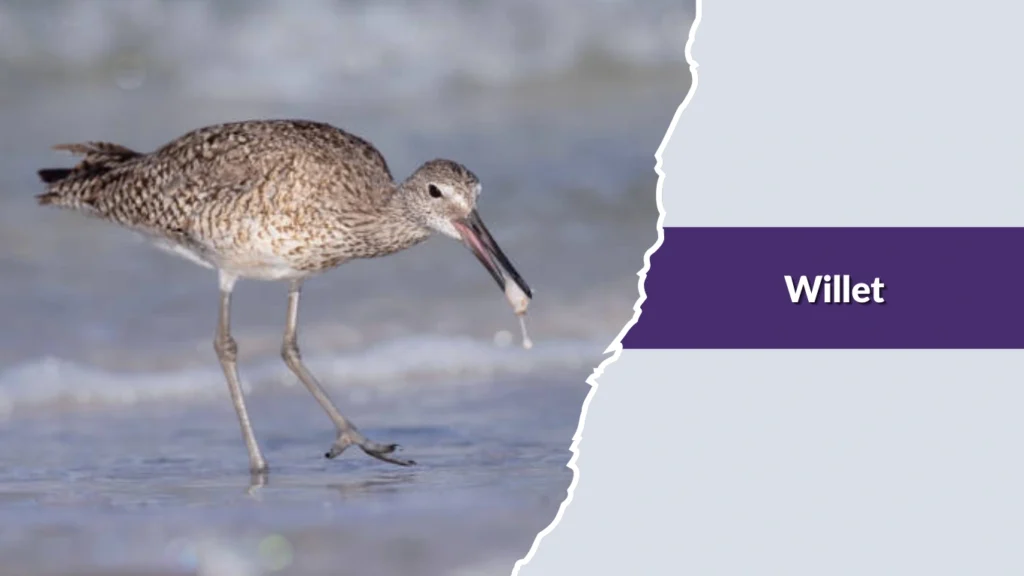
The Willet is a sturdy brown-and-gray shorebird with a long, straight beak and long legs. In breeding season, it appears more heavily streaked and mottled, blending well into muddy flats and marshes. When in flight, its bold black-and-white wing pattern becomes highly visible, making it easier to identify.
Identification
- Long, straight, thick-based beak
- Brownish-gray mottled body
- Long bluish-gray legs
- Strong black-and-white wing pattern (visible in flight)
- Medium-to-large shorebird size
Habitat
Willets are found in coastal marshes, beaches, mudflats, and inland wetlands. They breed in grasslands and marshes and migrate to coastal regions during the non-breeding season.
Diet
They feed on insects, worms, small crabs, mollusks, and aquatic invertebrates. The long beak is used to probe mud and shallow water for hidden prey.
Behavior
Willets are vocal and alert birds, often giving loud, piercing calls when disturbed. They usually forage by walking steadily and probing the surface or shallow mud.
Size and Appearance
Adults are about 13–17 inches long. Their solid build, long beak, and striking wing pattern help distinguish them from similar shorebirds.
Interesting Fact
The Willet’s bold wing markings are often the quickest way to identify it when it takes flight.
7. American Woodcock
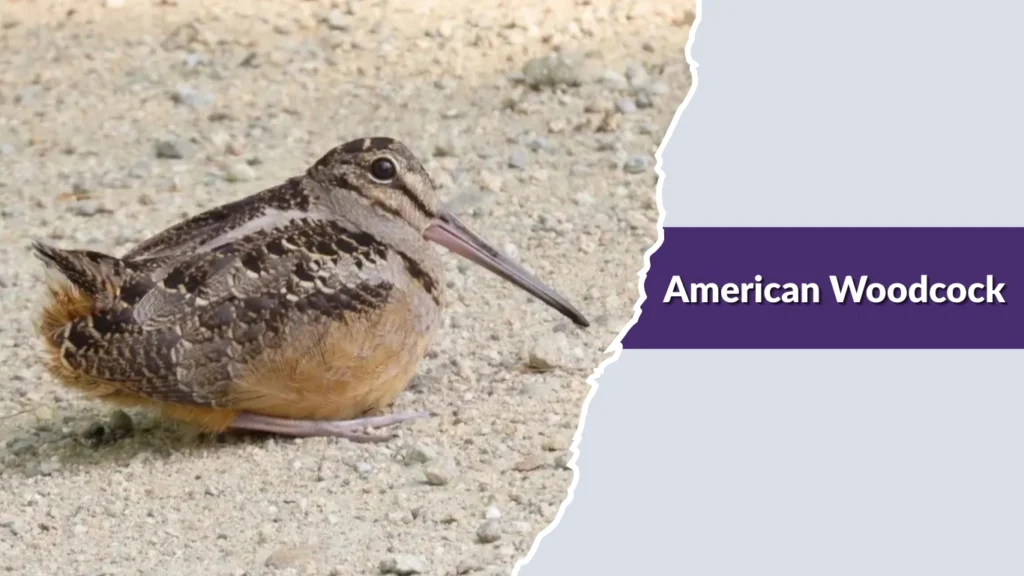
The American Woodcock is a short-legged, plump, brown bird with an exceptionally long, straight beak and large eyes set high on its head. Its beautifully mottled brown body provides perfect camouflage among fallen leaves. Although it is a shorebird by family, it lives mainly in forests and moist woodlands rather than open coasts.
Identification
- Very long, straight beak
- Rounded, stocky body shape
- Mottled brown and tan plumage
- Very large eyes set far back on the head
- Short neck and short tail
Habitat
American Woodcocks prefer moist forests, young woodlands, thickets, and areas with soft soil. They are often found near streams, swamps, and damp fields where earthworms are abundant.
Diet
Their diet mainly consists of earthworms, along with insects, larvae, and small invertebrates. The long beak is highly sensitive, allowing them to detect prey underground.
Behavior
They are mostly active at dawn and dusk. American Woodcocks walk slowly while probing the soil and are famous for their unique sky-dance courtship display.
Size and Appearance
These birds are about 10–12 inches long. Their compact body, long bill, and large eyes give them a very distinctive look compared to other brown long-billed birds.
Interesting Fact
The American Woodcock can open the tip of its beak while it is closed, helping it grip worms underground.
8. Common Snipe
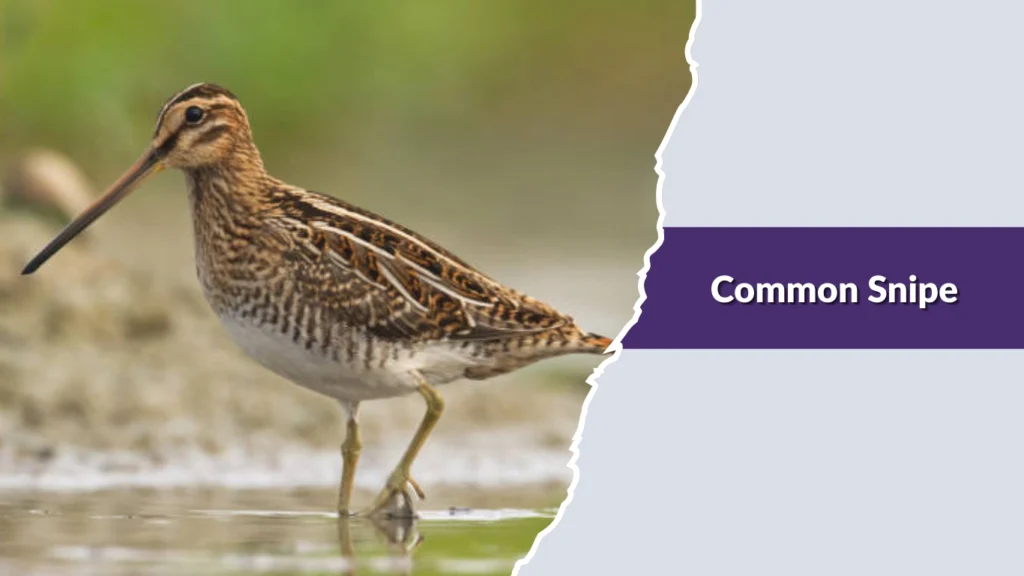
The Common Snipe is a small-to-medium brown wading bird with a very long, straight beak and heavily patterned plumage. Its streaked brown, black, and buff colors provide excellent camouflage in marshy grasslands. When flushed, it often zigzags through the air, making it challenging to track.
Identification
- Very long, straight, slender beak
- Brown body with bold buff and black streaks
- Distinct pale stripes along the head and back
- Short legs and compact body
- Pointed wings
Habitat
Common Snipes inhabit marshes, wet meadows, bogs, flooded fields, and muddy shorelines. They prefer soft, wet ground where they can easily probe for food.
Diet
Their diet consists mainly of earthworms, insects, larvae, small crustaceans, and mollusks. The long beak allows them to reach prey buried deep in mud.
Behavior
They are secretive birds that rely on camouflage. When disturbed, they burst into a fast, twisting flight. They forage by repeatedly probing the mud with rhythmic movements.
Size and Appearance
Common Snipes measure about 10–12 inches in length. Their long bill and cryptic plumage make them well adapted to wetland environments.
Interesting Fact
The vibrating “drumming” sound heard during their courtship flights is produced by air rushing over their tail feathers.
9. Brown Creeper
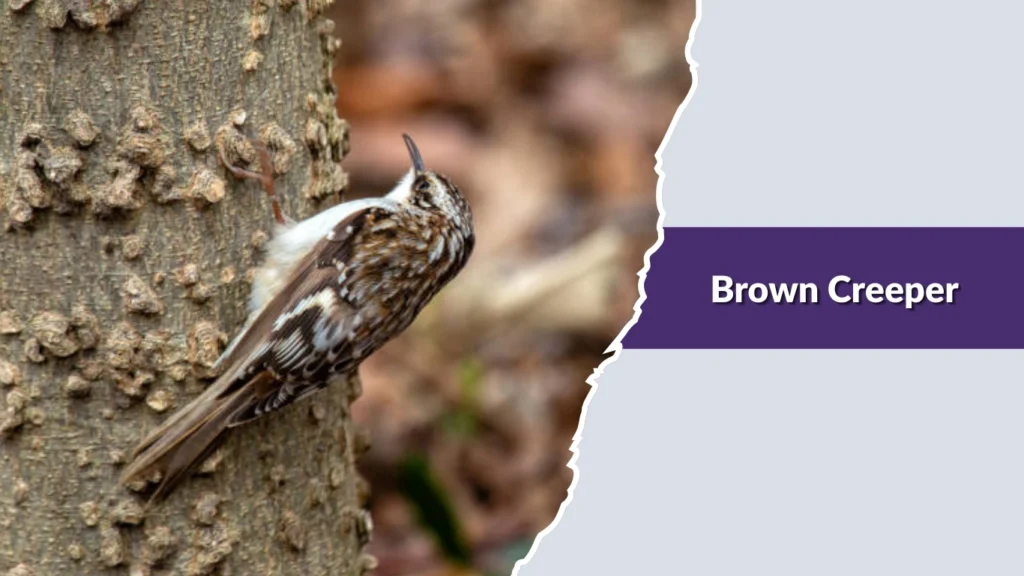
The Brown Creeper is a small, slim songbird with a thin, slightly curved long beak and beautifully mottled brown-and-white plumage that blends perfectly with tree bark. Unlike shorebirds, it lives almost entirely on tree trunks, where it creeps upward in a spiral while searching for hidden insects.
Identification
- Thin, slightly down-curved long beak
- Mottled brown, white, and black streaked back
- White underparts
- Stiff tail feathers used for support
- Very small, slender body
Habitat
Brown Creepers are found in mature forests, woodlands, parks, and wooded suburbs. They prefer areas with large trees, where loose bark provides shelter for insects.
Diet
Their diet consists mainly of insects, spiders, larvae, and other small invertebrates. The long beak helps them extract prey from deep bark crevices.
Behavior
They are famous for their climbing style—starting near the base of a tree and spiraling upward. After reaching the top, they fly down to the base of another tree and repeat the process.
Size and Appearance
Brown Creepers are about 5–6 inches long. Their tiny size, long curved beak, and bark-like coloring make them easy to overlook.
Interesting Fact
Brown Creepers almost always move upward on tree trunks—rarely downward—making their foraging style very distinctive.
10. Tawny Frogmouth
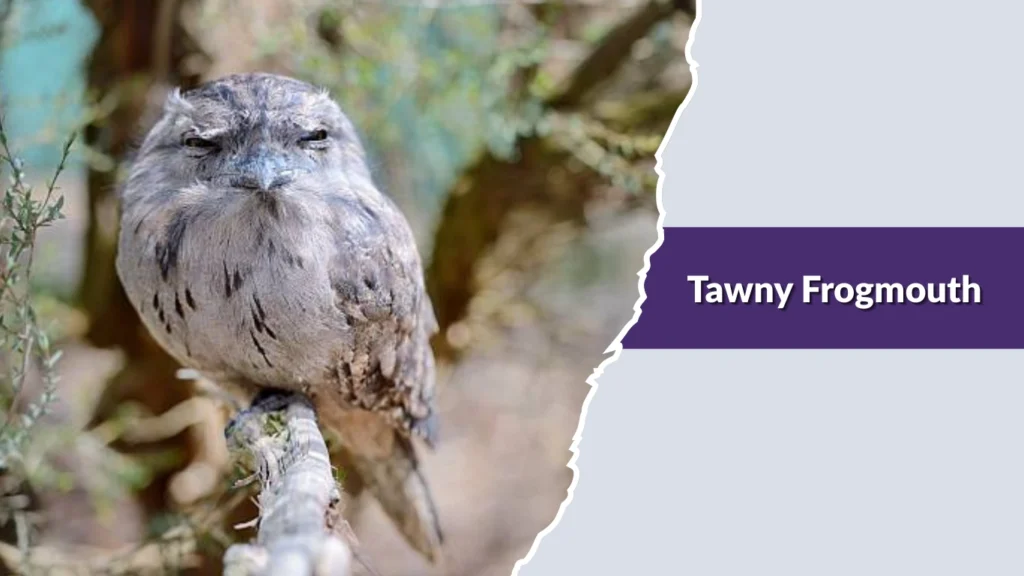
The Tawny Frogmouth is a nocturnal, brownish bird with a very wide mouth and a long, slightly hooked beak. Although often mistaken for an owl, it is more closely related to nightjars. Its bark-like plumage allows it to blend perfectly with tree branches, where it remains motionless during the day.
Identification
- Long, slightly hooked beak with wide gape
- Large flattened head
- Mottled brown, gray, and buff plumage
- Heavy body and short neck
- Large forward-facing eyes
Habitat
Tawny Frogmouths live in woodlands, forests, parks, and even suburban gardens across Australia. They prefer trees and open forests where they can perch quietly.
Diet
They mainly feed on insects, spiders, small rodents, and occasionally small birds. They hunt by sitting still and swooping down on prey rather than chasing it in flight.
Behavior
These birds are mostly active at night. During the day, they remain motionless on branches, relying on camouflage to avoid detection.
Size and Appearance
Adults are about 13–21 inches long. Their thick body, large head, and long beak give them a unique, almost owl-like appearance.
Interesting Fact
When threatened, Tawny Frogmouths stretch their necks and narrow their eyes to look like a broken tree branch.
11. Limpkin
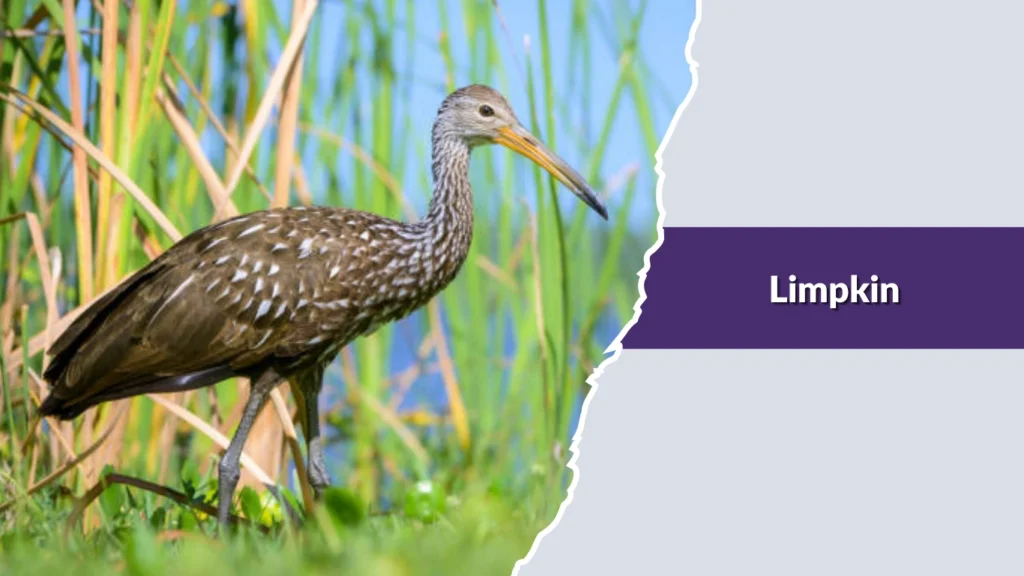
The Limpkin is a tall, brown wading bird with a long, slightly curved beak specially adapted for extracting snails from their shells. Its streaked brown body and loud, wailing calls make it quite distinctive. Limpkins are most often seen near freshwater wetlands, where apple snails are abundant.
Identification
- Long, slender, slightly down-curved beak
- Dark brown body with white streaks
- Long legs and long neck
- Large, somewhat rounded wings
- Heron-like overall shape
Habitat
Limpkins live around freshwater marshes, swamps, lakes, slow rivers, and wet fields. They stay close to shallow water where their main food source is plentiful.
Diet
Their diet consists mostly of apple snails, along with mussels, insects, and small aquatic creatures. The long beak is perfectly shaped to pull snails from their shells.
Behavior
Limpkins often walk slowly along shorelines while searching for snails. They are famous for their loud, haunting screams, especially at night and during breeding season.
Size and Appearance
Adults are about 24–28 inches long. Their tall body, long beak, and streaked brown feathers give them a very distinctive wetland silhouette.
Interesting Fact
The Limpkin is one of the only birds in the world highly specialized to feed on apple snails.
12. Glossy Ibis
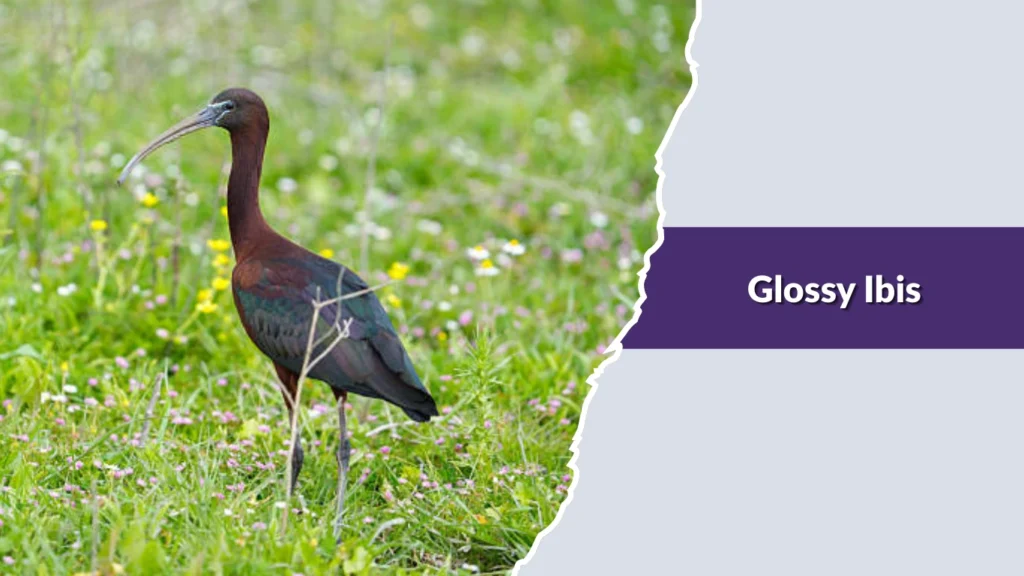
The Glossy Ibis is a slim, elegant wading bird with rich brown plumage that often shows green and purple sheen in sunlight. Its long, narrow, down-curved beak is perfectly designed for probing soft mud and shallow water. This species is widely distributed across wetlands in many parts of the world.
Identification
- Long, thin, down-curved beak
- Deep brown body with glossy green-purple shine
- Long dark legs
- Slender neck and body
- Bare dark facial skin around the eye
Habitat
Glossy Ibises are found in freshwater marshes, swamps, flooded fields, lagoons, and coastal wetlands. They prefer shallow water areas where they can easily walk and probe for food.
Diet
They mainly eat insects, small crustaceans, worms, snails, and tiny fish. Their long beak helps them feel and capture prey hidden in mud and vegetation.
Behavior
Glossy Ibises often feed in groups, slowly sweeping their beaks through water or mud. They are social birds and frequently nest and roost in colonies with other wading species.
Size and Appearance
Adults are about 22–26 inches long. Their slim build, long curved beak, and glossy brown feathers give them a very graceful appearance.
Interesting Fact
In bright sunlight, the Glossy Ibis’s feathers can appear metallic green, bronze, or purple, making it one of the most visually striking brown birds.
FAQs
What are common brown birds with long beaks?
Brown birds with long beaks are often found among shorebirds, waders, and probing forest birds. Well-known examples include curlews, godwits, snipes, woodcocks, Brown Thrashers, and ibises. Their long beaks help them search for insects, worms, crustaceans, and other hidden food sources.
Why do many brown birds have long beaks?
Long beaks allow birds to reach food buried deep in soil, sand, bark, or mud. This adaptation helps them access worms, insects, snails, and small aquatic animals that short-beaked birds cannot reach, reducing competition and making feeding more efficient in wetlands, forests, and grasslands.
Are brown long-beaked birds mostly found near water?
Many of them are, especially curlews, godwits, ibises, snipes, and willets, which depend on wetlands and shorelines. However, some brown long-beaked birds like the Brown Thrasher and Brown Creeper live mainly in forests, thickets, and woodland edges rather than near open water.
Do brown birds with long beaks migrate?
Yes, many species are strong migrators. Birds like Whimbrels, Eurasian Curlews, and Glossy Ibises often travel thousands of miles between breeding and wintering grounds. Migration helps them follow seasonal food supplies and suitable nesting conditions across different regions of the world.
How can I identify a brown bird with a long beak?
Focus on beak shape and length, body size, habitat, and behavior. Shorebirds usually have longer legs and probe mud or water, while woodland species probe bark or leaf litter. Head patterns, calls, and flight style also help narrow down the exact species.
