
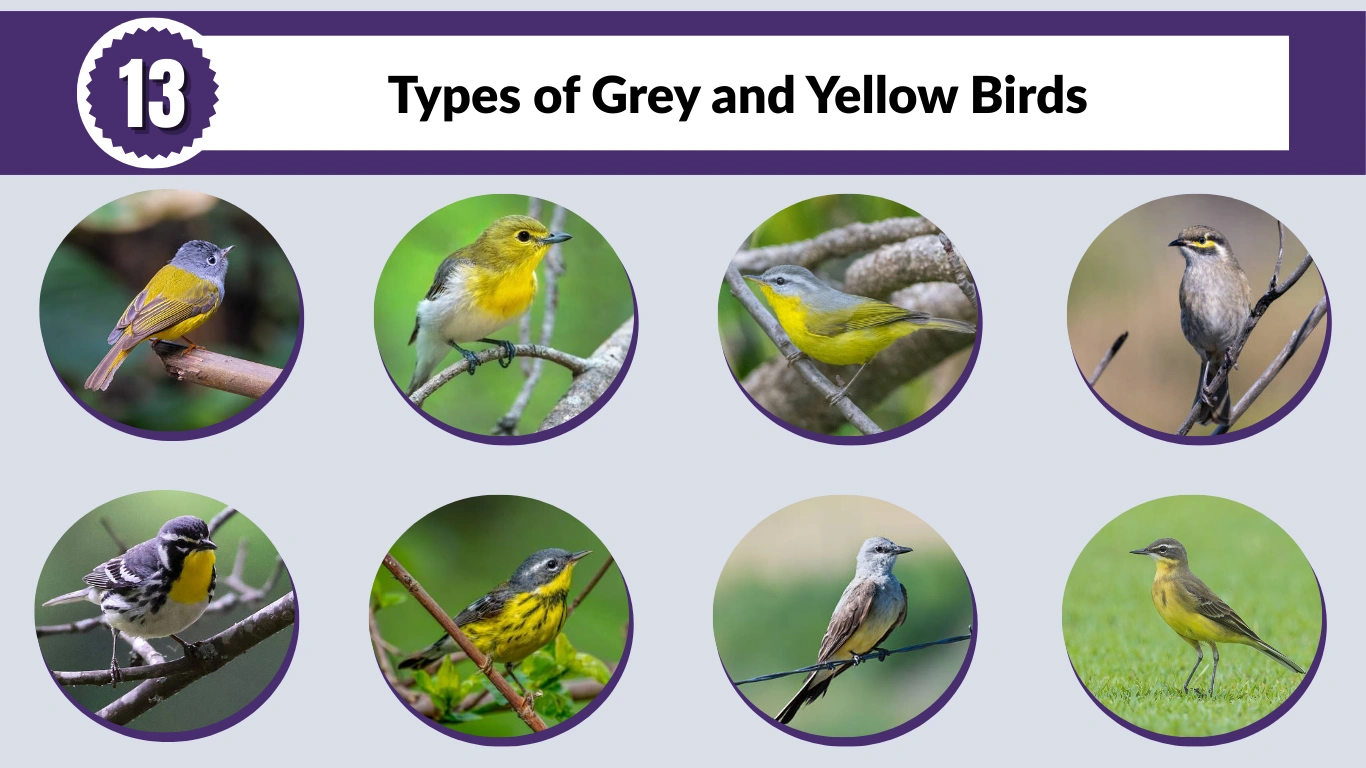
Grey and yellow birds are among the most eye-catching and widely recognized birds found across forests, wetlands, gardens, and open landscapes around the world. Their soft grey tones combined with bright yellow patches make them easy to notice while also providing useful camouflage in natural habitats. These birds belong to many different families, including warblers, wagtails, flycatchers, vireos, and honeyeaters. Some are migratory travelers covering long distances, while others remain in the same regions year-round.
1. Grey Wagtail (Motacilla cinerea)
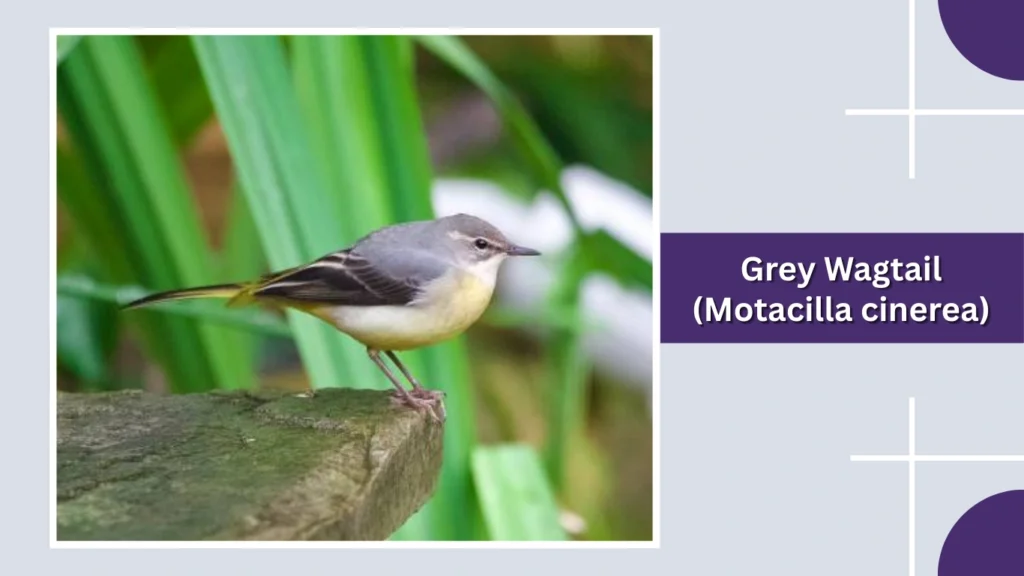
The Grey Wagtail is a slender, elegant bird known for its long tail, soft grey upperparts, and bright yellow underside. It is often seen near flowing water such as streams, rivers, and waterfalls, where it actively walks and wags its tail while searching for insects.
Identification
- Slim body with ash-grey back and wings
- Bright yellow belly and vent area
- Long black-and-white tail, constantly wagging
- Black throat in breeding males; paler throat in females
- Thin, pointed dark bill adapted for catching insects
Habitat
Grey Wagtails prefer freshwater environments, especially fast-flowing streams, riversides, rocky creeks, and mountain waterfalls. They are also found near lakes, canals, and wet urban areas where insects are abundant. During colder months, they may move to lower elevations and coastal regions.
Diet
Their diet mainly consists of small insects and aquatic invertebrates. They commonly eat flies, mosquitoes, mayflies, beetles, and larvae picked from rocks or caught mid-air. Occasionally, they also consume tiny crustaceans and spiders found near water edges.
Behavior
Grey Wagtails are highly active birds, constantly walking, bobbing, and flicking their long tails. They usually forage alone or in pairs, running quickly along riverbanks. Their flight is low and undulating, often accompanied by sharp, high-pitched calls.
Distribution
This species is widely distributed across Europe, Asia, and parts of North Africa. In South Asia, including Bangladesh, it is mostly seen as a winter visitor. They migrate seasonally, moving to warmer regions when breeding areas become too cold.
2. Eastern Yellow Wagtail (Motacilla tschutschensis)
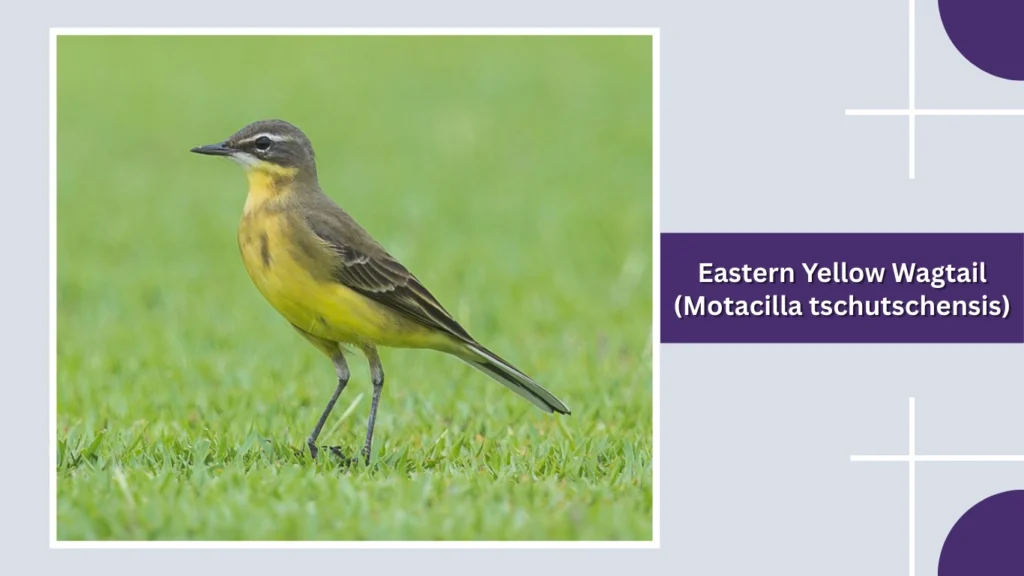
The Eastern Yellow Wagtail is a small, graceful bird with soft grey to olive upperparts and bright yellow underparts. It is well known for its long tail, constant tail-wagging behavior, and preference for open wetlands, grasslands, and agricultural fields near water.
Identification
- Slender body with greyish or olive upperparts
- Bright yellow face, throat, and belly
- Long, narrow tail with white outer feathers
- Thin, pointed dark bill
- Pale eyebrow stripe, more noticeable in some subspecies
Habitat
Eastern Yellow Wagtails are commonly found in marshes, wet grasslands, riverbanks, rice fields, and open farmland. They often forage on the ground near water sources and are frequently seen following livestock or walking through shallow wetlands.
Diet
They mainly feed on insects and small invertebrates such as flies, beetles, ants, caterpillars, and spiders. The bird picks prey from the ground, vegetation, or catches insects in short flights.
Behavior
These wagtails are very active and social, often seen walking quickly while pumping their tails up and down. They may appear alone, in pairs, or in small flocks, especially during migration and wintering seasons.
Distribution
The Eastern Yellow Wagtail breeds across northern Asia and migrates south during winter. It is a regular winter visitor in South Asia, including Bangladesh, where it can be seen from open countryside to wetlands and agricultural landscapes.
3. Western Kingbird (Tyrannus verticalis)
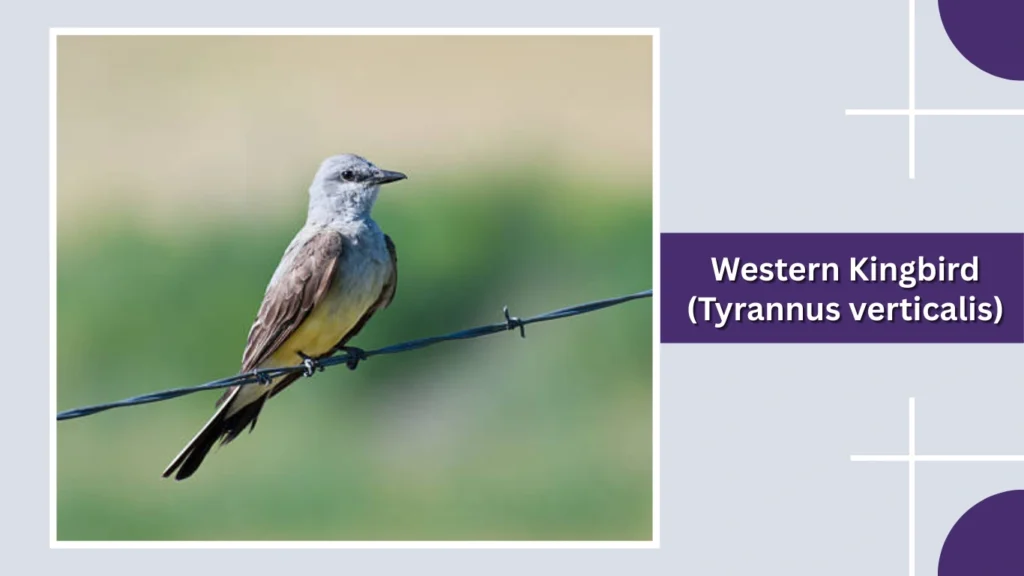
The Western Kingbird is a bold, medium-sized songbird recognized for its pale grey body, striking yellow belly, and energetic hunting style. It is often seen perched on wires, fences, or tree tops, where it watches for flying insects before darting out to catch them.
Identification
- Pale grey head, chest, and upperparts
- Bright lemon-yellow belly and undertail
- Long, black tail with white outer edges
- Straight, pointed dark bill
- Slim but sturdy body with upright posture
Habitat
Western Kingbirds favor open habitats such as grasslands, farmland, desert edges, open woodlands, and roadsides. They are especially common in areas with scattered trees, shrubs, and utility wires that provide good lookout points for hunting insects.
Diet
Their diet mainly consists of flying insects, including bees, wasps, grasshoppers, beetles, butterflies, and flies. They catch prey in mid-air using quick, agile flights. Occasionally, they also eat berries and small fruits, especially when insects are less available.
Behavior
This species is highly active and territorial. Western Kingbirds often make short aerial sallies from exposed perches and are known to aggressively chase away much larger birds that enter their territory. Their calls are sharp, chattering, and easily noticeable.
Distribution
Western Kingbirds breed across western and central North America and migrate south for winter. During the non-breeding season, they are found mainly in Mexico, Central America, and parts of northern South America.
4. Magnolia Warbler (Setophaga magnolia)
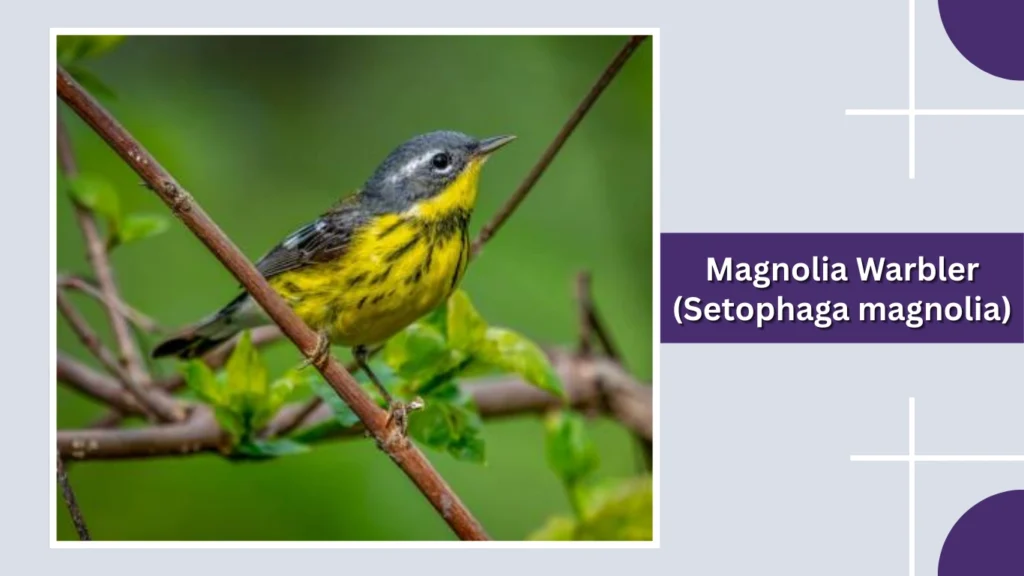
The Magnolia Warbler is a small, colorful songbird with soft grey upperparts and bright yellow underparts highlighted by bold black streaks. It is a lively bird that moves quickly through trees and shrubs, constantly searching leaves and branches for insects.
Identification
- Grey back with darker wings and tail
- Bright yellow throat and belly with bold black streaks
- Distinct white wing bars
- Black mask and necklace pattern in breeding males
- Thin, pointed bill suited for insect feeding
Habitat
Magnolia Warblers breed in dense coniferous and mixed forests, especially young spruce and fir stands. During migration and winter, they are commonly seen in woodland edges, gardens, shrubs, and tropical forests.
Diet
They feed mainly on insects and spiders, including caterpillars, beetles, flies, and moths. Occasionally, they also eat small berries and fruits, particularly outside the breeding season.
Behavior
Magnolia Warblers are active, restless birds that flit through foliage and frequently flick their tails. They often forage at low to mid-levels of trees and are commonly found during migration in parks and backyard gardens.
Distribution
They breed in Canada and the northern United States and migrate long distances to winter in Central America and the Caribbean. During migration, they can be spotted across much of North America.
5. Yellow-rumped Warbler (Setophaga coronata)
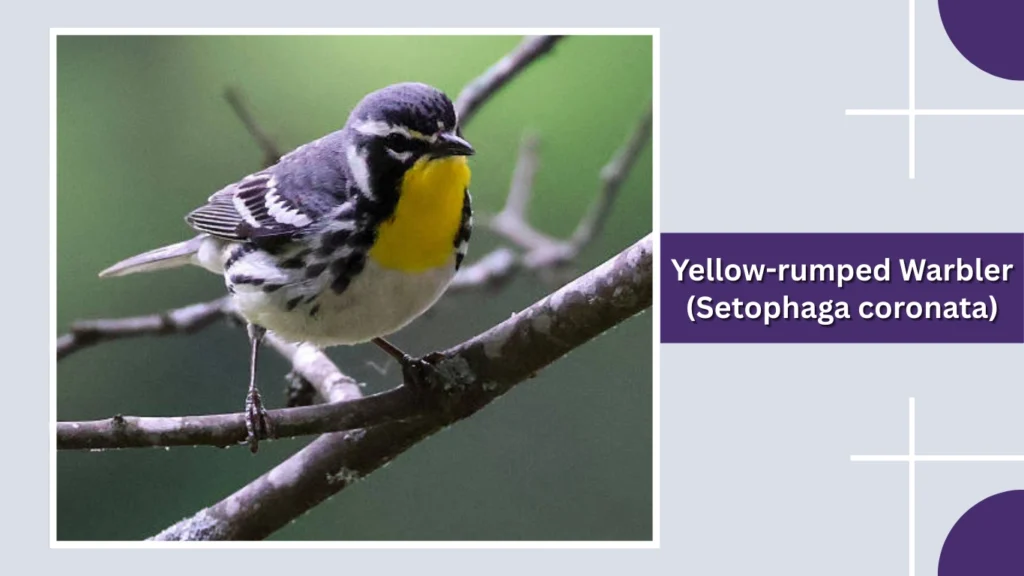
The Yellow-rumped Warbler is a small, adaptable songbird easily recognized by its grey body, bright yellow patches, and energetic movements. It is one of the most widespread warblers and is often seen in large numbers during migration and winter.
Identification
- Grey upperparts with black streaking
- Bright yellow rump, throat, and side patches
- White wing bars on dark wings
- Thin, pointed bill
- Compact body with active posture
Habitat
Yellow-rumped Warblers inhabit a wide range of environments, including coniferous and mixed forests, open woodlands, parks, coastal scrub, and even urban gardens. In winter, they are frequently found in berry-rich shrubs and open habitats.
Diet
They mainly eat insects such as gnats, beetles, caterpillars, and flies during warmer months. In winter, they also rely heavily on berries, wax myrtle, and fruits, making them one of the few warblers able to survive colder seasons.
Behavior
This species is highly active, often foraging in flocks. It hops through branches, catches insects in mid-air, and frequently flicks its tail. Their sharp “check” call is commonly heard in forests and open woodlands.
Distribution
They breed across Canada and much of the northern United States. In winter, they migrate south throughout the southern U.S., Central America, and the Caribbean.
6. Nashville Warbler (Leiothlypis ruficapilla)
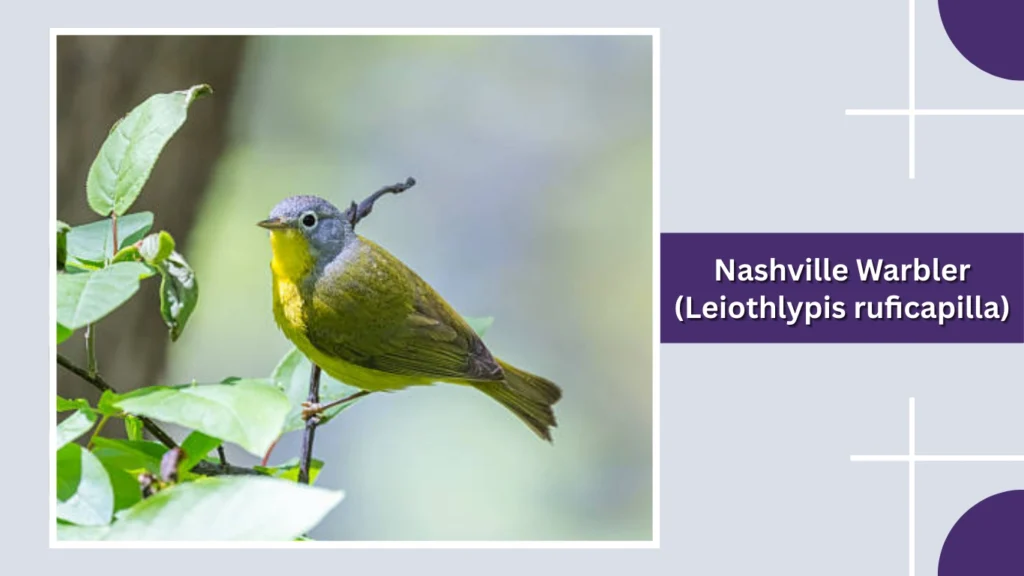
The Nashville Warbler is a small, lively bird with soft grey upperparts and a bright yellow underside. It is known for its gentle expression, quick movements, and preference for low vegetation where it searches for insects.
Identification
- Grey head and upperparts
- Bright yellow throat and belly
- Thin white eye-ring
- Olive-green back
- Slim, pointed bill
Habitat
Nashville Warblers breed in mixed and coniferous forests, especially young stands and forest edges. During migration and winter, they are often found in shrubby areas, gardens, mangroves, and open woodlands.
Diet
Their diet mainly includes insects and spiders such as caterpillars, beetles, flies, and ants. They may also consume small berries and nectar when insects are scarce.
Behavior
This species is active but less conspicuous than some other warblers. It moves quickly through shrubs and low branches, often flicking its tail and giving soft, high-pitched calls.
Distribution
They breed in Canada and the northern United States and migrate south to winter in Mexico and Central America, with some reaching the Caribbean.
7. Grey-hooded Warbler (Setophaga pensylvanica)
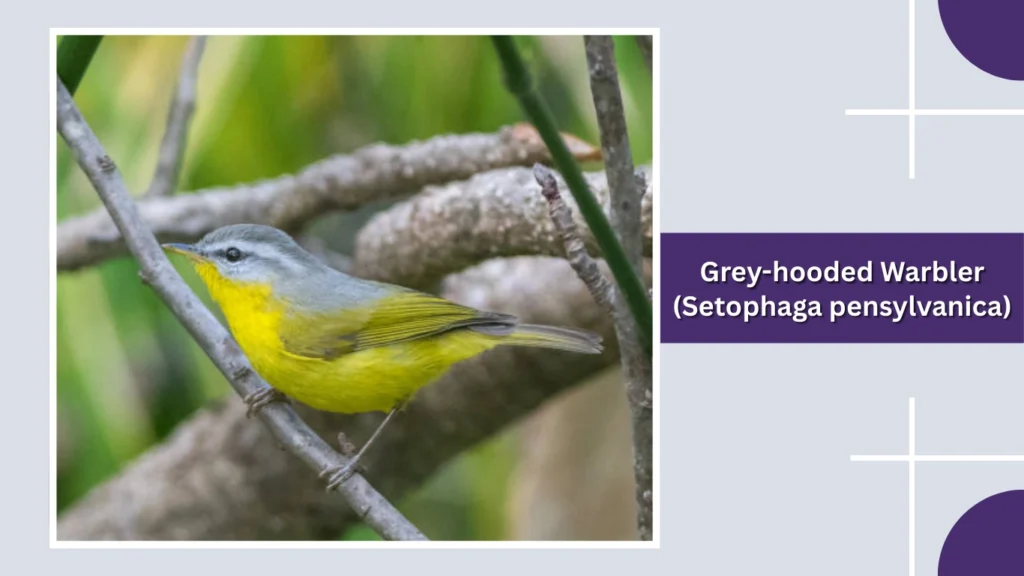
The Grey-hooded Warbler is a striking small songbird known for its soft grey head, bright yellow underparts, and sharp black facial markings. It is an energetic forest bird that moves quickly through foliage while hunting insects.
Identification
- Soft grey hood and upper head
- Bright yellow throat and belly
- Bold black mask and throat pattern
- Olive back with darker wings
- Thin, pointed bill
Habitat
Grey-hooded Warblers prefer dense deciduous forests, woodland edges, and shrubby undergrowth, especially in moist habitats. They are often found in thickets, young forests, and regenerating woodlands.
Diet
They mainly feed on insects and spiders, including caterpillars, beetles, flies, and moths. During migration and winter, they may also eat small fruits and berries.
Behavior
These warblers are active, alert birds that flit through shrubs and mid-level branches. They frequently flick their wings and tail while foraging and are known for their sharp, distinctive calls.
Distribution
They breed in eastern North America and migrate south to winter in Central America and the Caribbean.
8. Yellow-throated Vireo (Vireo flavifrons)
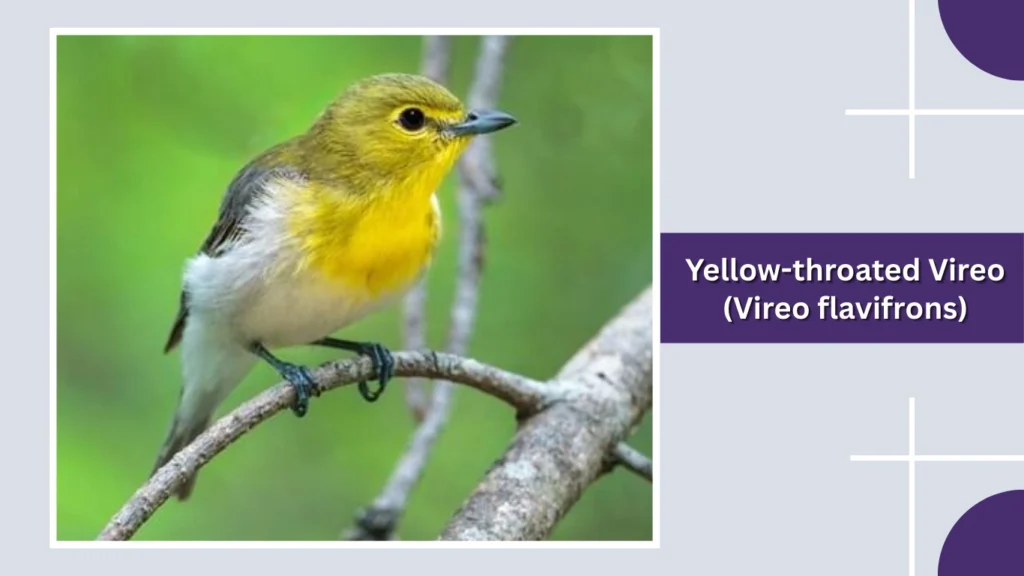
The Yellow-throated Vireo is a stocky, slow-moving songbird with a soft grey head, bright yellow throat and chest, and olive upperparts. It is often seen high in tree canopies, calmly searching leaves and branches for insects.
Identification
- Thick, sturdy body with a large head
- Bright yellow throat and upper chest
- Grey head with bold white spectacles
- Olive-green back and wings
- Strong, slightly hooked bill
Habitat
Yellow-throated Vireos live mainly in mature deciduous and mixed forests, woodland edges, and well-treed parks. They prefer tall trees, especially oaks and maples, where they forage among the outer branches.
Diet
They feed mostly on insects such as caterpillars, beetles, flies, and tree-dwelling larvae. Spiders are also common in their diet, along with small fruits and berries in late summer and fall.
Behavior
This species moves more slowly than warblers, carefully inspecting leaves and bark. It often pauses between movements and sings rich, burry phrases that sound calm and deliberate.
Distribution
They breed across eastern North America and migrate south to winter in Central America and northern South America.
9. Yellow-bellied Flycatcher (Empidonax flaviventris)
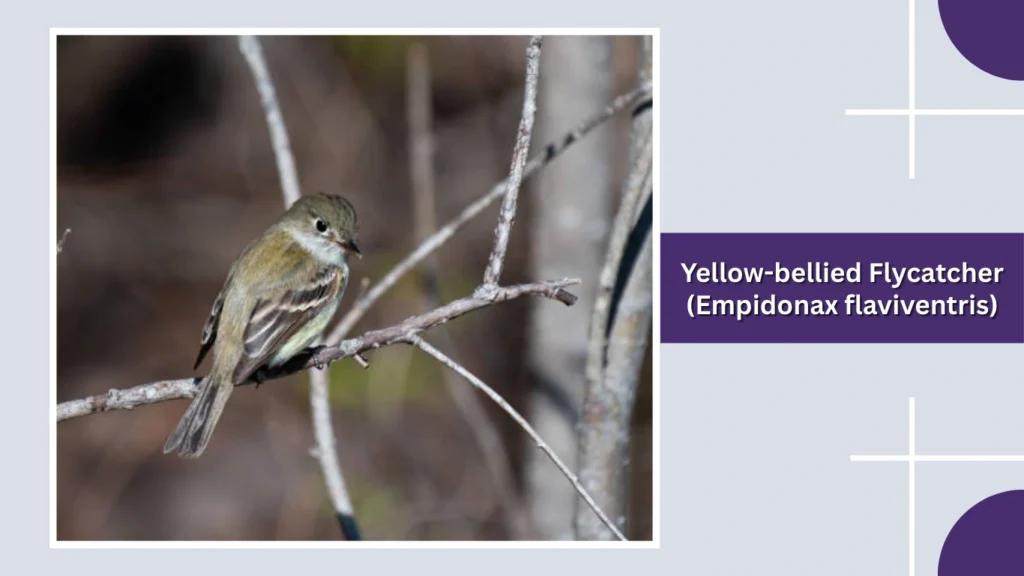
The Yellow-bellied Flycatcher is a small, compact bird with soft grey to olive upperparts and a noticeable yellow wash on its underparts. It is a quiet forest species, often hidden among dense foliage where it waits to catch passing insects.
Identification
- Olive-grey back and head
- Yellow throat and belly
- Pale eye-ring, often teardrop-shaped
- Short, straight bill with pale lower mandible
- Two faint wing bars
Habitat
This flycatcher prefers cool, moist forests, especially spruce, fir, and mixed woodlands. During migration and winter, it can also be found in dense shrubs, forest edges, and tropical lowland forests.
Diet
Its diet consists mainly of flying insects such as flies, mosquitoes, small beetles, and moths. It catches prey by making short flights from low perches and sometimes gleans insects from leaves.
Behavior
Yellow-bellied Flycatchers are usually solitary and rather still. They sit quietly before making quick sallies to snatch insects, then return to the same or a nearby perch.
Distribution
They breed in Canada and the northern United States and migrate south to winter in Central America and the Caribbean.
10. Grey-headed Canary-Flycatcher (Culicicapa ceylonensis)
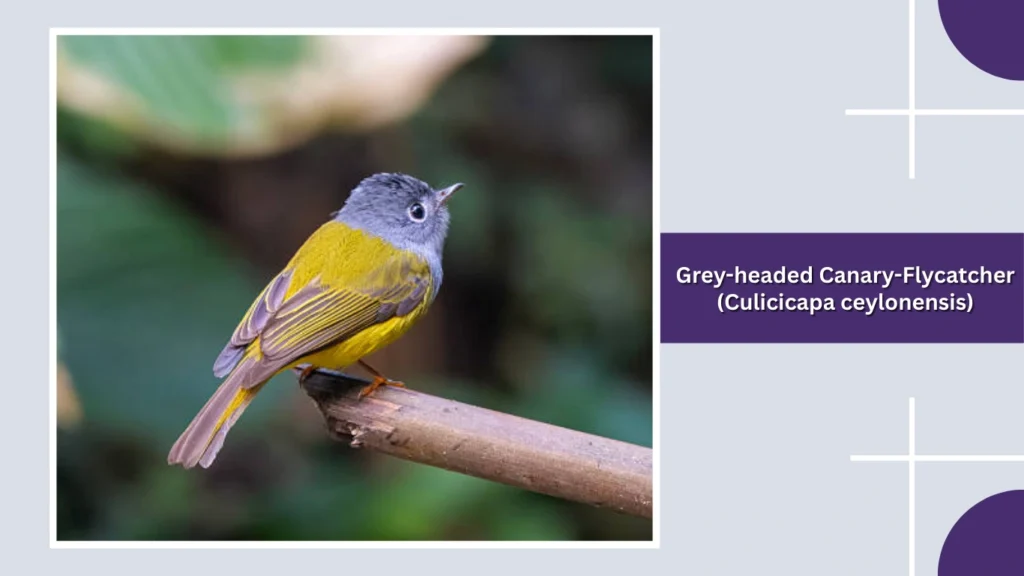
The Grey-headed Canary-Flycatcher is a small, bright bird with a soft grey head and vivid yellow underparts. It is commonly seen flitting actively through forest canopies, gardens, and wooded areas while catching tiny insects.
Identification
- Smooth grey head and nape
- Bright yellow throat, chest, and belly
- Olive-yellow back and wings
- Slender body with long tail
- Thin, pointed bill
Habitat
This species inhabits evergreen forests, mixed woodlands, forest edges, plantations, and well-wooded gardens. It is especially common in South and Southeast Asia, often at low to mid elevations.
Diet
Grey-headed Canary-Flycatchers mainly eat small flying insects such as flies, gnats, termites, and beetles. They catch prey in short, agile flights and sometimes hover briefly while feeding.
Behavior
They are lively, restless birds that move constantly through branches, often flicking their wings and tail. Their soft, high-pitched calls are frequently heard in wooded habitats.
Distribution
They are widely distributed across South and Southeast Asia, including India, Sri Lanka, Nepal, Bangladesh, and parts of Southeast Asia.
11. Yellow-faced Honeyeater (Caligavis chrysops)
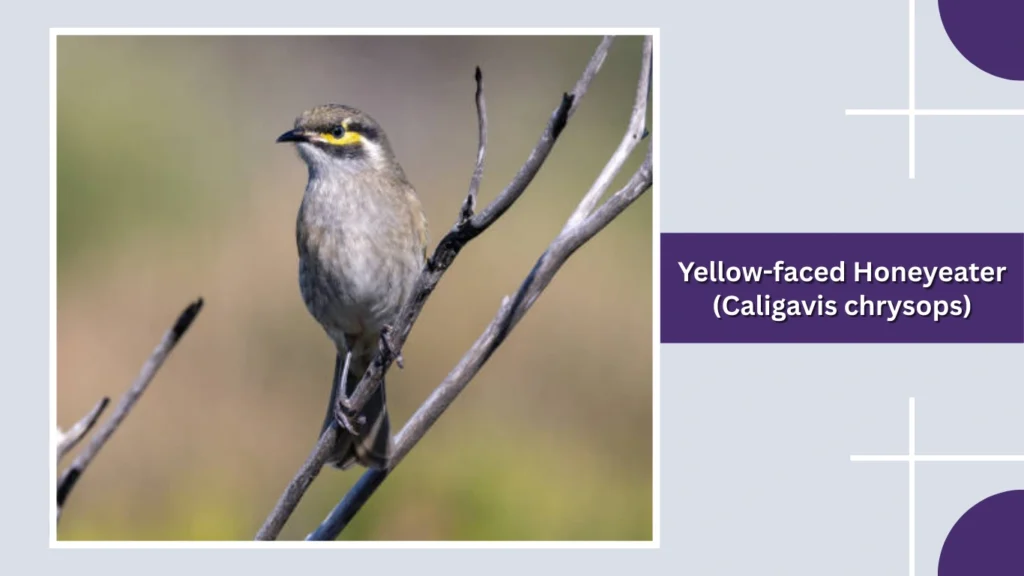
The Yellow-faced Honeyeater is a slim, active bird with a grey-brown body and bright yellow facial markings. It is well known for its seasonal movements and loud, ringing calls as it feeds among flowering trees and shrubs.
Identification
- Grey-brown upperparts and pale grey underparts
- Bright yellow stripe from bill through the eye
- Black mask across the face
- Slender, slightly curved bill
- Medium-length tail
Habitat
This species is commonly found in open forests, woodlands, coastal scrub, heathlands, and urban parks. It favors areas with flowering plants and trees where nectar and insects are abundant.
Diet
Yellow-faced Honeyeaters feed on nectar, insects, spiders, and occasionally fruit. They play an important role in pollination while visiting blossoms for nectar.
Behavior
They are energetic and social birds, often seen in small groups. These honeyeaters are known for their clear, ringing calls and constant movement through foliage while feeding.
Distribution
They are native to eastern and southeastern Australia and migrate seasonally between coastal and inland regions.
12. Grey-capped Greenfinch (Chloris sinica)
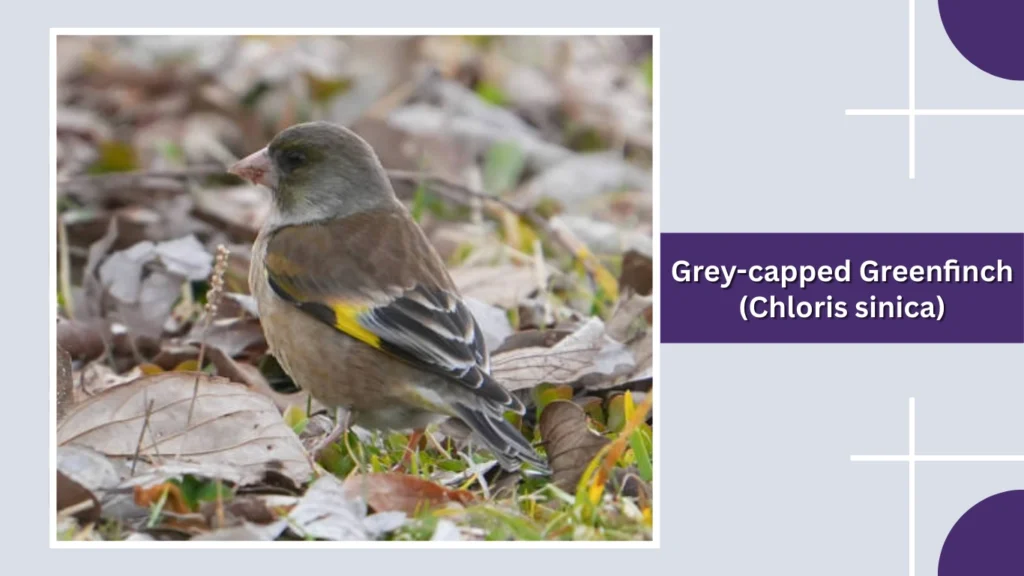
The Grey-capped Greenfinch is a small, thick-billed bird with soft grey tones on the head and bright yellow highlights on the wings and body. It is often seen in flocks, moving between trees, shrubs, and open fields in search of seeds.
Identification
- Grey cap and nape
- Yellow patches on wings and tail edges
- Olive-yellow body with darker streaks
- Short, strong conical bill
- Compact body with rounded head
Habitat
Grey-capped Greenfinches inhabit open woodlands, forest edges, farmland, gardens, and urban parks. They prefer areas with scattered trees and bushes, especially where grasses and seed-producing plants are common.
Diet
Their diet mainly consists of seeds from grasses, weeds, and trees. They also eat buds, small fruits, and occasionally insects, particularly during the breeding season when extra protein is needed.
Behavior
This species is social and often seen in small to large flocks. They frequently perch in treetops, fly in undulating patterns, and visit open ground to feed on fallen seeds.
Distribution
Grey-capped Greenfinches are found across East Asia, including China, Korea, Japan, and parts of eastern Russia. They are mostly resident, with some seasonal local movements.
13. Yellow-breasted Chat (Icteria virens)
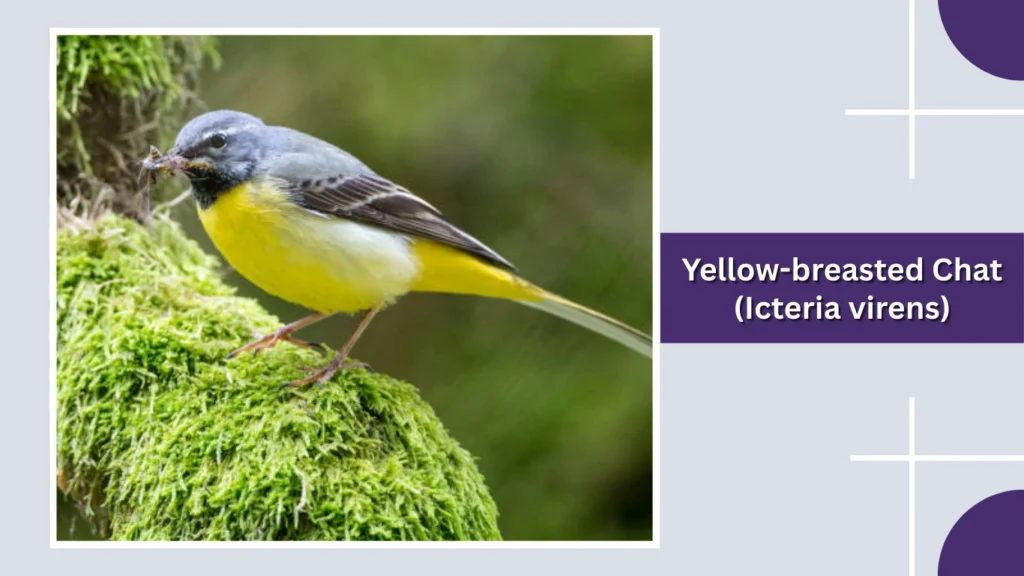
The Yellow-breasted Chat is a large, chunky warbler-like bird with a grey-olive back and a bright yellow chest. It is known for its bold expressions, hidden lifestyle in dense shrubs, and a wide variety of strange, mimicking calls.
Identification
- Bright yellow throat and breast
- Olive-grey upperparts
- Large head with thick bill
- White “spectacles” around the eyes
- Long, rounded tail
Habitat
Yellow-breasted Chats prefer dense thickets, shrubby fields, forest edges, riparian brush, and overgrown clearings. They often stay hidden deep in vegetation, making them easier to hear than to see.
Diet
They eat a wide range of insects, including beetles, caterpillars, grasshoppers, and spiders. They also consume berries and small fruits, especially in late summer and during migration.
Behavior
Chats are secretive but vocally expressive. Males often sing from exposed perches or while making display flights. They hop through dense shrubs, foraging quietly or making sudden noisy calls.
Distribution
They breed across much of North America and migrate south to winter in Mexico, Central America, and parts of the southern United States.
FAQs
What makes a bird grey and yellow in color?
Grey and yellow birds get their colors from a mix of natural pigments and feather structure. Yellow shades usually come from carotenoid pigments found in their diet, while grey tones are created by melanin and light reflection in feathers, helping with camouflage and communication.
Are grey and yellow birds common around the world?
Yes, grey and yellow birds are found on almost every continent. Many warblers, wagtails, flycatchers, and honeyeaters show this color combination. They live in forests, wetlands, grasslands, and even urban gardens, depending on the species.
Do grey and yellow birds migrate?
Many grey and yellow birds are migratory, especially warblers and wagtails. They often breed in cooler regions and travel long distances to warmer areas during winter. However, some species are resident birds and stay in the same region year-round.
What do most grey and yellow birds eat?
Most grey and yellow birds mainly eat insects such as flies, beetles, caterpillars, and spiders. Some species also consume nectar, seeds, or berries, especially outside the breeding season when insects are less available.
Are grey and yellow birds good for the environment?
Yes, these birds play important ecological roles. They help control insect populations, assist in pollination when feeding on nectar, and disperse seeds by eating fruits, making them valuable contributors to healthy ecosystems.
