

The gray catbird (Dumetella carolinensis) is a familiar songbird across much of North America, known for its gray plumage and distinctive cat-like call. While the species is easy to recognize, distinguishing between male and female gray catbirds is far more challenging. Unlike many birds, gray catbirds show very little visual difference between the sexes. This article explores how male and female gray catbirds compare in appearance, behavior, song, and breeding roles, helping birdwatchers and nature enthusiasts better understand these subtle differences.
Overview of Gray Catbird Gender Differences
Gray catbirds exhibit very limited sexual dimorphism, meaning males and females look almost identical. Both sexes share the same overall coloration, size range, and body structure. Because of this, gender identification is rarely possible through appearance alone.
Instead, differences are most noticeable in behavior, especially during the breeding season. Males tend to be more vocal and territorial, while females are more closely associated with nesting activities. Outside of breeding season, males and females behave so similarly that even experienced birders often cannot tell them apart without extended observation.
Physical Appearance: Male vs Female Gray Catbird
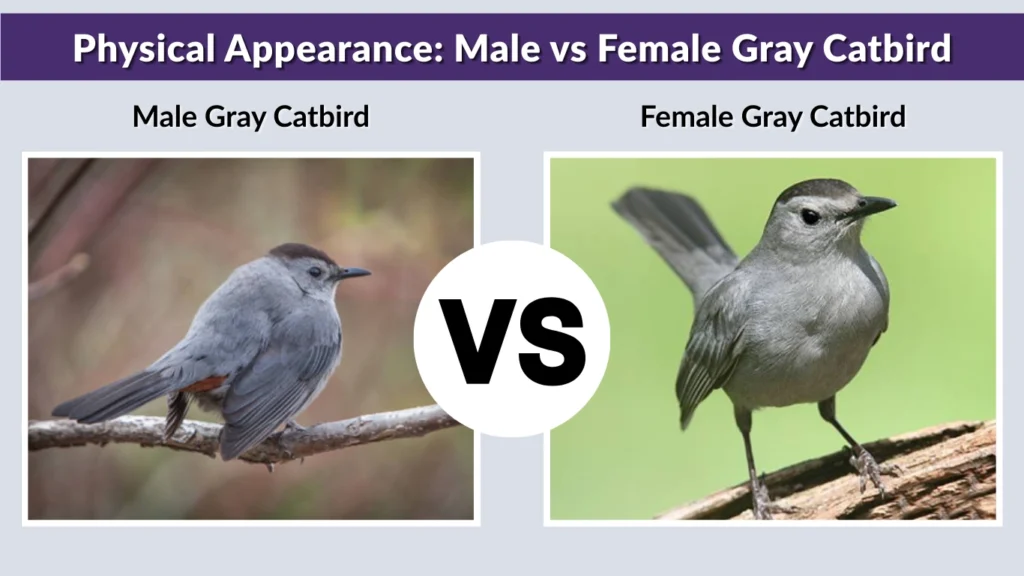
Male and female gray catbirds look nearly identical in physical appearance. Both share the same gray plumage, black cap, and distinctive rusty undertail coverts. Any minor size difference overlaps heavily, making visual identification unreliable without observing behavior or breeding activity.
| Feature | Male Gray Catbird | Female Gray Catbird |
| Overall Color | Slate-gray body | Slate-gray body |
| Head Cap | Black cap present | Black cap present |
| Undertail Coverts | Rusty, cinnamon-colored | Rusty, cinnamon-colored |
| Body Size | Slightly larger on average | Slightly smaller on average |
| Wingspan | About 11 inches | About 11 inches |
| Tail Length | Long, rounded tail | Long, rounded tail |
| Bill Color | Black | Black |
| Eye Color | Dark | Dark |
| Plumage Differences | None consistently visible | None consistently visible |
| Field Identification | Not reliable by appearance alone | Not reliable by appearance alone |
Behavioral Differences Between Male and Female
Singing and Vocal Activity
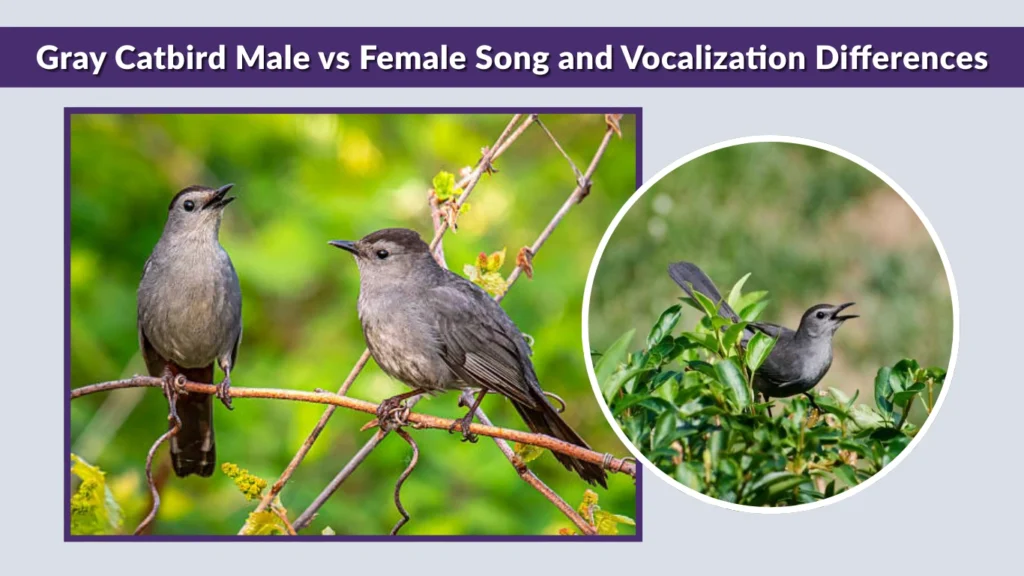
One of the most noticeable differences between male and female gray catbirds is vocal behavior. Males sing far more frequently, especially during the breeding season. Their songs are long, complex, and filled with mimicked sounds from other birds and environmental noises.
Females can vocalize, but they generally produce shorter calls rather than extended songs. Female vocalizations are often used for communication near the nest or as alarm calls when a threat is nearby.
Territorial and Aggressive Behavior
Male gray catbirds are typically more territorial than females. During breeding season, males actively defend their territory from other birds and intruders. This may include chasing rivals, snapping their bills, and giving sharp warning calls.
Females can also be aggressive, particularly when defending a nest, but males usually take the lead in territorial disputes. Outside of breeding season, aggression decreases significantly in both sexes.
Song and Vocalization Differences
Male Gray Catbird Song Patterns
Male gray catbirds are well known for their impressive singing ability. Their songs are often delivered from hidden perches within dense shrubs and can last for several minutes. Unlike mockingbirds, catbirds tend not to repeat phrases, making their songs sound rambling and unpredictable.
Males use songs primarily to attract mates and establish territory. Singing peaks in spring and early summer when breeding activity is highest.
Female Gray Catbird Vocalizations
Female gray catbirds do not typically perform long songs like males. Instead, they rely on shorter calls, including soft contact notes and harsher alarm sounds. These vocalizations play an important role in communication with mates and in protecting the nest from predators.
Breeding Season Roles
Courtship Behavior
During the breeding season, male and female gray catbirds take on distinct roles. Courtship begins primarily through vocal displays, with males using persistent singing to attract a mate and establish breeding territory. These songs not only demonstrate the male’s fitness but also help maintain spacing between neighboring males. Females evaluate potential mates based on song quality, territory, and overall behavior before forming a seasonal pair bond.
Nest Building and Egg Laying
Once a pair forms, both sexes participate in nest building, although the female usually selects the nesting site. Nests are typically placed low in dense shrubs or vines, providing concealment from predators. Construction materials include twigs, grass, bark, leaves, and rootlets.
The female is responsible for laying the eggs, usually between two and six per clutch. Egg laying occurs over several days, after which incubation begins.
Incubation and Chick Care
Incubation is carried out primarily by the female and lasts about 12 to 15 days. During this time, the male often remains nearby, guarding the territory and providing occasional food to the incubating female.
After hatching, both parents share feeding duties. Insects form the bulk of the chicks’ diet, supporting rapid growth. The young typically fledge within 9 to 11 days but remain dependent on the parents for a short period after leaving the nest.
Seasonal Differences in Behavior
Behavioral differences between male and female gray catbirds are most noticeable during the breeding season. Males become highly vocal and territorial, while females focus more on nesting and incubation. Outside of this period, these differences largely disappear.
During migration and wintering months, both sexes behave similarly, spending much of their time foraging quietly in dense vegetation. Social interactions are limited, and vocal activity is reduced, making gender identification nearly impossible during these seasons.
Why Male and Female Gray Catbirds Look So Similar
The lack of visible differences between male and female gray catbirds likely provides evolutionary advantages. Similar coloration helps both sexes remain camouflaged while foraging or nesting in dense shrubs. This reduces the risk of predation, especially for females during incubation.
Additionally, shared appearance supports cooperative breeding roles, where both parents contribute equally to raising young rather than relying on one sex to stand out visually.
How to Identify Male vs Female Gray Catbirds in the Wild
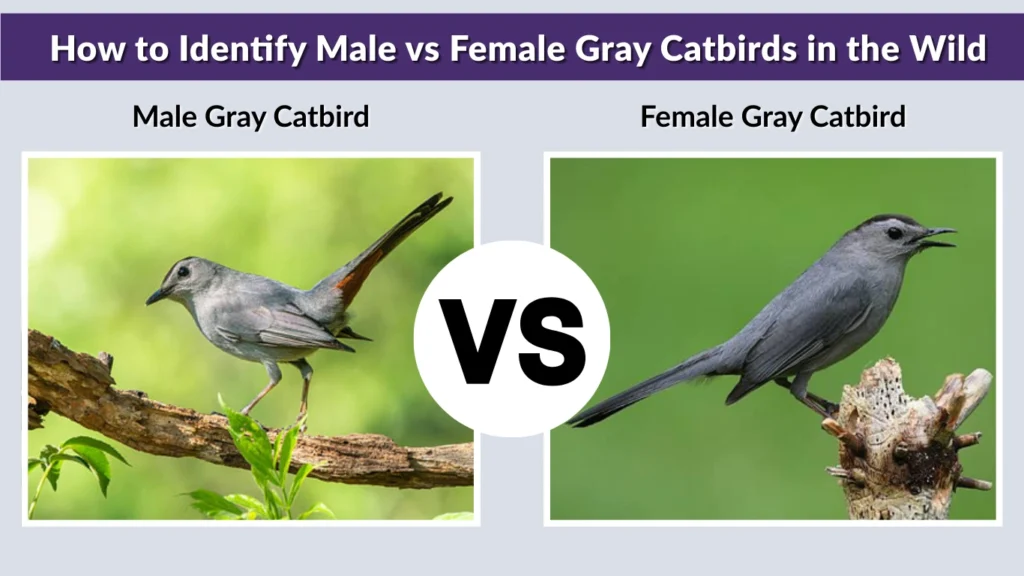
For birdwatchers, identifying the sex of a gray catbird requires patience and observation rather than quick visual cues. The most reliable indicator is song. A bird delivering long, complex songs during spring is almost always a male.
Observing nesting behavior can also help. A bird consistently sitting on eggs is female, while one defending the surrounding area is often male. Outside of breeding season, reliable identification is rarely possible.
Common Myths About Gray Catbird Gender
A common myth is that male gray catbirds are darker than females. In reality, coloration is virtually identical in both sexes. Another misconception is that only males defend nests. While males are often more aggressive, females are equally capable of defending their nest when threatened.
These myths persist because of subtle behavioral differences that are easily misunderstood without long-term observation.
Conclusion
Male and female gray catbirds are nearly identical in appearance, making gender identification a challenge even for experienced birders. The most meaningful differences lie in behavior, particularly singing, territorial defense, and breeding roles. By focusing on vocal activity and seasonal behavior rather than physical traits, observers can gain a clearer understanding of how male and female gray catbirds differ and work together throughout the year.
FAQs
Can you tell male and female gray catbirds apart by appearance?
In most cases, no. Male and female gray catbirds look almost identical, sharing the same gray plumage, black cap, and rusty undertail coverts. Any slight size difference is minimal and overlaps between sexes, making visual identification unreliable in the field.
Do male gray catbirds sing more than females?
Yes. Male gray catbirds sing far more frequently, especially during the breeding season. Their songs are long, complex, and often include mimicry. Females do vocalize, but their calls are usually shorter and used for communication or alarm rather than extended singing.
Are male gray catbirds larger than females?
Males may be slightly larger on average, but the difference is very subtle. Because individual size varies widely, body size alone cannot be used to accurately identify the sex of a gray catbird.
Which parent incubates the eggs in gray catbirds?
The female gray catbird is primarily responsible for incubating the eggs. The male typically stays nearby to defend the territory and may occasionally bring food to the female during the incubation period.
Do both male and female gray catbirds care for the chicks?
Yes. After the eggs hatch, both parents actively feed and protect the chicks. They bring insects and soft foods to the nest and continue caring for the young even after they leave the nest.
