
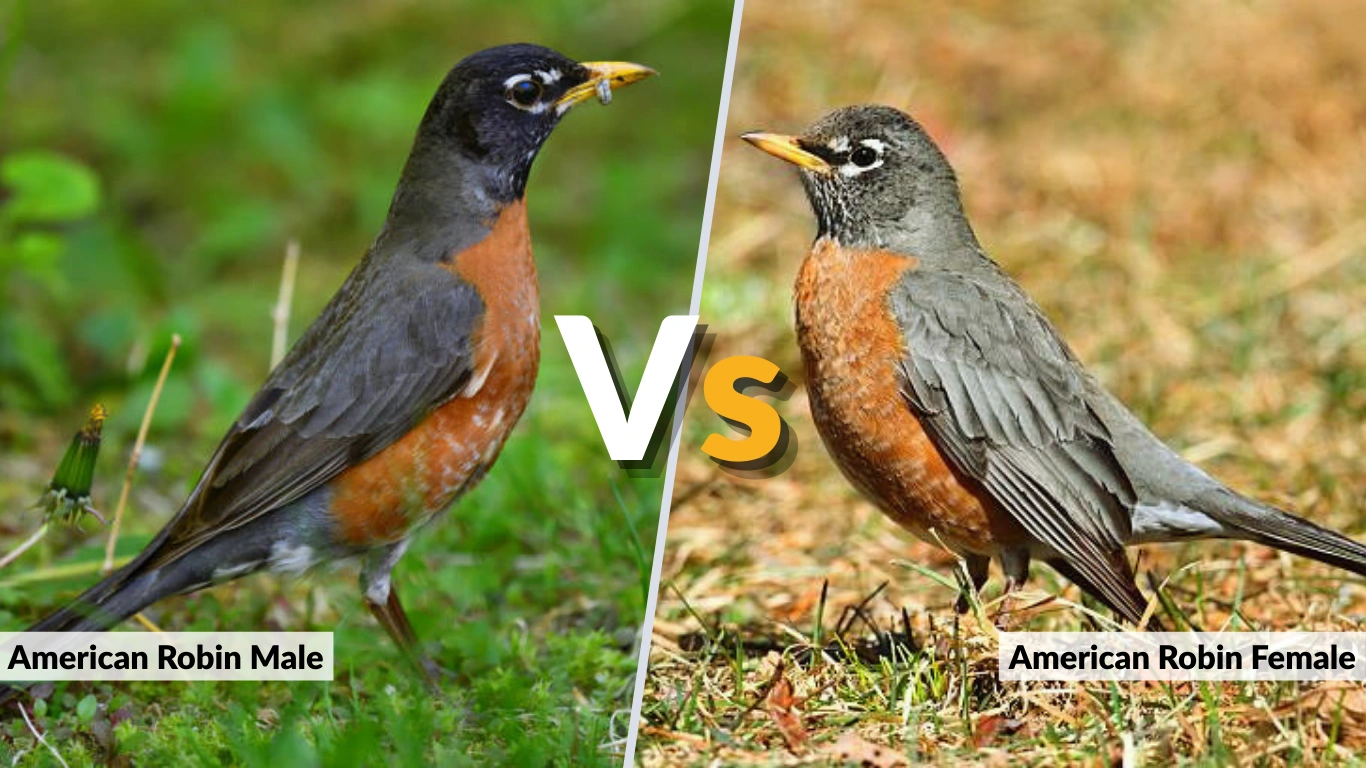
The American Robin (Turdus migratorius) is one of North America’s most familiar birds, easily recognized by its orange-red breast and cheerful song. While both sexes look similar at a glance, there are subtle but reliable differences between male and female robins. Learning how to tell them apart can be tricky, especially outside the breeding season, but with careful observation of color, markings, and behavior, accurate identification is possible. This guide explores the key traits that help birdwatchers distinguish male and female American Robins with confidence.
Overview of the American Robin
American Robins belong to the thrush family and are widespread across North America, from forests and suburbs to city parks and lawns. Both males and females share a similar overall appearance: a warm orange to brick-red breast, grayish-brown back, dark head, and white markings around the eyes and throat. They typically measure about 9–11 inches in length with a wingspan of roughly 12–16 inches. Because these shared traits dominate their appearance, sex differences can seem subtle, especially to beginners.
Key Differences Between Male and Female American Robins
Plumage Coloration
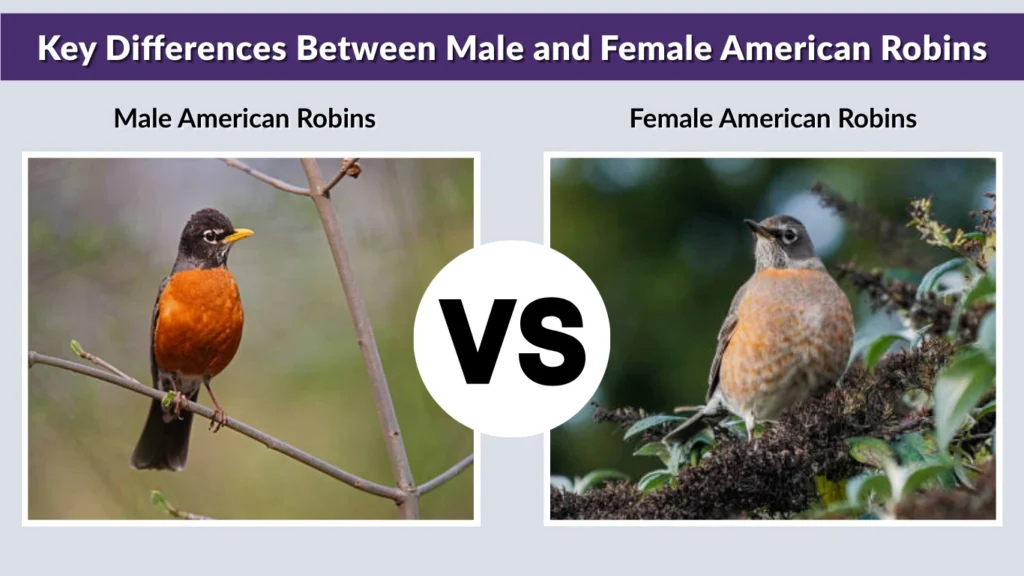
One of the most noticeable differences lies in breast coloration. Male American Robins usually display a brighter, richer orange or red breast that appears bold and vibrant, particularly during the breeding season. Females, on the other hand, tend to have a paler, more muted orange breast that may look slightly washed out or dull by comparison. Seasonal wear and molting can affect both sexes, but males generally retain stronger coloration overall.
Head and Facial Markings
The head color offers another helpful clue. Males often have a darker, nearly black head with stronger contrast between the head, back, and throat. Females usually show a lighter grayish-brown head, creating a softer, less defined contrast. The white eye ring is present in both sexes, but it often appears crisper and more pronounced in males.
Size and Body Shape
Size differences are subtle but consistent. Males are typically slightly larger and more robust, with a fuller chest and stronger posture. Females are often slimmer and more delicate in appearance. While size alone should never be the sole identification factor, it can support other visual cues when multiple robins are observed together.
Behavioral Differences
Singing and Vocalization
Behavior is often more reliable than appearance when identifying male and female American Robins. Males are the primary singers, especially during the breeding season. They sing loudly from treetops, rooftops, or other high perches to establish territory and attract mates. Their song is strong, clear, and frequently heard at dawn and dusk. Females are generally quieter and rarely sing, making vocal activity a strong indicator of sex during spring and early summer.
Nesting and Parental Roles
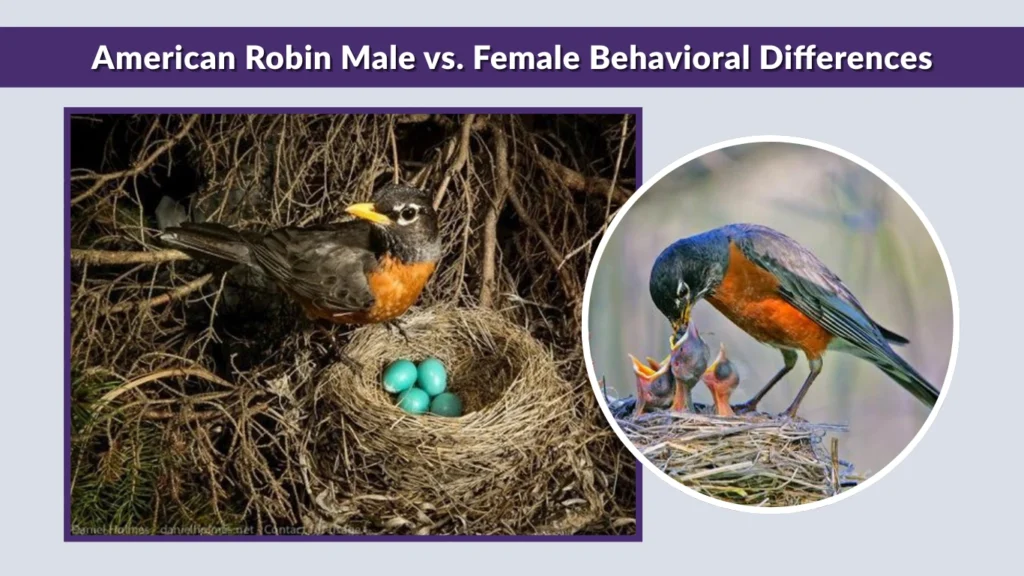
Nesting behavior clearly separates the sexes. Female robins are responsible for building the nest, usually selecting sheltered locations in trees, shrubs, or on ledges. They construct the nest using grass, twigs, and mud, then lay and incubate the eggs. Males do not incubate but play an important role by guarding the territory and providing food to the female during incubation. After hatching, both parents feed the chicks, though the female remains more involved in early care.
Seasonal and Age-Related Confusion
Identification becomes more challenging outside the breeding season. During fall and winter, plumage colors fade, reducing contrast between males and females. Molting can further blur differences, making color-based identification less reliable. Juvenile robins add another layer of confusion, as they display speckled breasts and lighter overall coloring that can resemble adult females. Observing behavior and time of year is essential when visual cues are unclear.
Tips for Identifying Male vs. Female Robins in the Wild
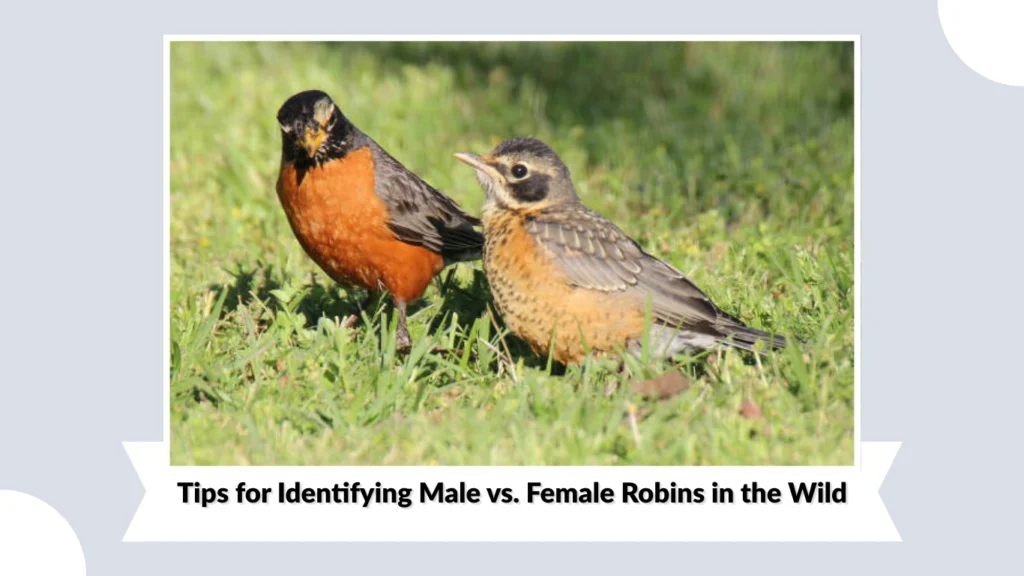
To improve accuracy, birdwatchers should rely on multiple traits rather than a single feature. Observe breast color under good lighting, noting richness and saturation. Pay attention to head darkness and contrast between facial markings. During spring, listen for frequent singing from elevated perches, which almost always indicates a male. Watching nesting behavior can also be decisive, as only females build and incubate nests. Using binoculars and field guides can help reveal subtle details that are easy to miss with the naked eye.
Common Misconceptions
A common myth is that the largest robin is always the male. While males are often slightly bigger, size varies widely among individuals. Another misconception is that color alone can determine sex, but lighting, feather wear, and age can make females appear brighter than expected. Young males are also frequently mistaken for females due to their softer coloration during their first year.
Conclusion
Distinguishing between male and female American Robins requires patience and careful observation. While males tend to have brighter plumage, darker heads, and louder songs, females play the central role in nesting and incubation. By combining visual clues with behavioral patterns and seasonal context, birdwatchers can confidently identify each sex and gain a deeper appreciation for this iconic North American bird.
