
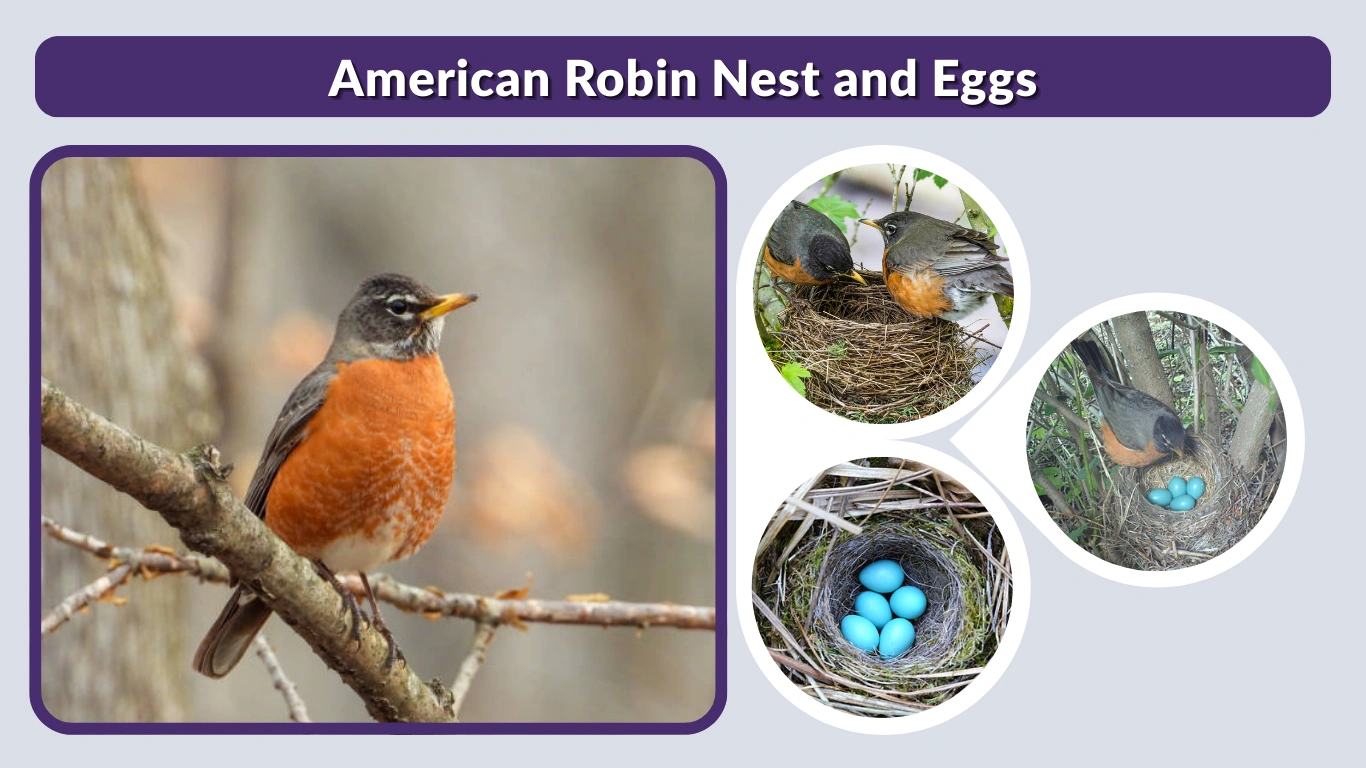
The American Robin (Turdus migratorius) is one of the most familiar and widely recognized birds in North America. Known for its bright orange breast and cheerful springtime presence, this bird often nests close to human homes, making its nest and eggs a common sight for homeowners and birdwatchers alike. Learning how to identify an American robin’s nest and eggs helps prevent accidental disturbance and deepens appreciation for this iconic species. This guide explores robin nesting behavior, nest characteristics, common nesting locations, and how to identify robin eggs with confidence.
American Robin Nesting Behavior
American robins typically begin nesting in early spring, often as soon as temperatures rise and food becomes plentiful. Depending on climate and location, nesting season can last from March through July. Robins usually raise two to three broods per year, especially in warmer regions.
The female robin is primarily responsible for building the nest and incubating the eggs, while the male guards the territory and brings food. From nest construction to fledging, a single nesting cycle usually lasts about four to five weeks. Robins are highly adaptable and often reuse familiar nesting areas each year, though they usually build a new nest for each brood.
American Robin Nest Identification
Nest Shape and Size
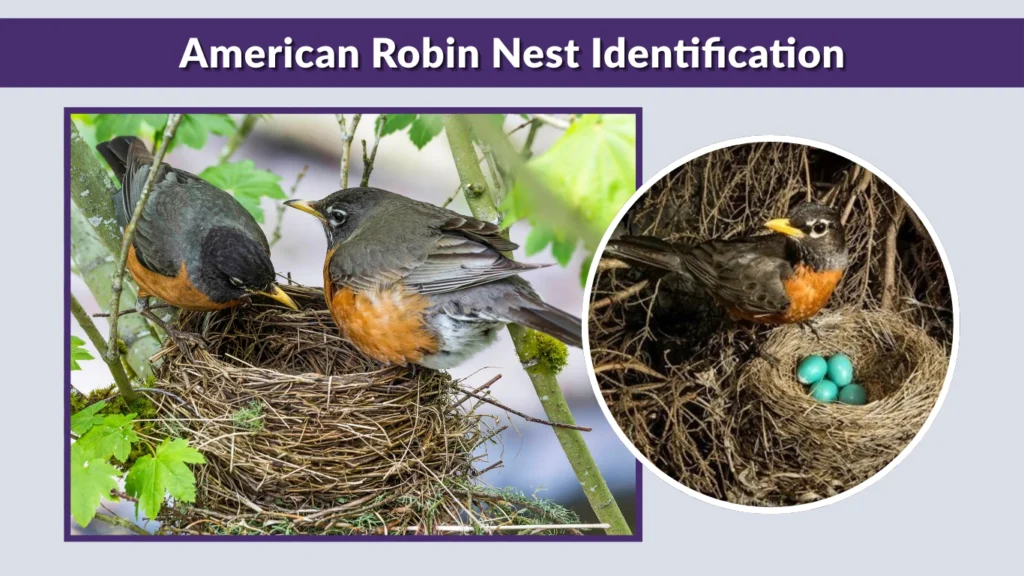
An American robin nest is most easily identified by its sturdy, cup-shaped structure. The nest typically measures about 6 to 8 inches in diameter and around 3 to 4 inches deep. The interior cup is well-defined and smooth, designed to securely hold the eggs and later the nestlings.
Compared to smaller songbirds like sparrows, robin nests are larger and more solid. Their open-cup design also distinguishes them from cavity-nesting birds such as bluebirds or wrens.
Materials Used in Nest Construction
One of the most distinctive features of a robin nest is the use of mud. The female robin gathers twigs, coarse grass, leaves, and sometimes bits of paper or string for the outer structure. She then reinforces the nest with a thick inner layer of mud, which hardens as it dries and provides strength and insulation.
The inner lining is finished with fine grass, root fibers, or soft plant material, creating a smooth surface for the eggs. This mud-lined construction is a key identification clue, as many similar birds do not use mud in their nests.
Color and Texture of the Nest
Freshly built robin nests often appear dark brown or gray due to the damp mud. As the nest ages and dries, it may fade to a lighter brown or tan. The interior is firm and compact, while the exterior looks rougher and more loosely assembled. Weather exposure can cause older nests to crack or crumble, especially after the breeding season ends.
Common Nesting Locations
Natural Nesting Sites
In natural environments, American robins commonly build nests in trees and large shrubs. Favorite locations include sturdy horizontal branches, tree forks, and dense vegetation near forest edges or open lawns. Most nests are placed between 5 and 15 feet above the ground, though some may be lower or higher depending on available shelter.
Human-Made Structures
Robins frequently nest on human-made structures, especially in suburban and urban areas. Common locations include window ledges, porch lights, gutters, eaves, and outdoor beams. These spots offer stable surfaces and some protection from predators and harsh weather, making them attractive nesting sites.
American Robin Eggs Identification
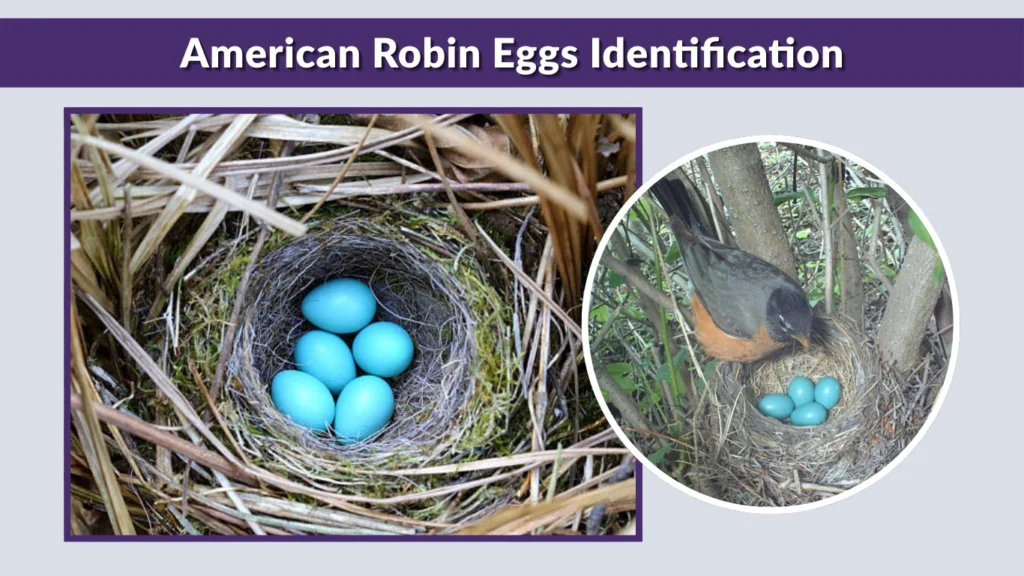
American robin eggs are famous for their striking “robin’s egg blue” color, a soft blue-green shade that is instantly recognizable. This uniform coloration, without spots or markings, helps distinguish them from many other bird eggs. The color may vary slightly, appearing paler or more greenish depending on lighting and the individual bird.
Robin eggs are oval-shaped with smooth, slightly glossy shells. They typically measure about 1.1 to 1.2 inches long. A typical clutch contains three to five eggs, though smaller or larger clutches can occur depending on the female’s age and environmental conditions.
Incubation and Hatching Process
After the female American robin lays her full clutch, incubation begins. The incubation period usually lasts 12 to 14 days. During this time, the female spends most of her day sitting on the eggs to keep them warm, leaving briefly to feed. The male robin often stands guard nearby and brings food to the female.
As hatching approaches, the eggs may darken slightly, and faint peeping sounds can sometimes be heard from inside. Chicks typically hatch within a short time frame, often on the same day. Newly hatched robins are blind, mostly featherless, and completely dependent on their parents for warmth and food.
Nestlings and Early Development
American robin nestlings grow rapidly. In the first few days, they are covered in sparse gray down and keep their eyes closed. Both parents take turns feeding the chicks a diet consisting mainly of insects, earthworms, and soft-bodied invertebrates.
Within about 5 to 6 days, the chicks begin to open their eyes, and pin feathers start to appear. By 9 to 12 days old, the young robins are fully feathered and strong enough to leave the nest. This stage is known as fledging. Although fledglings may appear independent, they continue to rely on their parents for food and protection for another one to two weeks.
How to Distinguish American Robin Eggs from Similar Species
American Robin vs. Eastern Bluebird Eggs
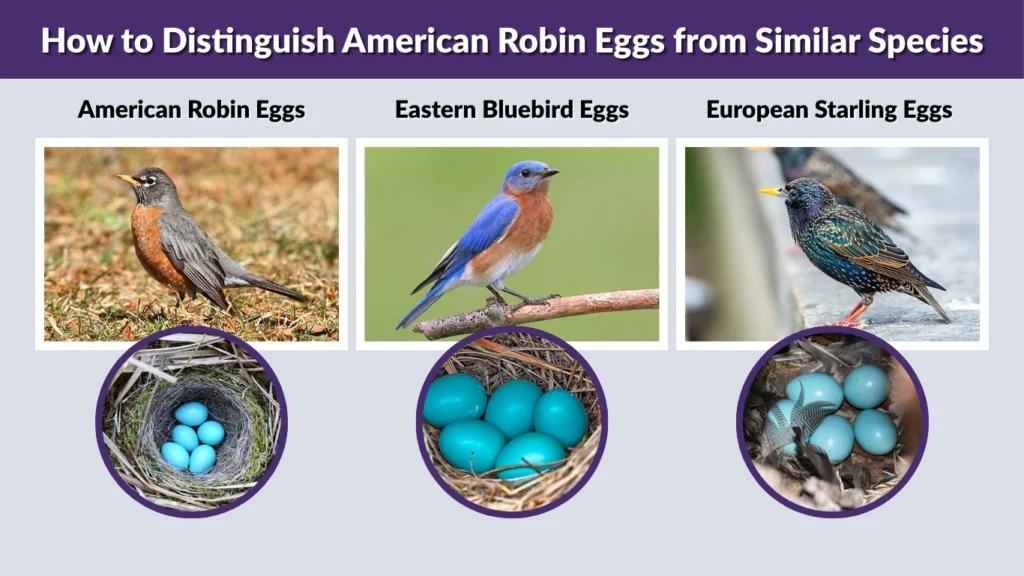
Eastern bluebird eggs are also blue, but they are usually paler and sometimes nearly white. Bluebirds nest in cavities such as birdhouses, while robins build open cup-shaped nests. Nest location is often the easiest way to tell these eggs apart.
American Robin vs. European Starling Eggs
European starling eggs are light blue to greenish but are laid inside enclosed cavities, including vents or tree holes. Starling nests are messy and made of coarse materials. Robins, in contrast, use open nests with a distinctive mud-lined interior.
What to Do If You Find a Robin Nest or Eggs
If you discover an American robin nest, it is important to observe without interfering. In the United States and Canada, robin nests and eggs are protected under the Migratory Bird Treaty Act, making it illegal to disturb, move, or remove them during the breeding season.
If a nest appears abandoned, watch from a distance for several hours before assuming it has been deserted. Adult robins may stay away when humans are nearby. If a nest falls due to weather, contact a licensed wildlife rehabilitator rather than attempting to fix it yourself.
Predators and Threats to Robin Nests
American robin nests face threats from a variety of predators, including domestic cats, snakes, raccoons, squirrels, and crows. Eggs and young chicks are especially vulnerable. Severe weather, such as heavy rain or strong winds, can also damage nests or cause eggs to fail.
Human activities pose additional risks, especially nest disturbance or tree trimming during nesting season. Robins may defend their nests aggressively, diving at perceived threats, but they rely heavily on nest placement and camouflage for protection.
Conservation and Coexisting with Nesting Robins
Homeowners can support nesting robins by avoiding pesticide use, keeping cats indoors, and delaying outdoor construction or pruning during spring and early summer. Providing natural food sources such as lawns rich in earthworms and planting native trees and shrubs helps create a safe nesting environment.
Robins play an important role in controlling insect populations and contribute to healthy ecosystems. Respecting their nesting space allows them to successfully raise their young.
FAQs
1. How long do American robin eggs take to hatch?
American robin eggs usually hatch after 12 to 14 days of incubation. The female does most of the incubating, while the male provides food and guards the nest. Hatching often occurs within a short window, sometimes all on the same day.
2. Can I move a robin nest from my house?
No. American robin nests are protected by law while active. Moving or disturbing a nest with eggs or chicks is illegal. If a nest is in an inconvenient location, it is best to wait until the breeding season ends before taking action.
3. Why are robin eggs blue?
The blue color of robin eggs comes from a pigment called biliverdin, deposited during egg formation. This color may help camouflage the eggs and signal the female’s health to the male, potentially influencing parental care.
4. What should I do if I find a baby robin on the ground?
If the bird is feathered and hopping, it is likely a fledgling and should be left alone. Parents are usually nearby. If the chick is injured or unfeathered, contact a licensed wildlife rehabilitator for proper assistance.
5. Do American robins reuse their nests?
Robins rarely reuse old nests. Instead, they usually build a new nest for each brood, even within the same season. Old nests may be abandoned or occasionally reused by other bird species once the breeding season is over.
