
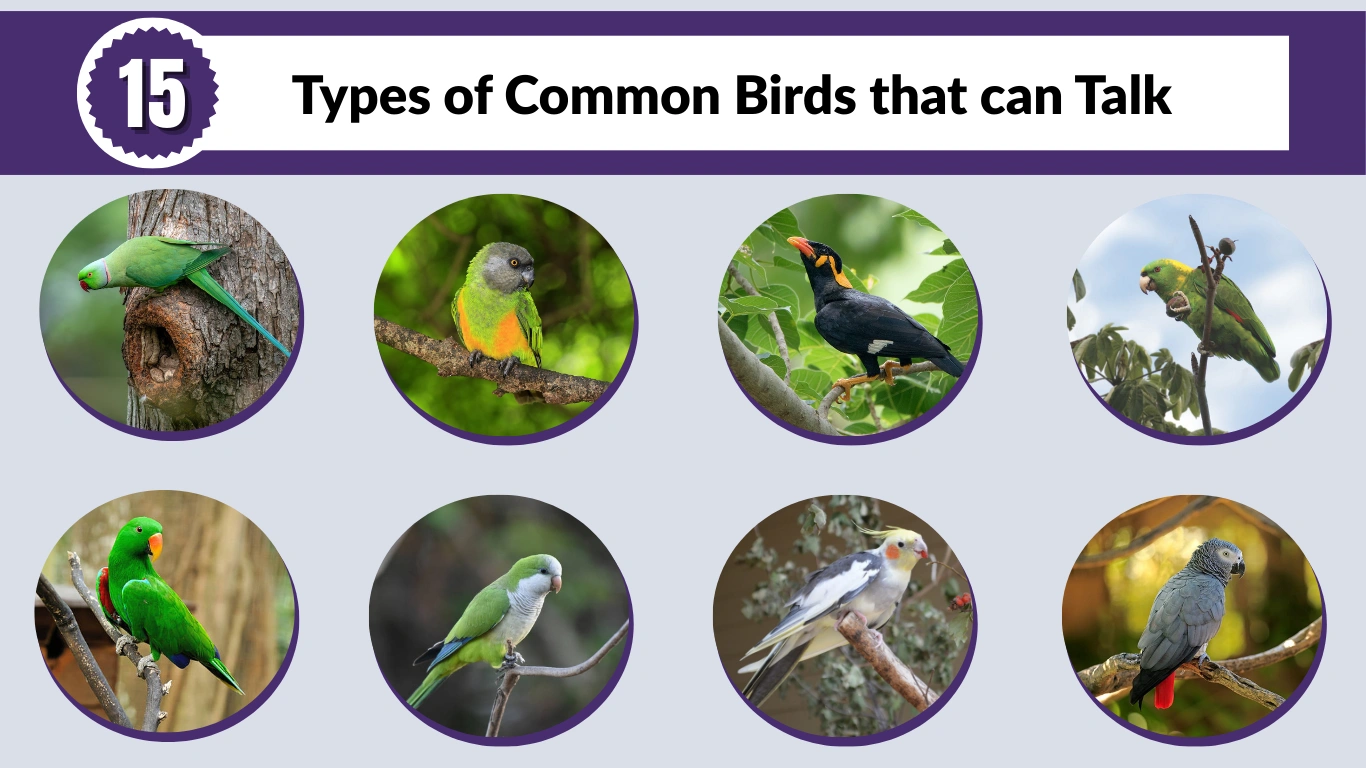
Talking birds have fascinated humans for centuries with their ability to mimic speech and sounds. Certain bird species possess exceptional intelligence and vocal control, allowing them to learn words, phrases, and even use speech in meaningful ways. From small parakeets to large parrots, these birds vary in personality, clarity, and learning speed. With proper training, social interaction, and care, many talking birds can develop impressive vocabularies and become engaging, interactive companions in the home.
1. African Grey Parrot
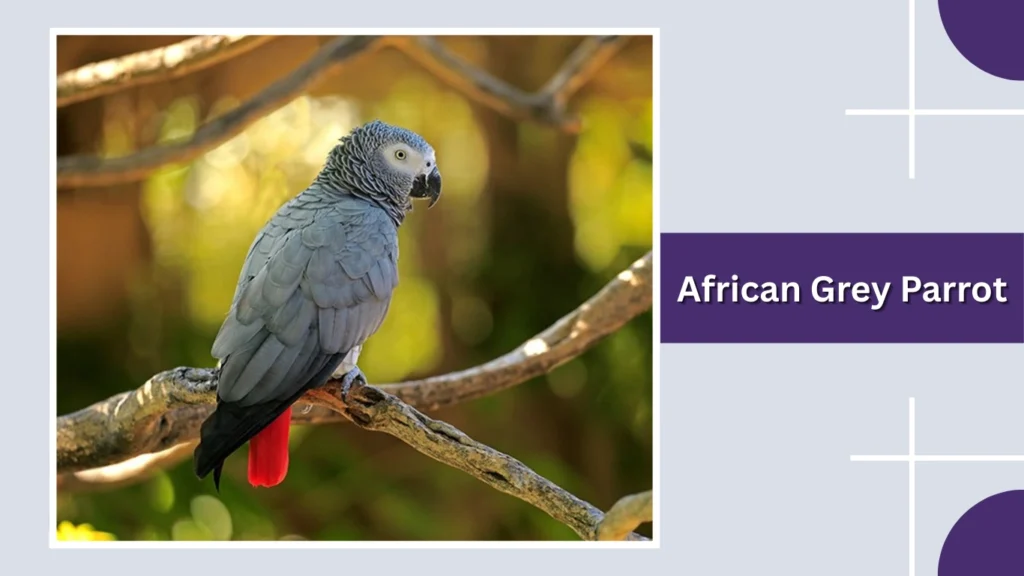
The African Grey Parrot is widely regarded as the best talking bird in the world due to its exceptional intelligence and ability to clearly mimic human speech. Famous for its advanced problem-solving skills and emotional sensitivity, this parrot is not only a skilled talker but also a highly social and perceptive companion bird.
Identification
- Medium-sized parrot with a gray body
- Bright red tail feathers
- Black curved bill
- Pale yellow eyes
- Compact, sturdy build
Habitat
African Grey Parrots are native to the rainforests and woodlands of Central and West Africa. They prefer dense forests but are also found in forest edges, savannas, and cultivated areas where food is available.
Behaviors
This species is extremely intelligent and forms strong social bonds. African Greys are known to use words contextually, not just through mimicry. They are observant, sensitive to routine changes, and require mental stimulation to remain healthy and engaged.
Diet and Lifespan
Their diet consists of fruits, seeds, nuts, berries, and leafy vegetation. In captivity, a balanced diet includes pellets and fresh produce. African Grey Parrots are long-lived birds, commonly reaching 40–60 years with proper care.
2. Budgerigar
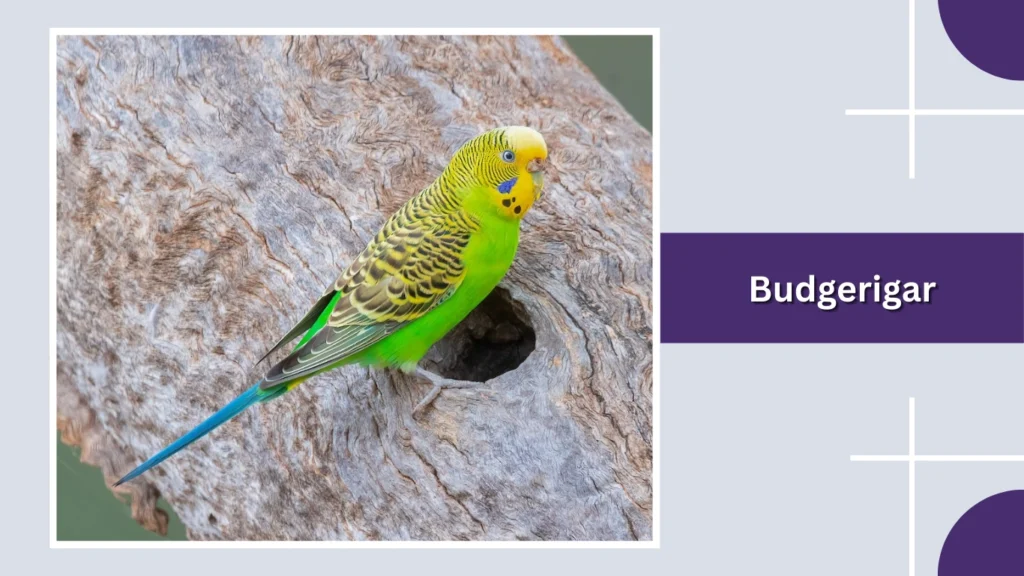
The Budgerigar, commonly known as the budgie, is a small parrot with a surprisingly strong ability to talk. Despite its size, it can learn a large vocabulary and mimic human speech clearly when well trained. Budgies are popular pets due to their friendly nature and intelligence.
Identification
- Small parrot with a slender body
- Green and yellow coloration in the wild
- Long pointed tail
- Curved bill
- Dark eyes with pale rings
Habitat
Budgerigars are native to Australia, where they inhabit open grasslands, woodlands, and scrublands. They are nomadic birds, often moving in flocks to find food and water, and adapt well to captivity.
Behaviors
Budgies are social, active, and playful birds. They thrive on interaction and mental stimulation. When kept singly and regularly spoken to, they are more likely to develop talking abilities. They communicate using chirps, whistles, and learned words.
Diet and Lifespan
Their diet mainly includes seeds, grasses, fruits, and vegetables. In captivity, a balanced diet includes pellets and fresh foods. Budgerigars typically live 7–15 years, with proper care contributing to longer lifespans.
3. Amazon Parrot
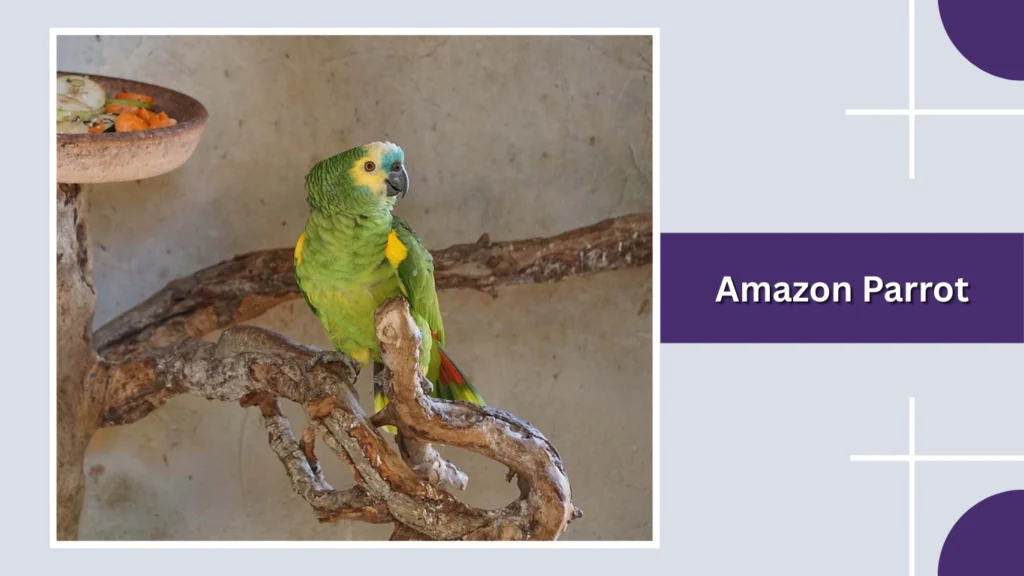
Amazon Parrots are well known for their loud, clear voices and strong ability to mimic human speech. They are confident, expressive birds with big personalities, often using words along with body language to communicate. Many species within this group are considered excellent talkers.
Identification
- Medium to large parrot with a sturdy body
- Predominantly green plumage with colorful accents
- Short, squared tail
- Strong curved bill
- Bright, expressive eyes
Habitat
Amazon Parrots are native to Central and South America, where they live in tropical forests, woodlands, and savannas. Some species are also found in mangroves and palm groves. They rely heavily on trees for nesting and feeding.
Behaviors
These parrots are highly social and thrive on interaction. They are confident and sometimes dominant, often vocalizing loudly to get attention. Amazon Parrots are known for learning songs, phrases, and even laughter, frequently using speech in appropriate situations.
Diet and Lifespan
Their diet includes fruits, seeds, nuts, berries, blossoms, and leafy vegetation. In captivity, a balanced diet with pellets and fresh produce is essential. Amazon Parrots typically live 40–60 years, making them a long-term companion.
4. Indian Ringneck Parrot
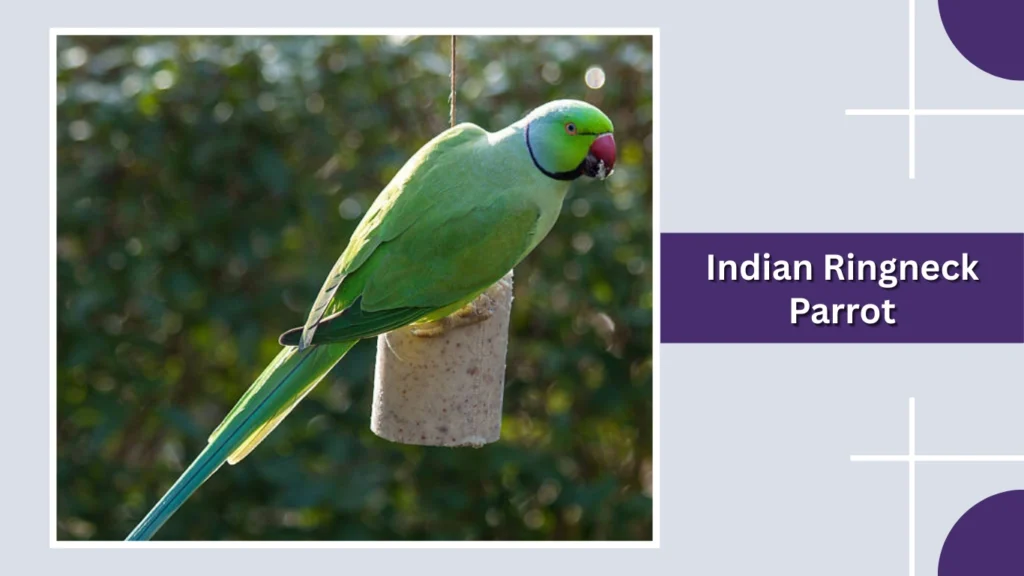
The Indian Ringneck Parrot is a highly intelligent and capable talking bird known for its clear pronunciation and ability to learn long phrases. With consistent training and social interaction, it can develop an impressive vocabulary and confident speaking style.
Identification
- Medium-sized parrot with a long tail
- Bright green body
- Adult males have a black and rose neck ring
- Red curved bill
- Pale yellow eyes
Habitat
Indian Ringneck Parrots are native to the Indian subcontinent and parts of Southeast Asia. They inhabit open woodlands, forest edges, farmlands, and urban areas, showing strong adaptability to human environments.
Behaviors
These parrots are alert, curious, and independent. They can be shy when young but often become confident talkers with regular handling and training. Indian Ringnecks are known for clear speech and may talk more than they enjoy being cuddled.
Diet and Lifespan
Their diet consists of fruits, seeds, nuts, grains, and vegetables. In captivity, pellets and fresh foods are recommended. Indian Ringneck Parrots typically live 25–35 years, with some individuals living even longer.
5. Cockatiel
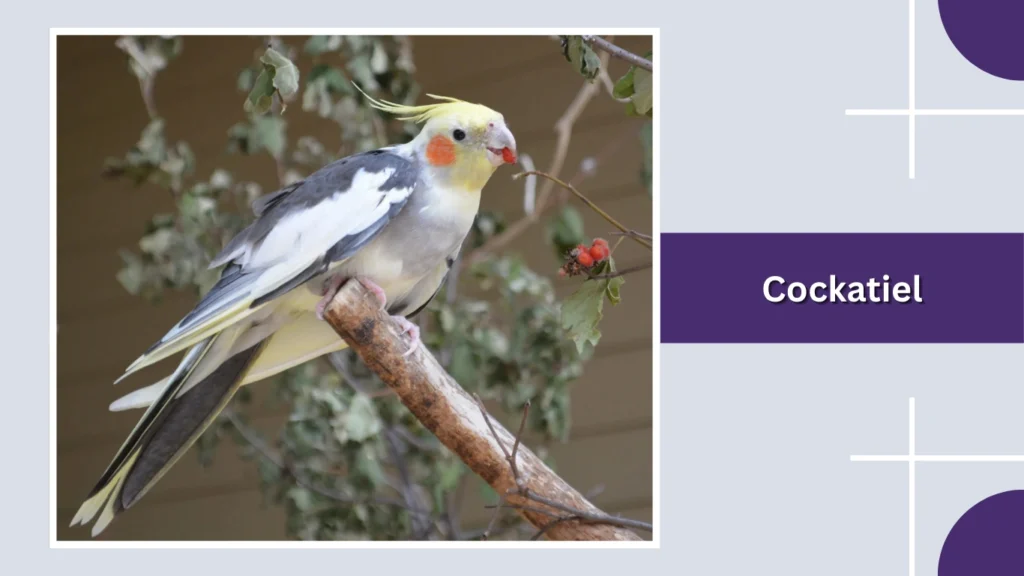
The Cockatiel is a small, friendly parrot known more for whistling than talking, but many individuals can learn words and short phrases. Their gentle nature and strong bond with humans make them one of the most popular companion birds worldwide.
Identification
- Small parrot with a slender body
- Distinctive upright crest
- Gray body with white wing patches
- Yellow face with orange cheek patches (males brighter)
- Long tail
Habitat
Cockatiels are native to Australia and are commonly found in open woodlands, grasslands, scrublands, and farmland. They prefer areas near water sources and often travel in flocks in search of food.
Behaviors
These birds are social, affectionate, and highly responsive to human interaction. Cockatiels enjoy whistling tunes and mimicking household sounds, and some individuals learn to speak simple words. They communicate through chirps, whistles, and crest movements that show mood.
Diet and Lifespan
Their diet includes seeds, grains, fruits, vegetables, and pellets in captivity. With proper care, Cockatiels typically live 15–25 years, making them a manageable long-term companion for many bird owners.
6. Macaw
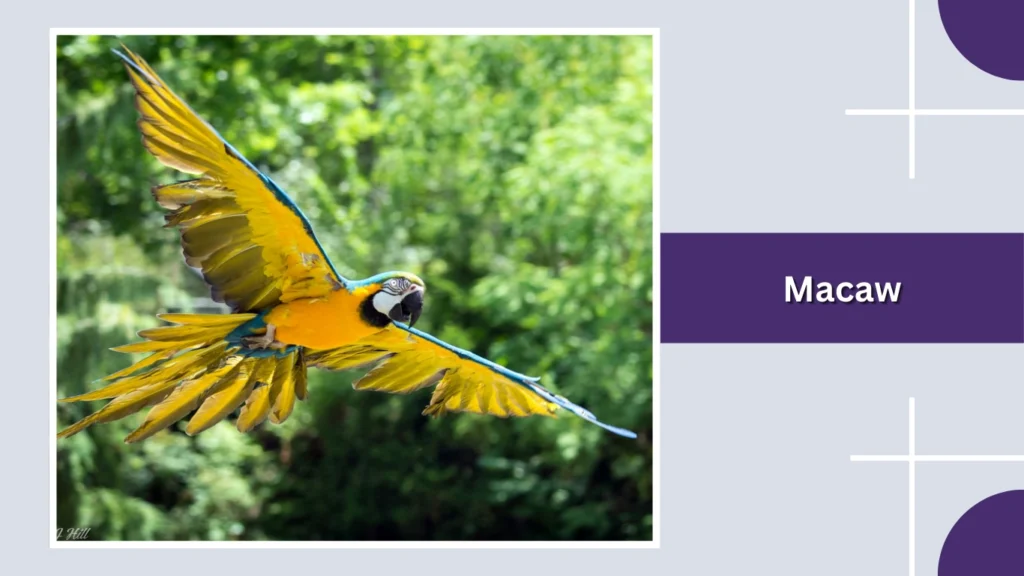
Macaws are large, colorful parrots known for their strong voices and ability to learn words and phrases. While they may not speak as clearly as African Greys, many macaws can talk well and often combine speech with expressive body language. Their striking appearance and playful nature make them very popular talking birds.
Identification
- Large parrot with a long tail
- Bright, multicolored plumage
- Strong, powerful curved bill
- Bare facial skin with fine feather lines
- Long wings and sturdy build
Habitat
Macaws are native to Central and South America, where they live in rainforests, woodlands, and riverine forests. They depend on large trees for nesting and roosting and often travel long distances to find food.
Behaviors
These parrots are highly social and form strong bonds with their owners. Macaws are playful, intelligent, and emotionally expressive. They enjoy interaction, toys, and mental challenges, and may become loud if bored or ignored.
Diet and Lifespan
Their diet includes fruits, nuts, seeds, berries, and vegetation. In captivity, a balanced diet with pellets and fresh foods is essential. Macaws are long-lived birds, commonly living 40–60 years, with some species living even longer.
7. Eclectus Parrot
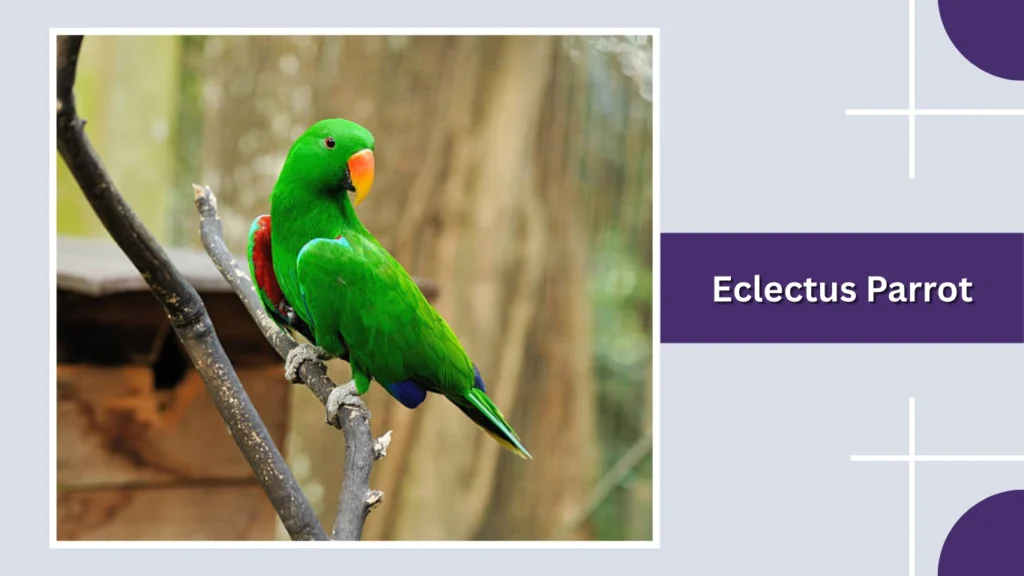
The Eclectus Parrot is well known for its striking color differences between males and females, as well as its calm and thoughtful personality. While not the loudest talker, many Eclectus parrots develop clear speech and use words appropriately in context.
Identification
- Medium to large parrot
- Male is bright green with orange bill
- Female is red and purple with black bill
- Short tail compared to body size
- Stocky build
Habitat
Eclectus Parrots are native to the rainforests of the Solomon Islands, New Guinea, northeastern Australia, and nearby islands. They live in dense forests and depend on tall trees for nesting.
Behaviors
These parrots are intelligent, observant, and generally calmer than many other parrot species. They tend to think before acting and may prefer routine. Eclectus parrots can learn words and phrases and often speak in a soft, clear voice.
Diet and Lifespan
Their diet is rich in fruits, vegetables, leafy greens, seeds, and nuts. In captivity, a high-fiber, low-fat diet is essential for their health. Eclectus Parrots typically live 30–50 years with proper care.
8. Monk Parakeet
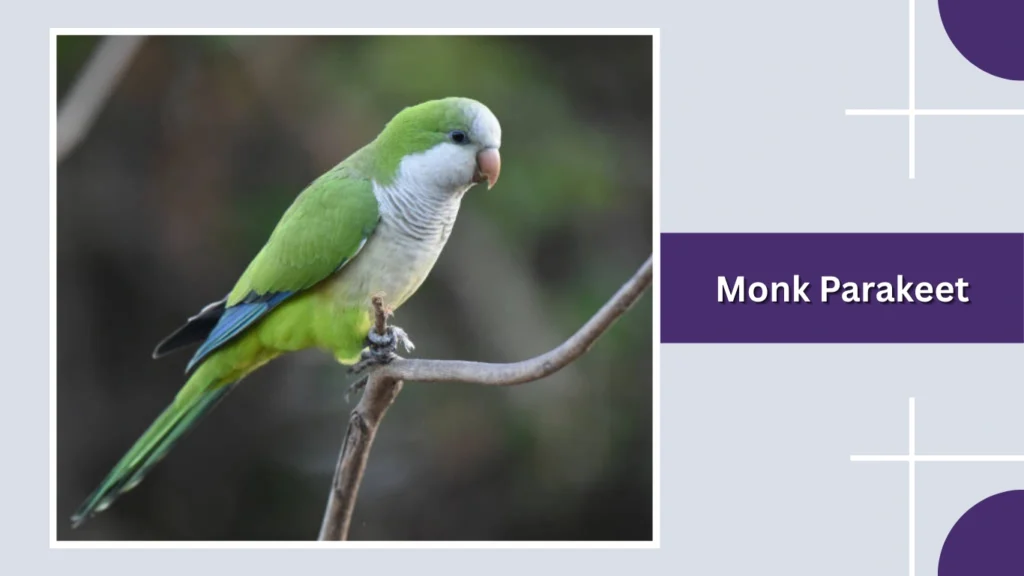
The Monk Parakeet, also known as the Quaker Parrot, is a small, lively bird known for its strong talking ability and social nature. It is one of the few parrot species that builds large, communal stick nests, and many individuals learn to speak clearly.
Identification
- Small to medium-sized parrot
- Green body with gray face and chest
- Long pointed tail
- Pale curved bill
- Compact, sturdy build
Habitat
Monk Parakeets are native to South America, where they inhabit open woodlands, savannas, farmland, and urban areas. Feral populations have also established in many other parts of the world.
Behaviors
These parakeets are energetic, vocal, and highly social. They enjoy constant interaction and are known to chatter throughout the day. Monk Parakeets can develop large vocabularies and often speak with surprising clarity for their size.
Diet and Lifespan
Their diet includes seeds, fruits, vegetables, grains, and pellets in captivity. Monk Parakeets typically live 20–30 years when provided with proper care and stimulation.
9. Quaker Parrot
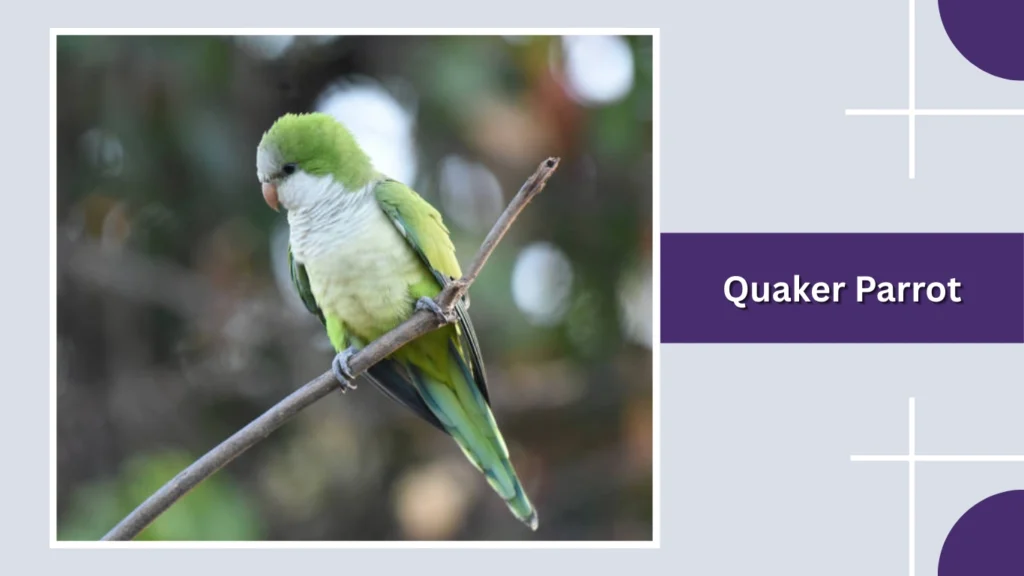
The Quaker Parrot, also called the Monk Parakeet, is a highly social and intelligent bird known for its excellent talking ability. Many individuals develop clear speech and enjoy using words to interact with people, making them one of the most talkative small parrots.
Identification
- Small to medium-sized parrot
- Green body with gray throat and chest
- Long, tapered tail
- Pale curved bill
- Compact and sturdy appearance
Habitat
Quaker Parrots are native to South America and naturally live in open woodlands, grasslands, and agricultural areas. They are highly adaptable and have established feral populations in several countries due to escaped or released pets.
Behaviors
These parrots are energetic, curious, and very vocal. They form strong bonds with their owners and enjoy constant interaction. Quaker Parrots are known to build complex stick nests and often talk throughout the day, mixing speech with chatter and whistles.
Diet and Lifespan
Their diet includes seeds, grains, fruits, vegetables, and pellets in captivity. With good care and mental stimulation, Quaker Parrots usually live 20–30 years.
10. Hill Myna
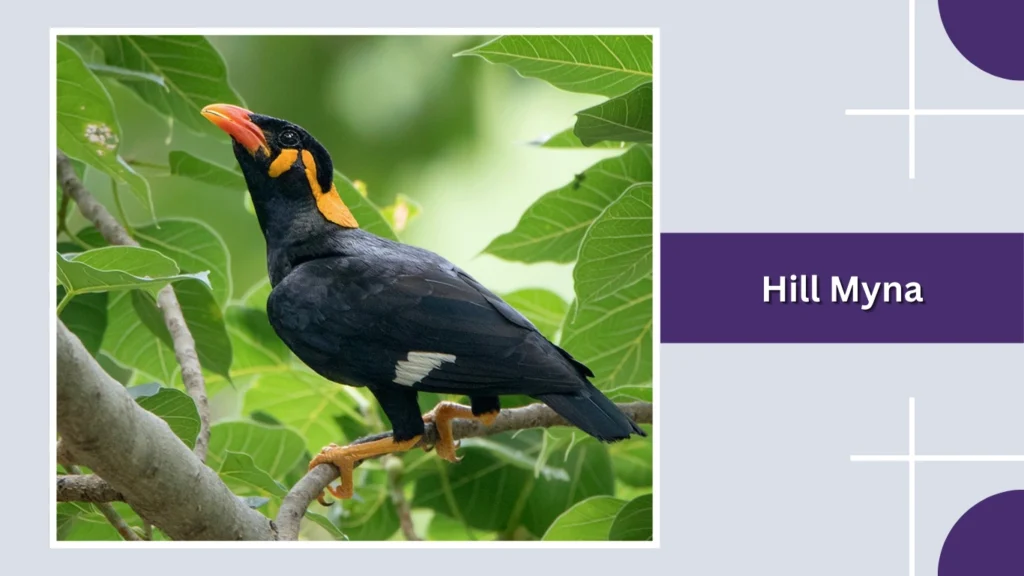
The Hill Myna is one of the clearest and most accurate talking birds in the world, famous for its ability to perfectly mimic human speech, tones, and even laughter. Unlike parrots, it belongs to the starling family, yet often outperforms many parrots in vocal clarity.
Identification
- Medium-sized bird with glossy black plumage
- Bright orange to yellow wattles behind the eyes
- Strong orange-yellow bill
- Short tail and sturdy body
- Pale legs and feet
Habitat
Hill Mynas are native to South and Southeast Asia, where they live in dense forests, forest edges, and wooded hills. They prefer tall trees and humid environments and are rarely found far from forested areas.
Behaviors
These birds are intelligent, alert, and highly vocal. Hill Mynas are excellent listeners and can reproduce sounds with remarkable accuracy, often matching human pitch and emotion. They are social but can be territorial, especially during breeding season.
Diet and Lifespan
Their diet includes fruits, berries, seeds, nectar, and insects. In captivity, a fruit-rich diet is essential. Hill Mynas typically live 20–25 years, with some individuals living longer under proper care.
11. Yellow-naped Amazon
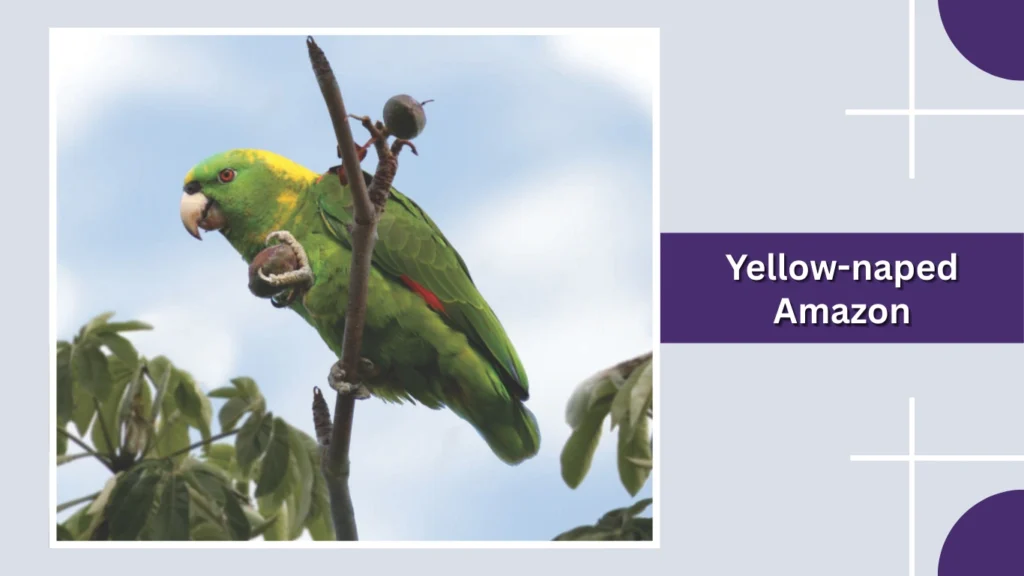
The Yellow-naped Amazon is considered one of the best talking Amazon parrots, famous for its clear pronunciation and large vocabulary. Confident and expressive, this parrot often uses speech along with tone and emotion, making its talking ability especially impressive.
Identification
- Medium-sized parrot with sturdy build
- Mostly green plumage
- Bright yellow patch on the back of the neck
- Short, squared tail
- Strong curved gray bill
Habitat
Yellow-naped Amazons are native to Central America, where they inhabit tropical forests, dry woodlands, and savannas. They rely on tall trees for nesting and are sometimes found near agricultural areas.
Behaviors
These parrots are bold, social, and highly intelligent. They enjoy attention and interaction and often perform vocally to engage their owners. Yellow-naped Amazons can be dominant at times but are extremely engaging when properly trained and socialized.
Diet and Lifespan
Their diet includes fruits, seeds, nuts, berries, leafy greens, and vegetables. In captivity, a balanced diet with pellets is important. Yellow-naped Amazons typically live 40–60 years, making them a lifelong companion.
12. Blue-fronted Amazon
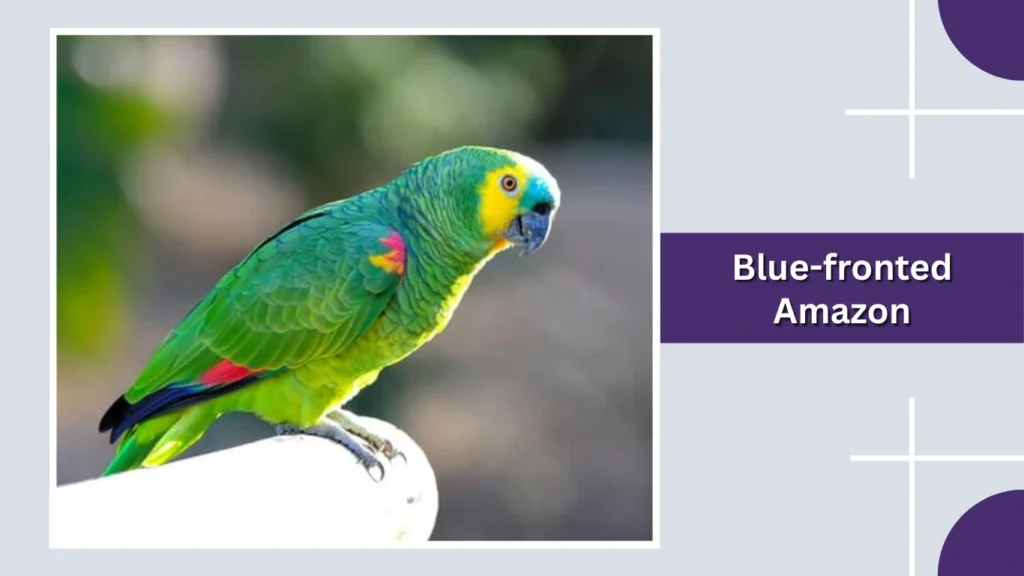
The Blue-fronted Amazon is one of the most popular talking parrots, known for its loud voice, playful personality, and strong speech ability. Many individuals learn a wide range of words, songs, and sounds, often using them confidently to get attention.
Identification
- Medium to large parrot with stocky body
- Green plumage with blue on the forehead
- Yellow markings on face and head
- Short, square tail
- Strong gray curved bill
Habitat
Blue-fronted Amazons are native to South America, where they inhabit forests, woodlands, savannas, and palm groves. They often live near rivers and wooded agricultural areas.
Behaviors
These parrots are energetic, outgoing, and very vocal. They enjoy social interaction and mental challenges and may become noisy if bored. Blue-fronted Amazons are known for expressive speech, often talking with dramatic tone and emotion.
Diet and Lifespan
Their diet includes fruits, seeds, nuts, berries, vegetables, and pellets in captivity. With proper care, Blue-fronted Amazons typically live 40–60 years.
13. Senegal Parrot
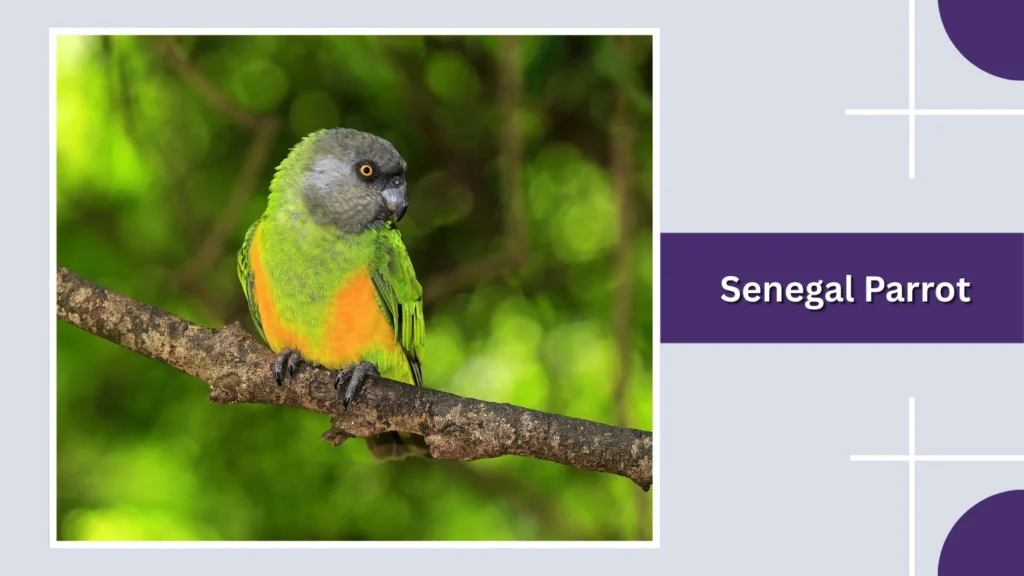
The Senegal Parrot is a small to medium-sized parrot known for its clear voice and ability to learn words and short phrases. While not as talkative as larger parrots, many Senegals develop impressive speech when regularly interacted with and trained.
Identification
- Compact parrot with stocky body
- Gray head with bright yellow eyes
- Green wings and back
- Yellow and orange chest markings
- Short, square tail
Habitat
Senegal Parrots are native to West Africa, where they inhabit open woodlands, savannas, and forest edges. They prefer areas with scattered trees and access to food and water.
Behaviors
These parrots are intelligent, calm, and affectionate. They often bond closely with one person and enjoy quiet interaction. Senegal Parrots can learn words and sounds and usually speak in a soft but clear voice.
Diet and Lifespan
Their diet includes seeds, fruits, vegetables, nuts, and pellets in captivity. With proper care, Senegal Parrots typically live 25–35 years.
14. Alexandrine Parakeet
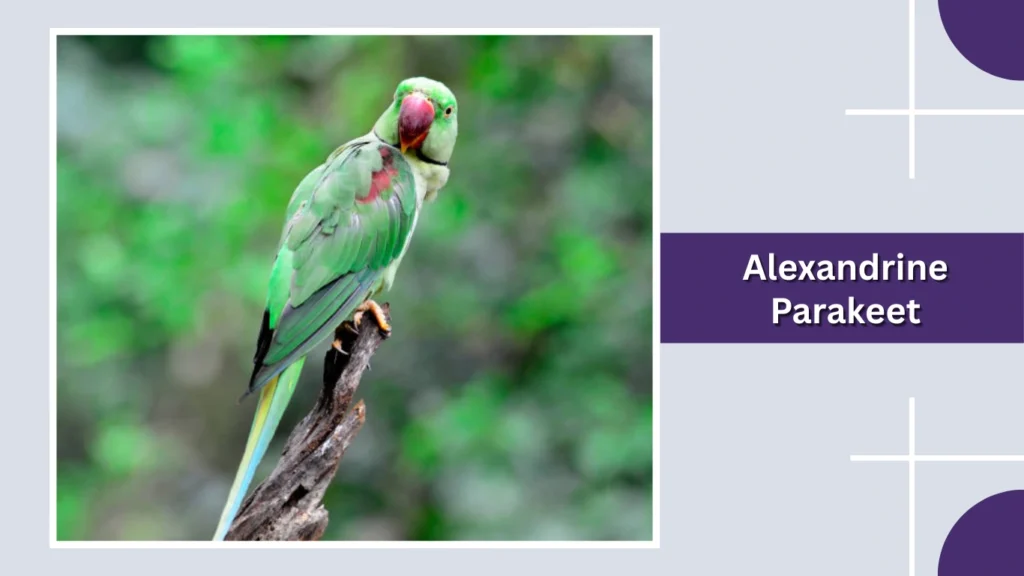
The Alexandrine Parakeet is a large, elegant parakeet known for its calm temperament and ability to learn words and phrases. While not as talkative as some smaller parrots, many individuals develop clear speech with consistent training and social interaction.
Identification
- Large parakeet with long tail
- Green body with bluish-gray sheen
- Adult males have a black and pink neck ring
- Maroon shoulder patch on wings
- Strong red curved bill
Habitat
Alexandrine Parakeets are native to South Asia and parts of Southeast Asia. They inhabit forests, woodlands, farmlands, and open countryside, often near human settlements.
Behaviors
These birds are intelligent, observant, and generally calmer than many other parakeet species. They enjoy interaction but are not overly demanding. Alexandrine Parakeets can become confident talkers when exposed to regular speech and positive training.
Diet and Lifespan
Their diet includes fruits, seeds, nuts, grains, vegetables, and pellets in captivity. With proper care, Alexandrine Parakeets typically live 30–40 years.
15. Rose-ringed Parakeet
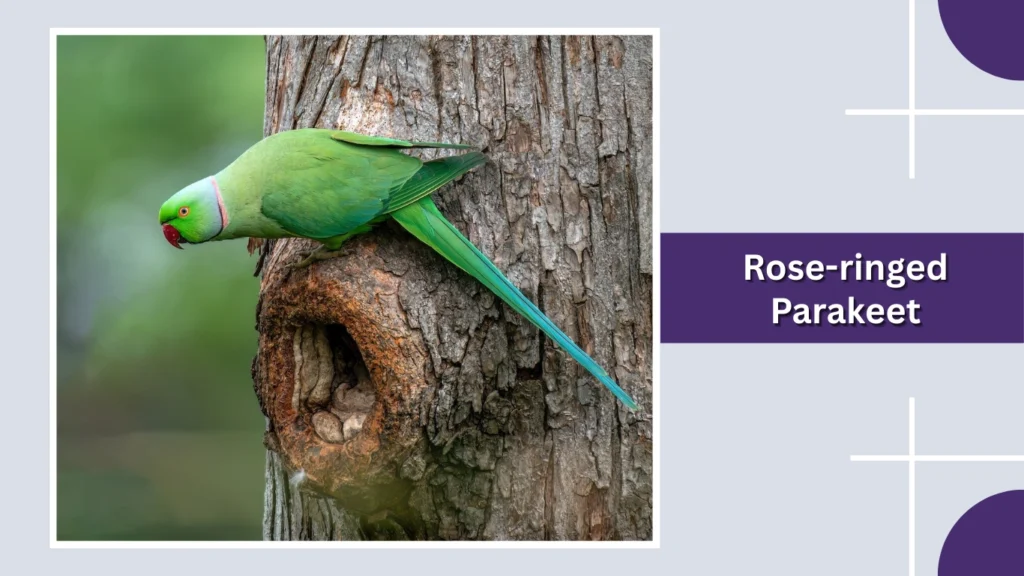
The Rose-ringed Parakeet is a highly intelligent and vocal parrot known for its impressive talking ability and confident personality. With clear pronunciation and the ability to learn long phrases, it is one of the most popular talking birds around the world.
Identification
- Medium-sized parakeet with long tail
- Bright green body
- Adult males have a rose-pink and black neck ring
- Red curved bill
- Pale yellow eyes
Habitat
Rose-ringed Parakeets are native to Africa and South Asia. They inhabit open woodlands, forest edges, farmlands, and urban areas, showing strong adaptability to human environments.
Behaviors
These parakeets are bold, alert, and highly vocal. They enjoy attention and mental stimulation and often talk to engage with people. Rose-ringed Parakeets are independent yet social and can become excellent talkers with consistent interaction.
Diet and Lifespan
Their diet includes fruits, seeds, nuts, grains, vegetables, and pellets in captivity. Rose-ringed Parakeets typically live 25–35 years, with some individuals living longer under good care.
FAQs
Which bird is considered the best talker overall?
The African Grey Parrot is widely regarded as the best talking bird due to its exceptional intelligence, clear pronunciation, and ability to use words in proper context rather than simple repetition.
Do all talking birds learn to speak?
No, not every individual bird will talk. Talking ability depends on species, personality, age, environment, and how much regular interaction and training the bird receives from humans.
Are male or female birds better at talking?
In many species, males tend to talk more frequently, but females can also learn to speak very well. Individual temperament and training usually matter more than gender.
At what age do birds start talking?
Most parrots begin attempting speech between 6 months and 1 year of age, though some may start earlier or much later depending on the species and learning conditions.
How can owners encourage a bird to talk?
Regular interaction, repetition, positive reinforcement, and a calm environment help encourage speech. Speaking clearly, using short phrases, and rewarding attempts with praise or treats can greatly improve results.
