
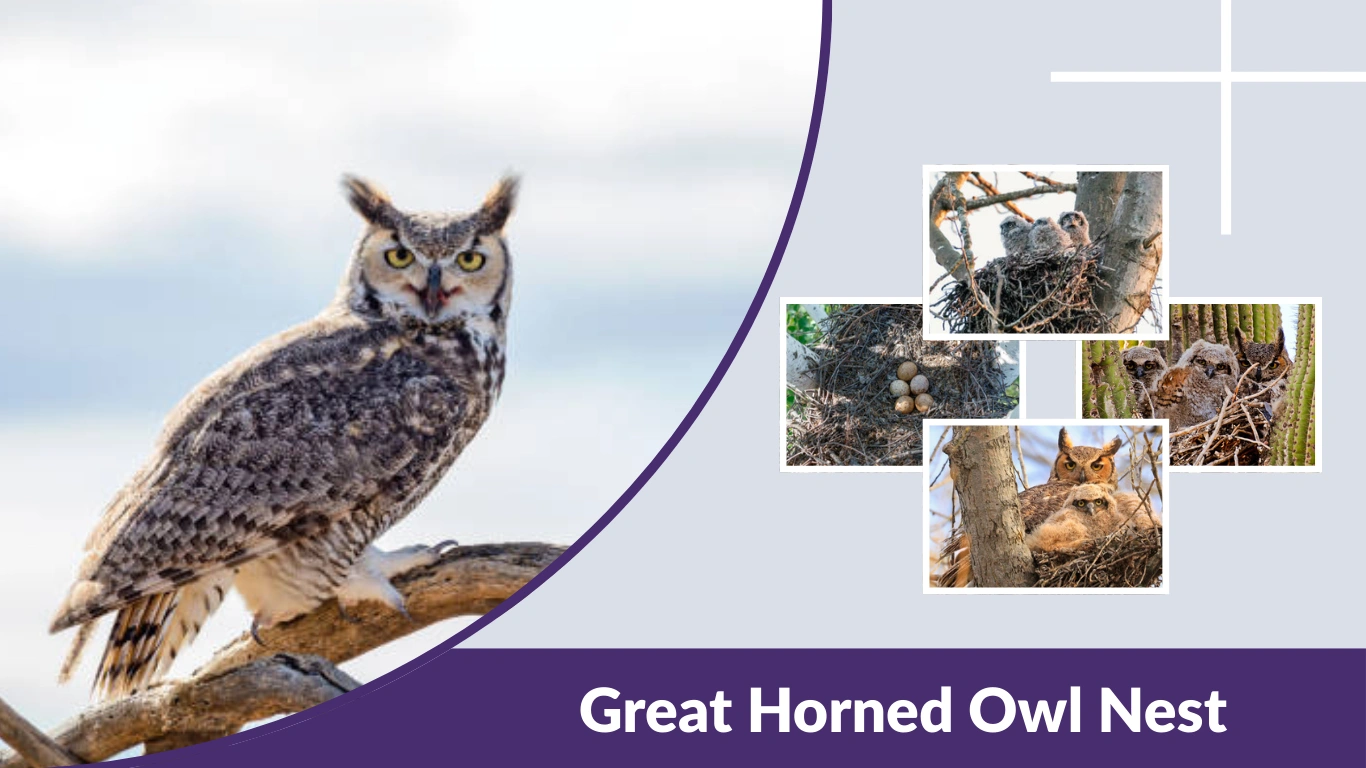
The great horned owl is one of North America’s most powerful and recognizable birds of prey. Known for its deep hooting call, piercing yellow eyes, and prominent ear tufts, this owl is also famous for its remarkable adaptability. One of the most fascinating aspects of its life cycle is its nesting behavior. Unlike many birds that carefully construct nests from scratch, the great horned owl follows a very different strategy. Understanding how and where these owls nest provides insight into their survival skills, breeding success, and relationship with their environment.
This article explores what a great horned owl nest is, where these owls choose to nest, and why their nesting habits are so unique among birds of prey.
What Is a Great Horned Owl Nest?
A great horned owl nest is not a carefully woven structure made of twigs and grasses, as seen in many birds. Instead, it is often a reused or repurposed site that offers safety, elevation, and protection for eggs and chicks. These nests are essential during the breeding season, serving as a secure place for incubation and early chick development.
The nest itself can look messy or incomplete compared to those of other birds. This is because great horned owls rely more on location and height than construction quality. As long as the site provides stability and a clear view of the surroundings, it can function effectively as a nest.
Do Great Horned Owls Build Their Own Nests?
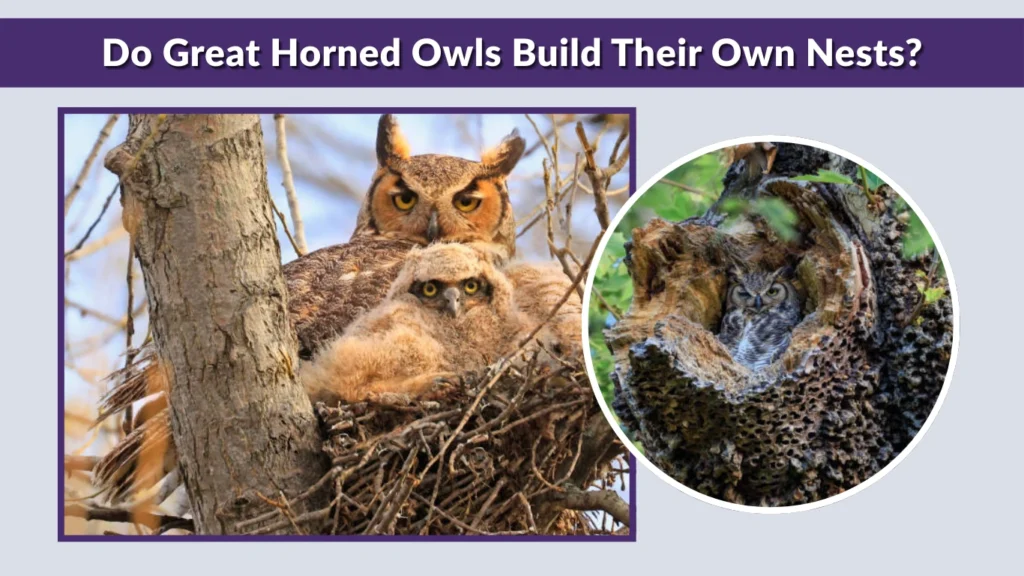
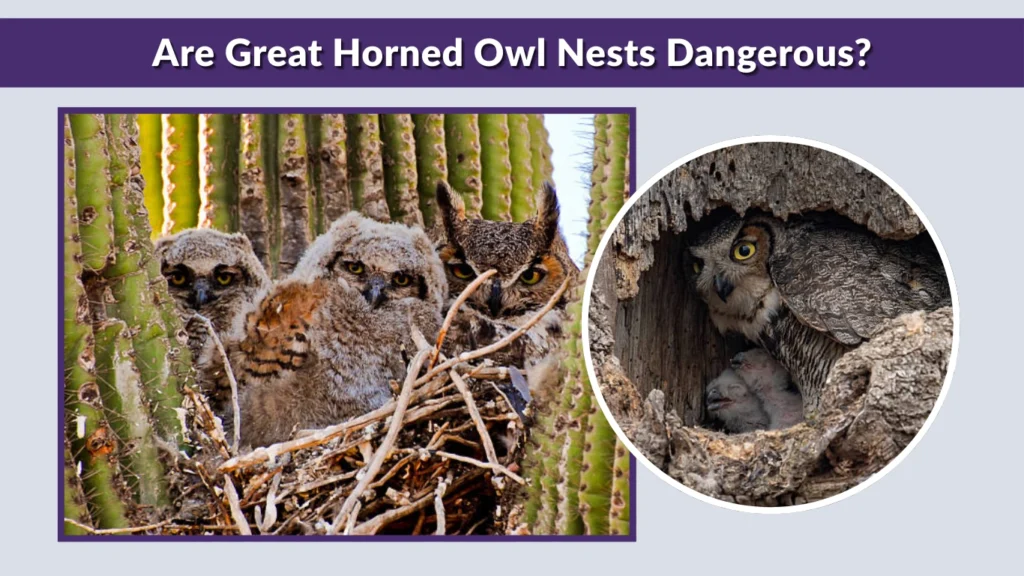
Great horned owls rarely build their own nests. Instead, they are known as “nest usurpers,” meaning they take over nests built by other animals. Commonly reused nests include those made by hawks, crows, ravens, and even large squirrels. In some cases, they may also use tree cavities, broken tree stumps, or natural depressions in cliffs.
This behavior saves time and energy, allowing the owls to begin nesting earlier than many other birds. By avoiding the effort of nest construction, great horned owls can focus on hunting, mating, and defending their territory. Their willingness to use a wide variety of nesting sites is a major reason for their widespread success across different habitats.
Where Do Great Horned Owls Nest?
Great horned owls are highly adaptable and can nest in a wide range of environments, from deep forests to busy cities.
Natural Nest Locations
In natural settings, great horned owls commonly nest in tall trees, especially near forest edges or open areas where hunting is easier. Old hawk or crow nests high in trees are particularly attractive. These elevated sites help protect the nest from ground predators and provide a good vantage point.
In rocky landscapes, great horned owls may nest on cliff ledges or in crevices along canyon walls. Some owls also choose tree cavities or broken trunks that offer shelter from wind and harsh weather. These natural locations provide both concealment and security.
Nesting in Urban and Suburban Areas
Great horned owls have successfully adapted to human-altered environments. In cities and suburbs, they may nest on building ledges, barns, bridges, or specially designed nesting platforms. Urban areas often offer abundant prey such as rodents, rabbits, and pigeons, making them attractive nesting sites.
Despite their proximity to humans, these owls usually choose quiet, elevated spots that minimize disturbance. Their ability to coexist with people is one of the reasons they remain one of the most widespread owl species in North America.
Great Horned Owl Nest Height and Size
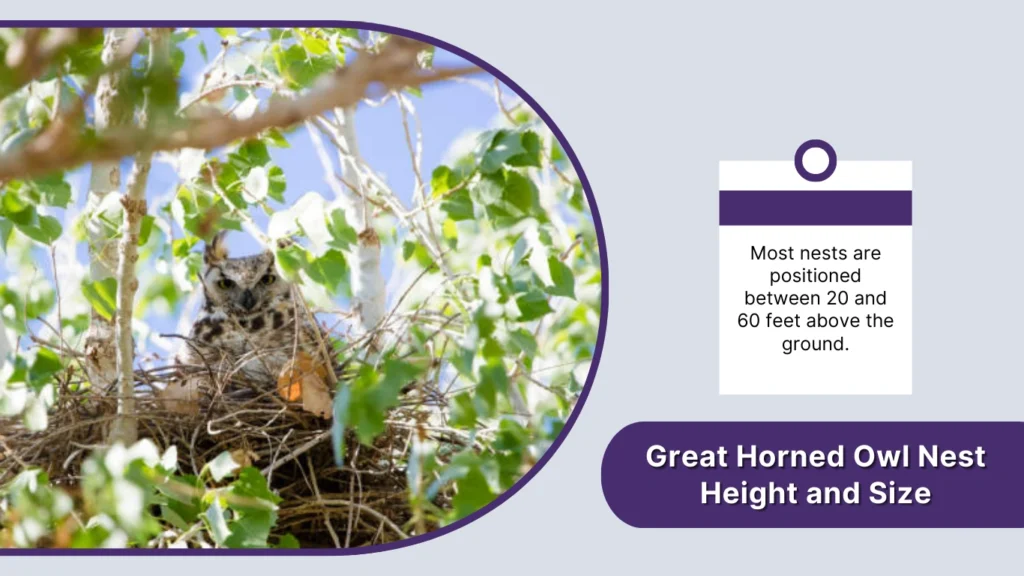
The height of a great horned owl nest can vary widely depending on the location. Most nests are positioned between 20 and 60 feet above the ground, though some may be much higher in tall trees or on cliffs. Elevation is crucial for reducing the risk of predation and avoiding human interference.
In terms of size, great horned owl nests are typically large but shallow. Because they reuse existing nests, the dimensions depend on the original builder. Over time, the nest may become flattened or worn, but this does not usually prevent successful breeding. The owls may add minimal materials, such as feathers or leaves, but they generally accept the nest as it is.
Great Horned Owl Nesting Season
One of the most unusual aspects of great horned owl nesting behavior is the timing of their breeding season. These owls begin nesting much earlier than most birds.
When Nesting Begins
In many regions, great horned owls start nesting in late winter, sometimes as early as January or February. In colder northern areas, nesting may begin slightly later, while in warmer climates it can start even earlier. This early schedule sets them apart from most other raptors and birds.
Why Great Horned Owls Nest So Early
Nesting early in the year gives great horned owls several important advantages. By raising their young before spring fully arrives, they ensure that their chicks are growing during a time when prey becomes increasingly abundant. Early nesting also reduces competition with other raptors and birds that begin breeding later in the season.
This strategy allows young owls to be strong and mobile by late spring or early summer, when food demands are high and territorial competition increases. As a result, early nesting plays a key role in the species’ long-term survival.
Eggs and Chicks Inside the Nest
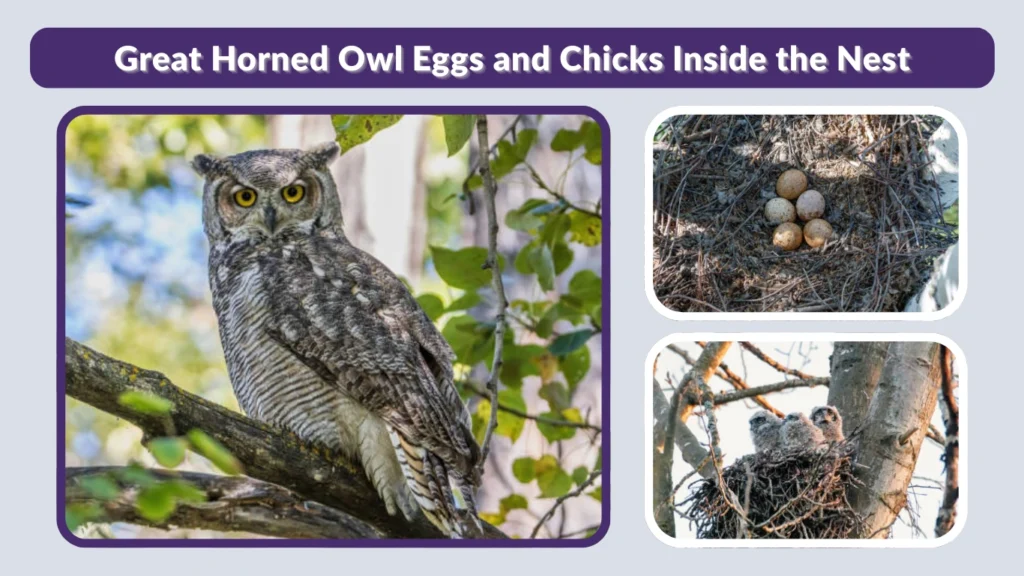
Once a suitable nest is secured, the female lays her eggs and begins the incubation process. The nest becomes the center of activity for several weeks as the next generation develops.
Great Horned Owl Eggs
A typical clutch contains one to four eggs, with two being the most common. The eggs are white, round, and relatively large compared to the bird’s body size. Incubation usually lasts around 30 to 35 days and is handled almost entirely by the female.
During this time, the male plays a critical role by hunting and bringing food to the nest. The female rarely leaves the eggs unattended, especially during cold winter nights, relying on her thick feathers and the nest’s shelter to keep them warm.
Development of Owl Chicks
Great horned owl chicks hatch covered in soft white down and are completely dependent on their parents. In the first few weeks, the female remains with the chicks while the male continues to provide food. As the chicks grow, both parents take part in feeding and protecting them.
After about six weeks, the young owls begin a stage known as “branching.” At this point, they leave the nest but stay nearby, moving along branches and learning to climb and glide. Full flight ability usually develops a few weeks later, though the parents may continue feeding the young for several months.
Nesting Behavior and Parental Roles
Great horned owls display strong parental instincts during the nesting period. The female is primarily responsible for incubation and early chick care, while the male focuses on hunting and defending the territory.
Communication between the pair is constant, especially at night. Deep hoots, screams, and bill snapping are used to warn intruders and coordinate activities. Both parents are highly protective and will aggressively defend the nest if they perceive a threat.
Are Great Horned Owl Nests Dangerous?
During nesting season, great horned owls can become extremely territorial. They are known to swoop at humans or animals that come too close to the nest, sometimes striking with their talons. While serious injuries are rare, these attacks can be frightening and potentially harmful.
Hikers, joggers, and pet owners are most at risk when unknowingly passing near an active nest. Signs that you may be too close include repeated swooping, loud vocalizations, or an owl staring directly at you. Wearing a hat and calmly leaving the area is usually enough to avoid further encounters.
How Long Do Great Horned Owls Use the Same Nest?
Great horned owls often reuse the same nest for multiple breeding seasons, especially if it remains stable and undisturbed. Some pairs return to the same nest year after year, making minor adjustments as needed.
However, nests may be abandoned if they become damaged, collapse, or are repeatedly disturbed. In such cases, the owls usually find another suitable site nearby rather than leaving the territory altogether.
What to Do If You Find a Great Horned Owl Nest
If you discover a great horned owl nest, the best action is to keep your distance. These birds are protected by law in many regions, and disturbing an active nest can result in legal consequences. Avoid climbing trees, approaching chicks, or attempting to move the nest.
If a chick appears to have fallen from the nest, it is often still being cared for by its parents. In most cases, it should be left alone. Contacting a licensed wildlife rehabilitator is recommended only if the bird is injured or in immediate danger.
Conclusion
The nesting habits of the great horned owl highlight the species’ adaptability and resilience. By reusing existing nests, nesting early in the year, and fiercely protecting their young, these owls have successfully thrived across a wide range of habitats. Understanding and respecting their nesting behavior not only keeps people safe but also helps ensure the continued survival of one of nature’s most impressive birds of prey.
FAQs
Where do great horned owls usually build their nests?
Great horned owls do not usually build their own nests. Instead, they take over abandoned nests from hawks, crows, or ravens. They may also use tree cavities, cliff ledges, broken tree stumps, or man-made structures such as buildings and nesting platforms.
What month do great horned owls start nesting?
Great horned owls typically begin nesting between January and February. In warmer regions, nesting may start as early as December, while colder northern areas may see nesting begin slightly later.
How many eggs does a great horned owl lay?
A female great horned owl usually lays between one and four eggs per clutch, with two eggs being the most common. The eggs are incubated for about 30 to 35 days.
How long do great horned owl chicks stay in the nest?
Chicks usually stay in the nest for about six weeks. After leaving the nest, they enter a branching stage where they move along nearby branches before learning to fly fully.
Are great horned owl nests protected by law?
Yes, great horned owl nests are protected under wildlife laws in many countries, including the United States. It is illegal to disturb, move, or destroy an active nest without proper permits.
