
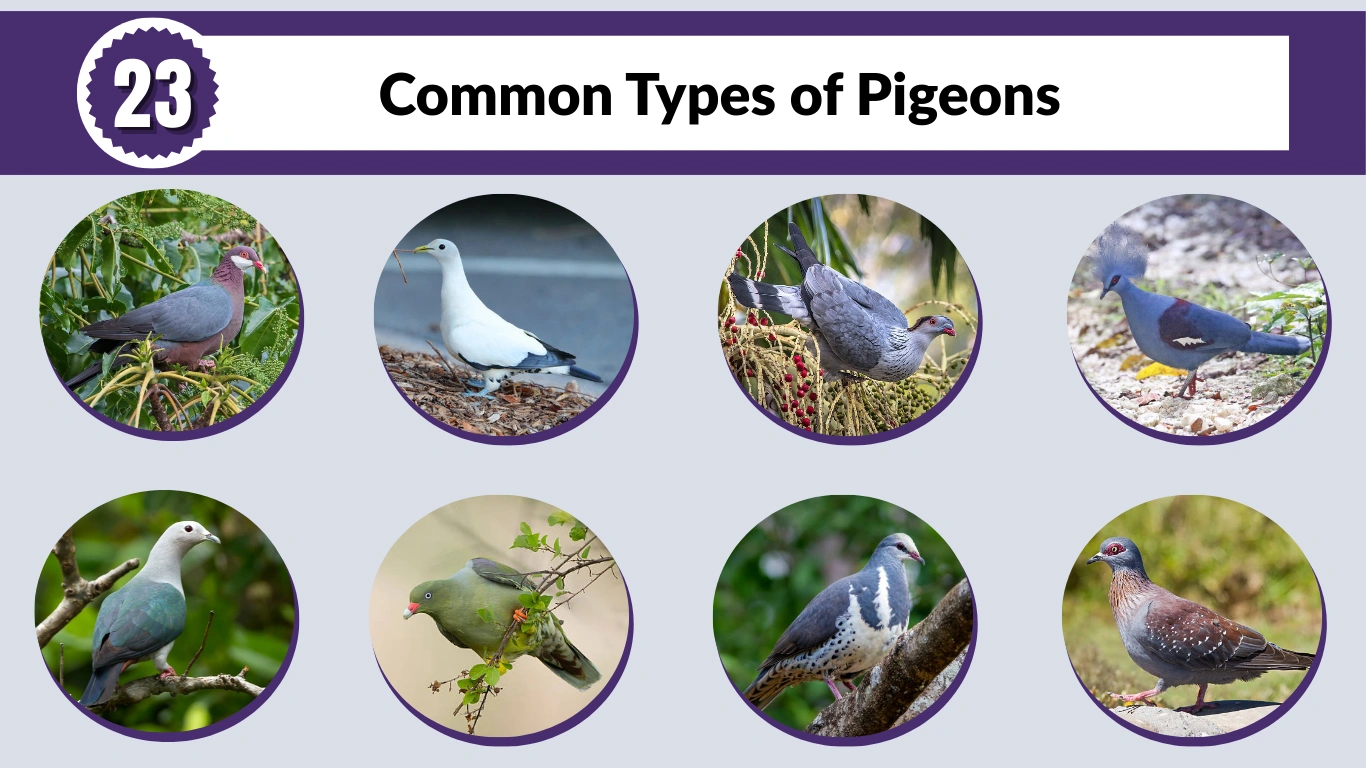
Pigeons are highly adaptable birds found across forests, islands, grasslands, and bustling cities around the world. While often associated with urban life, many pigeon species live in remote rainforests, coastal mangroves, and mountainous regions. They vary greatly in size, color, and behavior, from ground-dwelling forest pigeons to strong long-distance fliers. Pigeons play a vital ecological role, particularly as seed dispersers in fruit-rich habitats. This guide introduces 23 common types of pigeons, highlighting their unique characteristics, habitats, and behaviors.
1. Rock Pigeon (Columba livia)
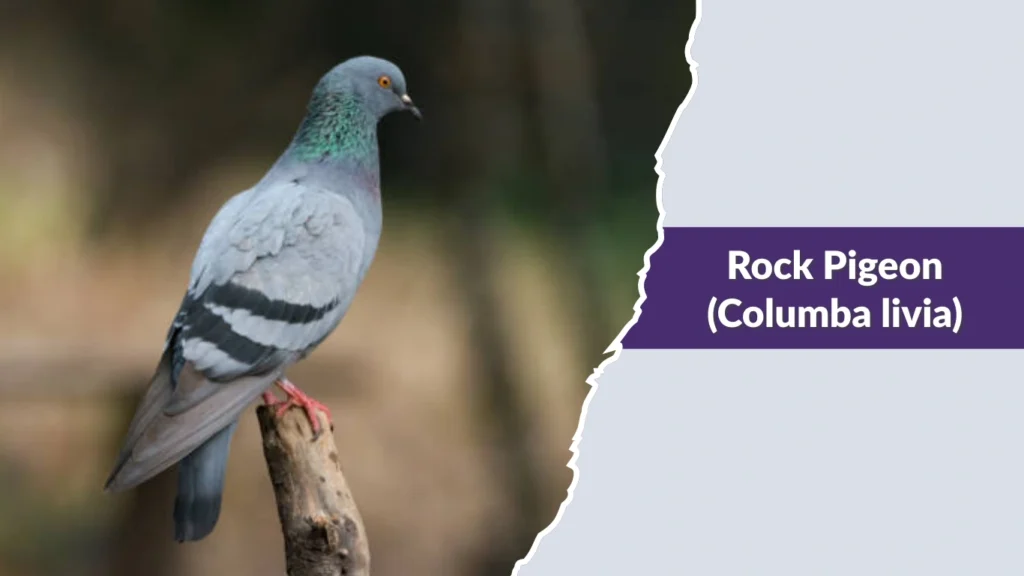
The Rock Pigeon is one of the most familiar and widespread pigeon species in the world. Commonly seen in cities and towns, it is highly adaptable and closely associated with human settlements. Originally a cliff-dwelling bird, it has successfully expanded its range across nearly all continents.
Identification
- Medium-sized, stocky-bodied pigeon
- Bluish-gray plumage with lighter underparts
- Two bold black bars on each wing
- Iridescent green and purple feathers on the neck
- Red to orange eyes with a pale eye ring
- Short, rounded tail with a dark terminal band
Habitat
Rock Pigeons originally lived on rocky cliffs and coastal outcrops. Today, they are most commonly found in urban environments such as buildings, bridges, rooftops, and city squares. They also inhabit farms, open countryside, and grain-producing areas, wherever food and nesting sites are available.
Behaviors
These pigeons are highly social and usually seen in pairs or large flocks. They are strong fliers with quick takeoffs and excellent navigation skills. Rock Pigeons form long-term pair bonds and often return to the same nesting sites year after year.
Diet and Lifespan
Rock Pigeons mainly feed on seeds, grains, and cereals, but they readily consume human food scraps in urban areas. They forage mostly on the ground. In the wild, their average lifespan is about 3–5 years, though some individuals live much longer in protected environments.
2. Wood Pigeon (Columba palumbus)
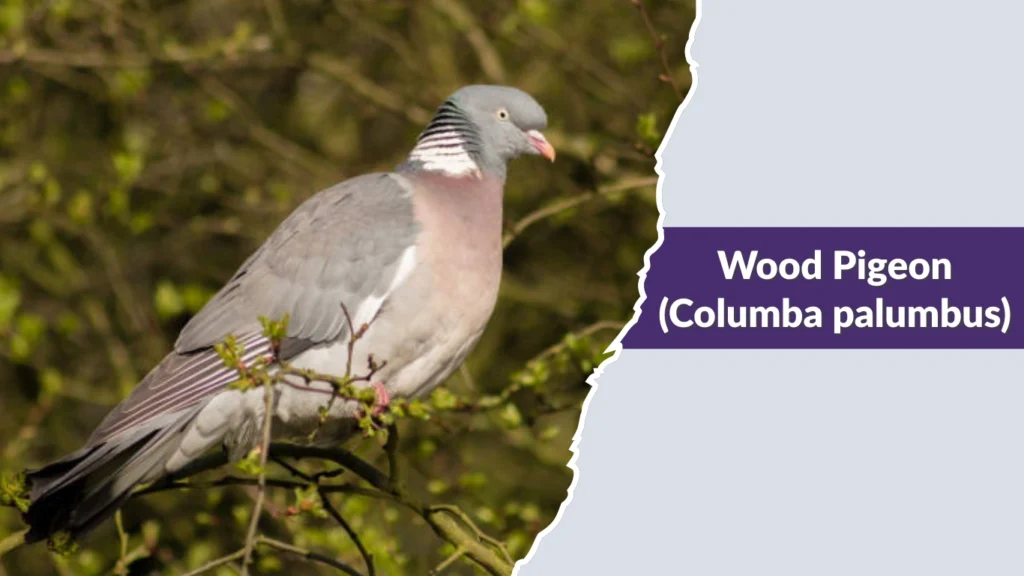
The Wood Pigeon is the largest and most common pigeon species in Europe, easily recognized by its size and bold markings. It is a strong, adaptable bird that thrives in both natural woodlands and human-altered landscapes.
Identification
- Large, broad-bodied pigeon
- Bluish-gray plumage with a pinkish chest
- White patch on each side of the neck
- Broad white bands on the wings, visible in flight
- Red-orange eyes
- Long, rounded tail
Habitat
Wood Pigeons inhabit a wide range of environments, including deciduous and mixed woodlands, farmlands, parks, gardens, and suburban areas. They nest in trees and shrubs and are increasingly common in towns and cities where food is abundant.
Behaviors
This species is often seen alone, in pairs, or in large flocks, especially outside the breeding season. Wood Pigeons have a strong, direct flight with loud wing claps during takeoff. They are generally wary birds but have become more tolerant of humans in urban settings.
Diet and Lifespan
Wood Pigeons feed on seeds, grains, leaves, buds, and agricultural crops. They forage both on the ground and in trees. In the wild, they typically live around 3–6 years, though some individuals survive longer under favorable conditions.
3. Band-tailed Pigeon (Patagioenas fasciata)
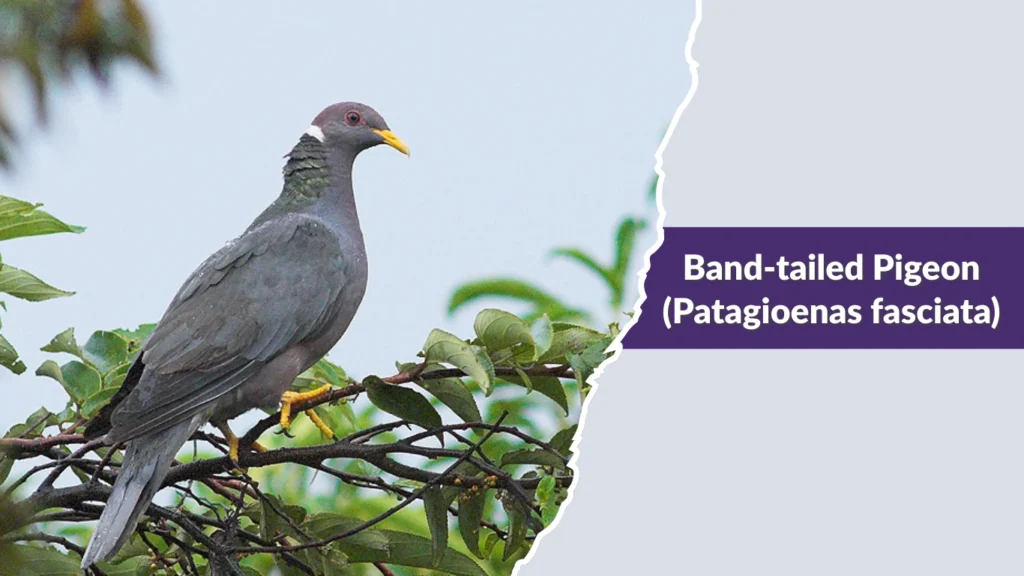
The Band-tailed Pigeon is a large, native pigeon of North and Central America, often considered the closest wild relative of the Rock Pigeon in the region. It is commonly found in forested and mountainous areas and is known for its calm, deliberate movements.
Identification
- Large, heavy-bodied pigeon
- Grayish-brown plumage with paler underparts
- Distinct white band on the back of the neck
- Yellow bill with a dark tip
- Yellow feet and legs
- Broad tail with a dark terminal band
Habitat
Band-tailed Pigeons primarily inhabit coniferous and mixed forests, especially in mountainous regions. They are often found near oak woodlands and areas with abundant fruiting trees. Nests are built in tall trees, usually far above the ground.
Behaviors
These pigeons are generally quiet and reserved, often seen perched high in trees. They may form small flocks, particularly outside the breeding season. Their flight is strong and steady, with slow, powerful wingbeats.
Diet and Lifespan
Band-tailed Pigeons feed mainly on fruits, berries, acorns, and seeds. They often travel long distances in search of food. In the wild, they typically live around 6–10 years, depending on environmental conditions and food availability.
4. Stock Dove (Columba oenas)
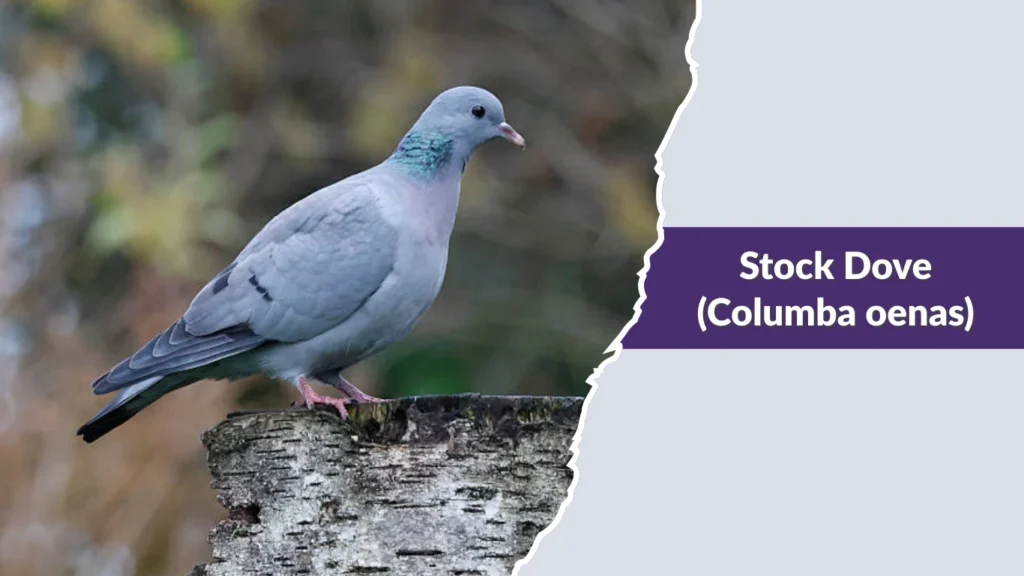
The Stock Dove is a medium-sized pigeon native to Europe and parts of western Asia. It is often overlooked due to its plain appearance but is notable for its preference for natural nesting sites and its soft, subdued behavior.
Identification
- Medium-sized pigeon with a compact body
- Bluish-gray plumage with a pinkish breast
- Lacks the white neck patch seen in Wood Pigeons
- Subtle green and purple sheen on the neck
- Dark eyes
- Short, rounded tail
Habitat
Stock Doves favor open woodlands, farmland with scattered trees, parklands, and rural areas. They often nest in tree cavities, old woodpecker holes, or cliff crevices rather than building exposed nests. This preference helps distinguish them from similar pigeon species.
Behaviors
These pigeons are generally quiet and shy, often seen in pairs or small flocks. Their flight is fast and direct. Stock Doves are less tolerant of urban environments compared to other pigeons and tend to avoid heavily populated city centers.
Diet and Lifespan
Stock Doves feed mainly on seeds, grains, sprouts, and small invertebrates. They forage mostly on the ground. In the wild, they typically live around 3–6 years, depending on habitat quality and predation levels.
5. Oriental Turtle-Dove (Streptopelia orientalis)
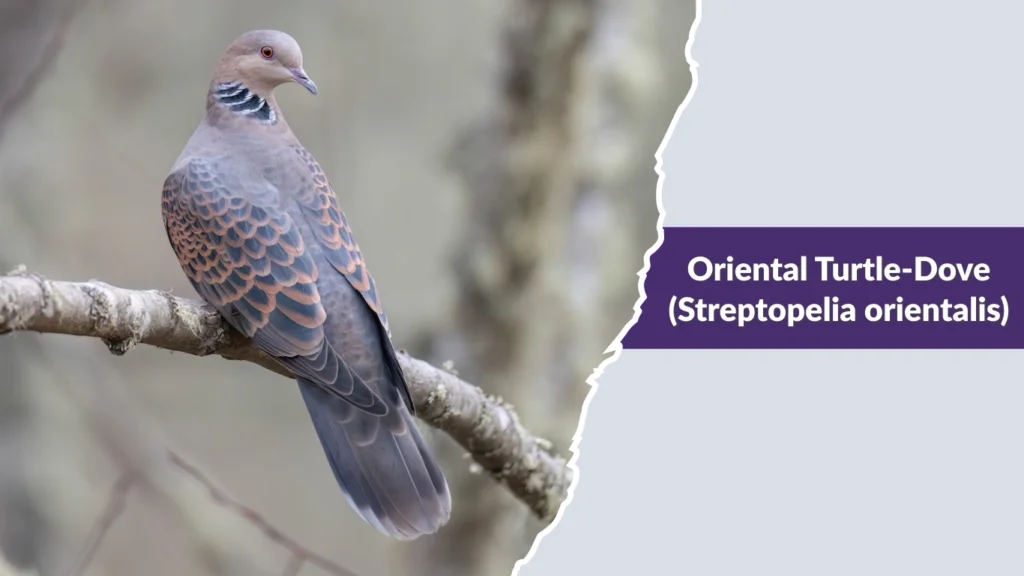
The Oriental Turtle-Dove is a medium-sized pigeon found across East Asia and parts of Southeast Asia. It is admired for its intricate plumage patterns and calm presence, often inhabiting wooded and semi-open landscapes.
Identification
- Medium-sized pigeon with a sturdy body
- Brownish-gray plumage with scaled appearance
- Black-and-white striped patch on the side of the neck
- Reddish-brown wings with dark markings
- Dark eyes with subtle eye ring
- Long, rounded tail
Habitat
This species inhabits woodlands, forest edges, agricultural areas, and suburban regions. It prefers areas that offer both tree cover for nesting and open ground for feeding. Some populations migrate seasonally in response to colder climates.
Behaviors
Oriental Turtle-Doves are generally shy and less tolerant of close human presence. They are often seen alone or in pairs. Their flight is strong and direct, and their deep, rhythmic cooing calls are most commonly heard during the breeding season.
Diet and Lifespan
Their diet consists mainly of seeds, grains, berries, and occasional small insects. They forage on the ground or in low vegetation. In the wild, Oriental Turtle-Doves typically live around 5–8 years, depending on environmental conditions.
6. European Turtle-Dove (Streptopelia turtur)
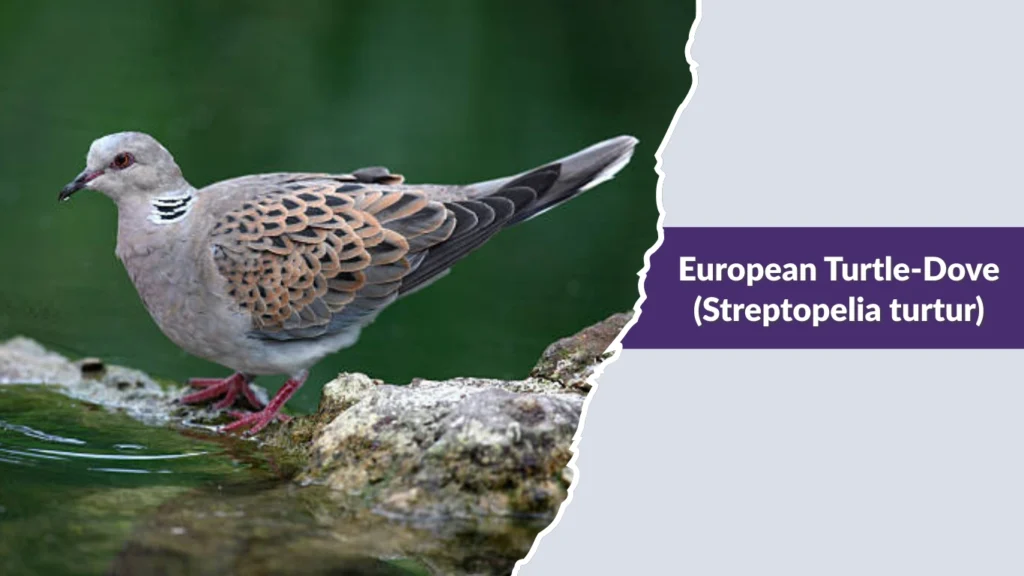
The European Turtle-Dove is a slender, migratory pigeon known for its soft colors and gentle, purring call. Once common across Europe, its numbers have declined in recent decades, making it a species of growing conservation concern.
Identification
- Slim, medium-sized pigeon
- Warm brown and gray plumage
- Black-and-white striped patch on the sides of the neck
- Pinkish breast
- Red eye ring
- Long, tapered tail
Habitat
European Turtle-Doves prefer open woodlands, forest edges, hedgerows, and farmland with scattered trees. They nest in dense shrubs or low trees and rely on traditional agricultural landscapes that provide abundant seed sources.
Behaviors
This species is shy and cautious, often flushing quickly when approached. It is a long-distance migrant, traveling between Europe and sub-Saharan Africa. Its flight is swift and direct, and its soft, rhythmic purring call is a familiar sound in spring and summer.
Diet and Lifespan
European Turtle-Doves feed mainly on wild seeds and grains, occasionally eating small insects. They forage mostly on the ground. In the wild, they typically live around 4–7 years, though survival rates vary due to migration risks and habitat loss.
7. Common Bronzewing (Phaps chalcoptera)
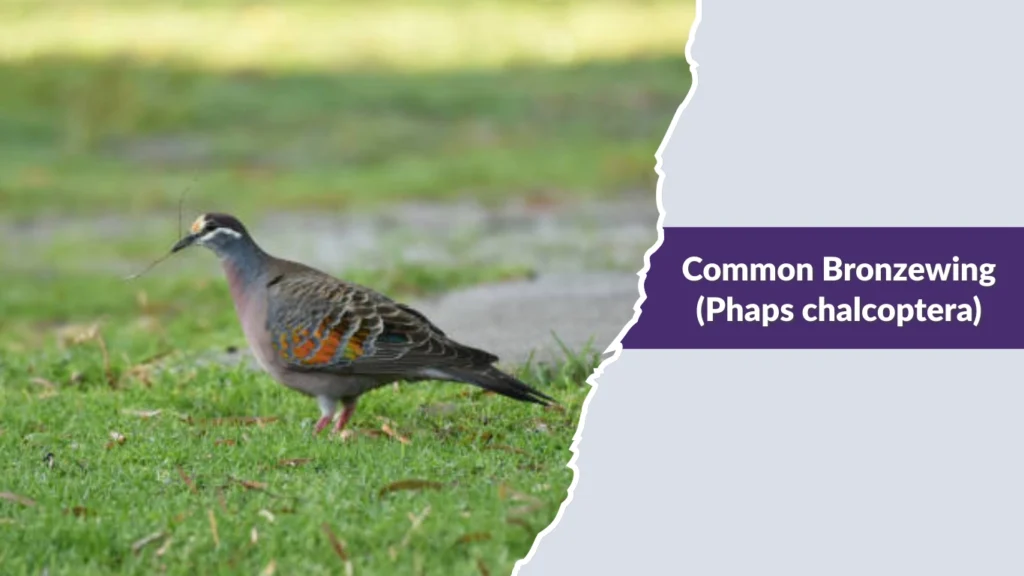
The Common Bronzewing is a large, ground-dwelling pigeon native to Australia. It is known for its striking metallic wing patches that shimmer green, bronze, and purple in sunlight, making it one of the most visually impressive pigeon species.
Identification
- Large, heavy-bodied pigeon
- Brownish-gray body with pinkish underparts
- Metallic bronze and green patches on wings
- Pale forehead and face
- Dark eyes
- Long tail with pale tips
Habitat
Common Bronzewings inhabit a variety of environments, including woodlands, forests, scrublands, grasslands, and agricultural areas. They prefer habitats with dense ground cover for feeding and nearby trees for roosting. This species is often found close to water sources, especially in dry regions.
Behaviors
These pigeons are usually seen alone or in pairs and spend much of their time walking quietly on the ground. When disturbed, they explode into flight with loud wingbeats before quickly dropping back into cover. They are generally shy and avoid human activity.
Diet and Lifespan
Their diet consists mainly of seeds, fallen fruits, and plant material gathered from the ground. Common Bronzewings forage by walking slowly and deliberately. In the wild, they typically live around 5–10 years, depending on habitat quality and predation pressure.
8. Crested Pigeon (Ocyphaps lophotes)
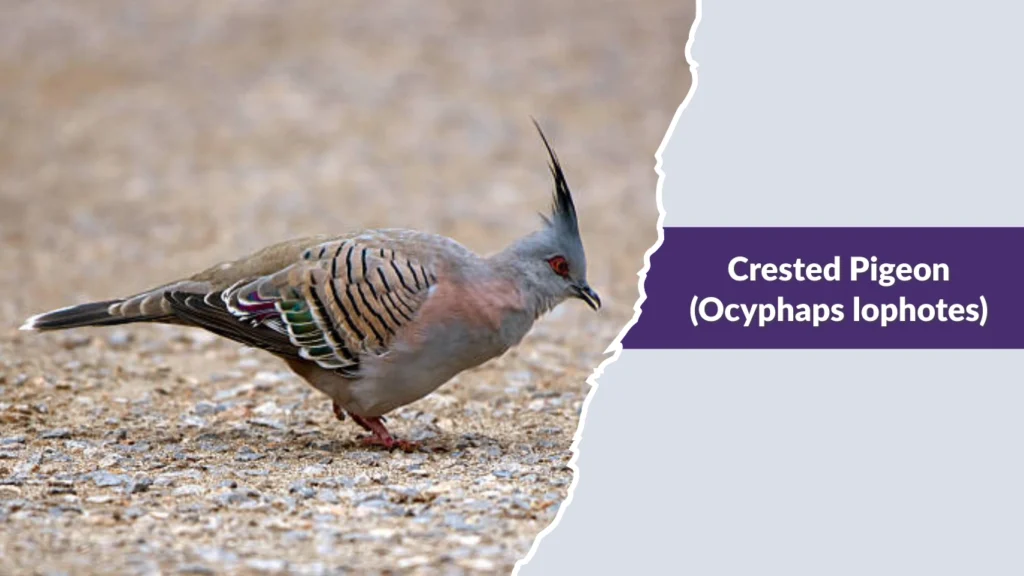
The Crested Pigeon is a distinctive Australian pigeon easily recognized by the elegant crest on its head. It is a highly adaptable species that has benefited from agricultural development and the availability of artificial water sources.
Identification
- Medium-sized pigeon with a slim build
- Prominent pointed crest on the head
- Gray-brown plumage with pinkish underparts
- Black wing markings with iridescent highlights
- Red eyes
- Long tail with dark central feathers
Habitat
Crested Pigeons inhabit open grasslands, farmlands, savannas, woodlands, and suburban areas. They are especially common in agricultural regions and areas with reliable water sources. Nests are built in trees or tall shrubs.
Behaviors
These pigeons are often seen in pairs or small flocks and are highly alert. When taking off, their wings produce a distinctive whistling sound that may serve as a warning signal to others. They are strong fliers and spend much of their time feeding on the ground.
Diet and Lifespan
Crested Pigeons feed mainly on seeds and grains, often collected from the ground in open areas. They regularly visit water sources. In the wild, they typically live around 6–10 years, depending on environmental conditions.
9. African Olive Pigeon (Columba arquatrix)
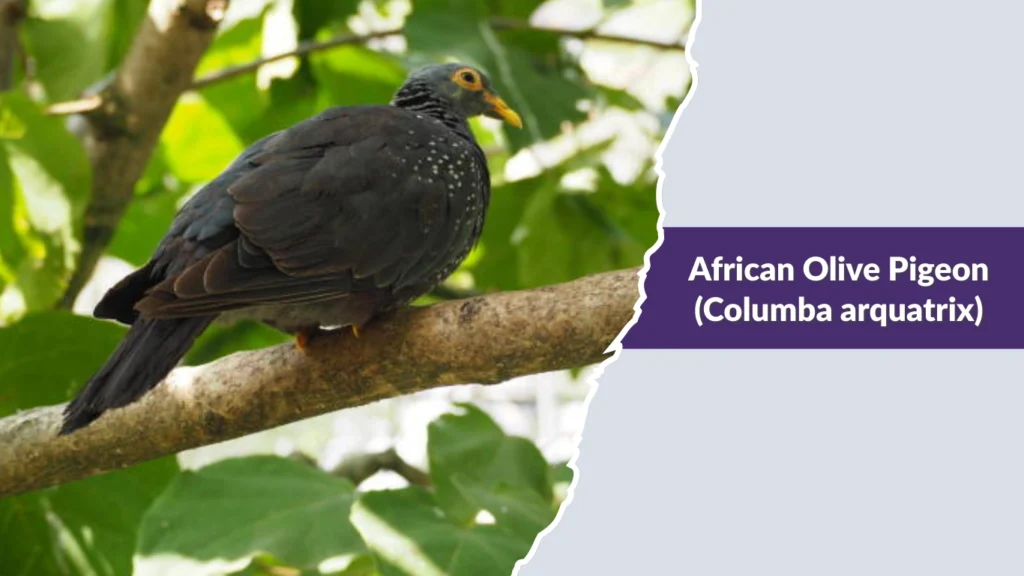
The African Olive Pigeon is a large, forest-dwelling pigeon native to sub-Saharan Africa. It is one of the biggest pigeon species on the continent and is closely associated with mature forests, where it plays an important role in seed dispersal.
Identification
- Large, heavy-bodied pigeon
- Dark slate-gray to brownish plumage
- Pale face and forehead
- Distinctive reddish eye ring
- Strong, thick bill
- Broad wings and long tail
Habitat
African Olive Pigeons primarily inhabit evergreen forests, montane forests, and dense woodlands. They are especially common in areas with fruiting trees. This species tends to stay high in the forest canopy and is rarely found in open or urban environments.
Behaviors
These pigeons are generally quiet and secretive, often detected by the sound of their wingbeats rather than their calls. They are usually seen alone or in pairs and may travel long distances between feeding and roosting sites. Their flight is powerful and direct.
Diet and Lifespan
Their diet consists mainly of fruits and berries, particularly figs, supplemented occasionally with seeds. African Olive Pigeons forage mostly in trees. In the wild, they are believed to live around 5–10 years, though exact lifespan data is limited.
10. White-crowned Pigeon (Patagioenas leucocephala)
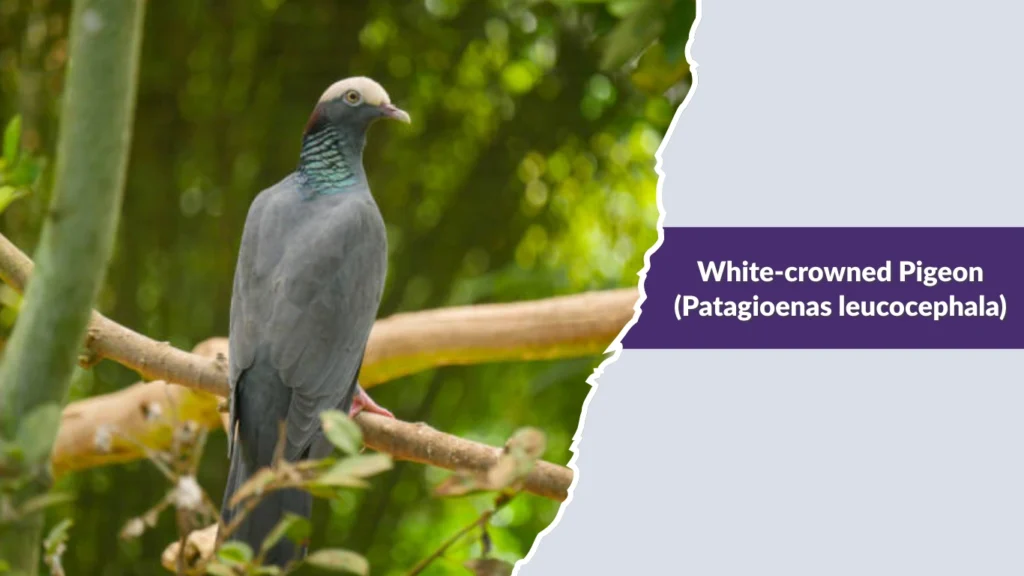
The White-crowned Pigeon is a large, striking pigeon native to the Caribbean, Central America, and southern Florida. It is well known for its bold white head and its dependence on coastal and island habitats.
Identification
- Large, robust pigeon
- Pure white crown and forehead
- Slate-gray body and wings
- Reddish-brown eye ring
- Dark bill with pale base
- Broad tail with dark tip
Habitat
White-crowned Pigeons inhabit mangroves, coastal forests, tropical woodlands, and island habitats. They often roost and nest in mangroves while traveling inland to feed. These habitats are critical for their survival and breeding success.
Behaviors
This species is often seen in small flocks and may gather in large groups at feeding sites. It is a strong flier capable of long-distance travel between roosting and feeding areas. White-crowned Pigeons are generally wary and flush quickly when disturbed.
Diet and Lifespan
Their diet mainly consists of fruits and berries, especially figs and palm fruits. They forage primarily in trees rather than on the ground. In the wild, White-crowned Pigeons typically live around 5–8 years, depending on habitat quality and threats.
11. Speckled Pigeon (Columba guinea)
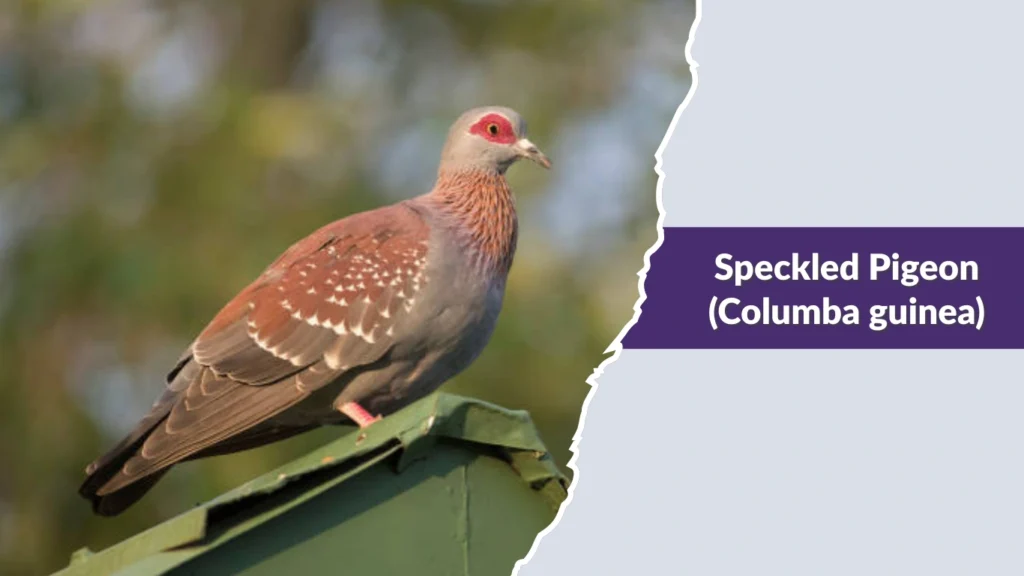
The Speckled Pigeon is a large, attractive pigeon native to Africa, easily recognized by the bold white spots scattered across its wings. It often inhabits rocky areas and human settlements, making it a familiar sight in many regions.
Identification
- Large, sturdy pigeon
- Dark gray to brown plumage
- Prominent white speckles on wings
- Red eyes with bright red eye ring
- Strong reddish bill
- Long, slightly rounded tail
Habitat
Speckled Pigeons favor rocky cliffs, outcrops, gorges, and mountainous regions. They also adapt well to urban environments, nesting on buildings and bridges that resemble natural cliff habitats. They are commonly found near farms and towns.
Behaviors
These pigeons are social and often seen in pairs or flocks. They perch openly on rooftops and rock ledges. Their flight is strong and direct, and they frequently glide between high perches and feeding areas.
Diet and Lifespan
Speckled Pigeons feed mainly on seeds, grains, and agricultural crops. They forage mostly on the ground. In the wild, they typically live around 5–10 years, though some individuals may survive longer in favorable conditions.
12. Victoria Crowned Pigeon (Goura victoria)
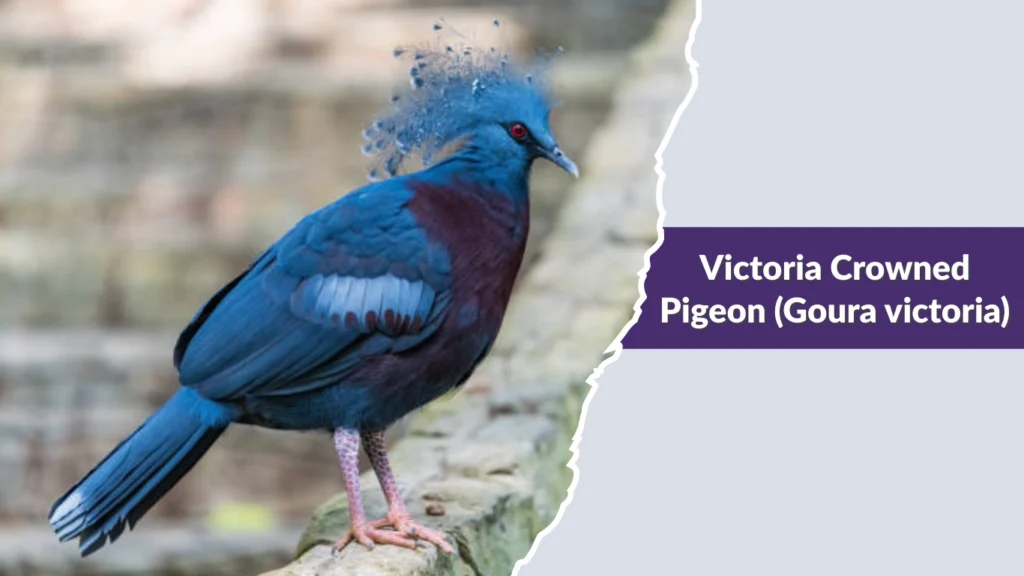
The Victoria Crowned Pigeon is one of the largest and most spectacular pigeon species in the world. Native to New Guinea, it is famous for its elaborate blue lace-like crest and graceful, almost regal appearance.
Identification
- Very large, heavy-bodied pigeon
- Soft blue-gray plumage
- Elaborate fan-shaped crest with white tips
- Maroon chest and red eyes
- Strong legs and feet
- Broad, rounded wings
Habitat
Victoria Crowned Pigeons inhabit lowland rainforests, swamp forests, and dense tropical woodlands. They spend much of their time on the forest floor but roost and nest in trees. Intact forest habitat is essential for their survival.
Behaviors
These pigeons are generally calm and slow-moving, often walking deliberately on the forest floor. They are usually seen alone or in small groups. When alarmed, they take off with loud wingbeats and fly into nearby trees.
Diet and Lifespan
Their diet consists mainly of fallen fruits, seeds, and berries collected from the ground. In the wild, Victoria Crowned Pigeons can live around 15–25 years, with individuals in captivity often living even longer due to protection and stable food sources.
13. Luzon Bleeding-heart (Gallicolumba luzonica)
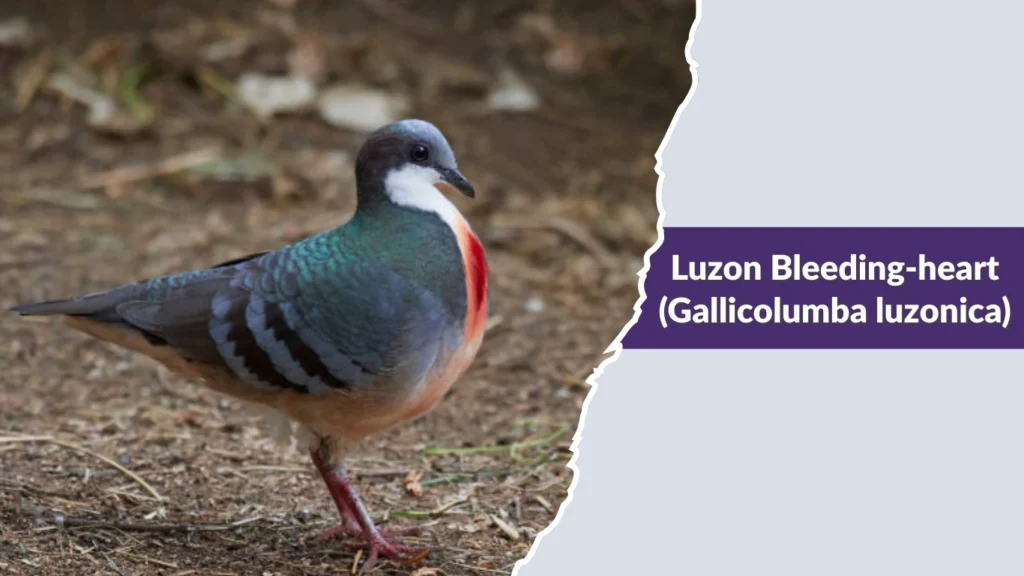
The Luzon Bleeding-heart is a striking and rare ground-dwelling pigeon endemic to the Philippines. It is named for the vivid red patch on its chest, which resembles a bleeding wound, making it one of the most visually distinctive pigeons in the world.
Identification
- Medium-sized, compact pigeon
- Pale gray body with white underparts
- Bright red patch on the chest
- Black markings on wings
- Red eyes with thin eye ring
- Short, rounded tail
Habitat
This species inhabits lowland tropical forests, secondary forests, and dense undergrowth. It prefers shaded, undisturbed environments with thick ground cover. Due to deforestation, its habitat has become increasingly fragmented, contributing to its rarity.
Behaviors
Luzon Bleeding-hearts are shy and secretive, spending most of their time walking quietly on the forest floor. They are usually seen alone or in pairs and fly only short distances when disturbed, quickly retreating into dense vegetation.
Diet and Lifespan
Their diet consists mainly of seeds, fallen fruits, berries, and small invertebrates. They forage on the ground. In the wild, their lifespan is estimated at around 8–12 years, though detailed data is limited due to their elusive nature.
14. Nicobar Pigeon (Caloenas nicobarica)
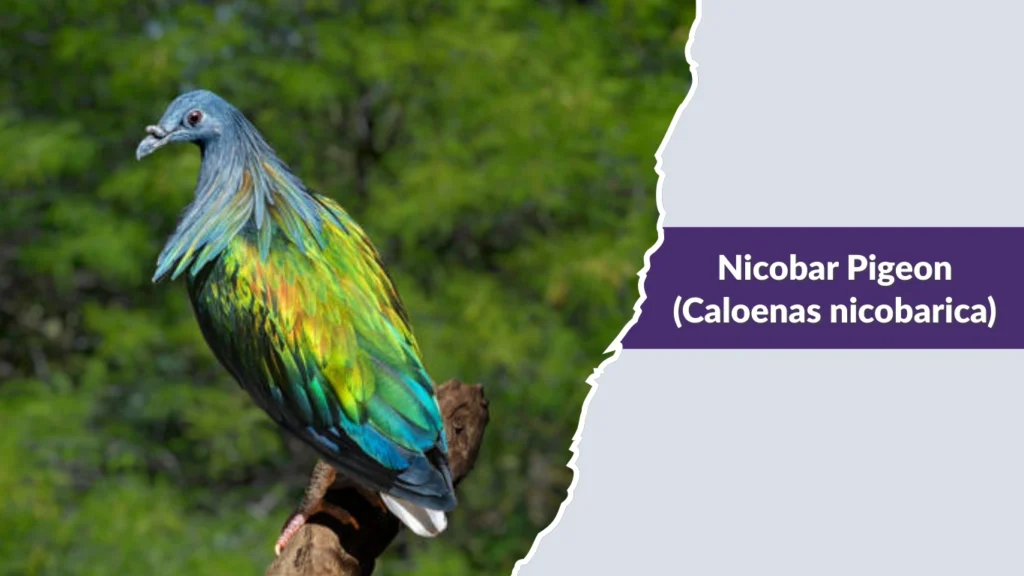
The Nicobar Pigeon is a striking, iridescent pigeon found on small islands across Southeast Asia and the Pacific. It is the closest living relative of the extinct dodo and is admired for its metallic plumage and long, decorative neck feathers.
Identification
- Medium to large-sized pigeon
- Metallic green, blue, and copper plumage
- Long, flowing hackle feathers on the neck
- White tail contrasting with dark body
- Dark eyes
- Strong black bill
Habitat
Nicobar Pigeons inhabit coastal forests, mangroves, and remote island woodlands. They typically nest on small offshore islands and travel to larger islands to forage. These secluded habitats help protect them from predators but are increasingly threatened.
Behaviors
This species is usually seen in small flocks and is a strong, fast flier capable of traveling long distances between islands. On land, they move deliberately while foraging. Nicobar Pigeons are generally wary and avoid human disturbance.
Diet and Lifespan
Their diet consists mainly of seeds, fruits, and nuts collected from the forest floor. They forage primarily on the ground. In the wild, Nicobar Pigeons are believed to live around 10–15 years, though exact lifespan data is limited.
15. Wonga Pigeon (Leucosarcia melanoleuca)
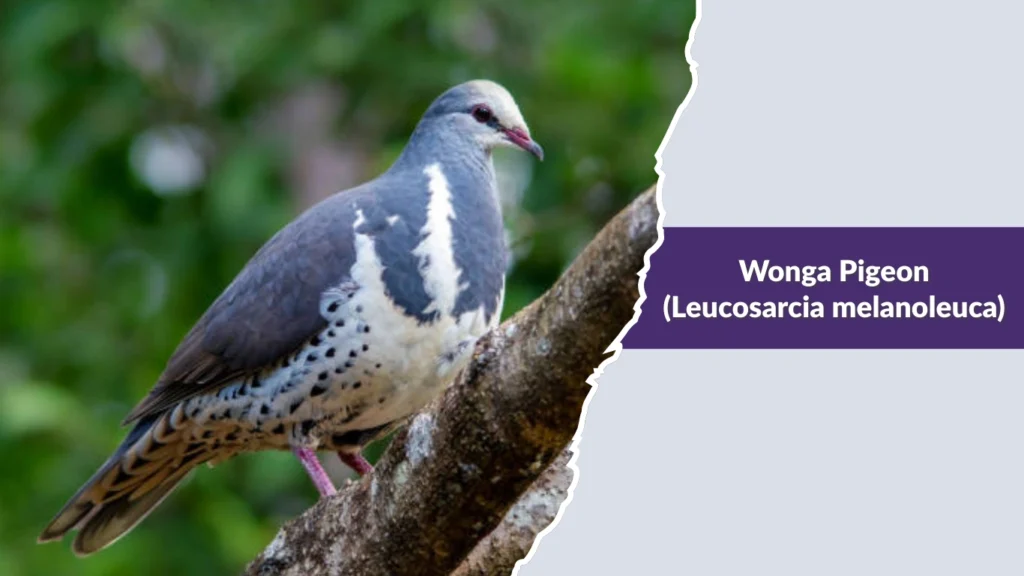
The Wonga Pigeon is a large, ground-dwelling pigeon native to eastern Australia. It is known for its bold black-and-white coloration and its preference for dense forest habitats, where it often remains hidden among thick vegetation.
Identification
- Large, heavy-bodied pigeon
- Gray-brown upperparts with white underparts
- Bold black stripe running down the chest
- Black wings with white patches
- Dark eyes
- Long, rounded tail
Habitat
Wonga Pigeons inhabit subtropical and temperate rainforests, wet sclerophyll forests, and dense woodlands. They prefer areas with thick ground cover and nearby fruiting trees. This species avoids open landscapes and urban areas.
Behaviors
These pigeons are usually seen alone or in pairs and spend much of their time walking on the forest floor. They are shy and tend to flush suddenly when approached, taking off with loud wingbeats into nearby trees.
Diet and Lifespan
Their diet mainly consists of fallen fruits, seeds, and berries, occasionally supplemented with small invertebrates. They forage almost entirely on the ground. In the wild, Wonga Pigeons typically live around 8–12 years, depending on habitat quality.
16. Pink Pigeon (Nesoenas mayeri)
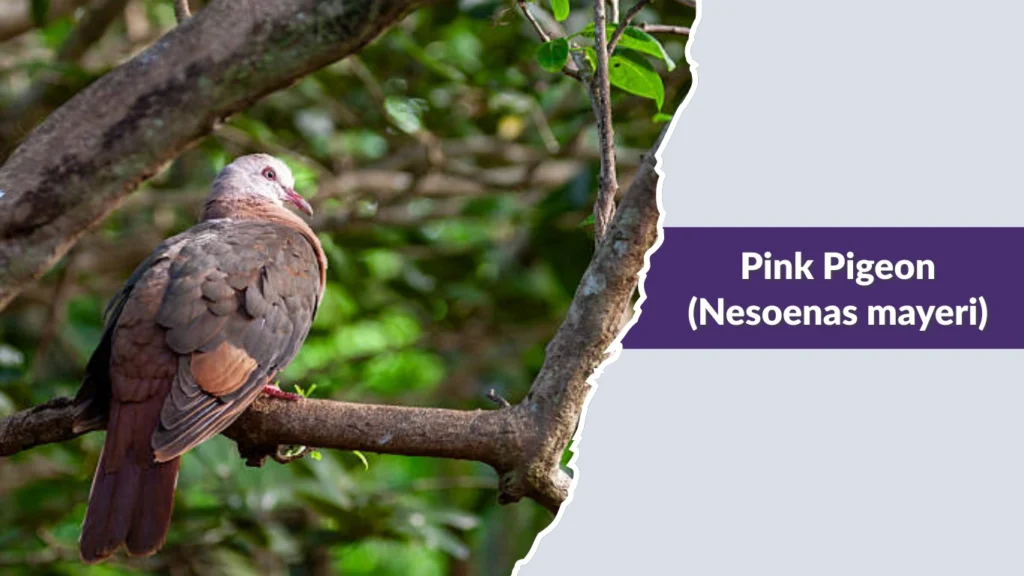
The Pink Pigeon is a rare and endangered pigeon species endemic to Mauritius. It is best known for its soft pink plumage and has become a symbol of successful conservation efforts on the island.
Identification
- Medium-sized pigeon
- Soft pink body with pale gray wings
- Reddish bill with yellow tip
- Red eye ring
- Rounded head and body
- Short, broad tail
Habitat
Pink Pigeons inhabit native evergreen forests and woodland areas on Mauritius. They rely heavily on intact forest ecosystems with a good supply of fruiting trees. Habitat loss was a major factor in their decline, making protected areas essential for survival.
Behaviors
These pigeons are generally calm and social, often seen in pairs or small groups. They perch quietly in trees and move slowly while foraging. Pink Pigeons are not strongly migratory and tend to stay within limited home ranges.
Diet and Lifespan
Their diet consists mainly of fruits, seeds, buds, and flowers from native plants. They forage mostly in trees. In the wild, Pink Pigeons can live around 10–15 years, with conservation efforts significantly improving survival rates.
17. Yellow-footed Green Pigeon (Treron phoenicopterus)
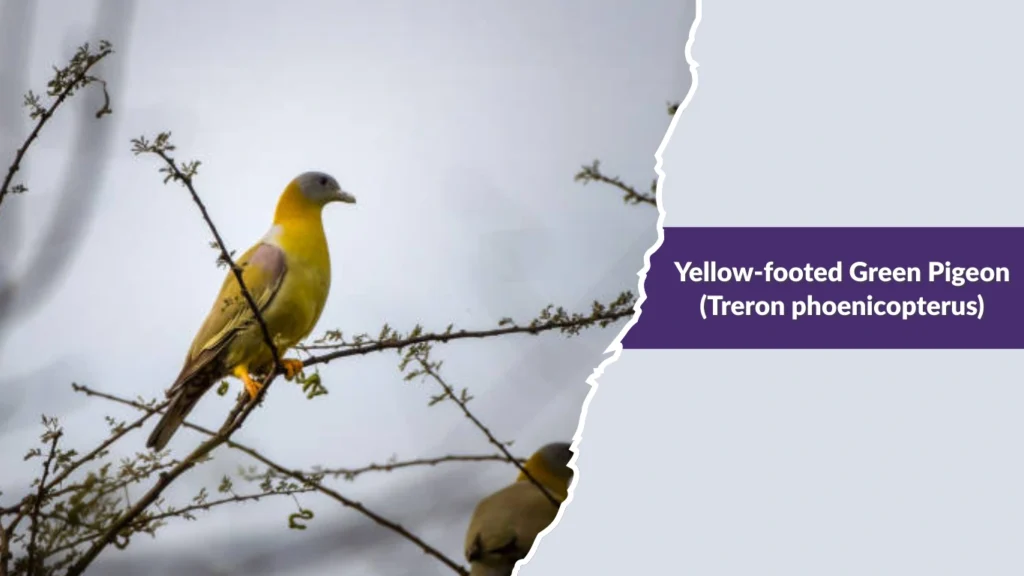
The Yellow-footed Green Pigeon is a colorful pigeon native to the Indian subcontinent. It is easily recognized by its bright green plumage and vivid yellow legs, often seen feeding quietly in fruiting trees.
Identification
- Medium-sized pigeon with stout body
- Bright green plumage
- Yellow legs and feet
- Pale gray head
- Maroon shoulder patch visible in flight
- Short, square tail
Habitat
This species inhabits deciduous forests, open woodlands, scrublands, and agricultural areas. It is commonly found near villages and orchards where fruiting trees are available. Nests are built high in trees, providing safety from ground predators.
Behaviors
Yellow-footed Green Pigeons are usually seen alone or in small groups. They are calm and deliberate in movement, spending long periods feeding in trees. Their flight is strong but quiet, often traveling between feeding and roosting sites.
Diet and Lifespan
Their diet consists mainly of fruits and berries, especially figs, supplemented occasionally with seeds. They forage almost entirely in trees. In the wild, Yellow-footed Green Pigeons typically live around 8–12 years, depending on habitat conditions.
18. Imperial Pigeon (Ducula spp.)
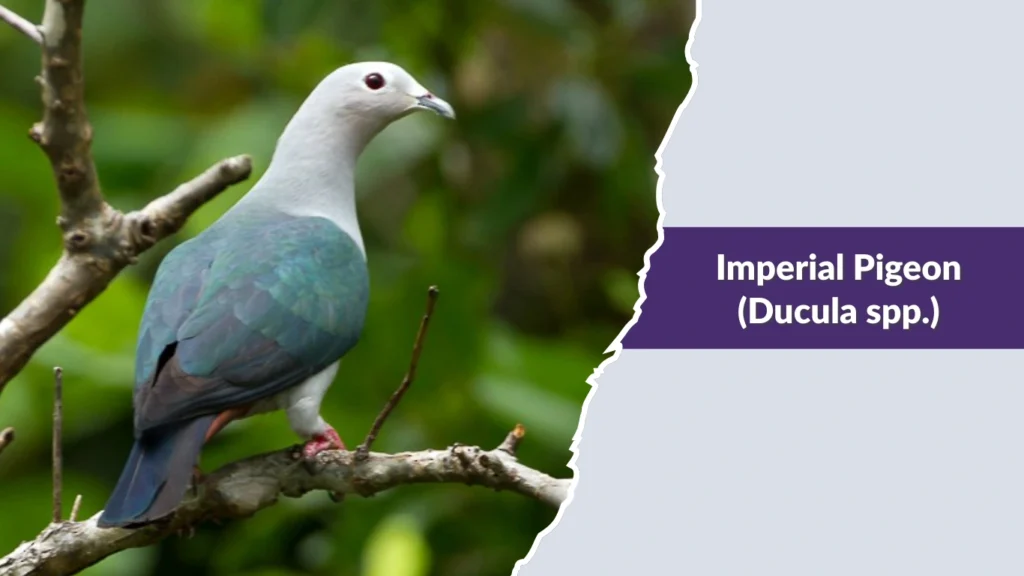
Imperial Pigeons are a group of large, fruit-eating pigeons found across Southeast Asia, Australia, and the Pacific islands. They are known for their impressive size, smooth plumage, and important role in forest ecosystems as seed dispersers.
Identification
- Large, heavy-bodied pigeon
- Smooth gray, white, or dark plumage (varies by species)
- Broad wings
- Dark eyes
- Strong, slightly hooked bill
- Long, rounded tail
Habitat
Imperial Pigeons inhabit tropical and subtropical forests, coastal woodlands, mangroves, and island forests. They are often found high in the canopy, especially in areas with abundant fruiting trees. Many species are closely tied to island ecosystems.
Behaviors
These pigeons are generally calm and slow-moving. They are often seen perched high in trees and may travel long distances to reach feeding areas. Imperial Pigeons are strong fliers and are usually observed alone, in pairs, or in small groups.
Diet and Lifespan
Their diet consists mainly of fruits and berries, particularly figs. They forage almost entirely in trees. In the wild, Imperial Pigeons typically live around 10–20 years, depending on the species and habitat quality.
19. African Green Pigeon (Treron calvus)
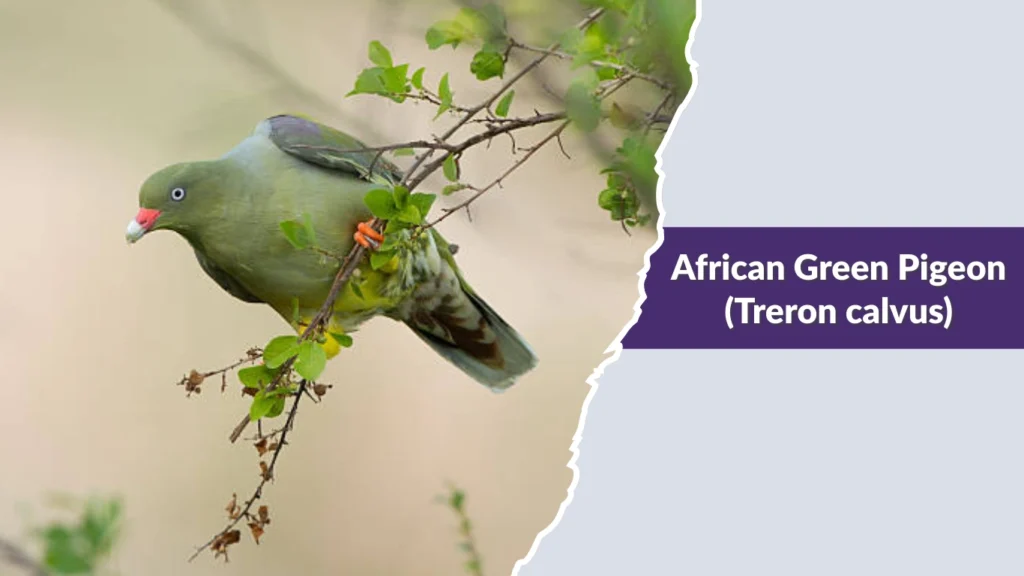
The African Green Pigeon is a brightly colored, fruit-eating pigeon widely distributed across sub-Saharan Africa. Its vivid green plumage allows it to blend easily into leafy canopies, where it spends most of its time feeding and resting.
Identification
- Medium-sized pigeon with stout body
- Bright green plumage
- Pale gray head
- Yellow-green legs and feet
- Dark eyes with thin eye ring
- Short, square tail
Habitat
This species inhabits forests, woodlands, riverine forests, and savannas with scattered trees. It is often found near fruiting fig trees and can also occur in gardens and cultivated areas with sufficient tree cover.
Behaviors
African Green Pigeons are usually seen alone or in small groups. They are quiet and unobtrusive, often remaining motionless while feeding in trees. Their flight is strong and direct, allowing them to travel efficiently between feeding sites.
Diet and Lifespan
Their diet consists mainly of fruits and berries, particularly figs. They forage almost entirely in trees. In the wild, African Green Pigeons typically live around 8–12 years, depending on habitat quality and food availability.
20. Topknot Pigeon (Lopholaimus antarcticus)
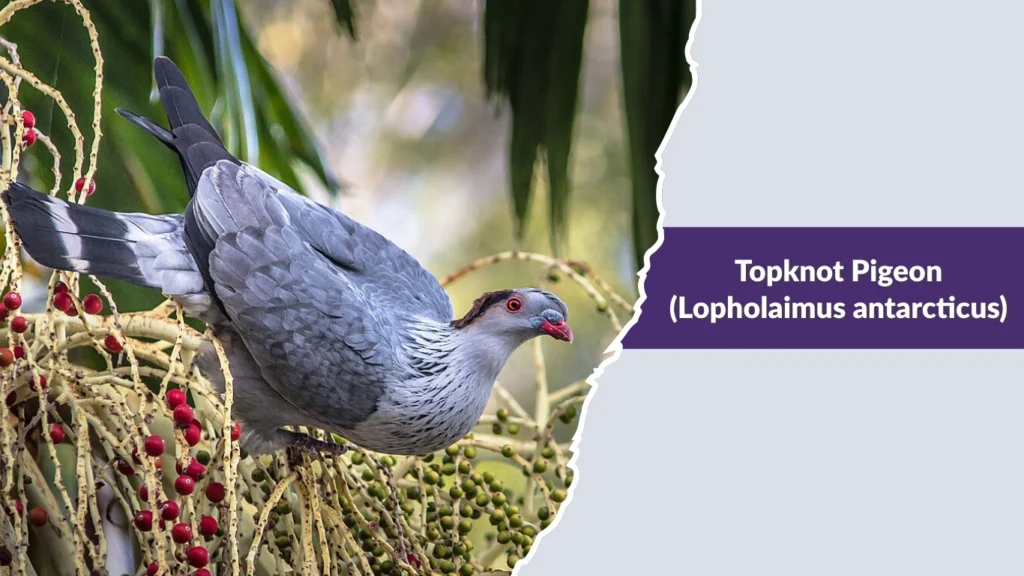
The Topknot Pigeon is a large, distinctive pigeon native to eastern Australia. It is best known for the prominent crest on its head and its reliance on rainforest habitats, where it plays an important role in dispersing large fruit seeds.
Identification
- Large, heavy-bodied pigeon
- Prominent crest (topknot) on the head
- Bluish-gray upperparts
- Pinkish to salmon-colored breast and belly
- Red eyes with narrow eye ring
- Long, broad tail
Habitat
Topknot Pigeons primarily inhabit subtropical and temperate rainforests, as well as nearby woodlands. They are strongly tied to areas with abundant fruiting trees, especially figs. During periods of food scarcity, they may move into open forests or urban parks with suitable trees.
Behaviors
These pigeons are often seen in pairs or small flocks, sometimes forming larger groups when feeding. They spend much of their time high in the canopy and are strong, direct fliers. Their movements often follow seasonal fruit availability.
Diet and Lifespan
Their diet consists almost entirely of fruits, particularly large figs and berries. They forage exclusively in trees and rarely feed on the ground. In the wild, Topknot Pigeons typically live around 10–20 years, depending on habitat stability and food supply.
21. Western Crowned Pigeon (Goura cristata)
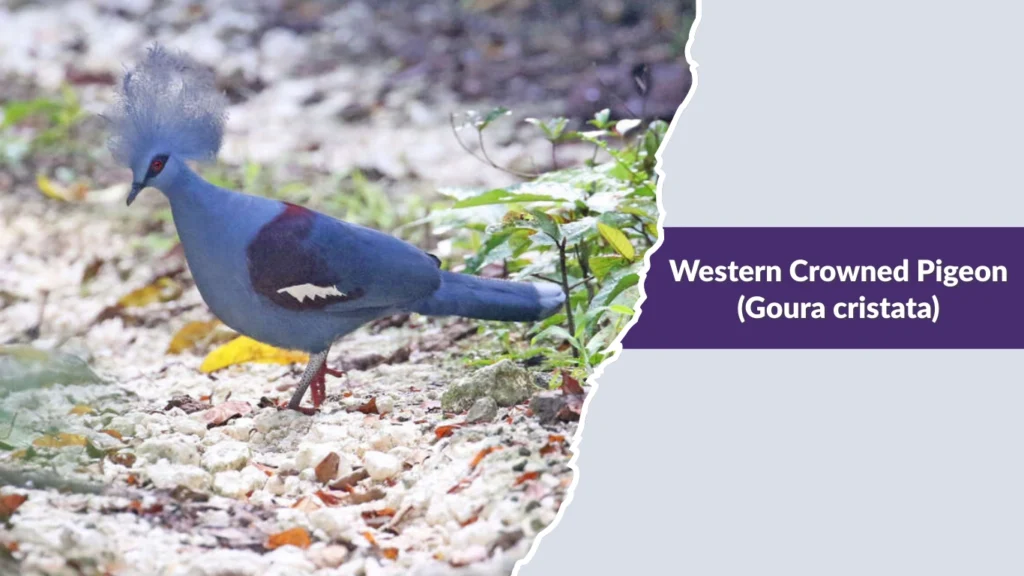
The Western Crowned Pigeon is a large, ground-dwelling pigeon native to New Guinea. It is admired for its elegant fan-shaped crest and soft blue-gray plumage, making it one of the most visually striking pigeons in the world.
Identification
- Very large, heavy-bodied pigeon
- Blue-gray plumage
- Fan-shaped crest with white-edged tips
- Maroon chest
- Red eyes
- Strong legs and feet
Habitat
Western Crowned Pigeons inhabit lowland rainforests and swamp forests. They spend most of their time on the forest floor but roost and nest in trees. Dense, undisturbed forest habitat is essential for their survival.
Behaviors
These pigeons are generally calm and slow-moving. They are usually seen alone or in pairs and occasionally in small groups. When threatened, they take off with loud wingbeats and fly into nearby trees.
Diet and Lifespan
Their diet consists mainly of fallen fruits, seeds, and berries collected from the forest floor. In the wild, Western Crowned Pigeons can live around 15–25 years, with longer lifespans commonly observed in captivity.
22. Torresian Imperial Pigeon (Ducula spilorrhoa)
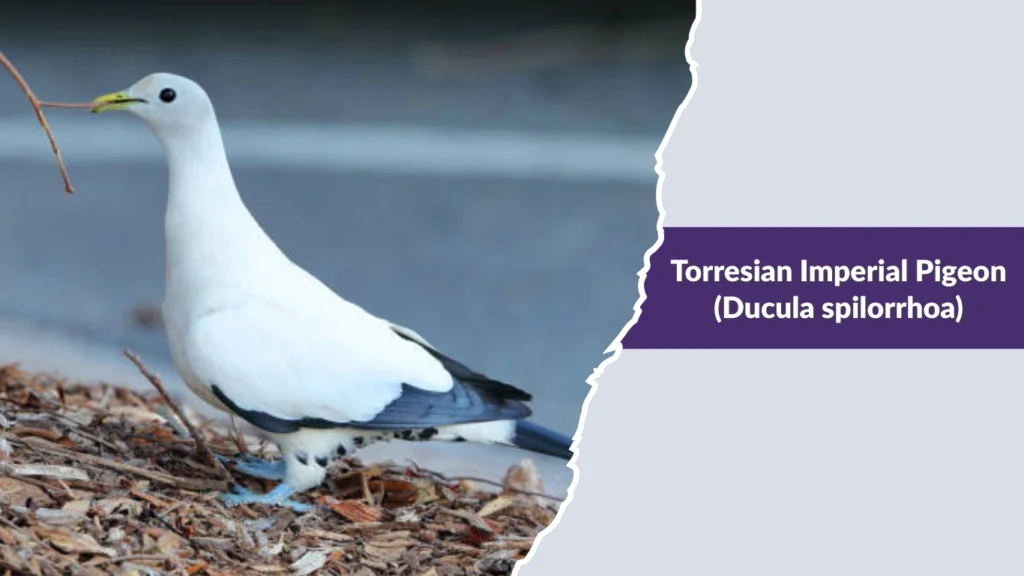
The Torresian Imperial Pigeon is a large, elegant pigeon found in northern Australia, New Guinea, and nearby islands. It is well known for its seasonal movements and impressive long-distance flights between feeding and breeding areas.
Identification
- Large, robust pigeon
- Pure white head, neck, and underparts
- Dark gray to black wings and tail
- Pale eyes
- Strong, dark bill
- Broad wings
Habitat
This species inhabits coastal forests, rainforests, mangroves, and island woodlands. It often nests on offshore islands and travels to mainland forests to feed. These habitats are essential for its breeding and survival.
Behaviors
Torresian Imperial Pigeons are highly mobile and often seen in flocks, sometimes numbering in the hundreds. They are strong fliers and regularly travel long distances over open water. Their movements are closely tied to seasonal fruit availability.
Diet and Lifespan
Their diet consists mainly of fruits and berries, especially figs. They forage almost entirely in trees. In the wild, Torresian Imperial Pigeons typically live around 10–20 years, depending on habitat quality and environmental conditions.
23. Metallic Pigeon (Columba vitiensis)
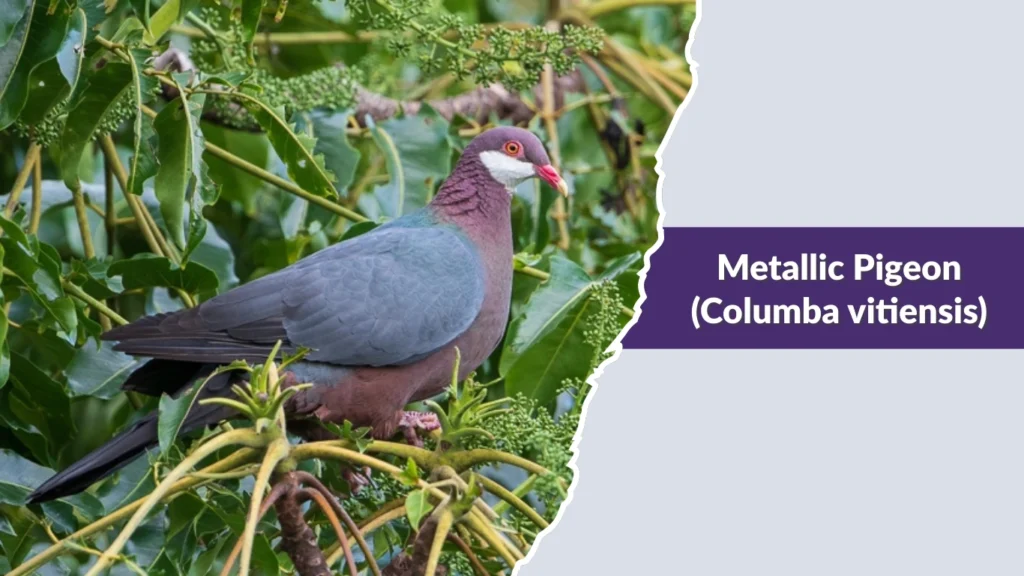
The Metallic Pigeon is a medium-sized forest pigeon named for the subtle metallic sheen on its plumage. It is widely distributed across Southeast Asia, Australia, and many Pacific islands, where it quietly inhabits dense forested habitats.
Identification
- Medium-sized pigeon with sturdy body
- Gray to greenish-gray plumage with metallic sheen
- Pale face and throat
- Dark eyes
- Strong, slightly curved bill
- Long, rounded tail
Habitat
Metallic Pigeons inhabit tropical and subtropical forests, rainforests, coastal woodlands, and island forests. They prefer dense canopy cover and are often found in remote or undisturbed areas. Nests are built high in trees, providing safety from predators.
Behaviors
These pigeons are generally shy and unobtrusive. They are usually seen alone or in pairs and spend much of their time perched quietly in the canopy. When disturbed, they fly strongly and directly to dense cover.
Diet and Lifespan
Their diet consists mainly of fruits, berries, and seeds. They forage primarily in trees and play an important role in seed dispersal. In the wild, Metallic Pigeons typically live around 8–15 years, depending on habitat quality and food availability.
FAQs
What is the most common pigeon species?
The Rock Pigeon is the most common and widespread pigeon species in the world. It thrives in urban environments and has adapted extremely well to living alongside humans on nearly every continent.
Are pigeons and doves different birds?
Pigeons and doves belong to the same bird family, Columbidae. The difference in names is mostly based on size and common usage rather than scientific distinction, with “pigeon” often referring to larger species.
What do pigeons usually eat?
Most pigeons feed on seeds, grains, fruits, and berries. Some species forage on the ground, while others, especially fruit pigeons, feed mainly in trees and play an important role in seed dispersal.
Where do pigeons live?
Pigeons live in a wide range of habitats, including forests, grasslands, coastal areas, farmlands, islands, and cities. Their adaptability allows different species to survive in both natural and human-altered environments.
How long do pigeons live?
In the wild, most pigeon species live between 3 and 15 years, depending on species, habitat, and threats. Larger forest pigeons often live longer, and individuals in captivity can survive well beyond their average wild lifespan.
