
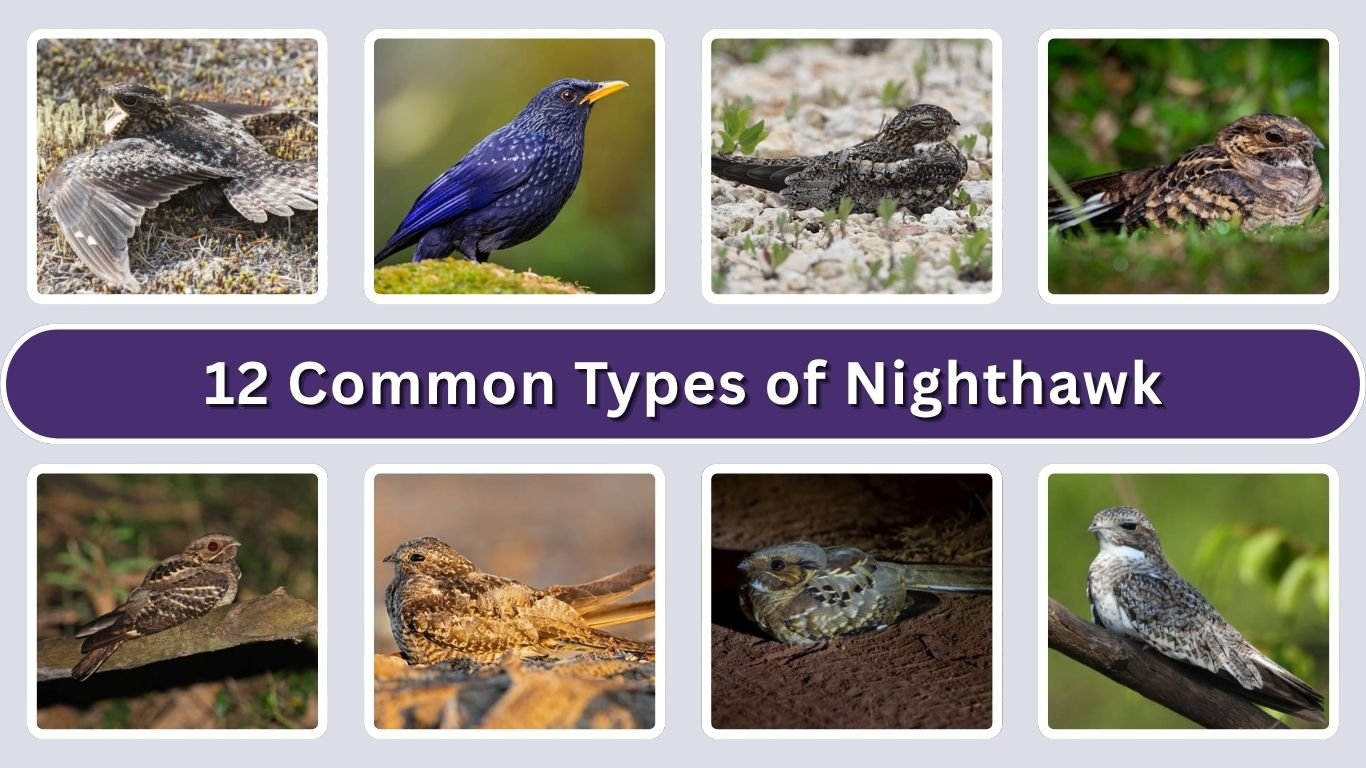
Nighthawks are fascinating birds known for their unique flight patterns, nocturnal or crepuscular behavior, and exceptional ability to catch insects mid-air. Despite their name, they are not true hawks but belong to the nightjar family. These birds are widely distributed across the Americas and can be found in a variety of habitats, from open grasslands and deserts to dense forests and even urban areas. Each species has its own distinct features, behaviors, and habitat preferences, making them an interesting group to study.
In this guide, we explore 12 common types of nighthawks, highlighting their identification, habitat, differences, and lifecycle to help you better understand and recognize these remarkable birds.
1. Common Nighthawk
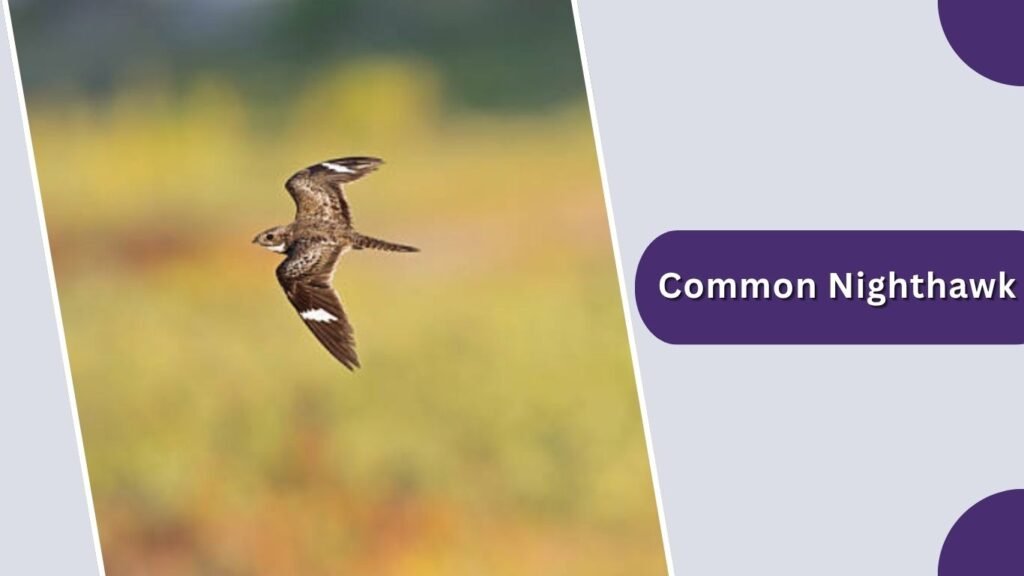
The Common Nighthawk is a widely distributed bird species belonging to the nightjar family, found across much of North and South America. Despite its name, it is not a hawk but is known for its nocturnal and crepuscular behavior—being most active during dawn and dusk. This bird is especially famous for its booming sound during aerial courtship displays, created by air rushing through its wings as it dives. It has adapted well to both natural and urban environments, often seen flying over cities during summer evenings. Its excellent camouflage and unique flight style make it a fascinating species to observe.
Identification
- Medium-sized bird with long, narrow, pointed wings and a streamlined body
- Plumage is gray, brown, black, and white, forming a mottled pattern that blends with surroundings
- Distinct white bar across each wing, clearly visible during flight
- Tail is slightly notched; males may show a white band on the tail
- Short, small bill but an unusually wide gape for catching insects mid-air
- Large, dark eyes suited for low-light vision
- Flight is erratic, buoyant, and bat-like, often with sudden twists and turns
Habitat
The Common Nighthawk occupies a wide range of habitats, favoring open and semi-open areas. These include grasslands, prairies, deserts, and forest clearings. Interestingly, it has adapted very well to urban environments, where it often nests on flat gravel rooftops that mimic its natural ground nesting sites. It avoids dense forests and heavily vegetated areas, preferring spaces where it can easily spot and catch flying insects. During migration and winter, it moves to South America, inhabiting similar open landscapes. Its adaptability to human-altered environments has contributed to its broad distribution, although populations have shown some decline in recent years.
Comparison
When compared to similar species like the Lesser Nighthawk, the Common Nighthawk is noticeably larger and has more pointed wings. The white wing bar is more prominent and positioned closer to the middle of the wing, making it easier to identify in flight. Its flight pattern is also more dramatic, especially during mating displays, where it performs steep dives producing a distinctive booming sound—something not seen in many related species. Additionally, its range is much broader, covering most of North America, whereas other nighthawks tend to have more limited or specialized habitats.
Diet and Lifecycle
The Common Nighthawk primarily feeds on flying insects, including moths, beetles, ants, and mosquitoes, which it catches in mid-air using its wide mouth. It often feeds during twilight hours when insect activity is highest. The species does not build a traditional nest; instead, it lays two eggs directly on bare ground or flat surfaces like rooftops. Both parents take turns incubating the eggs and feeding the chicks. The young are well-camouflaged and remain still to avoid predators. This bird is migratory, traveling long distances between breeding grounds in North America and wintering areas in South America, showcasing remarkable endurance.
2. Lesser Nighthawk
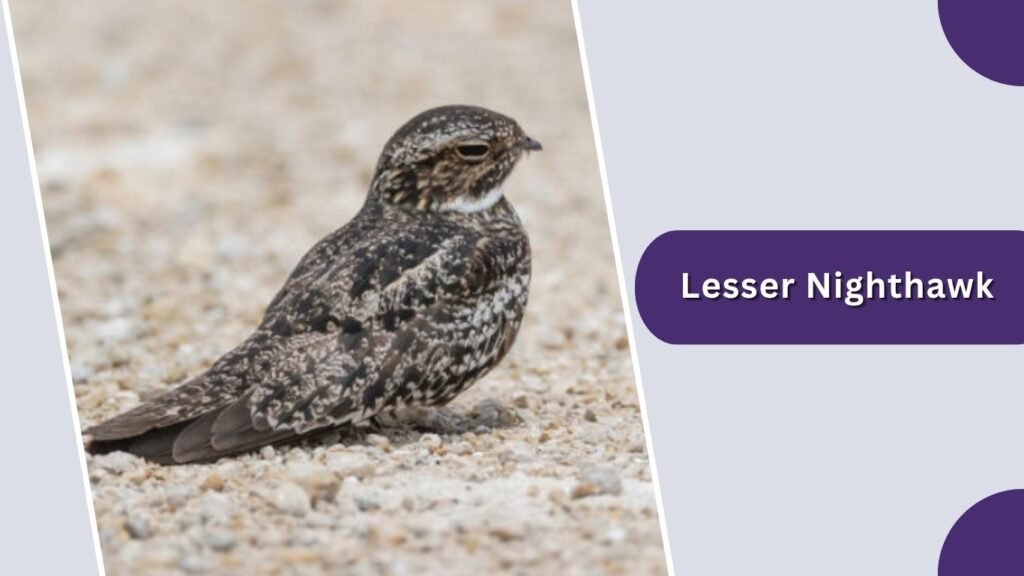
The Lesser Nighthawk is a smaller relative of the Common Nighthawk, commonly found in the southwestern United States, Central America, and parts of South America. It is most active during dusk and dawn, quietly foraging for insects in open landscapes. Unlike some other nighthawks, it has a more subtle flight display and lacks the loud booming sound during courtship. This species is well adapted to warm, dry environments and is often seen gliding low over open ground or water sources. Its calm behavior and excellent camouflage make it less noticeable despite being fairly common in its range.
Identification
- Smaller and more compact than the Common Nighthawk
- Long, pointed wings but slightly broader in appearance
- Grayish-brown mottled plumage for effective camouflage
- White wing bar present but less bold and positioned closer to the wingtip
- Tail is shorter with less noticeable markings
- Small bill with a wide mouth for catching insects
- Flight is smooth, low, and less erratic compared to larger nighthawks
Habitat
The Lesser Nighthawk prefers arid and semi-arid regions such as deserts, scrublands, open woodlands, and grasslands. It is commonly found near water sources like rivers, ponds, or irrigation areas, where insect populations are abundant. Unlike the Common Nighthawk, it is less frequently seen in urban environments, though it may still appear in rural towns. It nests directly on the ground, choosing bare soil or sparsely vegetated areas. During the non-breeding season, it migrates to warmer regions in Central and South America, maintaining a preference for open and dry habitats.
Comparison
Compared to the Common Nighthawk, the Lesser Nighthawk is smaller, quieter, and less dramatic in its behavior. Its wing bar is less prominent and located nearer the tips of the wings, which helps distinguish it during flight. The Lesser Nighthawk also flies lower to the ground and has a steadier, more controlled flight pattern. Unlike the Common Nighthawk, it does not produce a booming sound during courtship dives. These subtle differences make identification more challenging but noticeable with careful observation.
Diet and Lifecycle
The Lesser Nighthawk feeds primarily on flying insects such as moths, beetles, and ants, capturing them in flight with its wide mouth. It is most active during twilight hours when insect activity peaks. The species does not build a nest; instead, it lays eggs directly on bare ground, often in open or sparsely vegetated areas. Both parents share incubation duties and care for the chicks. The young rely on camouflage and stillness to avoid predators. This species is migratory, traveling between breeding grounds in North America and wintering regions further south.
3. Antillean Nighthawk
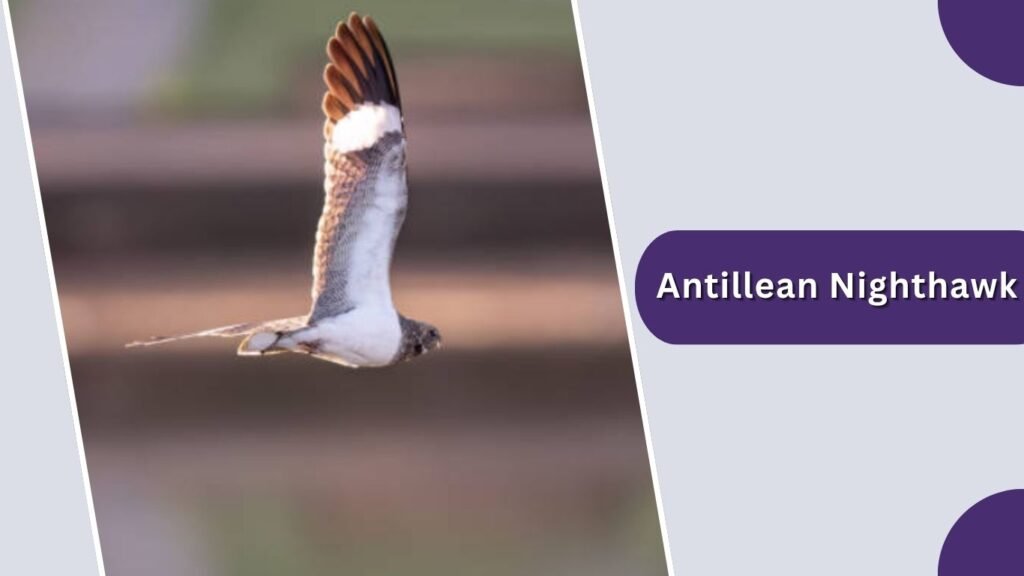
The Antillean Nighthawk is a regional species found primarily in the Caribbean, including islands such as Cuba, Hispaniola, Jamaica, and Puerto Rico. It is similar in appearance to other nighthawks but has distinct vocalizations and behaviors that set it apart. This bird is most active during dusk and dawn, when it hunts insects in open skies. It is less studied than its mainland relatives but is known for adapting well to island environments, including coastal and urban areas.
Identification
- Medium-sized nighthawk with long, pointed wings
- Mottled gray, brown, and black plumage for camouflage
- White wing bar present, though slightly less bold than in Common Nighthawk
- Tail may show faint banding; males sometimes have lighter markings
- Short bill with a wide gape for catching insects
- Large eyes adapted for low-light activity
- Flight is steady and graceful, often higher in the air
Habitat
The Antillean Nighthawk inhabits a variety of open and semi-open environments across Caribbean islands. These include coastal areas, dry scrublands, savannas, and even urban regions. It is often seen flying above towns, roads, and shorelines, especially during the evening. Like other nighthawks, it avoids dense forests and prefers areas where it can easily hunt flying insects. Nesting typically occurs on flat, open ground or rooftops, similar to its mainland relatives. Its ability to adapt to human-altered landscapes has helped it persist across many islands.
Comparison
The Antillean Nighthawk closely resembles the Common Nighthawk but is generally more localized and has subtle differences in vocalization and behavior. Its calls are often sharper and more repetitive. Compared to the Lesser Nighthawk, it is slightly larger and tends to fly at higher altitudes. The white wing bar is present but may appear less striking depending on lighting. Geographic location is often the easiest way to distinguish this species from others, as it is largely confined to Caribbean islands.
Diet and Lifecycle
This species feeds mainly on flying insects such as moths, beetles, and mosquitoes, which it catches during flight at dusk and dawn. It plays an important role in controlling insect populations. The Antillean Nighthawk does not build a nest; instead, it lays its eggs directly on bare ground, rocky surfaces, or flat rooftops. Both parents participate in incubation and chick rearing. The chicks rely heavily on camouflage to avoid predators. Some populations may be partially migratory, while others remain resident depending on the island and conditions.
4. Least Nighthawk
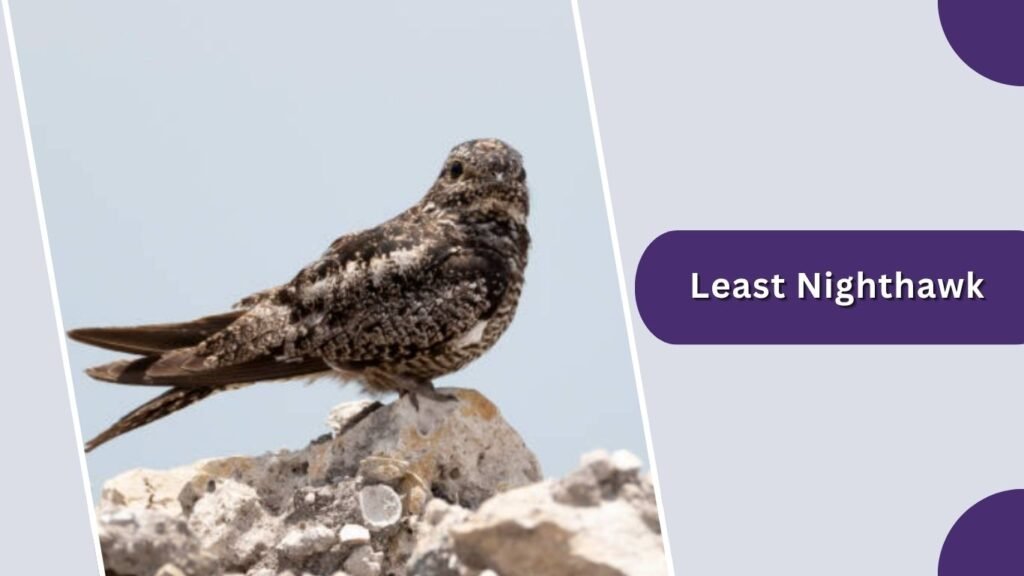
The Least Nighthawk is one of the smallest members of the nighthawk group, found mainly in parts of South America, especially in open and dry regions. Despite its small size, it is an agile flyer and an efficient insect hunter. It is less commonly observed than other nighthawks, partly due to its remote habitat and subtle behavior. Like others in its family, it is most active during twilight hours and relies heavily on camouflage for protection during the day.
Identification
- Very small size compared to other nighthawks
- Shorter wings and more compact body structure
- Mottled gray and brown plumage for blending into surroundings
- White wing markings present but faint and less noticeable
- Short tail with minimal visible markings
- Small bill with a wide mouth for catching insects
- Flight is quick, light, and close to the ground
Habitat
The Least Nighthawk prefers open, dry habitats such as savannas, scrublands, and sandy or rocky areas. It is often found in regions with sparse vegetation, where its camouflage is most effective. This species tends to avoid densely forested areas and is more commonly seen in quiet, less disturbed environments. It may also inhabit areas near water sources where insects are abundant. Its habitat choice allows it to remain well-hidden during the day while providing open space for feeding at dusk and dawn.
Comparison
Compared to other nighthawks, the Least Nighthawk stands out mainly due to its smaller size and more delicate build. It is significantly smaller than the Common and Lesser Nighthawks and has less prominent wing markings. Its flight is also lower and quicker, making it harder to spot. Unlike larger species, it tends to remain closer to the ground and is less likely to perform dramatic aerial displays. These differences make it unique but also more difficult to observe in the wild.
Diet and Lifecycle
The Least Nighthawk feeds primarily on small flying insects such as ants, beetles, and moths. It catches its prey in flight, usually during dusk when insect activity is highest. Like other nighthawks, it does not build a traditional nest and instead lays eggs directly on the ground in open areas. Both parents share responsibility for incubation and feeding the young. The chicks rely on camouflage and stillness to avoid predators. Its lifecycle follows a similar pattern to other nightjars, with strong adaptation to its environment.
5. Sand-colored Nighthawk
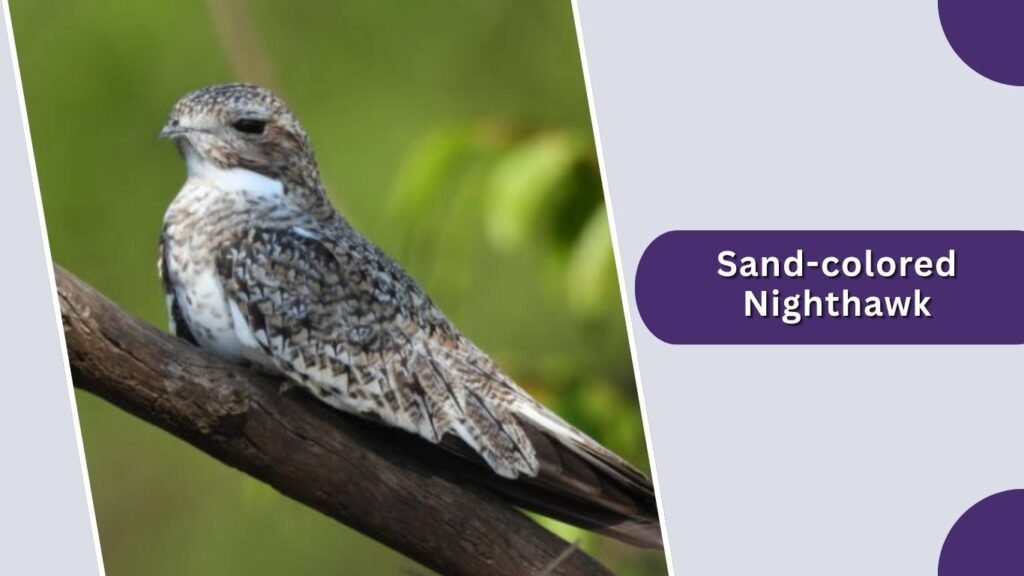
The Sand-colored Nighthawk is a distinctive species adapted to arid and sandy environments of South America. Its pale coloration helps it blend seamlessly into desert-like landscapes, making it difficult to spot during the day. This bird is mostly active at dusk and dawn, when it takes advantage of cooler temperatures and increased insect activity. It is less commonly observed due to its remote habitat and excellent camouflage, but it plays an important role in maintaining ecological balance in dry regions.
Identification
- Medium-sized nighthawk with a slim body
- Pale, sandy or buff-colored plumage suited for desert camouflage
- Subtle darker mottling across the body
- White wing bar present but less contrasting due to lighter coloration
- Tail relatively short with faint banding
- Small bill with a wide gape for catching insects
- Flight is smooth, low, and often close to the ground
Habitat
The Sand-colored Nighthawk prefers dry, open habitats such as deserts, sandy plains, scrublands, and riverbanks with loose soil. It is commonly found in areas with minimal vegetation, where its coloration provides excellent concealment. During the day, it rests on the ground, relying on its camouflage to avoid detection. It is rarely seen in forested or urban areas. These birds are well adapted to harsh, dry climates and are typically found in regions where few other nighthawks occur.
Comparison
Compared to other nighthawks, the Sand-colored Nighthawk is easily recognized by its much lighter, sandy plumage. While most nighthawks have darker gray or brown tones, this species appears paler and more uniform. Its wing markings are less striking, blending more with the rest of its body. In behavior, it tends to fly lower and more quietly than species like the Common Nighthawk. Its specialized habitat also sets it apart from more widespread and adaptable relatives.
Diet and Lifecycle
This species feeds mainly on flying insects such as beetles, moths, and ants, which it captures during low, gliding flights at dusk. Like other nighthawks, it does not build a nest but lays eggs directly on sandy or bare ground. The eggs and chicks are well camouflaged, reducing the risk of predation. Both parents are involved in caring for the young. Its lifecycle is closely tied to seasonal conditions, particularly insect availability in its dry habitat.
6. Pauraque
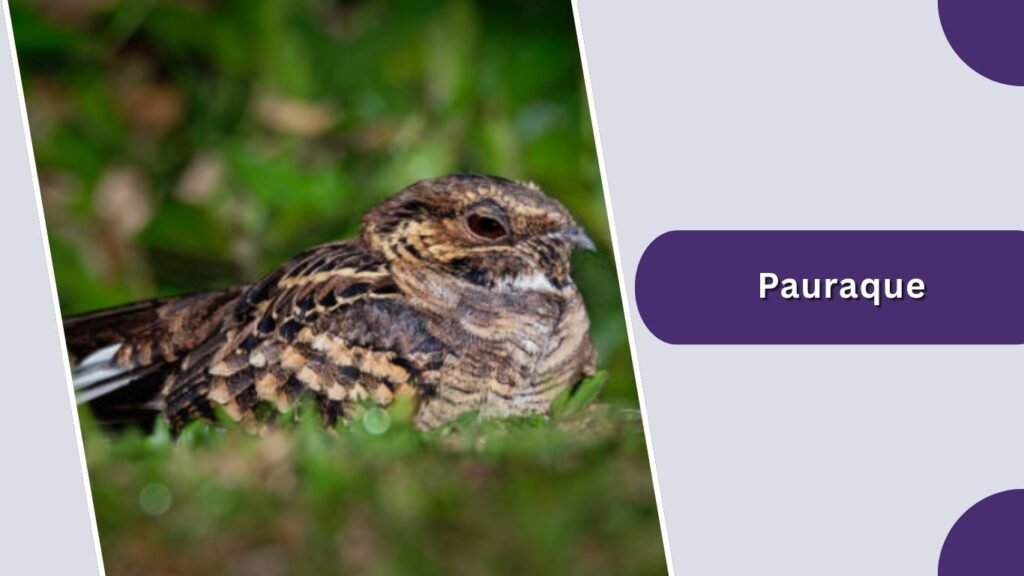
The Pauraque is a larger nightjar species found in Central and South America, often associated with open woodlands and forest edges. Unlike many nighthawks, it is more frequently seen resting on the ground during the day, where its camouflage helps it remain unnoticed. It is known for its distinctive, repetitive calls heard at night. The Pauraque is primarily nocturnal and is well adapted to a variety of environments, including areas near human settlements.
Identification
- Medium to large-sized nightjar with a sturdy body
- Brown, gray, and black mottled plumage for excellent camouflage
- Less distinct white wing bar compared to typical nighthawks
- Long tail with visible banding
- Short bill with a wide mouth for catching insects
- Large eyes adapted for nighttime activity
- Usually seen perched on the ground rather than flying
Habitat
The Pauraque prefers open woodlands, forest edges, grasslands, and areas with scattered trees. It is commonly found in tropical and subtropical regions, often near clearings or lightly wooded areas. Unlike many nighthawks, it is more tolerant of dense vegetation and may be seen along forest paths or rural roads. It adapts well to human presence and can even be found near villages or agricultural land. During the day, it rests quietly on the ground, relying on camouflage.
Comparison
Compared to typical nighthawks, the Pauraque is less aerial and spends more time on the ground. It lacks the bold white wing bars seen in species like the Common Nighthawk and has a more robust appearance. Its behavior is also different, as it is more strictly nocturnal and less active during twilight hours. Its vocalizations are another distinguishing feature, being louder and more repetitive than many other related species.
Diet and Lifecycle
The Pauraque feeds mainly on insects such as moths, beetles, and other flying or ground-dwelling insects. It hunts at night, often catching prey from the ground or during short flights. Like other nightjars, it does not build a nest but lays eggs directly on leaf litter or bare ground. Both parents take part in incubation and care of the chicks. The young rely heavily on camouflage and remain motionless when threatened, blending into their surroundings.
7. Common Pauraque
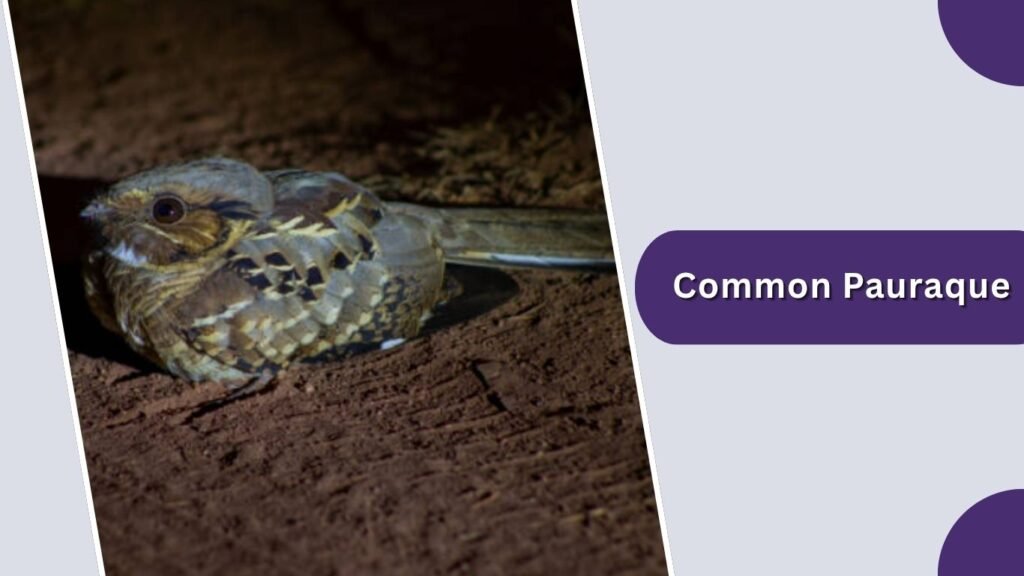
The Common Pauraque is a widespread nightjar found from southern Texas through Central America and into South America. It is known for its excellent camouflage and distinctive nighttime calls. Unlike many nighthawks, it is often seen resting on roads or open ground during the day. This species is primarily nocturnal, becoming active after sunset to hunt insects. Its adaptability to different environments, including human-modified areas, makes it one of the more commonly encountered nightjars in its range.
Identification
- Medium-sized bird with a slightly elongated body
- Mottled brown, gray, and black plumage for strong camouflage
- Lacks bold white wing bars seen in many nighthawks
- Long tail with noticeable banding
- Short bill with a wide gape for catching insects
- Large, dark eyes suited for night vision
- Often seen sitting motionless on the ground
Habitat
The Common Pauraque inhabits open woodlands, forest edges, savannas, and scrublands. It is frequently found along roads, trails, and clearings where it can easily spot prey. This species adapts well to human presence and is often seen in rural areas, farms, and even near villages. During the day, it rests quietly on the ground or low perches, blending perfectly with leaf litter. It prefers warm, tropical and subtropical climates and is generally non-migratory within much of its range.
Comparison
Compared to the Common Nighthawk, the Common Pauraque is less aerial and more ground-oriented in behavior. It lacks the distinct white wing markings and has a more rounded, less streamlined shape. Its activity is more strictly nocturnal, while many nighthawks are active at dusk and dawn. Additionally, its vocalizations are louder and more repetitive, making it easier to identify by sound rather than sight.
Diet and Lifecycle
The Common Pauraque feeds mainly on insects such as moths, beetles, ants, and other small invertebrates. It hunts at night, either catching prey in short flights or picking them from the ground. Like other nightjars, it does not build a nest and instead lays eggs directly on the ground among leaves or debris. Both parents share responsibilities in incubation and chick care. The chicks rely heavily on camouflage and remain still to avoid predators.
8. Rufous-bellied Nighthawk
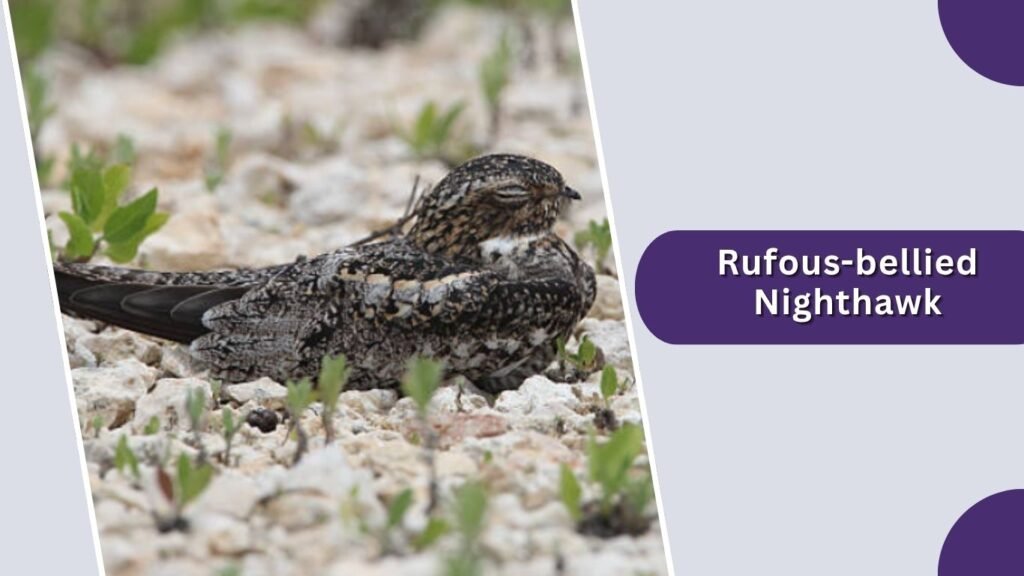
The Rufous-bellied Nighthawk is a distinctive species found in parts of South America, particularly in open and rocky habitats. It is named for the warm, reddish-brown coloration on its underside, which helps distinguish it from other nighthawks. This bird is most active during twilight hours, when it hunts insects in open airspace. Although not as widely known as some other species, it is well adapted to its environment and can be observed in suitable habitats with careful attention.
Identification
- Medium-sized nighthawk with long, pointed wings
- Upperparts are gray-brown with mottled patterns
- Distinct rufous (reddish-brown) coloration on the belly
- White wing bar present but may appear subtle in certain lighting
- Tail shows faint banding with possible lighter markings
- Short bill with a wide gape for aerial feeding
- Flight is steady, with occasional quick turns
Habitat
The Rufous-bellied Nighthawk prefers open, dry environments such as rocky hillsides, grasslands, and scrubby areas. It is often found in regions with sparse vegetation, where it can easily blend into the surroundings. This species tends to avoid dense forests and instead favors elevated or exposed areas that provide good visibility for hunting. It may also be seen near cliffs or rocky outcrops. Its habitat choice supports both camouflage and efficient foraging during low-light conditions.
Comparison
Compared to other nighthawks, the Rufous-bellied Nighthawk is most easily recognized by its reddish underparts, a feature not commonly seen in related species. While many nighthawks have gray or brown undersides, this warm coloration sets it apart. Its wing markings are less bold than those of the Common Nighthawk, and its flight is generally less dramatic. It shares similar behavior with other species but stands out visually when seen clearly.
Diet and Lifecycle
This species feeds primarily on flying insects such as moths, beetles, and ants, which it captures in mid-air during dusk. Like other nighthawks, it does not build a nest and instead lays its eggs directly on bare ground or rocky surfaces. The eggs and chicks are well camouflaged to blend with their surroundings. Both parents take part in incubation and feeding. Its lifecycle is closely tied to insect availability and seasonal environmental conditions.
9. Band-tailed Nighthawk
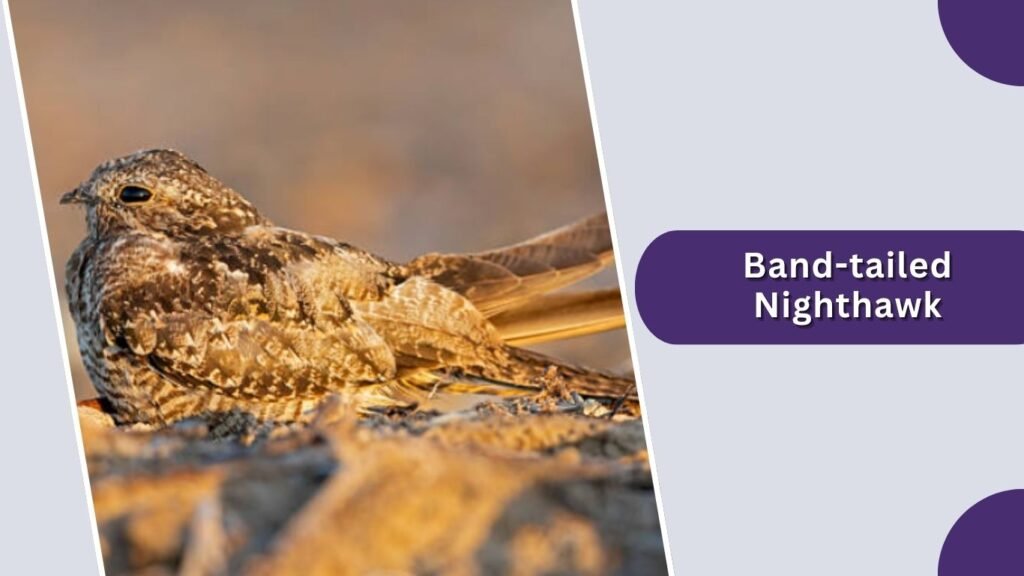
The Band-tailed Nighthawk is a South American species known for its distinctive tail pattern and preference for forested and mountainous regions. It is often seen flying during twilight hours, skillfully catching insects in the air. This species is less commonly observed than more widespread nighthawks, partly due to its more restricted range and habitat. Its subtle appearance and quiet behavior make it a challenging but rewarding bird to identify in the wild.
Identification
- Medium-sized nighthawk with long, pointed wings
- Gray-brown mottled plumage for camouflage
- Distinct banding across the tail, a key identifying feature
- White wing bar present but not as bold as in Common Nighthawk
- Slender body with a slightly elongated shape
- Short bill with a wide gape for insect feeding
- Flight is smooth, controlled, and often at mid to high levels
Habitat
The Band-tailed Nighthawk prefers forest edges, clearings, and mountainous regions, especially in tropical and subtropical areas of South America. It is often associated with humid environments and may be found near rivers or valleys. Unlike some other nighthawks that favor open plains or urban areas, this species is more closely tied to natural forested landscapes. It typically rests on the ground or low branches during the day, relying on camouflage to remain hidden.
Comparison
Compared to other nighthawks, the Band-tailed Nighthawk is best identified by the clear banding on its tail. While many species have subtle tail markings, this feature is more pronounced here. It is less bold in wing pattern than the Common Nighthawk and tends to inhabit more forested and elevated areas. Its behavior is also quieter and less dramatic, lacking the steep diving displays seen in some related species.
Diet and Lifecycle
The Band-tailed Nighthawk feeds mainly on flying insects such as moths and beetles, catching them in flight during dusk and dawn. Like other members of the nightjar family, it does not build a nest but lays eggs directly on the ground, often in leaf litter or among natural debris. Both parents share incubation and chick-rearing duties. The chicks are well camouflaged and remain still to avoid predators, blending into their surroundings effectively.
10. Blackish Nightjar
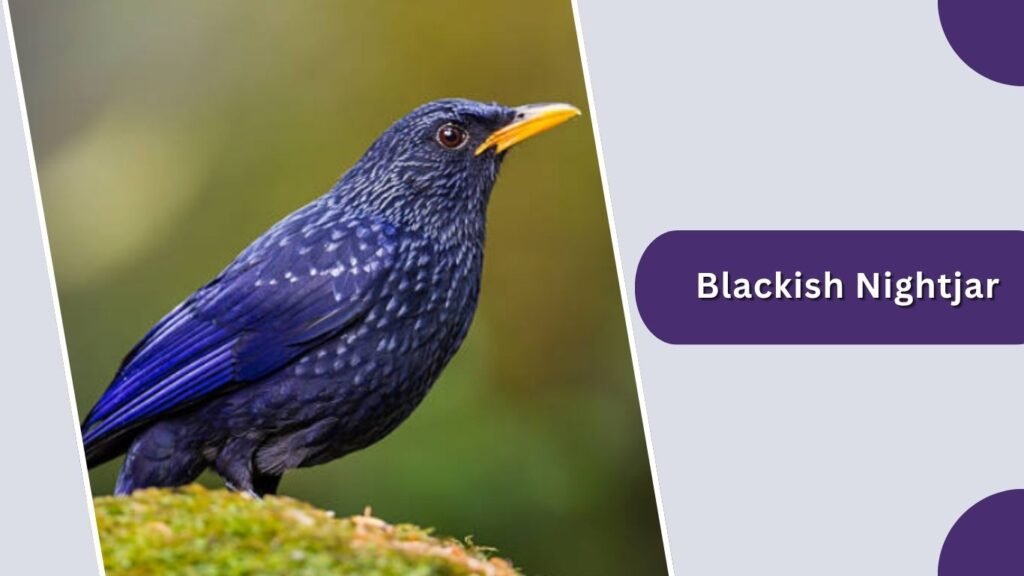
The Blackish Nightjar is a unique and striking member of the nightjar family, found mainly in northern and central South America. It is especially associated with rocky landscapes and riverine environments, where its dark coloration provides excellent camouflage. This species is often seen perched on rocks during the day and becomes active at dusk, flying out to catch insects. Its behavior and habitat preferences make it quite different from many other nighthawks.
Identification
- Medium-sized nightjar with a compact body
- Dark, blackish-gray plumage with subtle mottling
- Lacks strong white wing bars seen in many nighthawks
- Tail is relatively short with faint markings
- Short bill with a wide gape for catching insects
- Large eyes adapted for low-light vision
- Often seen resting on exposed rocks
Habitat
The Blackish Nightjar prefers rocky habitats such as riverbanks, cliffs, and exposed outcrops, particularly near fast-flowing rivers. It is commonly found in tropical regions, including parts of the Amazon basin. Unlike many nighthawks that favor open plains or urban areas, this species is closely tied to natural rocky environments. During the day, it rests motionless on rocks, blending perfectly with its surroundings. Its habitat choice provides both protection and easy access to flying insects.
Comparison
Compared to typical nighthawks, the Blackish Nightjar is darker and more specialized in habitat. It lacks the bold wing markings and lighter coloration seen in species like the Common Nighthawk. Its preference for rocky riverine environments also sets it apart from species that inhabit grasslands or deserts. Behaviorally, it is more often seen perched than flying, making its observation quite different from more aerial species.
Diet and Lifecycle
This species feeds mainly on flying insects such as moths, beetles, and other nocturnal insects. It hunts during dusk and early night, using short, controlled flights from perches. Like other nightjars, it does not build a nest and lays eggs directly on bare rock or ground. Both parents are involved in incubation and caring for the young. The chicks are well camouflaged and remain still to avoid detection in their rocky environment.
11. Ladder-tailed Nightjar
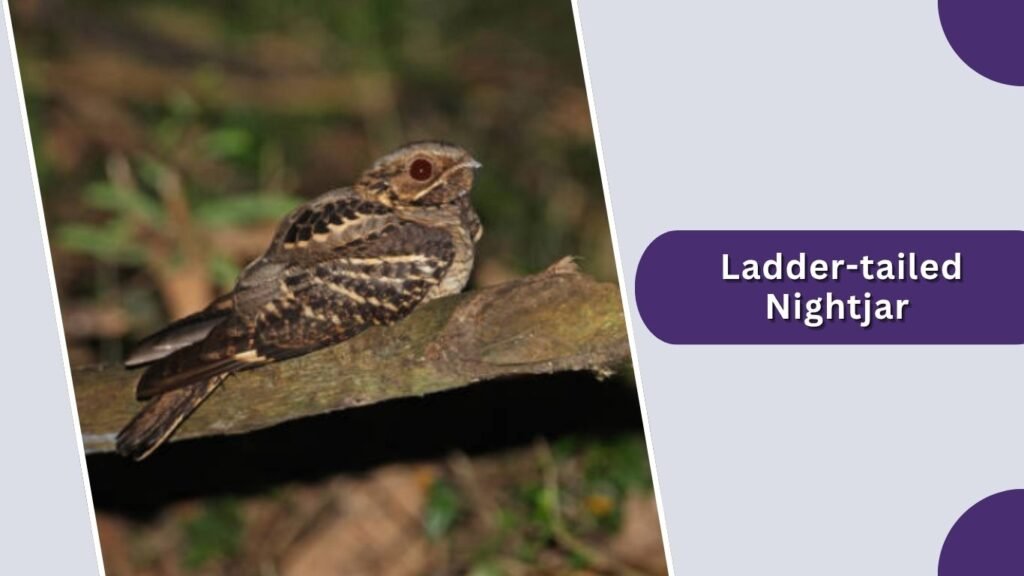
The Ladder-tailed Nightjar is a South American species known for its distinctive tail pattern and adaptability to open environments. It is commonly found in grasslands, savannas, and lightly wooded areas. This bird is mostly active at dusk and night, when it hunts insects in flight. During the day, it rests on the ground, relying on its excellent camouflage to remain unnoticed. Its name comes from the ladder-like pattern visible on its tail feathers.
Identification
- Medium-sized nightjar with a slender body
- Mottled brown and gray plumage for camouflage
- Distinct ladder-like pattern on the tail
- White wing markings may be present but not very bold
- Short bill with a wide gape for catching insects
- Large eyes adapted for nocturnal activity
- Flight is light, smooth, and close to the ground
Habitat
The Ladder-tailed Nightjar prefers open habitats such as savannas, grasslands, scrublands, and forest edges. It is often found in areas with scattered vegetation, which provide both cover and open space for hunting. This species may also occur near agricultural land and rural areas. During the day, it rests on bare ground or among dry leaves, blending into its surroundings. Its wide distribution across South America reflects its adaptability to different open environments.
Comparison
Compared to other nightjars, the Ladder-tailed Nightjar is most easily identified by the unique pattern on its tail. While many species have subtle tail markings, this ladder-like design is more noticeable. It is less bold in wing pattern than the Common Nighthawk and tends to fly lower and more quietly. Its habitat preference is broader than some specialized species, allowing it to be seen in a variety of open landscapes.
Diet and Lifecycle
The Ladder-tailed Nightjar feeds mainly on flying insects such as moths, beetles, and ants, catching them in mid-air during dusk and nighttime. Like other nightjars, it does not build a nest but lays eggs directly on the ground. The eggs are well camouflaged, blending with soil and leaf litter. Both parents share incubation and chick care. The young rely on stillness and camouflage to avoid predators in their open habitat.
12. Short-tailed Nighthawk
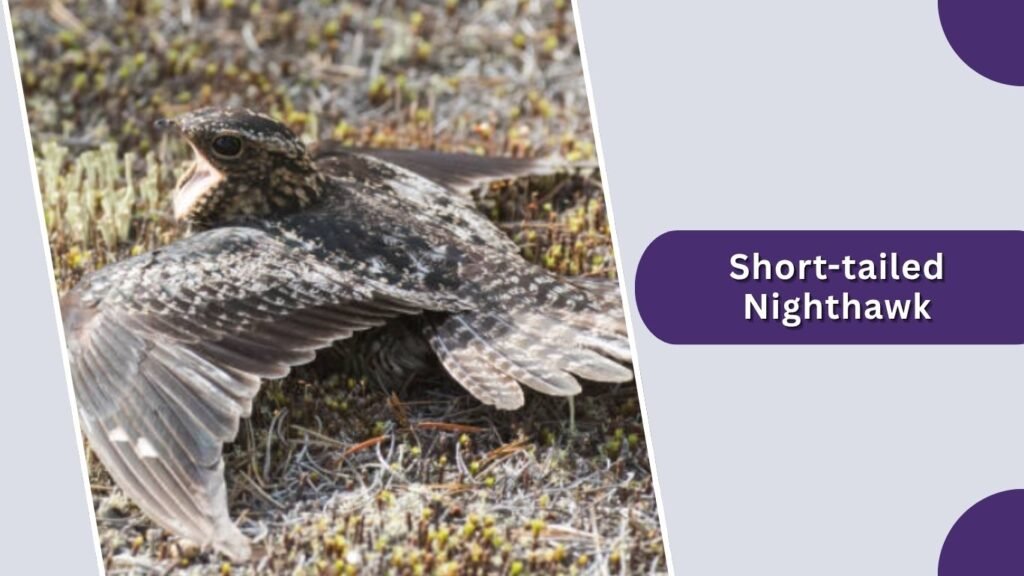
The Short-tailed Nighthawk is a forest-dwelling species found in Central and South America. Unlike many other nighthawks that prefer open habitats, this species is closely associated with dense tropical forests. It is most active during dusk and dawn, flying above the forest canopy to catch insects. Its subtle appearance and high-altitude flight make it difficult to observe, and it is often detected more by its calls than by sight.
Identification
- Medium-sized nighthawk with a noticeably short tail
- Long, pointed wings adapted for sustained flight
- Mottled gray and brown plumage for camouflage
- White wing bar present but may appear faint
- Compact body with a slightly rounded appearance
- Short bill with a wide gape for insect feeding
- Flight is steady, often high above the forest canopy
Habitat
The Short-tailed Nighthawk primarily inhabits tropical and subtropical forests, especially lowland rainforests. It is usually found flying above the canopy rather than within dense vegetation. This species prefers humid environments and is rarely seen in open or urban areas. During the day, it likely rests in concealed forest locations, making it difficult to spot. Its strong association with forest habitats sets it apart from many other nighthawks that favor open landscapes.
Comparison
Compared to other nighthawks, the Short-tailed Nighthawk is distinguished by its shorter tail and preference for forested habitats. While species like the Common Nighthawk are often seen in open skies or urban areas, this bird is mostly observed over dense जंगल canopy. Its wing markings are less prominent, and its flight is more consistent and less erratic, making it harder to identify without close observation.
Diet and Lifecycle
This species feeds mainly on flying insects such as moths, beetles, and other nocturnal insects, catching them in flight above the forest. Like other nighthawks, it does not build a nest and lays eggs directly on the ground or in concealed forest spots. Both parents are involved in incubation and chick care. The chicks rely on camouflage and stillness to avoid predators within the forest environment.
FAQs
What is a nighthawk?
Nighthawks are birds belonging to the nightjar family. They are not true hawks but are named for their hawk-like flight and nocturnal habits. These birds are mostly active during dusk and dawn and are known for catching insects in mid-air using their wide mouths.
Where are nighthawks commonly found?
Nighthawks are found across the Americas, from North to South America. Different species prefer different habitats, including grasslands, deserts, forests, and even urban areas. Some species migrate long distances, while others remain in tropical regions year-round.
What do nighthawks eat?
Nighthawks primarily feed on flying insects such as moths, beetles, ants, and mosquitoes. They hunt in the air, often during twilight hours when insect activity is highest. Their wide gape allows them to catch multiple insects efficiently while flying.
Are nighthawks nocturnal birds?
Nighthawks are mostly crepuscular, meaning they are most active during dawn and dusk rather than throughout the entire night. However, some species may remain active after dark, especially in areas with abundant insect activity or artificial lighting.
Do nighthawks build nests?
No, nighthawks do not build traditional nests. They lay their eggs directly on the ground, rooftops, or other flat surfaces. Their eggs and chicks are well camouflaged, helping them blend into their surroundings and avoid predators.