
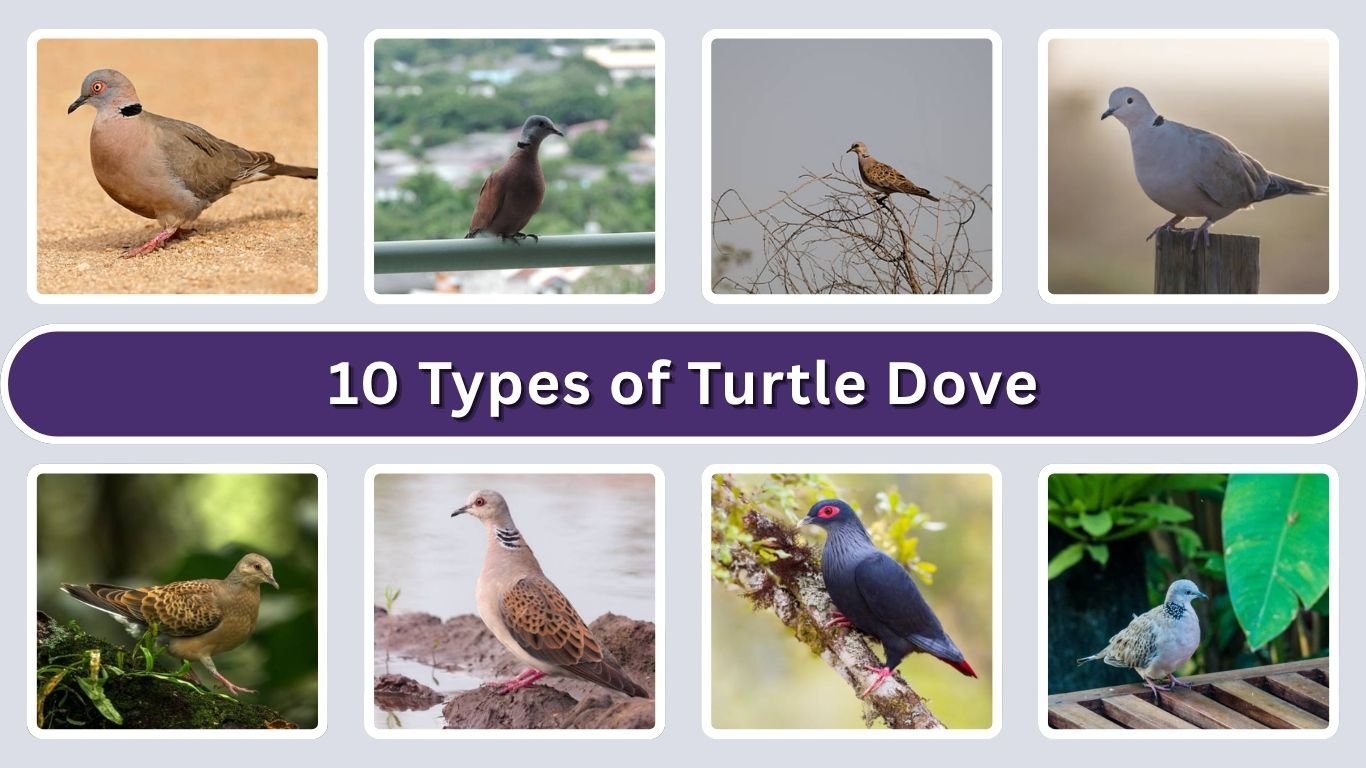
Turtle doves are gentle and graceful birds known for their soft cooing sounds and symbolic meaning of peace and love. Found across Europe, Asia, and Africa, these birds live in a variety of habitats, from open woodlands to farmlands. Each species has its own unique features, behaviors, and adaptations. In this guide, you’ll discover 10 different types of turtle doves, along with their identification, habitats, and lifestyles.
1. European Turtle Dove
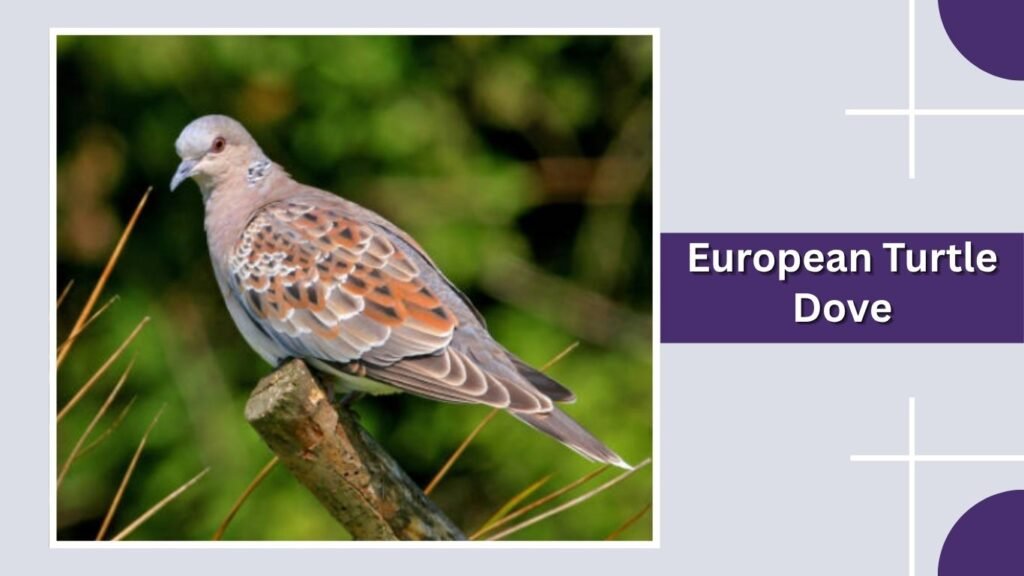
The European Turtle Dove is a graceful and migratory bird admired for its soft cooing call and gentle behavior. It is widely distributed across Europe, parts of Asia, and North Africa during the breeding season, and migrates to sub-Saharan Africa in winter. Known as a symbol of love and peace, this species has declined in recent years due to habitat loss and changes in farming practices, making it an important bird for conservation awareness.
Identification
- Small to medium-sized dove with a slim, elegant body
- Warm brown plumage with black-scaled pattern on the wings
- Distinct black-and-white striped patch on the sides of the neck
- Soft pinkish breast that fades into a lighter belly
- Long, pointed tail with noticeable white edges in flight
- Dark eyes with a slender, slightly curved dark bill
- Smooth, streamlined shape suited for long-distance migration
Habitat
The European Turtle Dove prefers open and semi-open landscapes where it can find both nesting sites and food sources. It is commonly found in farmlands, orchards, hedgerows, open woodlands, and scrublands. The species relies on a mix of trees or shrubs for nesting and open ground for feeding. During the breeding season, it occupies temperate regions across Europe and western Asia. As a migratory bird, it travels long distances to winter in sub-Saharan Africa, where it uses similar habitats. Availability of water and natural seed sources is essential for its survival, making habitat quality a key factor in its distribution.
Behaviors
This dove is known for its calm and somewhat shy nature. It is typically seen alone, in pairs, or occasionally in small flocks during migration. The European Turtle Dove has a soft, rhythmic purring call that is often heard during the breeding season. It spends time both in trees and on the ground, foraging quietly for food. During migration, it undertakes long journeys, flying mainly during favorable conditions. It is generally non-aggressive and avoids disturbance, relying on camouflage and quick flight to escape threats.
Diet and Lifespan
The European Turtle Dove mainly feeds on small seeds, grains, and wild plants, especially those found on the ground. It prefers natural food sources such as weed seeds rather than relying on human-provided food. This feeding habit makes it sensitive to changes in agricultural practices. It drinks regularly and often visits water sources. In the wild, the species typically lives around 3 to 5 years, although many individuals face challenges such as predation, habitat loss, and the demands of long-distance migration, which can impact survival rates.
2. Oriental Turtle Dove
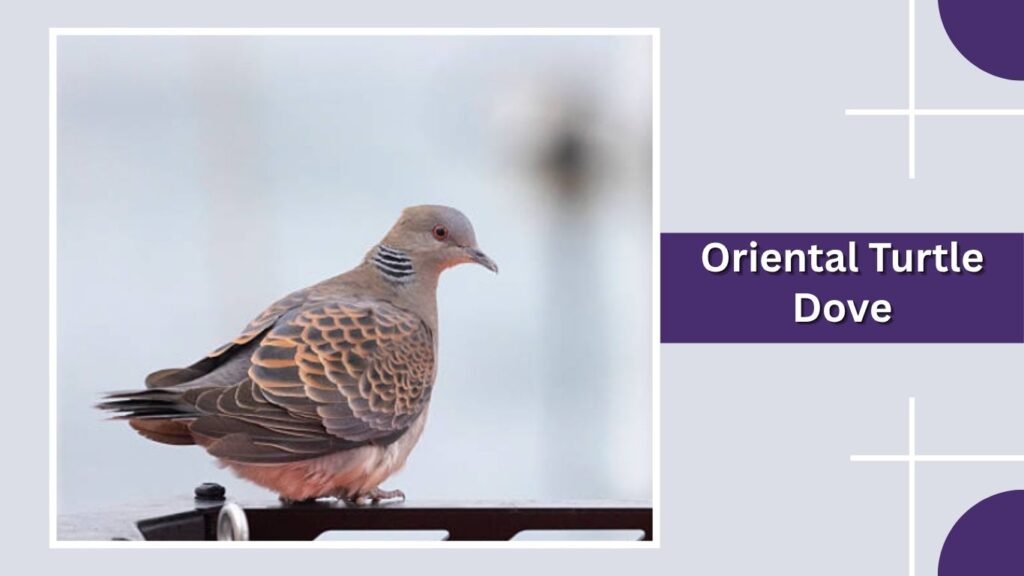
The Oriental Turtle Dove is a widespread and adaptable species found across Asia and parts of Eastern Europe. Known for its soft cooing and attractive plumage, this dove is commonly seen in both natural and human-influenced environments. It is a hardy bird that can survive in a variety of climates, from forests to urban areas.
Identification
- Medium-sized dove with a sturdy, rounded body
- Brownish-gray plumage with a scaled pattern on the wings
- Distinct black patch with white stripes on the sides of the neck
- Soft pinkish or grayish breast
- Long tail with white outer edges visible in flight
- Dark eyes and a short, dark bill
- Slight color variation depending on region
Habitat
The Oriental Turtle Dove is highly adaptable and found in a wide range of habitats, including forests, woodlands, farmlands, parks, and urban areas. It prefers places with trees for nesting and open spaces for feeding. This species is common across East Asia, South Asia, and parts of Eastern Europe. Some populations are migratory, while others remain in the same area year-round. Its ability to live near humans makes it more commonly seen than many other turtle dove species.
Behaviors
This dove is generally calm and often seen alone or in pairs. It spends time both on the ground and perched in trees. The Oriental Turtle Dove has a deep, rhythmic cooing call that is commonly heard in quiet environments. It flies with steady wingbeats and can travel moderate distances when needed. During colder seasons, some populations gather in small flocks.
Diet and Lifespan
The Oriental Turtle Dove mainly feeds on seeds, grains, and small plant materials. It forages on the ground, often in open spaces such as fields or gardens. Occasionally, it may eat small insects. Its lifespan in the wild is typically around 4 to 6 years, depending on environmental conditions, food availability, and predation.
3. Red Turtle Dove
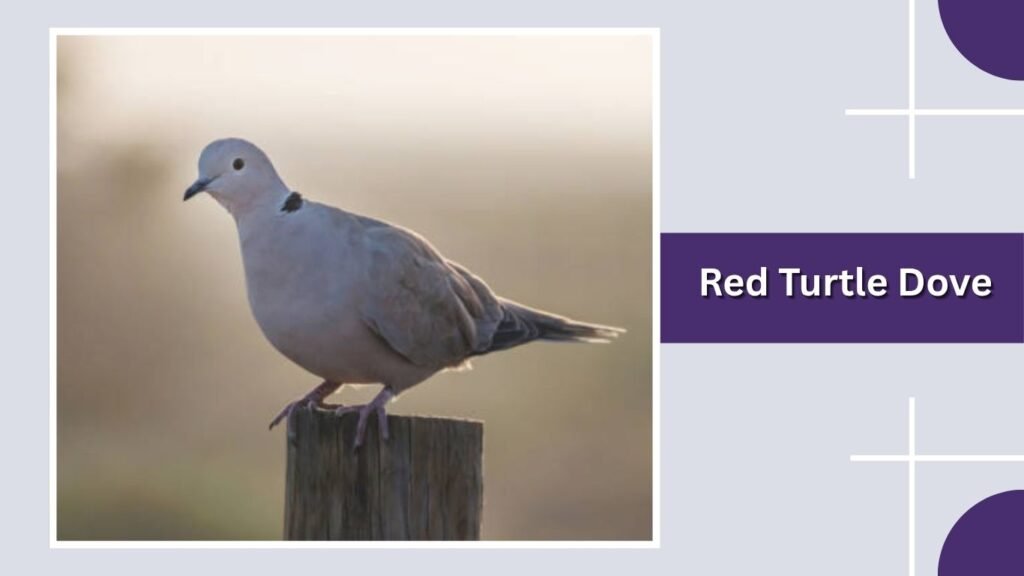
The Red Turtle Dove, also known as the Red Collared Dove, is a small and colorful species commonly found in South and Southeast Asia. It is especially known for its warm reddish tones and gentle behavior, making it a familiar sight in both rural and urban environments.
Identification
- Small, slender body with a delicate appearance
- Reddish or rusty-brown plumage, especially in males
- Females appear paler with more brownish tones
- Distinct narrow black collar on the back of the neck
- Short tail with slightly rounded edges
- Dark eyes and a small, dark bill
- Soft, smooth feather texture
Habitat
The Red Turtle Dove is highly adaptable and commonly found in open habitats such as farmlands, grasslands, villages, gardens, and city outskirts. It prefers warm climates and is widely distributed across South Asia, including countries like India and Bangladesh, as well as parts of Southeast Asia. This species thrives in areas where there is a mix of open ground for feeding and trees or structures for resting and nesting.
Behaviors
This dove is usually seen alone or in pairs, though small groups may gather in areas with abundant food. It spends much of its time on the ground searching for seeds. The Red Turtle Dove has a soft, repetitive cooing call that is often heard in quiet surroundings. It is generally calm and tolerant of human presence, often staying close to inhabited areas.
Diet and Lifespan
The Red Turtle Dove mainly feeds on small seeds, grains, and plant materials found on the ground. It may occasionally consume tiny insects. Its feeding habits make it well-suited to agricultural areas. In the wild, it typically lives around 3 to 5 years, although favorable conditions may allow some individuals to live longer.
4. Adamawa Turtle Dove
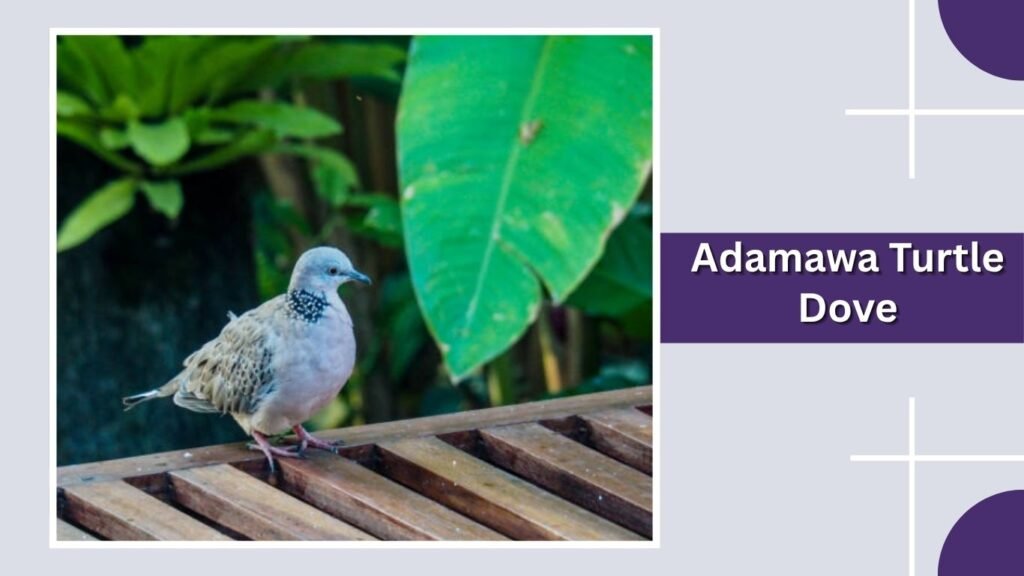
The Adamawa Turtle Dove is a lesser-known species found in parts of Africa. It is a quiet and subtle bird, often overlooked due to its resemblance to other turtle doves. Despite this, it plays an important role in its ecosystem and is well adapted to its natural environment.
Identification
- Medium-sized dove with a slim body
- Brownish-gray plumage with faint scaling on the wings
- Subtle pinkish or buff-colored breast
- Distinct but less prominent black-and-white neck patch
- Long tail with pale edges
- Dark eyes and a slender, dark bill
- Overall muted coloration compared to other turtle doves
Habitat
The Adamawa Turtle Dove is typically found in savannas, open woodlands, and lightly forested areas. It prefers regions with scattered trees and open ground for feeding. This species is mainly distributed in parts of West and Central Africa, where it thrives in warm climates. It often stays in areas that provide both shelter and access to seeds on the ground.
Behaviors
This dove is generally shy and not easily noticed. It is most often seen alone or in pairs, quietly foraging on the ground. The Adamawa Turtle Dove produces soft cooing calls that blend into the natural sounds of its surroundings. It tends to fly short distances when disturbed and quickly returns to cover.
Diet and Lifespan
The Adamawa Turtle Dove mainly feeds on seeds, grains, and small plant materials. It forages by walking slowly on the ground, picking food carefully. Like many similar species, its lifespan in the wild is estimated to be around 3 to 5 years, depending on environmental conditions and natural threats.
5. Dusky Turtle Dove
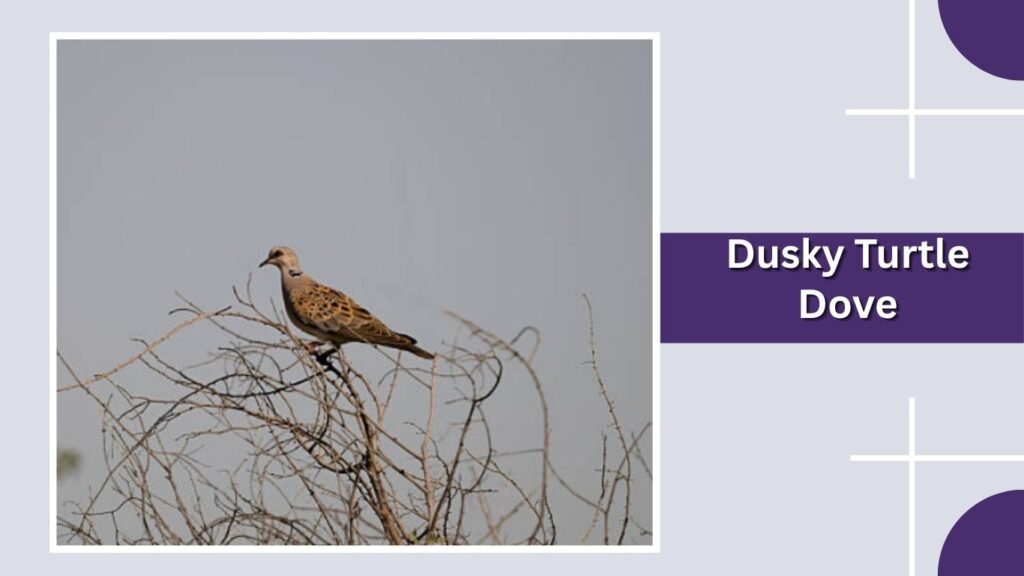
The Dusky Turtle Dove is a subtle and less brightly colored species known for its soft, muted tones. It is commonly found in parts of Africa and is often overlooked due to its quiet behavior and ability to blend into its surroundings.
Identification
- Medium-sized dove with a slim, streamlined body
- Dusky brown or grayish plumage with a soft, uniform look
- Faint scaling pattern on the wings
- Light gray or buff-colored breast
- Long tail with pale edges
- Dark eyes and a slender, dark bill
- Overall dull coloration compared to more colorful doves
Habitat
The Dusky Turtle Dove prefers open woodlands, savannas, and lightly forested areas. It is commonly found in regions with scattered trees and shrubs, where it can find both shelter and food. This species is mainly distributed across parts of sub-Saharan Africa. It favors warm climates and is often seen in natural habitats rather than urban environments.
Behaviors
This dove is generally quiet and shy, often staying hidden or moving slowly on the ground. It is usually seen alone or in pairs and avoids large groups. The Dusky Turtle Dove produces soft cooing sounds that are not easily heard from a distance. When disturbed, it flies a short distance before settling again in a safe spot.
Diet and Lifespan
The Dusky Turtle Dove mainly feeds on seeds, grains, and small plant materials. It forages on the ground, carefully picking food from the soil. Occasionally, it may consume tiny insects. Its lifespan in the wild is estimated to be around 3 to 5 years, depending on environmental conditions, availability of food, and predation.
6. Madagascar Turtle Dove
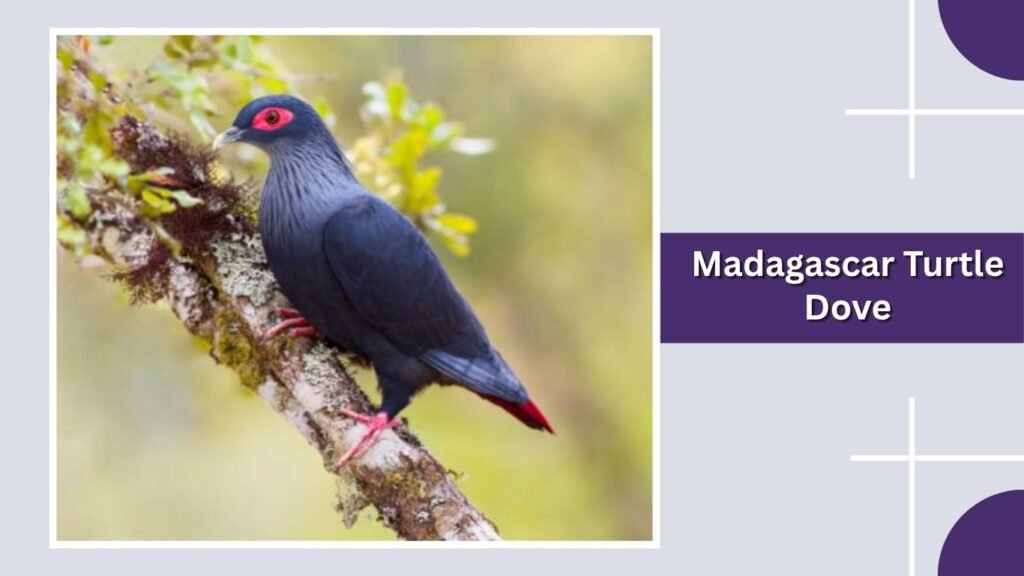
The Madagascar Turtle Dove is a unique species native to the island of Madagascar. It is known for its attractive plumage and relatively calm nature. Due to its limited range, it is considered an important species within its local ecosystem.
Identification
- Medium-sized dove with a plump body
- Warm brown plumage with a slight reddish tone
- Distinct black patch with white stripes on the sides of the neck
- Soft pinkish or buff-colored breast
- Long tail with pale or white edges
- Dark eyes and a slender, dark bill
- Smooth feather texture with subtle patterning
Habitat
The Madagascar Turtle Dove is commonly found in dry forests, scrublands, and open woodland areas across Madagascar. It prefers habitats with scattered trees and bushes where it can find both shelter and food. This species is well adapted to the island’s warm climate and can also be seen near villages and agricultural areas, where food sources are more accessible.
Behaviors
This dove is generally calm and often seen alone or in pairs. It spends much of its time on the ground searching for food, but also perches in trees for resting. The Madagascar Turtle Dove has a soft, rhythmic cooing call. It is not very aggressive and usually avoids disturbance by flying short distances to safer areas.
Diet and Lifespan
The Madagascar Turtle Dove mainly feeds on seeds, grains, and small plant materials. It forages on the ground, picking food carefully. Occasionally, it may eat tiny insects. Its lifespan in the wild is estimated to be around 3 to 5 years, depending on environmental conditions and natural threats.
7. Burmese Turtle Dove
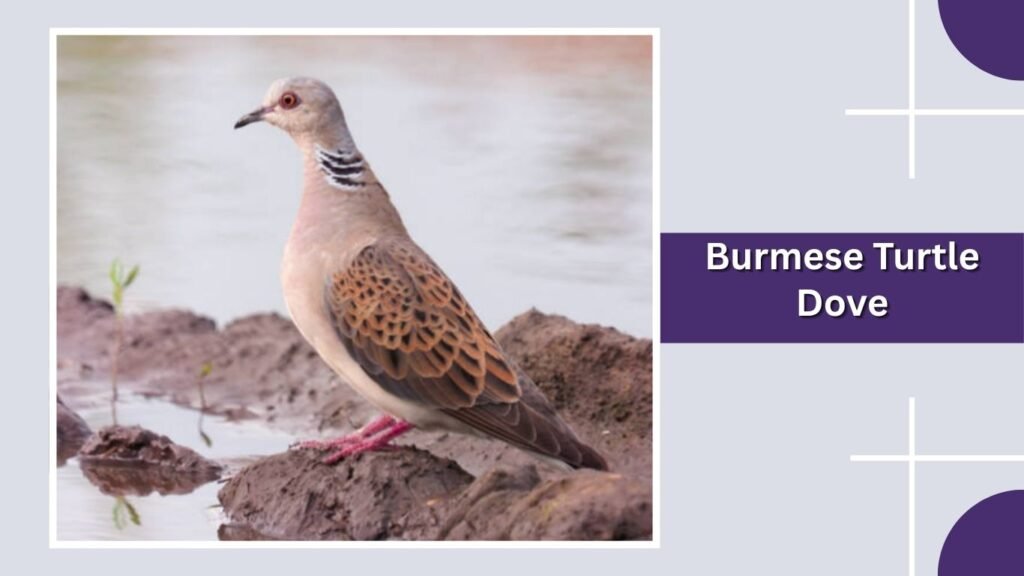
The Burmese Turtle Dove is a regional variation often associated with the Oriental Turtle Dove group, found mainly in parts of Southeast Asia. It is known for its soft coloration and adaptability to different environments, making it a familiar bird in its range.
Identification
- Medium-sized dove with a rounded, sturdy body
- Brownish-gray plumage with fine scaling on the wings
- Distinct black-and-white striped patch on the neck
- Pale pinkish or gray breast
- Long tail with white outer edges
- Dark eyes and a slender, dark bill
- Slight regional variation in tone and markings
Habitat
The Burmese Turtle Dove is commonly found in woodlands, forest edges, farmlands, and even urban areas. It prefers regions with a mix of trees for nesting and open spaces for feeding. This species is mainly distributed in Myanmar and surrounding regions, where it thrives in warm and tropical climates. It can adapt well to human presence, often appearing in villages and gardens.
Behaviors
This dove is generally calm and can be seen alone, in pairs, or occasionally in small groups. It spends time both on the ground and perched in trees. The Burmese Turtle Dove produces a soft, rhythmic cooing sound similar to related species. It flies steadily and may travel short distances between feeding and resting areas.
Diet and Lifespan
The Burmese Turtle Dove mainly feeds on seeds, grains, and small plant materials. It forages on the ground, often in open areas like fields and gardens. Occasionally, it may eat small insects. Its lifespan in the wild is typically around 4 to 6 years, depending on environmental conditions and food availability.
8. Philippine Turtle Dove
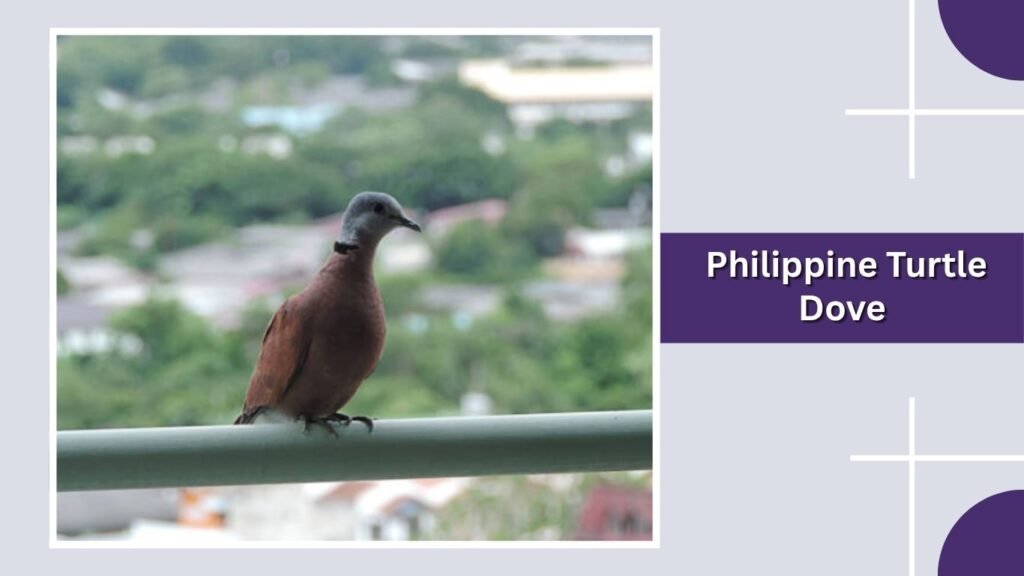
The Philippine Turtle Dove is a regional species found in the Philippines, known for its gentle nature and subtle coloration. It closely resembles other turtle doves but has slight differences in tone and markings that make it unique within its range.
Identification
- Medium-sized dove with a slim, balanced body
- Brownish-gray plumage with fine scaling on the wings
- Distinct black patch with white stripes on the sides of the neck
- Soft pinkish or grayish breast
- Long tail with pale or white outer edges
- Dark eyes and a slender, dark bill
- Slightly softer and lighter tones compared to related species
Habitat
The Philippine Turtle Dove is commonly found in forests, woodland edges, agricultural lands, and rural areas. It prefers habitats with a mix of trees for nesting and open spaces for feeding. This species is well adapted to tropical climates and can also be seen in gardens and village areas where food is available.
Behaviors
This dove is usually seen alone or in pairs, quietly moving between trees and the ground. It spends time foraging on the ground but also perches in trees for resting. The Philippine Turtle Dove produces soft, rhythmic cooing sounds similar to other turtle doves. It is generally calm and avoids disturbance by flying short distances.
Diet and Lifespan
The Philippine Turtle Dove mainly feeds on seeds, grains, and small plant materials. It forages by walking slowly on the ground and picking food carefully. Occasionally, it may consume tiny insects. Its lifespan in the wild is estimated to be around 3 to 5 years, depending on habitat conditions and environmental factors.
9. Sunda Turtle Dove
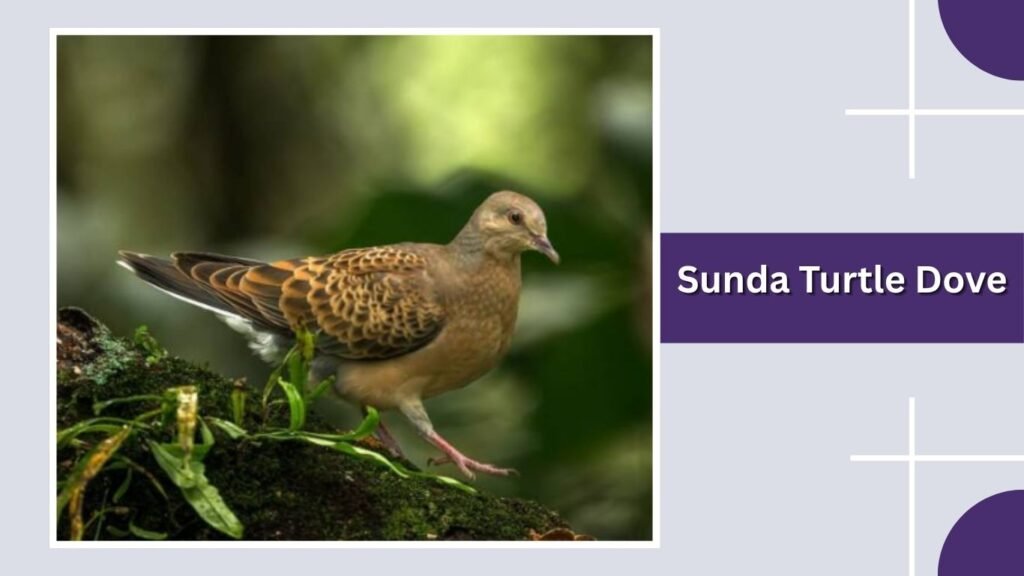
The Sunda Turtle Dove is a regional form associated with island populations in Southeast Asia, particularly within the Sunda region. It shares many similarities with the Oriental Turtle Dove but has slight variations in color and habitat preference. This bird is well adapted to island ecosystems and remains an important part of its local environment.
Identification
- Medium-sized dove with a well-balanced, slightly rounded body
- Brownish-gray plumage with detailed scaling across the wings
- Prominent black patch on the neck marked with fine white stripes
- Soft pinkish to gray-toned breast that blends smoothly into the belly
- Long, tapered tail with distinct white outer feathers visible in flight
- Dark, alert eyes and a slender, slightly curved bill
- Subtle regional color variations depending on island location
Habitat
The Sunda Turtle Dove is mainly found in tropical and subtropical island habitats, including forests, woodland edges, plantations, and rural landscapes. It prefers areas with a mix of tree cover for nesting and open ground for feeding. This species is commonly seen in Indonesia and surrounding islands, where it thrives in warm, humid climates. It can adapt to human-modified environments such as gardens and agricultural lands, provided there are sufficient trees and food sources. Access to water and seed-rich areas plays a key role in its habitat selection.
Behaviors
This dove is generally calm and adaptable, often seen alone or in pairs, though it may gather in small groups when food is plentiful. It spends time both on the ground and in trees, showing flexibility in its daily activities. The Sunda Turtle Dove produces a soft, rhythmic cooing sound, similar to related species, which is often heard during quiet periods of the day. It flies with steady wingbeats and can travel moderate distances between feeding and resting areas. Its behavior is non-aggressive, and it tends to avoid confrontation by retreating quickly when disturbed.
Diet and Lifespan
The Sunda Turtle Dove mainly feeds on a variety of seeds, grains, and small plant materials found on the ground. It may also consume small fruits and occasional insects, especially when available. Its feeding habits make it well suited to both natural and agricultural environments. The bird typically forages by walking slowly and picking food carefully from the ground. In the wild, its lifespan is estimated to be around 4 to 6 years, although this can vary depending on environmental conditions, availability of food, and exposure to predators.
10. African Turtle Dove
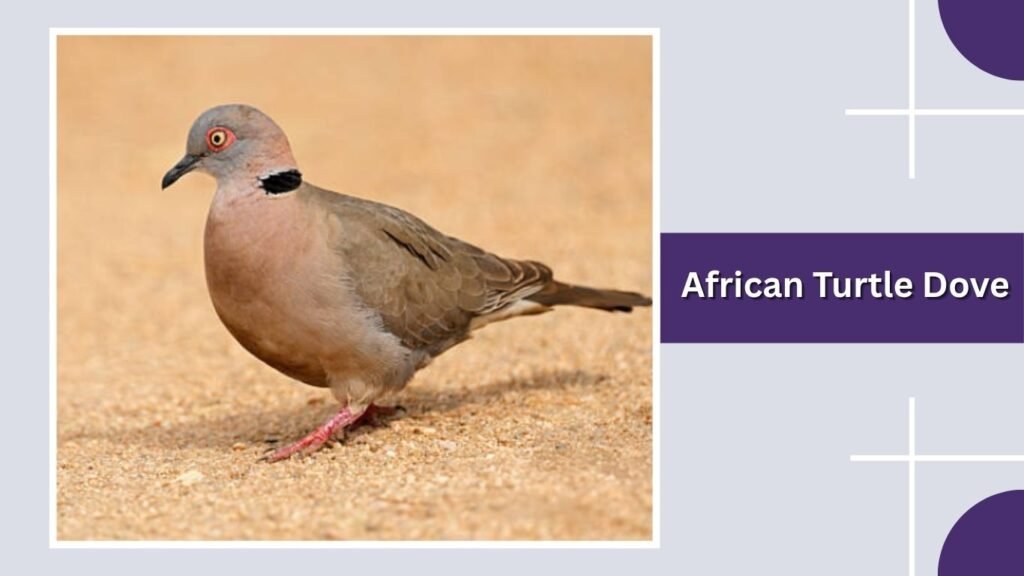
The African Turtle Dove is a graceful and adaptable species widely found across sub-Saharan Africa. It is known for its soft coloration, gentle behavior, and ability to thrive in a variety of environments, from natural landscapes to areas close to human activity.
Identification
- Medium-sized dove with a slim, elegant body
- Pale gray to light brown plumage with subtle shading
- Distinct black-and-white striped patch on the sides of the neck
- Soft pinkish or buff-colored breast
- Long, pointed tail with white outer edges
- Dark eyes and a slender, slightly curved bill
- Smooth and less heavily patterned appearance compared to some species
Habitat
The African Turtle Dove is commonly found in savannas, open woodlands, farmlands, and semi-arid regions. It prefers habitats with scattered trees and open ground for feeding. This species is widely distributed across sub-Saharan Africa and is well adapted to warm climates. It can also be seen near villages and agricultural areas, where food and water sources are more readily available.
Behaviors
This dove is generally calm and is often seen alone, in pairs, or in small groups. It spends time both on the ground and perched in trees. The African Turtle Dove produces a soft, rhythmic cooing call that is commonly heard in quiet surroundings. It flies with steady wingbeats and is capable of traveling moderate distances when necessary. It tends to avoid disturbance and quickly flies to safety when threatened.
Diet and Lifespan
The African Turtle Dove mainly feeds on seeds, grains, and small plant materials. It forages on the ground, often in open spaces such as fields and clearings. Occasionally, it may consume small insects. Its lifespan in the wild is typically around 4 to 6 years, depending on environmental conditions, food availability, and predation.
FAQs
What is a turtle dove?
A turtle dove is a type of small to medium-sized dove known for its gentle behavior and soft cooing calls. These birds are often associated with peace and love. They are found in various parts of the world, especially in Europe, Asia, and Africa, living in both natural and human-influenced environments.
Where do turtle doves live?
Turtle doves are commonly found in open woodlands, farmlands, scrublands, and forest edges. They prefer habitats that offer both trees for nesting and open ground for feeding. Many species live in warm regions, while some migrate between continents depending on the season.
What do turtle doves eat?
Turtle doves mainly feed on seeds, grains, and small plant materials. They forage on the ground, often in open areas such as fields and gardens. Occasionally, they may eat small insects, but plant-based food makes up most of their diet.
Are turtle doves migratory birds?
Some turtle dove species, like the European Turtle Dove, are migratory and travel long distances between breeding and wintering grounds. Others remain in the same region throughout the year. Migration depends on the species and environmental conditions.
How long do turtle doves live?
Turtle doves typically live between 3 to 6 years in the wild. Their lifespan can vary based on factors such as habitat quality, food availability, predation, and environmental changes. In safer conditions, some individuals may live slightly longer.
