
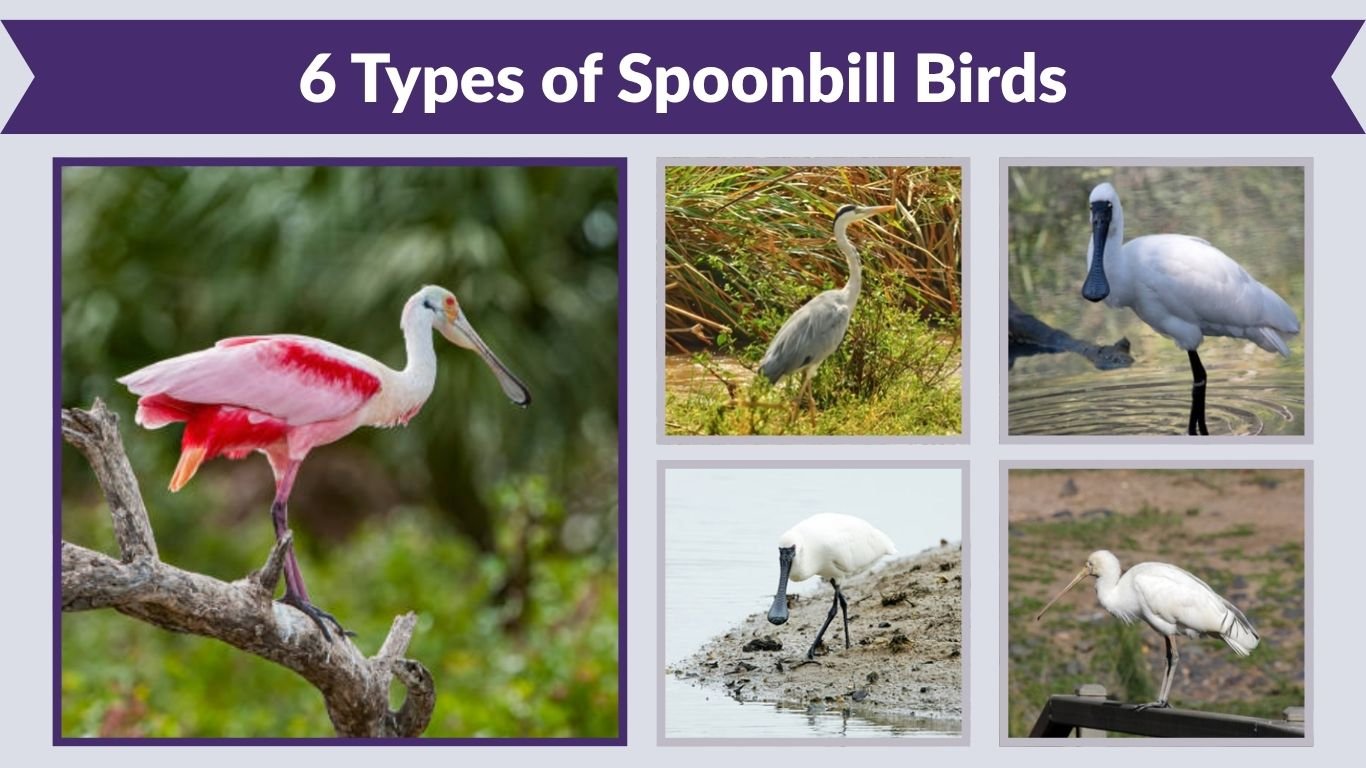
Spoonbills are fascinating wading birds known for their unique spoon-shaped bills and graceful feeding behavior. Found across different continents, each species has distinct features, habitats, and adaptations that make them easy to identify. In this guide, you’ll discover six types of spoonbill birds, along with their key identification traits to help you recognize them in the wild.
1. African Spoonbill

The African Spoonbill is a striking wading bird commonly found across wetlands in sub-Saharan Africa. Known for its distinct spoon-shaped bill and elegant posture, this species thrives in shallow waters where it feeds on small aquatic animals. Its pale coloration and contrasting facial features make it relatively easy to recognize in the wild.
Identification
- Mostly white plumage with a slight pinkish tint during breeding season
- Long, flattened spoon-shaped bill, typically gray in color
- Bare red facial skin around the eyes and base of the bill
- Long black legs adapted for wading
- Wings show a subtle pink hue when in flight
Habitat
African Spoonbills prefer freshwater environments such as lakes, marshes, and riverbanks. They are also occasionally seen in coastal lagoons. These birds favor shallow waters where they can easily sweep their bills side to side to catch prey.
Behavior
This species is usually seen alone or in small groups, though it may gather in larger numbers during breeding. It feeds by sweeping its open bill through the water until it detects movement. African Spoonbills are generally quiet but may produce low grunting sounds.
Diet
Their diet mainly consists of small fish, insects, crustaceans, and amphibians. The spoon-shaped bill is highly sensitive, allowing them to detect prey through touch rather than sight, which is especially useful in murky water.
Breeding
African Spoonbills breed in colonies, often alongside other waterbirds. They build nests in trees or reeds using sticks. The female typically lays 2–5 eggs, and both parents share responsibilities for incubation and feeding the chicks.
2. Eurasian Spoonbill
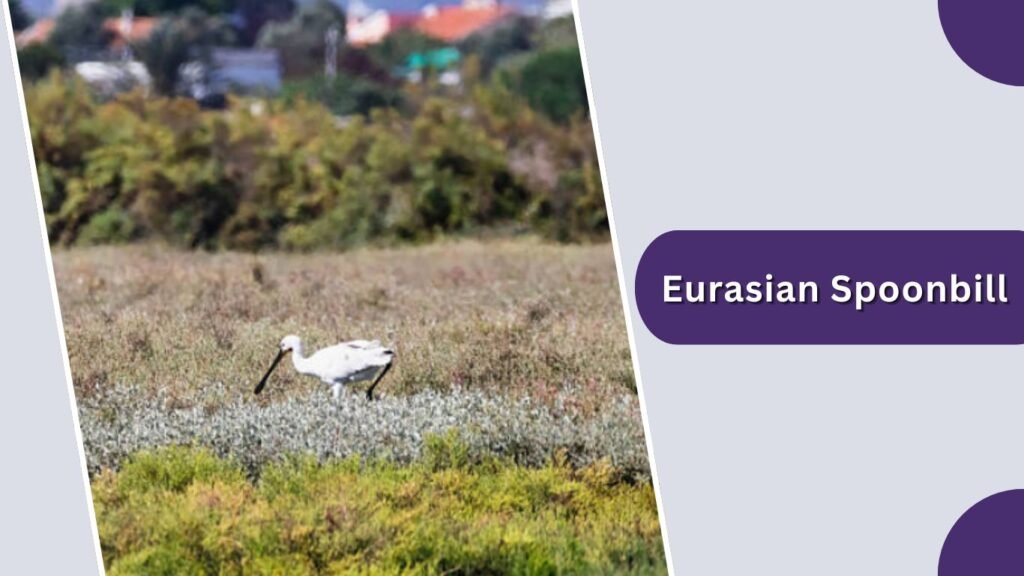
The Eurasian Spoonbill is a graceful white wading bird found across Europe, Asia, and parts of North Africa. It is well known for its long legs, elegant flight, and uniquely shaped bill. This species often inhabits wetlands and coastal areas, where it feeds in shallow water using its specialized bill.
Identification
- Pure white plumage, often with a yellowish breast patch during breeding
- Long black bill with a distinctive spoon-shaped tip
- Bare black facial skin with a yellow patch near the bill base
- Long black legs suited for wading
- Noticeable crest of elongated feathers on the back of the head in breeding season
Habitat
Eurasian Spoonbills prefer wetlands such as marshes, lagoons, and estuaries. They are also found in coastal mudflats and shallow lakes. These birds require calm, shallow waters where food is abundant and disturbance is minimal.
Behavior
This species is often seen feeding in groups, moving their bills side to side in synchronized motion. They are more social than some other spoonbills and may form large flocks outside the breeding season. Their flight is steady, with slow wingbeats and an outstretched neck.
Diet
Their diet includes small fish, crustaceans, aquatic insects, and mollusks. They rely on touch-sensitive bills to detect prey, allowing them to feed effectively even in cloudy or muddy water conditions.
Breeding
Eurasian Spoonbills breed in colonies, often alongside herons and other waterbirds. Nests are typically built in trees, shrubs, or reed beds. The female lays around 3–5 eggs, and both parents take part in incubation and chick rearing.
3. Royal Spoonbill
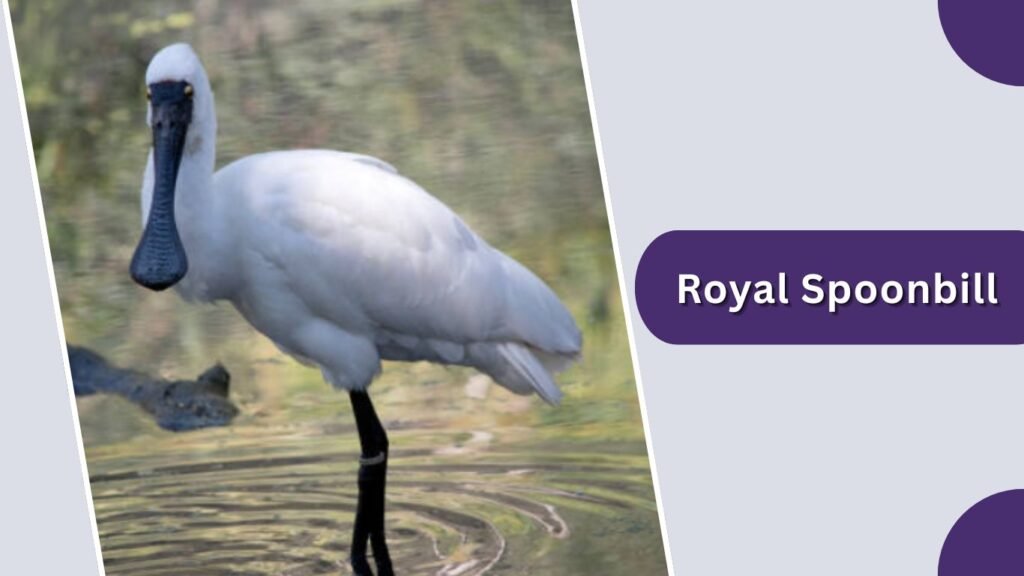
The Royal Spoonbill is a large and eye-catching bird native to Australia, New Zealand, and nearby regions. It is admired for its striking appearance, especially during the breeding season when ornamental feathers become more prominent. This species is often seen in calm, shallow waters where it forages gracefully.
Identification
- Bright white plumage with a clean, smooth appearance
- Long black spoon-shaped bill
- Distinctive black face and upper neck
- Long black legs adapted for wading
- During breeding, develops a crest of long white plumes at the back of the head
Habitat
Royal Spoonbills inhabit a variety of wetland environments, including freshwater lakes, estuaries, tidal flats, and coastal lagoons. They prefer shallow waters where food is easily accessible and are often found in both inland and coastal regions.
Behavior
These birds are typically seen alone, in pairs, or small groups, but may gather in larger flocks when feeding. They use a side-to-side sweeping motion with their bill to locate prey. Royal Spoonbills are generally quiet but may become more vocal during breeding periods.
Diet
Their diet mainly consists of small fish, crustaceans, insects, and aquatic larvae. Like other spoonbills, they rely on their sensitive bill to detect prey through touch, allowing them to feed efficiently even in murky water.
Breeding
Royal Spoonbills breed in colonies, often alongside other waterbirds such as ibis and herons. They build nests in trees or dense vegetation. The female usually lays 2–3 eggs, and both parents share the duties of incubation and caring for the chicks.
4. Yellow-billed Spoonbill
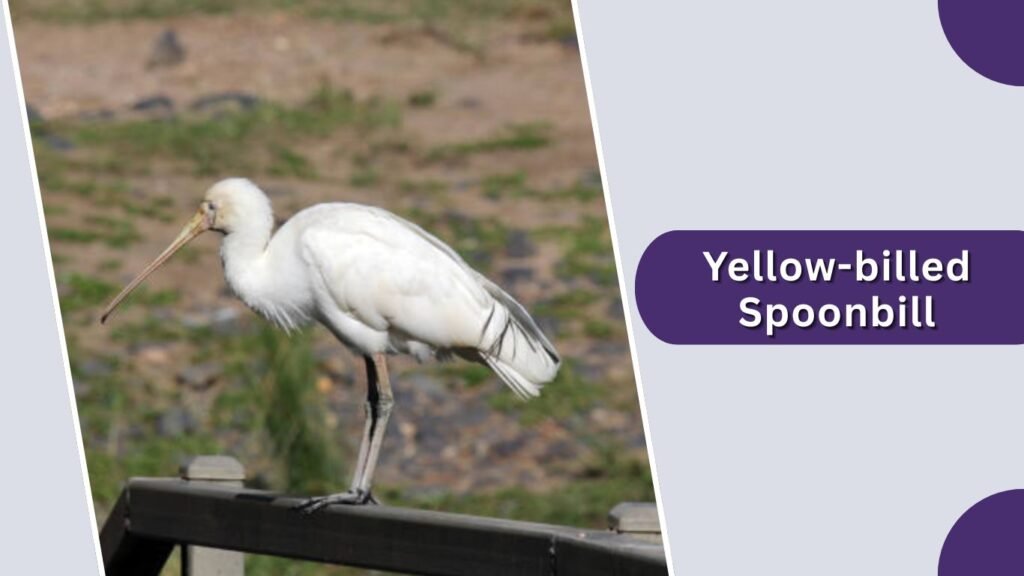
The Yellow-billed Spoonbill is a distinctive Australian wading bird, recognized for its unique bill coloration and elegant feeding style. It is commonly found in inland wetlands and is well adapted to dry environments where water availability may vary seasonally.
Identification
- White plumage with a slightly creamy tone
- Long, spoon-shaped bill that is pale yellow in color
- Bare yellow facial skin around the eyes
- Long yellowish legs suited for shallow water wading
- Smaller and more delicate in appearance compared to the Royal Spoonbill
Habitat
This species prefers inland freshwater habitats such as rivers, floodplains, marshes, and reservoirs. It is especially common in temporary wetlands formed after rainfall, showing a strong ability to adapt to changing water conditions.
Behavior
Yellow-billed Spoonbills are often seen foraging alone or in small groups. They feed by sweeping their bills side to side through shallow water. These birds are generally quiet and calm, though they may become more active and social during breeding periods.
Diet
Their diet mainly includes small fish, aquatic insects, crustaceans, and larvae. They rely heavily on tactile feeding, using their sensitive bill to detect prey in muddy or low-visibility water.
Breeding
Breeding usually occurs in response to rainfall and increased water levels. They nest in colonies, often with other waterbirds. Nests are built in trees over water, and the female typically lays 2–4 eggs. Both parents take part in incubation and feeding the young.
5. Roseate Spoonbill
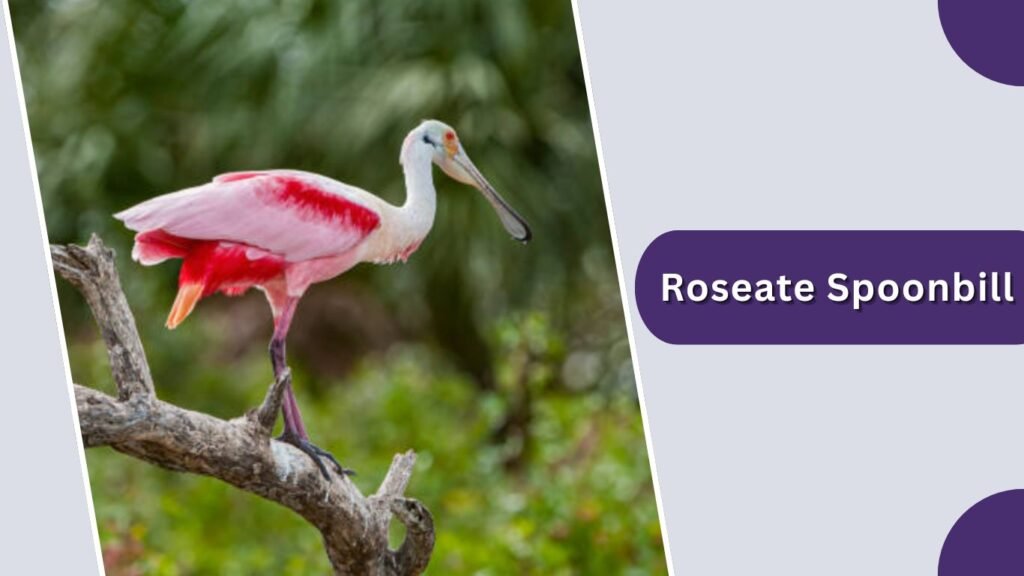
The Roseate Spoonbill is one of the most visually striking spoonbill species, known for its bright pink coloration. Native to the Americas, it is commonly found in coastal regions, wetlands, and mangrove habitats. Its vivid color and unique feeding style make it easy to spot.
Identification
- Bright pink plumage with deeper rose tones on wings
- Long gray, spoon-shaped bill
- Bare greenish head with a slightly bald appearance
- Red shoulder patch visible in adults
- Long pink legs adapted for wading
Habitat
Roseate Spoonbills are typically found in coastal wetlands, mangroves, lagoons, and estuaries. They prefer shallow waters with abundant food and are often seen in warm, tropical and subtropical regions.
Behavior
These birds are social and often seen feeding in groups, sometimes alongside other wading birds. They use a sweeping motion of their bill to catch prey. Roseate Spoonbills are generally quiet but may make low sounds during interactions.
Diet
Their diet consists mainly of small fish, shrimp, and aquatic insects. The pink coloration comes from pigments in their food, especially crustaceans. Like other spoonbills, they rely on touch to locate prey in the water.
Breeding
They breed in colonies, often nesting in trees or shrubs over water. The female usually lays 2–3 eggs. Both parents are involved in incubation and feeding the chicks. During breeding season, their colors become more vibrant, enhancing their overall appearance.
6. Black-faced Spoonbill
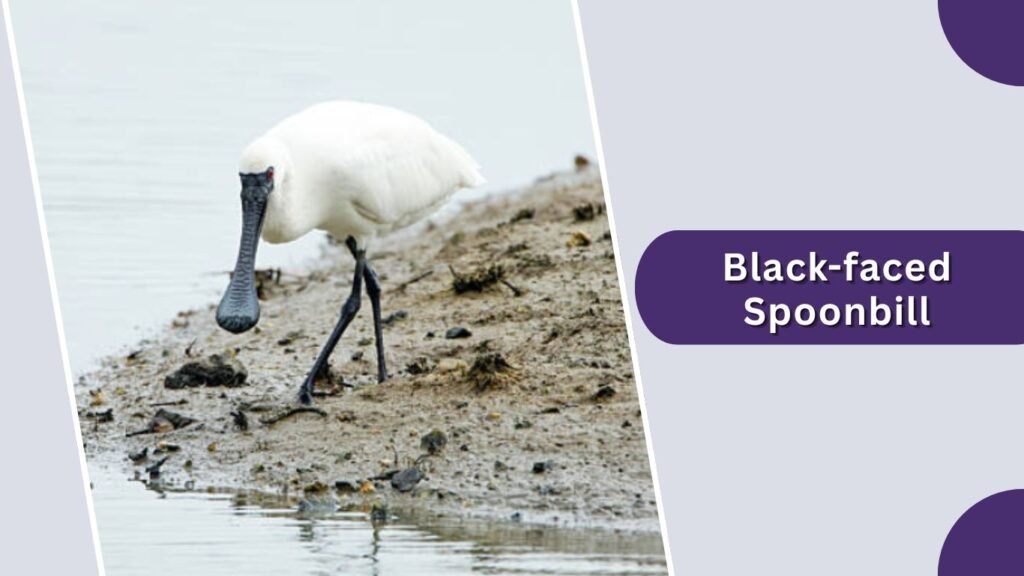
The Black-faced Spoonbill is a rare and endangered species mainly found in East Asia. It is known for its contrasting white body and distinctive black facial features. Due to its limited population, it is closely monitored and protected in many regions.
Identification
- White plumage with a smooth, clean appearance
- Long black spoon-shaped bill
- Distinct black face extending from the bill to the eyes
- Long black legs adapted for wading
- Yellow patch on the throat area during breeding season
Habitat
Black-faced Spoonbills inhabit coastal wetlands, mudflats, and estuaries. They rely on shallow tidal areas where food is abundant. During migration, they move between breeding and wintering sites across East Asia.
Behavior
This species is usually seen in small groups, feeding quietly in shallow waters. Like other spoonbills, they sweep their bills side to side to locate prey. They are generally calm and less vocal, often avoiding human disturbance.
Diet
Their diet includes small fish, shrimp, and other aquatic organisms. They depend on tactile feeding, using their sensitive bills to detect prey in muddy or low-visibility water environments.
Breeding
Black-faced Spoonbills breed on remote islands, often in colonies for protection. Nests are built on the ground or low vegetation. The female typically lays 2–3 eggs, and both parents share incubation and chick-rearing duties. Conservation efforts play a key role in protecting their breeding sites.
FAQs
What is special about spoonbill birds?
Spoonbill birds are unique because of their flat, spoon-shaped bills, which they use to catch food by sweeping side to side in water. This feeding method allows them to detect prey through touch, making them highly effective hunters even in muddy or low-visibility conditions.
Where are spoonbill birds commonly found?
Spoonbills are found across various regions, including Africa, Europe, Asia, Australia, and the Americas. They typically live in wetlands such as marshes, lakes, rivers, estuaries, and coastal lagoons where shallow water provides easy access to food.
What do spoonbill birds eat?
Spoonbills mainly feed on small aquatic animals like fish, crustaceans, insects, and larvae. They rely on their sensitive bills to detect movement in the water, allowing them to catch prey without needing to see it clearly.
Are spoonbill birds endangered?
Not all spoonbill species are endangered, but some, like the Black-faced Spoonbill, are at risk due to habitat loss and environmental changes. Conservation efforts are helping protect these vulnerable populations and their breeding habitats.
How can you identify different spoonbill species?
Different spoonbill species can be identified by their plumage color, bill shape and color, facial markings, and geographic location. For example, the Roseate Spoonbill is pink, while others are mostly white with distinct facial or bill features.
