
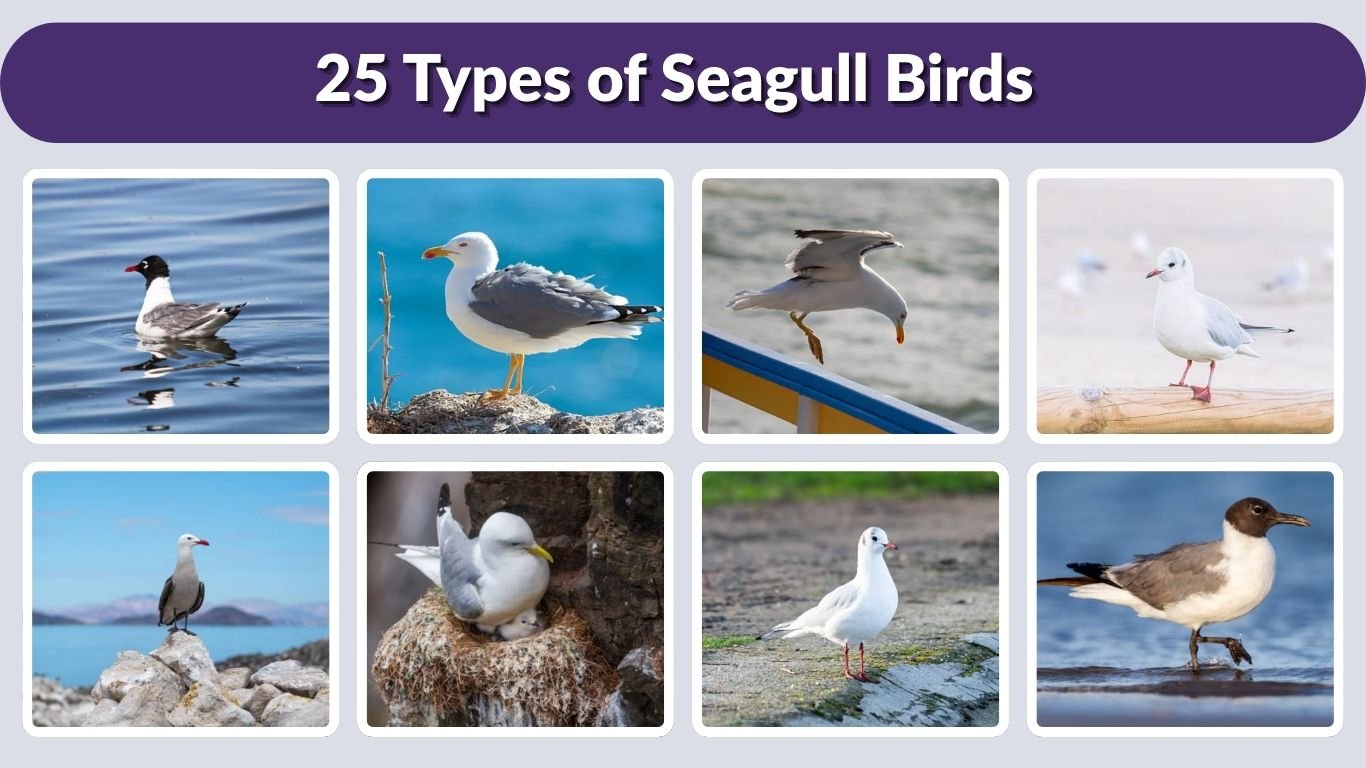
Seagulls are among the most recognizable and adaptable birds in the world, found across coastlines, lakes, rivers, and even busy cities. With over 25 distinct types covered in this guide, each species varies in size, habitat, behavior, and diet. From the massive Great Black-backed Gull to the delicate Little Gull, these birds showcase incredible diversity.
This guide provides a clear identification overview of each species, along with insights into where they live, how they behave, and what they eat. Whether you are a birdwatcher or just curious, this collection helps you easily understand and recognize different seagull species around the world
1. Herring Gull
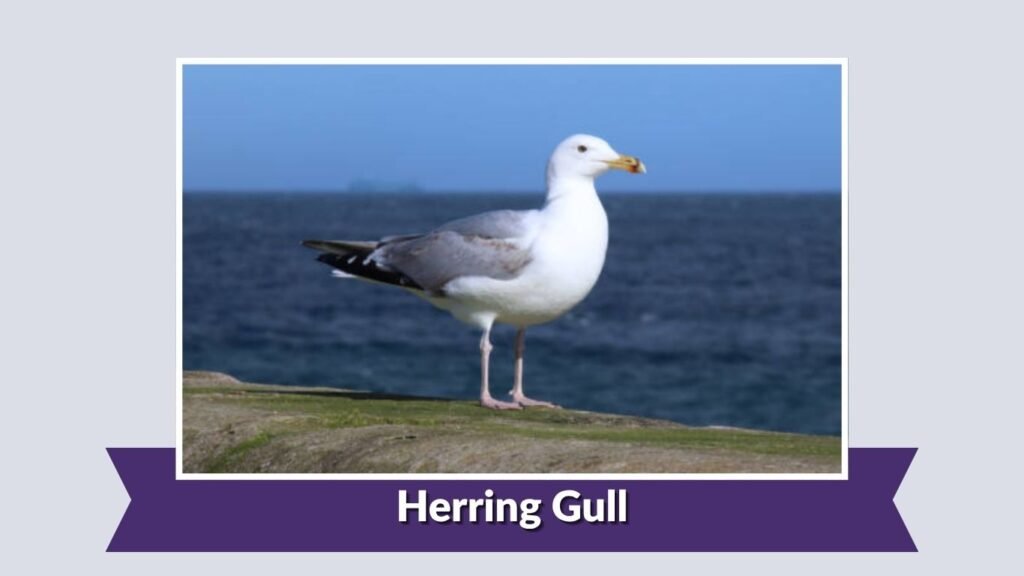
The Herring Gull is one of the most widespread and recognizable seagulls in the Northern Hemisphere. Known for its adaptability, it thrives in coastal areas as well as inland environments. Its bold nature and loud calls make it a familiar presence around beaches, harbors, and even urban settings.
Identification
- Large, bulky gull with a wingspan of about 120–150 cm
- Pale gray back and upper wings with black wing tips
- White head, neck, and underparts (may show streaks in winter)
- Yellow bill with a distinct red spot near the tip
- Pink legs and feet
- Sharp, piercing eyes with a pale yellow color
Habitat
Herring Gulls are commonly found along coastlines, including beaches, cliffs, and estuaries. They are also highly adaptable and often inhabit inland areas such as lakes, rivers, farmland, and city rooftops. During breeding season, they prefer isolated islands or coastal cliffs for nesting.
Behavior
These gulls are highly opportunistic and intelligent. They are known for their loud calls and social behavior, often forming large flocks. Herring Gulls are also skilled scavengers and can be seen stealing food from other birds or humans. Their bold nature allows them to thrive in human-dominated environments.
Diet
Herring Gulls have a very diverse diet. They feed on fish, insects, small animals, eggs, and carrion. In urban areas, they often scavenge garbage and leftover food. Their flexible feeding habits are a key reason for their widespread success.
2. Great Black-backed Gull
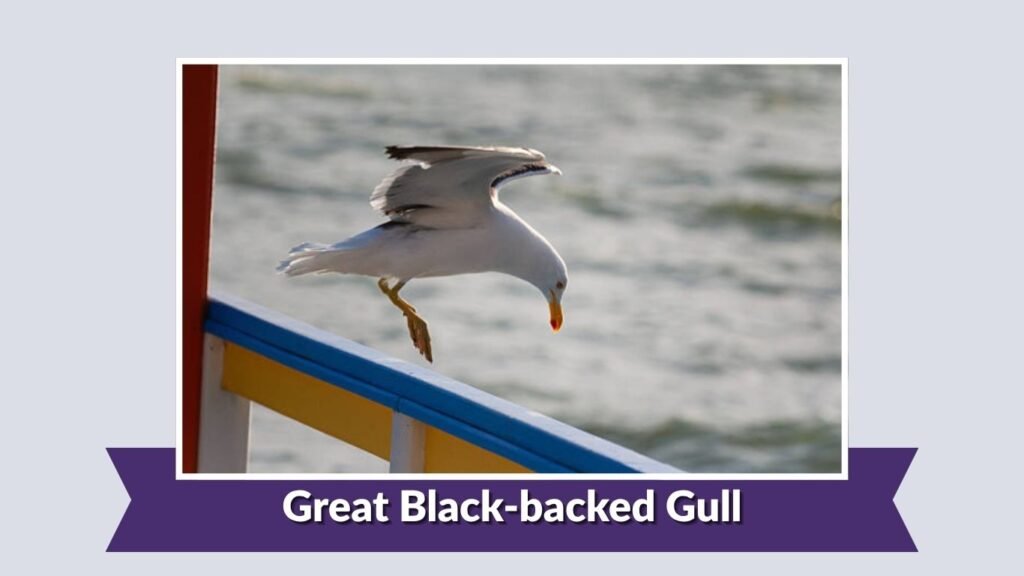
The Great Black-backed Gull is the largest gull species in the world, known for its powerful build and dominant behavior. It is commonly found along the coasts of the North Atlantic and is often seen patrolling shorelines with confidence.
Identification
- Very large gull with a wingspan up to 170 cm
- Black back and upper wings contrasting with white head and underparts
- Thick, strong yellow bill with a red spot
- Pink legs and feet
- Heavy body and broad wings
- Pale yellow eyes with a fierce expression
Habitat
This species mainly inhabits coastal regions, including rocky shores, beaches, and islands. It prefers open marine environments but can also be found in harbors and estuaries. During breeding, it nests on isolated islands or coastal cliffs.
Behavior
Great Black-backed Gulls are known for their aggressive and dominant nature. They often prey on smaller birds and can take over feeding areas. Despite this, they are also social and may gather in groups, especially where food is abundant. Their strong flight allows them to cover large distances.
Diet
Their diet is highly varied but leans more toward predation compared to other gulls. They feed on fish, seabirds, eggs, and small mammals. They also scavenge carrion and human waste when available, making them highly adaptable feeders.
3. Lesser Black-backed Gull
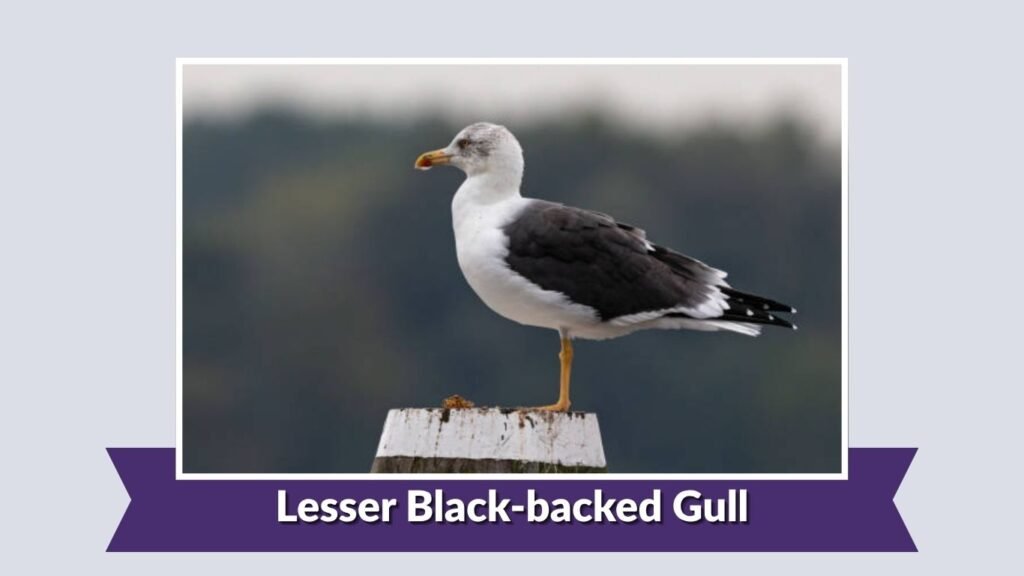
The Lesser Black-backed Gull is a sleek and agile gull commonly found across Europe and parts of Asia and North America. It is known for its darker back and graceful flight, often seen in coastal and urban environments.
Identification
- Medium to large gull with a wingspan of about 130–155 cm
- Dark gray to black back and upper wings
- White head and underparts
- Yellow bill with a red spot near the tip
- Bright yellow legs (key distinguishing feature)
- Slender body compared to larger gulls
Habitat
This species is widely distributed along coastlines, estuaries, and inland water bodies. It also adapts well to urban areas, including landfills, parks, and rooftops. During breeding season, it prefers coastal cliffs, dunes, or flat grassy islands.
Behavior
Lesser Black-backed Gulls are active and highly mobile. They are strong migrators, often traveling long distances between breeding and wintering grounds. They are social birds and can be found in mixed flocks with other gull species, especially around feeding areas.
Diet
Their diet is diverse and includes fish, insects, worms, and small animals. They are also opportunistic feeders, scavenging human food waste and refuse. This flexibility allows them to thrive in both natural and urban environments.
4. Ring-billed Gull
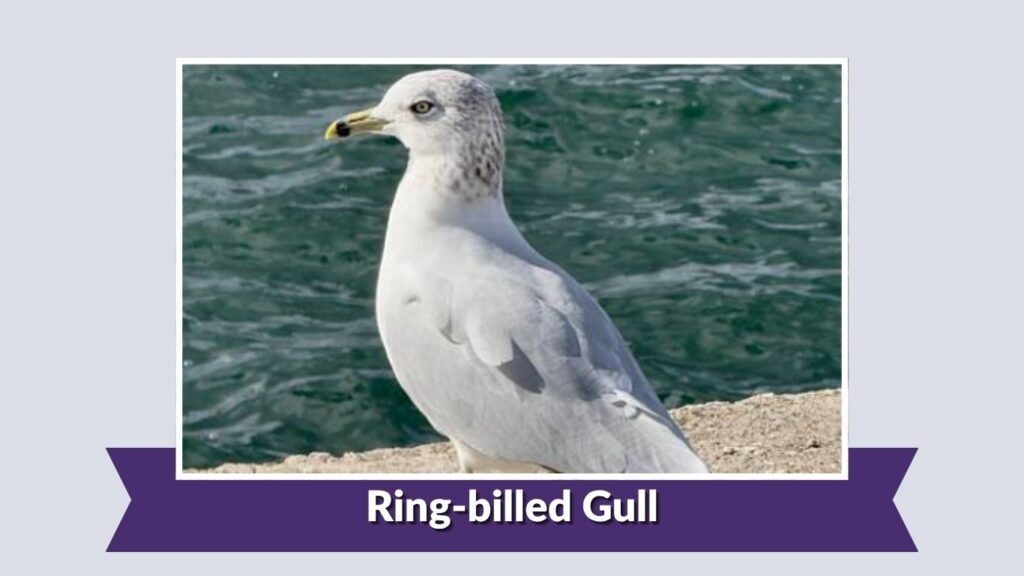
The Ring-billed Gull is a common and familiar gull in North America, especially around lakes and urban areas. It is easily recognized by the distinct black ring around its bill and its frequent presence near people.
Identification
- Medium-sized gull with a wingspan of about 105–130 cm
- Pale gray back with white head and underparts
- Yellow bill marked with a clear black ring
- Yellow legs and feet
- Black wingtips with white spots
- Clean, neat appearance compared to larger gulls
Habitat
Ring-billed Gulls are commonly found near freshwater lakes, rivers, and reservoirs. They are also frequent visitors to urban environments such as parking lots, parks, and landfills. During breeding, they nest in colonies on islands or near water bodies.
Behavior
These gulls are social and often gather in large flocks. They are less aggressive than larger gulls but are still bold around humans. Ring-billed Gulls are known for their loud calls and frequent presence in busy areas, often following people for food.
Diet
They have an opportunistic diet that includes fish, insects, grains, and small animals. In urban areas, they rely heavily on human food waste. Their adaptability in feeding habits contributes to their widespread success.
5. Laughing Gull
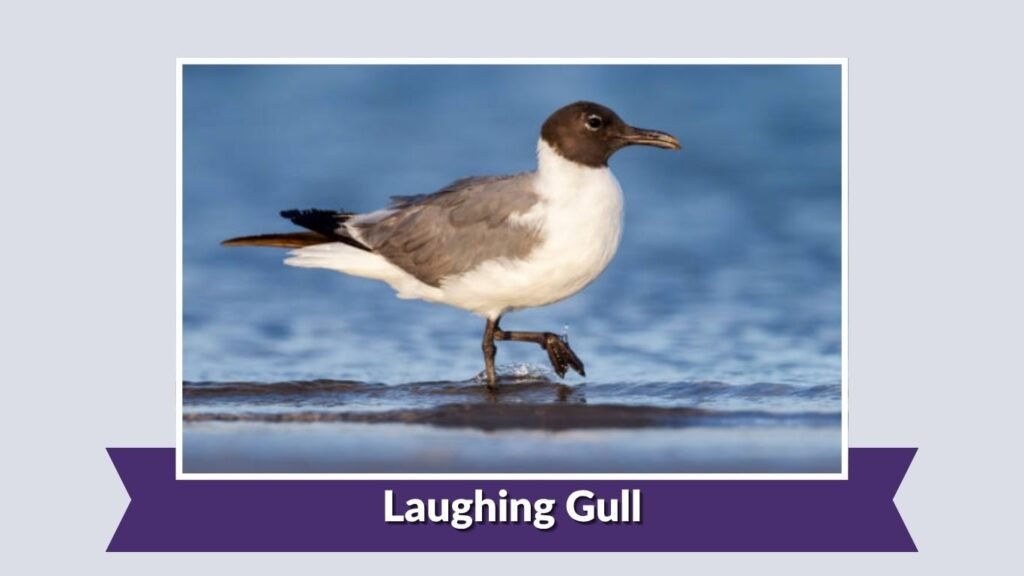
The Laughing Gull is a medium-sized gull best known for its distinctive call that sounds like laughter. It is commonly found along the coasts of the Americas and is especially active in warm coastal regions.
Identification
- Medium-sized gull with a wingspan of about 95–120 cm
- Black head during breeding season, turning grayish in winter
- Dark gray back with white underparts
- Red to dark red bill
- Dark legs
- Slender body with long wings
Habitat
Laughing Gulls are primarily coastal birds, found along beaches, marshes, and estuaries. They prefer warm, tropical, and subtropical regions but can also be seen inland near large water bodies during migration or winter.
Behavior
These gulls are very social and noisy, often forming large colonies. Their “laughing” call is a key feature, especially during breeding season. They are active flyers and are often seen hovering or gliding over water while searching for food.
Diet
Their diet includes fish, crustaceans, insects, and small marine animals. They are also known to scavenge and steal food from other birds. Around human areas, they may feed on scraps and waste.
6. Black-headed Gull
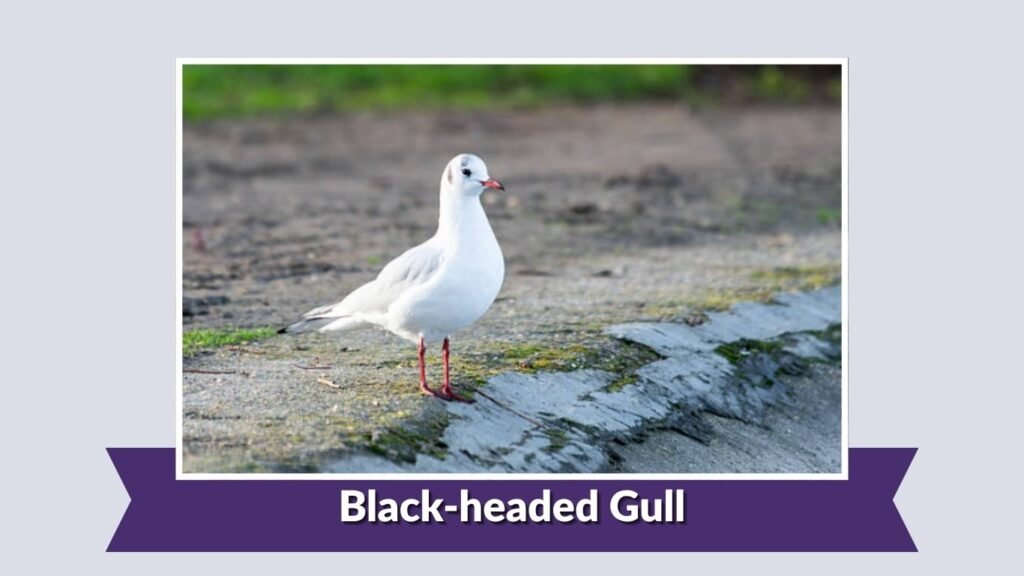
The Black-headed Gull is a small and elegant gull commonly found across Europe and Asia. Despite its name, its head is actually chocolate-brown during the breeding season, fading in winter.
Identification
- Small to medium gull with a wingspan of about 90–105 cm
- Chocolate-brown head in breeding season, white with a dark spot in winter
- Pale gray back and white underparts
- Red bill and red legs
- Slim body and delicate appearance
- White wings with dark tips
Habitat
This species prefers wetlands such as lakes, marshes, and rivers. It is also commonly found along coastlines and in urban parks. During breeding, it nests in colonies in marshy or grassy areas near water.
Behavior
Black-headed Gulls are highly social and often seen in flocks. They are agile fliers and frequently follow plows or boats to catch disturbed prey. Their calls are sharp and repetitive, adding to their active presence.
Diet
They feed on insects, worms, small fish, and crustaceans. In urban areas, they also consume human food scraps. Their varied diet helps them adapt to a wide range of environments.
7. Bonaparte’s Gull
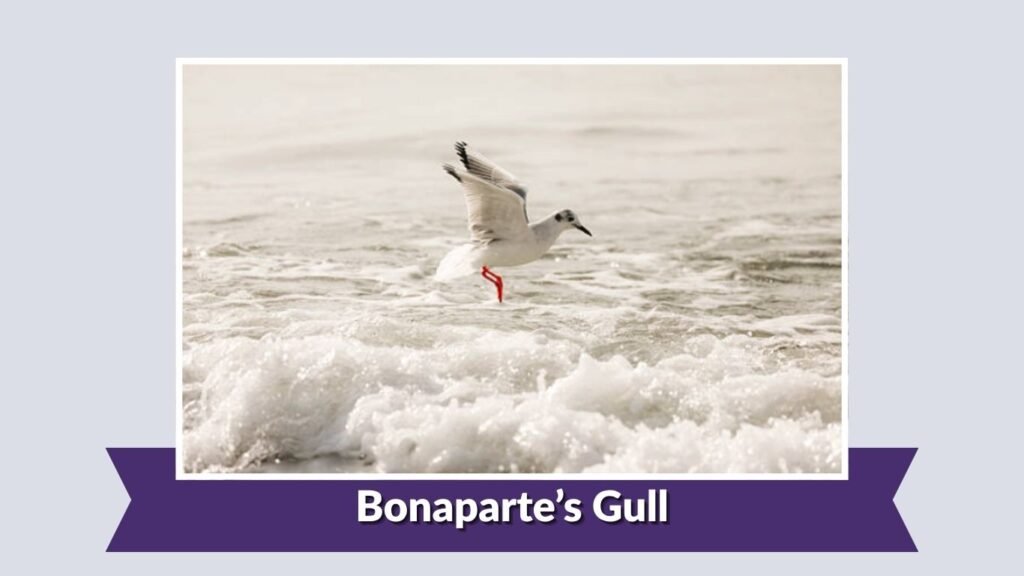
Bonaparte’s Gull is a small, graceful gull known for its buoyant flight and tern-like behavior. It is one of the smallest gulls in North America and is often seen skimming over water surfaces with agility. Unlike many larger gulls, it has a more delicate appearance and quieter demeanor, making it stand out in mixed flocks.
Identification
- Small gull with a wingspan of about 85–100 cm
- Pale gray back and white underparts
- Black head during breeding season, turning mostly white in winter
- Thin black bill (slimmer than most gulls)
- Bright red to orange legs
- Distinct white wedges visible on the wings during flight
Habitat
Bonaparte’s Gulls prefer freshwater habitats more than most gull species. They are commonly found near lakes, rivers, and wetlands, especially during migration. Unlike many gulls that breed on coastal cliffs, this species nests in trees, particularly in boreal forests across Canada and Alaska. During winter, they move to coastal areas, including bays, estuaries, and sheltered shorelines.
Behavior
This species is known for its light, buoyant flight, often compared to terns. Bonaparte’s Gulls frequently hover and dip to pick food from the water’s surface rather than diving deeply. They are less aggressive than larger gulls and tend to avoid confrontations. Social by nature, they often gather in flocks, especially during migration, sometimes mixing with other small gulls or terns. Their calls are soft and high-pitched, unlike the loud cries of larger gulls. They are also highly migratory, traveling long distances between breeding and wintering grounds.
Diet
Bonaparte’s Gulls primarily feed on small fish, aquatic insects, and crustaceans. They often catch prey by picking it from the water surface while in flight. In freshwater environments, insects such as midges and larvae form a significant part of their diet. They may also feed on plankton and small invertebrates. Unlike larger gulls, they rely less on scavenging and human waste, although they may occasionally take advantage of available food sources in urban or coastal areas. Their feeding style is more refined and less opportunistic compared to bigger gull species.
8. California Gull
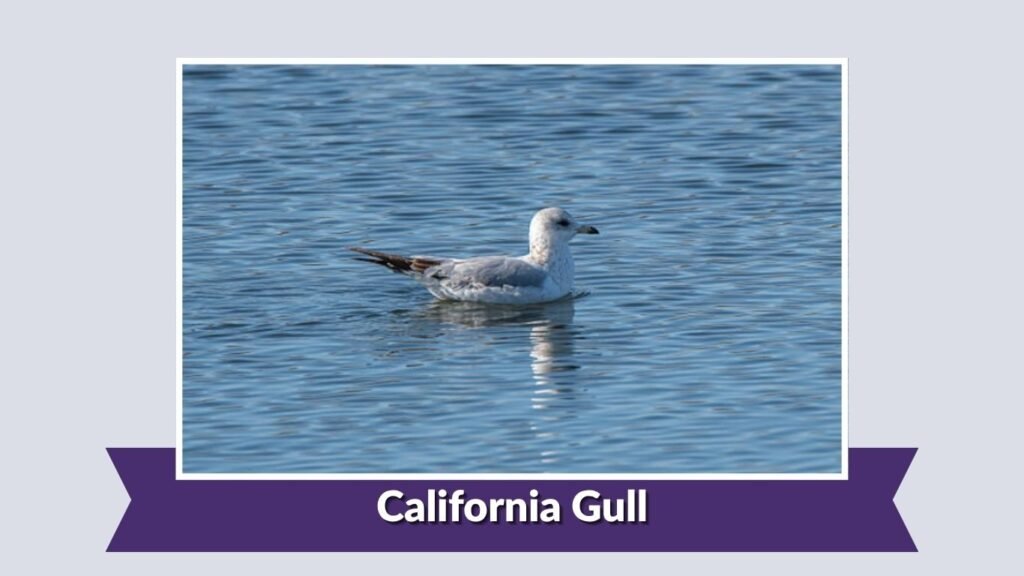
The California Gull is a medium-sized gull widely distributed across western North America. It is best known for its historical role in protecting crops from insect swarms, particularly in Utah, where it is recognized as the state bird. This species is adaptable and can thrive in both natural and human-altered environments.
Identification
- Medium-sized gull with a wingspan of about 120–140 cm
- Gray back and upper wings with white head and underparts
- Yellow bill with a distinct black ring and a red spot near the tip
- Yellow-green legs
- Black wingtips with white spots
- Slightly more slender than Herring Gull
Habitat
California Gulls are found in a wide range of habitats, including lakes, reservoirs, wetlands, and coastal areas. They breed mainly in inland regions, particularly around large lakes in the western United States and Canada. During the non-breeding season, they often move toward coastal environments such as beaches, bays, and estuaries. They are also common in agricultural fields, landfills, and urban settings where food is readily available.
Behavior
These gulls are highly social and often form large colonies during the breeding season. They nest on the ground, usually on islands or near water, where they are protected from predators. California Gulls are known for their adaptability and intelligence, often taking advantage of human activity for food. They are strong fliers and can travel long distances in search of feeding grounds. Their behavior is less aggressive compared to larger gulls, but they can still defend their territory when necessary. They communicate through a variety of calls, which are used for warning, mating, and social interaction.
Diet
The California Gull has a highly varied diet, making it an opportunistic feeder. It consumes insects, fish, small mammals, and bird eggs. Historically, they played a beneficial role by feeding on locusts and other crop-damaging insects. In modern times, they also rely heavily on human-related food sources, including garbage and agricultural waste. They are known to forage in fields, picking insects and worms from the soil. Their flexible diet allows them to survive in diverse environments, from remote lakes to busy urban centers.
9. Western Gull
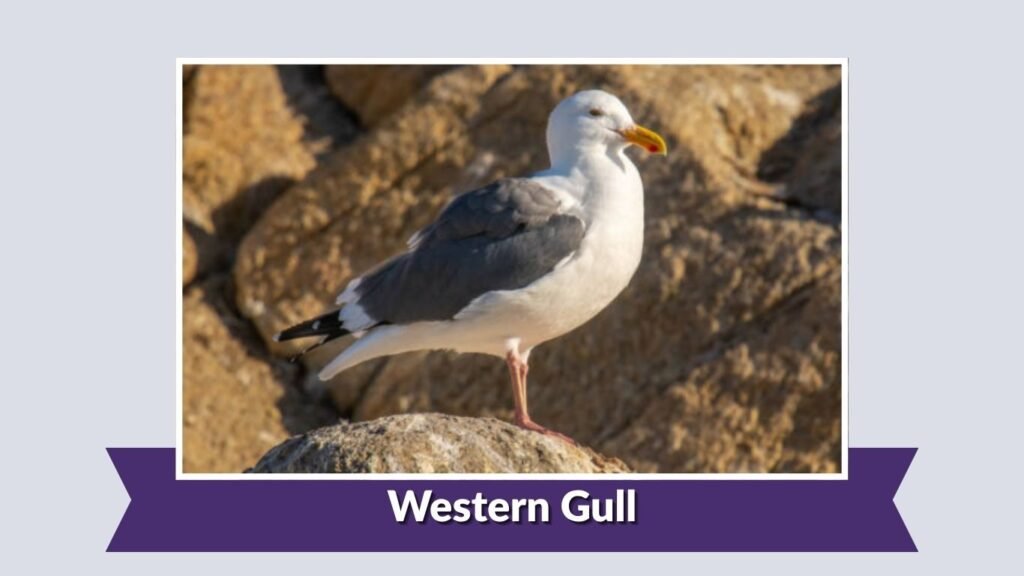
The Western Gull is a large, bold gull commonly found along the Pacific coast of North America. It is a year-round resident in its range and is known for its strong territorial behavior and deep, powerful calls. This species is often seen along rocky shores, piers, and coastal cities.
Identification
- Large gull with a wingspan of about 130–150 cm
- Dark gray back and upper wings
- White head and underparts
- Thick yellow bill with a red spot near the tip
- Pink legs and feet
- Heavy body with a strong, sturdy appearance
Habitat
Western Gulls are primarily coastal birds, rarely venturing far inland. They inhabit rocky coastlines, beaches, harbors, and offshore islands. During breeding season, they prefer isolated islands or cliffs where they can nest safely away from predators. They are also common around human settlements along the coast.
Behavior
These gulls are known for their aggressive and territorial nature, especially during breeding season. They defend their nests fiercely and may attack intruders. Western Gulls are generally non-migratory, staying within their coastal range year-round. They are often seen alone or in small groups rather than large flocks.
Diet
Western Gulls have a varied diet that includes fish, marine invertebrates, and small animals. They are also active scavengers, feeding on carrion and human waste. In some cases, they prey on eggs and chicks of other birds. Their opportunistic feeding habits help them thrive in coastal environments.
10. Glaucous Gull
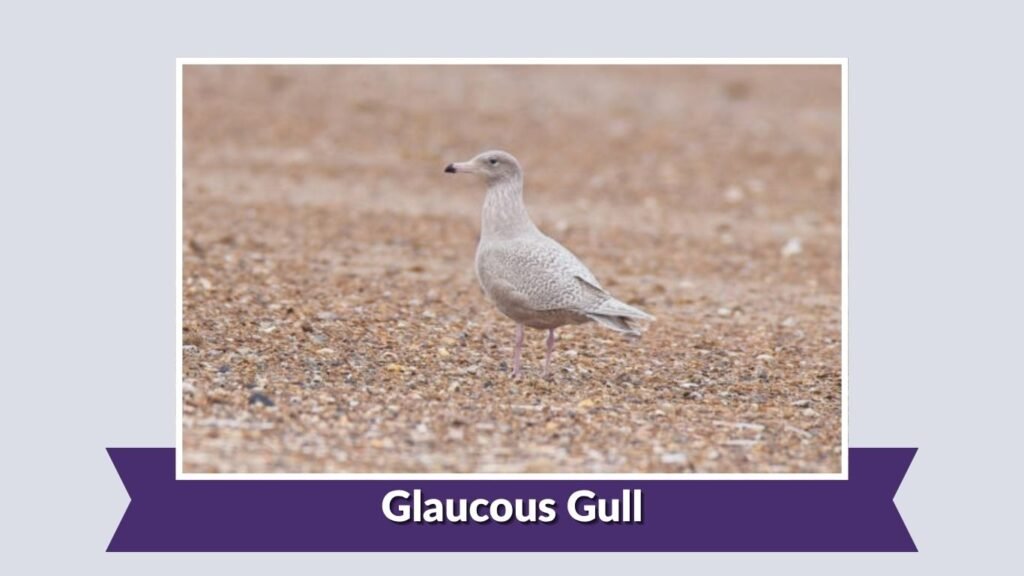
The Glaucous Gull is a large, pale gull that inhabits Arctic regions. It is well adapted to cold environments and is often seen along icy coastlines. Its light coloration and powerful build make it distinctive among gull species.
Identification
- Very large gull with a wingspan of about 140–165 cm
- Pale gray to almost white back and wings
- White head and underparts
- Thick yellow bill with a red spot
- Pink legs and feet
- Lacks black wingtips, giving a clean, pale appearance
Habitat
Glaucous Gulls are typically found in Arctic and sub-Arctic regions, especially along coasts, ice edges, and tundra areas. During winter, they may move southward to coastal areas and large inland water bodies. They prefer remote and cold habitats with minimal human disturbance.
Behavior
These gulls are strong and dominant birds, often competing with other seabirds for food. They are less social than smaller gulls but may gather in feeding areas. Glaucous Gulls are powerful fliers and can travel long distances across harsh environments. They are also known to scavenge frequently.
Diet
Their diet includes fish, seabirds, eggs, and carrion. They are also known to prey on smaller birds and steal food from other species. In addition, they feed on marine invertebrates and any available organic matter. Their ability to consume a wide range of food sources is essential for survival in extreme Arctic conditions.
11. Iceland Gull
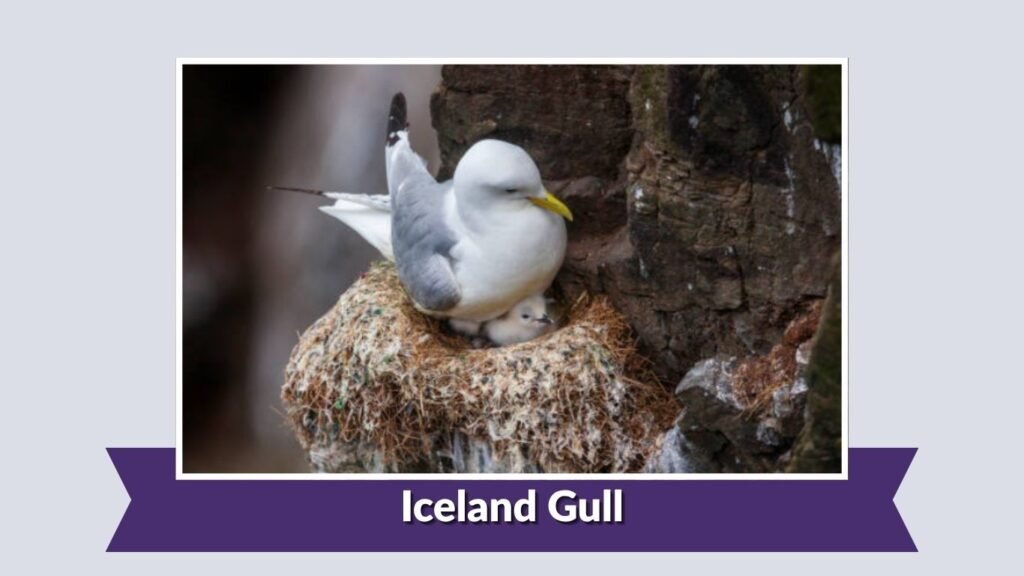
The Iceland Gull is a pale, elegant gull found in Arctic regions and along North Atlantic coasts. It is known for its soft appearance and gentle behavior compared to more aggressive gull species. This bird is often seen gliding effortlessly in cold coastal environments.
Identification
- Medium to large gull with a wingspan of about 120–140 cm
- Very pale gray to almost white back and wings
- White head and underparts
- Yellow bill with a small red spot
- Pink legs and feet
- No black on wingtips, giving a clean, light look
Habitat
Iceland Gulls breed in Arctic regions, particularly in Greenland and parts of Canada. During winter, they move south to coastal areas, harbors, and estuaries in the North Atlantic. They prefer cold marine environments and are often seen near ice-covered waters.
Behavior
This species is generally less aggressive than many other gulls. It often associates with mixed flocks and may follow ships or fishing boats for food. Iceland Gulls are graceful fliers and spend much of their time soaring over open water. They are relatively quiet compared to larger gulls.
Diet
Their diet mainly consists of fish and marine invertebrates. They also scavenge carrion and may take small prey when available. Like many gulls, they are opportunistic feeders but rely more on natural food sources than urban waste.
12. Heermann’s Gull
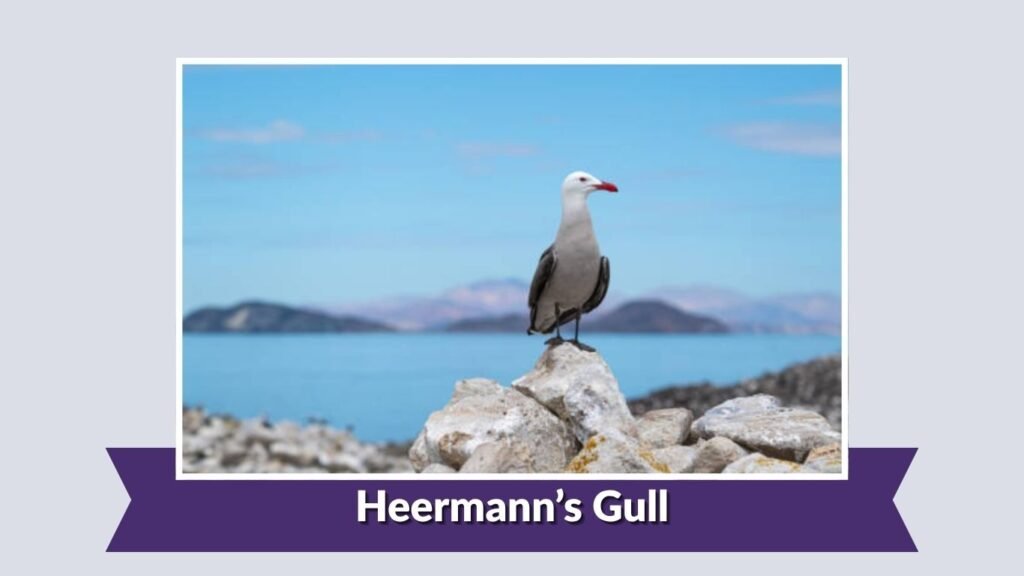
Heermann’s Gull is a striking and unique gull species found along the Pacific coast, especially in Mexico and the southwestern United States. It stands out due to its dark body and bright bill, making it one of the most visually distinctive gulls.
Identification
- Medium-sized gull with a wingspan of about 110–125 cm
- Dark gray body with a lighter gray head
- White head in breeding season
- Bright red bill with a black tip
- Dark legs and feet
- Black tail and wings with white markings
Habitat
Heermann’s Gulls are primarily coastal, inhabiting sandy beaches, rocky shores, and offshore islands. They breed mainly on islands in the Gulf of California. Outside the breeding season, they range along the Pacific coast, often staying close to marine environments.
Behavior
These gulls are known for their unique feeding strategy. Instead of catching fish themselves, they often steal food from other seabirds, especially pelicans. They are social birds and can be seen in groups along the shoreline. Their flight is strong and direct.
Diet
Heermann’s Gulls feed mainly on fish and marine life. Kleptoparasitism (stealing food from other birds) is a major part of their feeding behavior. They also consume crustaceans and occasionally scavenge. Their specialized feeding habits set them apart from many other gull species.
13. Sabine’s Gull
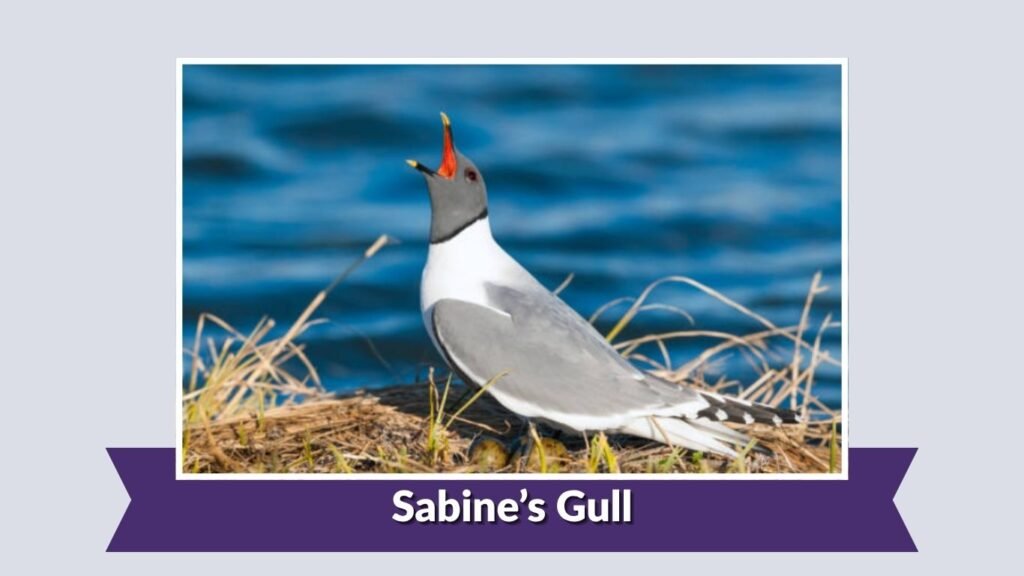
Sabine’s Gull is a small, striking gull known for its elegant appearance and long migratory journeys. It is often seen in Arctic regions during breeding season and spends much of its non-breeding time far out at sea. Its unique wing pattern makes it easy to identify in flight.
Identification
- Small gull with a wingspan of about 85–95 cm
- Distinctive tri-colored wings (black, white, and gray)
- Black head during breeding season, pale in winter
- Thin black bill with a yellow tip
- Forked tail (rare among gulls)
- Dark legs
Habitat
Sabine’s Gulls breed in Arctic tundra regions, often near wetlands and coastal lagoons. Outside the breeding season, they migrate long distances to tropical oceans, where they spend most of their time offshore. They are rarely seen inland except during migration.
Behavior
This species is known for its graceful and buoyant flight, often resembling a tern. Sabine’s Gulls are highly migratory, traveling from the Arctic to the southern oceans. They are usually seen in small groups and are less aggressive than larger gulls.
Diet
Their diet mainly consists of insects during the breeding season, especially in tundra habitats. At sea, they feed on small fish, crustaceans, and plankton. They typically pick food from the water surface rather than diving.
14. Little Gull
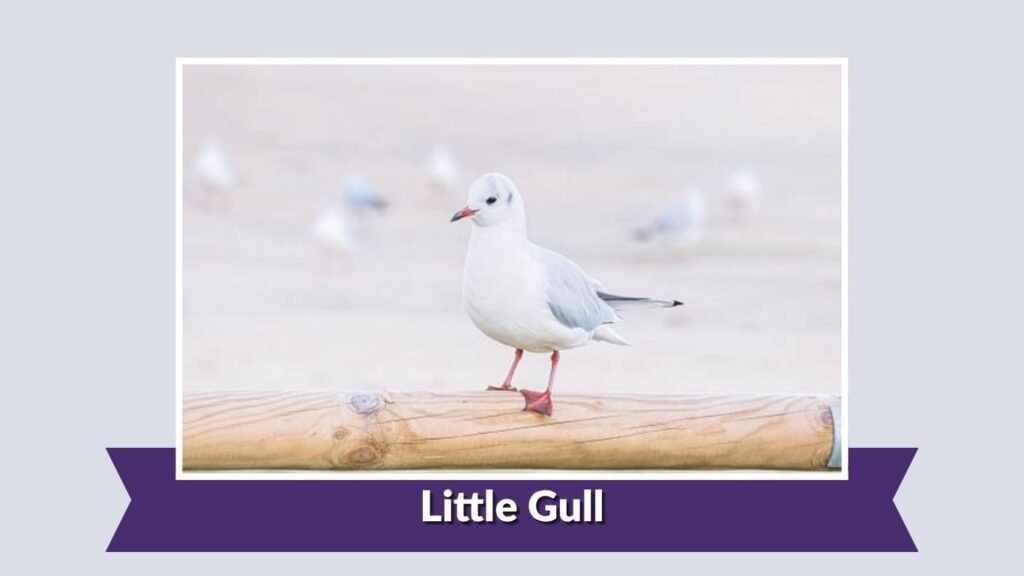
The Little Gull is the smallest gull species in the world, recognized for its delicate structure and light, fluttering flight. It is commonly found across Europe and parts of Asia, often near freshwater habitats.
Identification
- Very small gull with a wingspan of about 75–85 cm
- Pale gray back with white underparts
- Black head during breeding season
- Short, dark bill
- Dark underwings (a key feature in flight)
- Slender and compact body
Habitat
Little Gulls prefer freshwater environments such as lakes, marshes, and rivers. They breed in northern wetlands and move to coastal areas during winter. They are often found near calm waters with abundant insect life.
Behavior
These gulls are agile fliers and often hover or glide low over water while feeding. They are social birds and may gather in flocks, especially during migration. Their flight is light and tern-like, making them appear graceful in the air.
Diet
Little Gulls primarily feed on insects, especially during the breeding season. They catch prey from the water surface or in mid-air. They also consume small fish and aquatic invertebrates, depending on availability.
15. Ivory Gull
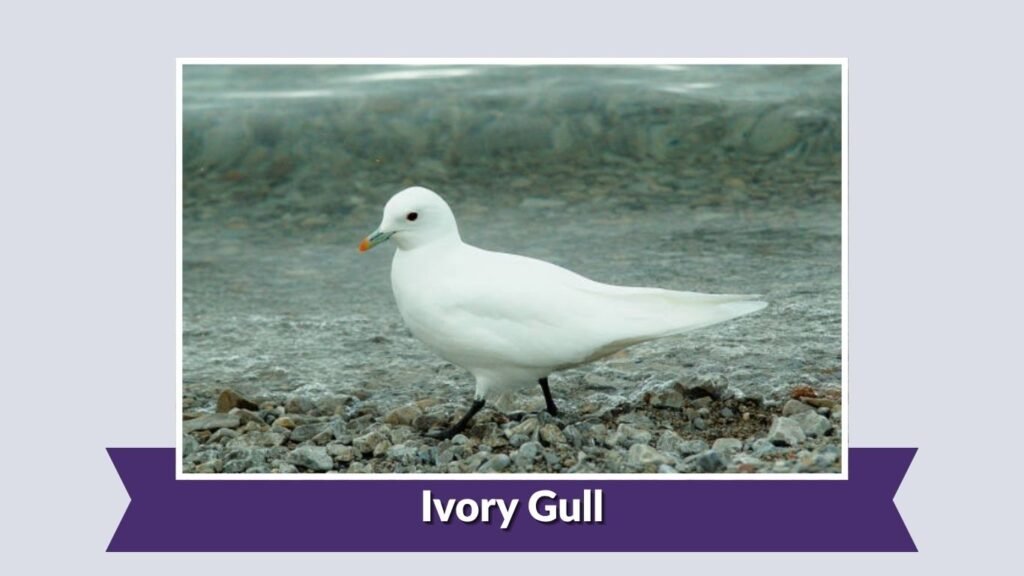
The Ivory Gull is a rare and beautiful Arctic species, known for its pure white plumage and close association with sea ice. It is one of the most specialized gulls, spending much of its life in remote, icy environments far from human activity.
Identification
- Medium-sized gull with a wingspan of about 105–120 cm
- Entirely white plumage with no gray or black markings
- Pale yellow bill with a slightly greenish tint
- Short black legs
- Rounded head with a soft, dove-like appearance
- Dark eyes contrasting with white feathers
Habitat
Ivory Gulls are strongly tied to Arctic regions, especially near pack ice and frozen seas. They breed on remote cliffs and rocky outcrops in the high Arctic. Outside the breeding season, they remain close to sea ice, rarely venturing into warmer coastal areas.
Behavior
These gulls are less social than many other species and are often seen alone or in small groups. They follow polar bears and other predators to feed on leftovers. Their flight is steady and direct, suited to long distances over icy waters.
Diet
Their diet mainly consists of fish, marine invertebrates, and carrion. They are known scavengers, often feeding on remains left by larger predators. This feeding strategy helps them survive in harsh Arctic conditions where food can be scarce.
16. Kelp Gull
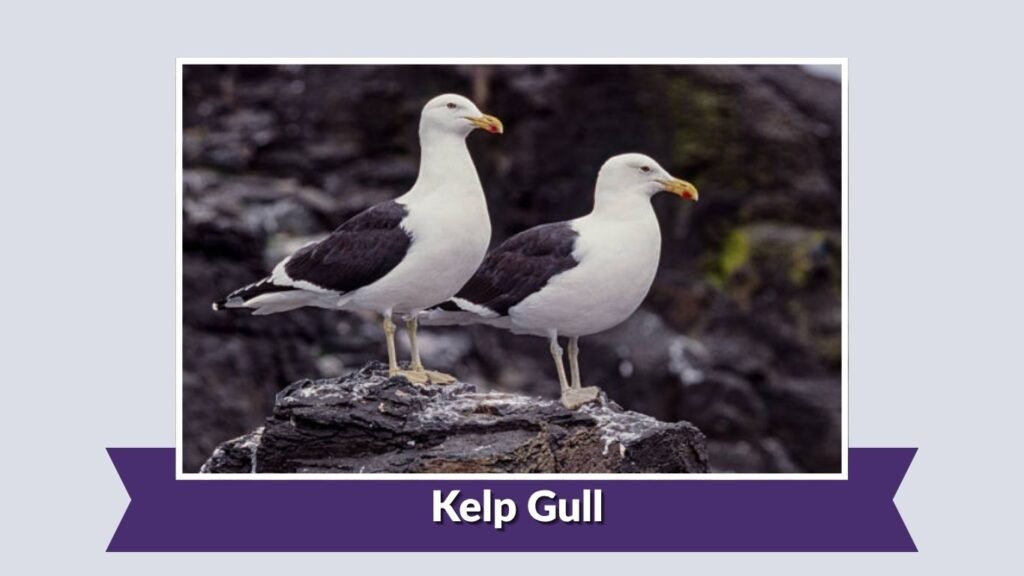
The Kelp Gull is a large and widespread gull found mainly in the Southern Hemisphere. It is a bold and adaptable species, commonly seen along coastlines, harbors, and even inland areas near water.
Identification
- Large gull with a wingspan of about 140–160 cm
- Black back and wings with white head and underparts
- Strong yellow bill with a red spot
- Yellow legs
- White tail with black markings
- Robust and powerful build
Habitat
Kelp Gulls are found along coasts of South America, Africa, Australia, and New Zealand. They prefer beaches, rocky shores, estuaries, and ports. They are also known to move inland to lakes, rivers, and human settlements when food is available.
Behavior
These gulls are highly adaptable and often live close to humans. They can be aggressive, especially when competing for food. Kelp Gulls are social birds, frequently seen in flocks, but they can also be territorial during breeding season.
Diet
Kelp Gulls have a very diverse diet, including fish, shellfish, insects, and small animals. They are also opportunistic scavengers, feeding on carrion and human waste. In some areas, they are known to prey on other birds or steal food, showing their flexible feeding behavior.
17. Slaty-backed Gull
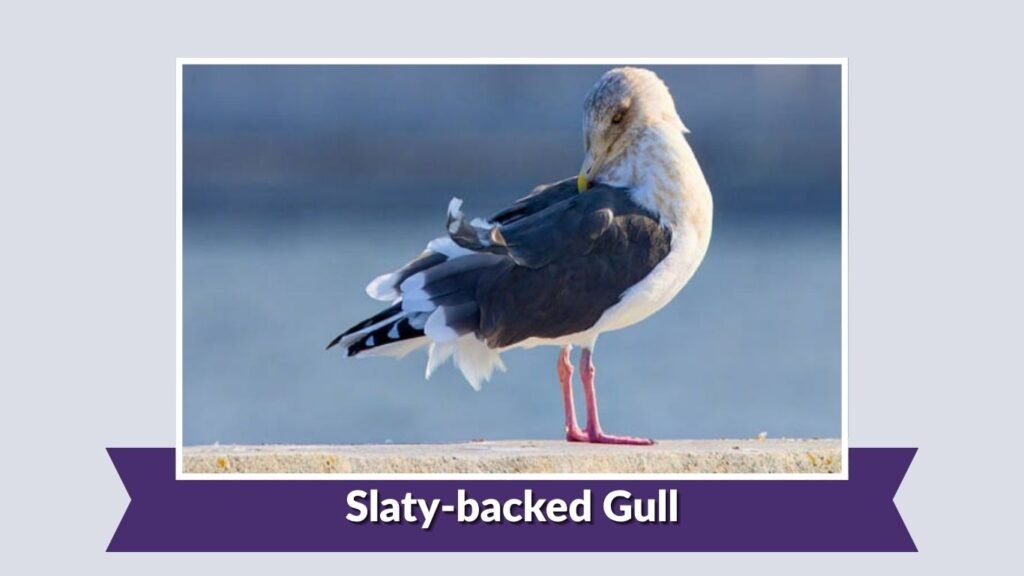
The Slaty-backed Gull is a large, powerful gull native to Northeast Asia. It is well known for its dark back and striking wing patterns. This species is often found in cold coastal regions and is admired for its bold appearance and strong presence.
Identification
- Large gull with a wingspan of about 140–160 cm
- Dark slate-gray back and upper wings
- White head and underparts
- Yellow bill with a red spot near the tip
- Pink legs
- Distinctive white “string of pearls” pattern on black wingtips
Habitat
Slaty-backed Gulls are commonly found along rocky coastlines, harbors, and islands in regions like Japan, Korea, and eastern Russia. During winter, they may move slightly south but generally remain in coastal marine environments.
Behavior
These gulls are strong and assertive, often dominating feeding areas. They are usually seen alone or in small groups but may gather in larger numbers where food is abundant. Their flight is powerful, and they can travel long distances over open water.
Diet
Their diet includes fish, marine invertebrates, and small animals. They are also scavengers and may feed on carrion or human waste. Like many large gulls, they may prey on other birds or steal food when the opportunity arises.
18. Yellow-legged Gull
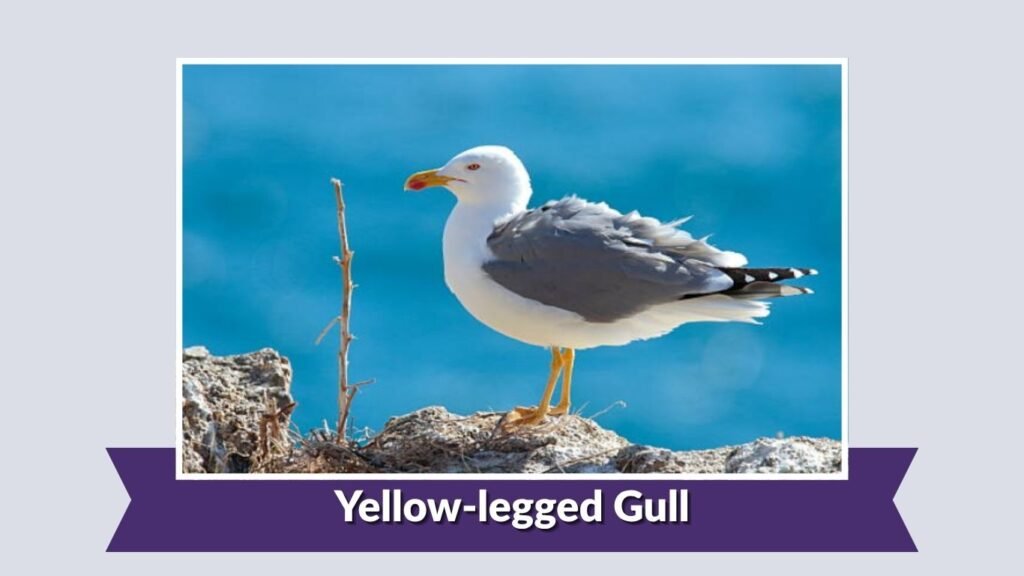
The Yellow-legged Gull is a medium to large gull commonly found around the Mediterranean and nearby regions. It is closely related to the Herring Gull but is distinguished by its bright legs and slightly more aggressive nature.
Identification
- Medium to large gull with a wingspan of about 130–155 cm
- Pale gray back with white head and underparts
- Bright yellow legs (key feature)
- Strong yellow bill with a red spot
- Black wingtips with white markings
- Sturdy body and confident stance
Habitat
This species is widely distributed along coastal areas, including beaches, cliffs, and ports. It also adapts well to inland habitats such as lakes, rivers, and urban areas. It is frequently seen in cities, especially near food sources.
Behavior
Yellow-legged Gulls are bold and often aggressive, especially when competing for food. They are highly adaptable and thrive in human-dominated environments. They may form large flocks but can also be territorial during nesting.
Diet
Their diet is highly varied, including fish, insects, small animals, and bird eggs. They are also common scavengers, feeding on garbage and food waste. Their opportunistic feeding habits contribute to their success across a wide range of habitats.
19. Audouin’s Gull
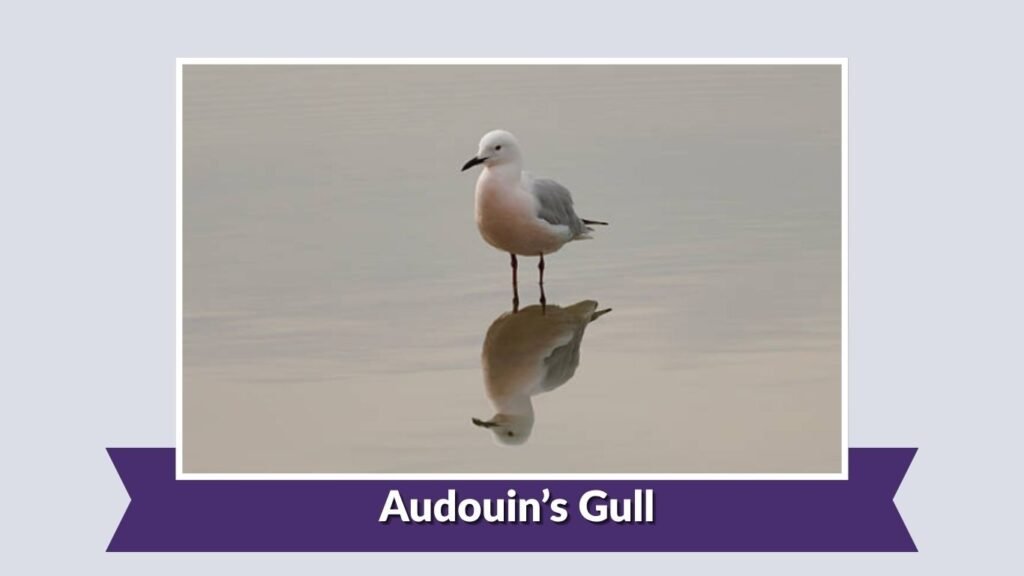
Audouin’s Gull is a rare and elegant gull species mainly found in the Mediterranean region. It is less widespread than many other gulls and is often associated with cleaner coastal environments. Its refined appearance and specialized feeding habits make it unique among gulls.
Identification
- Medium-sized gull with a wingspan of about 115–135 cm
- Pale gray back and white underparts
- White head with a clean, smooth look
- Red bill with a black band near the tip
- Dark legs
- Slim and graceful body shape
Habitat
Audouin’s Gulls are primarily coastal birds, found along sandy beaches, rocky shores, and small islands. They prefer undisturbed coastal habitats and often breed in colonies on isolated islands in the Mediterranean Sea.
Behavior
This species is less aggressive and more specialized compared to many other gulls. It is mostly active at night when feeding, which reduces competition with other gull species. They are social during breeding but generally quieter and less dominant.
Diet
Audouin’s Gulls mainly feed on fish, often catching them at night near the surface. They rely less on scavenging than other gulls and are more dependent on natural marine food sources.
20. Franklin’s Gull
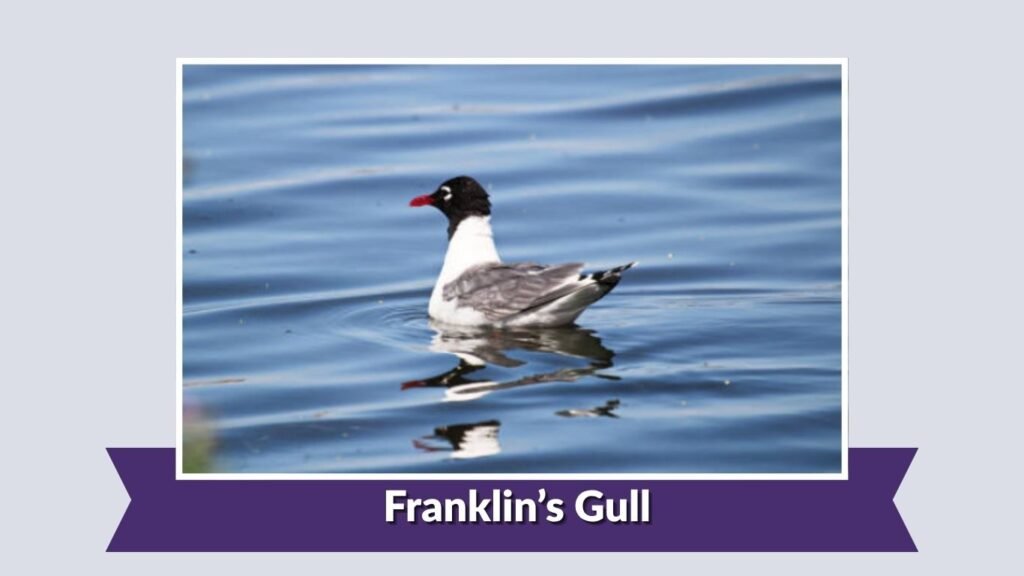
Franklin’s Gull is a medium-sized gull known for its striking breeding plumage and long migratory journeys. It breeds in North America and travels to South America during the non-breeding season.
Identification
- Medium-sized gull with a wingspan of about 95–105 cm
- Black head during breeding season, fading to white in winter
- Gray back with white underparts
- Red bill and red legs
- Black wingtips with white edges
- Slender and elegant appearance
Habitat
Franklin’s Gulls prefer freshwater habitats such as marshes, lakes, and prairies during breeding. In winter, they move to coastal areas and inland waters in South America. They are often seen in large flocks over wetlands.
Behavior
These gulls are highly social and form large colonies, especially during breeding. They are strong migrators, traveling thousands of kilometers each year. Their flight is agile, and they are often seen catching insects in mid-air.
Diet
Their diet includes insects, especially during breeding, as well as fish and small aquatic animals. They often forage in fields and wetlands and may also consume human food waste when available.
21. Ross’s Gull
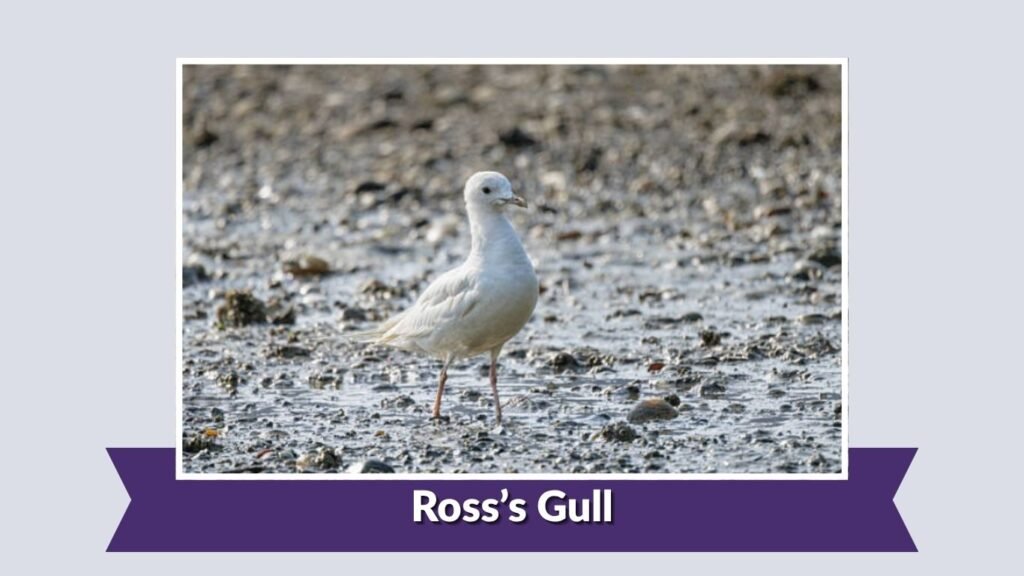
Ross’s Gull is a small and delicate Arctic gull, often considered one of the most beautiful gull species due to its soft pinkish tones and graceful form. It is a rare bird, typically found in remote northern regions, making sightings special for birdwatchers.
Identification
- Small gull with a wingspan of about 85–95 cm
- Pale gray back with white underparts
- Subtle pink flush on the chest during breeding season
- Distinct black collar around the neck
- Short black bill
- Wedge-shaped tail and pointed wings
Habitat
Ross’s Gulls breed in the high Arctic tundra, especially in Siberia, near rivers and wetlands. During the non-breeding season, they are often found along Arctic sea ice. Occasionally, they may wander south, but they generally remain in cold, remote environments with minimal human presence.
Behavior
This species is known for its light and buoyant flight, often appearing almost weightless in the air. Ross’s Gulls are relatively quiet and less aggressive than larger gulls. They are usually seen in small groups or pairs rather than large flocks. Their remote habitat and gentle behavior make them less commonly observed compared to other gulls.
Diet
Their diet mainly includes small fish, insects, and marine invertebrates. During the breeding season, they rely more on insects found in tundra wetlands. In marine environments, they pick food from the water surface. Like many Arctic birds, they take advantage of whatever food is seasonally available.
22. Brown-headed Gull
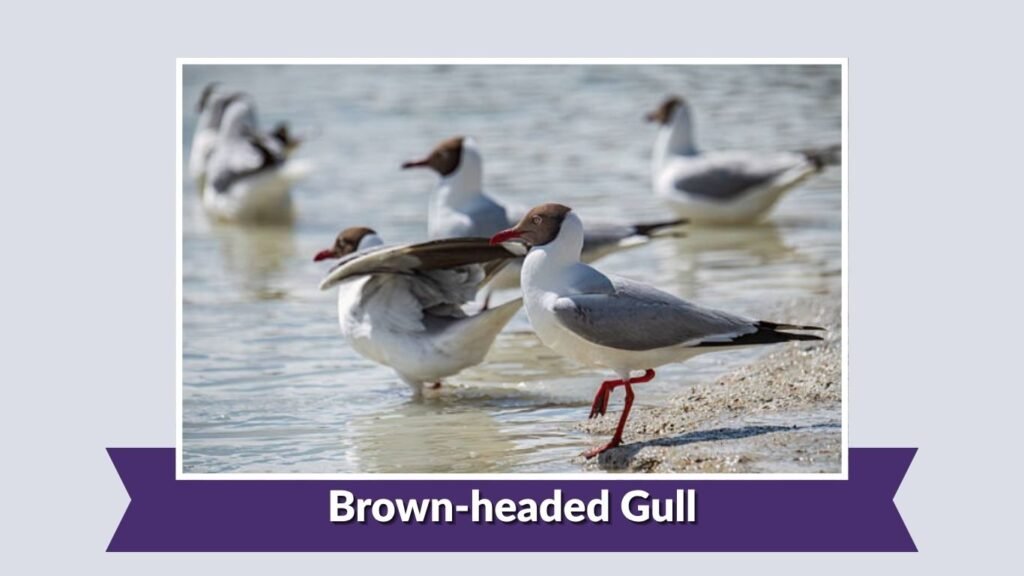
The Brown-headed Gull is a medium-sized gull widely distributed across South and Southeast Asia. It is a familiar bird around wetlands, rivers, and coastal areas, especially during winter when large flocks can be seen.
Identification
- Medium-sized gull with a wingspan of about 100–120 cm
- Chocolate-brown head during breeding season, white in winter with dark ear spots
- Pale gray back and white underparts
- Red bill and red legs
- Black wingtips with white markings
- Smooth and rounded head shape
Habitat
Brown-headed Gulls are commonly found near freshwater bodies such as lakes, rivers, and marshes. They also inhabit coastal regions, including beaches and estuaries. During winter, they are often seen in urban areas, especially near water sources where food is abundant.
Behavior
These gulls are highly social and usually gather in large flocks. They are active and agile fliers, often seen hovering or gliding over water while feeding. Brown-headed Gulls are less aggressive than larger gulls and tend to coexist peacefully in mixed-species groups.
Diet
Their diet is varied and includes fish, insects, and small aquatic animals. They often catch insects in flight or pick food from the water surface. In urban environments, they may also feed on scraps and human-provided food, showing their adaptability.
23. Black-tailed Gull
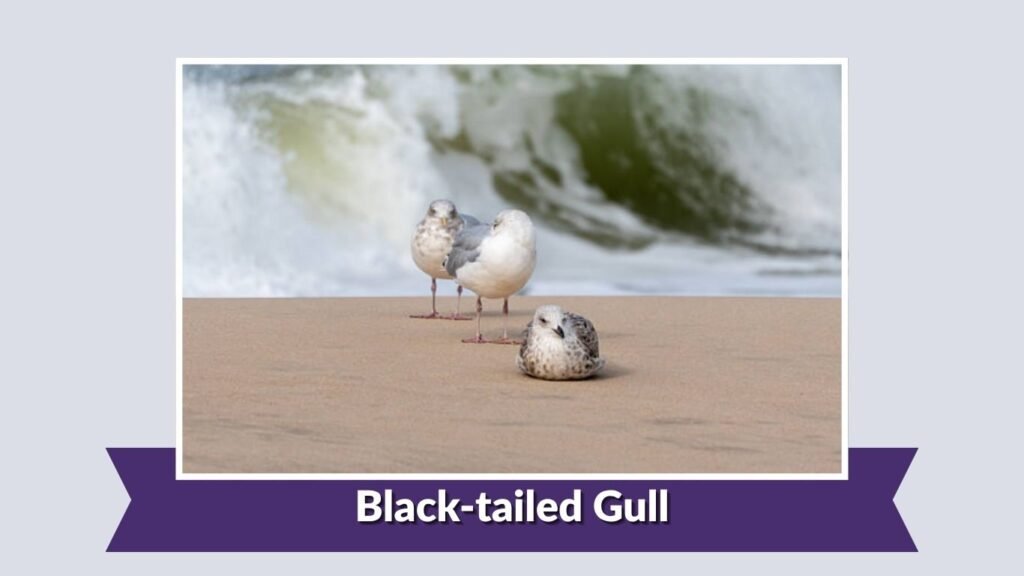
The Black-tailed Gull is a medium-sized gull commonly found in East Asia, especially around Japan, Korea, and coastal China. It is known for its distinctive call and strong association with rocky shorelines and fishing areas.
Identification
- Medium-sized gull with a wingspan of about 120–135 cm
- Pale gray back with white head and underparts
- Yellow bill with a black and red spot near the tip
- Yellow legs
- Black tail band (key distinguishing feature)
- Black wingtips with white markings
Habitat
Black-tailed Gulls are mainly coastal birds, inhabiting rocky shores, cliffs, beaches, and harbors. They are also commonly seen around fishing ports and offshore islands. They prefer marine environments but may occasionally visit nearby inland waters.
Behavior
These gulls are social and often found in colonies, especially during breeding season. They are known for their loud, cat-like calls. Black-tailed Gulls are active feeders and frequently follow fishing boats to take advantage of discarded fish.
Diet
Their diet includes fish, crustaceans, and marine invertebrates. They are also opportunistic feeders and may scavenge or steal food from other birds. Human-related food sources are also part of their diet in coastal towns.
24. Red-billed Gull
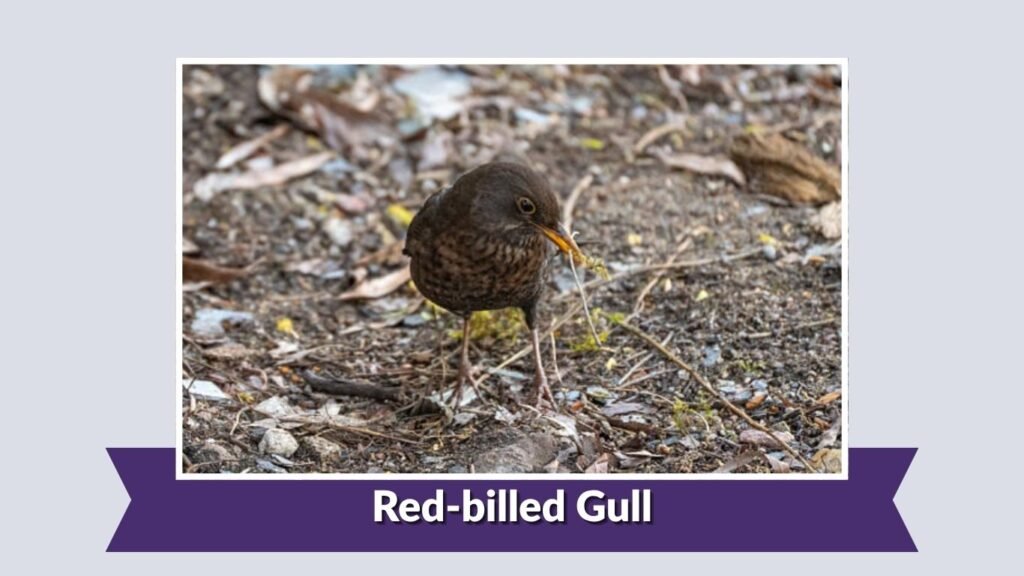
The Red-billed Gull is a small and attractive gull native to New Zealand. It is often seen along coastlines and is known for its bright bill and lively behavior.
Identification
- Small gull with a wingspan of about 85–100 cm
- Light gray back and white underparts
- Bright red bill
- Red legs and feet
- White head with occasional faint markings
- Black wingtips with white spots
Habitat
Red-billed Gulls are found along coastlines, including beaches, estuaries, and harbors. They may also be seen inland near rivers and lakes. They prefer areas with easy access to food and nesting sites such as sandy or rocky shores.
Behavior
These gulls are highly social and often gather in flocks. They are active and noisy, frequently calling while flying or resting. Red-billed Gulls are also known to associate closely with human activity, especially in coastal towns.
Diet
Their diet mainly consists of small fish, insects, and marine invertebrates. They also scavenge food scraps and may feed on human waste. Their adaptability allows them to thrive in both natural and urban environments.
25. Silver Gull
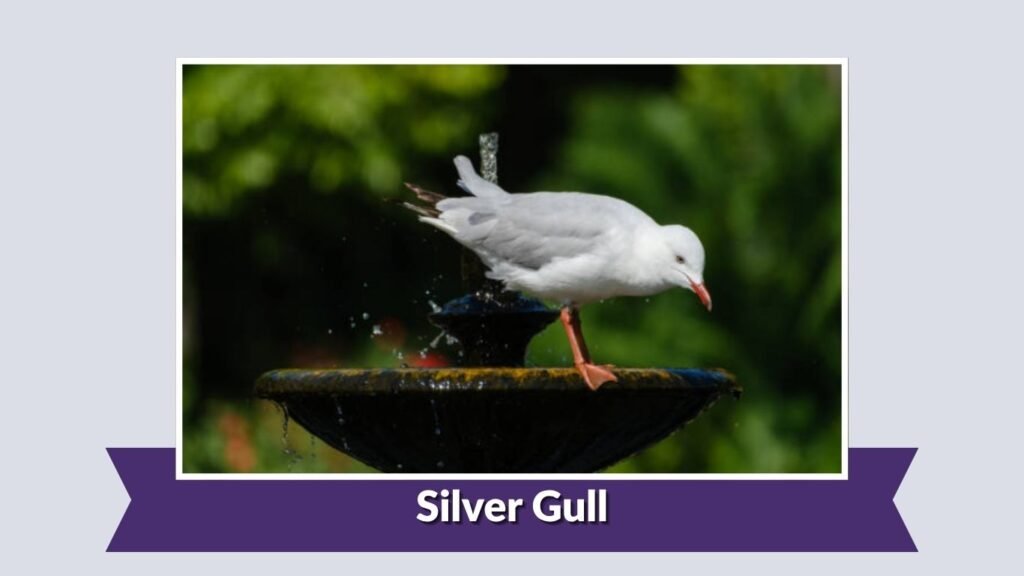
The Silver Gull is a small to medium-sized gull widely distributed across Australia and nearby regions. It is one of the most familiar gulls in its range and is often seen around beaches, cities, and inland water bodies due to its adaptability.
Identification
- Small to medium gull with a wingspan of about 95–110 cm
- Pale gray back and upper wings
- White head and underparts
- Bright red bill
- Red legs and feet
- White wings with black tips and white spots
Habitat
Silver Gulls are highly adaptable and found in a wide range of habitats, including coastal beaches, estuaries, harbors, and inland lakes. They are especially common in urban areas where food is abundant, such as parks, landfills, and waterfronts.
Behavior
These gulls are very social and often form large flocks. They are active, noisy, and frequently seen scavenging around human activity. Silver Gulls are bold and opportunistic, often approaching people for food and competing with other birds.
Diet
Their diet is extremely varied, including fish, insects, crustaceans, and small animals. They are also efficient scavengers, feeding on human food waste and garbage. This flexibility helps them thrive in both natural and urban environments.
