
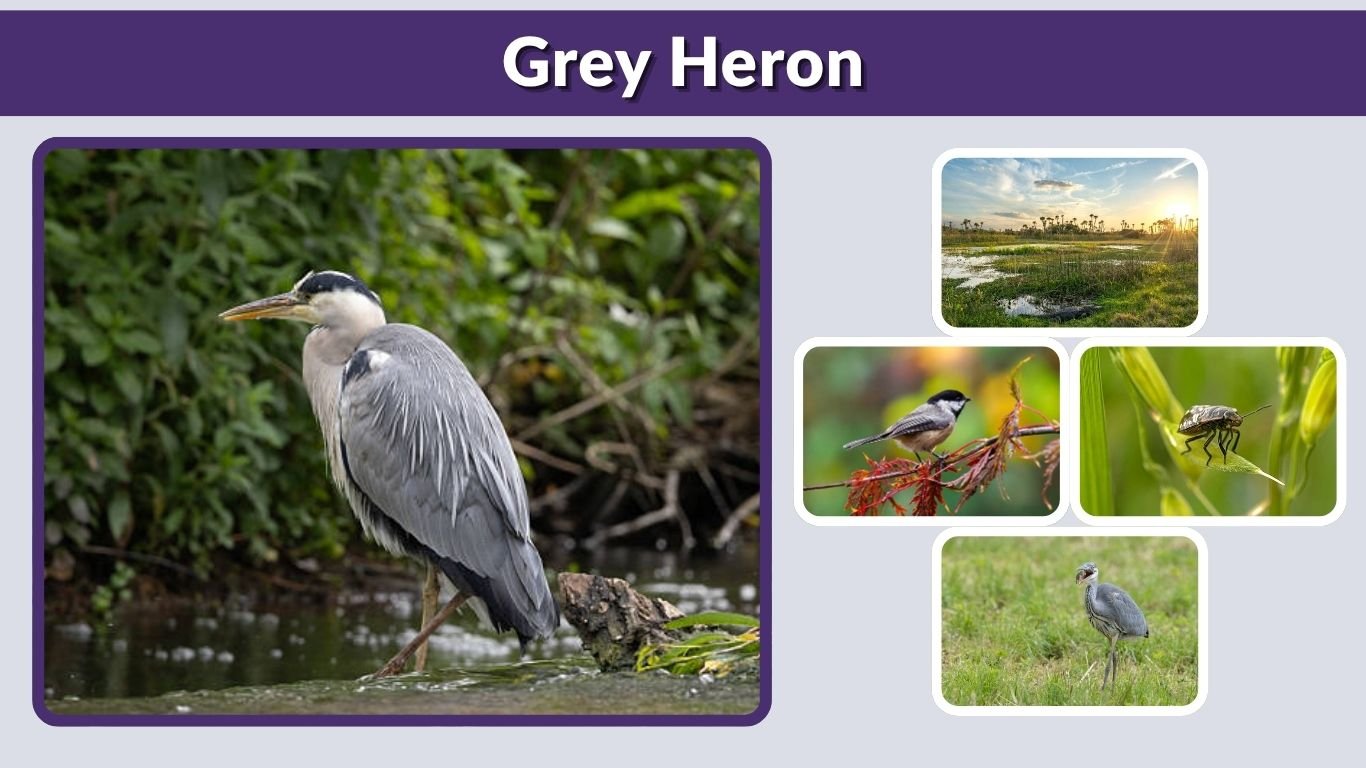
The grey heron (Ardea cinerea) is a tall, graceful wading bird widely seen across Europe, Asia, and parts of Africa. Known for its calm hunting style and slow, powerful flight, it often stands motionless in shallow water before striking prey with precision. Its distinctive grey plumage, long legs, and sharp beak make it easy to recognize. This bird is also frequently compared with the great blue heron and appears in symbolism, art, and even modern culture.
What Is a Grey Heron?
The grey heron belongs to the heron family, a group of long-legged birds adapted to wetland life. It thrives in rivers, lakes, marshes, and coastal areas, where it hunts for fish and other small animals. Its ability to remain still for long periods makes it a highly effective predator.
Scientific Classification
- Scientific name: Ardea cinerea
- Family: Ardeidae
- Type: Wading bird
General Characteristics
- Found near freshwater and coastal habitats
- Known for solitary hunting behavior
- Highly adaptable across different climates
Grey Heron Physical Characteristics and Size
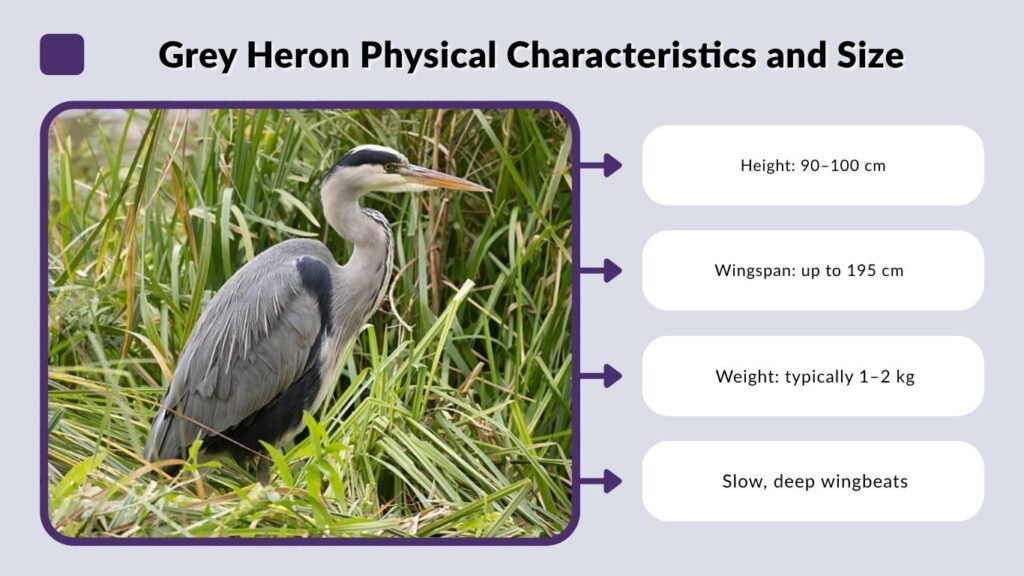
The grey heron is a large bird with a striking appearance that combines elegance and functionality. Its body structure is perfectly adapted for hunting in shallow water, allowing it to move slowly and strike quickly when prey is within reach.
Appearance
The bird has a grey back and wings, contrasted by a white head and a bold black stripe extending from the eye. Its long, pointed beak is usually yellowish, while its legs are long and sturdy, ideal for wading.
Size and Wingspan
- Height: 90–100 cm
- Wingspan: up to 195 cm
- Weight: typically 1–2 kg
Grey Heron in Flight
The flight of a grey heron is slow, steady, and easy to recognize. Unlike many other large birds, it maintains a unique posture that helps birdwatchers identify it even from a distance.
Flight Style
- Slow, deep wingbeats
- Neck folded into an “S” shape
- Legs extended behind the body
Identification in the Air
This folded-neck posture clearly separates herons from cranes, which fly with their necks fully extended. The grey heron’s broad wings and steady rhythm give it a calm, gliding appearance in the sky.
Grey Heron Habitat and Distribution
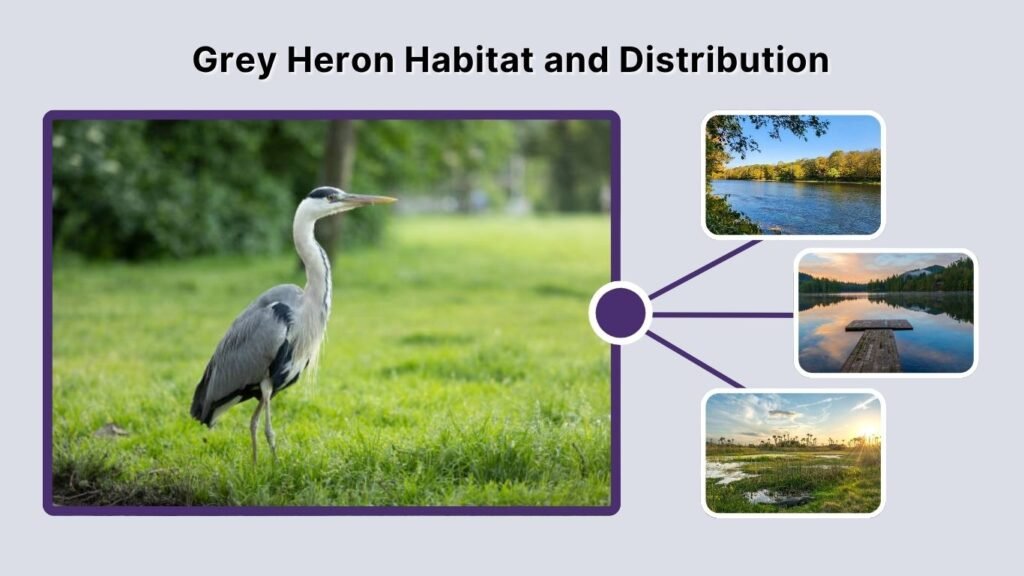
Grey herons are widely distributed and can be found in a variety of aquatic environments. They prefer areas with shallow water where food is abundant, but they are also adaptable enough to survive in both rural and urban settings.
Global Range
- Common across Europe and the United Kingdom
- Found throughout Asia, including Japan
- Present in parts of Africa
Preferred Habitats
- Rivers and lakes
- Marshes and wetlands
- Coastal shores and estuaries
Grey Heron Diet and Hunting Behavior
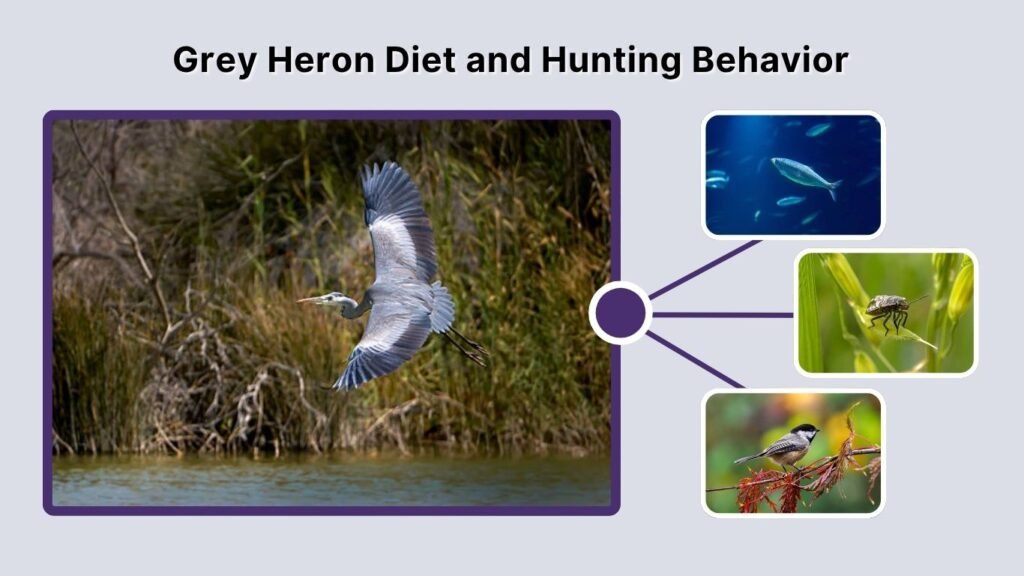
The grey heron is a skilled hunter, relying on patience and precision rather than speed. Its feeding habits play an important role in maintaining balance within aquatic ecosystems.
What Does a Grey Heron Eat?
Grey herons mainly feed on fish, but their diet is quite varied depending on availability. They also consume amphibians, insects, and occasionally small mammals or birds.
Hunting Technique
Instead of chasing prey, the grey heron stands still in shallow water, waiting for movement. Once a target is detected, it strikes quickly with its sharp beak, often catching prey in a single motion.
Grey Heron Behavior and Lifestyle
The behavior of the grey heron reflects its calm and independent nature. It is often seen alone while hunting, although it may gather with others during breeding seasons.
Social and Nesting Behavior
Grey herons typically nest in colonies known as heronries. These nests are built high in trees using sticks and can be reused year after year.
Migration Patterns
Some grey herons migrate during colder months, especially those living in northern regions. Others remain in the same area year-round if food sources are stable and accessible.
Grey Heron vs Great Blue Heron
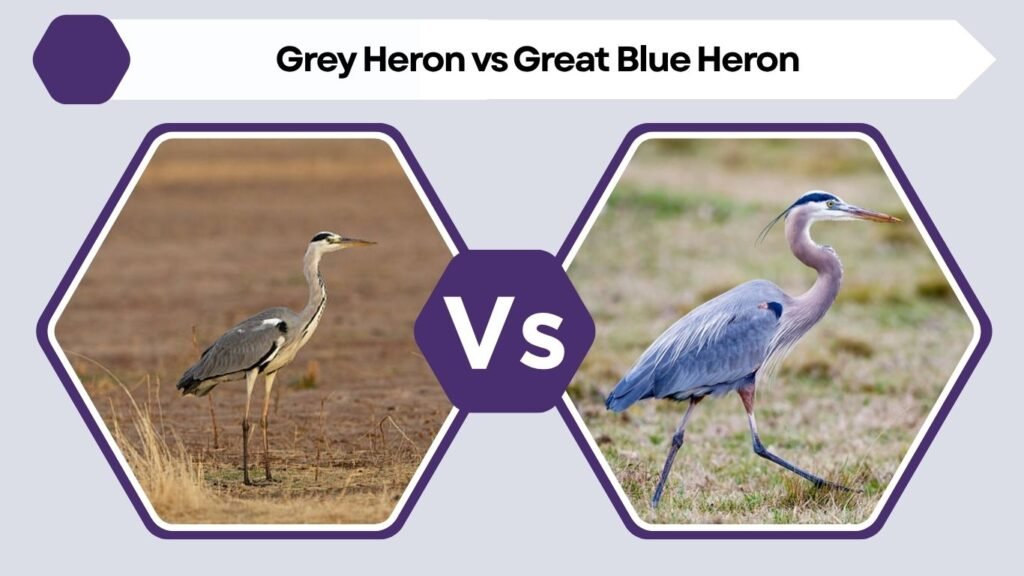
This comparison is one of the most searched topics because both birds look remarkably similar. While they share the same body structure and behavior, their geographic distribution and subtle color differences help distinguish them. Understanding these differences is useful for birdwatchers and anyone curious about global wildlife variations.
Key Differences
- Grey heron: Europe, Asia, and Africa
- Great blue heron: North America
- Slight variation in shade, with the great blue appearing more bluish
Similarities
- Tall, long-legged body shape
- Slow, steady flight with folded neck
- Similar hunting techniques and diet
Grey Heron vs Crane
Grey herons are often confused with cranes due to their similar size and long legs. However, they differ significantly in behavior, flight style, and structure. Observing how they move and fly is the easiest way to tell them apart in the wild.
Main Differences
- Herons fly with neck folded; cranes keep neck straight
- Cranes are more social and often seen in groups
- Herons hunt quietly, while cranes are more vocal
Juvenile vs Adult Grey Heron
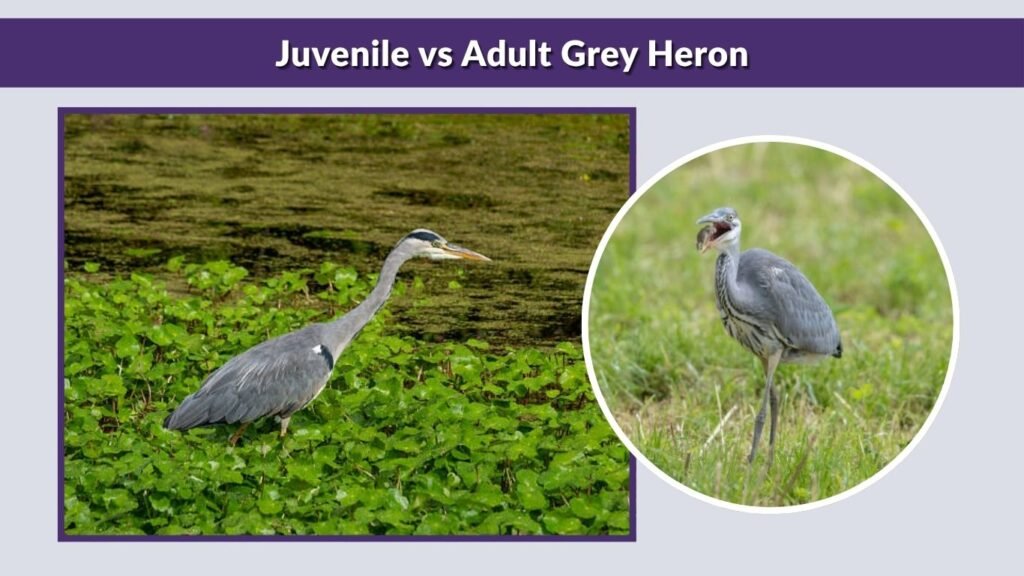
Age plays a role in how a grey heron looks and behaves. Juveniles can appear less striking than adults, which sometimes causes confusion for beginners trying to identify the species in the field.
Juvenile Grey Heron
- Duller grey coloring
- Less defined black head stripe
- Slightly less confident behavior
Adult Grey Heron
- Strong contrast in plumage
- Clear black stripe above the eye
- More skilled and efficient hunter
Sounds and Communication
Grey herons are generally quiet birds, but they do produce noticeable calls in certain situations. These sounds are most often heard during flight or when they are near nesting areas. Their vocalizations are not melodic but serve practical communication purposes.
Typical Call
- Harsh croaking or “fraaank” sound
- Often used during flight
- More frequent in breeding colonies
Conservation and Protection
The grey heron is not currently considered endangered, and its population remains stable across most of its range. Conservation efforts and legal protections have helped maintain healthy numbers, especially in regions where wetlands are preserved and pollution is controlled.
Protection Status
- Protected under wildlife laws in many countries
- Hunting and nest disturbance are restricted
- Benefiting from wetland conservation programs
Symbolism and Meaning
The grey heron holds symbolic value in many cultures, often representing calmness and independence. Its still hunting posture and solitary nature contribute to its image as a symbol of patience and focus. In modern interpretations, it is also linked with balance and self-reliance.
Grey Heron in Culture and Media
The name “Grey Heron” appears beyond wildlife, showing up in entertainment, design, and branding. This reflects the bird’s strong visual identity and cultural recognition across different fields.
Sydney Heron in Grey’s Anatomy
Sydney Heron is a fictional character in the TV series Grey’s Anatomy. She is known for her upbeat personality and unique approach to patient care, adding a lighter tone to the show.
Actress Who Plays Sydney Heron
- Portrayed by Kali Rocha
- Appears in several episodes as a recurring character
Grey Heron Paint Color and Design
“Grey Heron” is also used as a paint color name, especially by brands like Sherwin Williams. The shade typically represents a soft, balanced grey that works well in modern interiors. Its neutral tone makes it popular for walls, furniture, and minimalist design themes.
FAQs
What does a grey heron eat?
Grey herons primarily eat fish but also consume amphibians, insects, and small mammals. They rely on patience, standing still in shallow water before striking quickly with their beak to catch prey.
Are grey herons dangerous?
Grey herons are not dangerous to humans. However, they can defend themselves with their sharp beaks if threatened, so it is best to observe them from a safe distance in the wild.
Do grey herons migrate?
Some grey herons migrate during colder months, particularly those in northern regions. Others remain in the same area year-round if food sources are available.
What is the difference between a grey heron and a crane?
The main difference is in flight posture. Grey herons fly with their necks folded, while cranes keep their necks extended. They also differ in behavior and vocalization.
Are grey herons protected?
Yes, grey herons are protected in many countries under wildlife laws. It is illegal to harm them or disturb their nests, helping maintain stable populations.
