
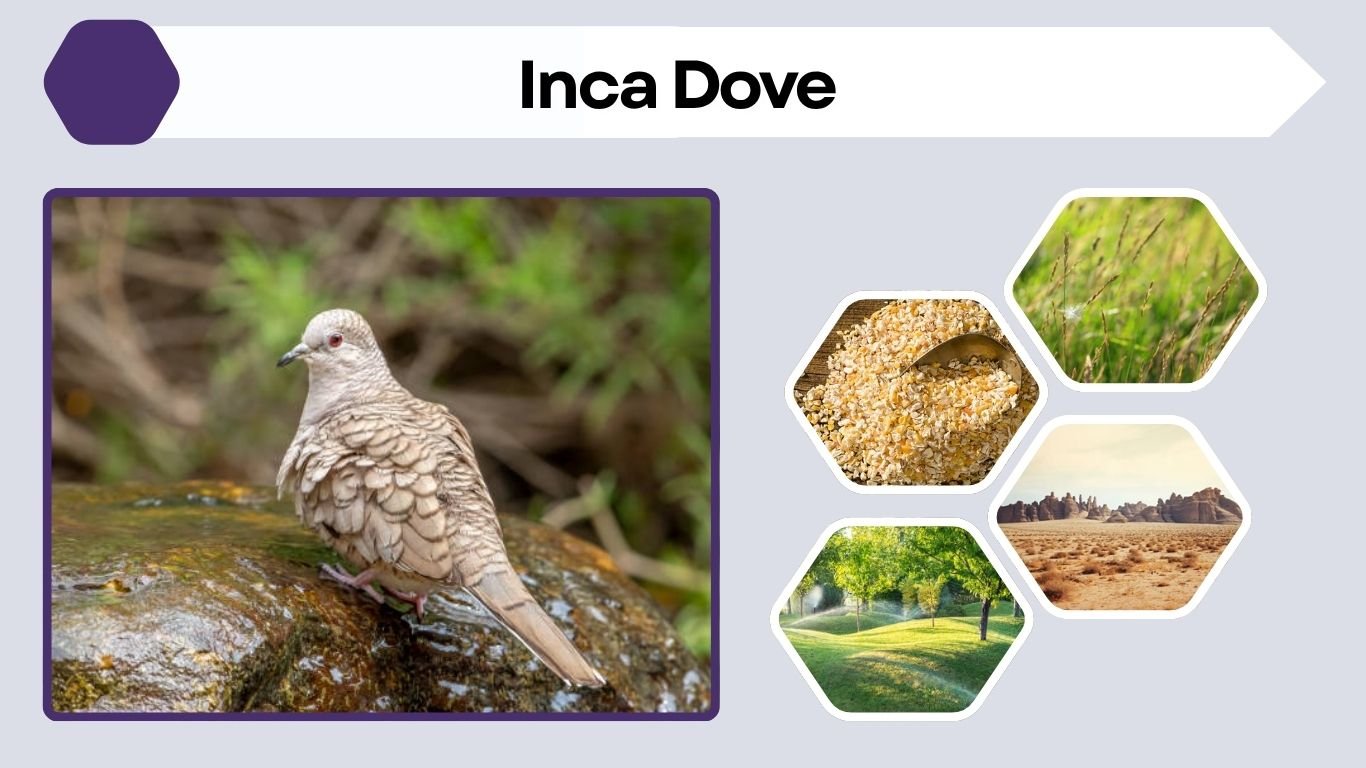
The Inca dove is a small desert bird known for its scaly feathers, soft calls, and calm behavior. Found across Texas, Arizona, and much of the southwestern United States, this dove adapts well to neighborhoods, parks, and dry landscapes. Birdwatchers often notice its long tail, gentle cooing, and social nature. Although smaller than the mourning dove, the Inca dove has become increasingly common in urban areas. Understanding its habitat, diet, nesting habits, and range helps bird enthusiasts identify and appreciate this unique species in the wild.
What Is an Inca Dove?
The Inca dove is a small member of the dove family native to the southwestern United States, Mexico, and Central America. Its scientific name is Columbina inca. The species is especially common in warm and dry regions where food, water, and shelter are easy to find.
Unlike larger doves, the Inca dove has a delicate appearance with scaled feathers covering much of its body. These birds are usually seen perched on fences, utility wires, rooftops, and backyard feeders. Their peaceful behavior and soft vocalizations make them popular among birdwatchers throughout Texas and Arizona.
Physical Appearance
The Inca dove has several features that make it easy to recognize in the field.
- Gray-brown body with a scaly feather pattern
- Long tail with white outer edges
- Small rounded head and slim body
- Short legs and compact posture
- Reddish coloring visible on the wings during flight
Adult Inca doves are relatively small compared to other common doves. Most measure around 6.5 to 9 inches in length with a wingspan of approximately 11 inches.
Male vs Female Inca Dove
Male and female Inca doves look very similar, making identification difficult for casual observers. Both sexes share the same scaled plumage and body shape. However, males may appear slightly brighter in color and sometimes show more active courtship behavior during breeding season.
Females are often slightly smaller and quieter, especially while nesting. In most situations, behavior rather than color differences helps separate males from females.
Where Do Inca Doves Live?
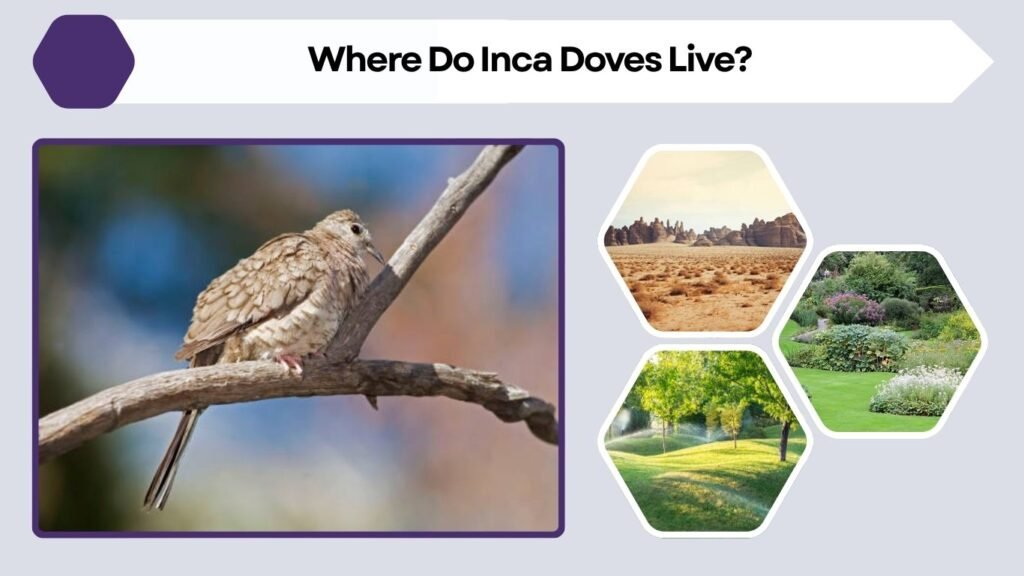
The Inca dove thrives in warm climates and dry environments. These birds are highly adaptable and can survive in both natural desert habitats and crowded urban neighborhoods. Their range has expanded steadily across the southern United States over the past century.
Today, Inca doves are commonly seen throughout Texas, Arizona, New Mexico, and parts of California. They also remain widespread across Mexico, where the species originally became established.
Inca Dove Range in North America
The species prefers regions with mild winters and open landscapes. In colder northern areas, populations become less common because these birds do not tolerate freezing temperatures well.
Common locations where Inca doves are found include:
- Residential neighborhoods
- Desert scrublands
- Public parks and gardens
- Rural farms and ranches
- Urban feeding stations
Their ability to live near humans has helped the species increase in population across many southern states.
Inca Doves in Texas
Texas is one of the best places in North America to observe Inca doves. The warm climate, suburban growth, and abundance of backyard feeders create ideal conditions for the species.
In many Texas cities, these birds remain active year-round. They often gather in small groups near bird feeders, sidewalks, and telephone wires. During colder weather, Inca doves sometimes huddle together closely for warmth, creating the famous “dove pyramid” behavior birdwatchers frequently photograph.
Inca Dove Sounds and Calls
One of the easiest ways to identify an Inca dove is by listening to its vocalizations. Their calls are softer and more delicate than those of larger dove species. Most people describe the sound as a repeated cooing or humming noise.
Unlike loud songbirds, Inca doves produce calm and rhythmic sounds that blend naturally into suburban environments. These calls are commonly heard early in the morning or near sunset.
What Does an Inca Dove Sound Like?
The typical Inca dove call consists of short repeated coos delivered in a steady rhythm. Birdwatchers often compare the sound to a gentle rolling hum.
These calls serve several purposes, including attracting mates and maintaining communication between nearby birds. During breeding season, males become especially vocal while defending territory or performing courtship displays.
Why Inca Doves Call
Inca doves rely on vocal communication throughout the year. Their sounds help maintain social bonds and warn nearby birds about disturbances.
Common reasons Inca doves vocalize include:
- Attracting a mate during breeding season
- Communicating with nearby flock members
- Defending nesting territory
- Responding to predators or danger
- Calling while perched at feeding areas
Because their calls are repetitive and peaceful, many homeowners enjoy having these birds nearby in gardens and yards.
What Do Inca Doves Eat?
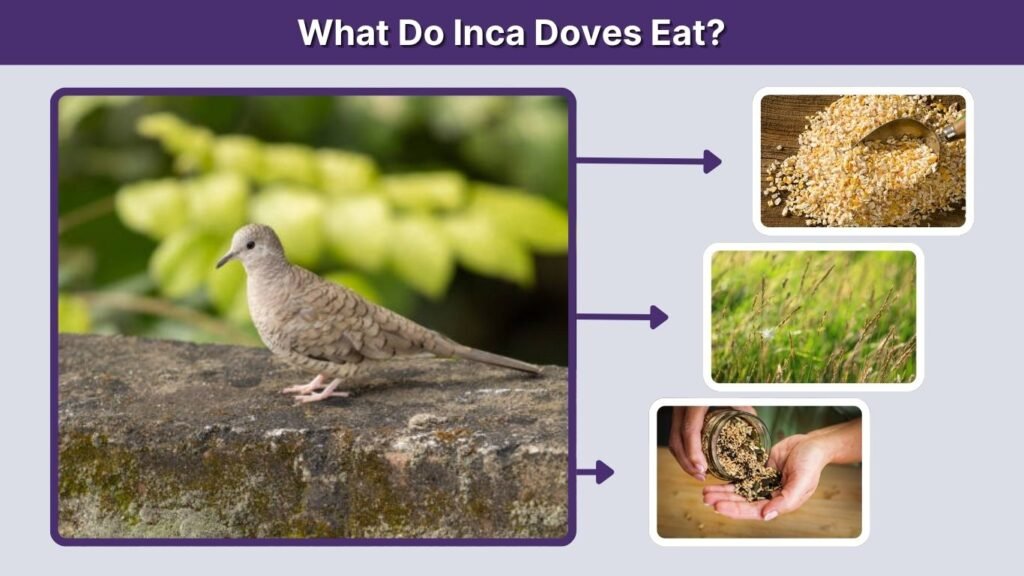
Inca doves primarily feed on seeds and small grains found on the ground. These birds spend much of their time walking slowly through open areas searching for food. Their small beaks are designed for picking up tiny seeds rather than insects or large food items.
In suburban neighborhoods, Inca doves frequently visit bird feeders and feeding stations. They are especially attracted to areas where people scatter seed mixes on sidewalks, patios, or gardens. Because they are calm and nonaggressive birds, they often feed quietly alongside sparrows and finches.
Common Foods in an Inca Dove Diet
Although seeds form the majority of their diet, Inca doves may occasionally consume small plant materials and bits of vegetation.
Foods commonly eaten by Inca doves include:
- Millet and cracked corn
- Grass and weed seeds
- Small grains from farms or feeders
- Sunflower chips and mixed birdseed
- Tiny berries and plant matter
Providing clean water and seed sources can encourage these doves to visit residential yards throughout the year.
Inca Dove Nesting and Reproduction
The nesting habits of Inca doves are simple yet effective. These birds usually build small nests in shrubs, trees, hanging planters, or sheltered building ledges. Their nests often appear fragile because they are made from loose twigs and grass stems.
Breeding activity increases during warmer months, although Inca doves may nest multiple times in regions with mild winters. Both parents help care for the eggs and young birds during development.
Inca Dove Nest Structure
Most nests are shallow platforms placed several feet above the ground. The birds prefer quiet areas protected from predators and harsh weather.
Unlike larger birds, Inca doves do not build elaborate nests. Their lightweight structures are often reused and repaired throughout the season. In urban environments, they commonly select patios, utility poles, or ornamental trees as nesting sites.
Inca Dove Fledgling Development
Baby Inca doves grow quickly after hatching. Young birds, called fledglings, begin leaving the nest within a few weeks. At this stage, they still rely on their parents for food and protection while learning to fly.
Fledglings usually appear fluffier and less neatly patterned than adults. Their tails are shorter, and their movements may seem awkward during early flights. Parents remain nearby until the young birds become fully independent.
Inca Dove vs Mourning Dove
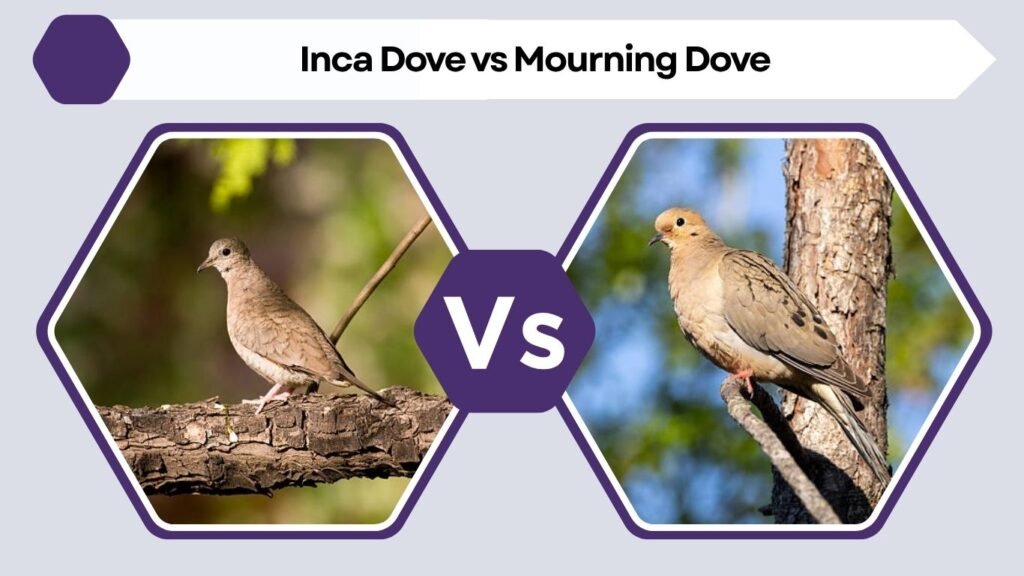
Many people confuse the Inca dove with the mourning dove because both species share similar colors and body shapes. However, several differences help distinguish them.
The mourning dove is noticeably larger with smoother feathers and a more elegant appearance. In contrast, the Inca dove has a scaled pattern across its body and a slimmer build.
Key Differences Between the Two Species
Birdwatchers can separate these doves by observing size, sound, and feather patterns.
- Inca doves are smaller and more compact
- Mourning doves have plain feathers without scaling
- Inca doves produce softer and shorter calls
- Mourning doves have longer pointed tails
- Inca doves prefer warmer desert climates
Although both species may appear together at feeders, careful observation quickly reveals their unique features.
Are Inca Doves Protected?
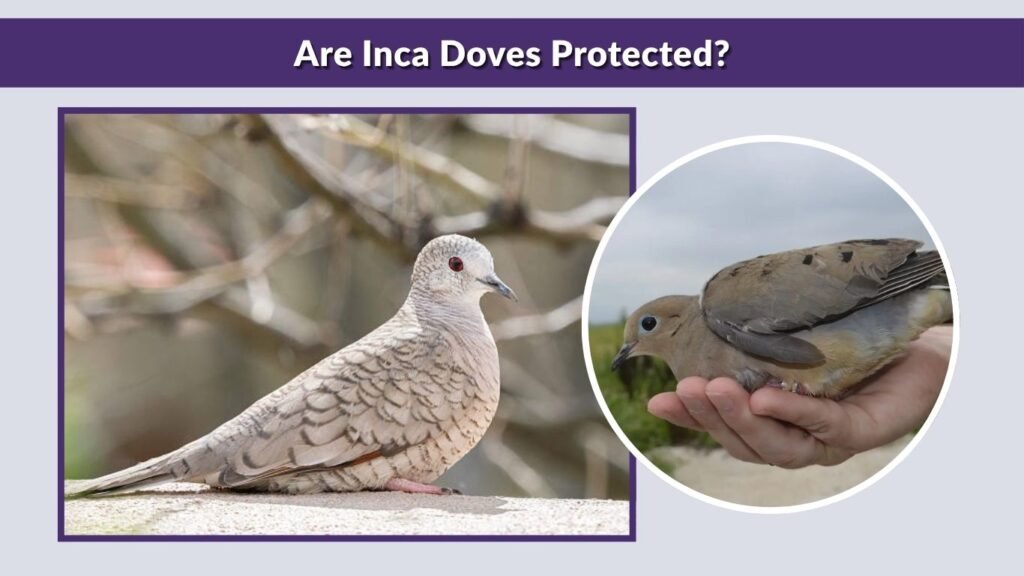
Like many native bird species in the United States, Inca doves receive legal protection under federal wildlife laws. These protections prevent the unlawful capture, sale, or destruction of nests and eggs.
Bird conservation laws exist to protect native populations and maintain healthy ecosystems. Even though Inca doves remain common in many areas, regulations still apply to prevent unnecessary harm.
Hunting and Legal Protection
In some states, dove hunting regulations include specific seasons and rules regarding native dove species. Hunters must follow local wildlife laws carefully because protections vary by region.
Inca doves are generally not considered major game birds compared to mourning doves or white-winged doves. In many urban and suburban locations, hunting them is restricted or prohibited entirely.
Interesting Facts About Inca Doves
Inca doves display several unusual behaviors that make them fascinating to observe in the wild. Their ability to survive extreme heat and adapt to urban environments has helped the species thrive across the Southwest.
One of the most famous behaviors is their tendency to huddle together in stacks during cold weather. This behavior helps conserve warmth and creates the appearance of a small feathered pyramid.
Unique Inca Dove Behaviors
Several traits make this species stand out among North American doves.
- They often sunbathe to regulate body temperature
- Groups may sleep pressed tightly together in winter
- Their scaled feathers provide excellent camouflage
- They can survive in very dry desert environments
- Urban populations continue expanding northward
These behaviors demonstrate how adaptable and resilient Inca doves are in changing environments.
FAQs
Are Inca doves aggressive?
Inca doves are generally peaceful and nonaggressive birds. They often feed quietly alongside other small birds and rarely fight over territory. During breeding season, males may briefly defend nesting areas, but serious aggression is uncommon compared to many other bird species.
Do Inca doves migrate?
Most Inca doves do not migrate long distances. They usually remain in warm regions throughout the year, especially in Texas, Arizona, and Mexico. However, some populations may move short distances during unusually cold weather in search of warmer conditions and reliable food sources.
How long do Inca doves live?
In the wild, Inca doves typically live between two and seven years, depending on habitat quality and predator exposure. Birds living in safe suburban environments with steady food sources often survive longer than those facing harsh desert conditions or natural predators.
Can Inca doves survive cold weather?
Inca doves tolerate mild winters but struggle in freezing temperatures. During cold weather, they often huddle closely together to conserve body heat. This group behavior helps them survive chilly nights, although severe winter storms can still threaten northern populations.
Why do Inca doves sit together in groups?
Inca doves gather closely together mainly for warmth and protection. During cooler weather, groups may stack tightly against one another in a behavior sometimes called a “dove pyramid.” Staying together also helps reduce predator risk and improves communication within the flock.