
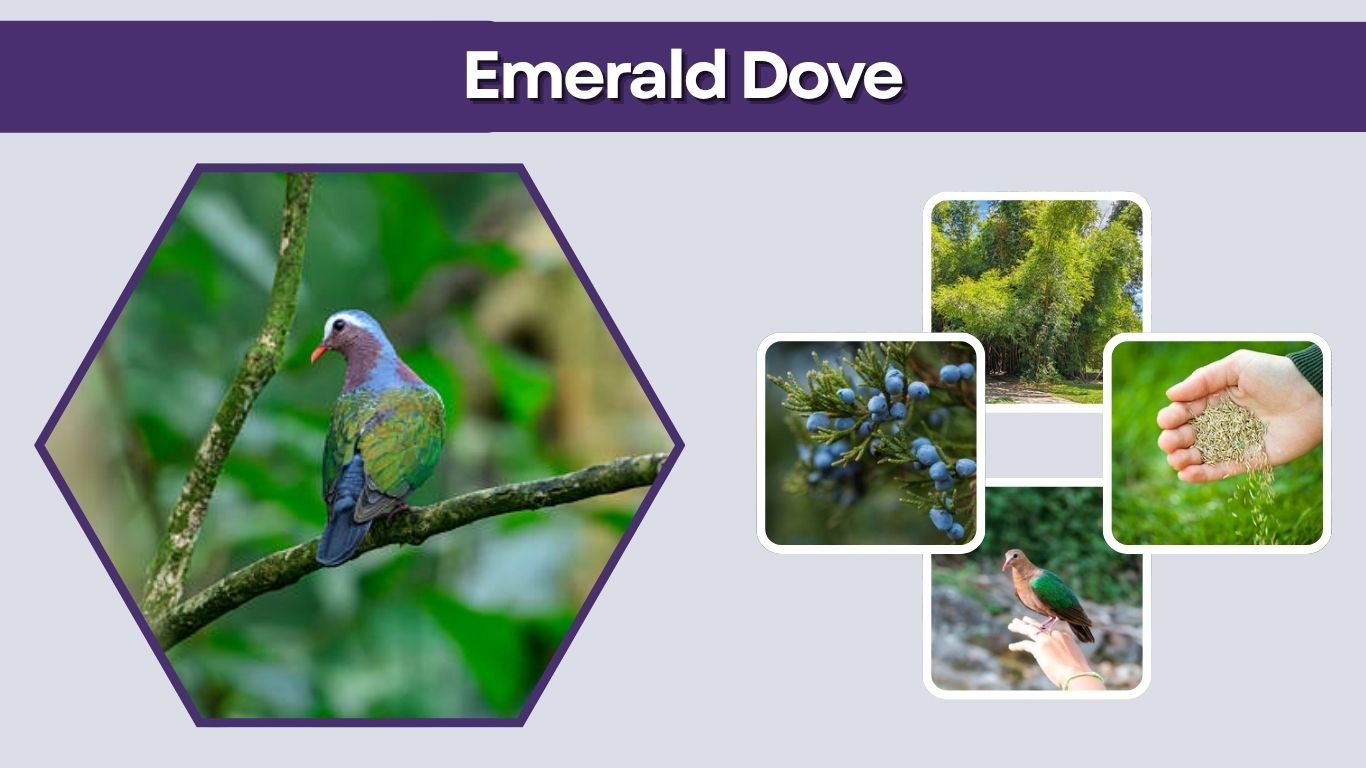
The emerald dove is a colorful tropical bird recognized for its brilliant green wings, soft cooing calls, and shy forest behavior. Found across parts of Asia and Australia, this dove prefers dense forests, mangroves, and woodland habitats where it can forage safely on the ground. The species is especially admired by birdwatchers because of its striking feather colors and peaceful nature. In Tamil Nadu, the emerald dove is celebrated as the state bird, adding cultural importance to its natural beauty. Understanding its habitat, diet, sounds, and behavior helps bird enthusiasts appreciate this remarkable dove species.
What Is an Emerald Dove?
The emerald dove is a medium-sized tropical dove belonging to the family Columbidae. Its scientific name is Chalcophaps indica. The species is also commonly called the common emerald dove and is closely related to several other forest dove species found throughout Asia and the Pacific region.
Unlike many gray or brown doves, the emerald dove is famous for the shimmering green feathers covering its wings and back. These bright colors stand out beautifully in sunlight but also help the bird blend into forest vegetation while resting quietly among leaves and branches.
What Does an Emerald Dove Look Like?
Several physical characteristics make the emerald dove easy to recognize in tropical forests.
- Bright emerald green wings and upper back
- Pinkish-brown chest and body feathers
- White forehead and eyebrow markings
- Dark eyes with reddish legs and feet
- Compact body with rounded wings
Adult emerald doves usually measure around 9 to 11 inches long. Their smooth feather patterns and colorful wings give them an elegant appearance compared to many other dove species.
Male and Female Emerald Dove Differences
Male and female emerald doves appear similar in size and coloration, although males often display brighter forehead markings and slightly more vivid feather colors. Females may appear duller overall, especially around the head and chest areas.
Both sexes share the same green wing feathers and quiet forest behavior. During breeding season, males become more vocal while defending territory and attracting mates through soft cooing calls.
Emerald Dove Habitat and Distribution
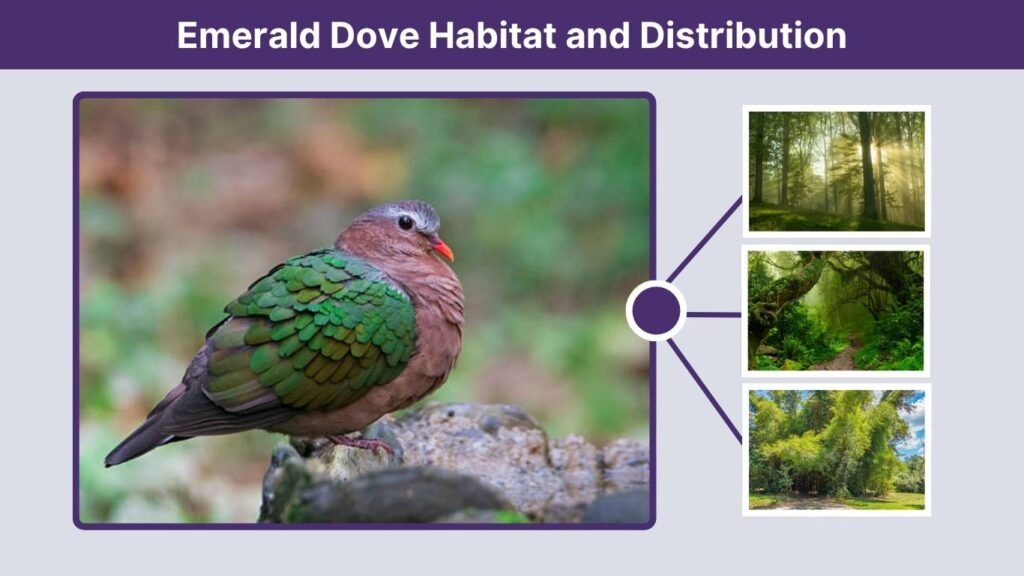
Emerald doves naturally inhabit tropical and subtropical regions with dense vegetation and reliable food sources. They spend much of their time on the forest floor searching for seeds and fallen fruit beneath trees and shrubs.
Because these birds prefer thick cover and quiet surroundings, they are often difficult to spot despite their bright wing coloration. Most emerald doves avoid crowded urban areas and remain hidden within woodland habitats.
Native Habitat of the Emerald Dove
The species thrives in moist forest ecosystems where vegetation provides both protection and feeding opportunities.
Common habitat features include:
- Tropical rainforests and woodlands
- Mangrove forests near coastlines
- Forest edges and shaded trails
- Bamboo thickets and dense shrubs
- Areas with fallen fruit and leaf litter
These habitats support the seeds, berries, and insects needed for survival while also protecting the birds from predators.
Emerald Dove Distribution in Asia and Australia
Emerald doves are widely distributed throughout South and Southeast Asia as well as parts of Australia and the Pacific region. Populations are especially common in India, Sri Lanka, Thailand, Malaysia, Indonesia, Singapore, and the Philippines.
In Australia, the species inhabits tropical northern forests where warm temperatures and heavy vegetation create suitable conditions year-round. Regional variations in feather color and size occur across different island populations.
Emerald Dove Sounds and Calls
The emerald dove is known for its calm and repetitive cooing calls that echo softly through forests and woodlands. Unlike loud parrots or songbirds, emerald doves produce low, soothing vocalizations mainly during early morning and late afternoon hours.
Birdwatchers often hear these calls before spotting the birds because emerald doves prefer remaining hidden beneath thick vegetation.
What Does an Emerald Dove Sound Like?
The typical emerald dove call consists of deep rhythmic coos repeated steadily over several minutes. Many people describe the sound as soft, peaceful, and slightly mournful.
These calls help maintain communication between mates and establish territory within dense forest habitats. During breeding season, males vocalize more frequently while searching for partners or defending nesting areas.
Emerald Spotted Wood Dove Call
Closely related emerald spotted wood doves produce similar cooing sounds, although slight differences in tone and rhythm may exist between species. These vocalizations help birds recognize members of their own species in thick rainforest environments.
Because the calls carry well through forests, emerald doves rely heavily on sound communication where visibility is limited by vegetation.
Emerald Dove Diet and Feeding Behavior
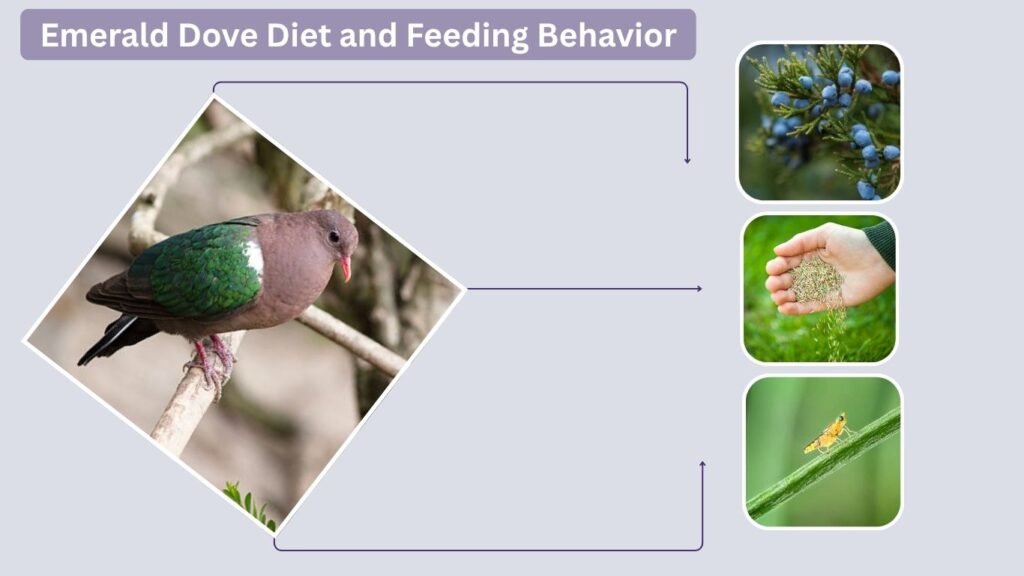
Emerald doves feed mainly on seeds, berries, fruits, and small insects collected from the forest floor. Their feeding behavior is quiet and cautious, helping them avoid predators while moving beneath dense vegetation.
Unlike many tree-feeding birds, emerald doves spend much of their time walking slowly on the ground while searching for fallen food items.
What Do Emerald Doves Eat?
The species consumes a variety of natural foods depending on habitat and seasonal availability.
Common foods include:
- Fallen berries and fruits
- Seeds from grasses and forest plants
- Small insects and tiny invertebrates
- Tender shoots and plant material
- Forest floor grains and organic matter
Early morning and evening are usually the most active feeding periods because cooler temperatures make foraging safer and more comfortable.
Emerald Dove Species and Variations
Several closely related species and regional variations of emerald doves exist across Asia and the Pacific region. Although they share similar green wing coloration, differences in head markings, body size, and habitat range help distinguish them from one another.
Birdwatchers and wildlife photographers often compare these species because subtle feather variations can make identification challenging in dense tropical forests.
Common Emerald Dove vs Pacific Emerald Dove
The common emerald dove and Pacific emerald dove share many similarities, but regional distribution and physical details help separate them.
- Pacific emerald doves are more common on island regions
- Common emerald doves are widespread across mainland Asia
- Feather brightness may vary between populations
- Head and wing markings differ slightly
- Habitat preferences can vary by region
Despite these differences, both species remain strongly associated with tropical forests and woodland habitats.
Grey-Capped and Stephan’s Emerald Dove
Grey-capped emerald doves and Stephan’s emerald doves are additional regional species known for their distinct head coloration and island distribution patterns. These birds are especially important for conservation studies because many populations exist only in limited geographic areas.
Their unique feather patterns and restricted habitats make them highly interesting to bird researchers and serious wildlife observers.
Emerald Dove Behavior and Adaptations
Emerald doves are naturally shy birds that depend heavily on camouflage and quiet movement for survival. Their green wing feathers blend effectively with leaves and forest vegetation, helping them avoid predators while feeding on the ground.
Unlike highly social urban pigeons, emerald doves usually remain solitary or travel in pairs through forest habitats. Their cautious behavior helps protect them from larger birds and mammals.
Emerald Dove Forest Adaptations
Several important adaptations help emerald doves survive in tropical ecosystems.
- Green wings provide camouflage among leaves
- Quiet movement reduces predator attention
- Strong wings support fast escape flights
- Ground-feeding behavior helps locate fallen fruit
- Soft vocalizations improve forest communication
These adaptations allow emerald doves to thrive in habitats with dense vegetation and limited visibility.
Daily Behavior and Nesting Habits
Emerald doves are most active during early morning and late afternoon when temperatures are cooler. During the hottest parts of the day, they usually rest quietly within shaded forest cover.
Their nests are often built low in shrubs or trees using twigs, leaves, and plant fibers. Both parents help incubate eggs and care for the young after hatching.
Emerald Dove Photography and Birdwatching
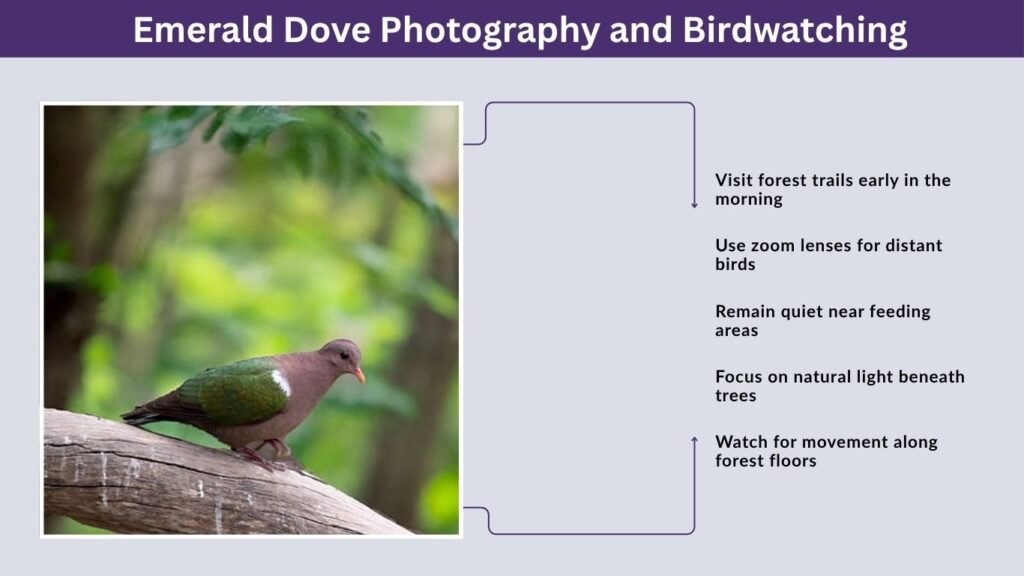
The emerald dove is highly valued among birdwatchers and wildlife photographers because of its colorful feathers and peaceful appearance. However, photographing these birds can be difficult because they move quietly through shaded forests and avoid human activity.
Patience and careful observation are usually necessary for successful sightings in natural habitats.
How to Photograph Emerald Doves
Photographers often rely on soft natural lighting and quiet movement to capture detailed emerald dove images.
Helpful photography tips include:
- Visit forest trails early in the morning
- Use zoom lenses for distant birds
- Remain quiet near feeding areas
- Focus on natural light beneath trees
- Watch for movement along forest floors
Because the green feathers reflect sunlight beautifully, photographs taken in soft daylight often produce the best results.
Emerald Dove Drawing and Art Ideas
The emerald dove is a popular subject for wildlife sketches and tropical bird artwork because of its vivid feather colors and elegant body shape. Artists frequently focus on the bright green wings and soft pink-brown body feathers when creating illustrations.
Simple drawing tutorials often begin with a rounded body outline before adding wing details and facial markings.
How to Draw an Emerald Dove
Drawing an emerald dove becomes easier when the bird is divided into simple shapes and feather sections.
Basic drawing steps include:
- Sketch a rounded body and small head
- Add curved wings along the sides
- Draw the short beak and dark eyes
- Color the wings emerald green
- Add pinkish-brown shading to the body
These techniques are useful for students, beginner artists, and wildlife illustration practice.
Emerald Dove Meaning and Cultural Importance
Emerald doves symbolize peace, beauty, and harmony in many cultures throughout Asia. Their calm behavior and vibrant green feathers often connect them with nature, renewal, and spiritual balance.
In Tamil Nadu, the emerald dove holds special importance as the official state bird. Its presence in forests and hill regions has made it a recognized symbol of regional wildlife diversity.
Emerald Dove Symbolism
The bird is often associated with several positive symbolic meanings.
- Peace and emotional calmness
- Natural beauty and balance
- Harmony within forests and nature
- Spiritual purity and renewal
- Gentle communication and love
Because of these associations, emerald doves frequently appear in regional art, poetry, and wildlife conservation campaigns.
Emerald Dove as a Pet
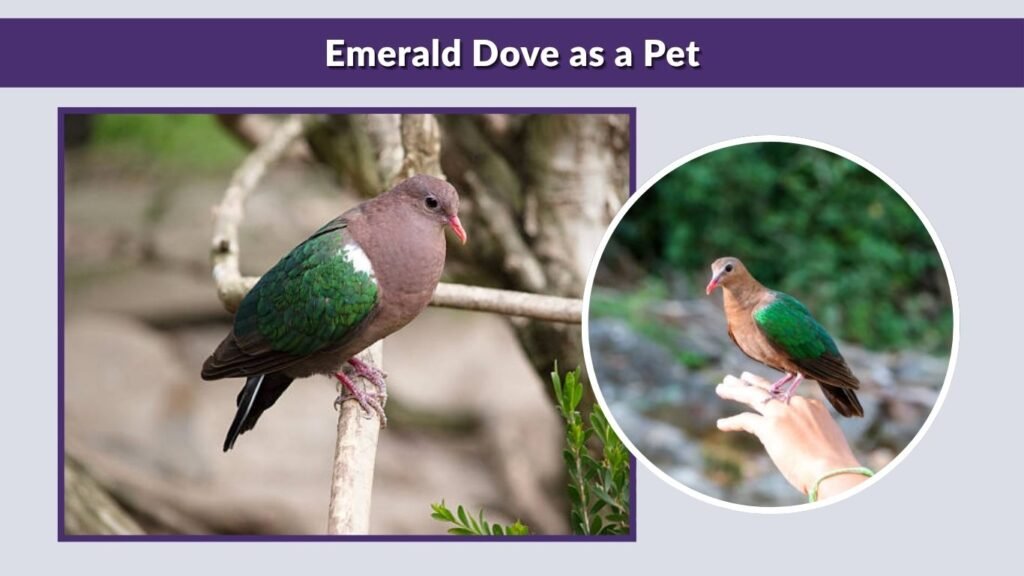
Emerald doves are occasionally kept in aviaries because of their attractive appearance and peaceful nature. However, they require spacious environments, proper nutrition, and legal ownership permissions in many regions.
Wild-caught birds should always be avoided because removing native wildlife from natural habitats can damage local populations.
Emerald Dove Price and Availability
The availability and price of emerald doves vary depending on location, legal regulations, and breeder reputation.
Responsible ownership should always include:
- Purchasing captive-bred birds only
- Providing large aviary space
- Maintaining proper tropical diets
- Avoiding illegal wildlife trade
- Supporting ethical bird breeding practices
Potential owners should carefully research local wildlife laws before obtaining exotic bird species.
FAQs
Are emerald doves rare?
Emerald doves are not considered globally rare, but they can be difficult to spot because of their shy behavior and dense forest habitats. In some regions, habitat destruction and deforestation may reduce local populations, making sightings less common in heavily developed areas.
Can emerald doves fly long distances?
Emerald doves are strong flyers capable of traveling moderate distances between feeding and nesting areas. However, they usually prefer short flights within forests rather than long migrations. Their fast, direct flight style helps them move quickly through dense vegetation when escaping predators.
Do emerald doves migrate?
Most emerald doves are nonmigratory birds and remain within the same general region throughout the year. Some local seasonal movement may occur depending on rainfall, food availability, and habitat conditions, but they do not usually complete large-scale migrations like many other bird species.
What is special about emerald doves?
Emerald doves are especially admired for their bright green wings and peaceful forest behavior. Their shimmering feathers stand out beautifully in sunlight while still providing camouflage among leaves. In Tamil Nadu, the emerald dove is also recognized as the official state bird.
Are emerald doves friendly birds?
Emerald doves are generally calm and nonaggressive birds, but they are naturally shy around humans. They prefer quiet forest habitats and often avoid crowded areas. In aviaries, captive-bred birds may become more comfortable around people when raised in peaceful environments.
