
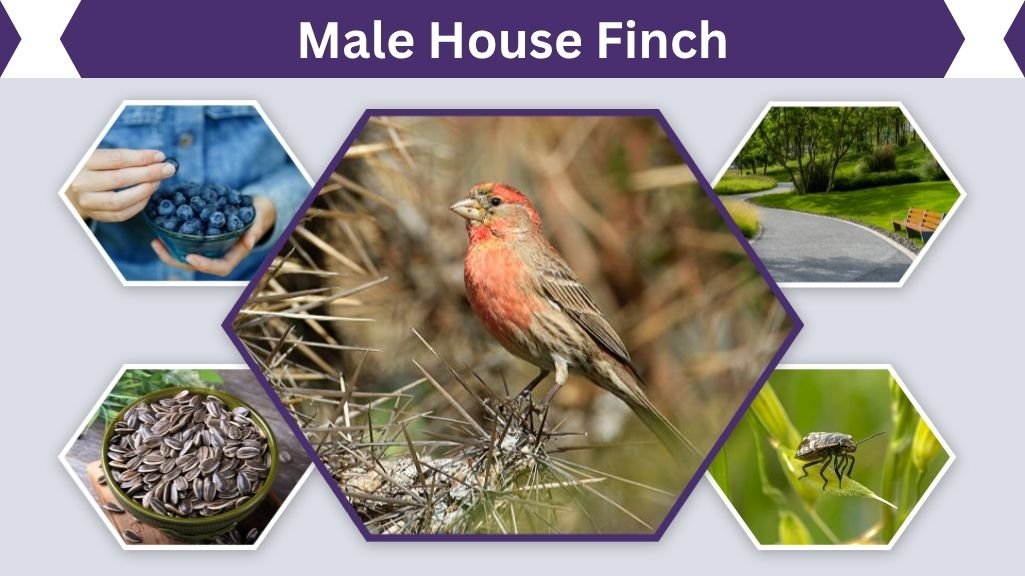
Male house finches are small, colorful songbirds commonly found across North America. They are easily distinguished from females by their bright red, orange, or yellow plumage, which covers the head, chest, and sometimes rump. These vibrant colors are influenced by diet and are used to attract mates. Males sing to establish territory and court females, while their behavior during breeding season involves feeding mates and occasionally assisting with chick rearing. Observing male house finches provides insight into plumage, song, and social behavior.
Physical Appearance of Male House Finch
Male house finches are slightly larger than females and display a wide range of coloration. Their physical traits help differentiate them from females and similar species like purple finches.
Size and Shape
- Length: 5–6 inches (13–15 cm)
- Wingspan: 8–10 inches (20–25 cm)
- Slim, rounded body with a short tail
Plumage and Coloration
- Bright red, orange, or yellow head, chest, and rump
- Brown-streaked back and wings
- Color intensity depends on diet and age
Juvenile and Immature Males
- Juvenile males are brown-streaked like females
- Red coloration develops gradually with age
- Plumage becomes brighter with carotenoid-rich diet
Seasonal Changes
- Winter plumage is slightly duller
- Brightest colors appear during breeding season
- Regional variations may affect intensity of red or orange
Male vs Female House Finch
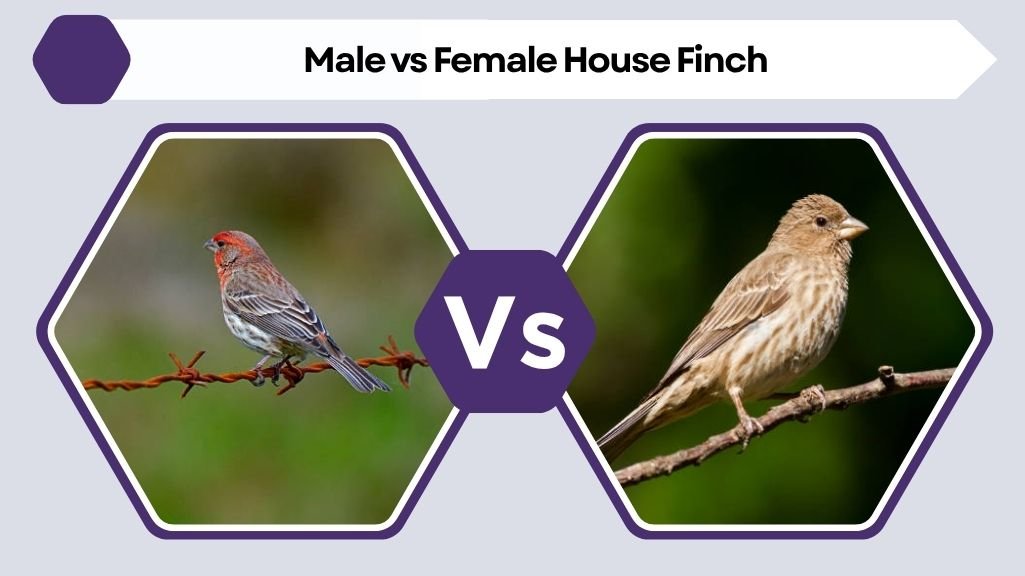
Male and female house finches differ in appearance, behavior, and breeding roles. Observing both together helps identify the sexes during the breeding season.
Color Differences
- Male: bright red, orange, or yellow on head and chest
- Female: brown-streaked with subtle olive or yellow tones
Behavioral Differences
- Males sing to attract females and defend territory
- Females focus on nest building, incubation, and chick care
Breeding Roles
- Males court females using song and display
- Feed mates during incubation and assist with feeding chicks post-hatching
- Males rarely incubate eggs themselves
Social Behavior
- Males may compete for mates or challenge rivals
- Form flocks outside the breeding season
- Display behaviors indicate dominance and mating readiness
Male House Finch Song and Vocalizations
Male house finch songs are complex and variable. Songs are important for attracting females, defending territory, and communicating with other males.
Song Characteristics
- Warbled and melodic, with repeated notes and occasional trills
- Highly variable among individuals and regions
- Helps distinguish males from similar species like purple finches
Calls
- Short chirps for communication within flocks
- Alarm calls to alert mates or young of danger
- Female calls are less complex and rarely sung
Male House Finch Feeding and Diet
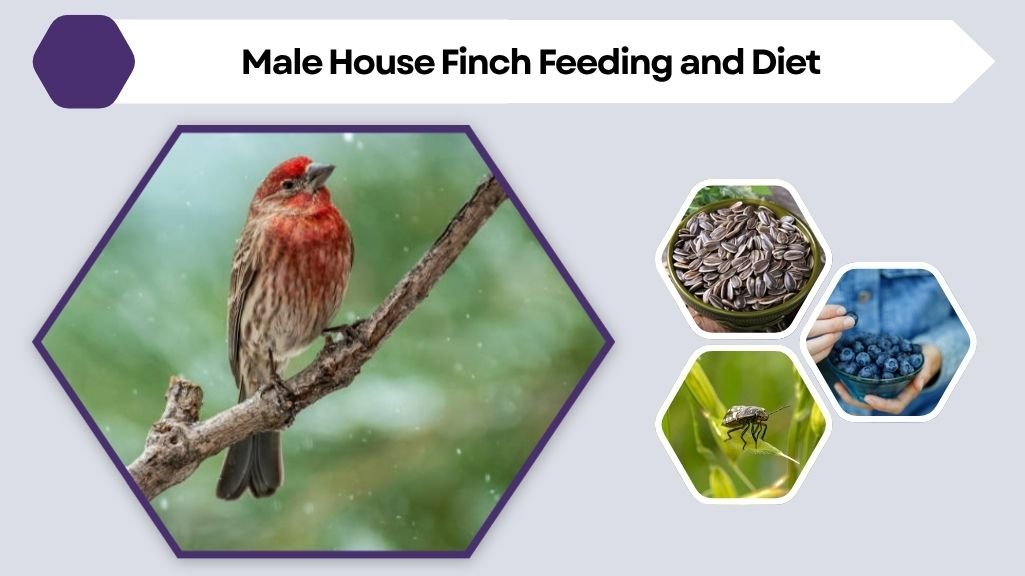
Diet affects both male health and plumage coloration. Carotenoid-rich foods enhance red and orange pigments, influencing mate selection. Feeding habits also support energy requirements for singing and breeding behavior.
Common Foods
- Seeds: sunflower, millet, dandelion
- Fruits and berries
- Small insects occasionally, especially during breeding season
Feeding Behavior
- Males feed in flocks or individually
- Feed females during courtship and incubation
- Urban males frequently visit backyard feeders
Male House Finch vs Purple Finch
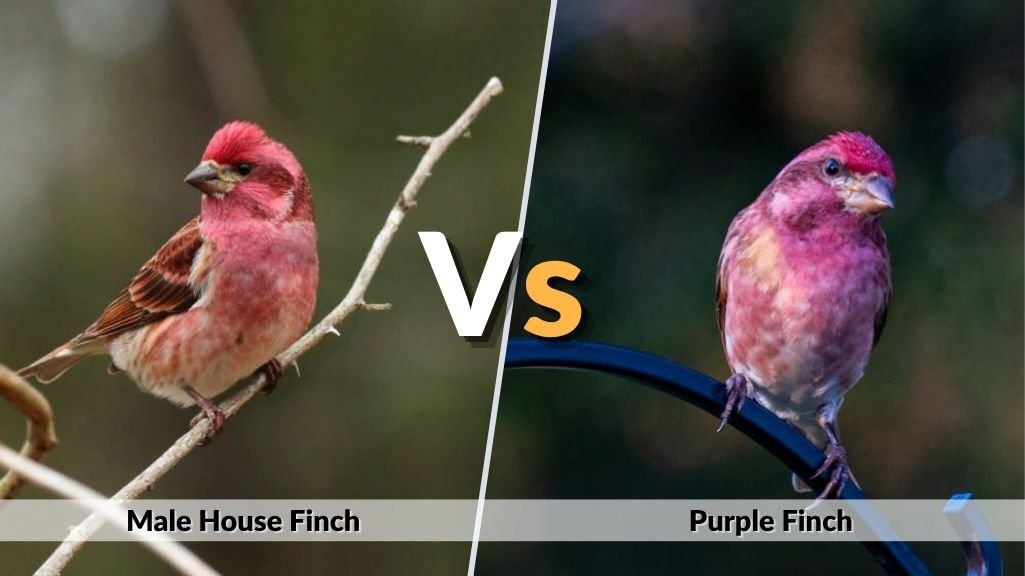
Male house finches are often confused with purple finches due to similar size and red coloration. Careful observation of plumage, tail shape, and song can help distinguish these species in the field.
Plumage Differences
- House finch: bright red, orange, or yellow on head and chest; streaked brown back
- Purple finch: deeper raspberry-red across head and breast; more uniform streaking on sides
- Tail: purple finch tail slightly notched, house finch tail straight
Body Shape and Size
- House finch: slightly slimmer, shorter tail, overall compact appearance
- Purple finch: slightly bulkier with a longer, notched tail
- Juvenile males: brown streaked, can resemble house finch juveniles
Song Comparison
- House finch: warbled, variable, repeated notes, melodic
- Purple finch: richer, longer warble, more fluid melody
- Male song is the most reliable way to differentiate adults
Behavior and Breeding
Male house finches are active participants in breeding and social interactions. Their behavior can indicate health, dominance, and readiness to mate.
Territoriality and Courtship
- Males defend perches, feeding areas, and breeding territory
- Court females through singing, wing flicks, and displays
- May chase rival males or attempt to take over nests
Interaction with Females
- Feed mates during incubation
- Help feed chicks post-hatching
- Maintain pair bonds throughout breeding season, but not necessarily year-round
Coloration and Health Indicators
- Bright red coloration indicates good diet and health
- Duller males may be younger or nutritionally deficient
- Plumage intensity helps females choose mates
Male House Finch in the Wild
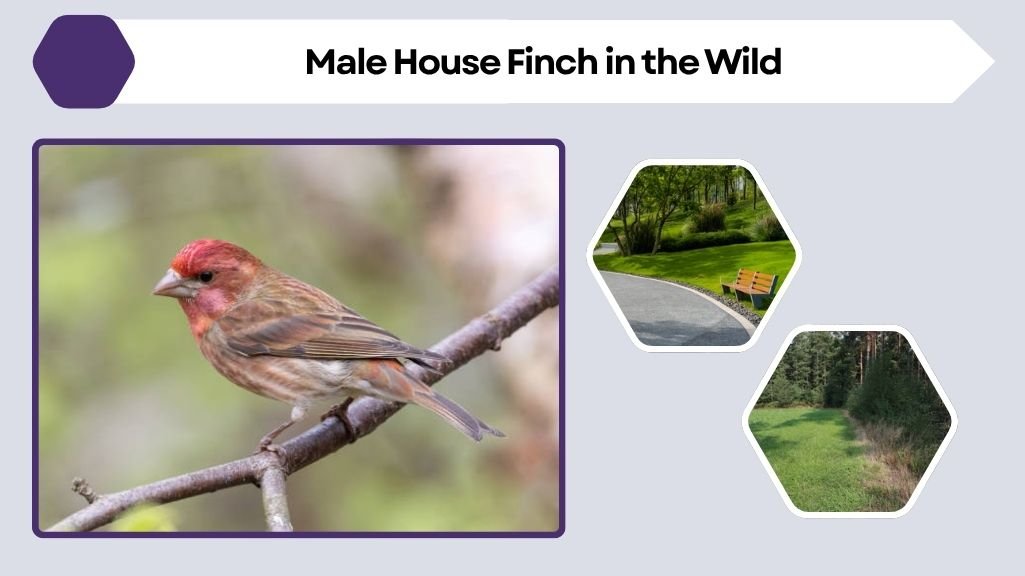
Observing males in natural habitats reveals their adaptability and variation in appearance. They occupy urban and rural areas, often forming flocks outside the breeding season.
- Common in backyards, city parks, and woodland edges
- Social outside of breeding season; males may flock together
- Exhibit variable red hues depending on diet, region, and age
- Active feeders and foragers, visiting feeders and natural seed sources
Visual Identification Tips
Proper identification of male house finches requires noting coloration, tail shape, and head markings, especially when purple finches are present.
Key Field Marks
- Red, orange, or yellow head and chest on males
- Brown-streaked back and wings
- Short, straight tail; purple finch tail is slightly notched
Juvenile Identification
- Immature males are streaked brown, like females
- Gradual development of red or orange plumage as they age
- Can be mistaken for female house finches or purple finches
Images and Reference Comparisons
- Include side-by-side photos of male and female house finches
- Comparisons with purple finches highlight red intensity, tail shape, and streaking patterns
- Observing multiple individuals improves field identification skills
FAQs
What does a male house finch look like?
Bright red, orange, or yellow on head and chest, streaked brown wings and back, and short tail. Juveniles are brown-streaked like females.
How do males differ from females?
Males are brightly colored, sing to attract mates, and defend territory. Females are brown-streaked and focus on nesting and chick care.
Do male house finches feed their mates or young?
Yes, males feed females during incubation and assist with feeding chicks after hatching but rarely incubate themselves.
Can male house finches mate for life?
They typically form pair bonds for the breeding season but are not strictly monogamous year-round.
How do you distinguish male house finch from purple finch?
House finches show brighter red or orange, straighter tails, and slightly slimmer bodies. Purple finches are raspberry-red, with a bulkier body and slightly notched tail.