

The cedar waxwing is one of North America’s most elegant and recognizable songbirds. Known for its silky feathers, black facial mask, and bright yellow tail tip, this bird often travels in social flocks and feeds heavily on berries and fruit. Cedar waxwings are admired by birdwatchers because of their smooth flight, gentle behavior, and unique appearance. Their soft high-pitched calls are commonly heard during migration and feeding seasons. Understanding their habitat, diet, and behavior helps bird lovers identify these beautiful birds more easily in the wild.
Cedar waxwings are highly social birds that often gather in large groups during winter and migration periods while searching for fruit-rich trees and shrubs.
What Is a Cedar Waxwing?
The cedar waxwing is a medium-sized songbird found throughout much of North America. It belongs to the waxwing family and is famous for its silky plumage and red wax-like markings on the wings. These birds are active, social, and highly dependent on fruit during much of the year. Their graceful appearance and flocking behavior make them easy to recognize once identified properly.
Cedar Waxwing Identification
Cedar waxwings have several unique physical features that help separate them from other songbirds.
Key Identification Features
- Silky brown and gray feathers
- Black mask around the eyes
- Bright yellow tail tip
- Crest on top of the head
- Red wax-like markings on wings
Adult cedar waxwings often appear sleek and smooth compared to many other backyard birds.
Cedar Waxwing Size and Appearance
Cedar waxwings are medium-sized birds with slender bodies and long wings. Adults usually measure around 6 to 7 inches long with a wingspan close to 12 inches.
Their coloration gradually blends from brown on the head to soft gray on the wings and belly. The black mask and yellow tail band are among their most noticeable field marks.
Cedar Waxwing Scientific Name
The scientific name of the cedar waxwing is Bombycilla cedrorum. The word “Bombycilla” refers to the bird’s silky feather appearance, while “cedrorum” relates to cedar trees where the species was often observed historically.
Cedar waxwings belong to the waxwing family, which also includes the Bohemian waxwing and Japanese waxwing.
Cedar Waxwing Habitat and Range

Cedar waxwings are highly adaptable birds found across much of North America. They prefer habitats with abundant fruit-bearing trees and shrubs. Their range changes seasonally because many populations migrate depending on weather and food availability.
Cedar Waxwing Range in North America
Cedar waxwings breed across large parts of Canada and the northern United States during summer. In winter, many populations move farther south into the southern United States, Mexico, and parts of Central America.
Migration patterns vary depending on berry crops and environmental conditions. Some populations remain in one region year-round if enough food is available.
States and Regions Where They Are Found
Cedar waxwings can be found in many different climates and regions throughout North America.
Areas Commonly Visited by Cedar Waxwings
- Texas
- Florida
- Oregon
- Michigan
- Southern Canada
They are especially common near fruit trees, forest edges, parks, and suburban gardens with berry-producing plants.
Cedar Waxwing Habitat Preferences
Cedar waxwings prefer open woodlands, orchards, river edges, and shrubby habitats with reliable food supplies. They are strongly attracted to areas with berry-producing plants such as cedar, juniper, holly, and dogwood.
Unlike some territorial birds, cedar waxwings are often comfortable feeding in groups and may travel widely while searching for seasonal fruit crops.
Cedar Waxwing Behavior
Cedar waxwings are highly social birds known for their calm behavior and flocking habits. They often travel together in groups and communicate constantly using soft high-pitched calls. Their graceful flight and coordinated feeding behavior make them fascinating to observe during migration and winter seasons.
Cedar Waxwing Flocks
Cedar waxwings frequently gather in flocks that may contain dozens or even hundreds of birds during winter months.
Common Flocking Behaviors
- Feeding together in fruit trees
- Passing berries between birds
- Flying in coordinated groups
- Roosting closely together
Large flocks help waxwings locate food more efficiently and reduce the risk of predators.
Cedar Waxwing Flight Patterns
Cedar waxwings have smooth, fast flight patterns with steady wingbeats. Their streamlined body shape allows them to move gracefully through forests and open spaces.
They often fly in tight groups while calling softly to each other. During feeding, waxwings may catch insects in midair using quick aerial movements.
Are Cedar Waxwings Rare?
Cedar waxwings are not considered rare birds. In many regions, they are fairly common during migration and winter seasons. However, they may seem uncommon because their movements depend heavily on food availability.
When berry crops are plentiful, cedar waxwings can suddenly appear in large numbers before disappearing again once food supplies decrease.
Cedar Waxwing Calls and Sounds

Cedar waxwings communicate using soft, high-pitched sounds that are often heard before the birds are seen. Their calls help flocks stay together during flight and feeding activities. Although they are not loud singers like many songbirds, their constant communication is an important part of their social behavior.
What Does a Cedar Waxwing Sound Like?
Cedar waxwings produce thin, high whistles and soft buzzing calls that are easy to recognize once familiar. Their calls often sound delicate and airy compared to louder songbirds.
Birdwatchers frequently hear cedar waxwing flocks flying overhead because the birds call continuously while traveling together.
Cedar Waxwing Call Types
Cedar waxwings use several different vocalizations to communicate with flock members during feeding, migration, and flight. Their calls are usually soft but constant when birds gather in groups.
Common Cedar Waxwing Sounds
- Thin high whistles
- Soft trills
- Buzzing calls
- Flock contact notes
- Flight communication sounds
These calls help waxwings stay connected while moving through trees and open skies together.
Why Cedar Waxwings Call Frequently
Cedar waxwings are social birds that rely heavily on communication. Their calls help coordinate flock movement and warn other birds about nearby danger.
During migration, constant calling allows birds to remain together while traveling long distances. Calls also help waxwings locate food-rich trees and feeding sites.
Male vs Female Cedar Waxwing
Male and female cedar waxwings look very similar, making them difficult to tell apart. However, close observation can reveal small differences in coloration and body markings. Juvenile birds also have unique features that separate them from adults.
Male Cedar Waxwing Features
Male cedar waxwings often show slightly brighter plumage and stronger facial markings than females.
Common Male Features
- Sharper black facial mask
- Brighter yellow tail band
- Slightly larger body
- More visible waxy wing tips
These differences are subtle and usually easiest to notice when birds are viewed side by side.
Female Cedar Waxwing Features
Female cedar waxwings generally appear softer in coloration with less intense facial markings. They share the same crest, black mask, and smooth feather texture as males.
Females help build nests and care for chicks during breeding season. Their overall appearance remains elegant and similar to the males.
Juvenile and Fledgling Cedar Waxwings
Young cedar waxwings look noticeably different from adults. Juveniles often have streaked chests and duller feather colors while their adult plumage develops gradually.
Fledglings usually stay close to parents after leaving the nest and continue learning feeding behaviors during late summer.
Cedar Waxwing Diet and Feeding Habits

Cedar waxwings are famous for their fruit-heavy diet. Unlike many songbirds that mainly eat insects, waxwings depend heavily on berries throughout much of the year. They are also skilled aerial feeders that catch insects while flying.
What Do Cedar Waxwings Eat?
Their diet changes seasonally depending on fruit and insect availability.
Common Cedar Waxwing Foods
- Berries
- Cherries
- Juniper fruit
- Flying insects
- Wild grapes
During summer, insects become especially important because they provide protein for growing chicks.
Cedar Waxwing Feeding Behavior
Cedar waxwings often feed cooperatively in flocks. One of their most famous behaviors involves passing berries from one bird to another before finally eating them.
They may also catch insects midair using quick flight movements. Feeding activity usually becomes more intense during migration and winter months.
Drunk Cedar Waxwings Explained
Cedar waxwings sometimes become intoxicated after eating fermented berries during winter. Overripe fruit may contain alcohol produced naturally through fermentation.
Intoxicated birds may fly poorly, appear confused, or struggle to perch properly. Large flocks feeding on fermented berries occasionally attract public attention during cold seasons.
Cedar Waxwing Nesting and Eggs
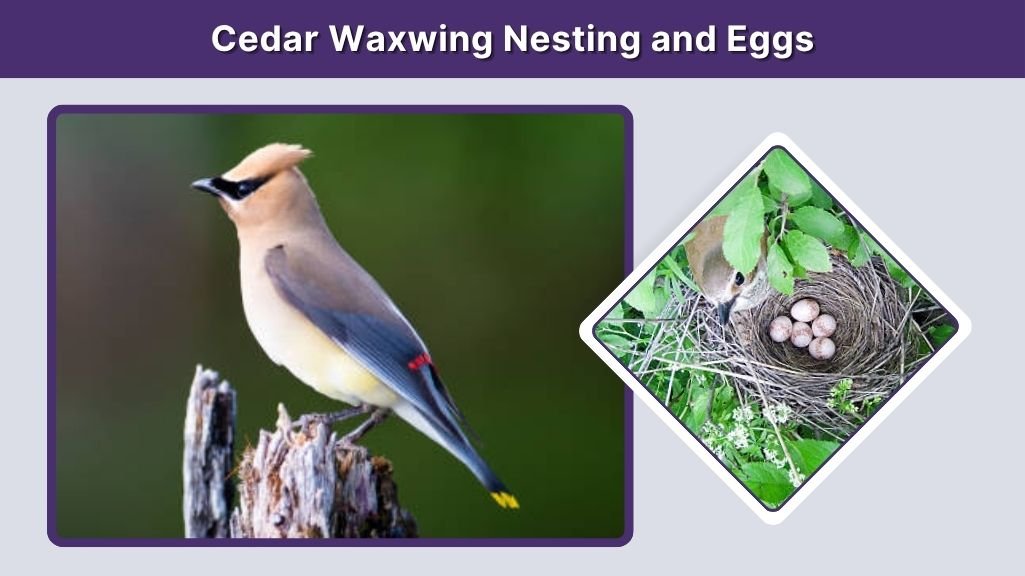
Cedar waxwings build carefully hidden nests in shrubs and trees during breeding season. Nesting usually begins later than many songbirds because waxwings rely heavily on summer fruit supplies for feeding young birds.
Cedar Waxwing Nest
Nests are commonly placed in shrubs, cedar trees, or dense branches where they remain concealed from predators.
The nest is cup-shaped and built from grass, twigs, bark strips, and soft plant materials. Females usually handle most nest construction while males assist by gathering materials.
Cedar Waxwing Eggs
Female cedar waxwings lay several eggs during each breeding season.
Cedar Waxwing Egg Facts
- Eggs are pale bluish-gray
- Often marked with dark spots
- Typical clutch contains 3 to 5 eggs
- Incubation lasts about two weeks
Both parents participate in feeding chicks after the eggs hatch.
Raising Young Birds
Young cedar waxwings grow quickly and depend heavily on insects during early development. Parents feed chicks soft insects and partially digested fruit.
Fledglings remain close to adult birds after leaving the nest and continue learning feeding and flocking behavior before migration begins.
Cedar Waxwing Migration
Cedar waxwings are partially migratory birds whose movements depend heavily on food supplies. Instead of following strict migration schedules, they travel wherever berries and fruit remain available.
Do Cedar Waxwings Migrate?
Many cedar waxwing populations migrate south during winter, especially birds breeding in northern Canada and colder U.S. states.
However, some flocks remain year-round in regions where winter fruit remains plentiful.
Cedar Waxwing Migration Map
During breeding season, cedar waxwings are commonly found across Canada and the northern United States. In winter, many birds move into the southern United States, Mexico, and Central America.
Migration routes often shift depending on seasonal berry crops and weather conditions.
Winter and Summer Distribution
Seasonal Cedar Waxwing Locations
- Northern forests during summer
- Southern states during winter
- Urban berry trees during migration
- Woodland edges year-round
Their seasonal movements make cedar waxwings highly unpredictable compared to many other songbirds.
FAQs
What do cedar waxwings eat?
Cedar waxwings mainly eat berries, cherries, wild fruits, and insects. During summer, insects become especially important because they provide protein for growing chicks.
What does a cedar waxwing sound like?
Cedar waxwings make soft, high-pitched whistles and thin buzzing calls. Their sounds are gentle and are often heard while flocks fly together.
Do cedar waxwings migrate?
Yes, many cedar waxwings migrate seasonally depending on food availability. Northern populations usually move south during winter in search of berries and fruit.
Why do cedar waxwings get drunk?
Cedar waxwings may become intoxicated after eating fermented berries during winter. Alcohol from overripe fruit can affect their balance and flying ability temporarily.
Are cedar waxwings rare?
No, cedar waxwings are generally common birds across much of North America. However, their movements change often because they follow seasonal fruit supplies.
