
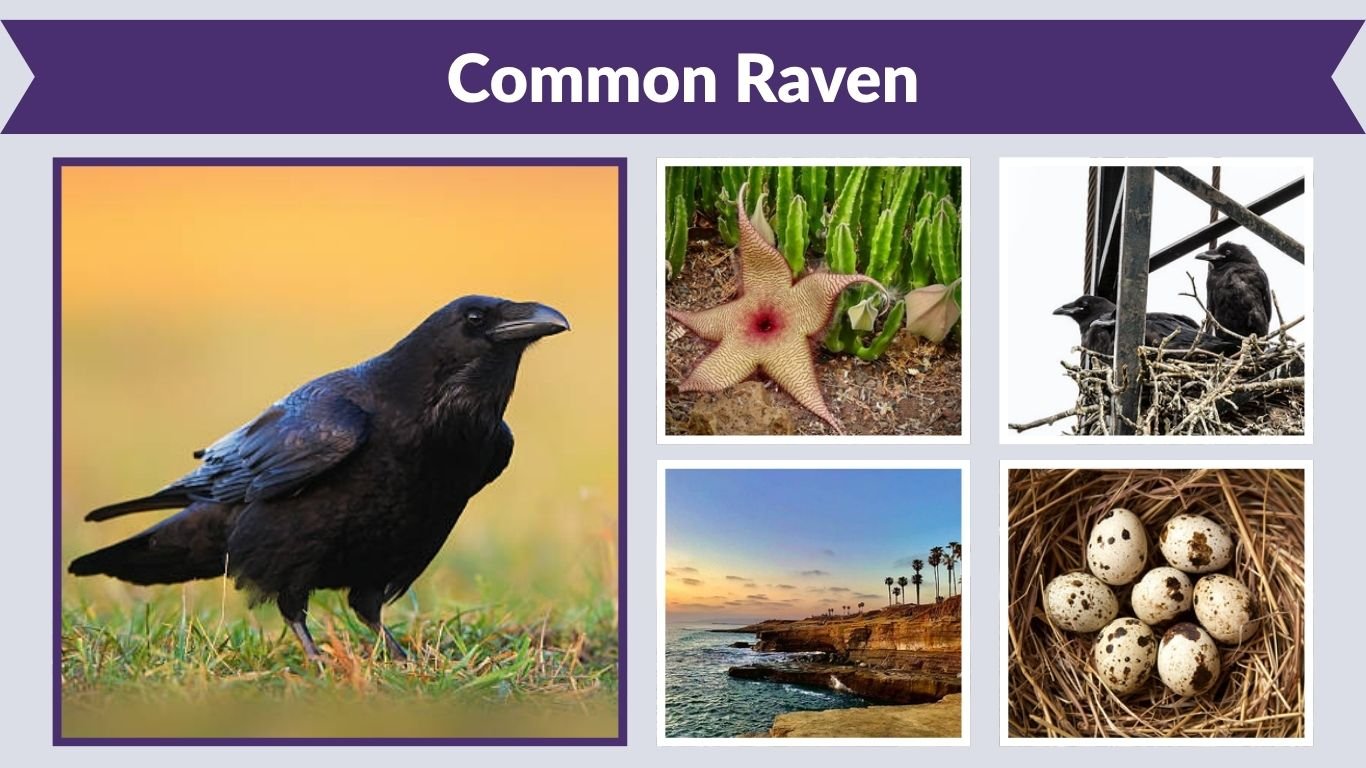
The common raven is one of the largest and most intelligent songbirds in the world. Known for its glossy black feathers, deep croaking calls, and remarkable problem-solving skills, this bird has fascinated humans for centuries. Ravens live across much of the Northern Hemisphere and can survive in forests, deserts, mountains, and even urban environments. Their playful behavior, strong memory, and ability to adapt make them one of the most successful bird species on Earth. Learning about their habitat, diet, flight, and social behavior reveals why ravens hold such an important place in folklore and nature.
Common ravens belong to the corvid family, which also includes crows, magpies, and jays—birds famous for their intelligence and communication abilities.
What Is a Common Raven?
The common raven is a large black bird belonging to the corvid family. Its scientific name is Corvus corax, and it is closely related to crows and magpies. Ravens are highly adaptable birds known for their intelligence, powerful flight, and loud vocalizations. They are found across North America, Europe, Asia, and parts of North Africa in many different habitats.
Common Raven Identification
Common ravens have several unique physical traits that separate them from crows and other black birds.
Key Identification Features
- Large glossy black body
- Thick curved beak
- Shaggy throat feathers
- Diamond-shaped tail
- Strong broad wings
Adult ravens appear heavier and more powerful than crows, especially during flight.
Common Raven Scientific Classification
The common raven belongs to the corvid family, one of the smartest bird groups in the animal kingdom. Its scientific name, Corvus corax, reflects its place among true crows and ravens.
Ravens are closely related to American crows, magpies, and jays, but they are usually larger and show more advanced social and problem-solving behavior.
Common Raven Size and Appearance
Common ravens are among the largest perching birds in the world. Adults can reach lengths of about 24 to 27 inches with impressive wingspans exceeding four feet.
Their glossy black feathers may show blue or purple shine in sunlight. The large beak and shaggy throat feathers give ravens a bold and powerful appearance.
Common Raven Habitat and Range

Common ravens are extremely adaptable birds capable of surviving in many different environments. They are found throughout much of the Northern Hemisphere and can thrive in both remote wilderness and human-developed areas. Their intelligence and flexible diet help them survive in climates ranging from deserts to icy tundra.
Common Raven Habitat
Ravens prefer open landscapes with cliffs, forests, or wide spaces for flying and nesting.
Common Raven Habitats
- Mountain regions
- Dense forests
- Coastal cliffs
- Arctic tundra
- Desert landscapes
They often choose high perches and remote nesting locations to avoid disturbance.
Common Raven Range
The common raven has one of the widest ranges of any songbird species. It lives throughout North America, Europe, Asia, and northern parts of Africa.
In North America, ravens are especially common in western states, Alaska, Canada, and remote wilderness areas. Some populations also thrive near cities and farmland.
Common Raven Distribution Map
Most common raven populations remain in the same region year-round instead of making long migrations. Their movements usually depend on food availability and weather conditions.
Urban raven populations have expanded in some areas because human settlements provide new food sources and nesting opportunities.
Common Raven Behavior and Intelligence
Common ravens are considered among the smartest birds in the world. They display advanced learning ability, social communication, and complex problem-solving skills. Ravens are also playful birds known for aerial acrobatics and curious behavior around objects and animals.
Are Common Ravens Intelligent?
Ravens can solve puzzles, remember locations, and learn through observation. Scientists have observed ravens using tools, planning ahead, and recognizing individual humans.
Their intelligence is often compared to that of primates because of their memory and ability to adapt to new challenges quickly.
Common Raven Social Behavior
Although ravens are often seen alone or in pairs, they are highly social birds that communicate regularly with each other.
Common Social Behaviors
- Pair bonding
- Group feeding
- Territorial defense
- Playful aerial games
Young ravens may gather in groups while adults often form long-term breeding pairs.
Common Raven Adaptations
Ravens possess several adaptations that help them survive in harsh environments. Their strong beaks allow them to tear food easily, while their thick feathers provide insulation in cold climates.
They also store food for later use and remember hidden food locations with remarkable accuracy.
Common Raven Calls and Sounds
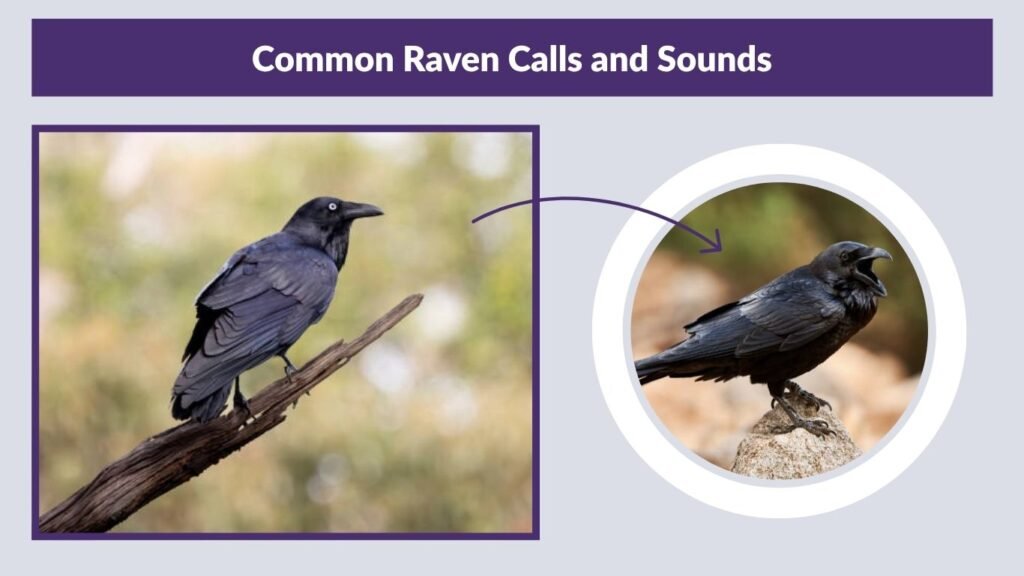
Common ravens produce a wide range of vocalizations used for communication, warning signals, and social interaction. Their deep croaking voice is one of the most recognizable bird sounds in many wilderness areas.
Common Raven Calls
The most common raven call is a deep croaking “kraaa” sound that can travel long distances through forests and mountains.
Common Raven Vocalizations
- Deep croaks
- Knocking sounds
- Clicking noises
- Gurgling calls
Ravens may also imitate certain sounds from their environment, including noises made by other animals.
Common Raven Vocalizations
Ravens use many different sounds to communicate with mates, defend territory, and warn other birds about danger. Their vocal range is far more complex than many people realize.
Common Raven Sound Types
- Croaking calls
- Rattling noises
- Clicking sounds
- Low gurgles
- Sharp warning calls
Different sounds may carry different meanings depending on social situations and environmental conditions.
What Does a Common Raven Sound Like?
The common raven’s voice is deeper and rougher than the sharp “caw” of a crow. Their calls often sound echoing and powerful, especially in open wilderness areas.
Ravens also make unusual knocking and bubbling sounds during close social interactions. Some captive ravens can imitate human speech and environmental noises.
Common Raven Diet and Feeding Habits
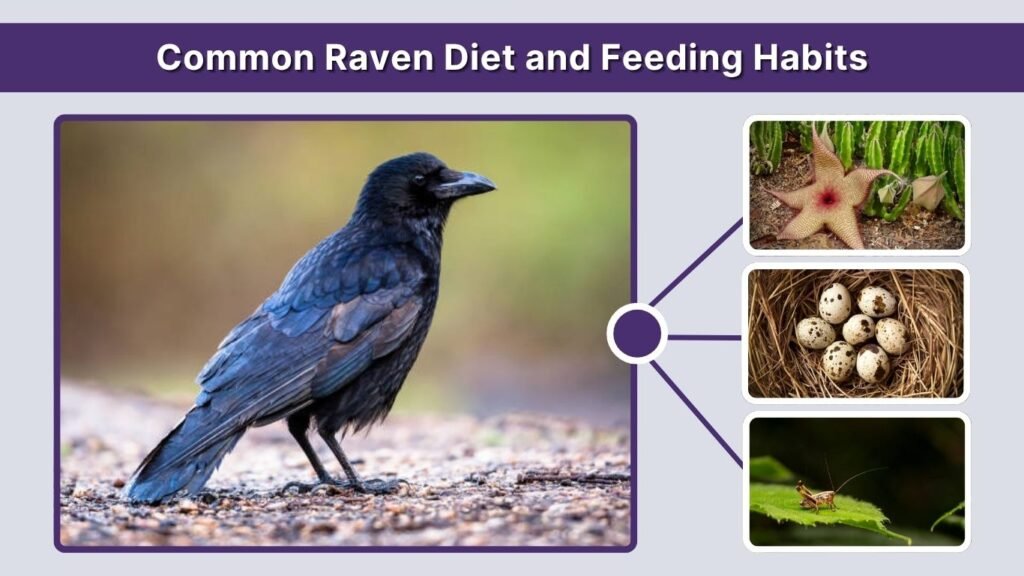
Common ravens are opportunistic feeders capable of surviving on many different food sources. Their intelligence allows them to adapt their feeding habits based on season, habitat, and food availability.
What Does a Common Raven Eat?
Ravens eat both animal and plant material and are known as highly adaptable omnivores.
Common Raven Foods
- Carrion
- Small mammals
- Insects
- Eggs
- Fruit and seeds
They may also feed on fish, reptiles, garbage, and leftover food from predators.
Common Raven Hunting and Scavenging
Ravens are skilled scavengers that often search for dead animals along roadsides, coastlines, and wilderness areas. They also hunt small prey such as rodents, lizards, and young birds.
In some regions, ravens follow wolves or other predators to locate carcasses. Their intelligence helps them discover food quickly in changing environments.
Food Caching Behavior
Ravens frequently store extra food for later use. They hide food beneath rocks, leaves, or snow and return later using memory to locate their hidden supplies.
This behavior helps ravens survive harsh winters and periods when food becomes scarce.
Common Raven Flight and Wingspan
The common raven is a powerful flier capable of soaring long distances and performing aerial acrobatics. Its large wings and wedge-shaped tail make it one of the easiest birds to recognize in flight.
Common Raven Wingspan
Adult common ravens usually have wingspans between 45 and 51 inches, making them significantly larger than most crows.
Their broad wings help them glide efficiently across mountains, deserts, and coastal regions with minimal effort.
Common Raven Flying Behavior
Ravens are famous for playful and skillful flight behavior. They often soar high above cliffs and perform rolls, dives, and flips in strong wind currents.
Common Raven Flight Behaviors
- Long-distance soaring
- Gliding on air currents
- Aerial acrobatics
- Fast direct flight
Young ravens especially enjoy playful flight activity while interacting with other birds.
Common Raven in Flight
The common raven’s wedge-shaped tail is one of the best field marks for identification during flight. Ravens also have slower, deeper wingbeats compared to crows.
Their large size and broad wings create a powerful silhouette visible even from great distances.
Common Raven vs Crow
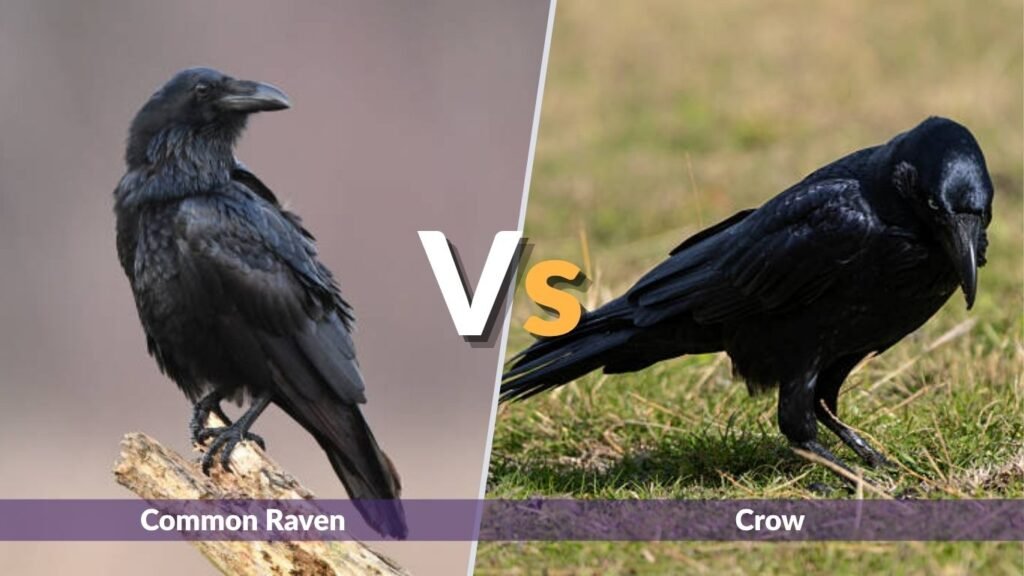
Ravens and crows belong to the same bird family and look similar at first glance. However, several important differences help birdwatchers tell them apart.
Common Raven vs American Crow
| Feature | Common Raven | American Crow |
| Size | Much larger | Smaller |
| Tail Shape | Wedge-shaped | Fan-shaped |
| Voice | Deep croak | Sharp caw |
| Beak | Thick and curved | Slimmer |
Ravens usually appear heavier with more powerful flight patterns than crows.
Common Raven vs Carrion Crow
Carrion crows are common in Europe and are generally smaller than ravens. Ravens also have larger beaks, shaggy throat feathers, and deeper vocalizations.
Both species are intelligent, but ravens are often considered more adaptable and socially complex.
Common Raven vs Chihuahuan Raven
Chihuahuan ravens are smaller birds found mainly in the southwestern United States and Mexico. They have shorter beaks and slightly different vocalizations compared to common ravens.
Habitat preference is another difference because Chihuahuan ravens favor open grasslands and desert regions.
Common Raven Nesting and Eggs
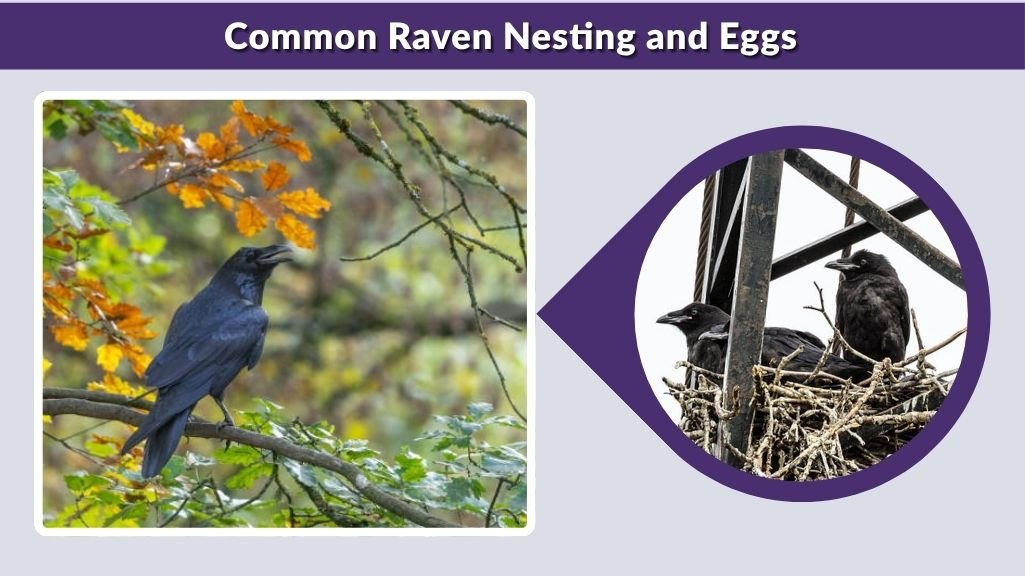
Common ravens build large nests in high and protected locations. They often reuse nesting sites for many years if conditions remain safe and food sources stay nearby.
Common Raven Nest
Ravens build nests using sticks, branches, grass, and animal hair. Nests are commonly placed on cliffs, tall trees, towers, or rocky ledges.
Large nests may become wider and deeper over multiple breeding seasons as pairs continue adding materials.
Common Raven Eggs
Female ravens usually lay several eggs each breeding season.
Common Raven Egg Facts
- Eggs are pale green or blue-green
- Often marked with dark spots
- Clutch size ranges from 3 to 7 eggs
- Incubation lasts around three weeks
Both parents help protect and feed young chicks after hatching.
FAQs
What does a common raven eat?
Common ravens eat carrion, insects, rodents, eggs, fruit, seeds, reptiles, and many other available foods. They are highly adaptable omnivores and scavengers.
What is the wingspan of a common raven?
A common raven typically has a wingspan between 45 and 51 inches, making it one of the largest songbirds in the world.
What is the difference between a raven and a crow?
Ravens are larger than crows and have thicker beaks, wedge-shaped tails, shaggy throat feathers, and deeper croaking calls.
Are common ravens intelligent?
Yes, common ravens are extremely intelligent birds capable of solving problems, using tools, recognizing humans, and remembering hidden food locations.
Can you keep a common raven as a pet?
In many places, keeping a raven as a pet is restricted or illegal. Ravens also require large spaces, mental stimulation, and experienced long-term care.
