
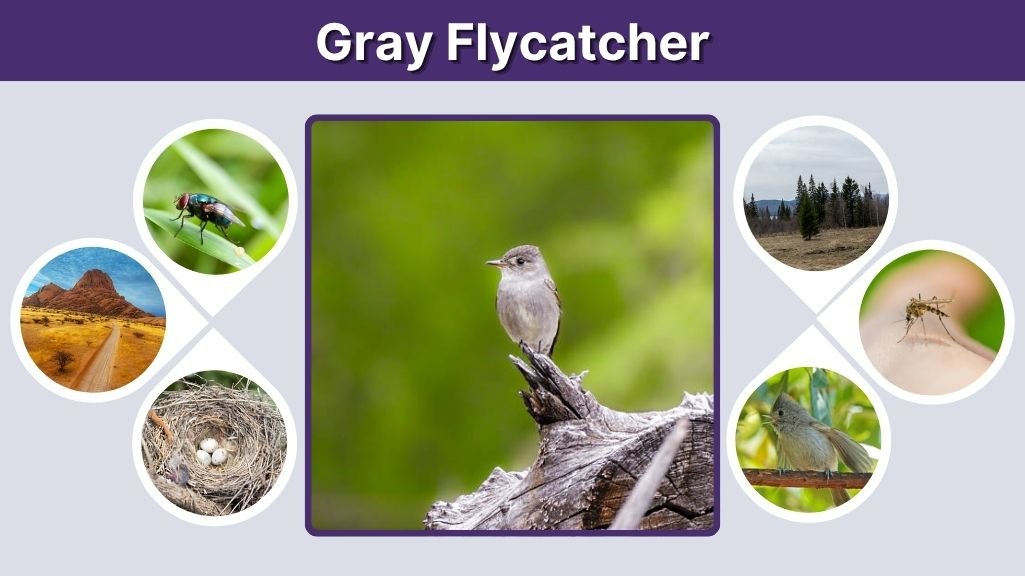
The gray flycatcher is a small and often overlooked songbird found mainly in western North America. Its soft gray coloring and quiet behavior make it difficult to spot in the wild, especially because it resembles several other flycatcher species. Birdwatchers often identify this bird by its distinctive tail-pumping movement and subtle vocalizations. Gray flycatchers prefer dry woodlands, sagebrush habitats, and open forests where they hunt insects from low perches. Learning their appearance, habitat, and behavior can help bird enthusiasts recognize this secretive bird more confidently.
Gray flycatchers are members of the tyrant flycatcher family and are especially active during spring and summer breeding seasons when insects are most abundant.
What Is a Gray Flycatcher?
The gray flycatcher is a small insect-eating bird belonging to the Empidonax group of flycatchers. These birds are known for their subtle gray coloring, thin bills, and calm behavior. Because many flycatchers look similar, identifying gray flycatchers often requires careful observation of movement, habitat, and vocalizations. Their gentle appearance and unique tail motion make them especially interesting to birdwatchers.
Gray Flycatcher Identification
Gray flycatchers have several physical traits that help separate them from similar species.
Key Identification Features
- Grayish upper body
- Pale gray or whitish belly
- Thin dark bill
- Long narrow tail
- Faint wing bars
Their overall appearance is plain compared to more colorful songbirds, but their posture and tail movement are distinctive.
Gray Flycatcher Scientific Classification
The gray flycatcher belongs to the tyrant flycatcher family, one of the largest bird families in the Americas. Its scientific name is Empidonax wrightii.
Like other Empidonax flycatchers, this species can be difficult to identify visually because many related birds share similar gray-brown plumage and body shape.
Gray Flycatcher Size and Appearance
Gray flycatchers are small birds measuring about 5 to 6 inches long. They have slender bodies, narrow tails, and relatively long wings for their size.
Their plumage is mostly soft gray and pale olive, helping them blend into dry woodland habitats. The bird’s simple appearance provides effective camouflage among branches and shrubs.
Gray Flycatcher Habitat and Range
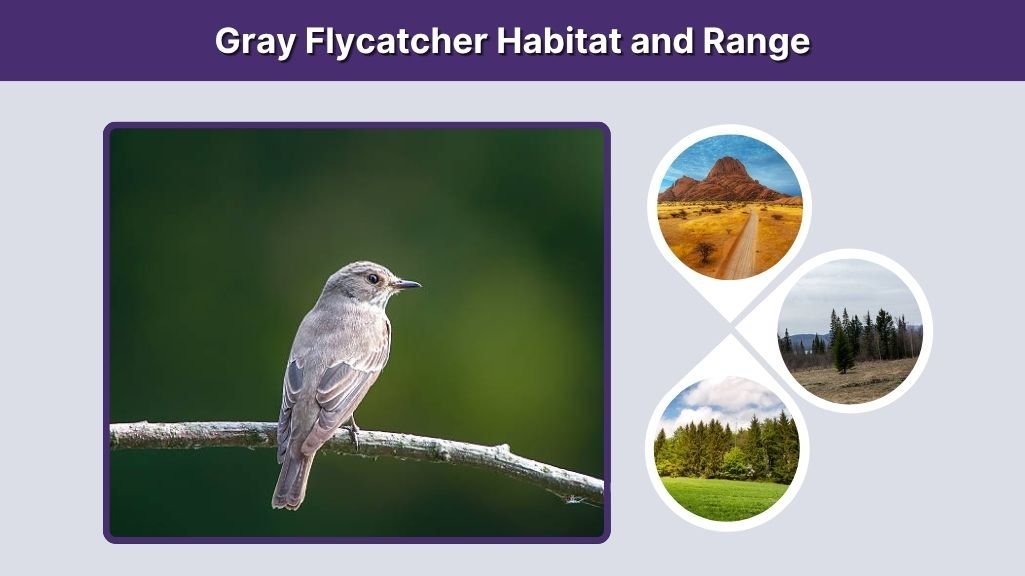
Gray flycatchers are most commonly found in dry habitats with scattered trees and shrubs. They prefer open woodlands and semi-arid environments where insects are plentiful. During migration and winter, they may move into lower elevations and warmer regions depending on seasonal conditions.
Gray Flycatcher Habitat
This species thrives in dry open landscapes with plenty of perches for hunting insects.
Common Gray Flycatcher Habitats
- Sagebrush areas
- Juniper woodlands
- Open pine forests
- Dry mountain slopes
- Woodland edges
Gray flycatchers usually avoid dense forests and prefer areas with open visibility and scattered vegetation.
Gray Flycatcher Range
Gray flycatchers breed mainly in the western United States and parts of southwestern Canada. Their breeding range stretches across dry mountain regions and semi-arid habitats.
During winter, many birds migrate south into Mexico and warmer desert regions. Migration timing often depends on weather conditions and insect availability.
States Where Gray Flycatchers Are Found
Several western states regularly support gray flycatcher populations during breeding season.
States Commonly Associated With Gray Flycatchers
- California
- Nevada
- Arizona
- Utah
- Texas
Birdwatchers frequently observe them in dry forests, sagebrush valleys, and mountain foothills.
Gray Flycatcher Behavior
Gray flycatchers are quiet, patient birds that spend much of their time perched while searching for insects. They are less active and flashy than many other songbirds, which makes them harder to notice in the field. However, their characteristic tail-pumping movement is one of the best ways to identify them.
Tail Pumping Behavior
Gray flycatchers are famous for their downward tail-pumping motion. While perched, they slowly dip their tail downward and then return it to a normal position.
This movement helps birdwatchers distinguish them from dusky flycatchers and other similar species that pump their tails differently or less frequently.
Feeding and Hunting Style
Gray flycatchers hunt insects using a perch-and-wait strategy. They sit quietly on branches before quickly flying out to catch insects in the air.
Common Hunting Behaviors
- Catching insects midair
- Returning to the same perch
- Short quick flights
- Hunting from low branches
Their feeding behavior becomes especially active during warm summer months when insect populations increase.
Gray Flycatcher Migration
Gray flycatchers migrate seasonally between breeding and wintering areas. During fall migration, they gradually move south into warmer habitats where insects remain available.
Unlike large flocking birds, gray flycatchers usually migrate alone or in small groups. Their secretive behavior often makes migration difficult to observe directly.
Gray Flycatcher Calls and Songs
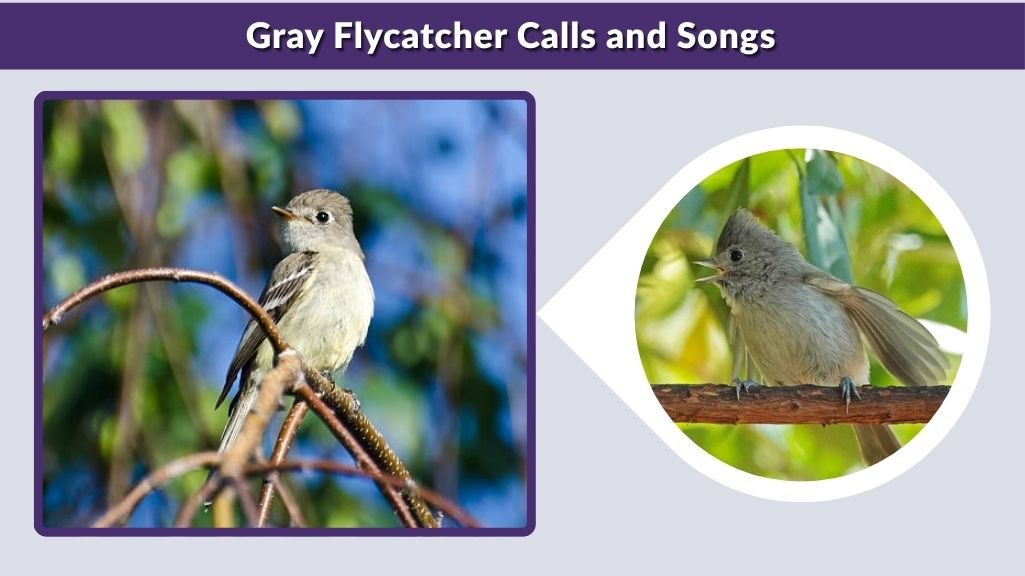
Gray flycatchers produce soft vocalizations that are less noticeable than those of many other birds. Their calls are usually short and dry sounding, while their songs consist of simple repeated phrases used during breeding season.
Gray Flycatcher Call
Gray flycatchers communicate using soft, short calls that can be difficult to hear from a distance. Their vocalizations are usually quieter than those of many other flycatchers, which adds to the challenge of identifying them in the wild.
Birdwatchers often rely on sound recordings and repeated listening to recognize the species correctly during migration and breeding seasons.
Common Gray Flycatcher Vocalizations
Gray flycatcher calls are simple and sharp compared to more musical songbirds.
Typical Gray Flycatcher Sounds
- Dry “pit” calls
- Short snapping notes
- Soft contact calls
- Quiet territorial sounds
These sounds are most often heard early in the morning or during breeding season activity.
Gray Flycatcher Song
The gray flycatcher song usually consists of repeated short phrases delivered calmly from a perch. Males sing most actively during spring and early summer while defending territories.
Their songs may sound weak compared to louder western birds, but careful listening often reveals consistent patterns that help separate them from similar flycatchers.
What Does a Gray Flycatcher Sound Like?
Many birdwatchers compare the gray flycatcher’s song to the dusky flycatcher, though the gray flycatcher’s vocalizations are usually softer and less harsh.
The song is often described as dry, simple, and repetitive. Because the bird frequently sings from hidden perches, listeners may hear it before ever spotting it visually.
Gray Flycatcher vs Dusky Flycatcher
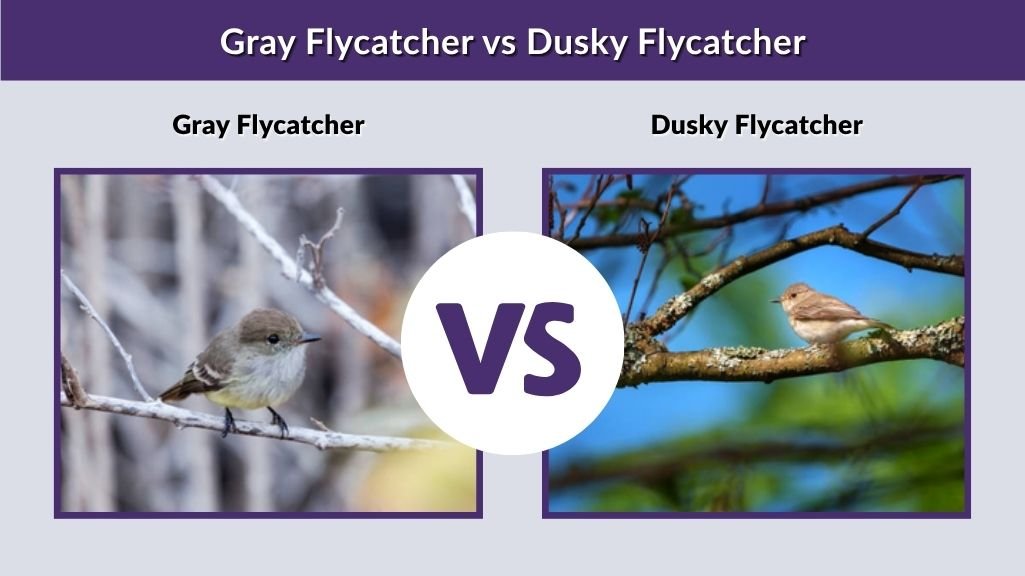
Gray flycatchers and dusky flycatchers are commonly confused because both species have plain gray-brown plumage and similar body size. Careful observation of tail movement, habitat, and vocalizations is usually needed for correct identification.
Key Identification Differences
Although these birds appear similar, several traits help separate them in the field.
| Feature | Gray Flycatcher | Dusky Flycatcher |
| Tail Movement | Slow downward pumping | Less obvious movement |
| Bill Color | Mostly dark | More orange below |
| Song | Softer and drier | Sharper and louder |
| Habitat | Dry open woodlands | Mountain forests |
Tail behavior is often considered the most reliable field mark when viewing perched birds.
Habitat Differences
Gray flycatchers usually prefer drier habitats with juniper trees and sagebrush, while dusky flycatchers are more common in moist mountain forests and higher elevations.
During migration, however, both species may appear in similar areas, which increases identification challenges for birdwatchers.
Why They Are Confused
Both birds belong to the Empidonax flycatcher group, a category known for difficult species identification.
Their similar body shape, gray plumage, and subtle markings often require birders to rely on sound, habitat, and movement instead of color patterns alone.
Gray Flycatcher Nesting and Eggs
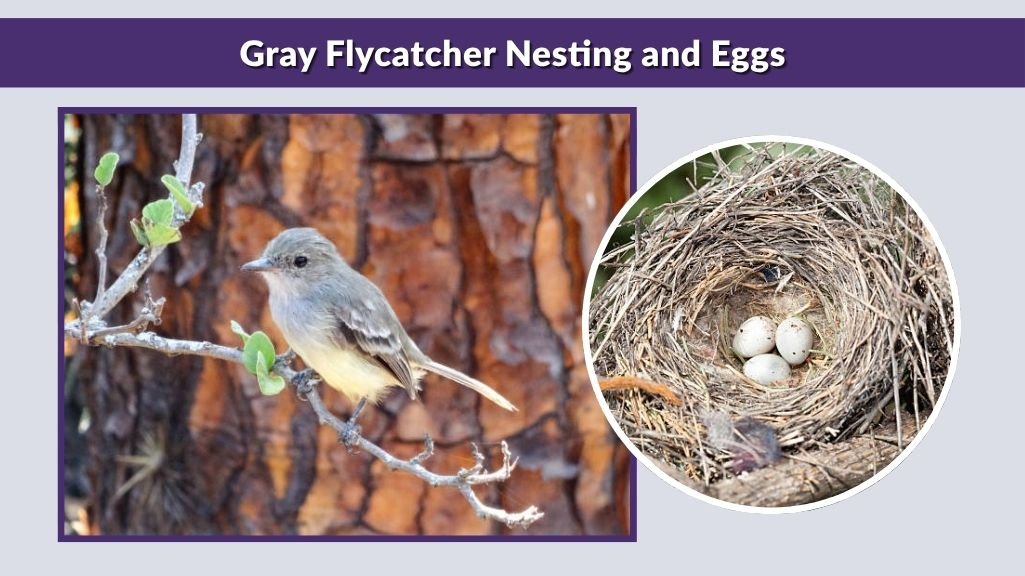
Gray flycatchers build carefully hidden nests in shrubs and small trees during breeding season. Nesting usually begins in late spring when insect populations become abundant enough to support growing chicks.
Gray Flycatcher Nest
The nest is typically placed low in shrubs or small branches where it remains concealed from predators.
Gray flycatchers build cup-shaped nests using grasses, bark fibers, plant stems, and soft materials such as animal hair or feathers.
Eggs and Incubation
Female gray flycatchers lay several small eggs during each nesting season.
Gray Flycatcher Egg Facts
- Eggs are pale white or creamy
- Clutch usually contains 3 to 4 eggs
- Incubation lasts about two weeks
- Nests stay hidden in vegetation
Females perform most of the incubation duties while males help defend nearby territory.
Raising Young Birds
After hatching, chicks are fed mostly insects because protein-rich food supports rapid growth.
Parent birds make frequent hunting trips throughout the day to provide caterpillars, flies, and other insects to developing young birds.
What Do Gray Flycatchers Eat?
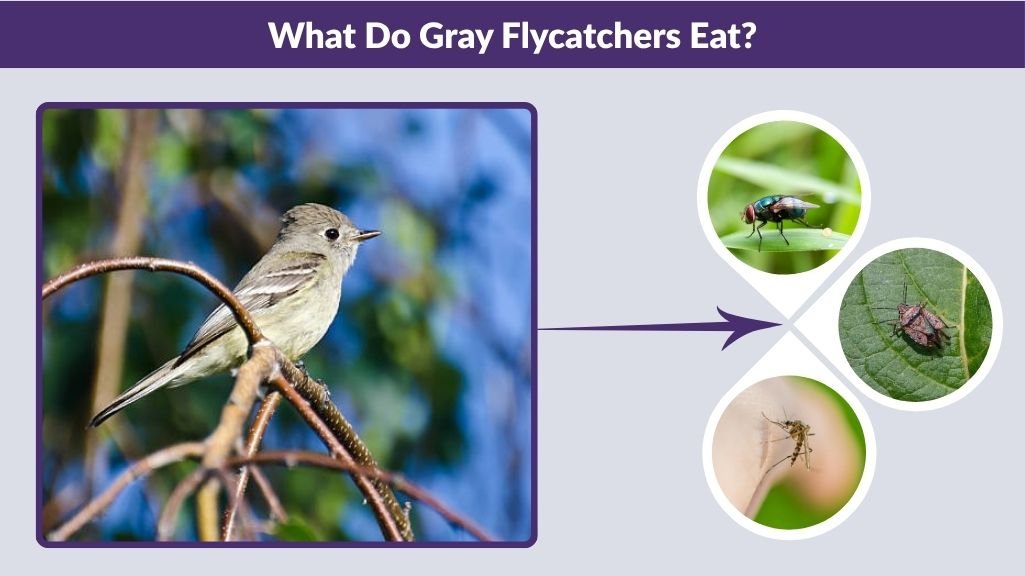
Gray flycatchers are insectivorous birds that rely heavily on flying insects and small invertebrates. Their hunting style is based on patience and quick aerial movements from exposed perches.
Common Foods in Their Diet
Their diet changes slightly depending on season and insect availability.
Foods Gray Flycatchers Commonly Eat
- Flies
- Beetles
- Moths
- Mosquitoes
- Spiders
Most prey is captured in midair after short rapid flights from branches.
Hunting Techniques
Gray flycatchers usually sit quietly before darting outward to catch insects. After catching prey, they often return to the same perch repeatedly.
This perch-and-wait feeding strategy helps conserve energy while still allowing efficient hunting in open woodland habitats.
Seasonal Diet Changes
During breeding season, gray flycatchers consume large numbers of insects to support nesting activity and chick development.
In migration periods, they may feed more heavily during mornings and evenings when insect activity increases in cooler temperatures.
FAQs
What does a gray flycatcher sound like?
Gray flycatchers make soft, dry “pit” calls and simple repeated songs that are quieter than many other flycatcher species.
Where do gray flycatchers live?
They live mainly in dry woodlands, sagebrush habitats, juniper forests, and open pine areas across western North America.
How do you identify a gray flycatcher?
Birdwatchers identify gray flycatchers by their gray plumage, pale belly, narrow tail, subtle wing bars, and distinctive downward tail-pumping behavior.
What do gray flycatchers eat?
Gray flycatchers feed mainly on insects such as flies, beetles, moths, mosquitoes, and spiders captured during short aerial flights.
What is the difference between a gray flycatcher and dusky flycatcher?
Gray flycatchers usually show slower downward tail pumping, darker bills, softer songs, and a preference for drier habitats compared to dusky flycatchers.
