
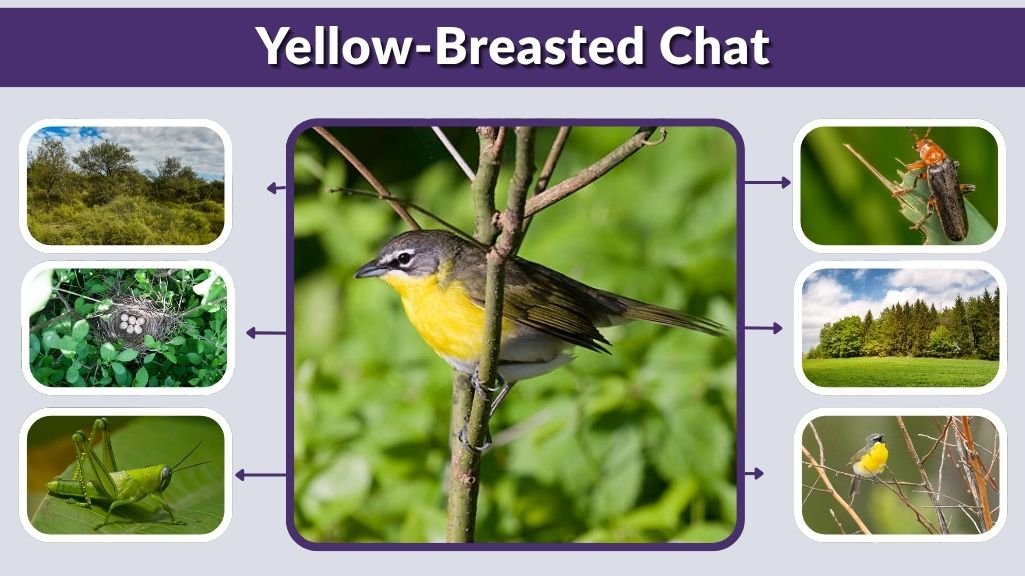
The yellow-breasted chat is one of the most unusual songbirds found in North America. Known for its bright yellow chest, loud calls, and secretive behavior, this bird often hides deep inside thick shrubs and forest edges. Birdwatchers enjoy spotting yellow-breasted chats because of their energetic songs and distinctive appearance. Although they were once grouped with warblers, scientists now place them in their own unique family. Understanding their habitat, behavior, and vocalizations helps bird lovers identify this fascinating species more easily in the wild.
Yellow-breasted chats are especially active during spring and summer when males sing loudly to defend territories and attract mates.
What Is a Yellow-Breasted Chat?
The yellow-breasted chat is a medium-sized songbird native to North America. It is famous for its bright colors, loud vocalizations, and shy personality. Unlike many small songbirds, chats spend much of their time hidden inside dense bushes and thickets. Their unusual calls and active behavior make them one of the most interesting birds for birdwatchers and nature enthusiasts.
Yellow-Breasted Chat Identification
The yellow-breasted chat has several distinctive features that help separate it from other yellow songbirds.
Key Identification Features
- Bright yellow throat and chest
- Olive-green upper body
- White markings around the eyes
- Long rounded tail
- Thick dark bill
Adult birds are larger than most warblers and often appear more robust when perched inside shrubs.
Is the Yellow-Breasted Chat a Warbler?
For many years, scientists classified the yellow-breasted chat as a type of warbler because of its size and feeding habits. However, modern research later showed that chats are different enough to belong to their own family.
Their unusual songs, body shape, and behavior separate them from true warblers. Today, the yellow-breasted chat is considered the only member of its special bird family in North America.
Yellow-Breasted Chat Size and Appearance
Yellow-breasted chats are medium-sized birds with long tails and sturdy bodies. Adults usually measure about 7 inches long, making them larger than many common warblers.
Their bright yellow chest contrasts strongly with olive-green feathers on the back. White spectacles around the eyes give the bird a unique facial appearance that helps birdwatchers identify it quickly.
Yellow-Breasted Chat Habitat and Range
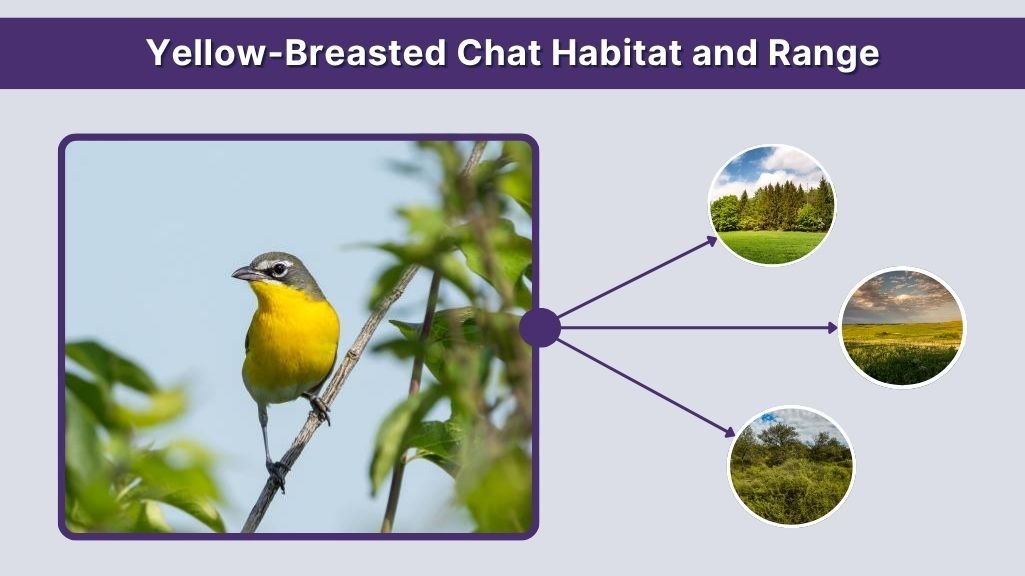
Yellow-breasted chats prefer dense shrubby habitats where they can hide easily while searching for food. They are most commonly found near woodland edges, overgrown fields, riversides, and thick brushy areas. These birds migrate seasonally, spending summers in North America and winters farther south in Central America and Mexico.
Where Do Yellow-Breasted Chats Live?
These birds thrive in habitats with dense vegetation and tangled shrubs. Thick cover provides protection from predators and suitable nesting locations.
Common Yellow-Breasted Chat Habitats
- Forest edges
- Overgrown fields
- Riverside thickets
- Dense brushy areas
- Shrubby grasslands
They usually stay hidden inside vegetation instead of sitting openly on tree branches.
Yellow-Breasted Chat Range in North America
Yellow-breasted chats are widely distributed across the United States during breeding season. Eastern and western populations occupy different regions, though both prefer shrubby habitats.
During migration, chats travel south toward Mexico and Central America for winter. Their migration patterns often depend on climate and food availability.
Yellow-Breasted Chats in Specific States
Some states are especially known for yellow-breasted chat populations during spring and summer.
States Where Chats Are Commonly Seen
- California
- Arizona
- Texas
- Colorado
- Florida
Birdwatchers often search for them in wildlife refuges, woodland edges, and riverside habitats.
Yellow-Breasted Chat Behavior
Yellow-breasted chats are active but secretive birds. They spend much of their time hidden deep inside bushes, making them easier to hear than see. Their energetic displays and unusual songs are most noticeable during breeding season when males defend territories aggressively.
Secretive and Shy Nature
These birds rarely stay in open areas for long periods. Instead, they move carefully through thick vegetation while searching for insects and berries.
Their secretive behavior helps protect them from predators. Even experienced birdwatchers sometimes hear chats singing loudly without ever spotting the bird itself.
Flight and Display Behavior
Male yellow-breasted chats perform unique flight displays during the breeding season. They may fly upward while singing loudly before dropping back into dense vegetation.
Common Behavioral Displays
- Tail flicking
- Hovering flight
- Puffing chest feathers
- Singing from hidden branches
These displays help males attract mates and warn rival birds away from their territory.
Are Yellow-Breasted Chats Rare?
Yellow-breasted chats are not considered extremely rare, but they are often difficult to observe because of their secretive habits. Habitat loss and shrinking shrubland areas have affected some local populations.
In many regions, chats remain fairly common during breeding season, especially in protected habitats with dense vegetation.
Yellow-Breasted Chat Song and Calls
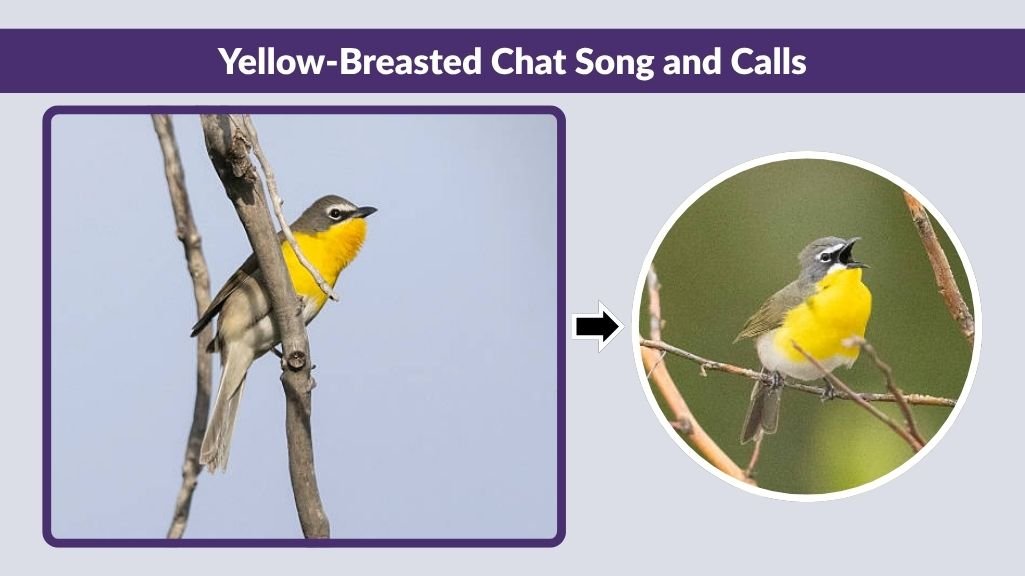
The yellow-breasted chat is famous for its unusual and noisy vocalizations. Unlike many songbirds that produce simple melodies, chats create a mix of whistles, clucks, cackles, and chattering sounds. Their songs can sound almost random, making them one of the most recognizable birds by voice alone. Males sing most actively during spring and early summer while defending territories and attracting mates.
What Does a Yellow-Breasted Chat Sound Like?
Yellow-breasted chats produce a wide variety of strange and energetic sounds. Their songs often include whistles, squeaks, clicks, and harsh notes mixed together in unpredictable patterns.
Some birdwatchers describe the song as a noisy conversation because the bird changes sounds quickly while singing. Chats may also mimic certain tones from nearby birds.
Yellow-Breasted Chat Call Types
Chats use different calls for communication, territorial defense, and warning signals.
Common Yellow-Breasted Chat Sounds
- Loud whistles
- Harsh cackles
- Chattering notes
- Clucking sounds
- Squeaky calls
Their vocal range is one of the main reasons they stand out among North American songbirds.
Why They Sing at Night
Male yellow-breasted chats sometimes sing during nighttime hours, especially during breeding season. Night singing helps males attract mates and establish territory boundaries.
This behavior is most common during spring migration and nesting periods when competition between males becomes stronger.
Male vs Female Yellow-Breasted Chat
Male and female yellow-breasted chats look similar, but there are slight differences in coloration and behavior. Males are usually more vocal and active during breeding season, while females spend more time caring for nests and young birds.
Male Yellow-Breasted Chat Features
Male chats are often easier to notice because of their loud singing and territorial displays.
Male Identification Features
- Brighter yellow chest
- More frequent singing
- Aggressive territorial behavior
- Active flight displays
Males usually sing from hidden perches inside thick shrubs and bushes.
Female Yellow-Breasted Chat Features
Female yellow-breasted chats generally appear slightly duller than males. They spend much of their time hidden near nesting areas during breeding season.
Females build nests, incubate eggs, and help feed chicks after hatching. Their quieter behavior makes them more difficult to observe in the wild.
Juvenile and Immature Chats
Young yellow-breasted chats often have duller plumage and less distinct markings than adults. Juveniles may appear more olive or brown while their yellow chest develops gradually.
Immature birds stay hidden in dense vegetation while learning to forage and avoid predators after leaving the nest.
Yellow-Breasted Chat Nesting and Eggs
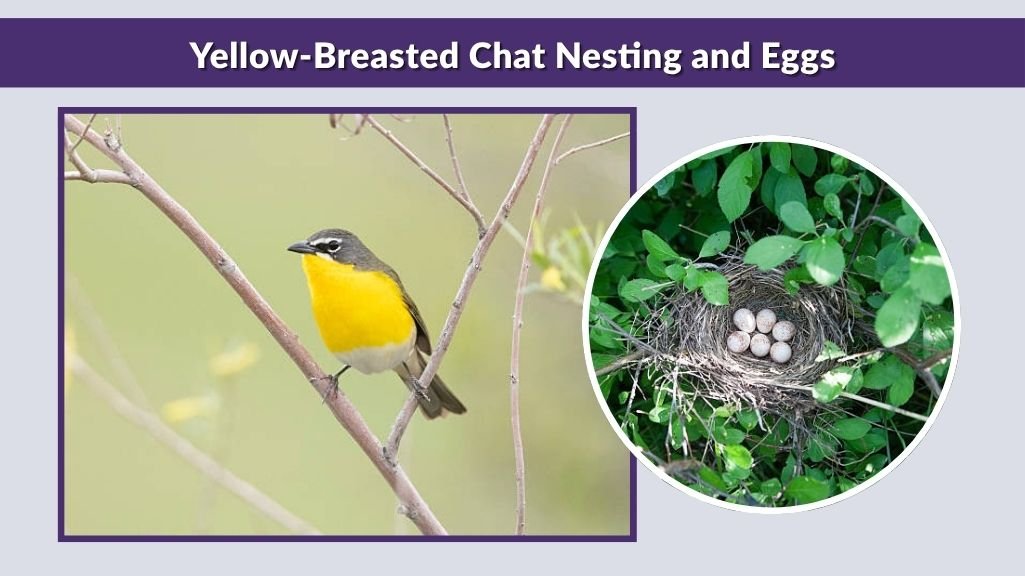
Yellow-breasted chats build hidden nests deep inside shrubs and dense vegetation. Their secretive nesting behavior helps protect eggs and chicks from predators. Breeding season usually begins during late spring when food sources become more abundant.
Yellow-Breasted Chat Nest
The nest is usually placed low inside bushes or tangled vegetation where it remains difficult to see.
Chats build cup-shaped nests using grasses, bark strips, leaves, and small plant fibers. Dense vegetation around the nest provides camouflage and shelter from predators.
Eggs and Incubation
Female chats lay several eggs during each breeding season and spend most of the incubation period protecting them.
Yellow-Breasted Chat Egg Facts
- Eggs are pale with dark spots
- Typical clutch contains 3 to 5 eggs
- Incubation lasts around two weeks
- Nests stay hidden in shrubs
Both parents may help care for the chicks after hatching.
Raising Young Chicks
After the eggs hatch, adult chats feed chicks insects and small food items rich in protein. Young birds grow quickly and leave the nest within a short period.
Parent birds continue protecting fledglings after they leave the nest because young chats remain vulnerable to predators.
What Do Yellow-Breasted Chats Eat?
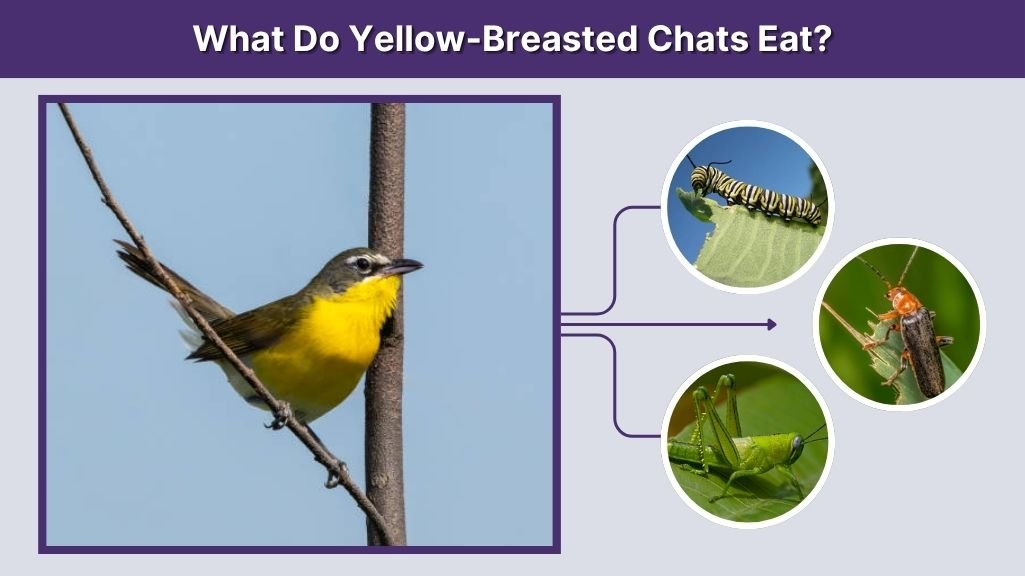
Yellow-breasted chats are omnivorous birds that eat both insects and fruits depending on the season. Their diet changes throughout the year based on food availability and migration needs.
Common Foods in Their Diet
Chats mainly search for food inside shrubs, branches, and dense vegetation.
Foods Yellow-Breasted Chats Commonly Eat
- Caterpillars
- Beetles
- Grasshoppers
- Spiders
- Wild berries
Insects are especially important during breeding season because they provide protein for growing chicks.
Feeding Behavior
Yellow-breasted chats usually forage quietly inside dense vegetation instead of feeding in open spaces. They hop between branches while searching leaves and bark for insects.
During late summer and fall, chats eat more berries and fruits before migration begins.
Backyard Feeding Possibilities
Yellow-breasted chats rarely visit traditional bird feeders because they prefer natural food sources. However, native shrubs and berry-producing plants may attract them to backyards.
Bird-friendly landscaping with dense bushes and natural cover can improve the chances of seeing chats near homes.
FAQs
What does a yellow-breasted chat sound like?
The yellow-breasted chat has a loud and unusual song made up of whistles, clucks, cackles, squeaks, and chattering sounds. Its vocalizations often sound random and are very different from typical songbirds.
Is the yellow-breasted chat a warbler?
Although it was once grouped with warblers, the yellow-breasted chat is now placed in its own bird family because of its unique behavior, body shape, and vocal patterns.
Where do yellow-breasted chats live?
Yellow-breasted chats live in dense shrubs, woodland edges, overgrown fields, riverside thickets, and brushy habitats across much of North America during breeding season.
Are yellow-breasted chats rare?
Yellow-breasted chats are not considered extremely rare, but they can be difficult to see because they spend most of their time hidden inside thick vegetation and shrubs.
What do yellow-breasted chats eat?
Their diet includes insects, caterpillars, beetles, spiders, berries, and wild fruits. They mainly forage inside dense vegetation where they search leaves and branches for food.
