
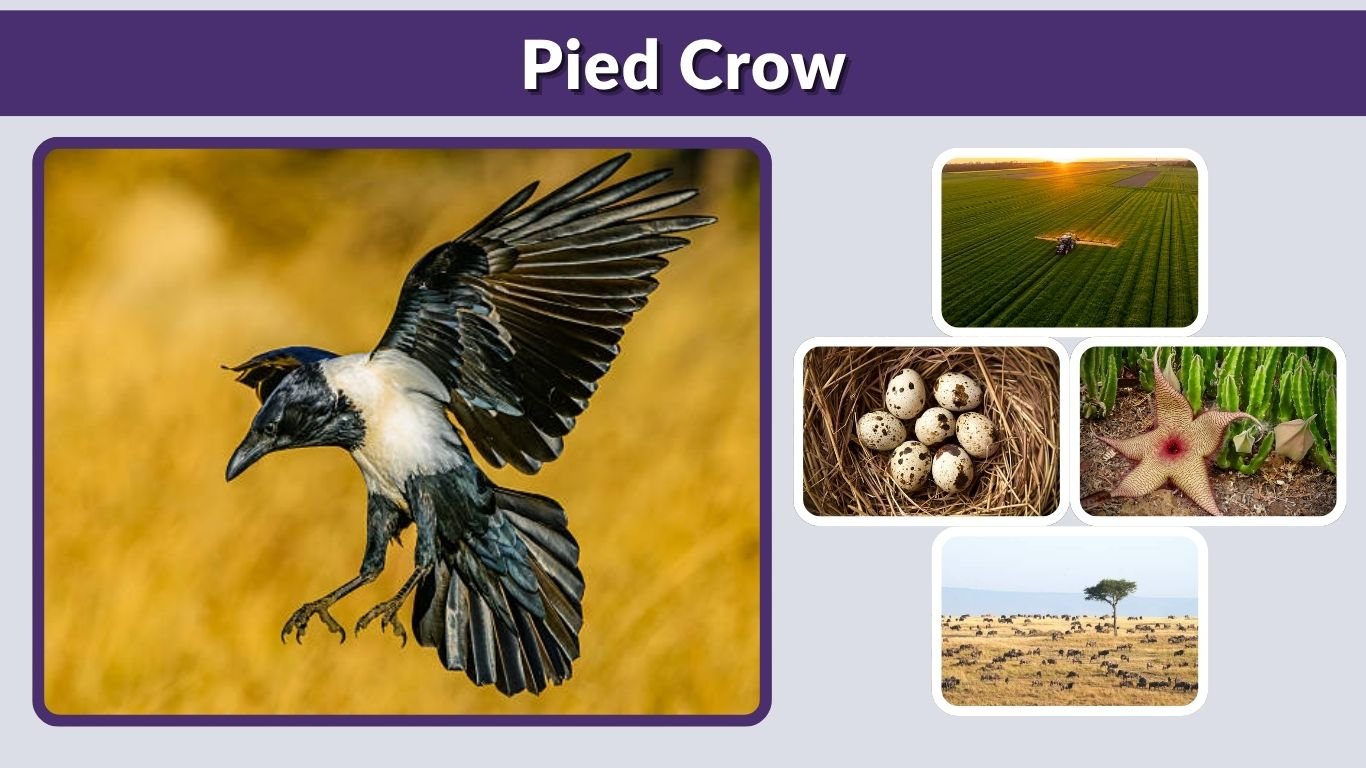
The pied crow is a highly intelligent black-and-white bird native to Africa. Known for its striking white chest, glossy black feathers, and loud calls, this bird easily stands out among other crow species. Pied crows are adaptable and can survive in grasslands, woodlands, farms, and busy urban areas. Their clever behavior and problem-solving skills have attracted attention from birdwatchers and exotic bird enthusiasts around the world. Learning about their habitat, diet, intelligence, and social behavior helps explain why pied crows are considered some of Africa’s most fascinating birds.
Pied crows belong to the corvid family, which includes ravens, magpies, and other highly intelligent birds known for advanced learning and communication abilities.
What Is a Pied Crow?
The pied crow is a medium-to-large crow species found mainly across sub-Saharan Africa. It is easily recognized by its bold black-and-white coloration and strong black beak. Unlike many plain-colored crows, pied crows have a distinctive white chest and neck that make them easy to identify from a distance. Their intelligence, adaptability, and loud vocalizations have helped them thrive in both wild and urban environments.
Pied Crow Identification
Pied crows have several unique physical features that separate them from other African crow species.
Key Identification Features
- Black body with white chest
- Glossy black wings
- Thick black beak
- Dark intelligent eyes
- Medium-to-large body size
Adult pied crows often appear sleek and powerful while perched or flying across open landscapes.
African Pied Crow Scientific Classification
The pied crow belongs to the corvid family, one of the most intelligent bird groups in the world. Its scientific name is Corvus albus.
Despite being called a crow, some experts believe the pied crow shares characteristics with ravens because of its size, voice, and behavior. It is closely related to other African corvid species.
Pied Crow Size and Appearance
Pied crows are relatively large birds with strong wings and sturdy bodies. Adults can reach around 18 to 20 inches in length with broad wings designed for long flights.
Their glossy black feathers contrast sharply with the bright white chest and upper neck. This bold pattern helps make the species one of the easiest African crows to recognize visually.
Pied Crow Habitat and Distribution
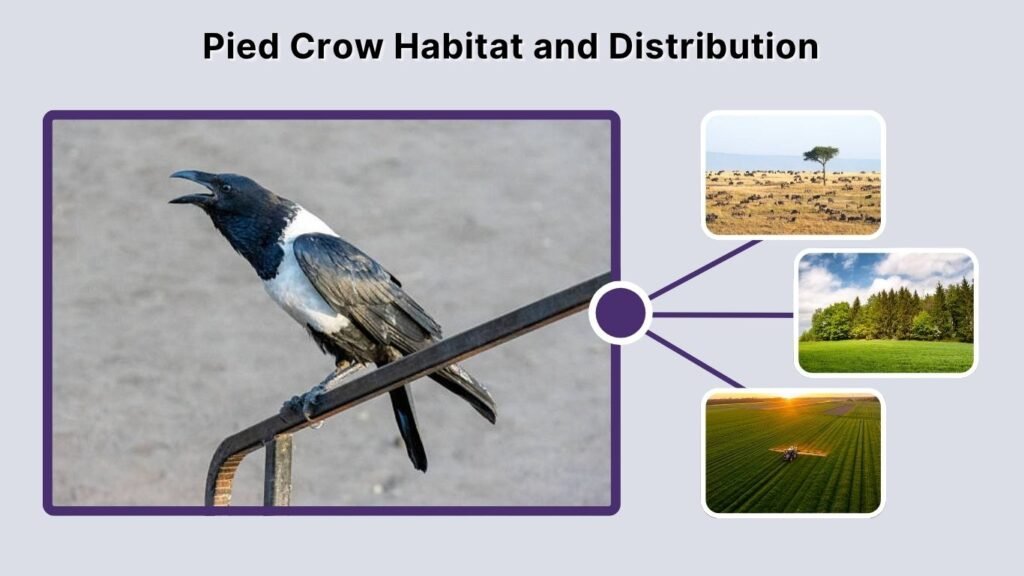
Pied crows are highly adaptable birds capable of surviving in many different habitats. They are commonly found across large areas of Africa and have adjusted well to human activity. Their ability to live near farms, cities, and roads has helped their population expand in several regions.
Where Do Pied Crows Live?
Pied crows live across much of sub-Saharan Africa in both natural and developed environments.
Common Pied Crow Habitats
- South African grasslands
- Open savannas
- Farmland regions
- Coastal areas
- Urban settlements
They are especially common in areas with open land and scattered trees for nesting and perching.
Pied Crow Habitat Preferences
These birds prefer open landscapes where they can search easily for food and monitor their surroundings. Savannas, woodland edges, and agricultural areas provide excellent feeding opportunities.
Pied crows are also highly successful in towns and cities because they can adapt to human waste, roadkill, and artificial structures for nesting and shelter.
Pied Crow Range and Expansion
Pied crow populations have expanded in some African regions because of urban growth and increased food availability near human settlements.
Their flexible diet and intelligence allow them to thrive in changing environments. Some researchers study pied crow expansion because of concerns about impacts on smaller native bird species.
Pied Crow Behavior and Intelligence
Pied crows are among the smartest birds in Africa. They display advanced learning abilities, strong memory, and excellent problem-solving skills. Their social behavior and adaptability help them survive in both wild habitats and crowded urban environments.
Are Pied Crows Intelligent?
Like other corvids, pied crows can solve problems, remember locations, and learn from experience. They are capable of recognizing threats and adapting quickly to new situations.
Some pied crows have been observed using creative feeding techniques and learning patterns from human activity. Their intelligence helps them locate food efficiently and avoid danger.
Pied Crow Social Behavior
Pied crows are social birds that communicate frequently using calls and body language.
Common Social Behaviors
- Pair bonding
- Territorial defense
- Feeding in groups
- Vocal communication
Mated pairs often stay together while defending nesting territories from intruders and predators.
Can Pied Crows Talk?
Pied crows can imitate sounds and may learn simple human words when raised around people. Although they are not as famous for talking as parrots, captive pied crows sometimes mimic voices, noises, and environmental sounds.
Their vocal learning ability reflects the high intelligence commonly found in the crow family.
Pied Crow Calls and Sounds
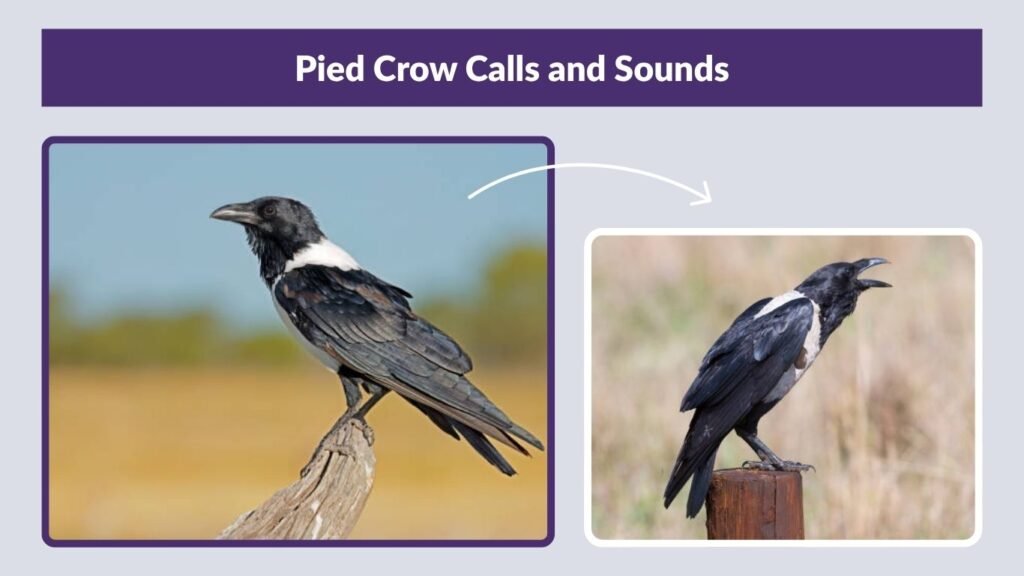
Pied crows are loud vocal birds that use calls for communication, warning signals, and territorial defense. Their harsh crow-like sounds are often heard across open African landscapes and urban areas.
Pied Crow Call
The typical pied crow call is deep, rough, and repeated several times in succession. Calls are often used to communicate with mates or warn nearby birds about danger.
Common Pied Crow Vocalizations
- Harsh “caw” sounds
- Repeated warning calls
- Short communication notes
- Territorial vocal displays
Their loud calls help pied crows stay connected over long distances in open habitats.
Why Pied Crows Are Vocal
Pied crows rely heavily on vocal communication while feeding, defending territory, and interacting with other birds. Their loud calls are especially useful in open habitats where flock members may spread across large distances.
Calls also help warn nearby birds about predators or unfamiliar animals. During breeding season, vocal activity often increases as pairs defend nesting areas from intruders.
What Does a Pied Crow Sound Like?
The pied crow’s voice is often described as a harsh, deep “caw” similar to other crow species but louder and rougher in tone. Some calls sound almost raven-like because of their deeper pitch.
Birdwatchers frequently hear pied crows before seeing them because the birds vocalize often while flying, feeding, or perching on high structures.
Pied Crow Diet and Feeding Habits
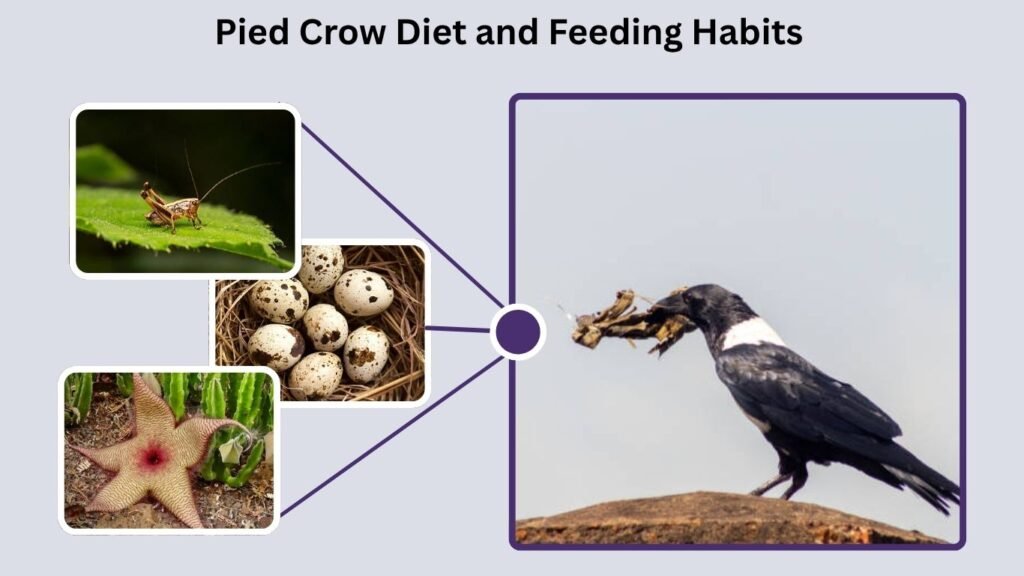
Pied crows are highly opportunistic feeders capable of eating many different foods. Their intelligence and adaptability allow them to survive in harsh environments where food availability changes regularly. They are both scavengers and hunters depending on the situation.
What Do Pied Crows Eat?
Pied crows eat a wide variety of foods found in natural and urban environments.
Common Foods in a Pied Crow Diet
- Insects
- Small reptiles
- Bird eggs
- Fruit and seeds
- Carrion
They may also feed on roadkill, food scraps, and leftover human waste in populated areas.
Scavenging and Hunting Behavior
Pied crows are skilled scavengers that often search roadsides, fields, and garbage areas for easy meals. They also hunt small animals and raid nests for eggs or chicks.
Their feeding flexibility allows them to survive in both remote wilderness and busy cities. This adaptability is one reason pied crow populations remain successful in many parts of Africa.
Pied Crow Feeding Intelligence
Pied crows show advanced problem-solving skills while searching for food. They can remember feeding locations and learn from observing both humans and other birds.
Some pied crows use creative methods to access difficult food sources, demonstrating the same intelligence commonly associated with ravens and other corvids.
Pied Crow Lifespan and Reproduction
Pied crows are long-lived birds compared to many smaller songbirds. Their intelligence, adaptability, and strong territorial behavior help increase survival rates in the wild.
Pied Crow Lifespan
Pied crows can live for many years in both wild and captive conditions.
Factors Affecting Lifespan
- Food availability
- Predator pressure
- Habitat quality
- Human activity
Captive birds often live longer because they receive regular food and protection from predators.
Pied Crow Nesting Behavior
Pied crows build large stick nests in tall trees, cliffs, utility poles, and sometimes human-made structures.
Common Nesting Features
- Large stick platforms
- High nesting locations
- Pair cooperation
- Reused nest sites
Mated pairs often return to successful nesting areas year after year.
Eggs and Raising Young
Female pied crows usually lay several eggs during breeding season while males help defend the nest territory.
Both parents participate in feeding chicks after hatching. Young birds grow quickly and remain dependent on adults until they learn to forage independently.
Pied Crow as a Pet
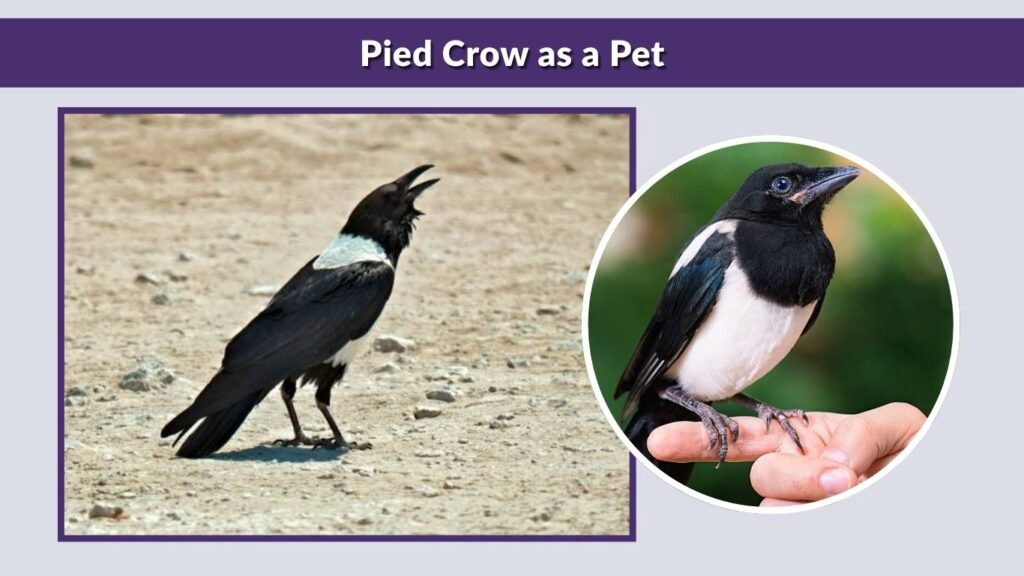
Some exotic bird enthusiasts are interested in keeping pied crows because of their intelligence and ability to interact with humans. However, caring for a crow requires significant time, space, and experience.
Can You Keep a Pied Crow as a Pet?
Keeping pied crows as pets may be restricted or illegal in some countries and regions. Wildlife laws often protect native bird species and regulate exotic bird ownership.
Even when legal, pied crows require specialized care because of their intelligence and social needs.
African Pied Crow Care
Pied crows need large enclosures and constant mental stimulation to remain healthy in captivity.
Important Pied Crow Care Needs
- Large flight space
- Daily enrichment activities
- Social interaction
- Balanced diet
Without stimulation, intelligent birds like crows may develop stress-related behaviors or aggression.
Are Pied Crows Dangerous?
Pied crows are not usually dangerous to humans, but they are powerful birds with strong beaks and defensive instincts.
Wild birds may become aggressive near nests during breeding season. Poorly trained captive birds can also bite or damage objects if not handled properly.
Pied Crow vs Other Birds
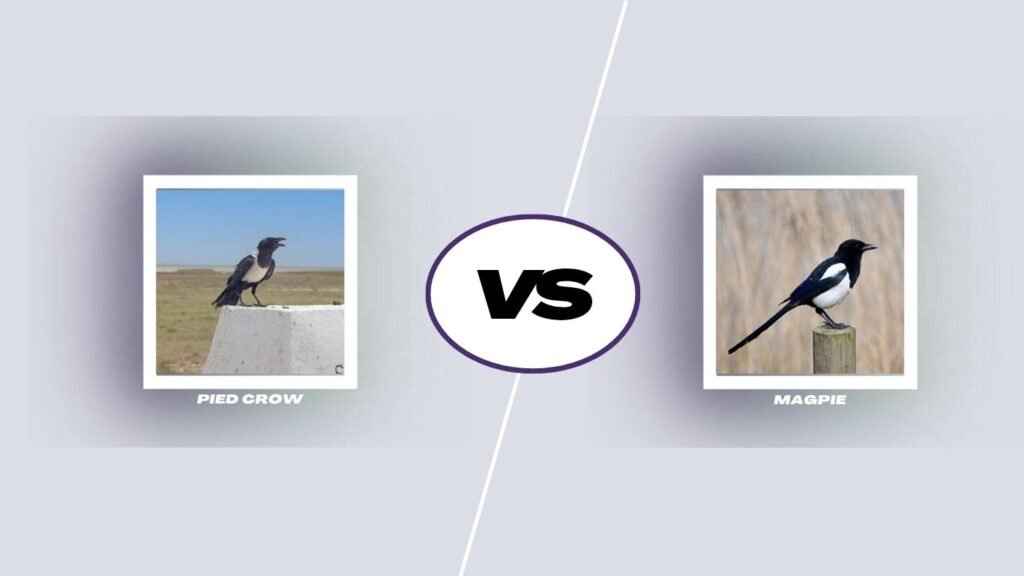
Pied crows are often compared with ravens and magpies because of their black-and-white coloration and intelligence. However, several differences help separate these species visually and behaviorally.
Pied Crow vs Magpie
| Feature | Pied Crow | Magpie |
| Size | Larger | Smaller |
| Color Pattern | White chest and black body | White wing patches |
| Range | Africa | Europe and Asia |
| Voice | Deep harsh calls | Chattering sounds |
Pied crows are generally heavier and more crow-like than magpies.
Pied Crow vs Raven
Ravens are usually larger than pied crows and have thicker beaks with shaggier throat feathers. Pied crows, however, are easier to recognize because of their bright white chest.
Both species share high intelligence and strong problem-solving abilities.
FAQs
Can pied crows talk?
Yes, pied crows can imitate sounds and may learn simple human words when raised around people. Their intelligence allows them to copy noises and recognize familiar voices.
Are pied crows dangerous?
Pied crows are generally not dangerous to humans, but they can become defensive near nests or if handled improperly in captivity because of their strong beaks and territorial behavior.
What do pied crows eat?
Pied crows eat insects, eggs, fruit, carrion, reptiles, food scraps, and other available foods. They are highly adaptable scavengers and hunters.
Can you keep a pied crow as a pet?
In some regions it may be legal, but pied crows need large enclosures, social interaction, mental stimulation, and experienced care because of their intelligence and energy.
What is the lifespan of a pied crow?
Pied crows can live for many years in both wild and captive environments, especially when food supplies and habitat conditions are favorable.
