
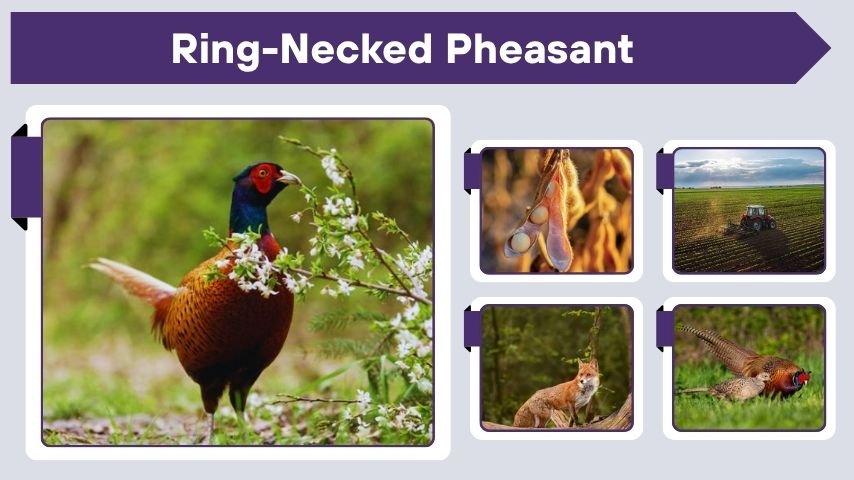
The Ring-necked Pheasant is one of the most colorful and recognizable game birds in the world. Famous for its long tail, bright feathers, and explosive flight, this bird is commonly found in grasslands, farmland, and open countryside. Male ring-necked pheasants display shiny green heads, white neck rings, and copper-colored bodies, while females use brown camouflage feathers to blend into their surroundings. These birds are popular among birdwatchers, hunters, and wildlife photographers because of their striking appearance and interesting ground-dwelling behavior.
Originally native to Asia, ring-necked pheasants were introduced to many countries and adapted successfully to agricultural landscapes. Today, they remain an important part of grassland ecosystems and rural wildlife culture.
What Is a Ring-Necked Pheasant?
The ring-necked pheasant is a large ground bird known for its colorful plumage and long pointed tail. It belongs to the pheasant family and spends most of its time walking, feeding, and hiding in grassy habitats.
Ring-Necked Pheasant Scientific Classification
The scientific name of the ring-necked pheasant is Phasianus colchicus. It belongs to the Phasianidae family, which includes pheasants, quail, partridges, and junglefowl.
These birds are closely related to domestic chickens but are much more colorful and adapted to wild environments. Their strong legs and quick running ability help them survive in open landscapes.
Origin and History of the Ring-Necked Pheasant
Ring-necked pheasants originally came from parts of Asia, including China and surrounding regions. Humans later introduced them to Europe and North America for hunting and wildlife management purposes.
The species adapted well to:
- Farmland habitats
- Prairie grasslands
- Wetland edges
- Agricultural fields
- Brushy countryside
Today, ring-necked pheasants are common in many rural areas across the world.
Why Ring-Necked Pheasants Are So Popular
Several traits make these birds highly recognizable and admired:
- Bright colorful feathers
- Long decorative tail
- Loud breeding calls
- Strong flight bursts
- Importance as a game bird
Their beautiful appearance makes them one of the most photographed upland birds in North America and Europe.
Ring-Necked Pheasant Identification
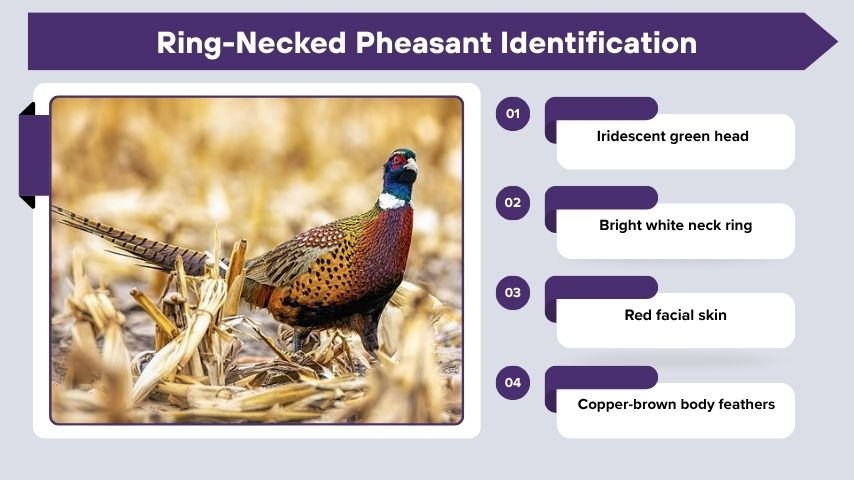
Ring-necked pheasants are easy to identify because males and females look dramatically different. Males are brightly colored, while females rely on camouflage for protection.
Male Ring-Necked Pheasant Identification
- Iridescent green head
- Bright white neck ring
- Red facial skin
- Copper-brown body feathers
- Long pointed tail
- Golden feather highlights
Male pheasants are often called “roosters” because of their colorful appearance and loud territorial behavior during breeding season.
Female Ring-Necked Pheasant Identification
Female pheasants are much less colorful than males. Their brown feathers help them remain hidden while nesting on the ground.
Important female features include:
- Brown speckled plumage
- Shorter tail
- Smaller body size
- Excellent camouflage
- Pale facial coloring
This camouflage is especially important because females build nests directly on the ground.
Juvenile Ring-Necked Pheasant Appearance
Young pheasants resemble females during their early development stages. Juveniles use dull feather colors to avoid attracting predators in open grassland habitats.
As males mature, they gradually develop brighter feathers and longer tails. Young birds typically stay close to protective vegetation during their first months of life.
Ring-Necked Pheasant vs Grouse
| Feature | Ring-Necked Pheasant | Grouse |
| Tail Length | Very long | Shorter |
| Male Color | Bright and colorful | More muted |
| Habitat | Farmland and grassland | Forests and shrublands |
| Flight Style | Explosive short flight | Fast low flight |
| Neck Ring | Present on males | Absent |
The white neck ring of the male pheasant is one of the easiest features for identification.
Ring-Necked Pheasant Habitat and Range
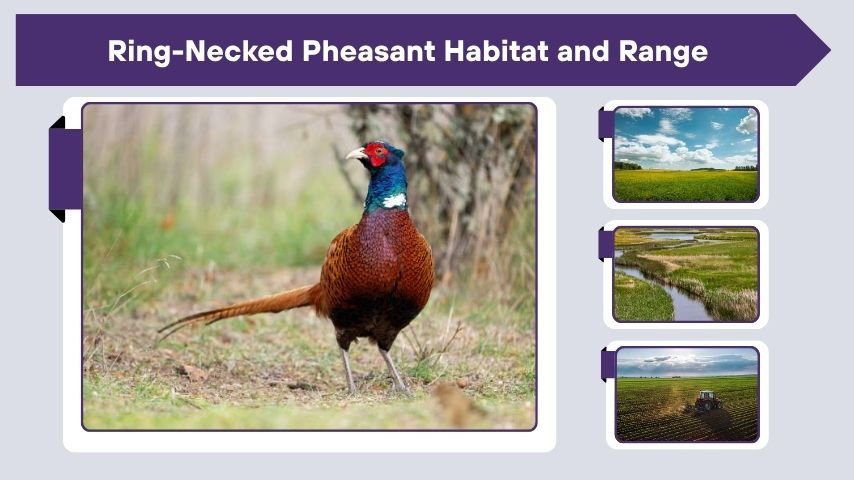
Ring-necked pheasants thrive in open landscapes with nearby cover and food sources. They are especially successful in agricultural environments where crops and grasses provide shelter and feeding opportunities.
Ring-Necked Pheasant Habitat
These birds commonly live in:
- Prairie grasslands
- Crop fields
- Wetland edges
- Rural farmland
- Brushy fence lines
- Tall grassy cover
They depend on dense vegetation for hiding from predators and protecting nests.
Ring-Necked Pheasant Range
Ring-necked pheasants are now widely distributed across North America, Europe, and parts of Asia. Large populations are found in agricultural regions with suitable nesting habitat.
In North America, they are especially common in:
- Midwest farmland
- Great Plains grasslands
- Agricultural valleys
- Prairie regions
Their populations are closely connected to farming landscapes and habitat management practices.
Are Ring-Necked Pheasants Migratory?
Ring-necked pheasants are generally non-migratory birds. Most remain close to the same territory throughout the year if food and shelter are available.
During harsh winters, pheasants may move short distances to:
- Dense grass cover
- Farm feeding areas
- Sheltered wetlands
- Brushy protection zones
Snow depth and weather conditions strongly influence winter survival.
Ring-Necked Pheasant Diet and Feeding Habits
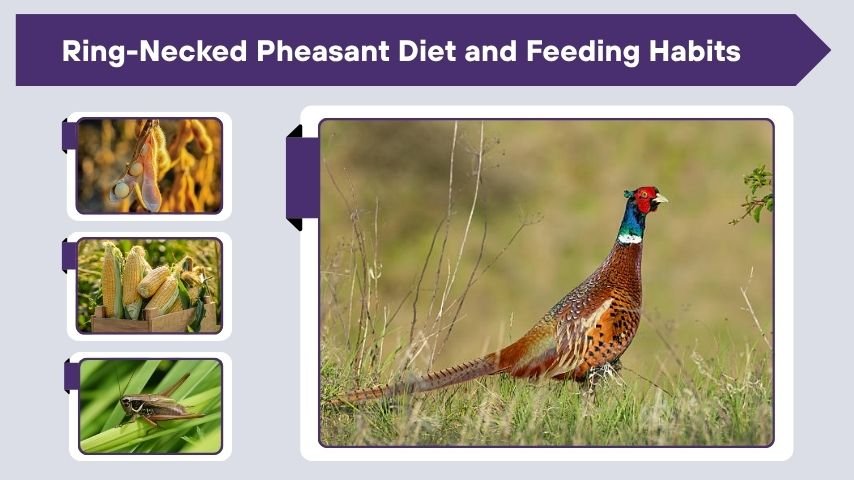
Ring-necked pheasants eat a wide variety of foods depending on season and habitat. Their flexible diet helps them survive in changing agricultural environments.
What Do Ring-Necked Pheasants Eat?
- Seeds
- Grain crops
- Corn
- Insects
- Green plants
- Berries
- Small invertebrates
Young chicks depend heavily on insects because they provide important protein needed for growth.
Seasonal Feeding Changes
Pheasant diets change throughout the year based on food availability. During warmer months, birds eat more insects and fresh plant material. In winter, they rely heavily on grain and leftover crops in agricultural fields.
Weather conditions can strongly affect feeding behavior, especially during snowy winters when food becomes difficult to locate.
Feeding Behavior
Ring-necked pheasants spend much of the day walking slowly while searching for food on the ground. They scratch through vegetation and soil using their strong feet and sharp beaks.
Their feeding habits include:
- Early morning foraging
- Feeding near crop edges
- Group feeding during winter
- Searching grassy cover for insects
Ring-Necked Pheasant Behavior and Communication
Ring-necked pheasants are active ground birds that rely on camouflage, fast running, and sudden flight to survive. Males become especially vocal and territorial during breeding season when competing for mates.
Ring-Necked Pheasant Sounds and Calls
Male pheasants produce loud crowing calls that can be heard across fields and grasslands. These calls help establish territory and attract females during spring.
Their vocal and physical sounds include:
- Crowing territorial calls
- Alarm noises
- Wing-flapping sounds
- Short warning calls
- Courtship displays
The loud wingbeats of a flushing pheasant are often one of the first signs the bird is nearby.
Social Behavior
Ring-necked pheasants display different social behaviors depending on season and habitat conditions. Males are usually solitary during breeding season, while females remain hidden near nesting areas.
During colder months, pheasants may gather in small feeding groups to improve survival in snowy conditions.
Their behavior often includes:
- Ground running
- Dust bathing
- Hiding in tall grass
- Roosting near cover
Pheasants spend most of their lives on the ground instead of in trees.
Flight Style of Ring-Necked Pheasants
Ring-necked pheasants are strong but short-distance flyers. When startled, they explode upward with rapid wingbeats before gliding toward safer cover.
Their flight characteristics include:
- Sudden vertical takeoff
- Loud wing noise
- Fast straight flight
- Short gliding movement
Although they can fly quickly, pheasants usually prefer running instead of flying long distances.
Ring-Necked Pheasant Breeding and Life Cycle
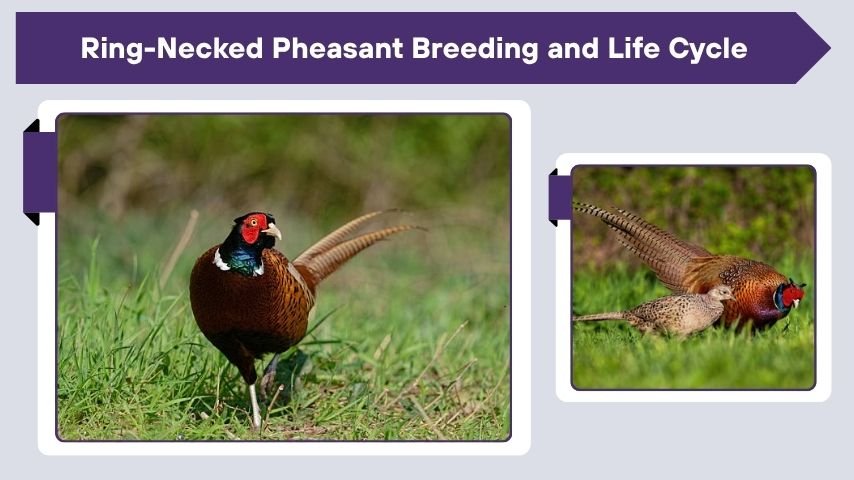
Breeding season is one of the most colorful and active periods in a pheasant’s life. Male birds display bright feathers and aggressive territorial behavior while females focus on nesting and raising chicks.
Ring-Necked Pheasant Breeding Season
Breeding season generally begins during spring when temperatures rise and food becomes more available.
Breeding activities include:
- Male crowing displays
- Territory defense
- Courtship behavior
- Nest preparation
- Egg laying
Males often compete aggressively with rival pheasants during this time.
Ring-Necked Pheasant Nest
Female pheasants build simple nests directly on the ground, hidden beneath grass or brush.
Nest features include:
- Grass-lined bowl shape
- Camouflaged placement
- Dense vegetation cover
- Dry plant materials
Ground nesting provides protection from wind but increases danger from predators.
Eggs and Chicks
Female ring-necked pheasants usually lay large clutches of olive-colored eggs during breeding season.
Important nesting facts:
- Clutch size may range from 8 to 15 eggs
- Incubation lasts around 23 days
- Chicks leave the nest quickly
- Young birds can run soon after hatching
Pheasant chicks grow rapidly and begin learning survival skills immediately after birth.
Ring-Necked Pheasant Lifespan
Most ring-necked pheasants live only a few years in the wild because they face many environmental challenges and predators.
Common survival threats include:
- Harsh winters
- Predators
- Hunting pressure
- Habitat loss
- Disease
Birds living in well-managed grasslands often survive longer than those in heavily developed areas.
Predators and Threats
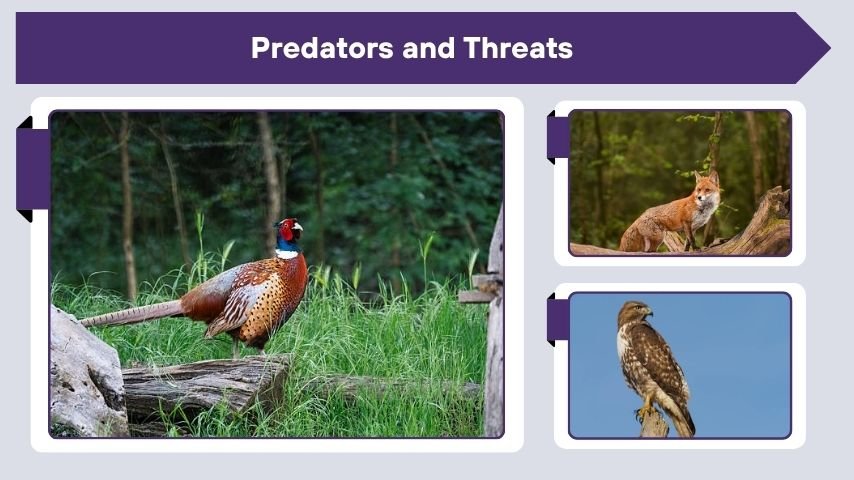
Ring-necked pheasants face many natural predators throughout their life cycle. Eggs, chicks, and adult birds are all vulnerable to different dangers in grassland habitats.
Natural Predators
- Foxes
- Coyotes
- Hawks
- Owls
- Snakes
- Domestic cats
Ground nests are especially vulnerable because predators can easily locate eggs hidden in grasslands.
Habitat Loss and Agricultural Changes
Modern agriculture has changed many traditional pheasant habitats. Removal of grasslands and wetlands reduces nesting cover and food availability.
Environmental pressures include:
- Habitat destruction
- Pesticide exposure
- Loss of prairie vegetation
- Harsh winter weather
Conservation programs often focus on restoring grassland habitat for pheasants and other upland birds.
Hunting and Conservation
Ring-necked pheasants are one of the world’s most popular game birds. Wildlife agencies carefully manage hunting seasons to maintain stable populations.
Conservation efforts may include:
- Habitat restoration
- Controlled hunting regulations
- Grassland preservation
- Wetland protection
Healthy habitat remains the most important factor for strong pheasant populations.
Interesting Ring-Necked Pheasant Facts
Ring-necked pheasants have several unusual traits that make them fascinating birds for both hunters and birdwatchers.
Fun Ring-Necked Pheasant Facts
- Males are much more colorful than females
- They can run surprisingly fast
- Roosters perform loud crowing calls
- Their tails may grow over 20 inches long
- They prefer running before flying
Why Birdwatchers Like Ring-Necked Pheasants
Birdwatchers enjoy spotting ring-necked pheasants because their colorful feathers stand out beautifully against grassland habitats.
People admire them for:
- Bright plumage
- Easy identification
- Explosive flight behavior
- Rural farmland sightings
- Interesting breeding displays
FAQs
Do ring-necked pheasants sleep in trees?
Ring-necked pheasants sometimes roost in trees at night for safety, especially during winter or in areas with many ground predators. However, they spend most of their time on the ground feeding, nesting, and moving through grassy cover.
Why do male ring-necked pheasants have bright colors?
Male pheasants use their colorful feathers to attract females during breeding season. Bright plumage also helps males display dominance and compete with rival birds while defending territory.
How fast can a ring-necked pheasant run?
Ring-necked pheasants are strong runners and can move quickly through tall grass and farmland. They often prefer running instead of flying because ground movement helps them stay hidden from predators.
Are ring-necked pheasants aggressive?
Male pheasants can become aggressive during breeding season when defending territory or competing for mates. Outside the breeding period, they are generally cautious birds that avoid conflict whenever possible.
What is the difference between a male and female ring-necked pheasant?
Male pheasants are brightly colored with green heads, white neck rings, and long tails. Females are smaller and covered in brown camouflage feathers that help protect them while nesting on the ground.