
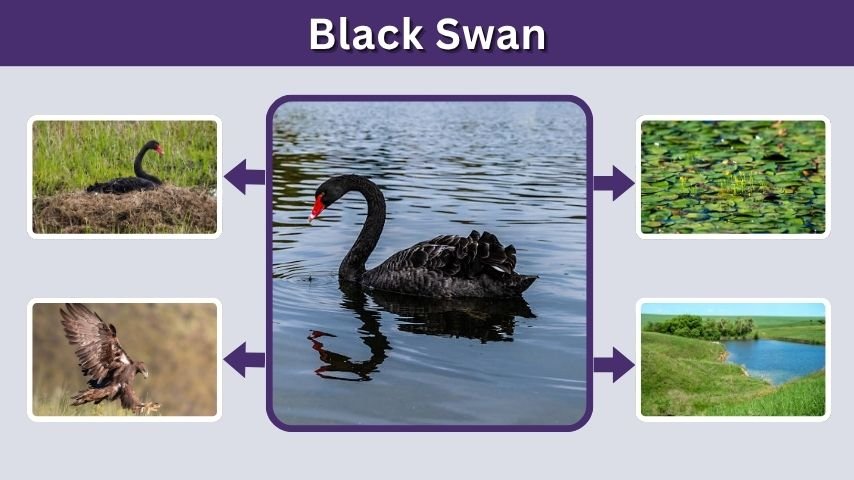
Black swans are among the most striking waterbirds in the world. Their glossy black feathers, bright red beaks, and elegant necks make them easy to recognize in lakes, wetlands, and parks. Native to Australia, these birds are admired for their graceful swimming and strong pair bonds.
Many people search for black swan facts because of their unusual appearance and symbolic meaning. From their habitat and diet to breeding habits and behavior, black swans are fascinating birds with many unique features that separate them from other swan species.
What Is a Black Swan?
Black swans are large aquatic birds known for their dark plumage and long curved necks. Unlike the more common white swans found in Europe and North America, black swans naturally occur in Australia. They belong to the duck and swan family and are excellent swimmers and flyers. Their graceful movement and social behavior have made them popular in zoos, parks, and ornamental lakes worldwide.
Scientific Classification
- Scientific name: Cygnus atratus
- Family: Anatidae
- Class: Aves
- Native region: Australia
- Related species: Mute swan and trumpeter swan
Why Are Black Swans Black?
Black swans have dark feathers because of natural pigmentation in their plumage. Their feathers appear mostly black, but the flight feathers are bright white underneath. These white feathers become visible when the bird spreads its wings or flies across water.
Black Swan vs White Swan
| Feature | Black Swan | White Swan |
| Feather Color | Black | White |
| Native Habitat | Australia | Europe and North America |
| Beak Color | Red | Orange or yellow |
| Neck Shape | Long and curved | Straighter |
| Personality | More vocal | Usually quieter |
Black Swan Identification Features
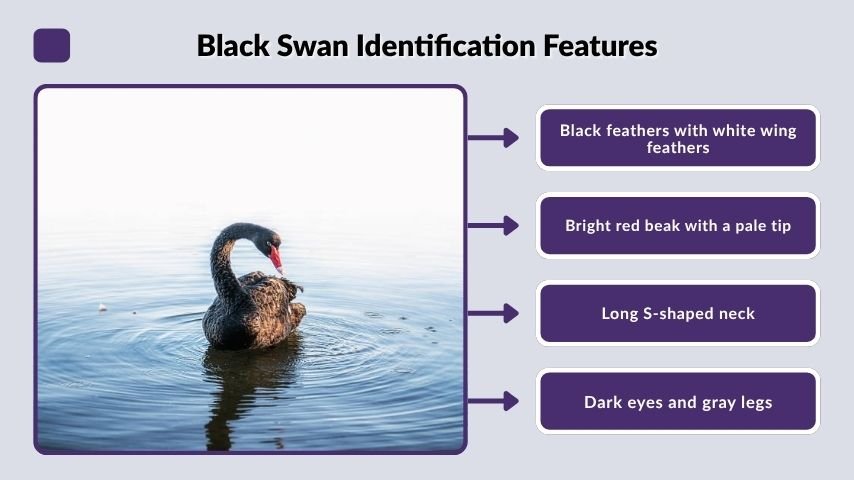
Black swans are easy to identify because of their bold coloration and elegant shape. Adult birds have black feathers with a slight gray or brown shine under sunlight. Their bright red beaks stand out sharply against their dark plumage. They are also among the largest waterbirds in Australia and can often be seen gliding peacefully across lakes and wetlands.
Physical Appearance
- Black feathers with white wing feathers
- Bright red beak with a pale tip
- Long S-shaped neck
- Dark eyes and gray legs
- Large rounded wings
Size and Wingspan
Adult black swans can grow quite large. Most birds reach about 43 to 56 inches in body length. Their wingspan may extend over 6 feet, allowing them to fly long distances. Males are usually slightly larger and heavier than females.
Male vs Female Black Swan
Male black swans, called cobs, are generally larger with thicker necks. Females, known as pens, have slimmer bodies and slightly softer calls. However, both sexes share similar feather coloration and appearance, making them difficult to distinguish from a distance.
Black Swan Habitat and Distribution
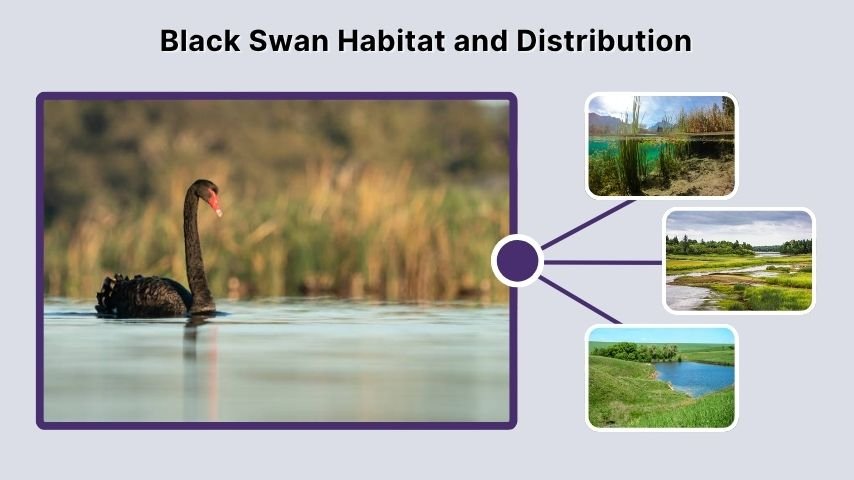
Black swans are highly adaptable birds that thrive in freshwater and coastal environments. They prefer shallow lakes, wetlands, rivers, and lagoons where aquatic vegetation is abundant. Although native to Australia, black swans have also been introduced to other countries and can now be found in parks and reserves around the world.
Where Do Black Swans Live?
- Australia
- Tasmania
- New Zealand
- Coastal wetlands
- Freshwater lakes and ponds
Preferred Habitat Conditions
Black swans prefer calm water bodies with plenty of underwater plants. Wetlands with open swimming areas and nearby grasslands are ideal because they provide both food and safe nesting sites.
Are Black Swans Migratory?
Black swans are not fully migratory birds, but they often move seasonally depending on rainfall and water levels. During dry conditions, large groups may travel to wetter regions in search of food and nesting areas.
What Do Black Swans Eat?
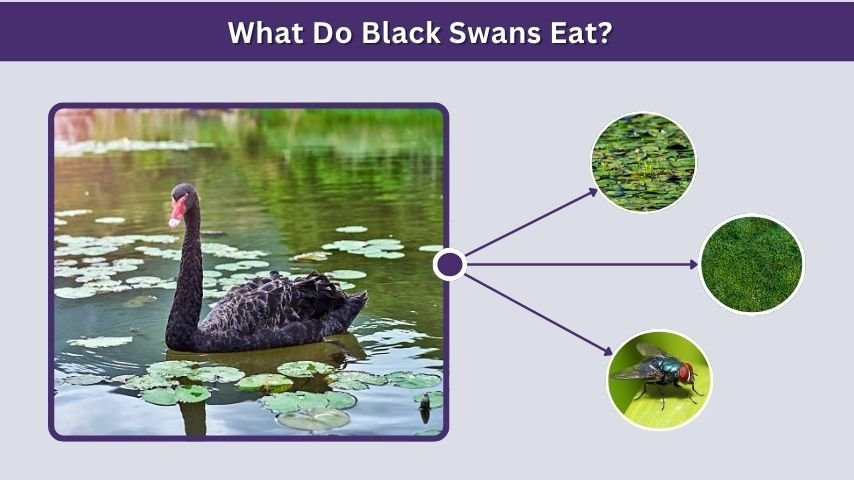
Black swans are mainly herbivores and spend much of their time feeding in shallow water. Their long necks help them reach underwater plants while swimming. They also graze on grass near shorelines and occasionally consume insects or small aquatic creatures.
Main Foods in Their Diet
- Aquatic plants
- Algae
- Grass
- Water weeds
- Small insects
- Seeds
Feeding Behavior
Black swans usually feed by dipping their heads underwater while their bodies float on the surface. They may also walk on land to graze in grassy areas near lakes and ponds. Groups of swans often feed together peacefully.
Foods Humans Should Avoid Feeding
Bread and processed foods are unhealthy for black swans. These foods can cause nutritional problems and pollute water habitats. Natural greens and aquatic plants are much safer for them.
Black Swan Behavior and Lifestyle
Black swans are social birds that often live in pairs or groups. They are known for their graceful swimming and loud trumpet-like calls. During the breeding season, they become more territorial and protective of their nests. Despite their calm appearance, they can hiss or flap their wings aggressively if threatened.
Social Structure
Black swans commonly form long-term pair bonds. Many pairs remain together for life and work together to raise their young. Outside the breeding season, they gather in flocks that may contain dozens or even hundreds of birds.
Swimming and Flying Ability
Black swans are strong swimmers that move smoothly across the water using their large webbed feet. Their long necks help them balance while swimming and feeding. Although they appear heavy, they are also powerful fliers and can travel long distances when searching for better habitats.
Flight Characteristics
- Wingspan can exceed 6 feet
- Fast and steady flight pattern
- White wing feathers visible during flight
- Need a running start on water before takeoff
- Often fly in loose groups
Black Swan Sounds
Black swans are more vocal than many other swan species. Their calls include trumpeting sounds, whistles, and hissing noises used for communication and warning signals. Young swans, called cygnets, make softer peeping calls when staying close to their parents.
Black Swan Breeding and Life Cycle
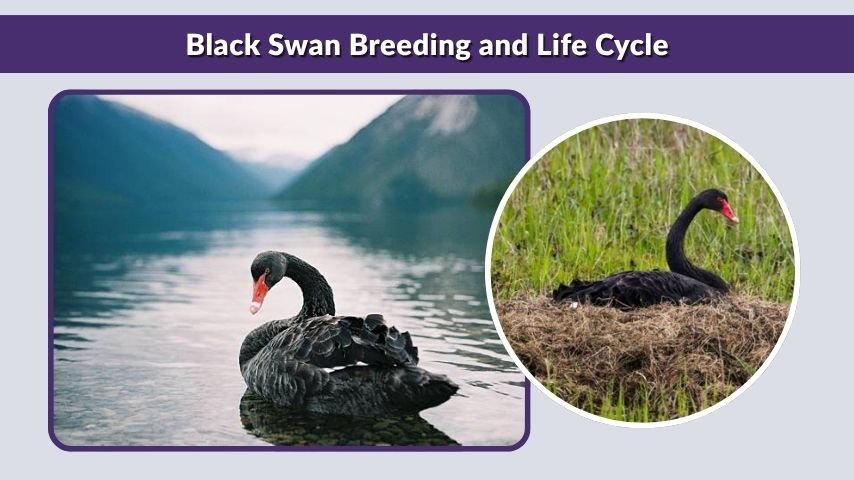
Black swans are known for strong pair bonds and cooperative parenting. Breeding usually begins during wetter seasons when food becomes more available. Both the male and female help build nests, protect eggs, and care for the young after hatching.
Mating Season
The breeding season varies depending on rainfall and climate. In many areas of Australia, black swans breed between February and September. Courtship displays include synchronized swimming, neck movements, and wing lifting.
Nesting Habits
- Large nests built near water
- Nests made from reeds and grasses
- Often placed on islands or shallow wetlands
- Both parents guard the nest
- Territorial during nesting season
Eggs and Cygnets
Female black swans usually lay four to eight eggs. The eggs are pale green or bluish-white and hatch after about 35 to 40 days. Cygnets are born with soft gray feathers and stay with their parents for several months while learning to swim and feed.
Predators and Threats
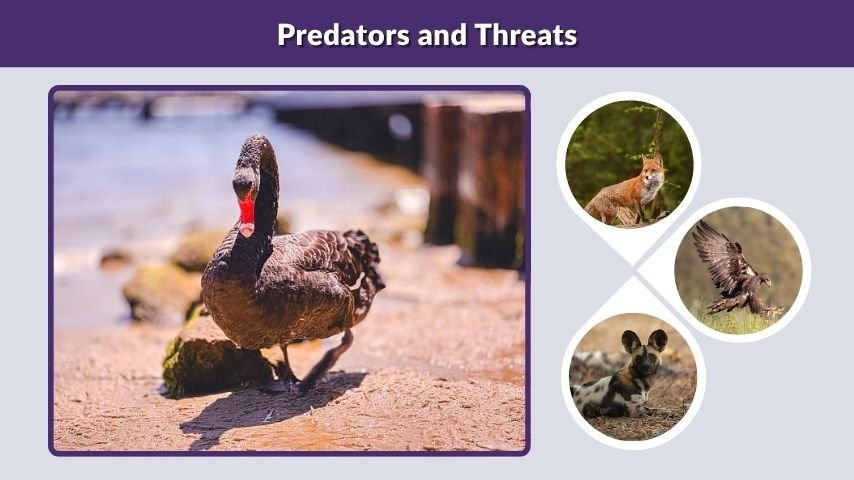
Although adult black swans are large birds, they still face dangers from predators and environmental problems. Eggs and young cygnets are especially vulnerable in the wild. Human activity has also affected some wetland habitats where these birds live and breed.
Natural Predators
- Foxes
- Large birds of prey
- Wild dogs
- Crocodiles in some regions
- Large fish attacking young cygnets
Human-Related Threats
Wetland destruction is one of the biggest threats to black swans. Pollution, fishing hooks, and plastic waste can also injure birds or reduce food sources. In crowded urban parks, improper feeding by humans may lead to health problems.
Conservation Status
Black swans currently have a stable population and are not considered endangered. Many protected wetlands and wildlife parks help maintain healthy populations. Conservation programs also focus on protecting water quality and nesting habitats.
Black Swan Symbolism and Meaning
Black swans have symbolic importance in many cultures because of their rare beauty and mysterious appearance. They are often connected with elegance, transformation, and unexpected events. The phrase “black swan event” is now widely used to describe rare and unpredictable situations.
Cultural Symbolism
In art and literature, black swans often represent:
- Beauty and grace
- Mystery
- Change and transformation
- Rarity
- Independence
Meaning of “Black Swan Event”
The term “black swan event” became popular in finance and history. It refers to a rare event that is difficult to predict but has a major impact. The phrase originated because Europeans once believed black swans did not exist until they were discovered in Australia.
Black Swans in Media and Art
Black swans have appeared in films, paintings, photography, and ballet performances. Their dramatic appearance and elegant movement make them popular subjects in visual arts and storytelling.
Interesting Black Swan Facts
Black swans are full of unusual traits that make them one of the world’s most fascinating waterbirds. Their behavior, appearance, and survival skills continue to attract birdwatchers and wildlife enthusiasts worldwide.
Fascinating Facts About Black Swans
- Black swans can sleep while floating on water
- Their white wing feathers are hidden when resting
- They form strong long-term pair bonds
- Young cygnets are gray rather than black
- Some flocks contain hundreds of birds
- They can become defensive near nests
- Black swans are excellent long-distance flyers
FAQs
Are black swans rare?
Black swans are not considered rare in Australia, where they are native. They are commonly found in wetlands, lakes, and parks. However, they are less common in many other parts of the world, which makes them appear more unusual and exotic to many people.
Can black swans fly?
Yes, black swans are strong fliers. They can travel long distances when searching for water, food, or nesting areas. Their large wings help them maintain steady flight, although they usually need a running start across the water before taking off.
What do black swans eat in ponds?
Black swans mainly eat aquatic plants, algae, grass, and water weeds found in ponds and wetlands. They may also consume small insects or seeds. Fresh greens are much healthier for them than bread or processed human foods.
How long do black swans live?
Black swans can live around 10 to 20 years in the wild, depending on habitat conditions and predator risks. In protected environments such as wildlife parks or zoos, they may survive even longer with proper care and nutrition.
Are black swans aggressive?
Black swans are usually calm birds, but they can become aggressive during breeding season. They may hiss, flap their wings, or chase intruders if they feel their nest or young are threatened.
