
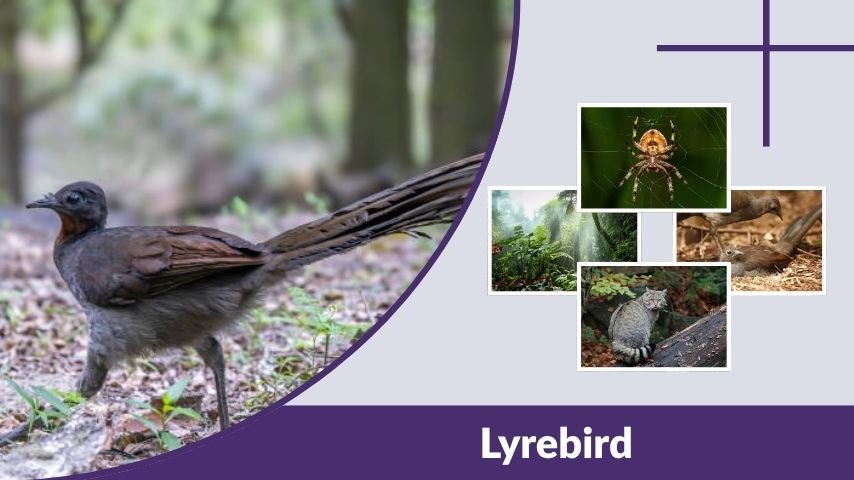
The lyrebird is one of the most fascinating birds in the world because of its incredible ability to copy sounds. Native to Australia, this unusual bird can imitate other birds, camera shutters, chainsaws, alarms, and even human voices. Its impressive vocal skills and beautiful tail feathers have made it famous in wildlife documentaries and nature photography.
Many people search for lyrebird sounds and behavior because these birds are unlike almost any other species. From their habitat and diet to their famous mimicry abilities, lyrebirds continue to amaze birdwatchers and scientists around the world.
What Is a Lyrebird?
The lyrebird is a ground-dwelling Australian bird known for its extraordinary sound mimicry and decorative tail feathers. It belongs to an ancient group of birds found only in Australia. Male lyrebirds are especially famous for their large tail shaped like a musical lyre, which they display during courtship performances. These birds spend most of their time walking through forest floors searching for food among leaves and soil.
Scientific Classification
- Family: Menuridae
- Native region: Australia
- Bird type: Ground-dwelling songbird
- Famous species: Superb lyrebird
- Related species: Albert’s lyrebird
Why Is It Called a Lyrebird?
- Tail resembles a musical lyre
- Decorative tail feathers in males
- Tail displayed during courtship
- Unique feather structure
- Famous Australian bird
Types of Lyrebirds
| Species | Main Location | Special Feature |
| Superb Lyrebird | Southeastern Australia | Strong mimicry |
| Albert’s Lyrebird | Queensland | Smaller population |
Superb Lyrebird Identification
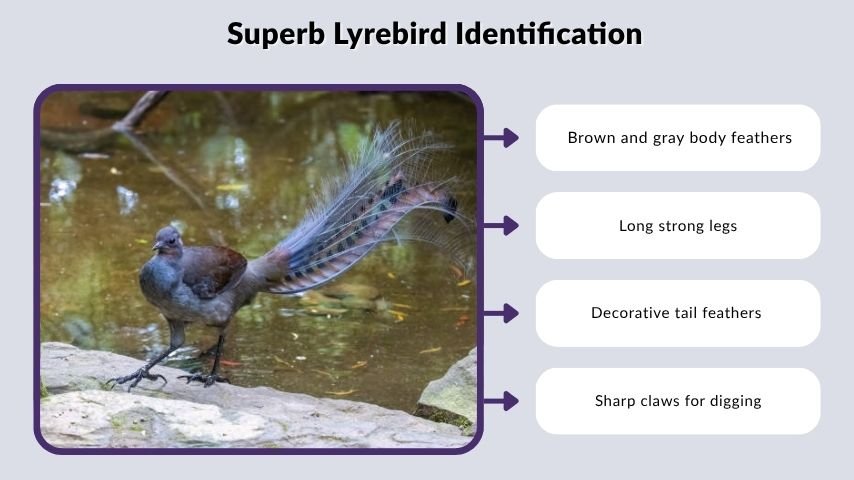
The superb lyrebird is the best-known species and is admired for its impressive appearance and vocal abilities. These birds have brown feathers that help them blend into forest environments. Their long legs and strong claws are designed for scratching through leaf litter while searching for insects and worms.
Physical Appearance
- Brown and gray body feathers
- Long strong legs
- Decorative tail feathers
- Sharp claws for digging
- Rounded wings for short flights
Male vs Female Lyrebird
| Feature | Male Lyrebird | Female Lyrebird |
| Tail Size | Large decorative tail | Smaller tail |
| Body Size | Larger | Smaller |
| Display Behavior | Performs courtship dances | Less colorful |
| Vocal Performance | Strong mimicry | Softer calls |
Lyrebird Tail Features
Male lyrebirds have one of the most unusual tails in the bird world. During courtship, they raise and spread their tail feathers over their body while singing loudly. The outer feathers curve outward, creating the shape of a lyre instrument.
Lyrebird Sounds and Mimicry
Lyrebirds are famous for copying sounds from their surroundings with incredible accuracy. They can mimic other birds, mechanical noises, and even human-made sounds. Scientists believe they learn many of these sounds through observation and repeated listening in the wild.
What Does a Lyrebird Sound Like?
- Bird songs
- Camera shutter clicks
- Chainsaw noises
- Car alarms
- Dog barking
- Human voice sounds
How Do Lyrebirds Mimic Sounds?
Lyrebirds use specialized vocal organs called syrinxes to produce complex sounds. Young birds learn by listening carefully to nearby noises and practicing them repeatedly. This ability helps males attract mates during breeding season.
Famous Lyrebird Recordings
Wildlife documentaries have made the lyrebird internationally famous. Recordings by naturalists like David Attenborough showed lyrebirds copying chainsaws, camera sounds, and multiple bird calls with stunning realism.
Lyrebird Habitat and Distribution
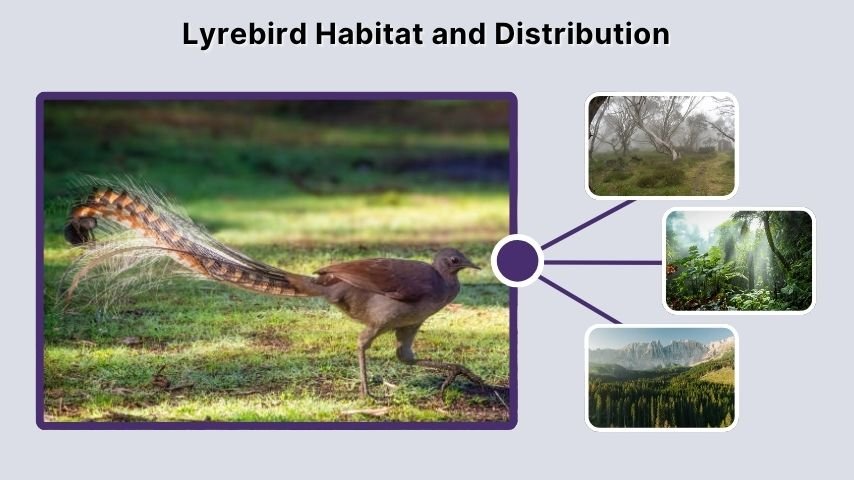
Lyrebirds naturally live in forests and rainforest regions across southeastern Australia. They prefer damp environments with thick leaf litter where food is easy to find. These birds spend most of their lives on the forest floor and are usually hidden among dense vegetation.
Where Do Lyrebirds Live?
- Australia
- Wet eucalyptus forests
- Rainforests
- Mountain woodlands
- Dense forest valleys
Lyrebird Range
Lyrebirds are mainly found in southeastern Australia, including regions of Victoria, New South Wales, and Queensland. Albert’s lyrebird has a smaller range and is limited mostly to rainforest areas near the Queensland border.
Are Lyrebirds Native to Australia?
Yes, lyrebirds are completely native to Australia and are considered one of the country’s most unique bird species. They evolved in Australian forests over millions of years and are not naturally found anywhere else in the world.
Lyrebird Diet and Feeding Habits
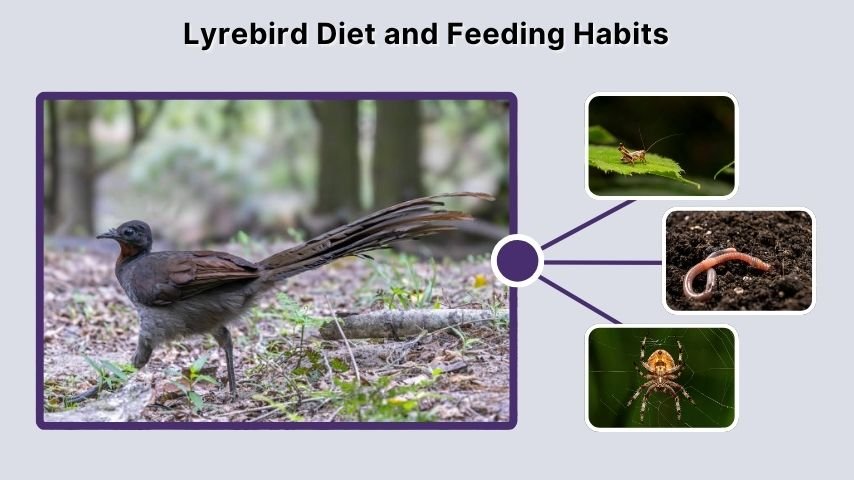
Lyrebirds are omnivorous birds that mainly feed on insects and small creatures found in forest soil. They use their strong feet to scratch through leaves and uncover hidden prey. Their feeding activity also helps turn over soil and recycle nutrients within forest ecosystems.
What Do Lyrebirds Eat?
- Insects
- Worms
- Spiders
- Small frogs
- Beetles
- Larvae
Feeding Behavior
Lyrebirds spend hours scratching through leaf litter using powerful claws. They move leaves aside to uncover insects and other small animals hiding beneath the forest floor. Their feeding style is similar to chickens or pheasants searching for food on the ground.
Water and Survival Needs
Lyrebirds depend on moist forest environments to survive. Damp soil supports the insects and worms they eat, while dense vegetation provides shelter from predators. Access to water and shaded areas is important because these birds spend most of their lives on the ground.
Lyrebird Behavior and Lifestyle
Lyrebirds are shy birds that usually avoid humans. They are most active during the early morning and late afternoon when they search for food or perform vocal displays. Male lyrebirds are especially known for dramatic courtship performances that combine dancing, tail displays, and complex sound mimicry.
Courtship and Mating Displays
Male lyrebirds create display mounds on the forest floor where they sing and spread their tails to attract females. Their performances may include dozens of copied sounds mixed with natural bird calls. These displays can continue for long periods during breeding season.
Can Lyrebirds Fly?
Lyrebirds can fly, but they are not strong long-distance fliers. They mainly use short flights to escape danger or move between trees and slopes. Most of their movement happens on the ground using their powerful legs.
Lyrebird Intelligence
- Exceptional sound memory
- Learns by listening and repetition
- Recognizes environmental noises
- Advanced mimicry abilities
- Complex communication skills
Lyrebird Nesting and Reproduction
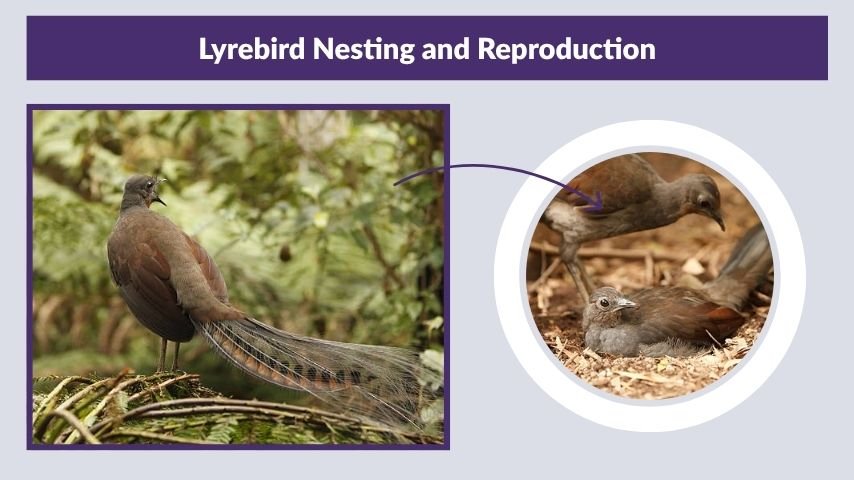
Lyrebirds build hidden nests close to the ground in dense vegetation. Female lyrebirds handle most nesting duties alone, including building the nest, incubating eggs, and caring for chicks after hatching. Their nesting behavior helps protect young birds from predators in forest habitats.
Lyrebird Nest Construction
- Dome-shaped nest structure
- Built with moss and sticks
- Hidden among rocks or roots
- Lined with soft materials
- Placed in sheltered forest areas
Eggs and Chicks
Female lyrebirds usually lay a single egg during the breeding season. The egg is incubated for several weeks before hatching. Young chicks remain dependent on the mother for warmth and food until they become strong enough to leave the nest.
Role of the Female Lyrebird
The female performs nearly all parenting responsibilities. She protects the nest, feeds the chick, and teaches survival behaviors while the male focuses mainly on courtship displays and territory defense.
Lyrebird Predators and Threats
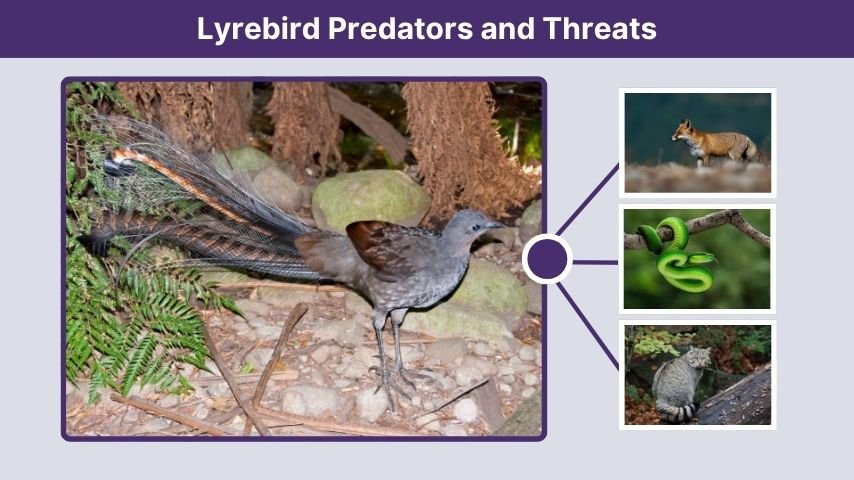
Although lyrebirds are skilled at hiding, they still face dangers from predators and habitat destruction. Ground nesting makes eggs and chicks especially vulnerable to introduced animals and environmental changes.
Natural Predators
- Foxes
- Wild cats
- Snakes
- Large birds of prey
- Dingoes
Human-Related Threats
Forest clearing and bushfires are major threats to lyrebird habitats. Roads, pollution, and introduced predators have also reduced populations in some regions. Noise pollution may interfere with their communication and mating displays.
Are Lyrebirds Endangered?
Most lyrebird populations are currently stable, especially the superb lyrebird. However, Albert’s lyrebird has a smaller range and faces greater habitat pressure. Protected national parks and conservation programs help preserve these unique Australian birds.
Interesting Lyrebird Facts
Lyrebirds are considered some of the best sound mimics in the animal kingdom. Their ability to copy both natural and artificial noises has made them famous around the world.
Amazing Facts About Lyrebirds
- Can imitate chainsaws and camera sounds
- Male tails can contain over sixteen feathers
- Mostly live on the forest floor
- Native only to Australia
- Superb lyrebirds are excellent mimics
- Some sounds are copied with near-perfect accuracy
- They help forests by turning over leaf litter
Lyrebirds in Media and Culture
Lyrebirds have appeared in wildlife documentaries, Australian art, and educational programs for decades. Their strange sounds and beautiful courtship displays make them popular subjects for filmmakers and photographers.
David Attenborough and the Lyrebird
David Attenborough helped make lyrebirds internationally famous through wildlife documentaries showing their incredible mimicry abilities. His recordings introduced millions of viewers to the bird’s chainsaw and camera imitation sounds.
Lyrebirds in Art and Symbolism
Lyrebirds often symbolize creativity, communication, and natural beauty in Australian culture. Their unique tails and vocal abilities inspire artists, photographers, and wildlife enthusiasts around the world.
FAQs
What does a lyrebird sound like?
Lyrebirds can mimic many sounds, including bird calls, chainsaws, camera shutters, dog barks, and alarms. Their mimicry is often so accurate that people mistake the sounds for real machines or animals.
Can lyrebirds mimic human voices?
Yes, lyrebirds can imitate certain human sounds and voices if they hear them often enough. However, they are best known for copying environmental noises and bird calls.
Where do lyrebirds live?
Lyrebirds live in forests and rainforest regions of southeastern Australia. They prefer moist habitats with dense vegetation and thick leaf litter on the forest floor.
What do lyrebirds eat?
Lyrebirds mainly eat insects, worms, spiders, beetles, larvae, and other small creatures found in forest soil and leaf litter.
Are lyrebirds endangered?
Superb lyrebirds are not currently endangered, but habitat destruction and bushfires can threaten local populations. Albert’s lyrebird faces greater conservation concerns because of its smaller natural range.
