
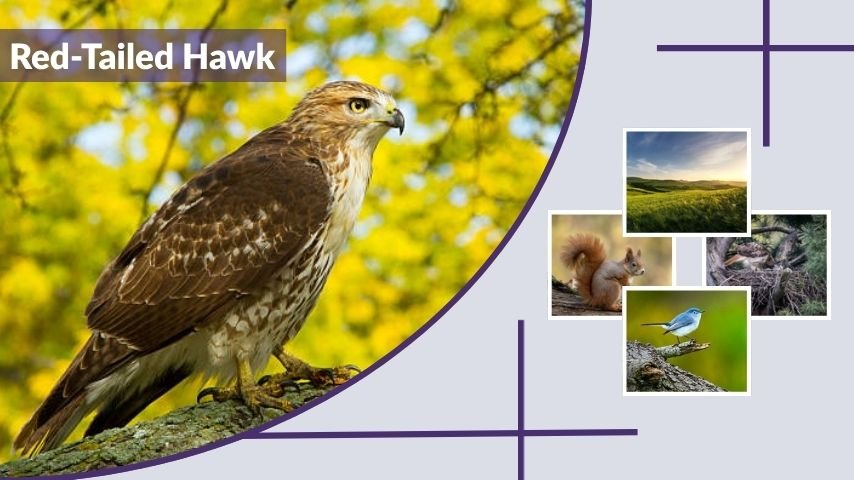
The red-tailed hawk (Buteo jamaicensis) is one of the most widespread and recognizable birds of prey in North America. Famous for its distinctive reddish tail and piercing call, this powerful raptor thrives in a variety of habitats, from open grasslands to urban environments. Its adaptability, sharp hunting skills, and impressive soaring abilities have made it a favorite among birdwatchers and wildlife enthusiasts. Understanding the red-tailed hawk reveals why it remains one of the continent’s most successful and admired predators.
What Is a Red-Tailed Hawk?
The red-tailed hawk is a large raptor belonging to the hawk family. It is commonly seen soaring high above fields, forests, deserts, and cities while searching for prey. Known for its broad wings and characteristic red tail, the species has become a symbol of strength and freedom across North America. Its adaptability allows it to occupy a wide range of environments throughout the continent.
Scientific Classification
The scientific name of the red-tailed hawk is Buteo jamaicensis. It belongs to the Accipitridae family, which includes hawks, eagles, and kites. The species was first described in Jamaica, which inspired its scientific name. Today, it is one of the most studied and recognized hawks in the Western Hemisphere.
Key Characteristics
Adult red-tailed hawks are known for their broad wings, sturdy bodies, and brick-red tails. They possess exceptional eyesight that allows them to detect prey from great distances. Their powerful talons and hooked beaks make them highly effective hunters capable of capturing a wide range of animals.
Red-Tailed Hawk Size and Appearance
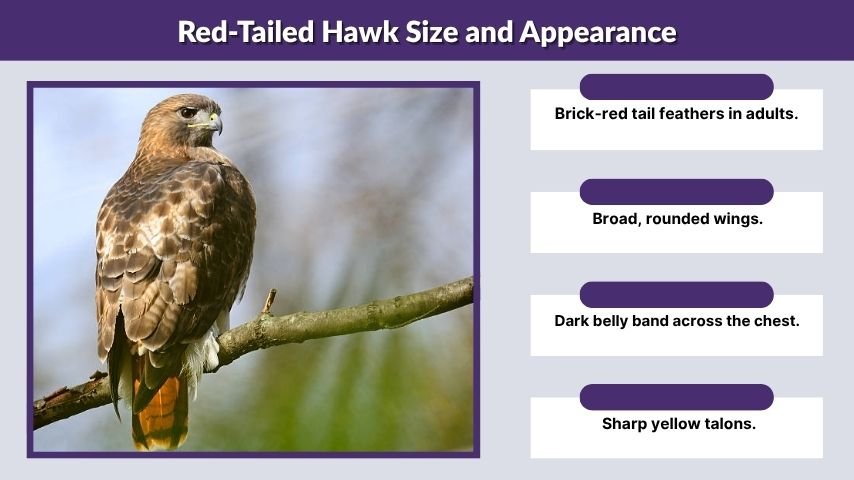
The red-tailed hawk is considered a medium-to-large hawk with an impressive wingspan and strong physical build. Although males and females share similar coloration, females are generally larger and heavier. Their size contributes to their hunting success and allows them to dominate many ecosystems throughout their range.
How Big Is a Red-Tailed Hawk?
Adult red-tailed hawks typically measure between 18 and 26 inches (45–65 centimeters) in length. Females often weigh more than males and can reach weights of over 3 pounds (1.4 kilograms). Their robust body structure makes them one of the largest hawk species commonly seen in North America.
Red-Tailed Hawk Wingspan
One of the bird’s most impressive features is its wingspan, which commonly ranges between 43 and 57 inches (110–145 centimeters). These broad wings allow efficient soaring and enable the hawk to conserve energy while searching for prey.
Distinctive Physical Features
Key identification features include:
- Brick-red tail feathers in adults.
- Broad, rounded wings.
- Dark belly band across the chest.
- Sharp yellow talons.
- Hooked beak designed for tearing prey.
These characteristics help distinguish the red-tailed hawk from many similar raptor species.
Juvenile Red-Tailed Hawks
Juvenile red-tailed hawks can be difficult to identify because they lack the famous red tail seen in adults. Their appearance changes gradually as they mature. Understanding these differences helps birdwatchers distinguish young birds from other hawk species and avoid common identification mistakes.
How Juveniles Differ From Adults
Young red-tailed hawks typically have brown tails with narrow dark bands instead of the reddish coloration seen in mature birds. Their plumage often appears lighter and more streaked, providing camouflage during their early years.
When Does the Red Tail Develop?
Most red-tailed hawks develop their characteristic red tail after their first year. As they molt into adult plumage, the reddish coloration becomes more noticeable and eventually becomes one of the species’ defining features.
Identifying Immature Birds
Birdwatchers can identify juvenile red-tailed hawks by looking for:
- Brown or banded tails.
- Streaked underparts.
- Lighter plumage overall.
- Less prominent adult markings.
These traits help separate immature birds from fully mature adults.
Red-Tailed Hawk Habitat and Distribution
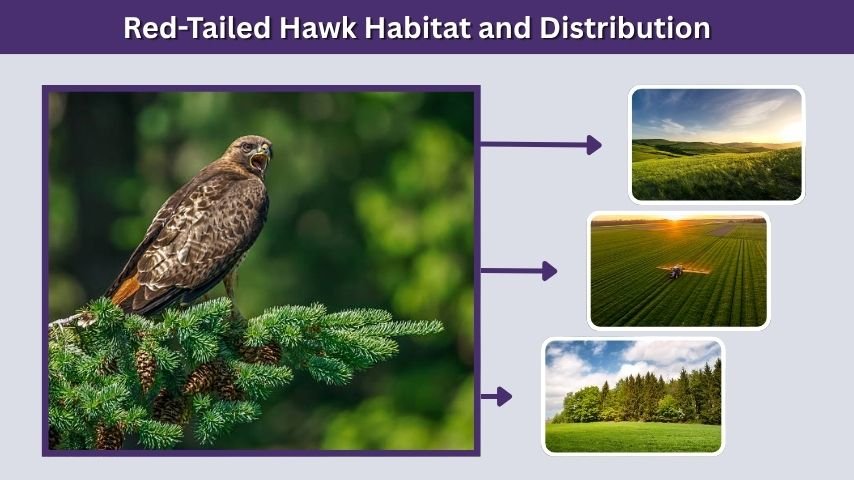
The red-tailed hawk has one of the widest distributions of any North American raptor. Its ability to adapt to diverse environments has contributed significantly to its success. Whether living in wilderness areas or suburban neighborhoods, the species continues to thrive across a broad geographic range.
Where Red-Tailed Hawks Live
Red-tailed hawks can be found throughout most of North America, including Canada, the United States, Mexico, and parts of Central America. Their distribution covers deserts, forests, grasslands, agricultural regions, and urban landscapes.
Preferred Habitats
The species thrives in areas that provide both open hunting grounds and elevated perches. Common habitats include:
- Grasslands and prairies.
- Forest edges.
- Agricultural fields.
- Desert environments.
- Urban and suburban areas.
These locations provide excellent opportunities for spotting prey while offering safe nesting sites.
Migration Patterns
Many northern populations migrate south during winter, while birds living in warmer regions often remain year-round residents. Migration patterns vary depending on local climate conditions and food availability, demonstrating the species’ remarkable adaptability.
What Do Red-Tailed Hawks Eat?
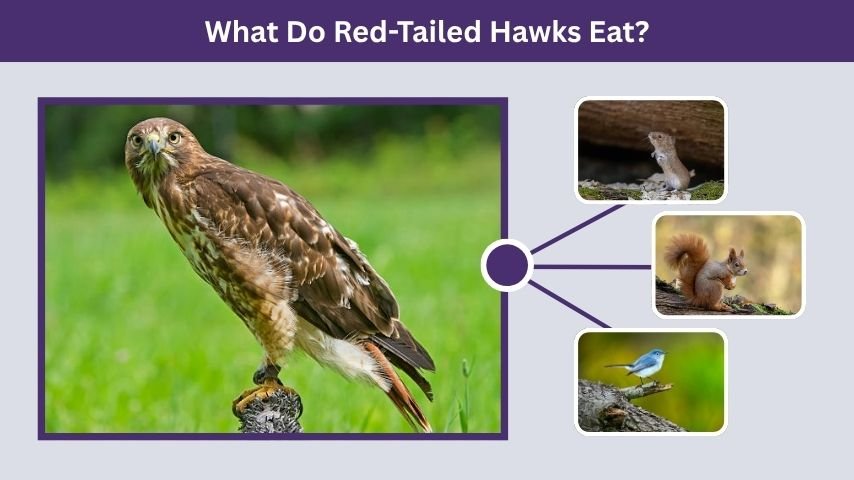
The red-tailed hawk is an opportunistic predator with a highly varied diet. Its ability to adapt to different prey sources contributes greatly to its widespread success. These hawks hunt from elevated perches or while soaring overhead, using their exceptional vision to locate potential meals. Their role as top predators helps regulate populations of small animals and maintain ecological balance.
Main Diet
Red-tailed hawks feed on a wide variety of prey depending on habitat and seasonal availability. Common food sources include:
- Mice and voles
- Rabbits and hares
- Squirrels
- Snakes
- Lizards
- Small birds
- Insects
Small mammals typically make up the majority of their diet throughout most of their range.
Hunting Techniques
These hawks often perch on utility poles, fence posts, or tree branches while scanning for movement below. Once prey is spotted, they dive rapidly and use their powerful talons to secure the animal. Their patience and precision make them highly effective hunters.
Importance in Ecosystems
By controlling populations of rodents and other small animals, red-tailed hawks provide valuable ecological benefits. Farmers often appreciate their presence because they help reduce agricultural pests naturally.
Red-Tailed Hawk Calls and Sounds
The red-tailed hawk’s call is one of the most recognizable bird sounds in North America. In fact, many movies and television shows use recordings of red-tailed hawk calls to represent eagles because the sound is more dramatic. These vocalizations serve important functions in communication, territory defense, and courtship.
The Famous Hawk Screech
The typical red-tailed hawk call is a descending, raspy scream often described as “kee-eeeee-arr.” This sound can travel long distances and is commonly heard when birds are soaring or defending territory.
Why Red-Tailed Hawks Call
Hawks use vocalizations for several purposes, including:
- Defending territories.
- Communicating with mates.
- Warning intruders.
- Maintaining contact with young birds.
Different calls may be used depending on the situation and the bird’s age.
Communication During Breeding Season
Breeding pairs become especially vocal during courtship and nesting periods. Calls help strengthen pair bonds and coordinate activities around the nest site.
Red-Tailed Hawk Nesting and Reproduction
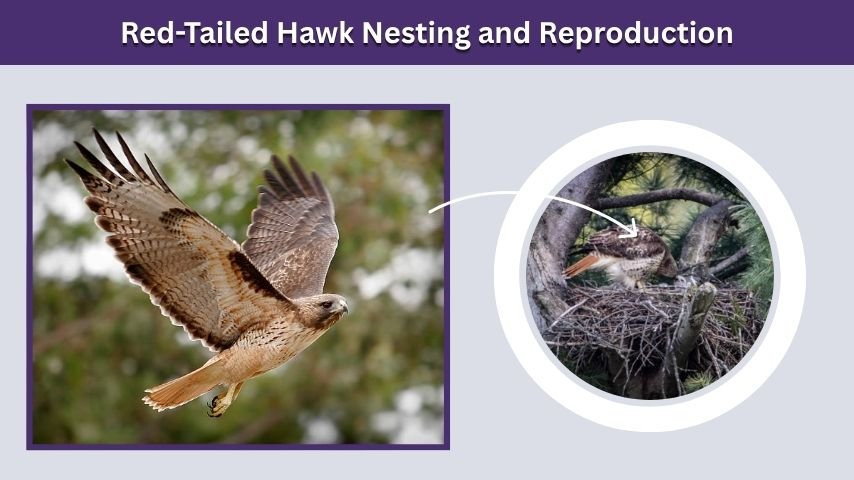
Red-tailed hawks form strong breeding partnerships and invest significant effort in raising their young. Their nesting habits contribute to the survival of future generations and allow populations to remain stable across much of their range.
Nest Construction
Nests are typically built high in trees, on cliffs, or occasionally on man-made structures. They are constructed from sticks and lined with softer materials for comfort and insulation.
Breeding Season
The breeding season generally begins in late winter or early spring. Females usually lay one to three eggs, which are incubated for approximately one month before hatching.
Raising Young Hawks
Both parents participate in caring for their offspring. Important parental responsibilities include:
- Incubating eggs.
- Delivering food to chicks.
- Protecting the nest.
- Teaching young hawks hunting skills.
Young birds remain dependent on their parents until they develop sufficient flying and hunting abilities.
Red-Tailed Hawk Feathers and Tail Identification
The red tail is the species’ most famous identifying feature. However, feather patterns vary depending on age, geographic location, and color morph. Understanding these differences can greatly improve field identification skills.
Red Tail Feather Characteristics
Adult birds display reddish-orange tail feathers that are most visible during flight. The bright coloration contrasts with the rest of the bird’s plumage and serves as a key identification marker.
Molting and Feather Replacement
Like other birds of prey, red-tailed hawks regularly replace worn feathers through molting. This process ensures continued flight efficiency and healthy plumage throughout their lives.
Color Variations
Although the classic red-tailed hawk is familiar to most observers, several regional color forms exist. Some birds appear much darker than average, while rare leucistic individuals display unusually pale feathers.
Red-Tailed Hawk vs Red-Shouldered Hawk
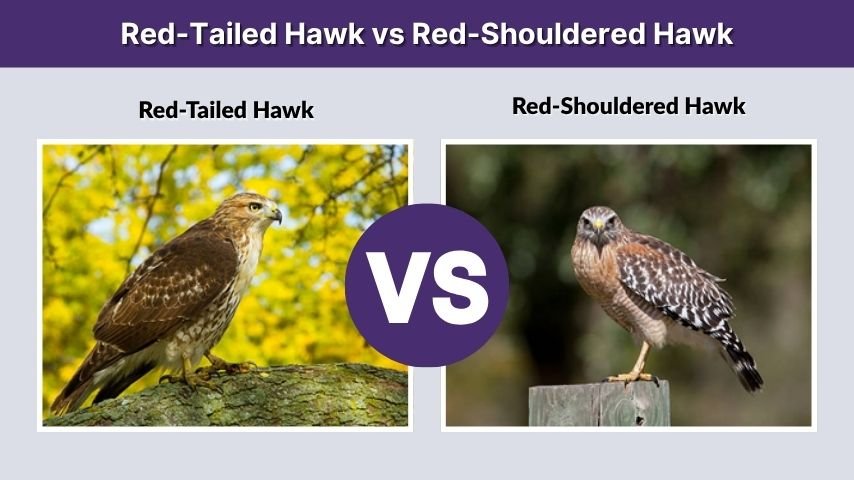
The red-tailed hawk and red-shouldered hawk are frequently confused because both species share similar habitats and coloration. However, several physical and behavioral differences make identification easier once observers know what to look for.
Size Differences
Red-tailed hawks are noticeably larger and heavier than red-shouldered hawks. Their broader wings and stockier bodies create a more powerful appearance in flight.
Tail and Wing Markings
Red-shouldered hawks display distinctive banded tails and reddish shoulders, while red-tailed hawks are recognized by their broad red tail and characteristic belly band.
Habitat Preferences
Although both species may occupy wooded regions, red-shouldered hawks tend to prefer forests and wetlands. Red-tailed hawks are more adaptable and frequently inhabit open landscapes and urban environments.
FAQs
What is the scientific name of the red-tailed hawk?
The scientific name of the red-tailed hawk is Buteo jamaicensis. It belongs to the Accipitridae family, which includes hawks, eagles, and other birds of prey. The species is one of the most widespread raptors in North America.
How long do red-tailed hawks live?
Red-tailed hawks typically live 10 to 20 years in the wild, although some individuals can survive longer under favorable conditions. In captivity, they may live more than 25 years due to consistent food sources and medical care.
Can red-tailed hawks live in cities?
Yes, red-tailed hawks adapt well to urban environments. They often nest on tall buildings, utility structures, and bridges while hunting rodents, pigeons, and other prey commonly found in cities and suburbs.
Are red-tailed hawks dangerous to humans?
Red-tailed hawks rarely pose a threat to humans. They generally avoid people and prefer hunting small animals. However, they may become defensive if someone approaches their nest or young chicks too closely during breeding season.
How can you tell a red-tailed hawk from a Cooper’s hawk?
Red-tailed hawks are larger, with broader wings and a distinctive red tail in adulthood. Cooper’s hawks are smaller, more agile, and have longer tails with rounded tips. Their hunting styles also differ, with Cooper’s hawks specializing in capturing birds in wooded areas.
