
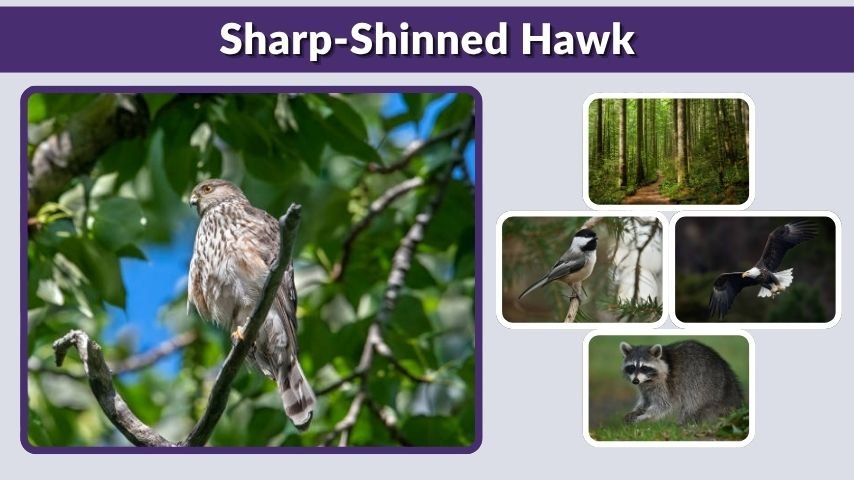
The Sharp-Shinned Hawk is the smallest hawk species in North America and one of the most fascinating birds of prey for birdwatchers. Known for its speed, agility, and ability to navigate dense forests, this raptor is often mistaken for the larger Cooper’s Hawk. Despite their similarities, Sharp-Shinned Hawks have unique characteristics that make them easier to identify once you know what to look for. This guide explores their appearance, size, habitat, and key identification features to help you recognize this remarkable hunter in the wild.
What Is a Sharp-Shinned Hawk?
The Sharp-Shinned Hawk (Accipiter striatus) belongs to the Accipiter family, a group of hawks known for their short wings and long tails. These adaptations allow them to maneuver quickly through forests while pursuing prey. Found throughout North America, the species is especially popular among birdwatchers due to its elusive nature and impressive hunting skills.
Scientific Classification
The Sharp-Shinned Hawk is classified as follows:
- Kingdom: Animalia
- Phylum: Chordata
- Class: Aves
- Order: Accipitriformes
- Family: Accipitridae
- Genus: Accipiter
- Species: Accipiter striatus
Why Is It Called a Sharp-Shinned Hawk?
The name comes from the bird’s thin lower legs, known as shins. Unlike many larger raptors that have thicker legs, this species possesses slender legs adapted for catching small birds. The feature is one of the physical traits that distinguish it from similar hawks.
Sharp-Shinned Hawk Size and Measurements
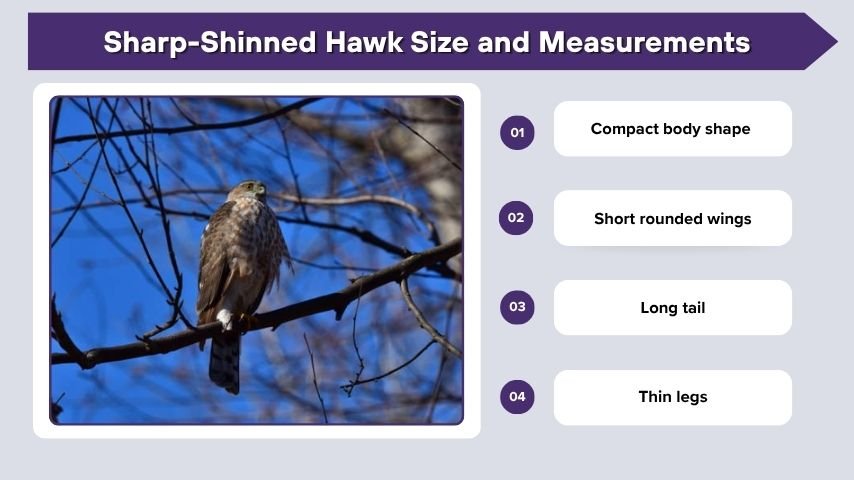
Although small compared to many birds of prey, the Sharp-Shinned Hawk remains an efficient predator. Its compact body and lightweight frame allow it to chase prey through dense vegetation with incredible precision.
Average Length and Wingspan
Adult Sharp-Shinned Hawks generally measure between 9 and 13 inches in length. Their wingspan typically ranges from 17 to 22 inches, making them significantly smaller than Cooper’s Hawks.
Male vs Female Size Differences
One of the most interesting aspects of this species is the noticeable size difference between males and females. Female Sharp-Shinned Hawks are often much larger than males, a trait common among raptors.
| Measurement | Male | Female |
| Length | 9–11 inches | 11–13 inches |
| Wingspan | 17–20 inches | 20–22 inches |
| Weight | 3–4 ounces | 5–8 ounces |
Physical Features
Key size and structure characteristics include:
- Compact body shape
- Short rounded wings
- Long tail
- Thin legs
- Small rounded head
These features help the hawk move rapidly through wooded environments where maneuverability is essential.
How to Identify a Sharp-Shinned Hawk
Correct identification can be challenging because this species closely resembles several other small raptors. However, a combination of physical traits and behavior can help birdwatchers identify it confidently.
Head Shape
The Sharp-Shinned Hawk has a small, rounded head that often appears tucked into the shoulders. Unlike the Cooper’s Hawk, its head does not project significantly beyond the wings during flight.
Tail Shape
The tail is one of the best identification features. It typically appears square-tipped because the outer tail feathers are nearly the same length as the central feathers. This creates a straight edge that birders can use to distinguish the species.
Eye and Plumage Characteristics
Adult birds display red or orange eyes and blue-gray upperparts. Their underparts are covered with fine reddish barring. Juveniles look different, showing brown upperparts and vertical streaking across the chest.
Juvenile and Immature Sharp-Shinned Hawks
Young Sharp-Shinned Hawks often create confusion among birdwatchers because they lack the distinctive coloration of adults. Learning how juvenile birds differ from mature individuals is essential for accurate identification.
Juvenile Appearance
Juveniles have brown backs and heavily streaked underparts. Their eyes are usually yellow, gradually changing color as they mature.
Common juvenile traits include:
- Brown upperparts
- White chest with brown streaks
- Yellow eyes
- Slim body structure
- Square tail shape
These features remain useful during the bird’s first year of life.
Immature vs Adult Differences
As Sharp-Shinned Hawks age, their plumage changes significantly. Adults develop blue-gray upperparts and reddish barring on the chest. Eye color also transitions from yellow to orange and eventually red in mature birds.
While color changes are helpful, body shape remains one of the most reliable identification tools throughout all life stages.
Sharp-Shinned Hawk vs Cooper’s Hawk
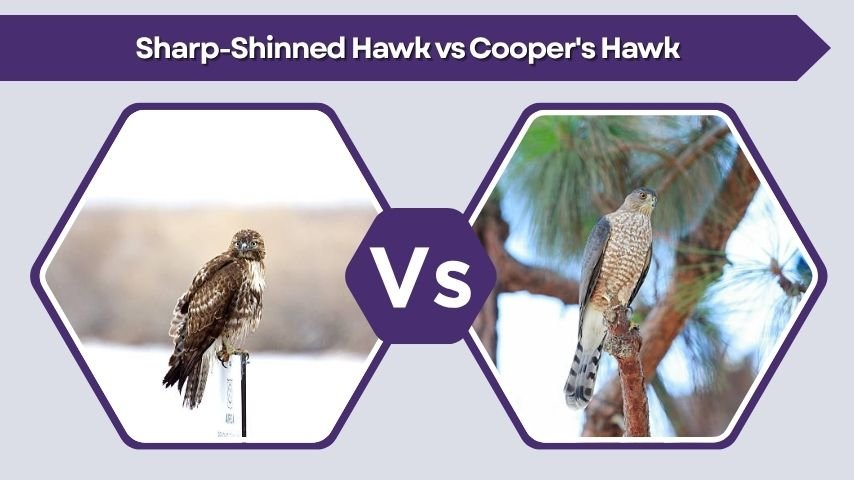
The Sharp-Shinned Hawk and Cooper’s Hawk are among the most commonly confused birds of prey in North America. Both belong to the same genus and share similar coloration, making identification difficult at first glance. Fortunately, several structural differences can help separate the two species in the field.
Size Differences
Cooper’s Hawks are noticeably larger and heavier than Sharp-Shinned Hawks. Many birders compare the difference to that of a crow versus a blue jay.
Head Shape Comparison
The Cooper’s Hawk has a larger, blockier head that projects beyond the wings during flight. In contrast, the Sharp-Shinned Hawk displays a smaller, rounded head that blends smoothly into the body.
Tail Shape Comparison
Tail shape provides another valuable clue:
- Sharp-Shinned Hawk: Square-tipped tail
- Cooper’s Hawk: Rounded tail
- Sharp-Shinned Hawk: Slim body
- Cooper’s Hawk: Broader chest
- Sharp-Shinned Hawk: Shorter neck
Using multiple field marks together produces the most accurate identification results.
Sharp-Shinned Hawk Habitat and Range
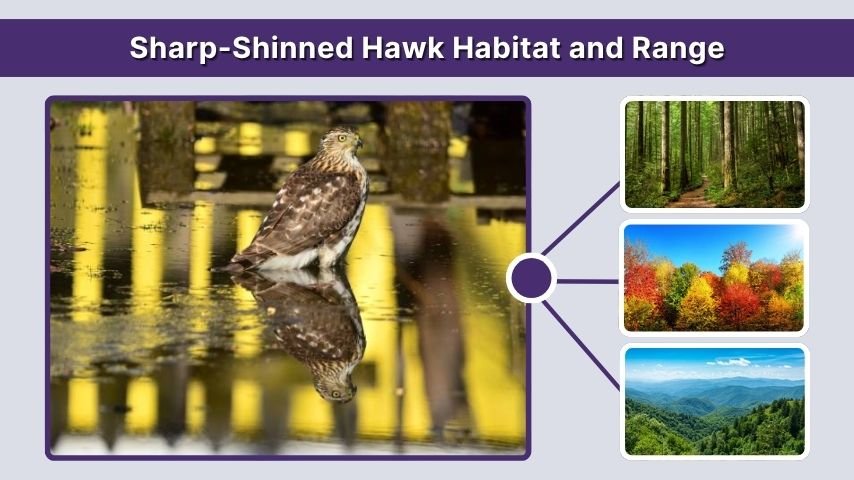
The Sharp-Shinned Hawk is widely distributed across North America and can be found in a variety of wooded environments. While it prefers dense forests during the breeding season, it also appears in suburban areas and migration corridors during certain times of the year. Understanding its habitat preferences can help birdwatchers increase their chances of spotting this elusive raptor.
Geographic Distribution
The species occurs throughout much of North America, including Canada, the United States, Mexico, and parts of Central America. Northern populations often migrate south during winter, while some southern populations remain year-round residents.
Preferred Habitats
Sharp-Shinned Hawks are most commonly associated with:
- Coniferous forests
- Mixed woodlands
- Mountain forests
- Forest edges
- Migration watch sites
These habitats provide the cover and hunting opportunities they need to thrive.
Seasonal Movements
Migration plays an important role in the life cycle of this species. Large numbers can be observed during autumn migration as they travel south in search of food and milder weather.
What Do Sharp-Shinned Hawks Eat?
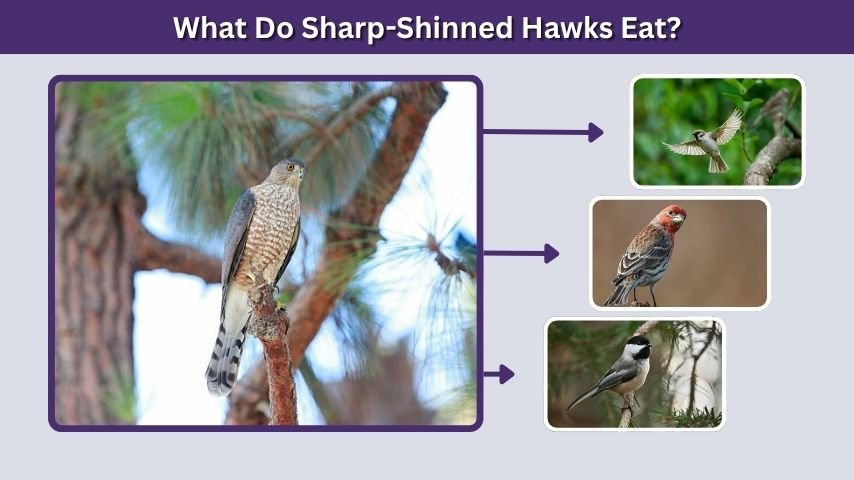
Sharp-Shinned Hawks are highly specialized predators that primarily feed on small birds. Their speed and agility allow them to pursue prey through dense vegetation where many larger hawks would struggle.
Primary Diet
The majority of their diet consists of songbirds. They often hunt around bird feeders because these locations attract large numbers of potential prey.
Common prey species include:
- Sparrows
- Finches
- Chickadees
- Warblers
- Nuthatches
They may also consume small mammals, insects, and reptiles when opportunities arise.
Hunting Techniques
Unlike soaring hawks that hunt from above, Sharp-Shinned Hawks rely on surprise attacks. They often hide within trees before launching rapid pursuits through the forest.
Their hunting success comes from exceptional maneuverability rather than sheer strength. This ability allows them to capture prey in areas where larger predators cannot easily operate.
Sharp-Shinned Hawk Flight Behavior
Flight characteristics can provide valuable identification clues, especially when the bird is seen only briefly. Observing wingbeats, body shape, and flight patterns often helps separate this species from similar raptors.
Flight Pattern
Sharp-Shinned Hawks typically fly using a pattern of quick wingbeats followed by short glides. Their compact body creates a fast and agile appearance in the air.
Identifying a Sharp-Shinned Hawk in Flight
Birdwatchers should look for the following characteristics:
- Rapid wingbeats
- Small head projection
- Long square-tipped tail
- Compact body shape
- Quick directional changes
These features are especially noticeable during migration when large numbers of hawks pass through observation points.
Flight Compared to Cooper’s Hawk
Although similar, Cooper’s Hawks generally appear larger and more powerful in flight. Their wingbeats are slower, and their heads project farther beyond the wings, creating a different silhouette.
Sharp-Shinned Hawk Calls and Sounds
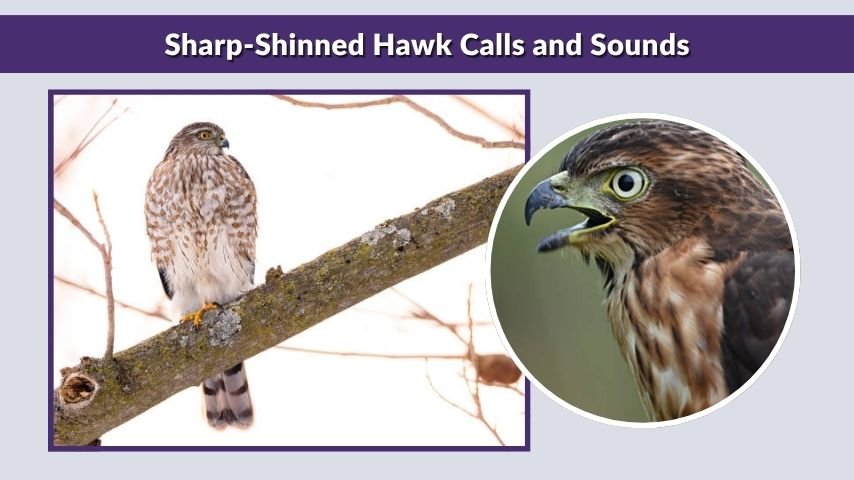
The Sharp-Shinned Hawk is generally quieter than many other birds of prey, but it can be quite vocal during the breeding season. Learning its calls can help birders detect the species even when it remains hidden within dense forest cover.
Common Vocalizations
The most frequently heard sound is a series of high-pitched notes repeated rapidly. These calls are often used to defend territory or communicate with mates.
When They Vocalize
Sharp-Shinned Hawks are most vocal during:
- Nesting season
- Territorial disputes
- Courtship displays
- Predator encounters
Outside the breeding season, they tend to remain relatively silent.
Sharp-Shinned Hawk Nesting and Reproduction
Breeding activities usually begin in spring when pairs establish territories and build nests within forested habitats. Nest placement is often high in coniferous trees, providing protection from predators.
Nest Construction
Both adults contribute to nest building. The structure is made primarily from sticks and lined with softer materials to protect eggs and nestlings.
Egg Laying and Incubation
Females typically lay several eggs during each breeding season. Incubation lasts about a month, with females performing most of the incubation duties while males provide food.
Raising Young
After hatching, both parents participate in feeding and protecting the chicks. Young hawks grow quickly and usually leave the nest within several weeks.
Predators and Threats
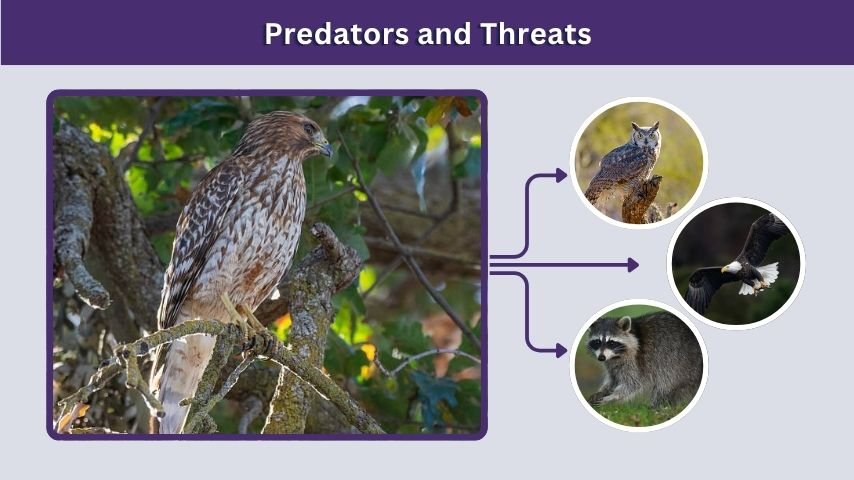
Despite being skilled hunters, Sharp-Shinned Hawks face numerous challenges in the wild. Natural predators and human-related dangers can affect survival rates.
Natural Predators
Potential predators include:
- Great Horned Owls
- Larger hawks
- Eagles
- Raccoons
- Tree-climbing mammals
Young birds are especially vulnerable before they become fully independent.
Human-Caused Threats
Habitat loss remains one of the most significant concerns for many bird populations. Additional threats include collisions with windows, vehicles, and other man-made structures.
Conservation efforts aimed at preserving forest habitats help support healthy Sharp-Shinned Hawk populations across their range.
Interesting Facts About Sharp-Shinned Hawks
The Sharp-Shinned Hawk possesses several remarkable characteristics that make it one of North America’s most fascinating raptors.
Smallest Hawk in North America
This species holds the distinction of being the smallest hawk commonly found in North America.
Expert Forest Hunter
Its body structure is perfectly adapted for navigating dense woodlands at high speed while chasing prey.
Remarkable Migration
Thousands of Sharp-Shinned Hawks can be observed during migration seasons at major hawk-watching locations throughout the continent.
FAQs
How can I identify a Sharp-Shinned Hawk?
Look for a small hawk with a rounded head, thin legs, rapid wingbeats, and a square-tipped tail. These features help distinguish it from similar species.
What is the difference between a Sharp-Shinned Hawk and a Cooper’s Hawk?
Sharp-Shinned Hawks are smaller, have a rounded head and square tail, while Cooper’s Hawks are larger with a blockier head and rounded tail.
Do Sharp-Shinned Hawks visit backyard bird feeders?
Yes. They often visit feeders to hunt small birds such as sparrows, finches, and chickadees rather than to eat seeds themselves.
Where do Sharp-Shinned Hawks build their nests?
They usually build nests high in coniferous or mixed woodland trees, often in dense forest habitats.
Are Sharp-Shinned Hawks endangered?
No. They are currently considered a species of least concern, although habitat loss and human-related threats can impact local populations.
