
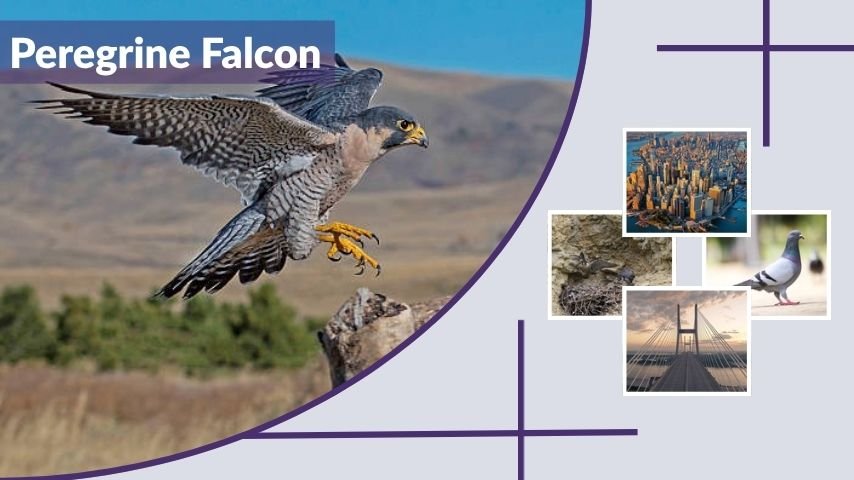
The peregrine falcon is one of the most powerful and fascinating birds of prey in the world. Famous for its breathtaking diving speed, sharp wings, and expert hunting skills, this falcon is often called the fastest animal on Earth. It lives in many habitats, from wild cliffs to busy city buildings. In this article, you will learn about peregrine falcon speed, flight, size, habitat, diet, and other important facts in a simple and clear way.
What Is a Peregrine Falcon?
The peregrine falcon is a medium-sized raptor known for speed, strength, and sharp eyesight. It belongs to the falcon family and is built for fast flight. Unlike many birds that rely mainly on soaring, the peregrine falcon uses speed and surprise to catch prey, especially other birds flying through open air.
Peregrine Falcon Scientific Name
The scientific name of the peregrine falcon is Falco peregrinus. The word “peregrine” is linked with wandering or traveling, which fits this bird well because many peregrine falcons travel long distances during migration. It is a bird of prey, meaning it hunts other animals for food.
Why Is the Peregrine Falcon Famous?
The peregrine falcon is most famous for its incredible diving speed. During a hunting dive, also called a stoop, it can reach speeds of more than 200 miles per hour. This makes it widely known as the fastest animal in the world during a dive.
Other reasons it is famous include:
- Long, pointed wings built for speed
- Excellent eyesight for spotting prey
- Powerful hunting dives from high places
- Ability to live on cliffs, bridges, towers, and city buildings
- A strong recovery after past population declines
How Fast Can a Peregrine Falcon Fly?
Speed is the main reason most people search for the peregrine falcon. However, its normal flying speed and diving speed are not the same. In regular flight, it is fast, but its record-breaking speed happens during a steep hunting dive when it folds its wings and drops toward prey from above.
Peregrine Falcon Top Speed
The top speed of a peregrine falcon is usually linked to its dive, not normal level flight. In a stoop, the bird can go over 200 mph. This is much faster than its regular flying speed. The falcon reaches this speed by using gravity, a streamlined body shape, and tightly controlled wing movements.
How Fast Can a Peregrine Falcon Dive?
A peregrine falcon can dive at more than 200 mph when hunting. It usually starts from a high position, spots a bird below, then drops rapidly with its wings partly folded. The dive is controlled, not random. The falcon adjusts its body and wings carefully so it can aim at prey with great accuracy.
Peregrine Falcon Flying vs Diving Speed
A peregrine falcon’s diving speed is much greater than its ordinary flying speed. This difference is important because many people ask, “How fast can a peregrine falcon fly?” The best answer is that it flies fast in normal flight, but it becomes truly record-breaking during its hunting dive.
- Normal flight is used for travel and searching.
- Fast direct flight is used when chasing prey.
- The hunting dive is used to strike prey from above.
- The famous top speed happens during the dive, not cruising flight.
What Does a Peregrine Falcon Look Like?
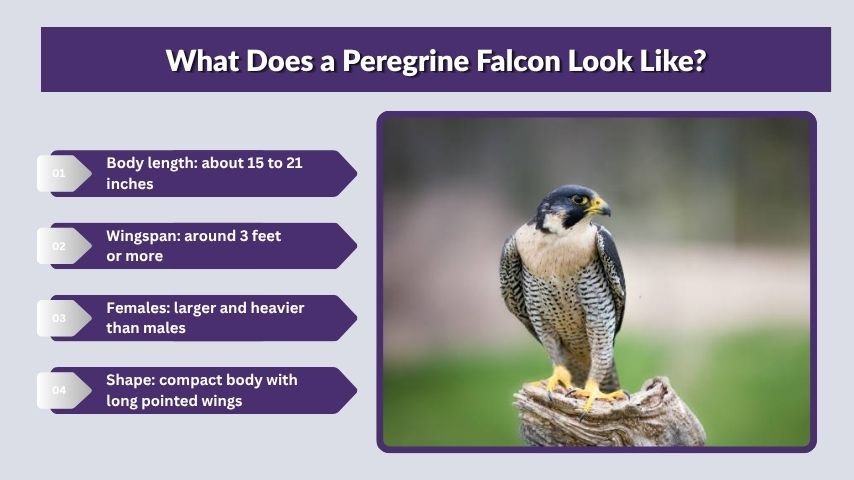
The peregrine falcon has a strong, athletic body made for speed. Its pointed wings, short hooked beak, dark facial markings, and sharp talons make it easy to recognize. Adult birds often have a blue-gray back, pale underside, and dark bars across the chest, giving them a bold and powerful appearance.
Peregrine Falcon Size
The peregrine falcon is about the size of a crow, but it looks more streamlined. Females are usually larger than males, which is common in many birds of prey. Its body is compact, but its wings are long and pointed, helping it cut through the air quickly.
Common size features include:
- Body length: about 15 to 21 inches
- Wingspan: around 3 feet or more
- Females: larger and heavier than males
- Shape: compact body with long pointed wings
- Beak: short, curved, and sharp for tearing food
Wings, Feathers, and Color
A peregrine falcon’s wings are one of its most important features. They are long, narrow, and pointed, which helps the bird fly quickly and dive with control. Adult peregrines usually have a slate-gray or blue-gray back. Their underside is lighter with dark barring, and the face has a dark “mustache” mark.
Juvenile Peregrine Falcon
A juvenile peregrine falcon looks different from an adult. Young birds are usually browner, with heavier streaks on the chest. Their colors are less clean and less blue-gray than adult peregrines. These differences help birdwatchers tell young peregrine falcons apart from mature birds in the wild.
Where Do Peregrine Falcons Live?
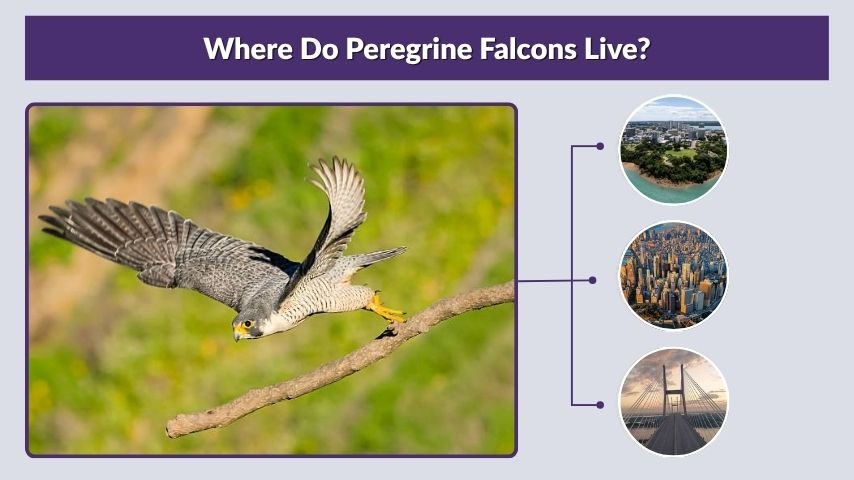
Peregrine falcons live in many parts of the world and can adapt to different environments. They are found near cliffs, coastlines, rivers, mountains, wetlands, and cities. Tall buildings often act like artificial cliffs, giving peregrines safe places to nest and good views for hunting birds below.
Peregrine Falcon Habitat
The natural habitat of a peregrine falcon often includes high places where it can watch for prey. Cliffs are one of its classic nesting sites, but peregrines also use human-made structures. In cities, skyscrapers, bridges, and towers can provide excellent nesting and hunting locations.
Peregrine Falcon Range
Peregrine falcons have one of the widest ranges of any bird of prey. They can be found on many continents and in many climates. Some populations migrate long distances, while others stay in the same area throughout the year if food and nesting places are available.
Why Do Peregrine Falcons Live in Cities?
Cities can be surprisingly good homes for peregrine falcons. Tall buildings resemble cliffs, and urban areas often have many pigeons and other birds to hunt. This gives peregrines both nesting sites and a steady food supply, allowing them to survive and breed in busy human environments.
What Do Peregrine Falcons Eat?
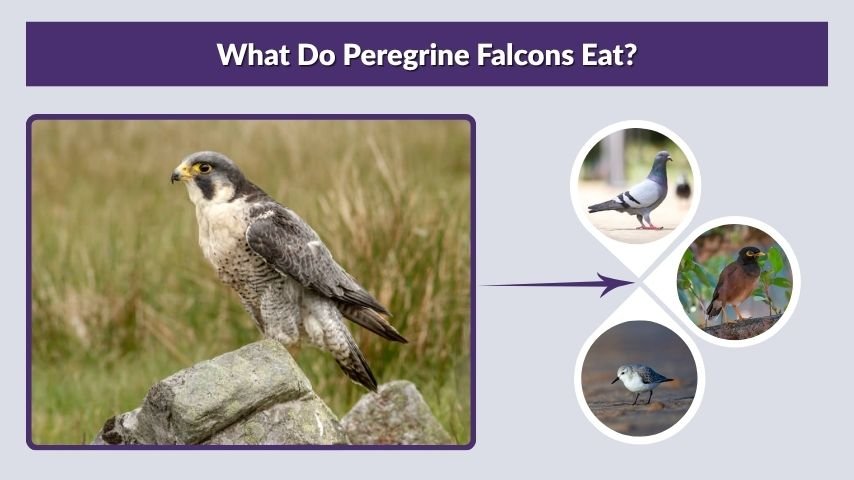
Peregrine falcons are skilled hunters that mainly eat other birds. Their diet depends on where they live, but they often catch prey in open air while flying at high speed. Instead of searching for food on the ground, they usually attack from above, using surprise, sharp talons, and their famous diving speed.
Peregrine Falcon Diet
The peregrine falcon’s diet is mostly made up of medium-sized birds. In cities, pigeons are common prey. Near water, peregrines may hunt shorebirds, ducks, or other water birds. Their food choices can change depending on season, location, and what birds are available nearby.
Common peregrine falcon food includes:
- Pigeons and doves
- Starlings and blackbirds
- Ducks and small water birds
- Shorebirds and seabirds
- Songbirds
- Occasionally bats or small mammals
How Peregrine Falcons Hunt
A peregrine falcon often hunts from a high perch or while circling in the sky. When it sees prey below, it dives quickly in a controlled stoop. The falcon may strike the prey in midair with its talons, then catch or collect it. This hunting method depends on speed, timing, and accuracy.
Peregrine Falcon Predators and Prey
Adult peregrine falcons have few natural predators because they are fast, strong, and aggressive when defending territory. However, eggs and chicks can be more vulnerable. Depending on the location, owls, eagles, raccoons, or other animals may threaten nests. The peregrine itself is a predator that mainly hunts birds.
Peregrine Falcon Call and Sound
The peregrine falcon is not known for a musical song like many smaller birds. Instead, it makes sharp calls, especially near the nest or when defending territory. These sounds are useful for communication between mates, warning other birds, and protecting chicks. Its call is often loud, repeated, and easy to notice.
What Does a Peregrine Falcon Sound Like?
A peregrine falcon call is often described as a sharp “kak-kak-kak” or “kek-kek-kek.” The sound can become louder and faster when the bird feels alarmed. People often hear this call near nesting sites, especially when adults are guarding eggs or young chicks.
When Do Peregrine Falcons Call?
Peregrine falcons usually call more often during the breeding season. They may call during courtship, when bringing food to the nest, or when warning intruders to stay away. A peregrine may also make noise if another bird of prey, human, or animal gets too close to its nesting area.
Peregrine Falcon Nest and Life Cycle
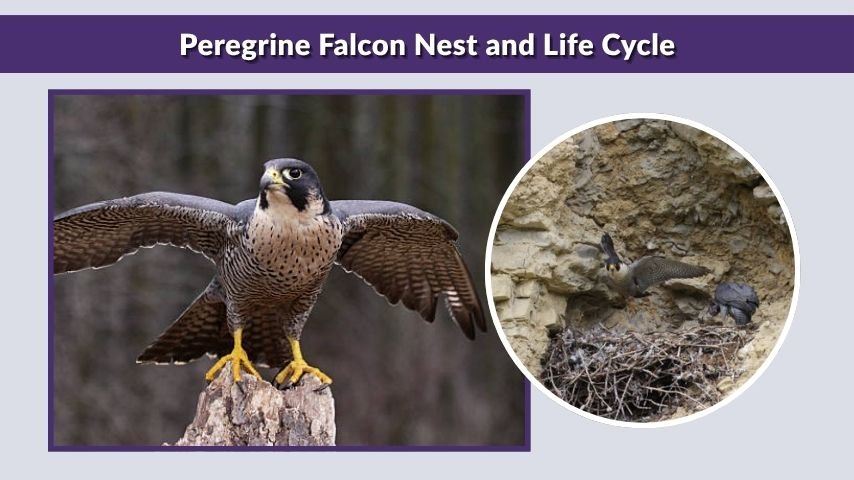
Peregrine falcons do not build typical cup-shaped nests like many backyard birds. Instead, they usually choose high ledges where they can lay eggs safely and watch the surrounding area. Their nesting habits are one reason they can live successfully on cliffs, bridges, towers, and tall buildings in large cities.
Where Do Peregrine Falcons Nest?
Peregrine falcons often nest in high, protected places. In wild areas, they use cliff ledges. In cities, they may use skyscrapers, bridges, towers, or special nest boxes placed by conservation groups. These high sites help protect eggs and chicks from many ground predators.
Are There Feathers in a Peregrine Falcon Nest?
Peregrine falcons usually do not create soft feather-lined nests. They often lay eggs in a shallow scrape on gravel, stone, or a ledge surface. Feathers may be found near the nest because of prey remains, but they are not usually placed there as proper nest lining.
Peregrine Falcon Lifespan
The lifespan of a peregrine falcon can vary. Many young birds face dangers in their first year, including hunger, accidents, and predators. Birds that survive to adulthood may live for many years in the wild. Safe nesting areas and healthy prey populations can help them survive longer.
Are Peregrine Falcons Endangered?
Peregrine falcons were once in serious danger in some parts of the world, especially during the twentieth century. Pesticides such as DDT caused major breeding problems by weakening eggshells. After legal protection, pesticide restrictions, and conservation programs, peregrine falcons made a strong recovery in many regions.
Past Decline from Pesticides
The biggest historical threat to peregrine falcons was pesticide poisoning. Chemicals built up in their prey and affected the falcons when they ate those birds. This caused thin eggshells that broke easily during incubation. As a result, many nests failed, and peregrine numbers dropped sharply.
Current Conservation Status
Today, peregrine falcons are no longer endangered in many areas where recovery programs succeeded. However, their exact status can vary by country or region. They may still face threats from pollution, illegal disturbance, collisions with buildings, and loss of safe nesting places.
Why the Peregrine Falcon Is a Conservation Success Story
The peregrine falcon is often seen as a powerful example of successful wildlife protection. Conservationists helped the species through captive breeding, nest monitoring, legal protection, and pesticide bans. Their return to cliffs and cities shows how a threatened bird can recover when people protect its habitat and food chain.
Peregrine Falcon vs Hawk: What Is the Difference?
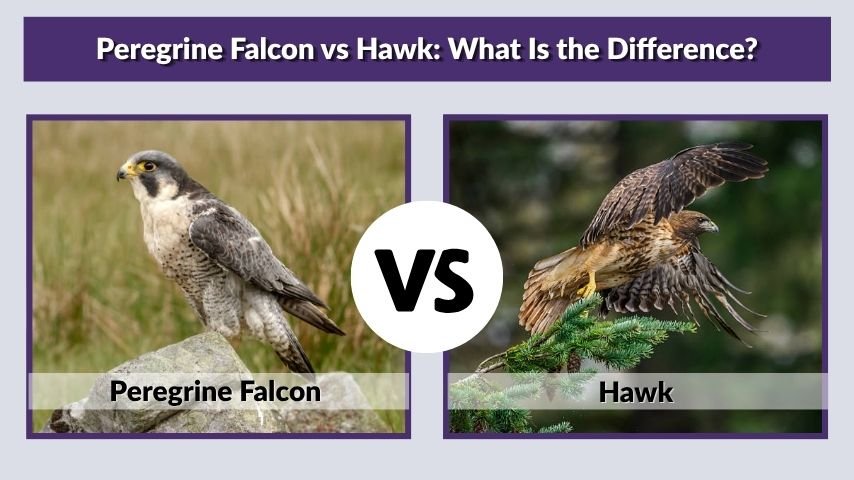
Many people confuse peregrine falcons with hawks because both are birds of prey. However, falcons and hawks have different body shapes, wing styles, and hunting methods. Peregrine falcons are built for speed in open air, while many hawks are better suited for soaring, gliding, or chasing prey through trees.
Falcon vs Hawk
Falcons usually have long, pointed wings and a slimmer shape. Hawks often have broader wings and may have longer tails for steering through wooded areas. A peregrine falcon often hunts by diving at high speed, while hawks may use ambush, soaring, or short bursts of pursuit.
Peregrine Falcon vs Cooper’s Hawk
A peregrine falcon has pointed wings, a strong facial mark, and a fast open-air hunting style. A Cooper’s hawk has shorter rounded wings and a long tail, which help it move quickly through trees and neighborhoods. Cooper’s hawks often surprise birds at close range, while peregrines attack from above.
Prairie Falcon vs Peregrine Falcon
A prairie falcon is usually paler than a peregrine falcon and is often found in dry open country. A peregrine falcon usually has a darker hood and stronger facial markings. Both are fast hunters, but the peregrine is more famous for its extreme diving speed.
Peregrine Falcon Pronunciation and Quick Facts
The name “peregrine falcon” can be difficult for some readers to pronounce, especially because “peregrine” is not a common everyday word. Learning the pronunciation, spelling, and basic facts helps readers understand the bird better and search for it correctly in books, videos, images, and bird guides.
How to Pronounce Peregrine Falcon
You can pronounce peregrine falcon as PEH-ruh-grin FAL-kun. Some people say PEH-ruh-green, depending on accent. The word “falcon” may sound like FAL-kun or FAWL-kun. Common misspellings include “peregrin falcon,” “perigrine falcon,” and “falcon peregrine.”
Quick Facts About Peregrine Falcons
- Scientific name: Falco peregrinus
- Bird type: raptor or bird of prey
- Famous for: fastest hunting dive
- Top dive speed: over 200 mph
- Diet: mostly birds
- Habitat: cliffs, coasts, cities, bridges, and towers
- Nest type: ledge scrape, not a typical twig nest
- Wings: long, narrow, and pointed
FAQs
How fast can a peregrine falcon fly?
A peregrine falcon is best known for its diving speed. In normal flight, it is fast, but during a hunting dive, it can reach more than 200 mph. This makes it widely known as the fastest animal in the world during a dive.
What do peregrine falcons eat?
Peregrine falcons mostly eat birds. Their prey can include pigeons, doves, starlings, ducks, shorebirds, seabirds, and songbirds. In cities, pigeons are one of their most common food sources.
Where do peregrine falcons live?
Peregrine falcons live in many places around the world. They can be found near cliffs, coastlines, mountains, rivers, wetlands, and cities. Tall buildings and bridges often provide good nesting sites.
Are peregrine falcons endangered?
Peregrine falcons were once seriously threatened in some regions because of pesticide poisoning. Today, they have recovered in many places because of conservation work, pesticide restrictions, and legal protection.
What does a peregrine falcon sound like?
A peregrine falcon often makes a sharp repeated call that sounds like “kak-kak-kak” or “kek-kek-kek.” These calls are most common near nests, during breeding season, or when the bird feels threatened.
