
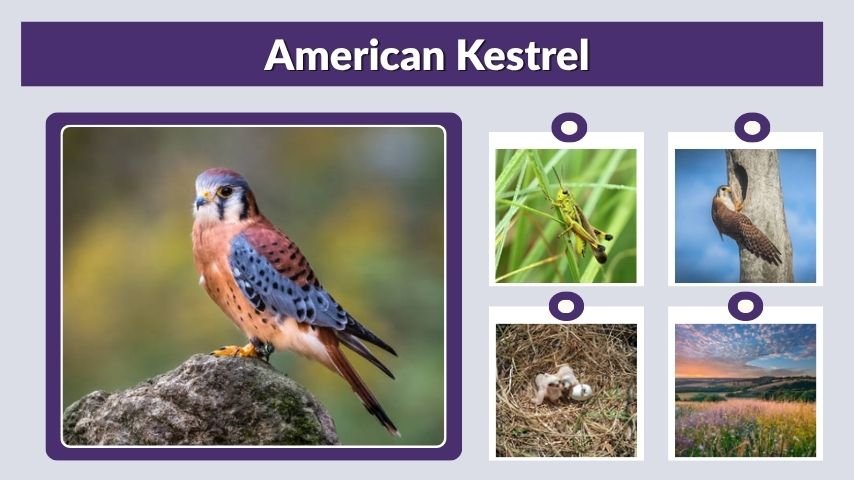
The American kestrel is a small but powerful falcon known for its bright colors, sharp call, and quick hunting style. It is often seen perched on wires, fence posts, or trees while watching for prey. Although some people call it a hawk, the American kestrel is actually a falcon. This beautiful bird lives in open areas, farms, grasslands, deserts, and some cities. In this guide, you will learn about its size, appearance, call, diet, habitat, and key facts.
What Is an American Kestrel?
The American kestrel is one of the most recognizable small raptors in North America. It has a compact body, pointed wings, a long tail, and bold facial markings. Unlike large hawks that often soar for long periods, this falcon is active, quick, and alert. It hunts small prey from perches and can also hover in place while searching the ground below.
American Kestrel Scientific Name
The scientific name of the American kestrel is Falco sparverius. It belongs to the falcon family, which includes fast birds of prey with pointed wings and hooked beaks. The American kestrel is also known as the smallest falcon in North America, but its small size does not make it weak. It is a skilled hunter with sharp eyesight and strong talons.
Is the American Kestrel a Hawk or a Falcon?
The American kestrel is a falcon, not a true hawk. Many people search for “American kestrel hawk” because the word hawk is often used for many birds of prey. However, kestrels belong to the falcon family. They usually have pointed wings, fast wingbeats, and a different hunting style from many hawks.
American Kestrel Characteristics
The American kestrel has several features that make it easy to recognize in the wild:
- Small, compact raptor body
- Long, pointed wings
- Long tail used for balance
- Rusty back and tail
- Bold black marks on the face
- Sharp hooked beak
- Fast, direct flight
- Ability to hover while hunting
American Kestrel Size and Appearance
The American kestrel is much smaller than many other birds of prey, but it still looks strong and confident. Its colorful feathers, slim shape, and sharp markings help birdwatchers identify it quickly. Males and females look different, which is helpful because many raptor species are harder to tell apart by sex.
American Kestrel Size
The American kestrel is a small falcon with a light body and long wings. It is often compared with a robin or mourning dove in size, though its shape is very different. In flight, it may look larger because of its pointed wings and long tail, but it is still much smaller than a peregrine falcon.
American Kestrel Wingspan
The wingspan of an American kestrel helps it fly quickly and turn with control. Its wings are narrow and pointed, which is a common falcon feature. These wings allow the bird to make fast movements, hover in the wind, and drop suddenly toward prey on the ground.
Male American Kestrel
A male American kestrel is very colorful. He usually has blue-gray wings, a rusty back, a rusty tail, and dark spots on the body. His head often shows blue-gray color with bold black facial marks. These colors make the male easier to identify when perched in good light.
Female American Kestrel
A female American kestrel is usually warmer brown or rusty overall. Her wings, back, and tail often show more barring than the male’s. Females are usually slightly larger than males, which is common in many birds of prey. Their strong pattern helps them blend into open habitats and nesting areas.
American Kestrel Call and Sound
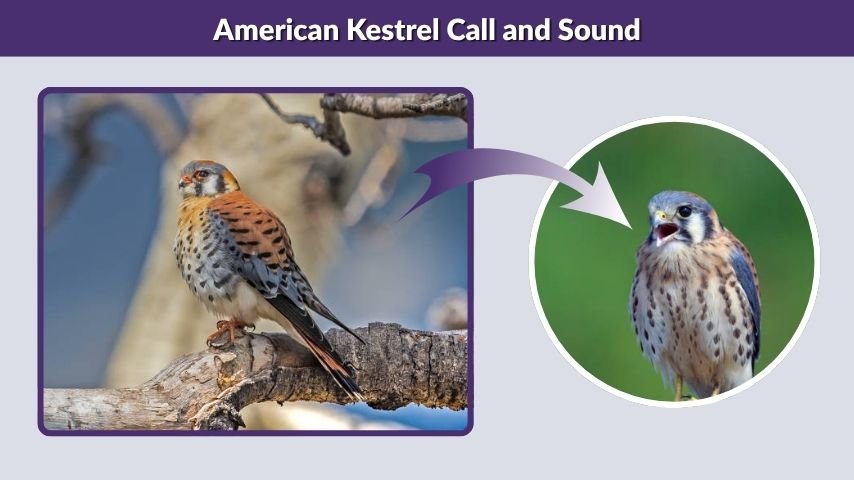
The American kestrel does not sing like a songbird. Instead, it makes sharp calls that are used for warning, communication, nesting, and courtship. These sounds are often heard near open fields, nest boxes, or perching sites. Learning the call can help birdwatchers identify the bird even when it is hard to see.
What Does an American Kestrel Sound Like?
An American kestrel call is often described as a sharp, repeated “klee-klee-klee” or “killy-killy-killy.” The sound is high, quick, and urgent. It may be heard when the bird is flying, defending a nest, or reacting to another animal nearby.
When Do American Kestrels Call?
American kestrels call more often during active moments in their daily life. Common calling situations include:
- During the breeding season
- Near nest cavities or nest boxes
- When warning intruders
- During courtship
- When communicating with a mate
- When young birds are nearby
What Do American Kestrels Eat?
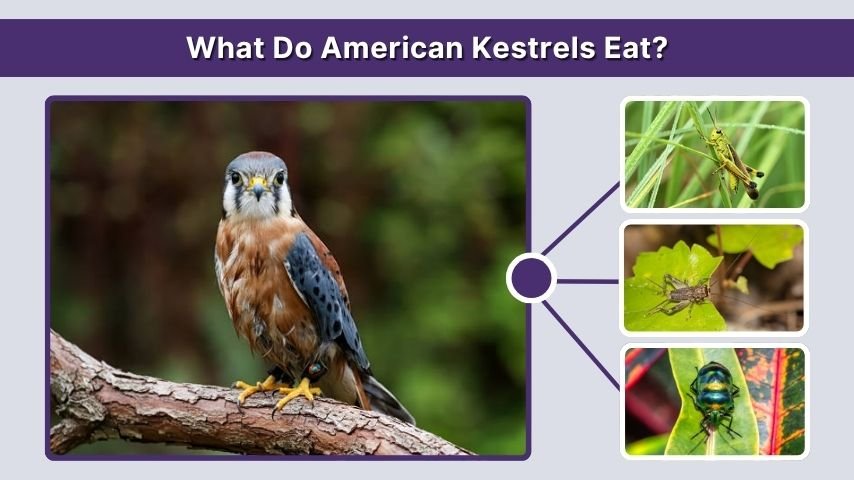
American kestrels are hunters that feed on small animals. Their diet changes with season, location, and prey availability. In warm months, insects are often very important. In colder months or when insects are harder to find, they may eat more small mammals, reptiles, or birds. Their flexible diet helps them survive in many different habitats.
American Kestrel Diet
The American kestrel diet includes many types of small prey. It often hunts in open areas where it can see movement on the ground. Common food includes:
- Grasshoppers
- Crickets
- Beetles
- Dragonflies
- Mice
- Voles
- Lizards
- Small snakes
- Small birds
American Kestrel Food by Season
During spring and summer, American kestrels often catch insects such as grasshoppers, beetles, and crickets. These prey are easy to find in fields, pastures, and roadsides. During colder months, insects may become less available, so kestrels may rely more on mice, voles, small birds, and other small animals.
How American Kestrels Hunt
American kestrels often hunt from a perch. They sit on wires, poles, fence posts, or tree branches and watch the ground carefully. When they see prey, they drop quickly and grab it with their talons. They can also hover in the air, holding position while scanning grass or open ground below.
Where Do American Kestrels Live?
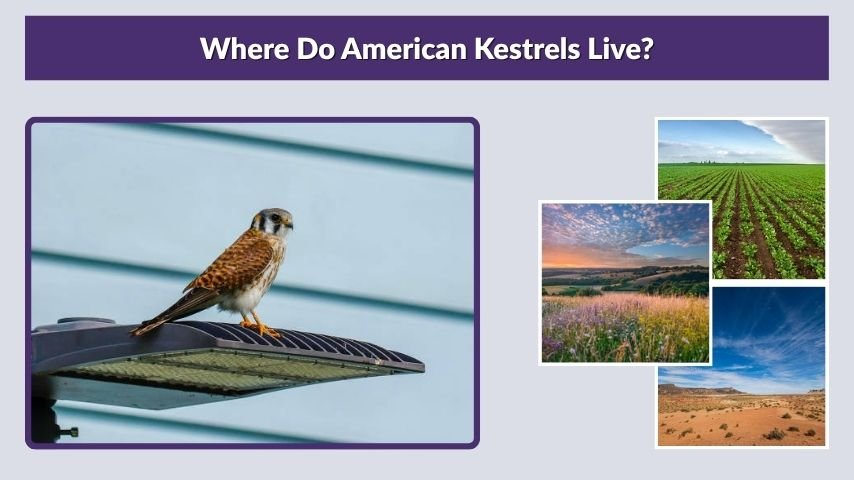
American kestrels live in open and semi-open habitats where they can find prey and safe nesting places. They often need clear hunting space, good perches, and cavities for nesting. Because of this, they are commonly seen around fields, farms, grasslands, roadsides, deserts, and open woodland edges, as well as some towns and cities.
American Kestrel Habitat
American kestrels prefer areas where they can easily watch the ground for prey. They do well in places with scattered trees, poles, fences, or wires for perching. Their habitat may include grasslands, meadows, farms, deserts, pastures, open parks, and roadsides.
American Kestrel Range
The American kestrel is found across much of North America and also parts of Central and South America. Some kestrels migrate when seasons change, while others stay in the same area all year. Their range depends on climate, food supply, nesting sites, and local habitat conditions.
Where Do American Kestrels Live in Cities?
American kestrels can live near towns and cities if there is enough open space for hunting. Parks, airports, sports fields, roadside edges, and open lots may provide suitable feeding areas. They may nest in cavities, building gaps, or nest boxes when safe places are available.
American Kestrel Nest, Eggs, and Nest Box
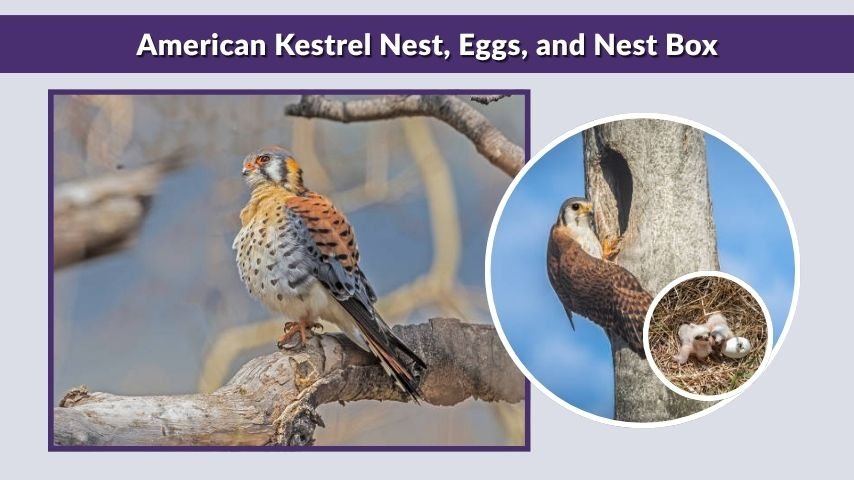
American kestrels are cavity nesters, which means they do not build open twig nests like many birds. Instead, they use holes in trees, old woodpecker cavities, building openings, cliff holes, or nest boxes. Safe nesting cavities are very important because a shortage of nest sites can limit breeding success in some areas.
American Kestrel Nest
An American kestrel nest is usually inside a cavity. The bird does not create a detailed nest with sticks, grass, and feathers. Eggs are often laid directly on wood chips, natural debris, or the bottom of the cavity. The hidden space helps protect eggs and young chicks from weather and some predators.
American Kestrel Eggs and Chicks
Female American kestrels lay eggs inside the nesting cavity. Both parents help during the nesting season, with the male often bringing food and the female spending more time with eggs or young chicks. After hatching, chicks remain in the cavity until they grow feathers, gain strength, and prepare to leave the nest.
American Kestrel Nest Box
Nest boxes can help American kestrels when natural cavities are limited. A good nest box should be placed in open habitat where kestrels can hunt easily. It should also be built with proper ventilation, drainage, safe entrance size, and protection from predators.
Important nest box points include:
- Place the box near open fields or grassland
- Use proper entrance size for kestrels
- Add drainage holes to keep the box dry
- Include ventilation for hot weather
- Avoid placing boxes too close to heavy disturbance
- Clean and monitor boxes responsibly
American Kestrel in Flight and Hovering
The American kestrel is known for active flight and a special hunting behavior called hovering. While many raptors soar in circles, kestrels often flap quickly and hold their position in the wind. This lets them look down carefully for insects, mice, lizards, or other prey moving through grass and open ground.
American Kestrel Flying
An American kestrel flies with quick wingbeats and direct movement. Its pointed wings help it move fast, while its long tail helps with balance and turning. When hunting, it may fly low over open ground, perch on wires, or drop suddenly toward prey.
American Kestrel Hovering
Hovering is one of the most interesting American kestrel behaviors. The bird faces into the wind and flaps rapidly while staying almost in one place. From this position, it scans the ground below. When it sees prey, it drops quickly and tries to catch it with its talons.
American Kestrel Adaptations
The American kestrel has many adaptations that help it hunt and survive:
- Sharp eyesight for spotting small prey
- Hooked beak for tearing food
- Strong talons for catching prey
- Pointed wings for fast flight
- Long tail for balance
- Hovering ability for open-country hunting
- Colorful plumage that also helps with camouflage
American Kestrel Lifespan, Predators, and Conservation
American kestrels are skilled hunters, but they still face many natural and human-related dangers. Young birds are especially vulnerable after leaving the nest. Habitat loss, fewer nesting cavities, pesticides, vehicle collisions, and predators can all affect survival. Protecting open habitats and providing safe nest boxes can help support local kestrel populations.
American Kestrel Lifespan
The lifespan of an American kestrel can vary. Many young birds do not survive their first year because they are learning to hunt and avoid danger. Adults that find good habitat, steady food, and safe nesting areas may live for several years in the wild.
American Kestrel Predators
Adult American kestrels are quick and alert, but they can still be threatened by larger birds of prey. Eggs, chicks, and fledglings are more vulnerable. Possible predators may include larger hawks, owls, snakes, raccoons, and other animals that can reach nesting cavities.
Are American Kestrels Declining?
American kestrels have declined in some areas, and scientists continue to study the reasons. Possible causes include loss of grassland habitat, fewer nesting cavities, pesticides, climate changes, and changes in prey populations. Nest boxes, habitat protection, and careful monitoring can help support conservation.
American Kestrel vs Other Birds
Many people compare American kestrels with hawks, peregrine falcons, common kestrels, and even owls. These comparisons are useful because several birds of prey can look similar from a distance. Understanding body shape, wing style, size, color, hunting behavior, and habitat can make identification much easier.
American Kestrel vs Peregrine Falcon
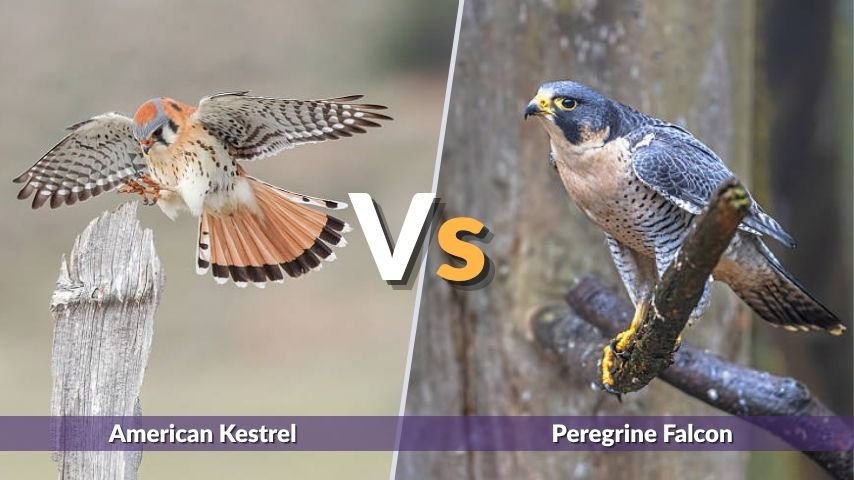
Both birds are falcons, but they are very different in size and hunting style. The peregrine falcon is much larger and famous for extreme diving speed. The American kestrel is smaller, more colorful, and often hunts insects, mice, and lizards from perches or while hovering over open ground.
Common Kestrel vs American Kestrel
The common kestrel and American kestrel are different species. The American kestrel lives in the Americas, while the common kestrel is found across Europe, Asia, and Africa. Both can hover while hunting, but their markings, range, and colors are not exactly the same.
American Kestrel vs Hawk
The American kestrel is a falcon, not a true hawk. Compared with many hawks, it has a smaller body, more pointed wings, and faster wingbeats. Hawks often have broader wings and may soar more often, while kestrels frequently perch, hover, and drop onto small prey.
FAQs
What is an American kestrel?
An American kestrel is a small falcon and bird of prey. It is known for colorful feathers, pointed wings, sharp calls, and hovering flight. It often hunts insects, small mammals, reptiles, and small birds in open habitats.
What do American kestrels eat?
American kestrels eat insects, mice, voles, lizards, small snakes, and small birds. In warm months, insects such as grasshoppers and crickets are very common foods. In colder months, they may eat more mammals or birds.
Where do American kestrels live?
American kestrels live in open and semi-open places such as grasslands, farms, deserts, meadows, roadsides, parks, and woodland edges. They need hunting perches, open ground, and safe cavities or nest boxes for nesting.
What does an American kestrel sound like?
An American kestrel often makes a sharp, repeated call that sounds like “klee-klee-klee” or “killy-killy-killy.” It may call near nests, during courtship, when warning intruders, or while communicating with another kestrel.
Is the American kestrel a hawk?
No, the American kestrel is not a true hawk. It is a falcon. People may call it a hawk because it is a bird of prey, but scientifically it belongs to the falcon family.
