
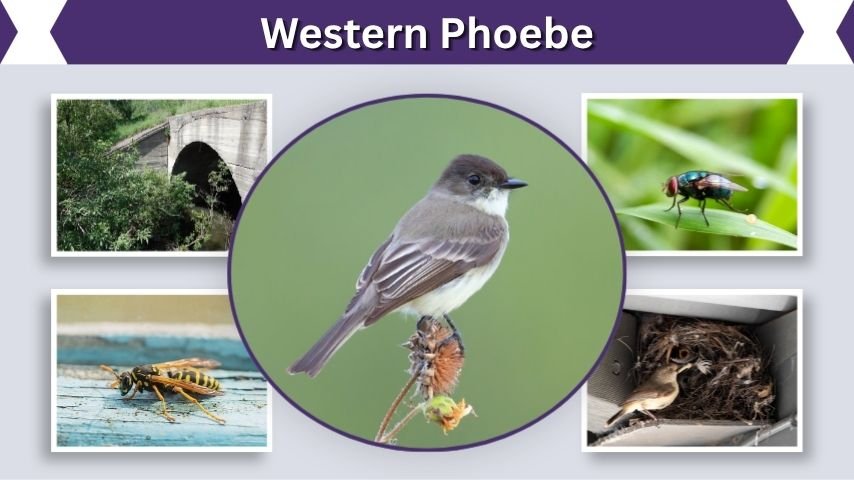
The Western Phoebe is a small, active flycatcher known for its tail-wagging behavior, sharp calls, and habit of perching in open areas while watching for insects. Common across much of western North America, this bird is often seen near streams, bridges, farms, canyons, and buildings. Its plain gray-brown body may look simple at first, but its behavior makes it easy to recognize. For birdwatchers, homeowners, and nature lovers, the Western Phoebe is an interesting species because it adapts well to both natural and human-made environments.
What Is a Western Phoebe?
The Western Phoebe is a medium-small songbird in the flycatcher family. It belongs to a group of birds that catch insects in the air or from nearby surfaces. Like other phoebes, it often sits upright on an exposed perch, watches carefully, then quickly flies out to grab prey.
Although it is not brightly colored, the Western Phoebe has a clean and recognizable look. Its quiet colors help it blend into rocky, dry, and brushy habitats.
Basic Identification
Western Phoebes usually have a grayish-brown head and back, a darker face, pale underparts, and a slightly darker chest. The belly may show a yellowish or buff tone, especially in fresh plumage. The bird has a thin, dark bill and a long tail that it often pumps downward.
This tail movement is one of the easiest field marks. If you see a plain gray flycatcher repeatedly dipping or wagging its tail from a low perch, it may be a Western Phoebe.
Size and Shape
The Western Phoebe has a slim body, a fairly large head, and a medium-length tail. Its posture is usually upright. It often perches on fence posts, rocks, branches, roof edges, or wires while scanning for insects.
It is larger than many tiny songbirds but smaller than robins or jays. Its overall shape is typical of flycatchers: alert, balanced, and ready to launch into short flights.
Western Phoebe Identification Table
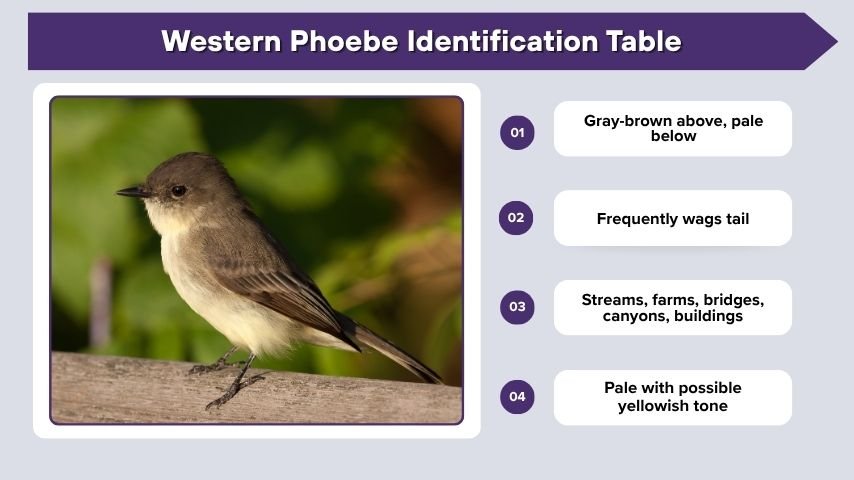
The Western Phoebe can be confused with other flycatchers, especially the Black Phoebe and Say’s Phoebe. This table highlights common identification points.
| Feature | Western Phoebe | Black Phoebe | Say’s Phoebe |
| Overall color | Gray-brown above, pale below | Dark blackish body with white belly | Gray-brown above with warm cinnamon belly |
| Tail behavior | Frequently wags tail | Frequently wags tail | Often pumps tail, but less sharply |
| Common habitat | Streams, farms, bridges, canyons, buildings | Water edges, ponds, streams, urban areas | Open fields, deserts, grasslands |
| Underparts | Pale with possible yellowish tone | Strong white belly contrast | Buffy to cinnamon lower belly |
| General look | Plain and soft-toned | Bold dark-and-white contrast | Warmer and more open-country look |
Where Do Western Phoebes Live?
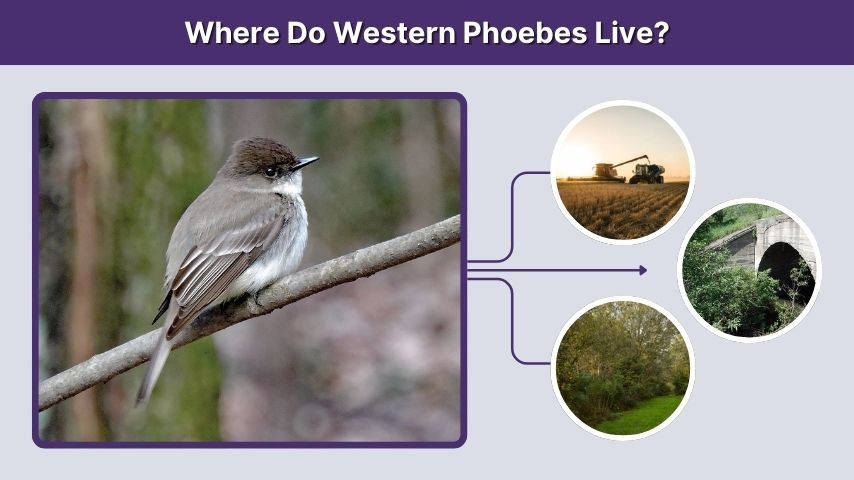
Western Phoebes live mainly in western North America. They are commonly found in areas with open space for hunting insects and nearby surfaces for nesting. They do not need dense forests. Instead, they prefer edges, clearings, and semi-open places.
Their habitat can include both wild and developed areas. This adaptability is one reason people often notice them around homes, ranches, parks, and bridges.
Common Habitats
Western Phoebes may be found in:
- Stream corridors and riverbanks
- Canyons and rocky slopes
- Farms, ranches, and open country
- Bridges, culverts, and barns
- Woodland edges and brushy areas
- Rural buildings and sheds
They often choose locations where there are good perches and plenty of flying insects. Water nearby can be helpful because insects are usually abundant around streams and ponds.
Range and Seasonal Movement
In many areas, Western Phoebes are year-round residents. In colder parts of their range, some may move south or to lower elevations during winter. Their movements are generally not as dramatic as long-distance migrants, but local seasonal shifts can occur.
During breeding season, they may move into nesting territories with suitable ledges, walls, bridges, or rock faces.
What Do Western Phoebes Eat?
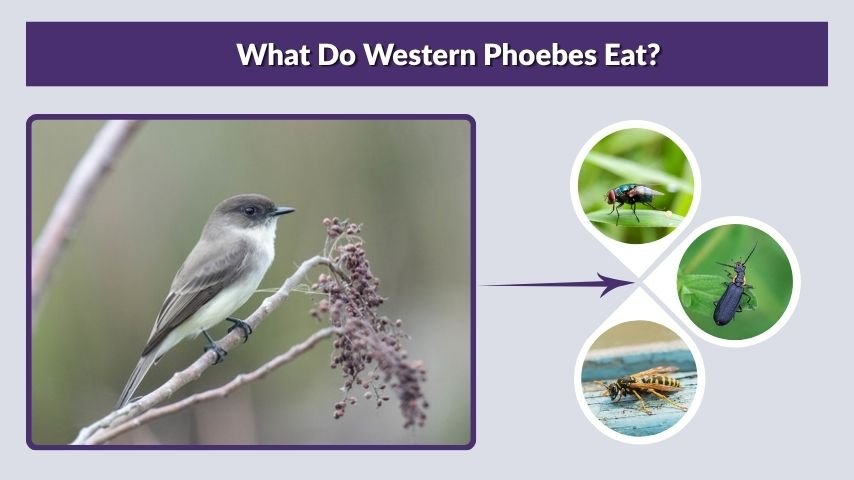
Western Phoebes mainly eat insects. They are skilled aerial hunters and spend much of the day watching from a perch before flying out to catch prey. This feeding style is called flycatching or hawking.
They may catch insects in midair, pick them from the ground, or grab them from vegetation and surfaces.
Common Foods
Their diet may include:
- Flies
- Beetles
- Wasps
- Bees
- Moths
- Grasshoppers
- Crickets
- Small caterpillars
- Other flying insects
Because they eat many insects, Western Phoebes can be helpful around yards, gardens, barns, and farms. They are natural insect hunters, though they should not be viewed as complete pest control.
Hunting Behavior
A Western Phoebe often chooses a favorite perch and returns to it again and again. From there, it scans the air and ground. When it sees prey, it makes a quick flight, catches the insect, and often returns to the same perch.
This repeated perch-and-sally behavior is one of the best ways to identify the bird in the field.
Western Phoebe Behavior
The Western Phoebe is not usually a flashy bird, but its behavior is distinctive. It is alert, active, and often easy to watch because it uses exposed perches.
It may tolerate people if it nests near buildings or farms, but it is still a wild bird and should not be disturbed.
Tail Wagging
One of the most familiar behaviors of the Western Phoebe is tail wagging or tail dipping. The bird often lowers and raises its tail while perched. This movement may help with balance, communication, or alertness, but for birdwatchers, it is mostly a helpful identification clue.
Other phoebes also wag their tails, so this behavior should be used together with color, habitat, and location.
Calls and Sounds
The Western Phoebe gives a sharp, simple call. Its song is not as musical as many songbirds. Instead, it has a rough, clear quality that matches its flycatcher family.
The call is often heard near nesting areas or feeding perches. Once you learn the sound, it can help you notice the bird before you see it.
Western Phoebe Nesting
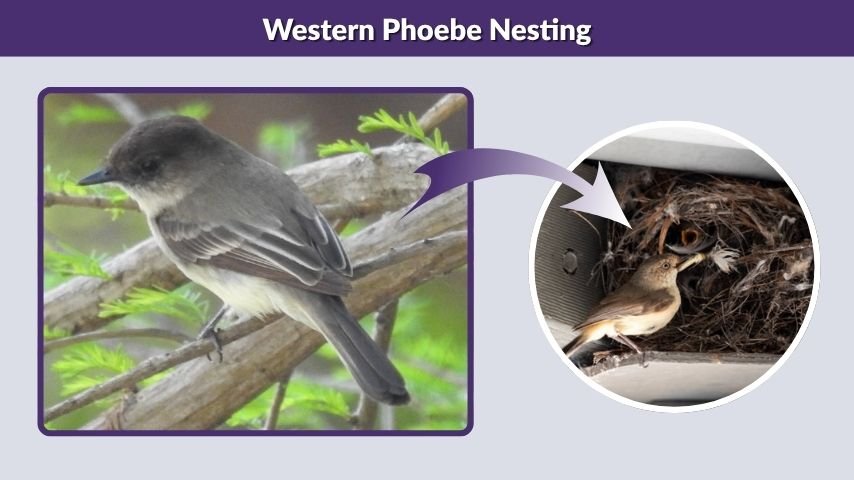
Western Phoebes often build nests on protected ledges. They use natural rock faces as well as human-made structures. This makes them common around bridges, barns, porches, sheds, and buildings.
The nest is usually cup-shaped and made with mud, plant fibers, grass, and other materials. It is attached to a vertical or sheltered surface.
Nest Locations
Typical nest sites include:
- Rock ledges
- Cliff faces
- Bridge beams
- Barn rafters
- Building ledges
- Culverts
- Porches and sheds
These sites protect the nest from weather and some predators. A good nest location also gives adults easy access to nearby feeding areas.
Eggs and Young
The female usually lays a small clutch of eggs. Both the nesting period and feeding period require frequent insect hunting by the adults. After the young hatch, the parents bring insects repeatedly throughout the day.
Young phoebes grow quickly and leave the nest once they are developed enough to fly. In good conditions, a pair may raise more than one brood in a season.
Western Phoebe Around Homes
Western Phoebes may nest near homes, barns, sheds, or porch structures. Many people enjoy having them nearby because they are quiet, interesting to watch, and helpful insect hunters.
However, nesting near buildings can sometimes create concerns about droppings or nest placement. In most cases, the best approach is to leave active nests alone until the young have fledged.
Should You Remove a Western Phoebe Nest?
You should not remove an active bird nest with eggs or young. Native birds are often legally protected, and disturbing active nests can harm the birds. If a nest is in an inconvenient place, wait until the breeding attempt is finished before cleaning the area.
After the birds leave, you can block unsafe or unwanted nesting spots before the next nesting season.
How to Make Your Yard Bird-Friendly
To support Western Phoebes and other insect-eating birds:
- Avoid heavy pesticide use
- Keep some natural vegetation
- Provide open perching areas
- Protect streamside plants if present
- Keep cats indoors or supervised
- Leave active nests undisturbed
A yard with insects, shrubs, open perches, and safe nesting space is more likely to attract phoebes.
Western Phoebe vs Similar Birds
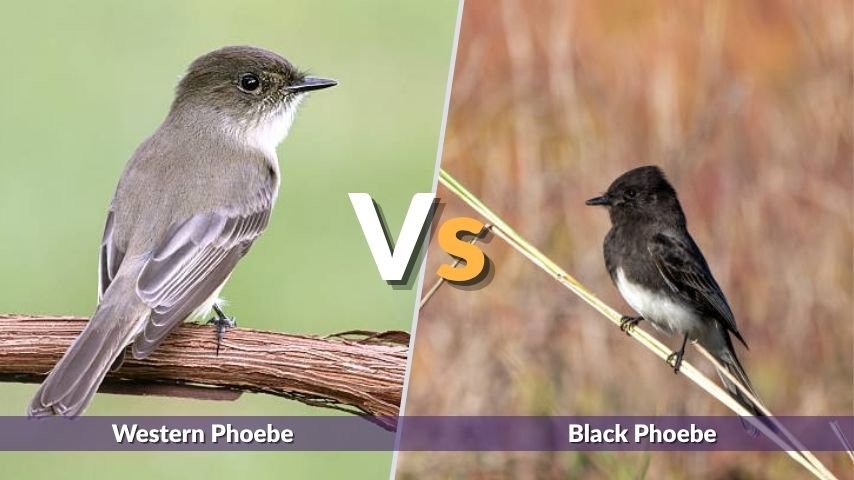
Western Phoebes can be confused with several other flycatchers. Since many flycatchers are plain gray or brown, behavior and habitat are very important for identification.
The most common confusion is with Black Phoebe and Say’s Phoebe.
Western Phoebe vs Black Phoebe
Black Phoebes are darker and show strong contrast between a blackish upper body and a white belly. They are often found near water and in urban areas. Western Phoebes look softer and browner, without the bold black-and-white pattern.
Both birds wag their tails and catch insects from perches, so color and habitat are helpful clues.
Western Phoebe vs Say’s Phoebe
Say’s Phoebe has warmer coloring, especially on the lower belly, which is often cinnamon or peachy. It is common in open country, deserts, grasslands, and fields. Western Phoebes are usually grayer and may be more closely tied to wooded edges, streams, or structures.
If the bird looks warm and rusty below, consider Say’s Phoebe. If it looks plain gray-brown and pale below, Western Phoebe may be more likely.
Why Western Phoebes Matter
Western Phoebes are important insect predators in their habitats. By feeding on flying insects and other small invertebrates, they play a natural role in the food web.
They are also useful indicators of healthy semi-open habitats, especially places with insect life, water sources, and safe nesting surfaces.
Benefits to the Environment
Western Phoebes help by:
- Eating many flying insects
- Feeding young with protein-rich prey
- Supporting predator-prey balance
- Using both natural and human-made nesting sites
- Adding bird diversity to farms, yards, and stream areas
Their presence can make a property feel more alive and connected to nature.
Conservation and Human Impact
Western Phoebes are generally adaptable, but they still depend on healthy insect populations and suitable nesting areas. Heavy pesticide use, loss of habitat, and disturbance around nests can affect local birds.
Protecting natural edges, avoiding unnecessary chemicals, and respecting active nests are simple ways to support them.
FAQs
What does a Western Phoebe look like?
A Western Phoebe is a plain gray-brown flycatcher with pale underparts, a darker head, a slim bill, and a long tail. It often sits upright on exposed perches and repeatedly dips or wags its tail, which helps separate it from many other small birds.
Where do Western Phoebes build nests?
Western Phoebes usually build nests on protected ledges, cliffs, bridges, barns, sheds, porches, and building structures. Their nests are cup-shaped and often made with mud, grass, and plant fibers. They prefer sites sheltered from rain and predators.
What do Western Phoebes eat?
Western Phoebes mainly eat insects, including flies, beetles, wasps, moths, grasshoppers, crickets, and small caterpillars. They hunt by watching from a perch, flying out to catch prey, and often returning to the same perch again.
Are Western Phoebes good to have around?
Yes, Western Phoebes are generally good to have around because they eat insects and are interesting to watch. They may nest near buildings, barns, or porches. Active nests should be left undisturbed until the young birds leave.
How can you tell a Western Phoebe from a Black Phoebe?
A Western Phoebe is softer gray-brown with pale underparts, while a Black Phoebe has a darker blackish body and a strong white belly contrast. Both birds wag their tails, so body color, habitat, and overall contrast are useful identification clues.
