
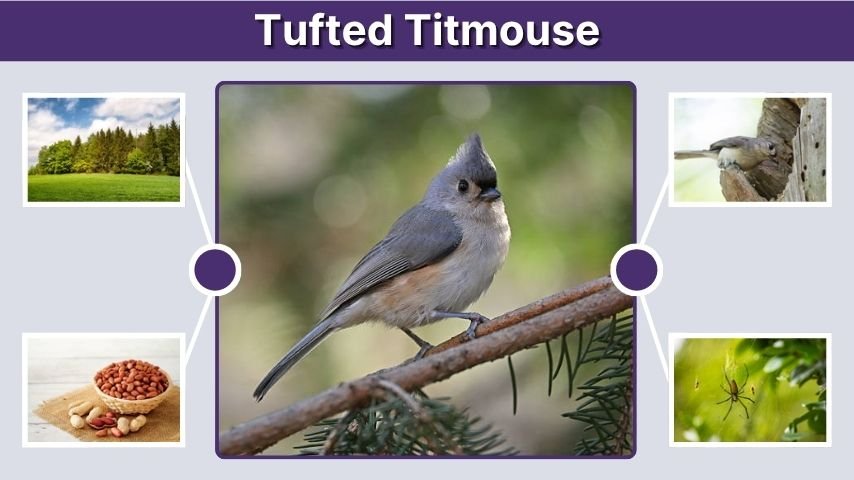
The Tufted Titmouse is a small gray songbird with a bold personality, a pointed crest, large dark eyes, and a loud, clear voice. It is one of the most familiar backyard birds in the eastern United States, often seen visiting feeders, hopping through trees, or calling from wooded areas. Although it may look simple at first, the Tufted Titmouse is full of character. Its curious behavior, recognizable song, and year-round presence make it a favorite among birdwatchers and homeowners who enjoy attracting birds to their yards.
What Is a Tufted Titmouse?
A Tufted Titmouse is a small songbird in the chickadee and tit family. Its scientific name is Baeolophus bicolor. The word “tufted” refers to the small crest on top of its head, while “titmouse” is an old name used for small active birds in this family.
This bird is known for being alert, social, and vocal. It often moves quickly through branches, searching for insects, seeds, and nuts. It may appear alone, in pairs, or with mixed flocks of chickadees, woodpeckers, nuthatches, and other small birds.
Tufted Titmouse Size and Shape
The Tufted Titmouse is a small bird, but it looks slightly larger than a chickadee because of its crest, long tail, and rounded body. It has a fairly large head, short neck, strong legs, and a short, stout bill designed for cracking seeds and grabbing insects.
Its body shape is compact and balanced. When perched, it often looks upright and alert. The crest may be raised or flattened depending on mood, excitement, or alarm.
What Does a Tufted Titmouse Look Like?
The Tufted Titmouse is mostly soft gray above and pale below. It has a gray crest, white face, dark round eyes, and a small black patch above the bill. Many birds show a light peach or rusty wash along the sides.
The combination of gray upperparts, white face, crest, and black forehead patch makes this bird easy to recognize. Unlike many colorful backyard birds, its beauty is subtle but distinctive.
Tufted Titmouse Identification Table
The Tufted Titmouse can sometimes be confused with chickadees, Oak Titmice, or Black-crested Titmice. The table below highlights key identification points.
| Feature | Tufted Titmouse | Chickadee | Oak Titmouse | Black-crested Titmouse |
| Crest | Noticeable gray crest | No crest | Small plain crest | Black crest |
| Face | Pale face with dark eyes | Black cap and bib | Plain gray face | Pale face with black crest |
| Body color | Gray above, pale below | Gray, black, and white | Mostly plain gray | Gray with bold black crest |
| Range | Eastern and central U.S. | Widespread, varies by species | Western U.S. oak habitats | Texas and northern Mexico |
| Feeder behavior | Bold but quick | Active and social | More local and habitat-specific | Similar to Tufted Titmouse |
Tufted Titmouse Range and Habitat
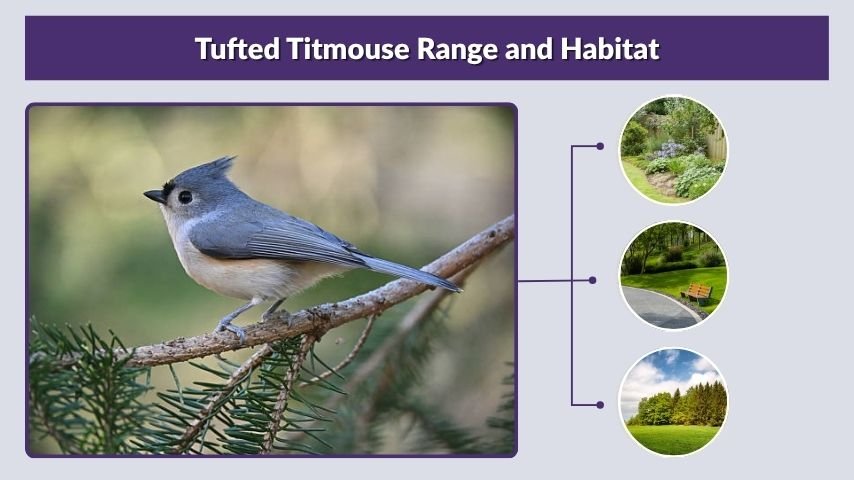
The Tufted Titmouse is most common in the eastern United States and parts of the central United States. It is often found in deciduous forests, mixed woodlands, parks, suburbs, gardens, and wooded neighborhoods.
It prefers areas with mature trees because trees provide food, shelter, nesting cavities, and safe travel routes. However, it adapts well to human environments when yards include trees, shrubs, and feeders.
Common Habitats
Tufted Titmice live in many wooded settings, including:
- Deciduous forests
- Mixed woodlands
- Backyard gardens
- City parks
- Suburban neighborhoods
- Wooded farms
- Streamside trees
- Forest edges
They are not usually birds of wide-open grassland. They prefer places with enough trees for cover and feeding.
Do Tufted Titmice Migrate?
Tufted Titmice generally do not migrate long distances. In most of their range, they stay in the same area throughout the year. This makes them a reliable backyard bird in every season.
During winter, they may join small mixed flocks with chickadees, nuthatches, and woodpeckers. These flocks help birds find food and watch for predators.
Tufted Titmouse Call and Song
The Tufted Titmouse is famous for its loud, whistled song. Many people describe the song as sounding like “peter-peter-peter.” It is clear, repeated, and easy to notice in spring and early summer.
Its calls are also varied. Tufted Titmice use sharp notes, scolding sounds, and contact calls to communicate with mates, flock members, and young birds.
What Does a Tufted Titmouse Sound Like?
A Tufted Titmouse sound may be loud and ringing, especially during breeding season. The repeated “peter-peter-peter” song can carry through wooded areas. Calls may sound sharper, scratchier, or more urgent.
They are especially vocal when alarmed. If a hawk, owl, snake, cat, or other threat is nearby, titmice may call loudly and attract other birds to the area.
Bird Call Tufted Titmouse: Why It Calls
Tufted Titmice call for several reasons. Males sing to claim territory and attract mates. Pairs use calls to stay in contact. Families use calls while moving through trees. Alarm calls warn other birds about danger.
Because they are vocal and active, learning their sound is one of the best ways to identify them.
Tufted Titmouse Diet
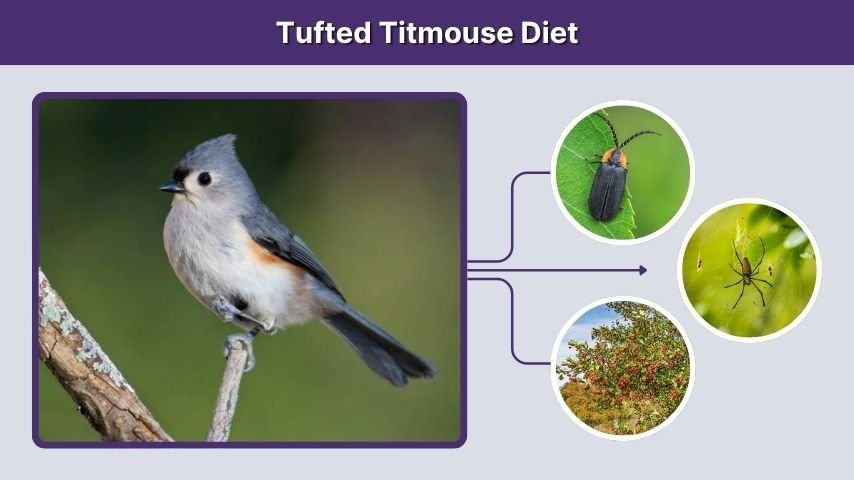
The Tufted Titmouse diet includes insects, seeds, nuts, berries, and small fruits. Its diet changes with the season. In warmer months, insects and other small invertebrates are especially important. In colder months, seeds and nuts become more important.
This bird is a frequent visitor to feeders and often takes one seed at a time, flies to a branch, and cracks it open with its bill.
What Do Tufted Titmouse Birds Eat?
Tufted Titmice commonly eat:
- Beetles
- Caterpillars
- Spiders
- Ants
- Wasps
- Moths
- Seeds
- Acorns
- Sunflower seeds
- Peanuts
- Berries
- Small fruits
They are helpful in natural pest control because they consume many insects, especially during nesting season when young birds need protein-rich food.
Tufted Titmouse at Bird Feeders
At feeders, Tufted Titmice often prefer sunflower seeds, peanuts, suet, and mixed seed blends. They are quick visitors. Instead of staying at the feeder for a long time, they often grab food and carry it away.
They may store food in bark crevices or other hiding places. This behavior helps them survive when food becomes harder to find.
Tufted Titmouse Nesting
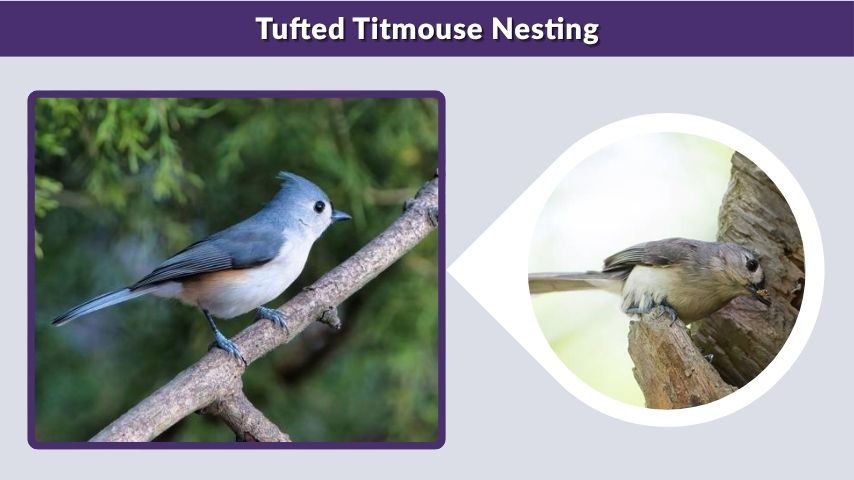
Tufted Titmice are cavity-nesting birds. They usually nest in natural holes in trees, old woodpecker cavities, or birdhouses. They do not usually make their own cavities, so they depend on existing holes.
Their nesting habits make mature trees and dead tree limbs important habitat features. Safe nest boxes can also help them in yards where natural cavities are limited.
Tufted Titmouse Nest
A Tufted Titmouse nest is built inside a cavity. The nest may include leaves, grass, moss, bark strips, hair, feathers, and other soft materials. One interesting habit is that titmice sometimes use animal hair in their nests.
The female does most of the nest building. The nest cup is made soft enough to hold eggs and protect young birds.
Tufted Titmouse Eggs
Tufted Titmouse eggs are usually small and pale, often marked with reddish or brownish speckles. The female incubates the eggs while the male may bring food.
After hatching, both parents feed the young. The chicks grow quickly and leave the nest once they are ready to fly.
Tufted Titmouse Nest Box and Birdhouse
A Tufted Titmouse may use a nest box if it is placed in a wooded or semi-wooded area. A good birdhouse should be mounted securely, protected from predators, and placed away from heavy disturbance.
Nest boxes should be cleaned after the breeding season, not while active eggs or young are inside. Active nests should always be left undisturbed.
Male vs Female Tufted Titmouse
Many people search for Tufted Titmouse male vs female because they want to identify the sex of a bird in their yard. However, male and female Tufted Titmice look very similar.
Unlike some birds, where males are brighter and females are duller, both sexes have gray upperparts, pale faces, crests, and similar markings.
How to Tell Male and Female Apart
It is difficult to tell male and female Tufted Titmice apart by appearance alone. Behavior can give clues during breeding season. Males are more likely to sing repeatedly to defend territory. Females spend more time building the nest and incubating eggs.
Still, even experienced birdwatchers may not identify sex confidently unless they observe nesting behavior.
Juvenile Tufted Titmouse
A juvenile Tufted Titmouse looks similar to an adult but may appear softer, duller, or less sharply marked. Young birds may have shorter crests and may behave clumsily as they learn to forage.
Juveniles often follow adults and beg for food after leaving the nest. Their calls may sound thinner or more persistent than adult calls.
Tufted Titmouse Behavior
The Tufted Titmouse is curious, active, and sometimes bold. It may come close to homes, feeders, and bird baths, but it usually does not stay still for long.
Its movements are quick and purposeful. It hops through branches, hangs briefly from twigs, examines bark, and flies short distances between trees.
Social Behavior
Tufted Titmice are often seen in pairs or small groups. In winter, they may join mixed feeding flocks. These flocks improve safety because more birds can watch for predators.
They can be assertive at feeders, but they are not usually as aggressive as larger birds. Their alert calls often help warn other species.
Food Caching
Tufted Titmice sometimes store seeds and nuts for later. They may hide food in bark cracks, under leaves, or in small crevices. This behavior helps them survive cold weather and periods when food is less available.
Food caching also shows their intelligence and memory. Like chickadees, they can remember many hiding places.
Tufted Titmouse vs Chickadee
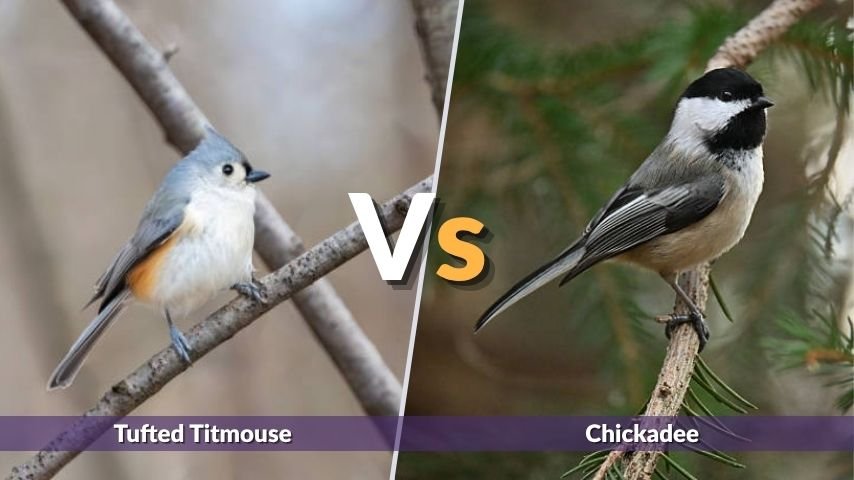
Tufted Titmice and chickadees are related and often appear together, but they are easy to separate once you know what to look for.
A Tufted Titmouse has a crest, plain gray upperparts, pale face, and no black cap. A chickadee has a black cap, black bib, white cheeks, and no crest.
Key Differences
Look for these differences:
- Tufted Titmouse has a pointed crest
- Chickadee has a black cap and bib
- Tufted Titmouse is usually larger
- Chickadee has a rounder, smaller look
- Tufted Titmouse song is often “peter-peter-peter”
- Chickadee calls often sound like “chick-a-dee-dee-dee”
Both birds may visit the same feeders and travel in the same winter flocks.
Tufted Titmouse vs Blue Jay
A Tufted Titmouse is much smaller than a Blue Jay. Both birds have crests, but their size, color, and behavior are very different.
Blue Jays are bright blue, white, and black. They are larger, louder, and more dominant at feeders. Tufted Titmice are gray, smaller, and more delicate in movement.
If the bird is small, gray, and quick with a soft crest, it is likely a Tufted Titmouse, not a Blue Jay.
How to Attract Tufted Titmice
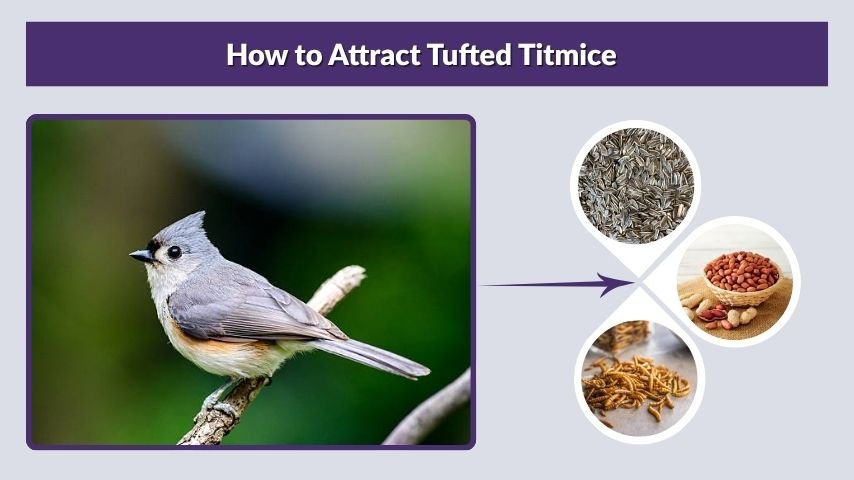
Attracting Tufted Titmice is easier if your yard has trees, shrubs, feeders, and safe nesting areas. They prefer yards that feel like woodland edges rather than open spaces.
Food, water, and shelter are the three most important factors.
Best Foods for Tufted Titmice
Good feeder foods include:
- Black oil sunflower seeds
- Hulled sunflower seeds
- Peanuts
- Suet
- Mealworms
- Mixed seed blends with quality ingredients
They may carry food away instead of eating at the feeder. This is normal behavior.
Make Your Yard Titmouse-Friendly
To create a better habitat:
- Plant native trees and shrubs
- Keep some natural cover
- Provide clean water
- Avoid heavy pesticide use
- Leave safe dead limbs when possible
- Install a proper nest box
- Keep cats indoors or supervised
A natural, layered yard will attract more birds than a bare lawn.
Fun Facts About the Tufted Titmouse
The Tufted Titmouse may be common, but it has many interesting traits. Its bold voice and active behavior make it one of the most enjoyable backyard birds to watch.
Interesting Facts
- The plural of titmouse can be “titmice.”
- Tufted Titmice often store food for later.
- They may use animal hair in their nests.
- They are closely related to chickadees.
- Their loud song is often heard before the bird is seen.
- They often travel with mixed flocks in winter.
- They are year-round residents in much of their range.
These traits make the Tufted Titmouse both practical and charming: a small bird with a big presence.
FAQs
What does a Tufted Titmouse look like?
A Tufted Titmouse is a small gray bird with a pointed crest, pale face, dark eyes, and a small black patch above the bill. It has gray upperparts, pale underparts, and sometimes a peachy wash along the sides.
What does a Tufted Titmouse sound like?
The Tufted Titmouse is known for a loud, clear “peter-peter-peter” song. It also makes sharp calls, scolding notes, and contact sounds. Its voice is one of the easiest ways to notice it in wooded areas.
What do Tufted Titmice eat?
Tufted Titmice eat insects, spiders, seeds, nuts, berries, and small fruits. At feeders, they commonly take sunflower seeds, peanuts, suet, and mealworms. They may carry food away and store it for later.
Do Tufted Titmice use birdhouses?
Yes, Tufted Titmice may use birdhouses or nest boxes if they are placed in wooded or semi-wooded areas. They are cavity nesters, so they also use old woodpecker holes and natural tree cavities.
Are male and female Tufted Titmice different?
Male and female Tufted Titmice look very similar and are difficult to tell apart by appearance. During breeding season, males are more likely to sing often, while females spend more time building the nest and incubating eggs.
