
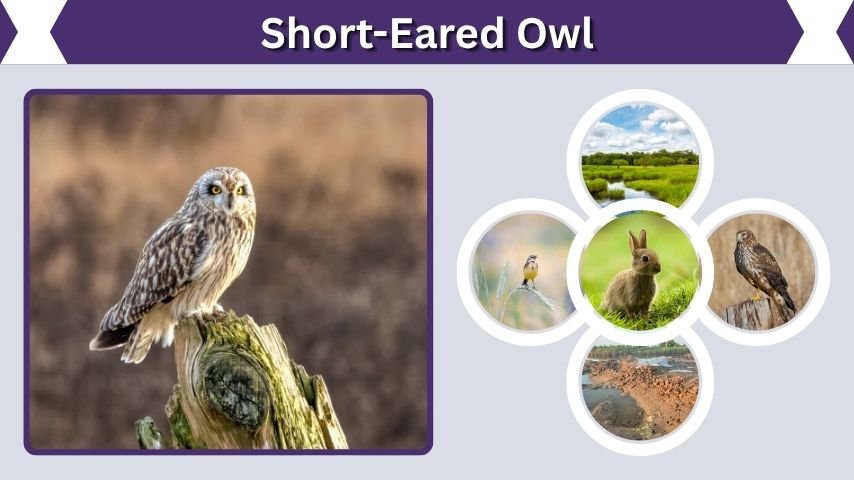
The short-eared owl is one of the most widespread and fascinating owls in the world. Known for its low, floating flight over open fields, this grassland hunter is often seen at dawn, dusk, and even during the day. From its unusual ground nest to its barking calls and long-winged hunting style, the short-eared owl is a bird full of surprises.
What Is a Short-Eared Owl?
The short-eared owl is a medium-sized owl with the scientific name Asio flammeus. It belongs to the family Strigidae, which includes many typical owls. Despite its name, the “ears” are not real ears. They are small feather tufts on top of the head, and they are often so short that they are hard to see.
This owl is best known for living in open country rather than dense forests. It hunts over grasslands, marshes, moorlands, tundra, coastal fields, prairies, and agricultural land. Unlike many owls that stay hidden until dark, short-eared owls are often active in daylight, especially in winter or during the breeding season.
Quick Short-Eared Owl Facts
- Scientific name: Asio flammeus
- Family: Strigidae
- Size: Medium-sized owl
- Wingspan: About 34 to 40 inches
- Main food: Voles, mice, and other small mammals
- Habitat: Open grassland, marshes, tundra, moorland, fields, and wetlands
- Nest: On the ground
- Activity: Often crepuscular and partly diurnal
- Conservation status: Globally listed as Least Concern, but declining or threatened in some regions
Short-Eared Owl Identification
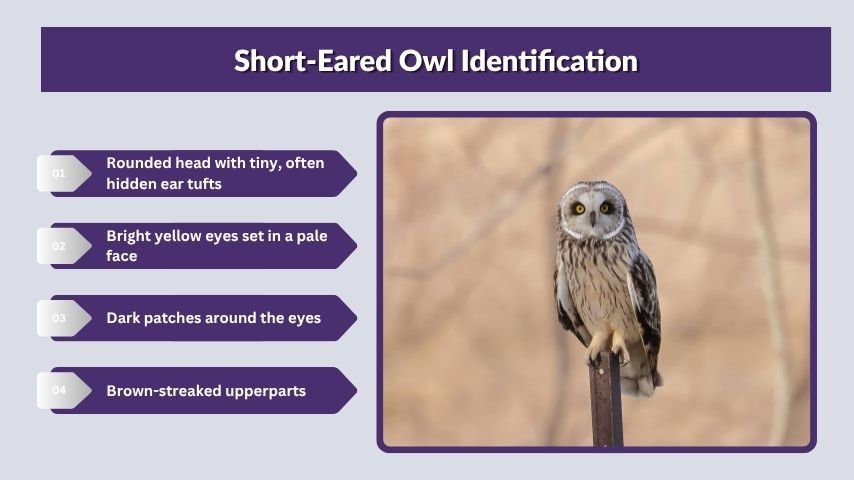
The short-eared owl has a rounded head, yellow eyes, a pale facial disk, and a dark patch around each eye. Its body is mottled brown, buff, and cream, helping it blend into grass and dry vegetation. In flight, it looks long-winged and buoyant, often flying low over open land with slow, floppy wingbeats.
How to Identify a Short-Eared Owl
Look for these features:
- Rounded head with tiny, often hidden ear tufts
- Bright yellow eyes set in a pale face
- Dark patches around the eyes
- Brown-streaked upperparts
- Pale underwings with darker wrist patches
- Long, narrow wings
- Low, moth-like flight over open fields
- Habit of perching on fence posts, low mounds, or the ground
A short-eared owl in flight is often easier to identify than one sitting still. Its hunting style is distinctive: it glides low, flaps slowly, then drops suddenly into grass when it detects prey.
Short-Eared Owl Size and Wingspan
Short-eared owls are about the same general size as barn owls, but they often appear longer-winged in flight. Their body length is usually around 14 to 17 inches, while the wingspan is commonly around 34 to 40 inches. Females are usually slightly larger and darker than males, although the difference can be subtle in the field.
| Feature | Short-Eared Owl Description |
| Scientific name | Asio flammeus |
| Average length | About 14–17 inches |
| Wingspan | About 34–40 inches |
| Eye color | Yellow |
| Main habitat | Open grasslands, marshes, tundra, moorland, and fields |
| Main diet | Voles, mice, and other small mammals |
| Nest type | Ground nest in grass or vegetation |
| Best viewing time | Dawn, dusk, winter afternoons, and breeding displays |
Short-Eared Owl Habitat
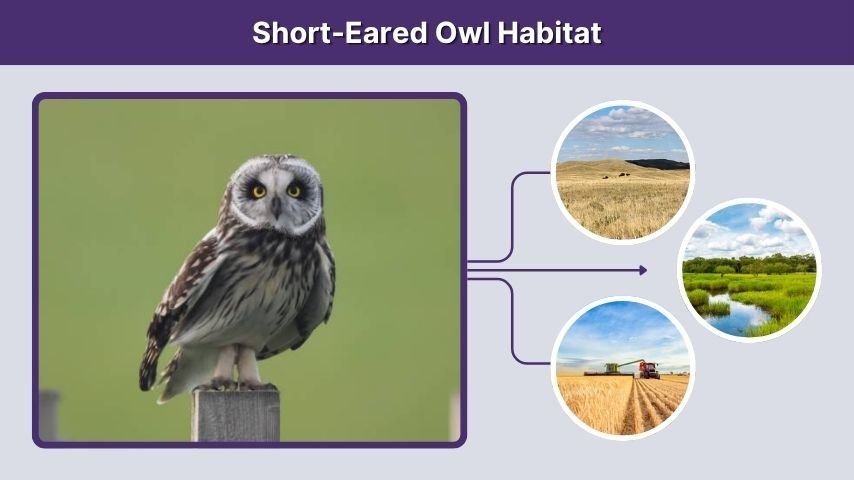
Short-eared owls are birds of open landscapes. They avoid dense woodland and prefer areas where they can fly low and listen for prey moving through grass. Their habitat varies by region, but the key requirement is usually open ground with enough small mammals to hunt.
Common Habitats
Short-eared owls may live or hunt in:
- Native grasslands and prairies
- Wet meadows and marshes
- Coastal saltmarshes
- Tundra and open moorland
- Agricultural fields
- Reclaimed grasslands
- Airports, dunes, and large open fields
- Winter roosting areas with rough vegetation
Their use of habitat can change with prey abundance. In years when vole numbers are high, short-eared owls may appear in unusually large numbers in a particular region. When prey becomes scarce, they may move elsewhere.
Short-Eared Owl Range and Distribution
The short-eared owl has a very wide range. It is found across much of North America, Europe, Asia, parts of South America, and many island regions. It is one of the most widely distributed owls in the world.
In North America, it breeds in northern areas, open grasslands, tundra, and some prairie regions. In winter, many birds move south or gather in areas with suitable hunting habitat. In the United Kingdom and Ireland, short-eared owls breed mainly in open uplands and moorlands but are seen more widely in winter.
Where Do Short-Eared Owls Live?
Short-eared owls live where open habitat and prey are available. Good places to look include large grasslands, marsh edges, coastal fields, rough pastures, reclaimed land, airports, and protected wildlife areas.
They are often nomadic, meaning they do not always return to exactly the same place every year. Their movements are strongly influenced by food supply, especially vole populations.
Short-Eared Owl Call and Sounds
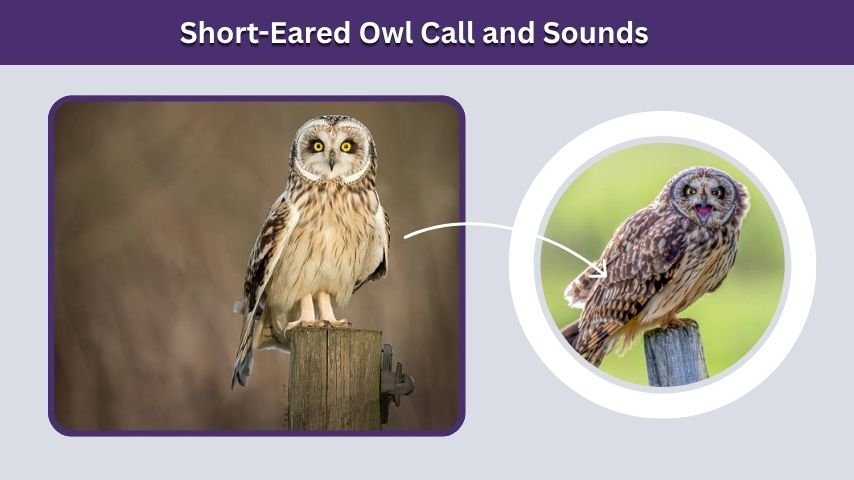
Short-eared owls are not usually very loud birds, but they do make several important sounds. The male gives a repeated hooting call during courtship flights. Both males and females may bark, scream, whine, or cluck, especially near the nest or when alarmed.
What Does a Short-Eared Owl Sound Like?
Common short-eared owl sounds include:
- A repeated “hoo-hoo-hoo” courtship call
- A bark-like “kee-ow”
- Screams and whines during defense
- Clucking sounds from females
- Wing-clapping during display flights
People often search for “short eared owl call,” “short eared owl sound,” or “short eared owl hoot,” but this species is generally quieter than many forest owls. The best time to hear one is during the breeding season, especially when males perform display flights.
Short-Eared Owl Flight and Hunting Behavior
The short-eared owl is famous for its graceful, low flight. It often flies just above the grass, rocking from side to side with slow wingbeats. This hunting style allows it to listen and watch for voles, mice, and other prey.
How Short-Eared Owls Hunt
They usually hunt by:
- Flying low over fields or marshes
- Listening for movement in grass
- Hovering briefly over prey
- Dropping suddenly into vegetation
- Perching low between hunting flights
- Hunting at dawn, dusk, and sometimes during the day
Short-eared owls have excellent hearing and vision. Their facial disk helps direct sound toward their ears, making it easier to locate prey hidden under grass or snow.
What Do Short-Eared Owls Eat?
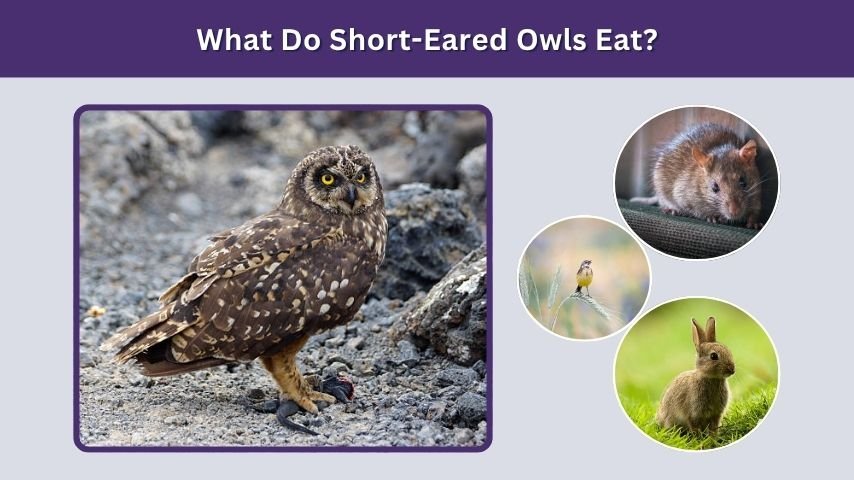
Short-eared owls mainly eat small mammals. Voles are one of their most important foods, but they also eat mice, shrews, rats, young rabbits, small birds, and occasionally insects. In coastal and island habitats, they may take more birds than usual.
Their diet changes depending on what is available. When vole numbers are high, short-eared owls may breed successfully and raise larger broods. When vole populations crash, the owls may leave the area or produce fewer young.
Short-Eared Owl Food Chain
In the food chain, the short-eared owl is a predator of small mammals and birds. It helps control rodent populations in grassland ecosystems. However, eggs and chicks can be vulnerable to foxes, skunks, raccoons, crows, gulls, and other ground predators.
Short-Eared Owl Nesting and Breeding
Unlike many owls that nest in tree cavities or old nests made by other birds, the short-eared owl nests on the ground. The female usually chooses a hidden spot among grasses, reeds, or low vegetation. She makes a shallow scrape and lines it with grass, feathers, and down.
Short-Eared Owl Nesting Facts
- Nest is built on the ground
- Female lines the nest with grass and feathers
- Eggs are usually white
- Clutch size varies with food supply
- Young may leave the nest before they can fly
- Adults may distract predators by acting injured
- Breeding success often depends on vole abundance
Because they nest on the ground, short-eared owls are sensitive to habitat disturbance. Mowing, grazing, off-road vehicles, dogs, and human disturbance can all harm nests during the breeding season.
Are Short-Eared Owls Nocturnal?
Short-eared owls are not strictly nocturnal. They are often crepuscular, meaning they are most active around dawn and dusk. However, they may also hunt during daylight, especially in winter, in northern regions with long summer daylight, or when feeding chicks.
This daytime activity makes them one of the easier owl species to watch. Birders often look for them in late afternoon as they begin hunting over fields.
Are Short-Eared Owls Rare or Endangered?
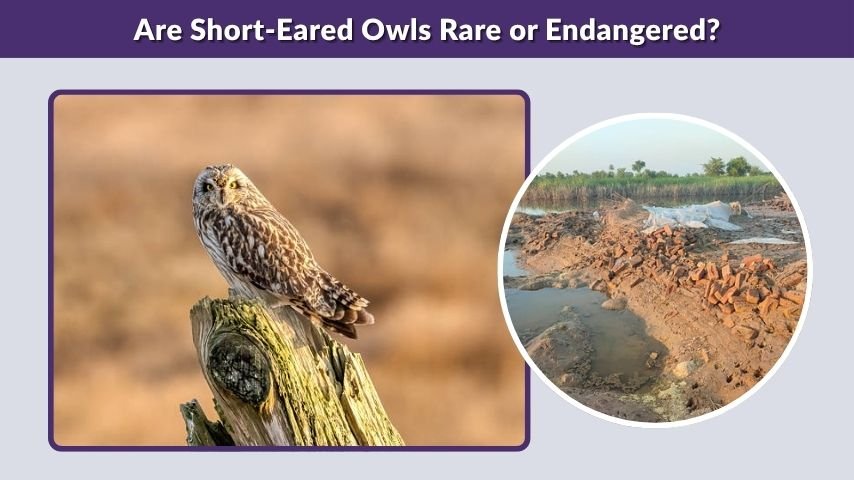
Globally, the short-eared owl is not considered endangered and is listed as Least Concern. However, that does not mean it is doing well everywhere. In many regions, the species has declined because of grassland loss, wetland drainage, agricultural intensification, development, and disturbance at nesting sites.
In some countries, states, or provinces, the short-eared owl is considered threatened, endangered, or a species of conservation concern. This is especially true where large open habitats have been lost or fragmented.
Main Threats
Short-eared owls face several threats:
- Loss of grassland and wetland habitat
- Disturbance of ground nests
- Rodenticide poisoning
- Vehicle collisions
- Declining prey populations
- Changes in farming practices
- Climate-related habitat changes
Protecting large open landscapes is one of the best ways to support this species.
Hawaiian Short-Eared Owl: The Pueo
The Hawaiian short-eared owl is commonly known as the pueo. It is an important bird in Hawaiian culture and is often considered a guardian spirit by some Native Hawaiian traditions. The pueo is a subspecies of the short-eared owl and is found in open areas across the Hawaiian Islands.
Like other short-eared owls, the pueo hunts over grasslands, fields, and open landscapes. It may be seen during the day, which makes it more visible than many owl species.
Galapagos Short-Eared Owl
The Galapagos short-eared owl is another island form of the species. It lives in the Galapagos Islands and is known for hunting in open volcanic and coastal habitats. On some islands, it may prey on seabirds and other island wildlife.
Island populations of short-eared owls are especially interesting because their behavior and diet may differ from mainland birds depending on available prey.
Barn Owl vs Short-Eared Owl
Barn owls and short-eared owls can both hunt open fields, but they look and behave differently. A barn owl has a heart-shaped white face, pale body, and silent ghost-like flight. A short-eared owl has a rounder face, yellow eyes, mottled brown plumage, and a more buoyant, moth-like flight.
Barn owls are often more nocturnal, while short-eared owls are more likely to be seen hunting in daylight or late afternoon.
Long-Eared Owl vs Short-Eared Owl
Long-eared owls and short-eared owls are related, but they use different habitats. Long-eared owls usually roost in trees and have long, obvious ear tufts. Short-eared owls prefer open ground and have tiny ear tufts that are often invisible.
In flight, short-eared owls look paler and more open-country adapted. Long-eared owls are usually more secretive and nocturnal.
Northern Harrier vs Short-Eared Owl
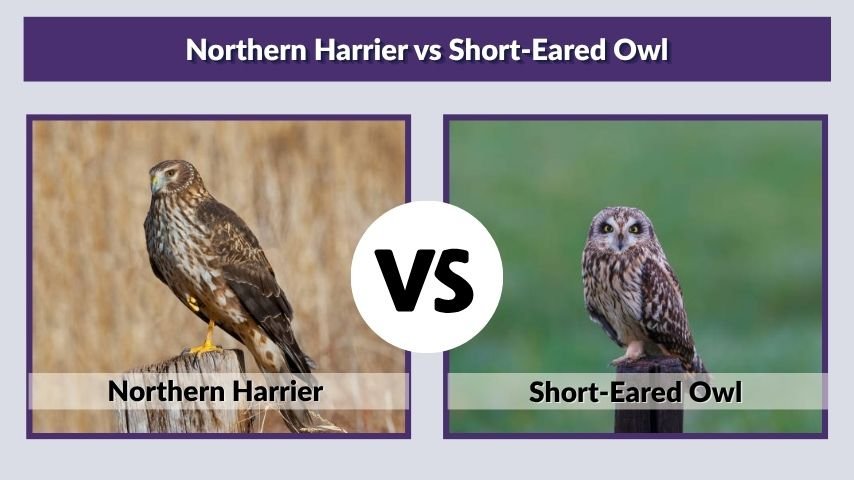
Short-eared owls are sometimes confused with northern harriers because both fly low over grasslands. Northern harriers are hawks, not owls. They have a slimmer body, longer tail, and often a white rump patch. Short-eared owls have a rounder head, broader wings, and a softer, more owl-like flight.
Both species may hunt the same fields, and seeing them together is common in good winter grassland habitat.
Best Time of Day to See Short-Eared Owls
The best time to see short-eared owls is usually late afternoon into dusk. In winter, they may begin hunting before sunset, especially on cloudy days. During breeding season, males may display in the evening with dramatic flight, hooting, and wing-clapping.
How to Find Short-Eared Owls
To improve your chances:
- Visit large open fields, marshes, or grasslands
- Go at dawn or late afternoon
- Watch for low, floating flight
- Scan fence posts and ground mounds
- Check eBird reports for recent sightings
- Keep your distance from hunting or nesting birds
- Avoid walking through nesting habitat in spring and summer
Patience is important. Short-eared owls may appear suddenly after a quiet hour of scanning.
How to Photograph Short-Eared Owls
Short-eared owls are popular with wildlife photographers because they hunt in open light and often fly low. However, they should never be chased, flushed, or baited.
Ethical Photography Tips
- Stay on roads, trails, or public viewing areas
- Use a long lens instead of approaching too closely
- Never enter nesting habitat
- Do not use food or live bait
- Avoid blocking the owl’s hunting path
- Keep dogs away from fields
- Leave if the owl changes behavior because of you
A calm owl hunting naturally makes a better photo than a stressed owl forced into flight.
Short-Eared Owl Adaptations
The short-eared owl has several adaptations that help it survive in open habitats. Its mottled feathers provide camouflage in grass and reeds. Its long wings allow slow, efficient flight over fields. Its facial disk improves hearing, helping it detect prey in thick vegetation. Its flexible movement patterns also allow it to follow food sources across large areas.
Ground nesting is another adaptation to open landscapes where trees may be scarce. However, it also makes the species vulnerable to disturbance and predators.
FAQs
What is the scientific name of the short-eared owl?
The scientific name of the short-eared owl is Asio flammeus. It is a medium-sized owl in the family Strigidae. The name “short-eared” refers to its small feather tufts, which are often difficult to see in the field.
What do short-eared owls eat?
Short-eared owls mainly eat voles, mice, shrews, and other small mammals. They may also eat small birds, insects, and occasionally larger prey depending on habitat and food availability. Their breeding success often rises when vole numbers are high.
Where do short-eared owls live?
Short-eared owls live in open habitats such as grasslands, marshes, tundra, moorland, coastal fields, prairies, and agricultural land. They are widely distributed across North America, Europe, Asia, parts of South America, and several island regions.
Are short-eared owls endangered?
Globally, short-eared owls are listed as Least Concern, but many regional populations are declining. In some areas, they are considered threatened or of conservation concern because of habitat loss, wetland drainage, disturbance, and changes in grassland management.
Are short-eared owls nocturnal?
Short-eared owls are not strictly nocturnal. They often hunt at dawn and dusk, and they may also be active during the day. This makes them easier to observe than many owl species, especially in winter open-country habitats.
