
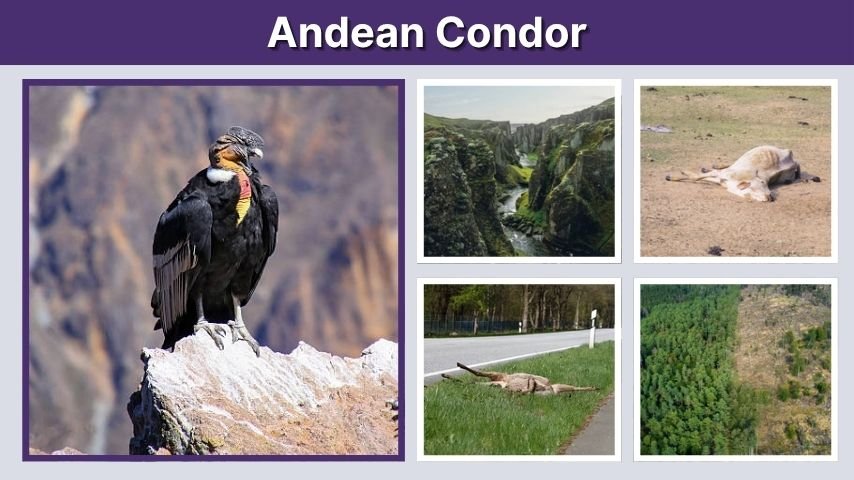
The Andean condor is one of the most impressive birds in the world. Known for its huge wingspan, mountain habitat, and powerful gliding flight, this South American vulture has become a symbol of the Andes. Many people search for the Andean condor because they want to know how big it is, how it compares to humans, where it lives, and why it matters in the wild.
What Is the Andean Condor?
The Andean condor is a large New World vulture found mainly along the Andes Mountains of South America. Its scientific name is Vultur gryphus. Unlike eagles or hawks, the Andean condor is not a hunter in the usual sense. It is mostly a scavenger, meaning it feeds on dead animals and helps clean the environment.
This bird is famous for its dark body, white neck ruff, and broad wings. Adult males usually have a fleshy comb on the head, while females lack this large crest. Males are also generally bigger than females, which is unusual among many large birds of prey.
The Andean condor is admired not only for its size but also for its ability to soar for long periods with very little wing movement. It uses rising warm air and mountain winds to glide across huge distances while searching for food.
Andean Condor Size: How Big Is It?
When people ask about Andean condor size, they usually want to know how it compares to a person or other large birds. The Andean condor is truly massive. It can reach about 3.2 meters in wingspan, making it one of the largest flying birds on Earth by wingspan.
Its body length is usually around 97 to 128 centimeters, and its weight can range from about 7.7 to 15 kilograms. Males are typically heavier and larger than females.
Here is a quick look at common Andean condor measurements:
| Feature | Approximate Size |
|---|---|
| Wingspan | Up to about 3.2 meters |
| Body length | About 97–128 cm |
| Weight | About 7.7–15 kg |
| Lifespan | Often several decades |
| Main range | Andes Mountains and nearby regions |
These numbers help explain why the bird looks so dramatic in flight. Its wings are long and broad, built more for soaring than fast flapping.
Andean Condor Wingspan
The Andean condor wingspan is one of the bird’s most searched features. Its wings can stretch over 10 feet from tip to tip. This makes the bird look enormous when seen flying over cliffs, valleys, or open mountain slopes.
The wings are not just large for show. They are perfectly suited for the condor’s lifestyle. The bird often rides air currents instead of using constant wingbeats. This helps it save energy while covering large areas in search of carrion.
Why Its Wings Are So Important
The Andean condor’s wings help it:
- Glide over mountains and valleys with little effort
- Travel long distances while searching for food
- Use thermal air currents to stay in the sky
- Conserve energy in harsh high-altitude environments
Because the bird is heavy, continuous flapping would require a lot of energy. Soaring is the perfect solution. Watching an Andean condor in flight is one of the best ways to understand how well it is adapted to life in the Andes.
Andean Condor Next to Human
The phrase “Andean condor next to human” is popular because people want a visual sense of scale. Beside a person, the bird’s body may not seem as tall as a human, but its wingspan is much wider than a person’s height.
A fully spread Andean condor can look wider than a small car. Its wings may stretch more than the height of an average adult human. This is why photos of the Andean condor next to a person often surprise viewers.
However, it is important to remember that condors are wild birds. They should not be approached closely in nature. In the wild, the best way to see them is from a safe distance at known viewpoints, cliffs, or protected areas.
Where Do Andean Condors Live?
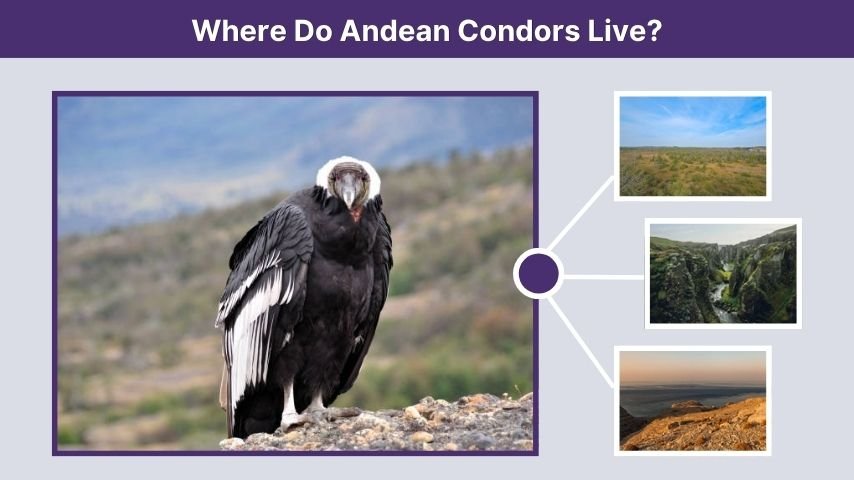
The Andean condor lives mainly in western South America. Its range follows the Andes Mountains through countries such as Colombia, Ecuador, Peru, Bolivia, Chile, and Argentina. It is also associated with parts of the Pacific coast, especially in areas where open landscapes and cliffs provide good flying and nesting conditions.
The bird prefers open habitats where it can spot food from above. Mountain slopes, high grasslands, rocky cliffs, coastal areas, and open plains can all support condors if food and nesting places are available.
Common Andean Condor Habitat
Andean condors are usually found in:
- High mountain regions
- Open grasslands
- Rocky cliffs and canyons
- Coastal desert areas in some countries
- Remote valleys and wide open landscapes
Cliffs are especially important because condors use them for resting, nesting, and launching into flight. A high cliff gives the bird a natural takeoff point, allowing it to catch rising air currents more easily.
What Do Andean Condors Eat?
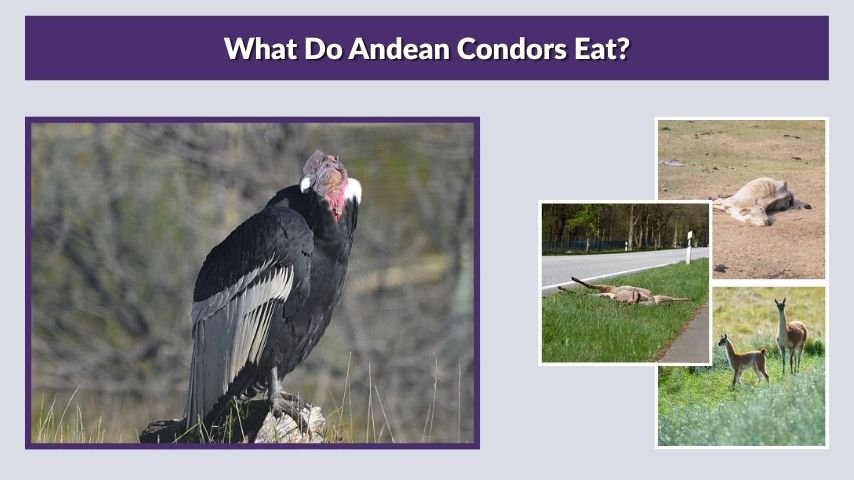
The Andean condor diet is based mostly on carrion. This means the bird eats animals that are already dead. Its food can include wild mammals, livestock carcasses, and animals found along the coast.
Because it feeds on dead animals, the Andean condor plays an important role in the ecosystem. It helps remove carcasses that might otherwise spread disease or attract large numbers of other scavengers.
Common Foods in the Andean Condor Diet
The Andean condor may feed on:
- Dead deer or wild mammals
- Livestock carcasses
- Guanacos and other native animals
- Marine animals near coastal areas
- Large carrion found in open landscapes
Condors have excellent eyesight and can search large areas from the air. They may also watch the behavior of other scavengers to locate food. Since carrion is not always easy to find, the bird may travel long distances between meals.
Andean Condor Lifespan
The Andean condor can live for a long time, especially compared with many smaller birds. In protected environments, some individuals may live for several decades. In the wild, survival depends on food availability, habitat quality, human pressure, poisoning risk, and other threats.
Long lifespan is important because condors reproduce slowly. They do not produce many chicks quickly. This makes population recovery difficult when adult birds are killed or breeding pairs are disturbed.
Why Slow Reproduction Matters
Slow reproduction means:
- Population growth is naturally limited
- Losing adult birds has a serious impact
- Conservation programs need long-term planning
- Nest protection is very important
A species that lives long and breeds slowly can remain stable when conditions are good. But when threats increase, it may decline faster than it can recover.
Is the Andean Condor the Largest Flying Bird?
The Andean condor is often described as one of the largest flying birds in the world. It is especially famous among land birds because of its enormous wingspan. While some seabirds, such as large albatrosses, may have even longer wingspans, the Andean condor is still one of the greatest examples of large soaring flight.
It is also often considered one of the largest birds of prey or vultures in the world. Its size, weight, and wingspan make it stand out even among other large raptors.
Andean Condor vs California Condor
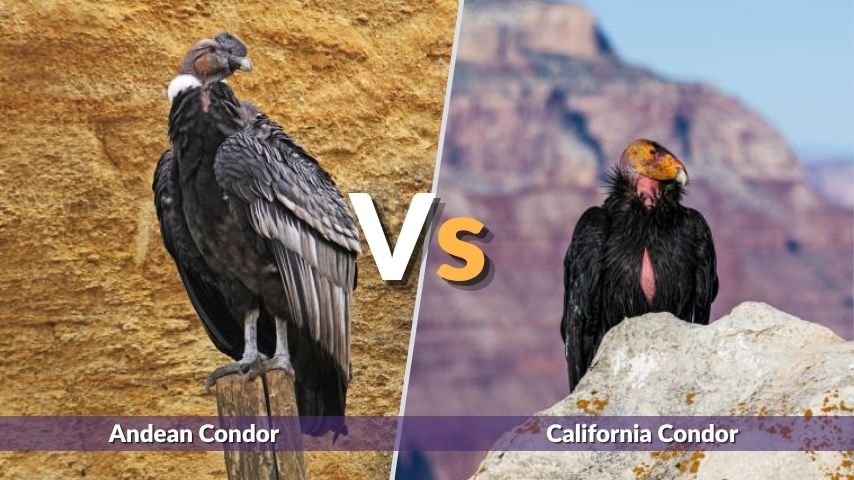
The Andean condor and California condor are both huge vultures, and many people compare them. They are related as New World vultures, but they live in different regions.
The Andean condor is native to South America, especially the Andes. The California condor is native to North America and is found in parts of the western United States and nearby areas after major conservation efforts.
In terms of size, both birds are enormous. The Andean condor is often heavier, while the California condor is also known for its impressive wingspan. Both species face conservation challenges and depend on large open landscapes where they can find carrion.
Key Differences
The main differences include:
- Andean condors live in South America
- California condors live in North America
- Andean condors are strongly linked with mountain and coastal landscapes
- California condors are closely associated with conservation recovery programs
- Male Andean condors have a noticeable comb on the head
Both birds show how important vultures are to healthy ecosystems.
Are Andean Condors Dangerous?
Andean condors are not usually dangerous to humans. They are scavengers, not predators that hunt people. Their beaks are adapted for tearing carrion, and their feet are not as powerful for grabbing prey as those of eagles.
Still, they are large wild birds and should be respected. People should not try to touch, feed, chase, or disturb them. Human disturbance can affect feeding behavior, nesting success, and long-term survival.
The idea of an “Andean condor attack” is often exaggerated. Most real conservation concerns are the opposite: condors are more threatened by humans than humans are by condors.
Why Are Andean Condors Important?
The Andean condor is important for ecological, cultural, and conservation reasons. In nature, it helps clean the landscape by feeding on dead animals. This scavenging role supports a healthier environment.
Culturally, the bird is deeply connected to Andean identity. It appears in stories, symbols, art, and national imagery across parts of South America. For many communities, the condor represents power, freedom, endurance, and the high mountains.
The Andean Condor’s Role
The Andean condor matters because it:
- Removes carrion from the environment
- Supports natural nutrient recycling
- Acts as a symbol of the Andes
- Indicates the health of open mountain ecosystems
- Encourages wildlife tourism and conservation awareness
Protecting the Andean condor also helps protect the landscapes where it lives.
Are Andean Condors Endangered?
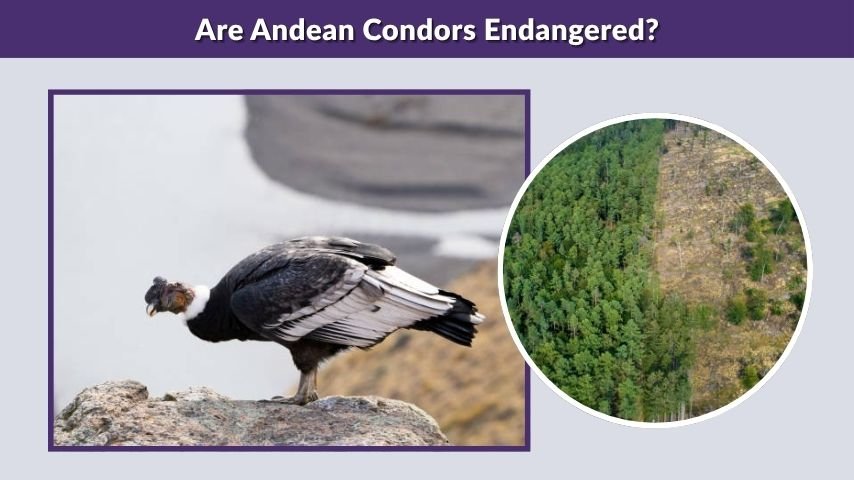
The Andean condor is currently considered vulnerable, and its population is believed to be declining in parts of its range. Threats include poisoning, habitat disturbance, reduced food availability, persecution, lead contamination from ammunition, and conflict with livestock owners.
Poisoning is one of the biggest problems. In some areas, poisoned carcasses are used to kill predators such as pumas or foxes, but condors may feed on the same carcasses and die as a result. Because condors gather around large food sources, a single poisoned carcass can kill many birds.
Main Threats to Andean Condors
The biggest threats include:
- Poisoned carcasses
- Habitat loss and disturbance
- Persecution due to livestock conflict
- Lead poisoning from ammunition fragments
- Low reproductive rate
- Declining food sources in some regions
Conservation efforts focus on education, protected areas, rescue programs, captive breeding, population monitoring, and reducing poisoning risks.
Best Places to See Andean Condors
Many travelers hope to see an Andean condor in the wild. Some of the best viewing opportunities are in mountain regions where condors use cliffs and air currents.
Famous viewing areas include parts of Peru, Chile, Argentina, Bolivia, Ecuador, and Colombia. In Peru, Colca Canyon is especially well known for condor sightings. In Patagonia and the southern Andes, condors may be seen gliding over open valleys and mountain slopes.
When watching condors, visitors should use binoculars, stay on marked paths, and avoid disturbing nesting or feeding sites. Responsible tourism can support local communities and encourage protection of these magnificent birds.
Andean Condor Facts
Here are some quick facts about the Andean condor:
- The Andean condor is a New World vulture.
- Its scientific name is Vultur gryphus.
- It has one of the largest wingspans of any land bird.
- Males are usually larger than females.
- Adult males often have a comb on the head.
- It mainly eats carrion.
- It lives across the Andes and nearby regions of western South America.
- It can soar for long periods using thermal air currents.
- It has cultural importance in many Andean countries.
- It is vulnerable and faces several human-related threats.
FAQs
How big is an Andean condor?
An Andean condor is one of the largest flying birds in the world. It can have a wingspan of about 3.2 meters and a body length of around 97 to 128 centimeters. Males are usually larger and heavier than females.
What is the wingspan of an Andean condor?
The Andean condor wingspan can reach about 3.2 meters, or more than 10 feet. This huge wingspan helps the bird glide over mountains and valleys while using rising air currents to save energy during long flights.
Where do Andean condors live?
Andean condors live mainly along the Andes Mountains in western South America. They are found in countries such as Colombia, Ecuador, Peru, Bolivia, Chile, and Argentina. They prefer open mountain areas, cliffs, grasslands, and some coastal regions.
What do Andean condors eat?
Andean condors mostly eat carrion, which means dead animals. Their diet can include wild mammals, livestock carcasses, and coastal animal remains. By feeding on carrion, they help clean the environment and reduce the spread of disease.
Are Andean condors endangered?
The Andean condor is considered vulnerable, and some populations are declining. Major threats include poisoning, habitat disturbance, persecution, lead contamination, and slow reproduction. Conservation programs aim to reduce these threats and protect important condor habitats.
