
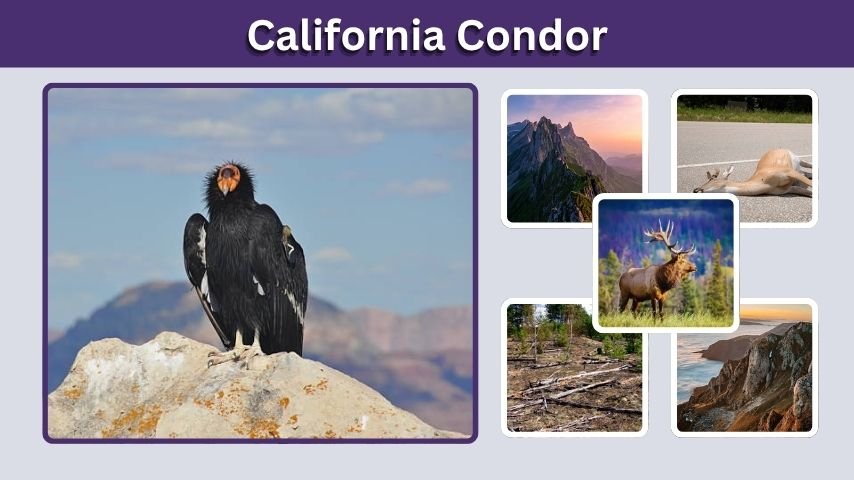
The California condor is one of North America’s most remarkable birds. Known for its huge wingspan, rare status, and dramatic recovery story, this massive vulture has become a symbol of wildlife conservation. Once nearly extinct, the California condor now survives because of decades of captive breeding, release programs, habitat protection, and careful monitoring. Still, it remains one of the rarest birds in the world.
What Is the California Condor?
The California condor is a large New World vulture with the scientific name Gymnogyps californianus. It is the largest land bird in North America and one of the most impressive flying birds anywhere in the world. With broad wings, a mostly black body, white patches under the wings, and a bare head, the condor is built for soaring over wide landscapes.
Unlike hawks, eagles, or falcons, California condors do not usually hunt live animals. They are scavengers, which means they feed mainly on dead animals. This role makes them important to healthy ecosystems because they help remove carcasses from the landscape.
California condors are also famous because they came extremely close to extinction. By the 1980s, only a small number remained. Conservationists captured the last wild birds to begin a breeding program, and later generations were released back into the wild.
California Condor Size
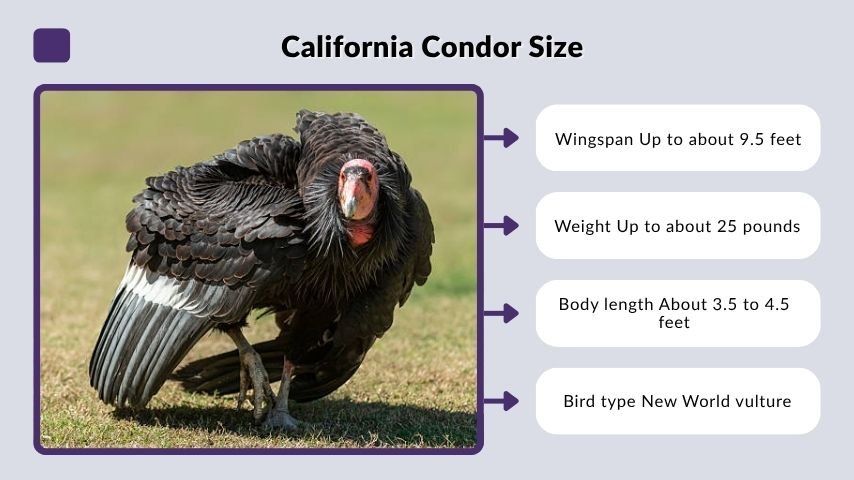
The California condor is enormous compared with most birds. Its body is heavy, its wings are long and broad, and its overall appearance is powerful when seen in flight. Many people search for California condor size because photos often do not fully show how large this bird really is.
A California condor can weigh up to about 25 pounds. Its body length is usually around 3.5 to 4.5 feet, and its wingspan can reach about 9.5 feet. That wingspan is one of the main reasons the bird looks so impressive in the sky.
| Feature | Approximate Measurement |
|---|---|
| Wingspan | Up to about 9.5 feet |
| Weight | Up to about 25 pounds |
| Body length | About 3.5 to 4.5 feet |
| Bird type | New World vulture |
| Scientific name | Gymnogyps californianus |
| Conservation status | Endangered / critically endangered globally |
Its large size helps it glide for long distances while looking for carrion. However, size also means the bird needs suitable open spaces, reliable food sources, and safe nesting areas.
California Condor Wingspan
The California condor wingspan is one of its most famous features. With wings reaching nearly 10 feet across, the condor can soar with very little flapping. Its wings are designed for gliding rather than fast, active flight.
When a condor catches rising warm air, it can travel long distances while using very little energy. This is especially useful because carrion can be scattered across huge areas. A condor may need to search many miles before finding food.
Why the Wingspan Matters
The California condor’s wingspan helps it:
- Ride thermal air currents
- Travel across canyons, mountains, and open country
- Save energy while searching for food
- Remain in the air for long periods
- Cover large feeding ranges
This ability to soar is one of the reasons condors are so closely linked with cliffs, canyons, and rugged landscapes. High places give them a natural launch point and access to strong air currents.
California Condor Next to Human
The phrase “California condor next to human” is popular because people want to understand the bird’s real size. Next to a person, the condor’s body may not look taller than a human, but its wingspan is much wider than most people are tall.
A fully spread California condor can look wider than a small room. Its wingspan is longer than the height of many adults. This makes the bird especially dramatic in photos, wildlife demonstrations, and viewing areas.
However, California condors are wild endangered birds. They should never be approached, fed, chased, or disturbed. Observing them from a distance is the safest and most responsible way to appreciate their size.
Where Do California Condors Live?

Today, California condors live in selected areas of the western United States and Baja California, Mexico. Reintroduced populations can be found in parts of California, Arizona, Utah, and the Pacific Northwest. They are also strongly associated with places like the Grand Canyon, Big Sur, Pinnacles National Park, and parts of Southern California.
Historically, California condors had a much larger range. They once lived across a wide area of North America, but their population declined because of hunting, poisoning, habitat loss, and other human-related threats.
California Condor Habitat
California condors usually need open landscapes where they can find food and soar easily. Their habitat may include:
- Canyons
- Mountains
- Cliffs
- Open grasslands
- Coastal ranges
- Forest edges
- Remote nesting areas
Cliffs and large trees can be important for nesting and roosting. Open spaces are also important because condors need room to take off, land, and search for food from the air.
What Do California Condors Eat?
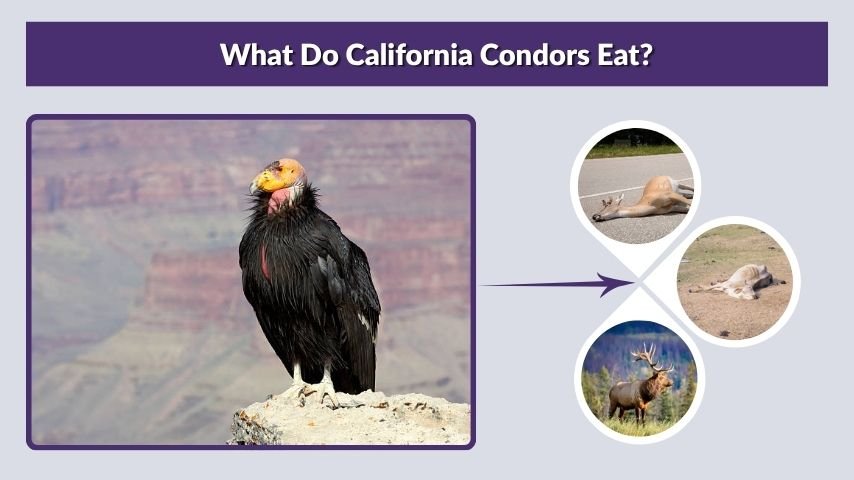
California condors are scavengers. Their diet is mostly carrion, which means dead animals. They do not have strong grasping talons like eagles, so they are not built to capture large live prey. Instead, they use their strong beaks to feed on carcasses.
Their food may include dead deer, elk, cattle, sheep, marine mammals, or other large animals. Because they feed on carcasses, condors play an important cleaning role in nature.
Common Foods in the California Condor Diet
A California condor may eat:
- Deer carcasses
- Livestock remains
- Elk or pronghorn carrion
- Marine mammal carcasses near coastal areas
- Other large dead animals
Condors often depend on large carcasses because their size makes small food sources less useful. They may also feed in groups when a large carcass is available.
Why Are California Condors Endangered?
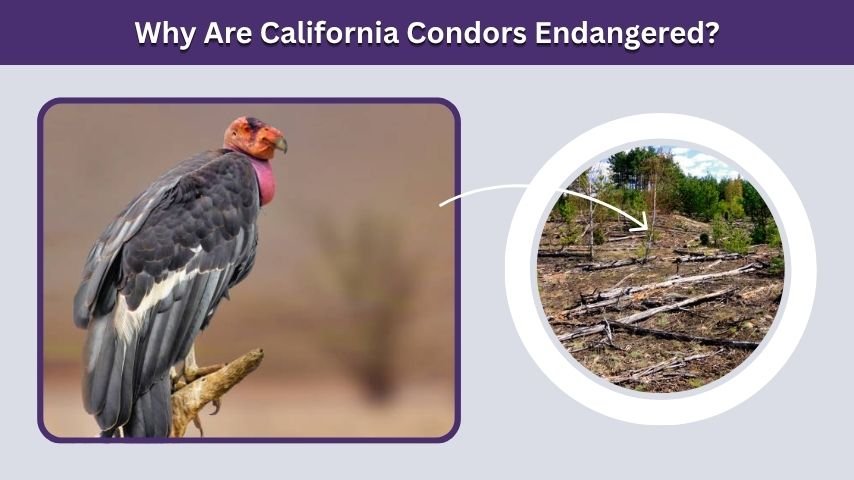
The California condor is endangered because several threats caused its population to collapse. By the 1980s, the species had dropped to only a tiny number of birds. Without human help, it likely would have disappeared from the wild.
One of the biggest threats is lead poisoning. Condors can accidentally eat fragments of lead ammunition when feeding on carcasses or gut piles left in the field. Even small pieces of lead can be dangerous or fatal.
Other threats include habitat disturbance, microtrash, collisions, illegal shooting in the past, and low reproductive rates. California condors reproduce slowly, so the loss of even a few adults can harm recovery efforts.
Main Threats to California Condors
The biggest threats include:
- Lead poisoning from ammunition fragments
- Habitat loss and disturbance
- Eating small trash items by mistake
- Collisions with power lines or structures
- Slow breeding rate
- Limited wild population size
Because the population is still small, every bird matters. Conservation teams monitor released condors closely to improve survival rates.
California Condor Population
The California condor population is one of the most closely watched wildlife recovery stories in the United States. In 1982, the total population had fallen to only 22 birds. That number was dangerously low and forced conservationists to take urgent action.
All remaining wild condors were eventually brought into captivity for protection and breeding. This decision was controversial at the time, but it helped prevent extinction. Captive-bred condors were later released back into the wild.
Today, the population is much larger than it was in the 1980s, but the species is still not secure. As of the end of 2025, there were 607 California condors in total, including both wild and captive birds. The wild population was still carefully managed and monitored.
California Condor Recovery Program
The California Condor Recovery Program is one of the most important endangered species programs in North America. It involves government agencies, zoos, tribes, national parks, conservation groups, and researchers.
The program focuses on breeding condors in captivity, releasing them into suitable wild areas, monitoring their movements, treating sick birds, reducing threats, and educating the public.
What the Recovery Program Does
The recovery program helps condors by:
- Breeding birds in managed facilities
- Releasing young condors into the wild
- Tracking birds with transmitters
- Testing and treating birds for lead exposure
- Protecting nesting and roosting areas
- Encouraging the use of non-lead ammunition
The program has made real progress, but condors still require ongoing support. A self-sustaining wild population remains the long-term goal.
California Condor vs Turkey Vulture
The California condor is often confused with the turkey vulture because both are scavengers and both soar with broad wings. However, they are very different in size.
A turkey vulture is much smaller than a California condor. Turkey vultures are common across much of North America, while California condors are rare and found only in specific recovery areas.
In flight, California condors look heavier, broader, and more powerful. They also have large white patches under the wings, while turkey vultures have a different wing pattern and often fly with a wobbling motion.
California Condor vs Andean Condor
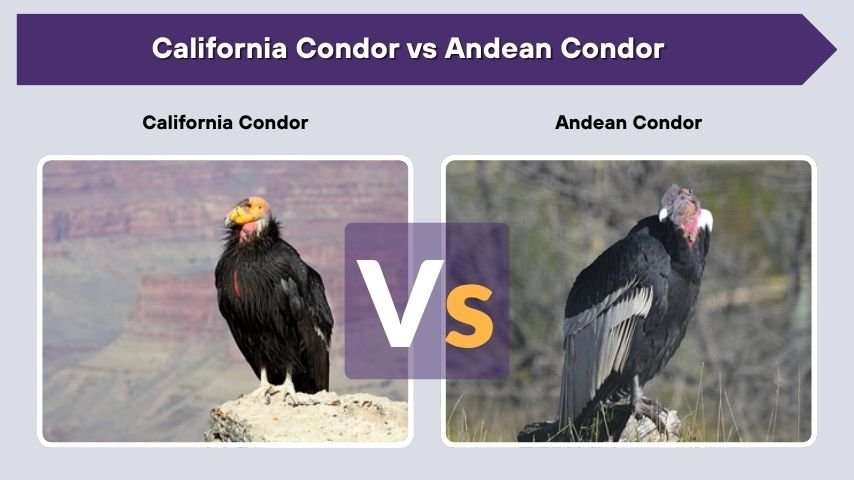
The California condor and Andean condor are both huge New World vultures. The California condor lives in North America, while the Andean condor lives in South America, especially along the Andes Mountains.
Both birds have impressive wingspans and feed mainly on carrion. The Andean condor is generally heavier, while the California condor is the largest land bird in North America. Both species are important scavengers and both face conservation concerns.
California Condor Lifespan
California condors can live for many decades. Their long lifespan is one reason conservation programs can be successful over time. However, they also mature slowly and reproduce slowly.
A breeding pair usually raises only one chick at a time, and reproduction does not happen quickly enough to replace large losses. This makes adult survival extremely important.
If adult condors die from lead poisoning or other preventable causes, the whole population can suffer. Protecting mature birds is just as important as raising young birds.
Where to See California Condors
California condors can sometimes be seen in areas where reintroduced populations are established. Popular viewing regions include parts of California, the Grand Canyon area, and other western landscapes where condors are monitored.
Good viewing often depends on location, timing, weather, and bird movement. Since condors travel long distances, sightings are never guaranteed.
Responsible Viewing Tips
When watching California condors:
- Use binoculars or a spotting scope
- Stay on marked trails and viewing areas
- Never feed condors
- Do not approach nests or roosts
- Keep trash secured
- Follow park and wildlife agency rules
Responsible viewing helps protect the birds while allowing people to enjoy one of North America’s rarest wildlife experiences.
California Condor Facts
Here are some quick facts about the California condor:
- It is the largest land bird in North America.
- Its scientific name is Gymnogyps californianus.
- Its wingspan can reach about 9.5 feet.
- It mainly eats carrion.
- It nearly went extinct in the 20th century.
- Only 22 birds remained in 1982.
- Captive breeding helped save the species.
- Lead poisoning remains one of its biggest threats.
- It can live for several decades.
- It is still one of the rarest birds in the world.
FAQs
How big is a California condor?
A California condor is the largest land bird in North America. It can weigh up to about 25 pounds and have a wingspan of around 9.5 feet. Its body is large, but its huge wings are what make it look especially impressive in flight.
What is the wingspan of a California condor?
The California condor wingspan can reach about 9.5 feet. This long wingspan helps the bird soar over mountains, canyons, and open landscapes while using rising air currents. It allows the condor to travel long distances with very little flapping.
How many California condors are left?
As of December 31, 2025, there were 607 California condors in the total world population, including wild and captive birds. This is a major improvement from 1982, when only 22 birds remained, but the species still needs active conservation.
What do California condors eat?
California condors eat carrion, which means dead animals. Their diet can include deer, elk, livestock, marine mammals, and other large carcasses. By feeding on dead animals, they help clean the environment and support healthy ecosystems.
Why is the California condor endangered?
The California condor is endangered because of lead poisoning, habitat loss, past hunting, collisions, trash ingestion, and slow reproduction. Lead poisoning remains one of the most serious threats because condors can eat ammunition fragments while feeding on carcasses.
