
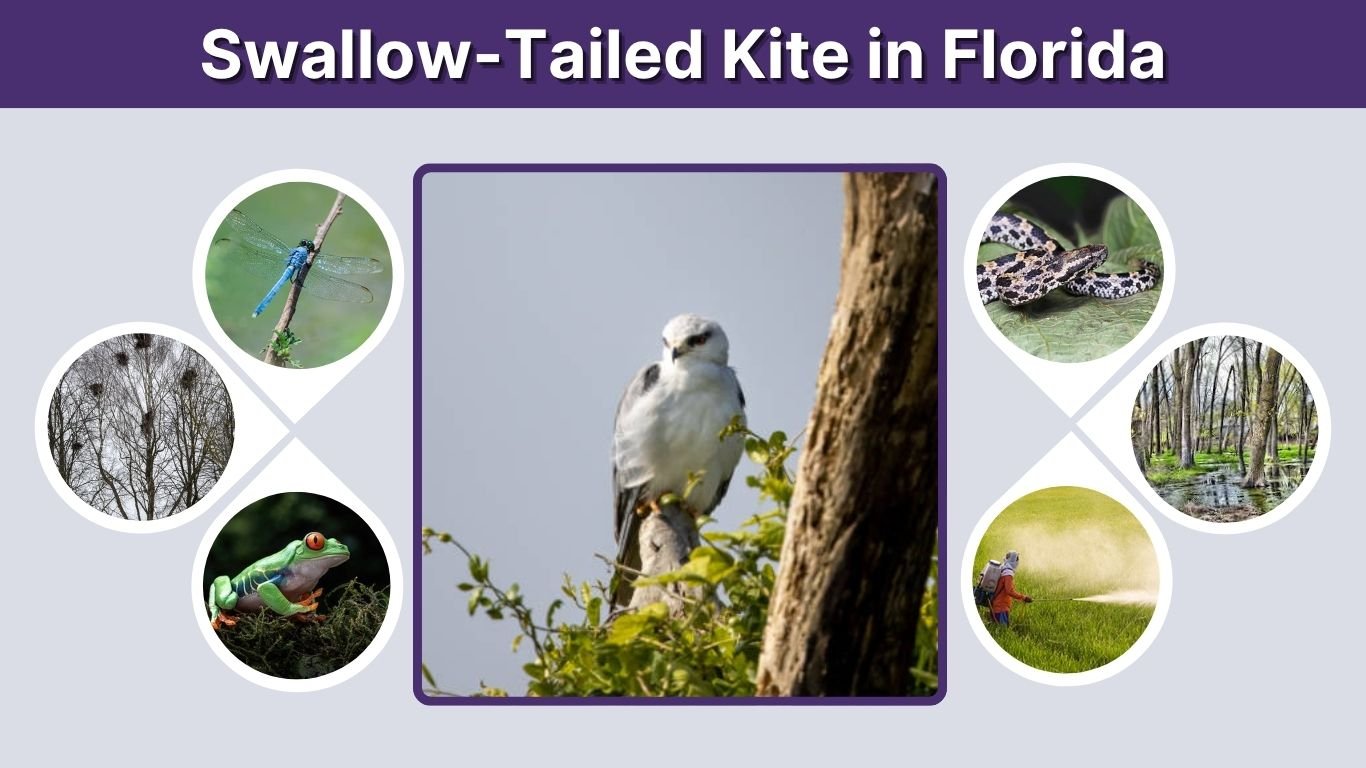
The swallow-tailed kite is one of Florida’s most beautiful birds of prey. With its bright white body, black wings, and long forked tail, this graceful raptor is easy to recognize as it glides over forests, wetlands, rivers, and neighborhoods. Florida is one of the best places in the United States to see swallow-tailed kites, especially during spring and summer when they return to nest and raise their young.
What Is the Florida Swallow-Tailed Kite?
The swallow-tailed kite is a black-and-white raptor known for its smooth, floating flight. Its scientific name is Elanoides forficatus. Although people may call it a “swallow tail kite,” “swallow-tailed kite,” or “swallow tailed kite,” they are usually referring to the same bird.
How to Identify a Swallow-Tailed Kite in Florida
A swallow-tailed kite is almost unmistakable in flight. It has long, narrow wings and a deeply forked tail that looks like a pair of open scissors. Its body and head are mostly white, while the wings and tail are black.
Common identification features include:
- White head and body
- Black wings and tail
- Long, deeply forked tail
- Smooth gliding flight
- Sharp aerial turns
- Long, pointed wings
- Graceful soaring over trees and wetlands
If you see a black-and-white bird of prey floating high above Florida’s treetops, it is very likely a swallow-tailed kite.
Are Swallow-Tailed Kites Common in Florida?
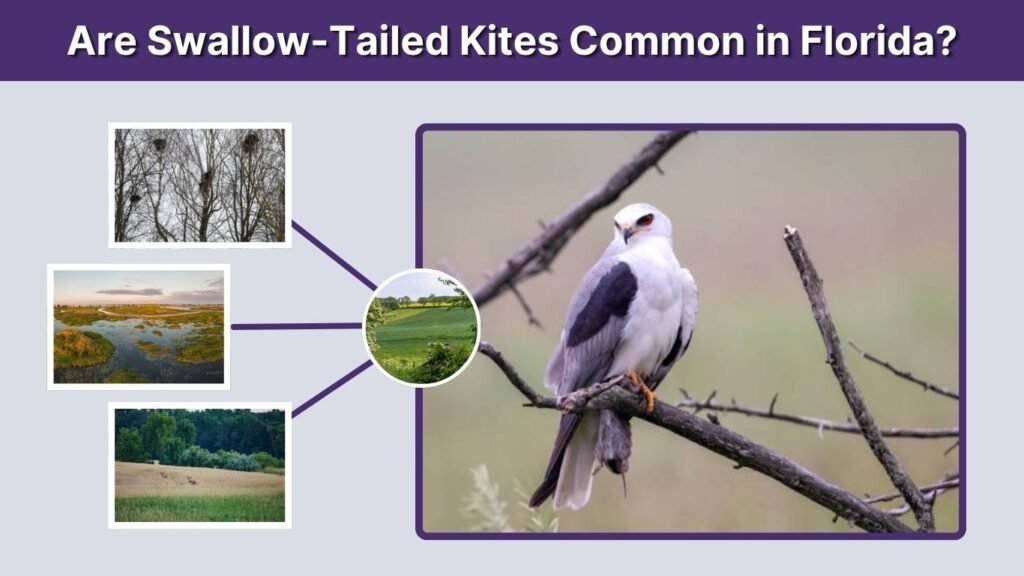
Swallow-tailed kites are seasonal birds in Florida. They are not usually permanent year-round residents. Instead, they return from South America to Florida in late winter or early spring, nest during spring and early summer, then leave again later in the year.
Why Florida Is Important for This Bird
Florida is one of the most important breeding areas for swallow-tailed kites in the United States. The state offers warm weather, tall nesting trees, wetlands, river corridors, open hunting areas, and abundant prey.
You may see them in many parts of Florida, including central Florida, south Florida, southwest Florida, the Everglades region, coastal counties, and areas near large forests and wetlands.
When Do Swallow-Tailed Kites Arrive in Florida?
Swallow-tailed kites usually begin returning to Florida in late February and March. Many people notice them in early spring, when they appear over neighborhoods, highways, preserves, and wetlands.
What Month Do Swallow-Tailed Kites Arrive?
In many parts of Florida, March is the best month to start watching for returning swallow-tailed kites. Some may arrive in late February, especially in southern Florida. By spring, more birds are seen across the state.
Their arrival is one of the early signs that Florida’s spring bird season is underway.
When Do Swallow-Tailed Kites Leave Florida?
Swallow-tailed kites do not stay in Florida all year. After nesting, they begin gathering in large groups and preparing for migration.
When Do They Depart?
Many swallow-tailed kites begin gathering in communal roosts in July. They usually leave Florida by late summer, with migration continuing into August and September. Their final destination after leaving Florida is generally Central or South America, where they spend the nonbreeding season.
By fall and winter, most Florida swallow-tailed kites are gone from the state.
Swallow-Tailed Kite Migration in Florida
The swallow-tailed kite migration is one of the most impressive parts of its life cycle. These birds travel long distances between their breeding areas in Florida and wintering areas farther south.
Where Do They Go After Leaving Florida?
After leaving Florida, swallow-tailed kites migrate south toward Central and South America. Some birds make long over-water crossings, which can be risky because they cannot stop to rest or feed while crossing large stretches of ocean or gulf waters.
Migration timing can vary based on weather, age, and location. However, the general pattern is simple: they come to Florida to breed, then return south after nesting season.
Swallow-Tailed Kite Nesting in Florida
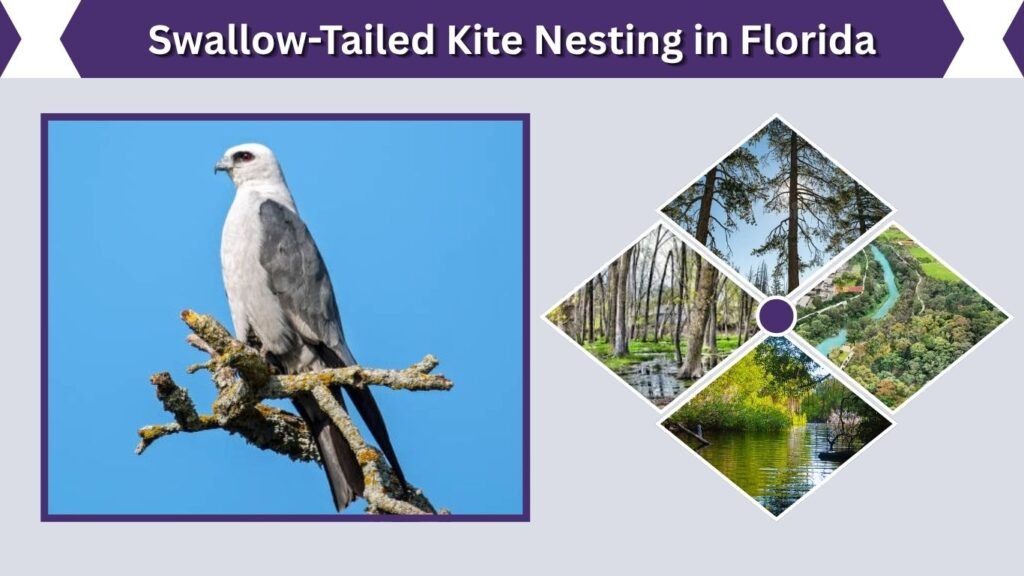
Swallow-tailed kites nest in Florida during spring and early summer. They usually choose tall trees in or near forests, swamps, wetlands, rivers, and open feeding areas.
Where Do They Nest?
In Florida, swallow-tailed kites may nest in:
- Tall pines
- Cypress trees
- Wooded wetlands
- River corridors
- Swamp forests
- Pine flatwoods
- Large trees near open hunting areas
They often build nests high in trees, where they are safer from many ground predators. The nest is usually a platform of sticks lined with softer material.
Nesting Season in Florida
The Florida nesting season generally runs from March through June. During this time, adults build nests, lay eggs, incubate, and feed young birds. Females usually lay two or three eggs, and both parents help raise the young.
Young birds leave the nest after several weeks but may remain dependent on adults for a period before full independence.
Swallow-Tailed Kite Range in Florida
Swallow-tailed kites can be found across much of Florida, but they are most often associated with wooded wetlands, river systems, and open areas near tall trees.
Florida Bird Range and Habitat
In Florida, look for them around:
- The Everglades
- Big Cypress
- Corkscrew Swamp
- Myakka River areas
- Kissimmee Prairie region
- Ocala National Forest
- Apalachicola region
- St. Johns River corridor
- Southwest Florida preserves
- Central Florida wetlands
They may also appear over neighborhoods, golf courses, farms, and roadways if suitable nesting or feeding habitat is nearby.
Where to See Swallow-Tailed Kites in Florida
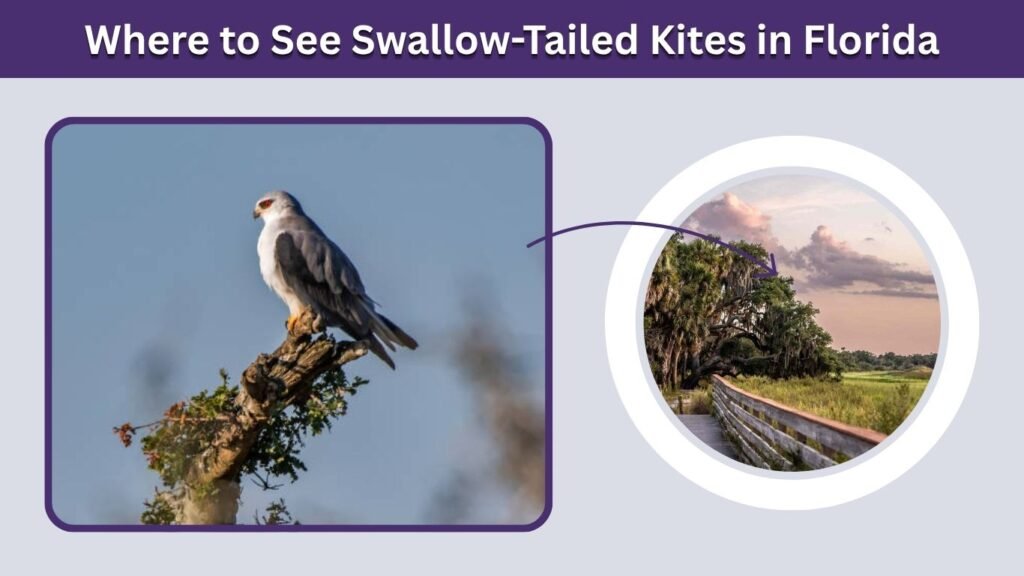
The best places to see swallow-tailed kites in Florida are areas with tall trees, open sky, wetlands, and abundant prey. They are often seen soaring above the canopy rather than sitting in obvious low perches.
Good Places to Look
Good locations include wildlife refuges, state parks, wetland boardwalks, river trails, forest edges, and open prairies near wooded areas.
You may have good chances in:
- Everglades National Park
- Big Cypress National Preserve
- Corkscrew Swamp Sanctuary
- Myakka River State Park
- Paynes Prairie Preserve State Park
- Lake Kissimmee area
- Apalachicola National Forest
- St. Marks National Wildlife Refuge
- CREW lands in southwest Florida
- Florida Panther National Wildlife Refuge region
The best viewing is often during warm, sunny parts of the day when rising air helps them soar.
Swallow-Tailed Kite Sightings in Florida
Swallow-tailed kite sightings are exciting because the bird is large, elegant, and easy to recognize. Birdwatchers often report sightings to birding platforms, conservation groups, or local wildlife organizations.
How to Report a Sighting
If you see a swallow-tailed kite in Florida, you can record the sighting with a birding app or local birding group. Useful details include date, location, number of birds, behavior, and whether the bird was flying, feeding, nesting, or gathering in a group.
Sightings can help researchers understand migration timing, nesting activity, and important habitat areas.
What Do Florida Swallow-Tailed Kites Eat?
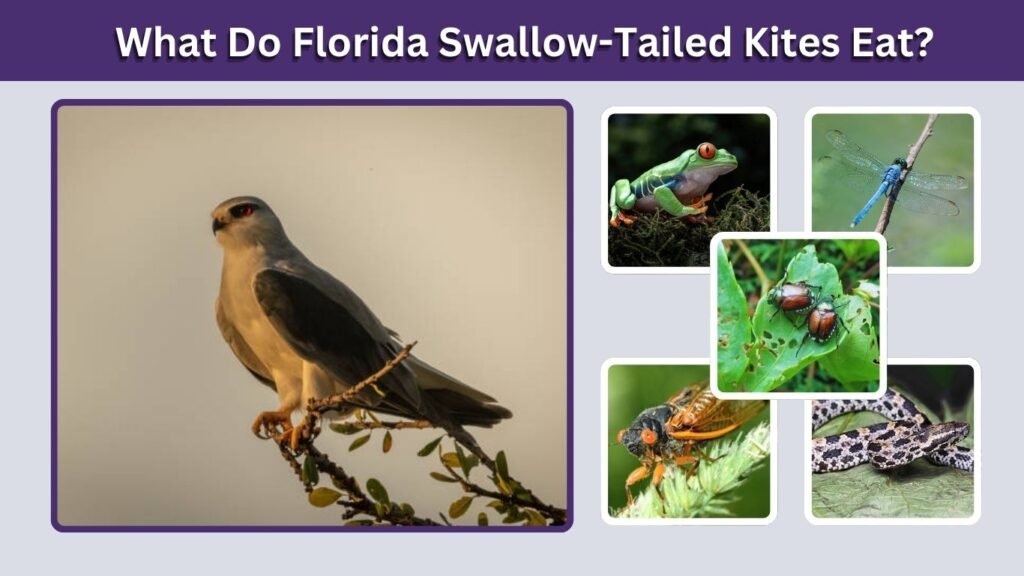
Swallow-tailed kites eat insects and small animals. They often catch prey while flying and may also grab food from trees.
Florida Swallow-Tailed Kite Diet
Their diet may include:
- Dragonflies
- Grasshoppers
- Wasps
- Cicadas
- Beetles
- Anoles
- Tree frogs
- Small snakes
- Small birds or nestlings
In Florida, anoles, frogs, insects, and small snakes are common prey. These foods are available in wetlands, forests, backyards, and open areas.
Swallow-tailed kites are not major predators of chickens or large pets. Their prey is usually small enough to catch and carry easily.
Are Swallow-Tailed Kites Florida Raptors?
Yes, swallow-tailed kites are Florida raptors. A raptor is a bird of prey with a hooked beak and talons used to catch or handle food. However, swallow-tailed kites are lighter and more aerial than many hawks.
Swallow-Tailed Kite vs. Hawk
People sometimes call them hawks, but they are technically kites. They are related to hawks and eagles, but their shape and behavior are different. Their long tail helps them steer, and they often hunt while gliding instead of relying on heavy wingbeats.
Are There Dark Swallow-Tailed Kites in Florida?
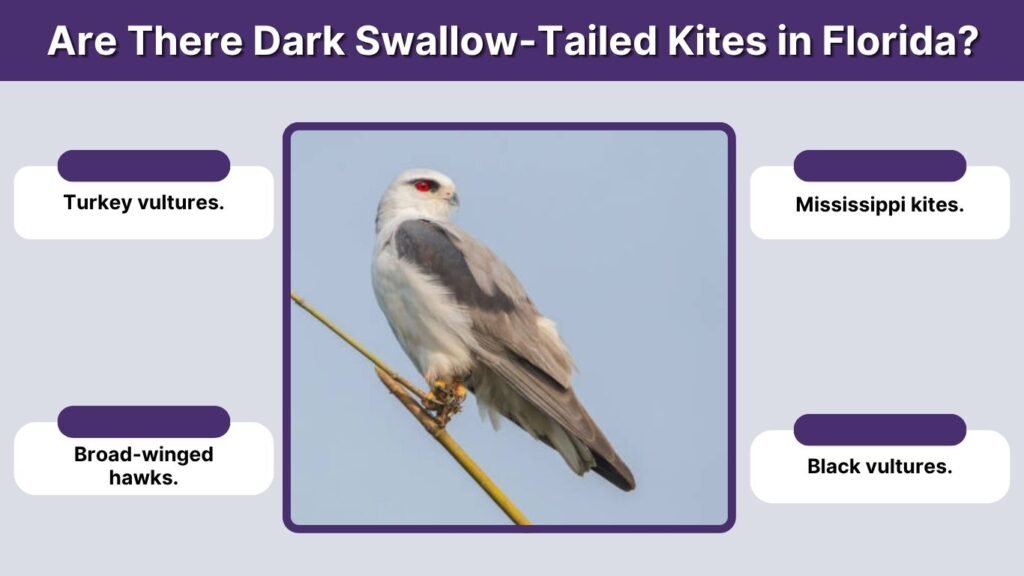
A normal swallow-tailed kite has a bold black-and-white pattern. If a bird looks mostly dark, it may be backlit, seen in poor lighting, or it may be another species.
Possible Confusion Species
Dark birds sometimes confused with swallow-tailed kites include:
- Mississippi kites
- Black vultures
- Turkey vultures
- Broad-winged hawks
- Snail kites
- Frigatebirds near the coast
The deeply forked tail and white body are the best identification clues. If the bird does not show a white body and deeply split tail, it may not be a swallow-tailed kite.
Juvenile Swallow-Tailed Kites in Florida
Juvenile swallow-tailed kites look similar to adults but may appear less crisp in color. Their tails may also look shorter or less deeply forked when young.
When Young Birds Appear
Young kites are most likely noticed in late spring and summer, after nesting begins. They may stay near nesting areas while they improve their flying and hunting skills.
If you see multiple kites circling near tall trees in summer, they may be part of a local family group or a gathering before migration.
Is the Swallow-Tailed Kite Endangered in Florida?
The swallow-tailed kite is protected by migratory bird laws, but it is not usually listed as federally endangered. However, it remains a conservation concern because it depends on large trees, wetlands, and healthy foraging areas.
Main Threats in Florida
The biggest threats include:
- Loss of lowland forest
- Wetland destruction
- Removal of tall nesting trees
- Nest failure during storms
- Disturbance near nesting sites
- Habitat fragmentation
- Climate and weather-related risks
Protecting wetlands, river corridors, and mature trees is important for keeping swallow-tailed kites in Florida.
Swallow-Tailed Kite Boat Trips in Florida
Some people search for swallow-tailed kite boat trips in Florida because many good viewing areas are near rivers, wetlands, and coastal marshes.
Can You See Them From a Boat?
Yes, it is possible to see swallow-tailed kites from boats in Florida, especially near wooded rivers, cypress wetlands, mangrove edges, and open marshes. However, sightings are never guaranteed because these birds move widely while hunting and migrating.
Choose ethical wildlife tours that keep a respectful distance from nesting birds and avoid disturbing roosts or sensitive habitats.
How to Help Swallow-Tailed Kites in Florida
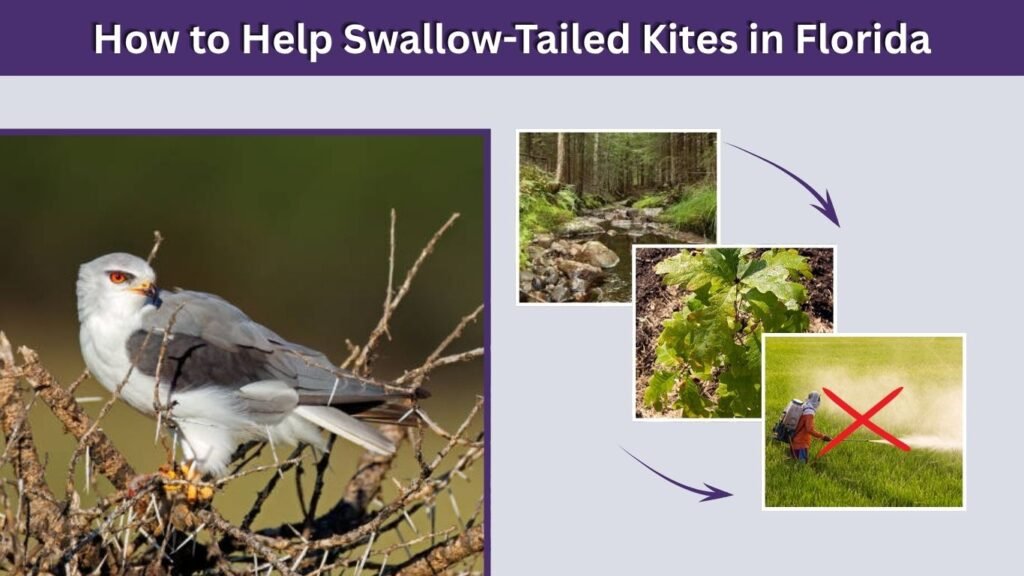
Florida residents can help swallow-tailed kites by protecting trees, reducing disturbance, and supporting habitat conservation.
Simple Ways to Help
Helpful steps include:
- Keep large native trees when possible
- Protect wetlands and wooded areas
- Avoid disturbing nests
- Report sightings
- Do not feed or harass raptors
- Support local conservation programs
- Use fewer pesticides to protect insect prey
- Keep natural areas connected
Even small actions can support the habitat these birds need for nesting, hunting, and migration.
FAQs
Are swallow-tailed kites permanent residents in Florida?
No, most swallow-tailed kites are not permanent residents in Florida. They usually arrive in late winter or early spring, nest during spring and early summer, then migrate south after breeding season.
What month do swallow-tailed kites arrive in Florida?
Most swallow-tailed kites arrive in Florida from late February through March. Sightings often increase in spring as more birds return to nesting areas.
When do swallow-tailed kites leave Florida?
Swallow-tailed kites usually begin gathering in July and many leave Florida in August or September. They migrate south after nesting season.
Where can I see swallow-tailed kites in Florida?
You can see swallow-tailed kites in Florida near wetlands, river corridors, forests, prairies, and preserves. Good areas include the Everglades, Big Cypress, Corkscrew Swamp, Myakka River, and central Florida wetland regions.
What do Florida swallow-tailed kites eat?
Florida swallow-tailed kites eat insects and small animals, including dragonflies, grasshoppers, wasps, anoles, frogs, small snakes, and sometimes small birds or nestlings.
