
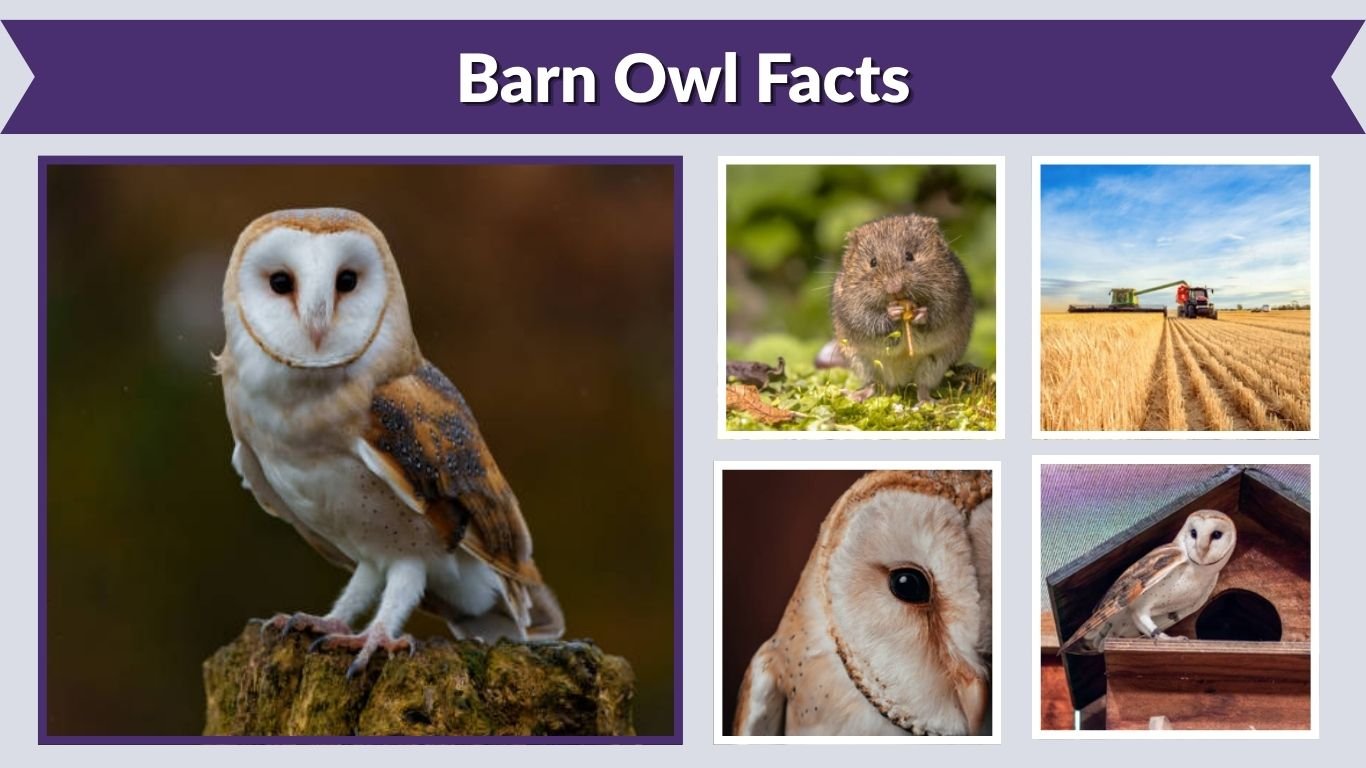
Barn owls are among the most recognizable owls in the world. With their white heart-shaped face, ghostly flight, and silent hunting style, they look very different from many other owls. They are often seen around farms, grasslands, old buildings, open fields, and rural edges where small mammals are common.
This barn owl fact file covers their appearance, habitat, diet, pellets, hunting skills, baby owls, and surprising behaviors.
1. Barn Owls Have a Heart-Shaped Face
One of the easiest ways to identify a barn owl is by its pale, heart-shaped facial disc. This face is not just for looks. It helps direct sound toward the owl’s ears, making it easier to locate prey in darkness.
Their face is usually white or pale cream, while the back and wings are golden-brown, gray, and speckled. This gives them a soft but striking appearance.
2. Barn Owls Are Built for Silent Flight
Barn owls are famous for flying almost silently. Their wing feathers are soft and specially shaped, which helps reduce noise as they move through the air.
This silent flight gives them a big advantage when hunting mice, voles, shrews, and other small animals at night. Prey often does not hear the owl coming until it is too late.
3. Barn Owls Mostly Hunt Small Mammals
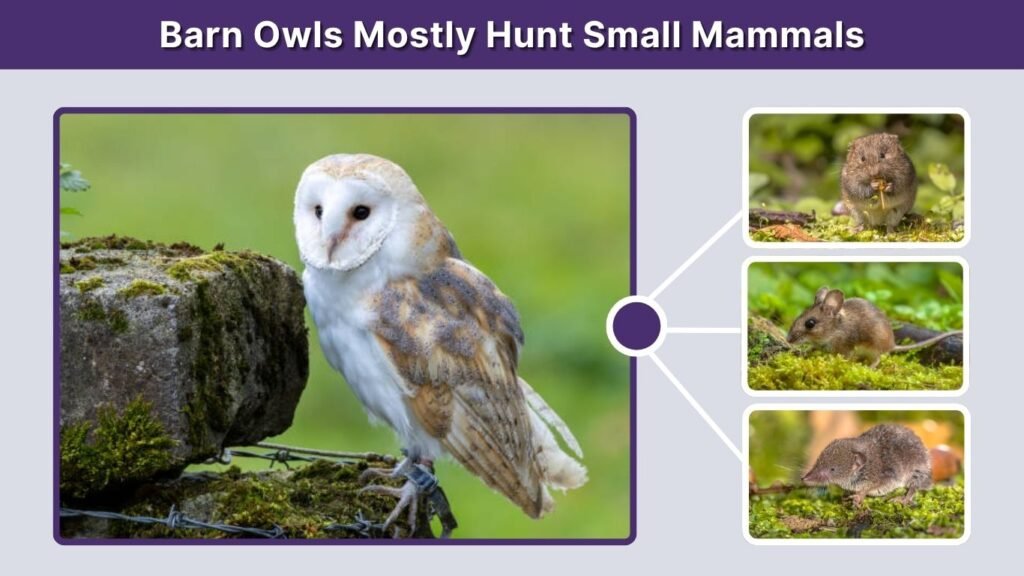
The barn owl diet is mainly made up of small mammals. In the UK, common prey includes field voles, wood mice, and shrews, while barn owls in other parts of the world may also eat reptiles, large insects, small birds, rats, and frogs.
Barn owls are natural rodent hunters, which is why farmers often welcome them around fields and barns.
4. Barn Owls Swallow Prey Whole
Barn owls usually swallow small prey whole, including bones, fur, teeth, and claws. Their stomach digests the soft parts but cannot digest everything.
The hard and furry parts are packed into a pellet and later coughed up. Cornell Lab notes that American Barn Owls may cough up pellets about twice a day, and those pellets help scientists study what the owls have eaten.
5. Barn Owl Pellets Are Full of Clues
Barn owl pellets are one of the most interesting barn owl facts for kids and students. When a pellet is opened carefully, it may contain tiny skulls, bones, teeth, and fur from the owl’s prey.
Scientists and teachers often use owl pellets to study food chains. A pellet can show which small animals live in the owl’s hunting area and how important barn owls are in controlling rodent populations.
6. Barn Owls Prefer Open Habitats
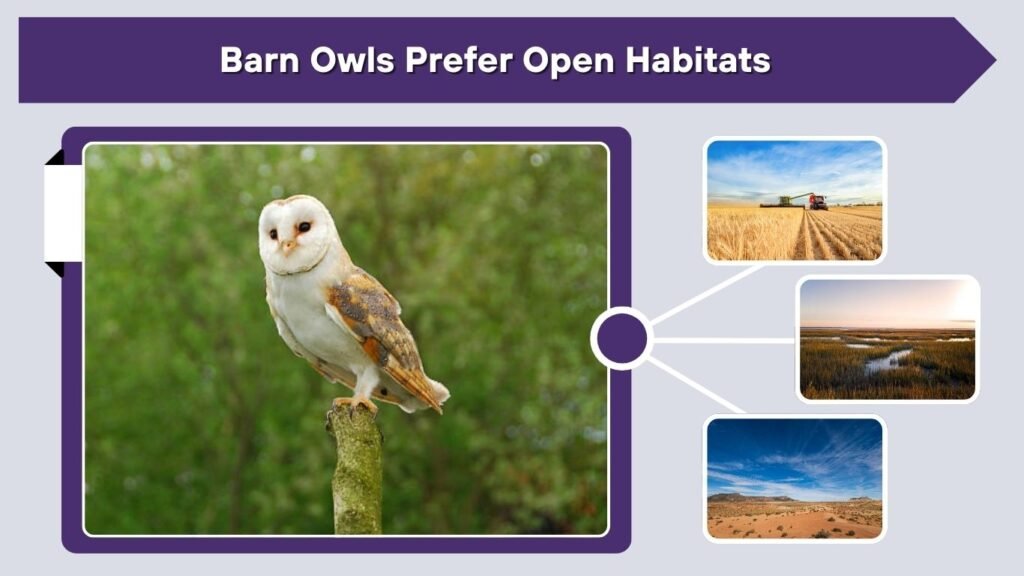
Barn owls usually live and hunt in open habitats. These include grasslands, agricultural fields, marshes, deserts, ranchlands, brushy fields, woodlots, suburbs, and some city edges. They may nest in tree cavities, caves, barns, and other buildings.
They do not usually prefer dense forests because they need open space to fly low and listen for prey.
7. They Are Often Found Near Farms
Barn owls got their name because they commonly nest or roost in barns and farm buildings. They may also use silos, church towers, old sheds, nest boxes, and hollow trees.
NestWatch says barn owl boxes can be placed in barns, silos, granaries, grain elevators, church steeples, or on free-standing poles.
8. Barn Owls Are Mostly Nocturnal
Barn owls are usually active at night. They often begin hunting around dusk and continue through the night when rodents are active.
However, they may sometimes hunt during daylight, especially when feeding hungry chicks or when food is scarce.
9. They Do Not Hoot Like Many Other Owls
A fun fact about barn owls is that they do not make the classic “hoot-hoot” sound many people expect from owls. Instead, they make harsh screeches, hisses, snoring sounds, and other strange calls.
Their scream-like call can sound spooky at night, which is one reason barn owls have appeared in folklore and ghost stories.
10. Barn Owls Have Excellent Hearing
Barn owls are expert sound hunters. Their ears are positioned in a way that helps them detect exactly where a sound is coming from.
Even in complete darkness, a barn owl can locate a small mammal moving through grass by listening carefully. This makes hearing one of their most important hunting tools.
11. Their Eyes Are Dark and Forward-Facing
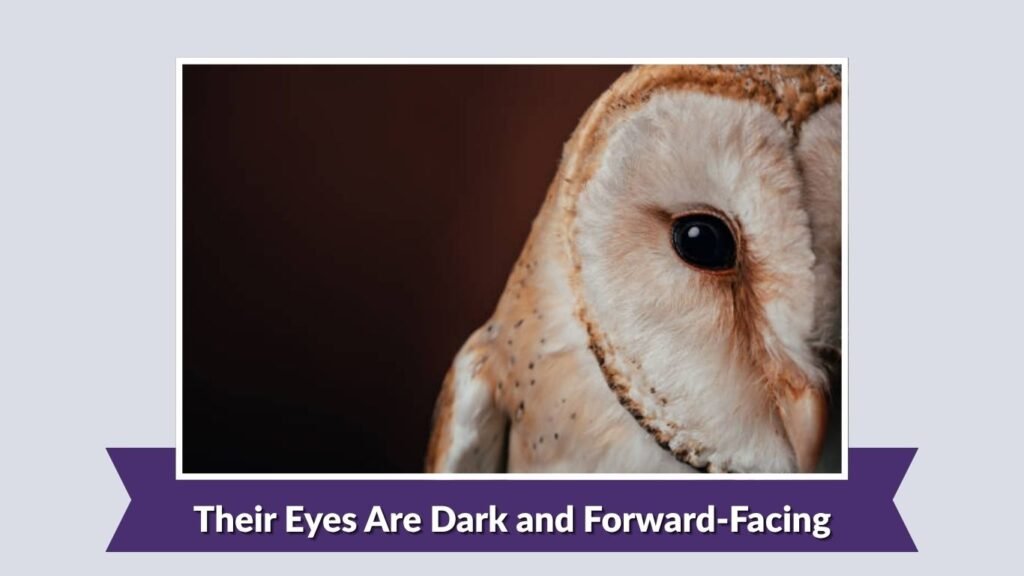
Barn owls have large, dark eyes that face forward. This gives them good depth perception, which helps when judging distance during flight and hunting.
Like other owls, barn owls cannot move their eyes around like humans can. Instead, they turn their heads to look in different directions.
12. Barn Owls Can Turn Their Heads Far Around
Barn owls can turn their heads much farther than humans. This helps them scan their surroundings without moving their whole body.
They cannot turn their heads completely around in a full circle, but they can rotate them far enough to look almost behind themselves.
13. Baby Barn Owls Are Called Owlets
Baby barn owls are called owlets. They hatch covered in soft white down and look fluffy compared to the sleek adults.
Owlets grow quickly, but they depend on their parents for food while they are young. In a good hunting area, adult barn owls may bring many small mammals to the nest each night.
14. Barn Owls Can Nest in Human-Made Boxes
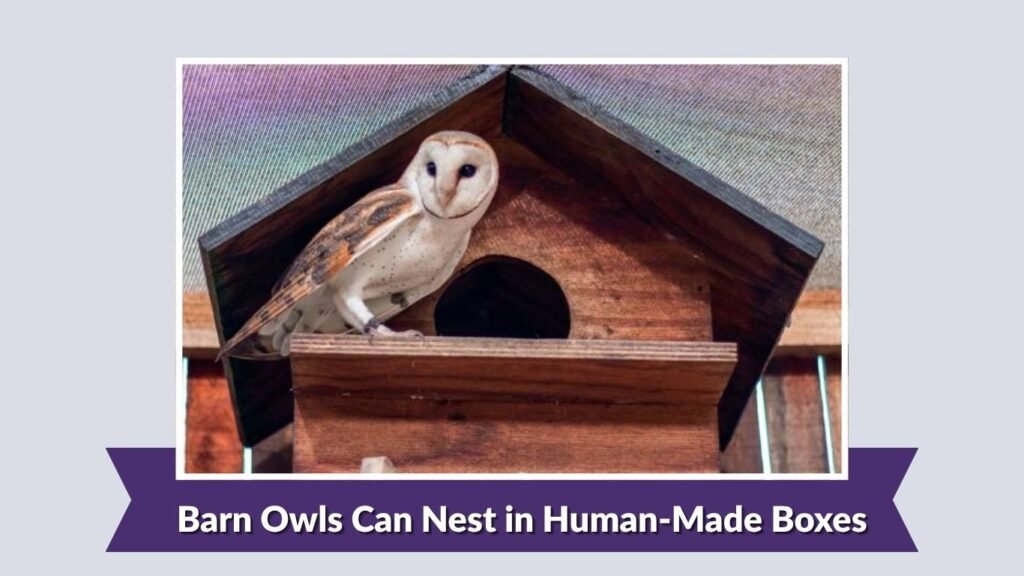
Barn owls will use nest boxes when the location is safe and the surrounding habitat has enough food. This is especially useful in places where old barns, hollow trees, or natural nesting sites are missing.
However, nesting barn owls can be sensitive to disturbance. NestWatch warns that they may abandon a nest if disturbed during early nesting stages.
15. They Help Control Rodents Naturally
Because barn owls eat many mice, voles, and rats, they are useful natural pest controllers. A breeding pair with chicks can catch large numbers of rodents in a season.
This makes them important to farms, grasslands, and ecosystems where rodent numbers can rise quickly.
16. Barn Owls Need Rough Grassland for Hunting
Good hunting habitat is very important for barn owls. Rough grassland with tall, tussocky grass supports small mammals, which provide food for the owls. RSPB notes that prey can be found at high densities in rough grassland with a thick litter layer.
Short, heavily managed grass usually supports fewer small mammals, so it may not be as useful for hunting barn owls.
17. Starvation Is a Major Threat
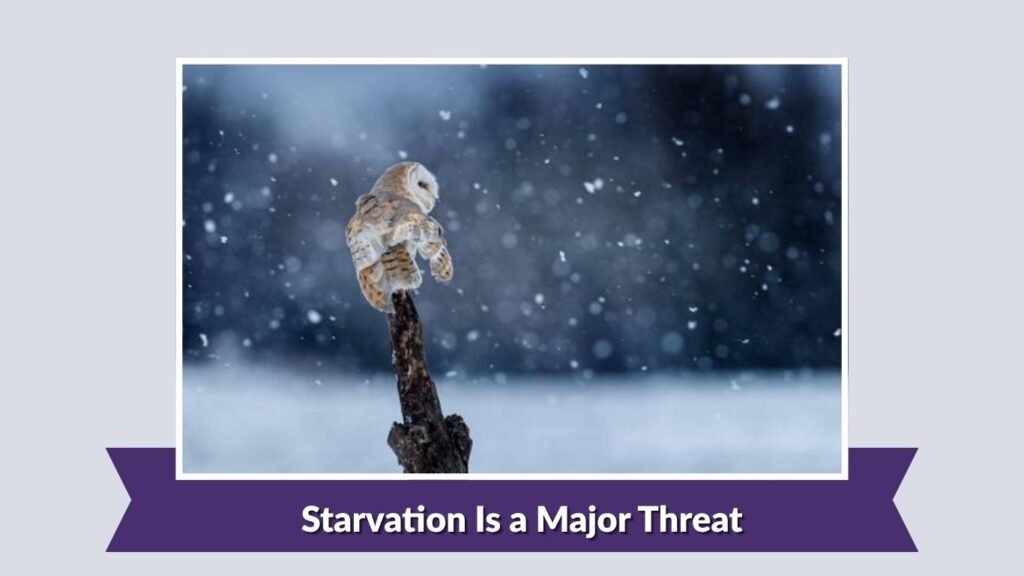
Barn owls depend heavily on food supply. Harsh winters, snow, heavy rain, and poor hunting conditions can make survival difficult.
The Game & Wildlife Conservation Trust notes that starvation is a major cause of death for nestlings, first-year juveniles, and adults in winter, with food supply strongly linked to habitat and weather.
18. Barn Owls Are Found in Many Parts of the World
Barn owls are widely distributed and live in many countries. They can survive in different open habitats as long as they have food, safe nesting sites, and suitable hunting areas.
This wide range is one reason they are so well known compared with many other owl species.
19. Female Barn Owls Are Often More Spotted
In many barn owls, females may have darker markings or more spots than males, although appearance can vary by region and individual.
These spots are usually found on the chest and underside. However, color alone is not always enough for beginners to identify sex accurately.
20. Barn Owls Are Important in Food Chains
Barn owls are predators, but they are also part of a larger food web. They eat small mammals and sometimes birds, reptiles, insects, or amphibians. Their pellets return undigested material to the environment and give scientists clues about local wildlife.
This makes barn owls useful indicators of ecosystem health.
21. Barn Owls Are Beautiful but Wild
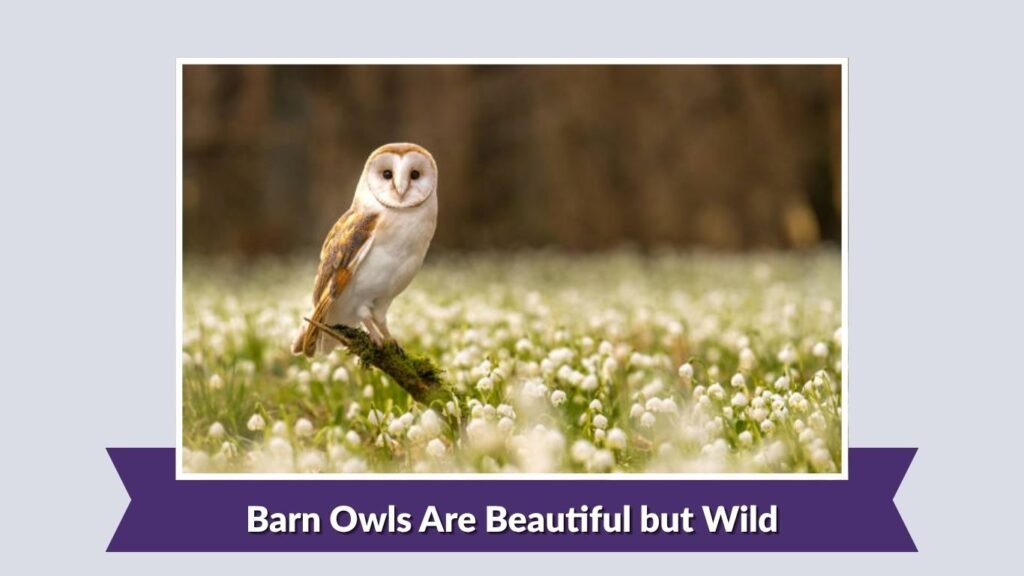
Barn owls may look gentle, but they are wild birds of prey. They have sharp talons, strong beaks, and specialized hunting instincts.
If you find an injured barn owl or a fallen owlet, it is best to contact a local wildlife rescue or licensed rehabilitator instead of trying to keep or handle it yourself.
Quick Barn Owl Fact File
Common name: Barn owl
Scientific group: Tyto owls
Best-known feature: Heart-shaped white face
Diet: Mostly small mammals such as mice, voles, shrews, and rats
Habitat: Open fields, grasslands, farms, marshes, rural edges, and some urban areas
Nest sites: Barns, tree cavities, caves, old buildings, towers, and nest boxes
Activity: Mostly nocturnal
Sound: Screeches, hisses, and harsh calls rather than classic hoots
Young: Called owlets
Useful role: Natural rodent control
FAQs
1. What is the most interesting fact about barn owls?
One of the most interesting facts about barn owls is that they can hunt using sound. Their heart-shaped face and strong hearing help them locate prey even in darkness.
2. What do barn owls eat?
Barn owls mostly eat small mammals such as mice, voles, shrews, and rats. In some areas, they may also eat small birds, frogs, reptiles, or large insects.
3. Where do barn owls live?
Barn owls live in open habitats such as grasslands, farms, marshes, deserts, ranchlands, brushy fields, and some suburbs or cities. They often nest in barns, buildings, caves, tree cavities, and nest boxes.
4. Do barn owls hoot?
No, barn owls do not usually make the classic owl hoot. They are better known for harsh screeches, hisses, and other sharp calls.
5. Are barn owls good for farms?
Yes. Barn owls help control rodents naturally by hunting mice, voles, shrews, and rats. Farms with rough grassland and safe nesting places can provide good habitat for them.
