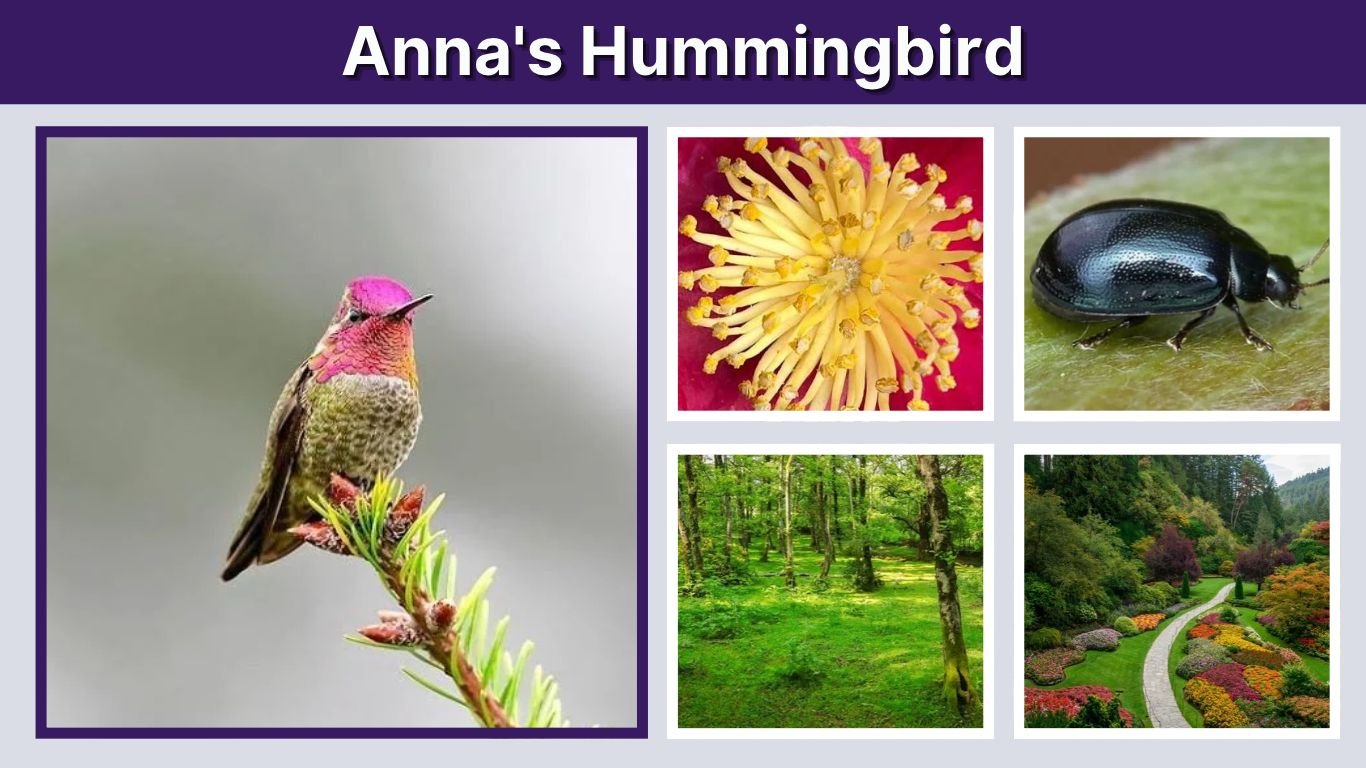
Anna’s hummingbird is a beautiful and fascinating bird commonly found along the Pacific Coast of North America. Known for its brilliant pink feathers, incredible flying abilities, and energetic behavior, this small hummingbird attracts birdwatchers throughout the year. Unlike many hummingbird species, Anna’s hummingbirds often remain in the same region during winter. Males display spectacular courtship dives, while females carefully build tiny nests and raise their young. Understanding their identification features, habitat, diet, nesting habits, sounds, and lifespan can help you recognize these remarkable birds in the wild.
What Is Anna’s Hummingbird?
Anna’s hummingbird (Calypte anna) is a small bird belonging to the hummingbird family, Trochilidae. It is native to western North America and is particularly common in California, Oregon, Washington, and parts of British Columbia.
These birds are known for their territorial behavior, rapid wingbeats, and ability to hover while feeding.
Anna’s Hummingbird Size and Appearance
Anna’s hummingbirds measure approximately 3.9 inches (10 centimeters) long and weigh around 3–6 grams. Their wingspan is roughly 4.7 inches (12 centimeters).
They have compact bodies, relatively straight bills, green upperparts, and grayish underparts. Males are particularly recognizable because of their brilliant iridescent head feathers.
How to Identify Anna’s Hummingbirds
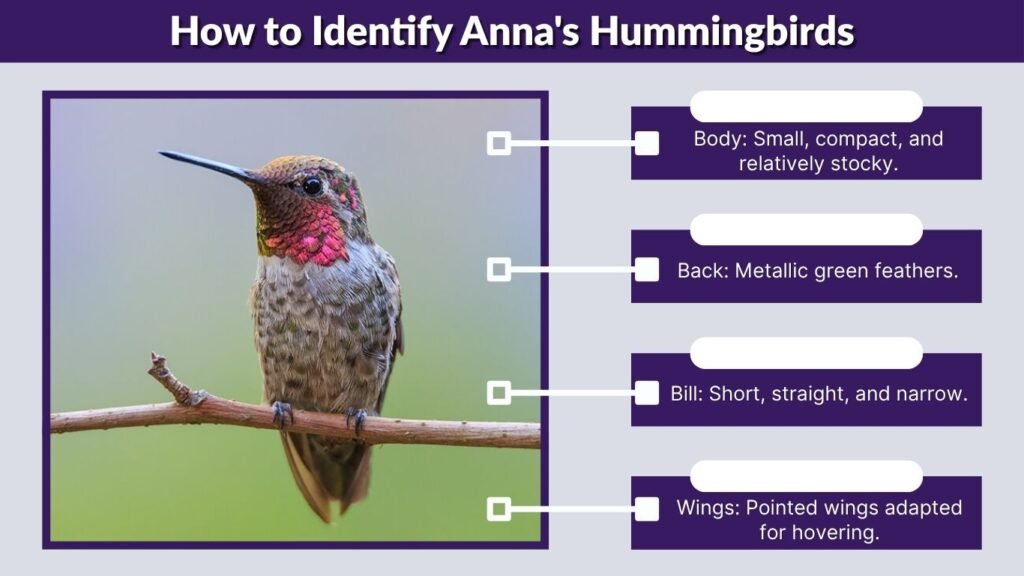
Identifying Anna’s hummingbirds is relatively easy when adult males display their colorful plumage. Females and juveniles can be more challenging because they resemble several other hummingbird species.
Their body shape, feather patterns, and behavior provide useful identification clues.
Key Identification Features
- Body: Small, compact, and relatively stocky.
- Back: Metallic green feathers.
- Bill: Short, straight, and narrow.
- Wings: Pointed wings adapted for hovering.
- Tail: Fairly broad and extending beyond folded wingtips.
- Head: Bright pink on adult males, mostly green on females.
Juvenile Anna’s Hummingbird
Young Anna’s hummingbirds generally resemble females, with green backs, pale underparts, and limited colorful throat feathers.
Immature males gradually develop reddish-pink feathers on their heads and throats. Their full adult appearance becomes more noticeable as they mature.
Male vs. Female Anna’s Hummingbird
Male and female Anna’s hummingbirds differ mainly in coloration and breeding behavior. Both sexes have similar body shapes, but adult males possess much brighter ornamental feathers.
Male Anna’s Hummingbird
Adult males have iridescent rose-pink feathers covering the crown and throat. These feathers can appear purple, red, or nearly black depending on the lighting.
Males are territorial and frequently chase competing hummingbirds away from feeding areas. During the breeding season, they perform dramatic aerial displays to attract females.
Female Anna’s Hummingbird
Females have green upperparts, grayish underparts, and a mostly pale throat that often features a small patch of reddish-pink feathers.
They lack the extensive bright head coloring of adult males. Females build nests, incubate eggs, and raise chicks without assistance from males.
Where Do Anna’s Hummingbirds Live?
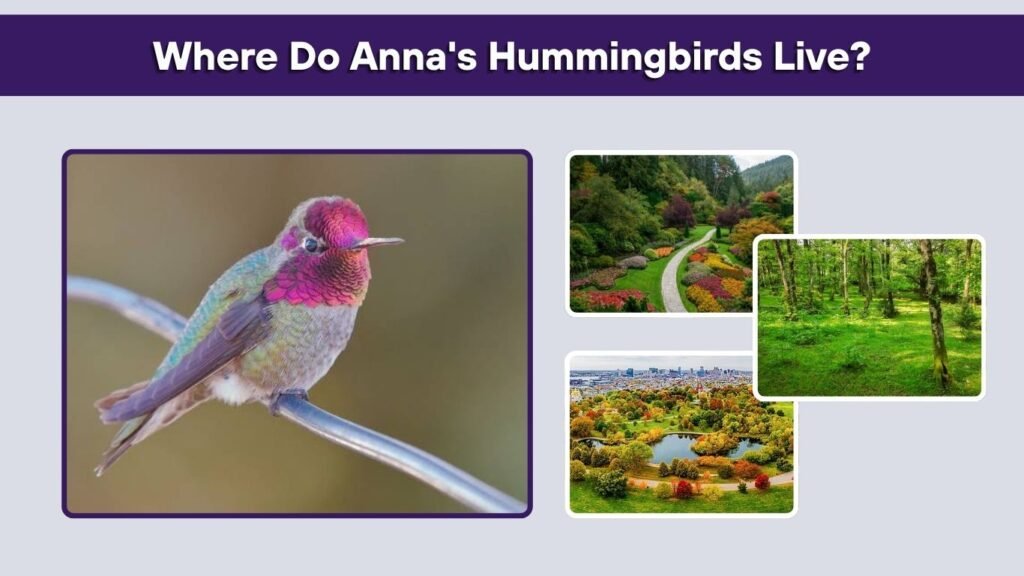
Anna’s hummingbirds occupy many habitats throughout western North America. They are especially common in areas where flowering plants provide nectar throughout the year.
Their adaptability has allowed them to expand into suburban and urban environments.
Anna’s Hummingbird Habitat and Range
Typical habitats include coastal scrublands, open woodlands, gardens, city parks, and residential neighborhoods.
Their range extends along the Pacific Coast from northwestern Mexico into southwestern Canada. They also occur in parts of the southwestern United States, including Arizona.
Do Anna’s Hummingbirds Migrate?
Unlike many North American hummingbirds, Anna’s hummingbirds do not undertake regular long-distance migrations.
Many remain in their territories throughout winter. However, some populations make seasonal movements between elevations or nearby regions, following flowering plants and suitable weather conditions.
What Do Anna’s Hummingbirds Eat?
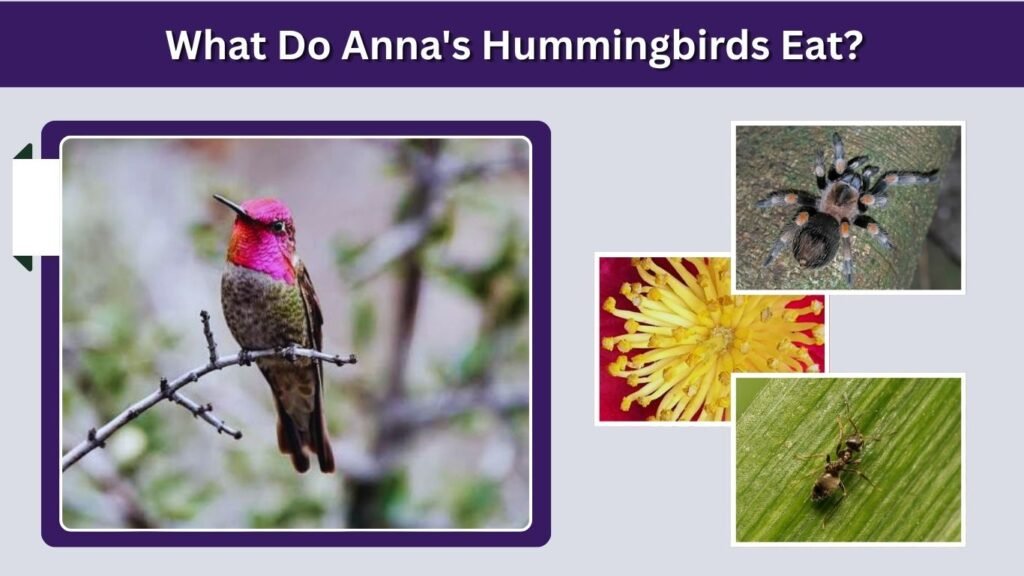
Anna’s hummingbirds primarily feed on flower nectar and small arthropods. Nectar provides energy, while insects and spiders supply essential protein and other nutrients.
They frequently visit flowers, hovering in front of blossoms while using their long tongues to collect nectar.
Anna’s Hummingbird Diet
Their natural diet includes:
- Nectar from flowering plants
- Small flies and gnats
- Mosquitoes and midges
- Aphids and other tiny insects
- Small spiders
- Sugar water from suitable hummingbird feeders
Feeding Habits
Anna’s hummingbirds often defend productive feeding territories against other hummingbirds.
They visit flowers repeatedly throughout the day and capture tiny insects from the air or vegetation.
Their rapid metabolism requires frequent feeding, especially during cold weather or periods of intense activity.
Anna’s Hummingbird Nesting and Eggs
Anna’s hummingbirds have fascinating nesting habits. In coastal California, breeding may begin during winter, earlier than the nesting season of many other North American birds.
Females take complete responsibility for nest construction and parental care.
Anna’s Hummingbird Nest
The female builds a tiny cup-shaped nest using soft plant fibers, feathers, and spider silk. Lichens or other materials may help camouflage the outside.
Nests are commonly placed on horizontal tree branches, often approximately 6–20 feet above the ground.
Spider silk allows the nest to stretch as the chicks grow.
Eggs and Incubation
Female Anna’s hummingbirds usually lay two small white eggs.
Incubation lasts approximately 14–19 days, with around 16 days being typical.
After hatching, chicks remain in the nest for approximately three weeks. The female feeds them regurgitated food containing tiny insects and other nutrients until they are ready to fledge.
Anna’s Hummingbird Calls and Sounds
Anna’s hummingbirds are among the more vocal hummingbird species. Their sounds include sharp chips, buzzy songs, and distinctive noises associated with courtship displays.
These vocalizations help birds communicate and defend territories.
Anna’s Hummingbird Call
Males produce scratchy, metallic-sounding songs that include buzzes, whistles, and repeated chip notes.
Both sexes make sharp calls during territorial encounters or other interactions.
Their songs may last ten seconds or longer, making them unusual among North American hummingbirds.
Anna’s Hummingbird Courtship Dive
During courtship, males climb approximately 100–130 feet before diving rapidly toward a female.
At the bottom of the dive, special tail feathers produce a loud, high-pitched sound as air passes over them.
Research has measured diving speeds near 61 miles per hour. This spectacular display demonstrates remarkable aerial control.
Anna’s Hummingbird Lifespan and Behavior
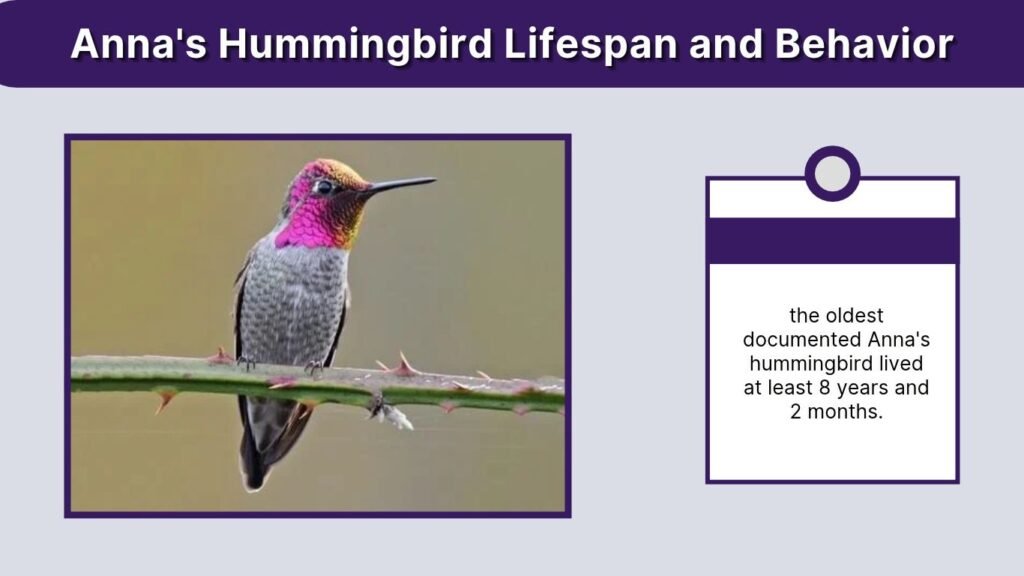
Anna’s hummingbirds are energetic birds with several adaptations that help them survive changing environmental conditions.
Although small, they can defend territories, tolerate relatively cool temperatures, and survive for multiple breeding seasons.
How Long Do Anna’s Hummingbirds Live?
Anna’s hummingbirds can live for several years in the wild, although survival varies with age, predators, and environmental conditions.
According to bird-banding records, the oldest documented Anna’s hummingbird lived at least 8 years and 2 months.
How Do Anna’s Hummingbirds Survive Winter?
During cold weather, Anna’s hummingbirds may enter a temporary state called torpor.
Their heart rate, metabolism, and body temperature decrease significantly, conserving energy when food is limited.
They become active again as conditions improve and continue feeding on available nectar and insects.
Anna’s Hummingbird vs. Similar Species
Several western hummingbirds resemble female or juvenile Anna’s hummingbirds. Careful observation of feather colors, body proportions, and geographic distribution helps distinguish them.
Anna’s vs. Rufous Hummingbird
Rufous hummingbirds have prominent orange or rusty-colored plumage, particularly on the body and tail.
Anna’s hummingbirds are primarily green and gray, without the extensive rusty coloration of Rufous Hummingbirds.
Anna’s vs. Ruby-Throated Hummingbird
Male Ruby-throated Hummingbirds have a bright red throat but lack the extensive pink crown found on male Anna’s hummingbirds.
Ruby-throated Hummingbirds primarily inhabit eastern North America, while Anna’s hummingbirds are associated with the West.
How to Attract Anna’s Hummingbirds
Creating a hummingbird-friendly backyard can encourage Anna’s hummingbirds to visit regularly. Suitable flowering plants, clean feeders, and safe resting locations provide valuable resources.
Backyard Attraction Tips
- Grow regionally appropriate native nectar-producing flowers.
- Provide clean hummingbird feeders.
- Mix one part refined white sugar with four parts water.
- Avoid red dye, honey, and artificial sweeteners.
- Clean feeders frequently, especially during warm weather.
- Avoid pesticides that harm insects and hummingbirds.
FAQs
1. Are Anna’s Hummingbirds Rare?
Anna’s hummingbirds are relatively common along the Pacific Coast of North America. Their populations have expanded into several northern regions. They regularly visit gardens, parks, and neighborhoods, making them familiar birds in many western communities.
2. Why Do Anna’s Hummingbirds Change Color?
Anna’s hummingbirds do not deliberately change feather color. Their iridescent feathers reflect light differently depending on viewing angle and illumination. A male’s bright pink throat and crown may appear dark, purple, or brilliant reddish-pink as it moves.
3. How Fast Can Anna’s Hummingbirds Fly?
Male Anna’s hummingbirds can reach approximately 61 miles per hour during their spectacular courtship dives. Ordinary flight is considerably slower. Their powerful wings also allow precise hovering, backward movement, and rapid changes in direction while feeding.
4. Do Anna’s Hummingbirds Stay in California Year-Round?
Yes, many Anna’s hummingbirds remain in California throughout the year. They can survive winter by feeding on available nectar and insects, occasionally using torpor to conserve energy. Some individuals also make shorter seasonal movements within their range.
5. What Flowers Do Anna’s Hummingbirds Like?
Anna’s hummingbirds visit many nectar-producing flowers, including California fuchsia, salvias, manzanita, and flowering currants. Native plants suited to the local climate are especially valuable because they provide reliable nectar sources and support insects used for food.