
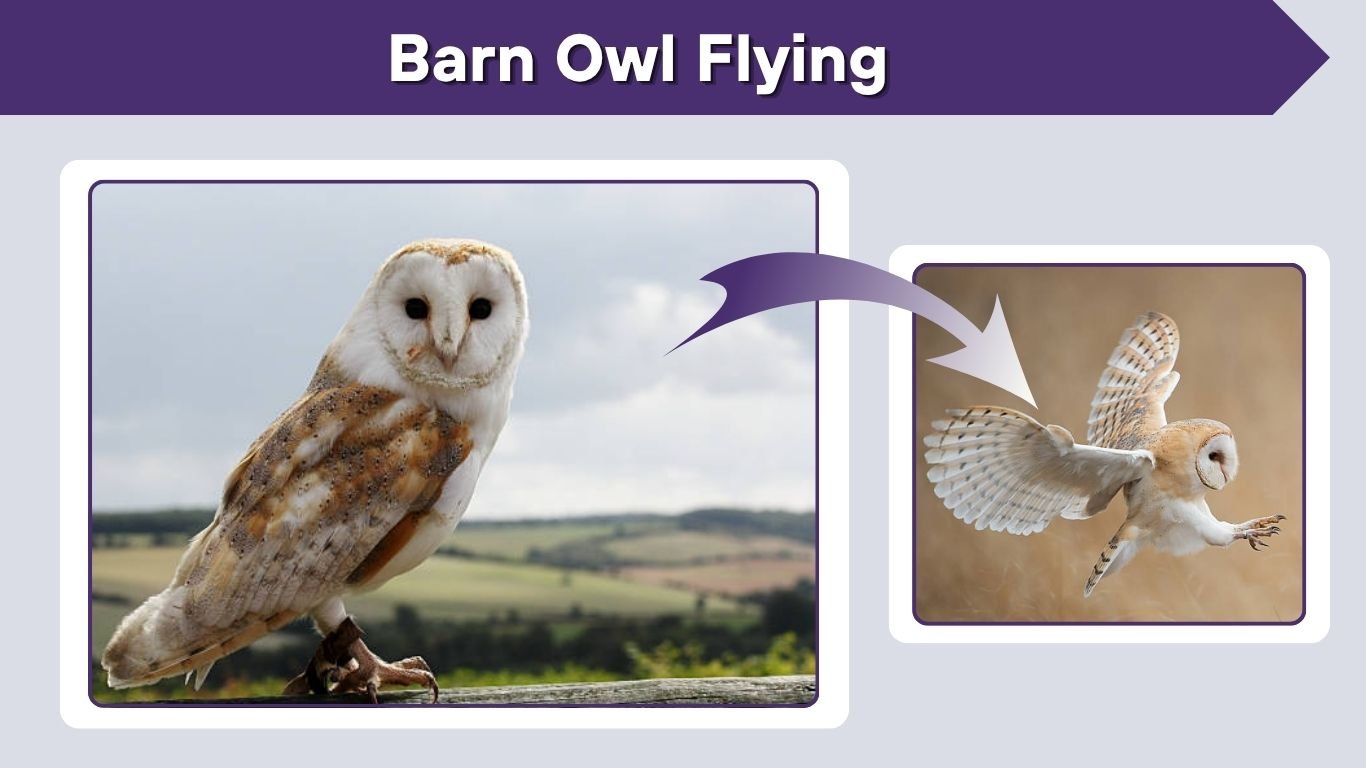
Barn owl flying is one of the most beautiful sights in nature. These pale owls glide low over fields, grasslands, and farm edges while searching for mice, voles, shrews, and rats. Their flight looks soft and ghost-like because their wings are broad, light, and specially adapted for silence. In this article, you’ll learn how barn owls fly, why they fly quietly, when they fly, how fast they can move, and why flying barn owl images are so popular.
Barn Owl Flying Facts
Barn owls are medium-sized birds of prey, but their wings make them look larger in flight. Their long wings, light body, and short tail help them move slowly over open ground. Instead of rushing like a falcon, a barn owl usually flies low and carefully, listening for small animals hidden in grass.
Quick flying fact file
- Flight style: Slow, low, smooth, and silent
- Main hunting time: Dusk, night, and early morning
- Main hunting areas: Open fields, grassland, farmland, marshes, and field edges
- Wingspan: About 80–95 cm in many barn owls
- Body length: About 33–39 cm
- Main prey during flight: Mice, voles, shrews, rats, and small birds
- Special skill: Finding prey by sound while flying
Barn owls use exceptional hearing as they fly low over open habitats, and their heart-shaped face helps direct sounds toward the ears.
How Do Barn Owls Fly?
A barn owl does not usually fly in a fast, straight chase. It often uses a hunting method called quartering, where it moves back and forth over a field while scanning and listening. This slow flight helps the owl cover ground carefully without making much noise or wasting energy.
Low hunting flight
Barn owls often fly just above grass or field edges. This gives them a better chance to hear small prey moving below. When they detect a sound, they may hover briefly, turn, and then drop down feet-first with sharp talons ready.
The National Trust describes barn owls as slow, silent flyers that may appear to hover over small rodents before dropping feet-first into vegetation.
Silent gliding
A flying barn owl often glides more than it flaps. Gliding helps reduce sound and saves energy during long hunting trips. When it does flap, the wingbeats are soft and controlled. This is why many people describe a barn owl flying at night as ghost-like.
Why Do Barn Owls Fly Silently?
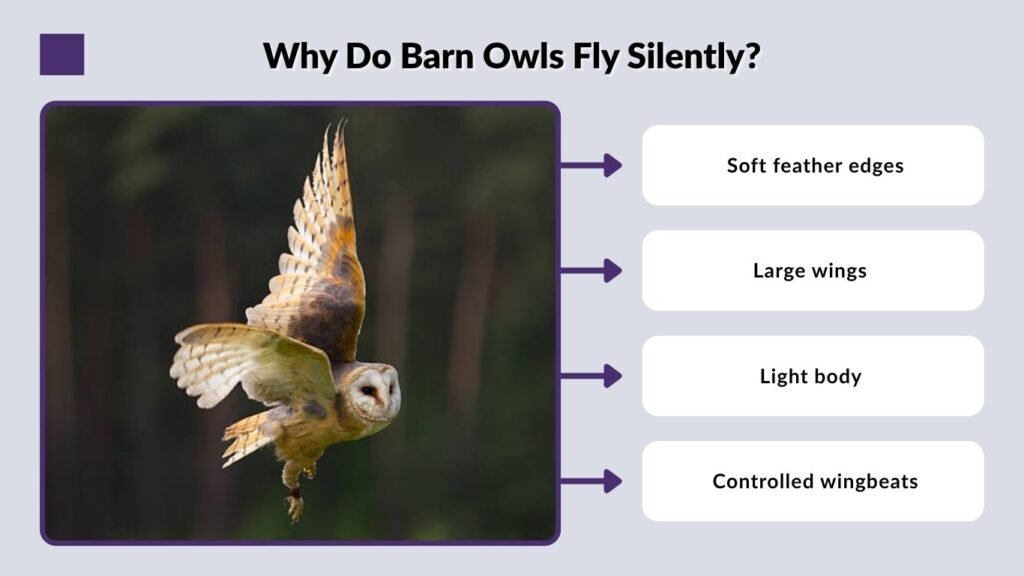
Silent flight is one of the most famous barn owl abilities. The owl needs to hear tiny sounds from prey, so noisy wings would be a problem. Quiet wings also help the owl approach prey without warning. This mix of stealth and hearing makes barn owls excellent night hunters.
Main reasons for silent flight
- Soft feather edges: The wing feathers have fine edges that reduce air noise.
- Large wings: Big wings create lift, so the owl can fly slowly.
- Light body: A light body helps the owl glide with less effort.
- Controlled wingbeats: Slow, careful wingbeats make less sound.
- Hunting by hearing: Quiet flight allows the owl to hear prey clearly.
Audubon explains that owl feathers have comb-like leading edges and fringed trailing edges that smooth airflow and reduce sound. Large wings also allow owls to fly very slowly.
Why silence matters
Silence helps the barn owl in two ways. First, prey animals such as mice may not hear the owl coming. Second, the owl can still hear tiny rustling sounds in grass. If the owl’s own wings were loud, those sounds would be harder to detect.
Barn Owl Flying at Night
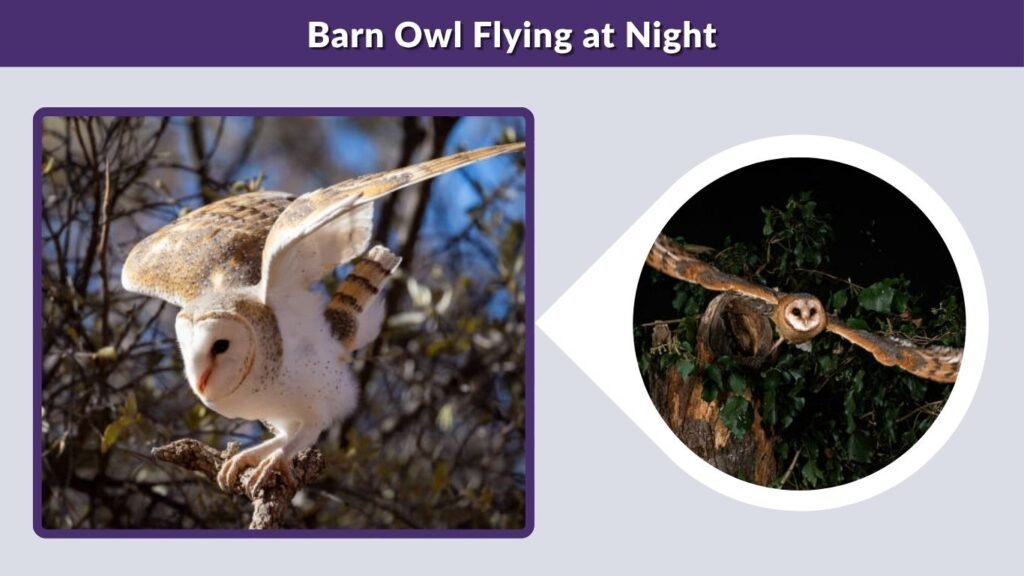
Barn owls are mostly nocturnal, which means they are most active at night. They often begin hunting around dusk, continue through the night, and may still be active near dawn. Their pale body can look almost white in low light, especially when the owl is flying toward a camera or across a dark field.
Why barn owls fly at night
Barn owls fly at night because many of their prey animals are also active then. Mice, voles, and shrews often move through grass after dark. Night hunting gives the owl a better chance to find food while avoiding some daytime disturbance.
Cornell Lab notes that American Barn Owls live in open habitats such as grasslands, deserts, marshes, agricultural fields, ranchlands, brushy fields, suburbs, and cities. These open areas make low night hunting easier.
Do barn owls fly during the day?
Barn owls can fly during the day, but it is less common. Daytime flight may happen when food is scarce, when adults are feeding hungry chicks, or when a bird is disturbed from its roost. In winter, barn owls may also be seen earlier in the evening because nights are longer and hunting can be harder.
How Fast Can a Barn Owl Fly?
Barn owls are not famous for speed. Their strength is quiet, careful hunting. A falcon uses speed to catch prey in the air, but a barn owl uses silence, hearing, and surprise. For this reason, many barn owl flights are slow and controlled rather than fast and dramatic.
Typical flying speed
A barn owl may fly slowly while hunting, especially when it is listening for prey. Audubon says large owl wings can allow very slow flight, even as slow as a few miles per hour in some cases.
Some general wildlife sources give higher speeds for barn owls in normal flight, but exact speed changes with wind, hunting style, and whether the owl is gliding, flapping, escaping, or crossing open land. For SEO-safe wording, it is better to say that barn owls usually hunt with slow, silent flight instead of giving one fixed speed for every situation.
Can barn owls hover?
Barn owls can appear to hover briefly when they focus on prey. They are not true hovering specialists like kestrels, but they can pause, flutter, or hold position for a short moment in the air before dropping onto prey.
Can Barn Owls Fly in Rain?
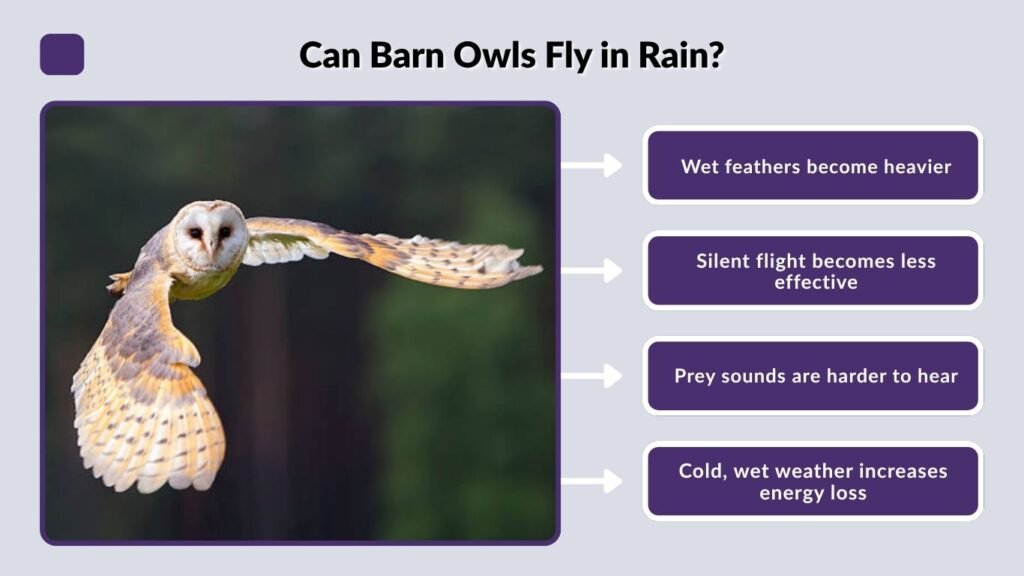
Barn owls can fly in light rain, but heavy rain is a problem. Wet feathers can make flight harder and reduce the owl’s ability to stay warm. Rain also makes hunting more difficult because it creates background noise and can hide the small rustling sounds of prey in grass.
Why rain affects barn owl flight
- Wet feathers become heavier
- Silent flight becomes less effective
- Prey sounds are harder to hear
- Cold, wet weather increases energy loss
- Hunting success may drop during storms
Barn owls depend strongly on hearing when hunting, so noisy weather can make prey harder to locate. The Natural History Museum explains that barn owls use exceptional hearing and low flight to track prey over open habitats.
What happens in bad weather?
During heavy rain, strong wind, or snow, barn owls may wait in sheltered roosts until conditions improve. If bad weather lasts too long, they may be forced to hunt in poor conditions. This is one reason winter and stormy periods can be dangerous for wild barn owls.
Young Barn Owls Learning to Fly
Baby barn owls do not fly immediately. They hatch helpless and covered in white down. As they grow, they stretch their wings, flap inside the nest, and slowly build strength. Their first flights are short and awkward, but they improve quickly with practice.
When do barn owls start flying?
The Barn Owl Trust says young barn owls usually make their first short flights by 8–9 weeks and are often competent flyers by about 10 weeks of age.
Young owls may stay near the nest area while learning. At this stage, they still rely on their parents for food, even after they begin flying. A young barn owl learning to fly may look clumsy, but this stage is normal.
FAQs
1. How do barn owls fly silently?
Barn owls fly silently because their feathers reduce air noise, their wings are large for their body size, and their wingbeats are slow and controlled. This helps them hear prey while hunting.
2. Do barn owls fly at night?
Yes. Barn owls mostly fly at night, especially at dusk, during the night, and near dawn. They hunt small mammals that are active after dark.
3. How fast can a barn owl fly?
Barn owls can move faster when needed, but they usually hunt with slow, quiet flight. Their hunting success depends more on hearing and stealth than speed.
4. Can barn owls fly in the rain?
Barn owls can fly in light rain, but heavy rain makes hunting harder. Wet feathers, cold conditions, and noisy rainfall can reduce hunting success.
5. When do baby barn owls learn to fly?
Young barn owls usually begin short flights at about 8–9 weeks old and become more confident flyers around 10 weeks. They still depend on their parents for food during this learning stage.
