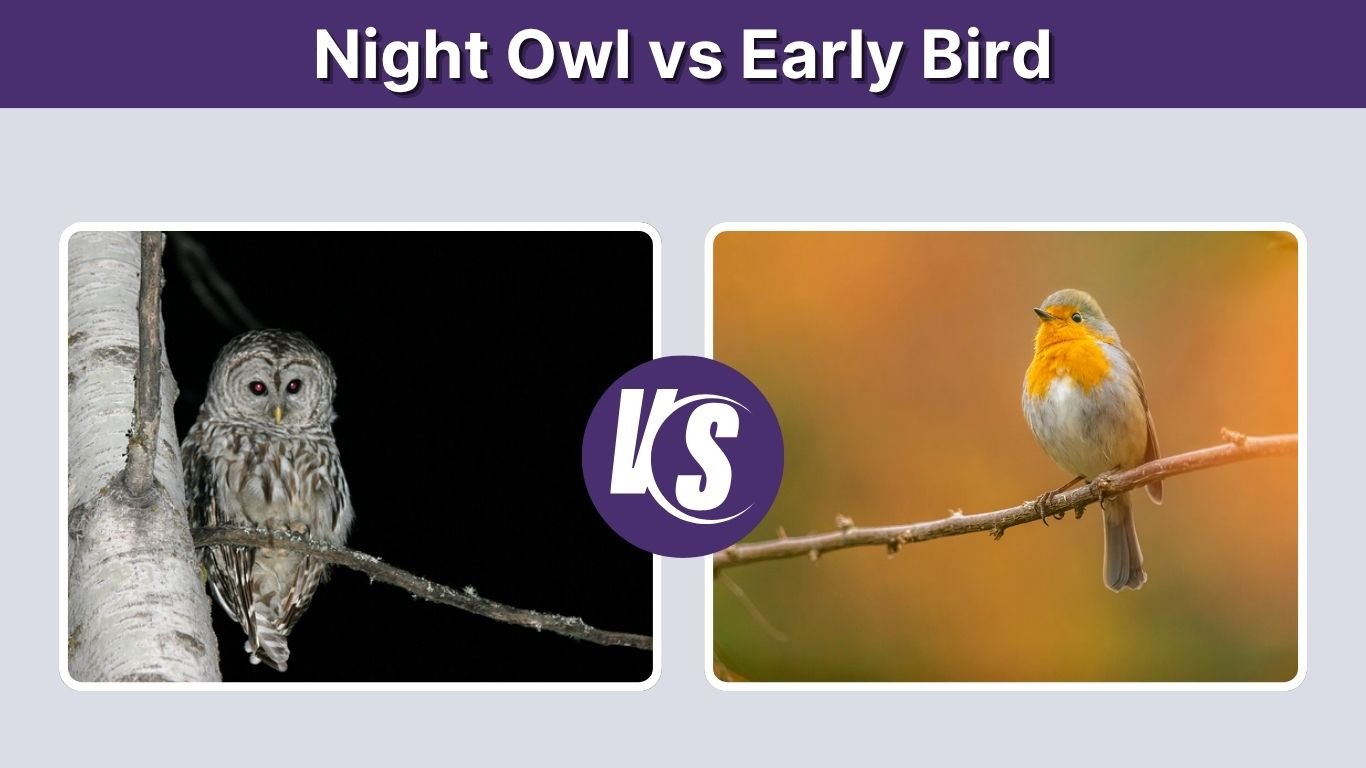
Are you more focused late at night, or do you feel your best early in the morning? The “night owl vs early bird” debate is really about chronotype, which means your natural sleep-wake preference. Some people feel alert at sunrise, while others become more creative and energetic after dark. Neither type is automatically better. The right answer depends on your biology, schedule, lifestyle, health habits, and work demands.
What Does Night Owl vs Early Bird Mean?
Night owls and early birds are two common sleep chronotypes. A chronotype describes when your body naturally prefers to sleep, wake, focus, and perform daily activities. Research explains that chronotype exists on a continuum, not just two fixed boxes. Some people are strong morning types, some are strong evening types, and many fall somewhere in the middle.
What Is a Night Owl?
A night owl is someone who naturally feels more awake, alert, or productive later in the day. Night owls may struggle with early mornings, especially if school, work, or family duties force them to wake before their body feels ready.
Common night owl traits include:
- Prefers sleeping late and waking late
- Feels more energetic in the evening
- May do creative work better at night
- Often dislikes early morning schedules
- May need more time to feel alert after waking
Night owls are not lazy. Their internal rhythm may simply run later than the standard 9-to-5 schedule.
What Is an Early Bird?
An early bird is someone who naturally wakes up early and feels active in the morning. Early birds often prefer starting work, exercise, or important tasks earlier in the day.
Common early bird traits include:
- Wakes up early more easily
- Feels focused in the morning
- Gets sleepy earlier at night
- Often enjoys structured routines
- May perform best before afternoon
Early birds often fit more easily into traditional school and office schedules because society is usually built around morning activity.
Night Owl vs Early Bird: Quick Comparison
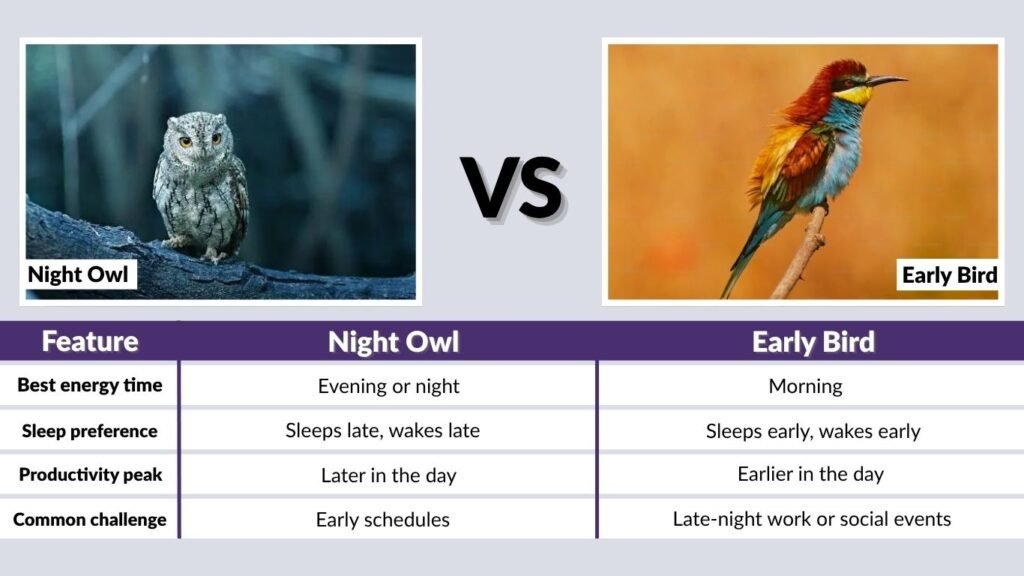
Here is a simple comparison between night owls and early birds.
| Feature | Night Owl | Early Bird |
|---|---|---|
| Best energy time | Evening or night | Morning |
| Sleep preference | Sleeps late, wakes late | Sleeps early, wakes early |
| Productivity peak | Later in the day | Earlier in the day |
| Common challenge | Early schedules | Late-night work or social events |
| Social fit | May clash with morning routines | Often fits school/work timing |
| Main risk | Sleep debt from early obligations | Tiredness during late activities |
Both types can be productive. The key difference is when their energy naturally peaks.
Night Owl vs Early Bird Personality
Many people search for “night owl vs early bird personality” because they want to know whether sleep style says something about character. It can show patterns, but it does not define a person completely.
Night Owl Personality Traits
Night owls are often described as flexible, creative, independent, and comfortable working when others are asleep. They may enjoy quiet nighttime hours because there are fewer distractions.
Some night owls also feel more socially active at night. This can make them enjoy late conversations, entertainment, gaming, writing, studying, or creative projects. However, if they must wake early, they may appear tired, unfocused, or unmotivated in the morning.
Early Bird Personality Traits
Early birds are often linked with routine, discipline, planning, and morning energy. They may like starting the day with exercise, breakfast, reading, or important work before distractions begin.
Because early birds usually match standard work and school schedules, they may seem more organized. But this does not mean they are better workers. Their schedule simply fits the social clock more easily.
Is Being a Night Owl Genetic?
Yes, genetics can play a role in whether someone becomes a night owl or an early bird. Large genetic research on chronotype found that being a morning person is connected with biological circadian rhythm factors, though lifestyle and social pressure also influence sleep timing.
That means your sleep pattern is not only about habit. Your body clock, genes, age, light exposure, work timing, screen use, caffeine, and daily routine can all shape your chronotype.
Can You Change From Night Owl to Early Bird?
You may be able to shift your schedule slightly, but completely changing your natural chronotype can be difficult. For example, a natural night owl may learn to wake earlier by using morning sunlight, consistent bedtime, less evening screen time, and earlier meals. But they may still feel naturally sharper later in the day.
Helpful ways to shift earlier include:
- Wake up at the same time every day
- Get sunlight soon after waking
- Avoid caffeine late in the day
- Reduce bright screens before bed
- Move exercise earlier
- Keep bedtime consistent
- Avoid sleeping too late on weekends
The goal is not to fight your body completely. The goal is to create a routine that supports your life.
Night Owl vs Early Bird Health
Health is one of the biggest parts of the early bird vs night owl debate. Some studies connect evening chronotypes with more sleepiness, irregular sleep habits, and higher caffeine use. This does not mean every night owl is unhealthy. The problem often comes from mismatch.
Why Night Owls May Face More Health Challenges
Night owls may face health problems when their natural rhythm conflicts with early school, work, or family schedules. This creates “social jet lag,” where the body wants one schedule but life demands another.
For example, a night owl who naturally sleeps from 1 a.m. to 9 a.m. may be forced to wake at 6 a.m. for work. Over time, this can cause sleep debt, tiredness, poor focus, and unhealthy habits.
Are Early Birds Healthier?
Early birds may have an advantage because their natural rhythm often matches society’s schedule. They may get more consistent sleep and morning light. However, being an early bird does not guarantee good health. Poor diet, stress, lack of sleep, and inactivity can affect anyone.
The healthiest person is not always the earliest riser. The healthiest person is usually the one who gets enough quality sleep on a consistent schedule.
Night Owl vs Early Bird Productivity
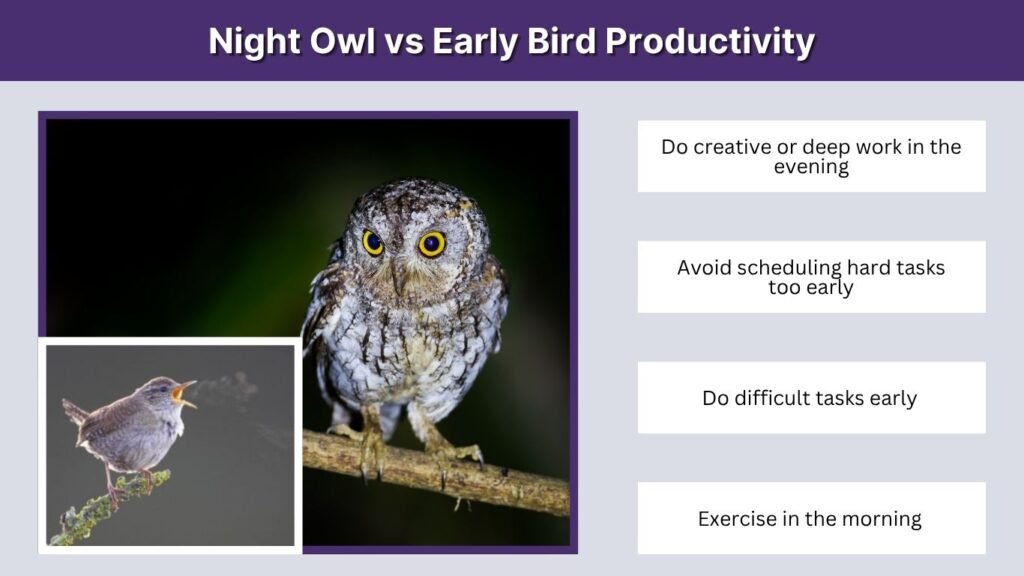
The better productivity type depends on the task and timing. A night owl may do deep creative work at 10 p.m., while an early bird may finish their best work before 10 a.m.
Research on chronotype and cognitive performance shows that time of day can interact with mental performance, alertness, memory, and thinking. So productivity is not just about discipline. It is also about matching important tasks to your peak energy window.
Best Productivity Tips for Night Owls
Night owls can improve productivity by protecting their evening focus without damaging sleep.
Good strategies include:
- Do creative or deep work in the evening
- Avoid scheduling hard tasks too early
- Prepare morning tasks the night before
- Use soft light at night
- Keep a fixed wake-up time
- Avoid revenge bedtime procrastination
Night owls should be careful not to confuse productive nighttime energy with endless scrolling or entertainment.
Best Productivity Tips for Early Birds
Early birds can use the morning for high-value work before distractions begin.
Good strategies include:
- Do difficult tasks early
- Exercise in the morning
- Plan the day before breakfast
- Avoid wasting peak energy on small tasks
- Schedule meetings before afternoon fatigue
- Sleep early enough to protect morning focus
Early birds should avoid overloading their mornings and crashing later in the day.
Night Owl vs Early Bird Pros and Cons
Both sleep types have strengths and weaknesses. The best type depends on your lifestyle.
| Type | Pros | Cons |
|---|---|---|
| Night owl | Creative night focus, quiet work time, flexible evening energy | Early mornings can be hard, may develop sleep debt |
| Early bird | Strong morning focus, fits school/work schedules, easier routines | May struggle with late events, evening fatigue |
| Middle chronotype | Flexible schedule, balanced energy | May not have one strong peak time |
A middle chronotype is also common. Not everyone is a strong night owl or early bird.
Night Owl vs Early Bird Quiz
Use this simple quiz to understand your sleep style. Choose the answer that feels most natural, not the one your schedule forces you to follow.
Simple Chronotype Test
- When do you feel most focused?
- A. Morning
- B. Afternoon
- C. Evening or night
- When would you wake up without an alarm?
- A. Early morning
- B. Mid-morning
- C. Late morning or noon
- When do you prefer doing hard mental work?
- A. Before lunch
- B. Afternoon
- C. Night
- When do you naturally feel sleepy?
- A. Early night
- B. Around normal bedtime
- C. Very late night
- Which schedule feels easiest?
- A. Sleep early, wake early
- B. Balanced schedule
- C. Sleep late, wake late
Results:
Mostly A answers mean you are likely an early bird. Mostly C answers mean you are likely a night owl. Mostly B answers mean you may be an intermediate chronotype.
Which Is Better: Night Owl or Early Bird?
Neither is better for everyone. Early birds often have an easier time fitting into school, office, and morning-based routines. Night owls may perform better in creative, flexible, or evening-based work. The real issue is not whether you are a night owl or early bird. The real issue is whether your lifestyle matches your chronotype.
If you are a night owl with flexible work, you may do very well. If you are a night owl forced into early mornings, you may struggle. If you are an early bird with late-night obligations, you may also feel drained.
How Couples Can Handle Night Owl vs Early Bird Differences
A night owl and an early bird can live together successfully, but they need respect and planning. Problems happen when one person sees the other’s rhythm as laziness, selfishness, or poor discipline.
Helpful tips include:
- Respect different sleep times
- Use quiet routines at night and morning
- Plan shared time during overlapping energy hours
- Avoid forcing one person to fully change
- Keep the bedroom sleep-friendly
- Discuss alarms, lights, and noise
The goal is not to make both people the same. The goal is to create a routine that protects sleep and relationship quality.
FAQs
Is it better to be a night owl or early bird?
Neither is always better. Early birds often fit traditional schedules more easily, while night owls may feel more creative and productive later. The best option depends on your natural rhythm, job, health habits, and whether you get enough sleep.
Are night owls more intelligent than early birds?
Some people search for night owls vs early birds intelligence, but intelligence is not decided by sleep type alone. Chronotype may affect when someone performs best, but education, habits, sleep quality, health, and environment are also important.
Are night owls unhealthy?
Night owls are not automatically unhealthy. The main problem is when they must follow early schedules that reduce sleep. Poor sleep timing, short sleep, stress, and irregular routines can create health problems for night owls.
Can a night owl become an early bird?
A night owl can shift earlier with consistent wake times, morning sunlight, reduced evening light, and better sleep habits. However, genetics and biology still matter, so a complete change may be difficult for strong evening types.
What is the difference between a night owl and an early bird?
A night owl feels more awake and productive later in the day, while an early bird feels best in the morning. The difference comes from chronotype, which is your natural sleep-wake preference shaped by biology, habits, age, and environment.