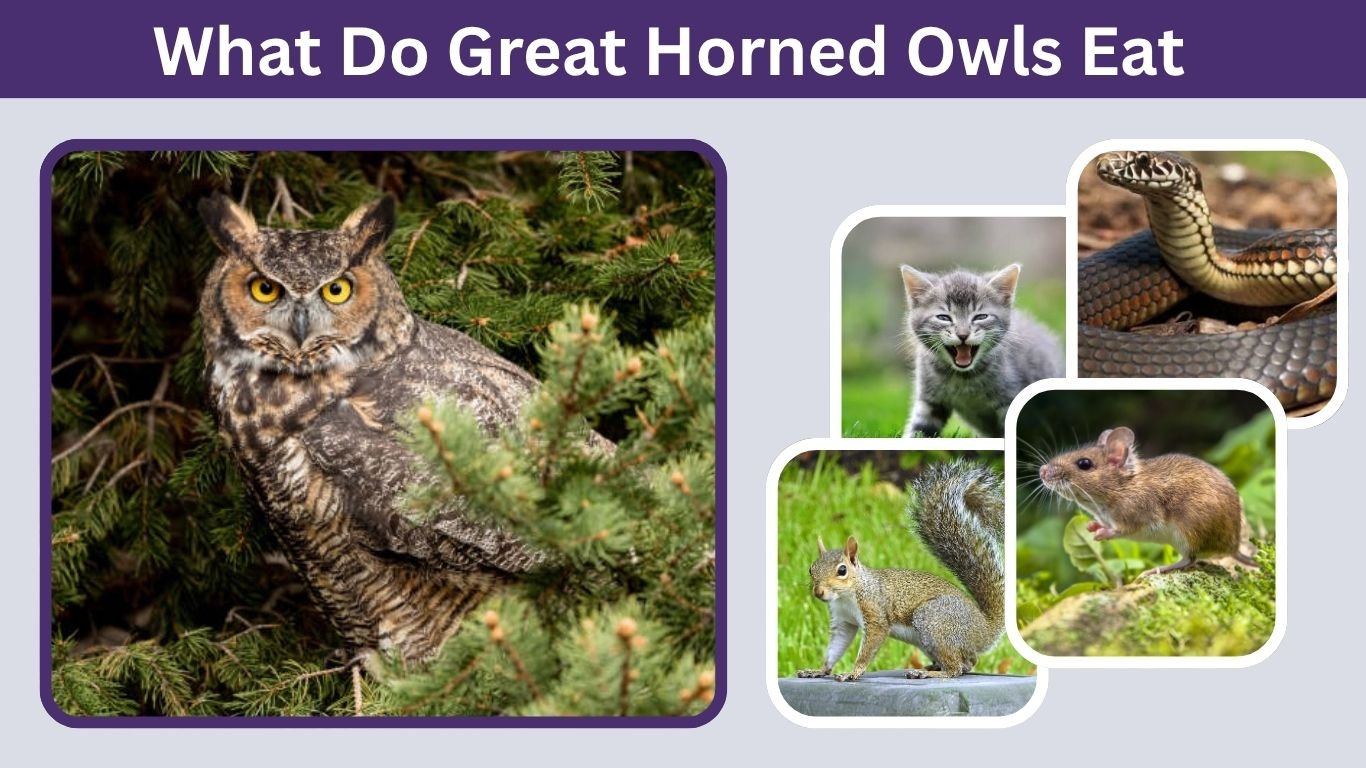
Great horned owls eat a wide range of animals, including rodents, rabbits, squirrels, skunks, birds, reptiles, amphibians, insects, and sometimes fish. They are powerful birds of prey with strong talons, silent flight, and excellent night vision. In most regions, mammals make up the largest part of their diet, but they are highly opportunistic hunters. A great horned owl may catch anything it can safely overpower, from tiny mice to ducks, crows, hawks, and even other owls.
What Does a Great Horned Owl Eat?
The great horned owl is one of the most powerful and adaptable owls in the Americas. Its diet depends on habitat, season, prey availability, and the size of the owl. In forests, it may hunt squirrels, rabbits, and birds. Near farms, it may take rats, mice, chickens, and other small animals. In wetlands, it may catch ducks, frogs, snakes, and fish.
Great horned owls are carnivores. They do not eat fruit, seeds, or plants as a normal part of their diet. Their food comes from live prey, although they may occasionally eat carrion if food is scarce.
Common Foods of Great Horned Owls
- Mice
- Rats
- Voles
- Rabbits
- Hares
- Squirrels
- Skunks
- Opossums
- Bats
- Ducks
- Crows
- Pigeons
- Hawks
- Other owls
- Snakes
- Lizards
- Frogs
- Insects
- Scorpions
- Fish
Great horned owls are often called “tiger owls” because of their strength and hunting ability. Cornell Lab notes that they can take large prey such as raptors and other owls, as well as smaller prey like rodents, frogs, and scorpions.
Great Horned Owl Diet by Prey Type
The great horned owl has one of the broadest diets of any North American owl. Mammals are usually the most important food group, but birds and reptiles can also be common in some areas.
| Prey Type | Examples | How Common? |
|---|---|---|
| Small mammals | Mice, rats, voles, squirrels | Very common |
| Medium mammals | Rabbits, skunks, opossums | Common |
| Birds | Ducks, crows, pigeons, hawks, owls | Common in many regions |
| Reptiles | Snakes, lizards, turtles | Occasional to common locally |
| Amphibians | Frogs and toads | Occasional |
| Invertebrates | Insects, scorpions, large bugs | Occasional |
| Fish | Small fish | Rare but possible |
Audubon describes the diet as varied, mostly mammals and birds, with prey including rats, mice, rabbits, ground squirrels, opossums, skunks, ducks, geese, hawks, smaller owls, snakes, lizards, frogs, insects, scorpions, and rarely fish.
Do Great Horned Owls Eat Cats?
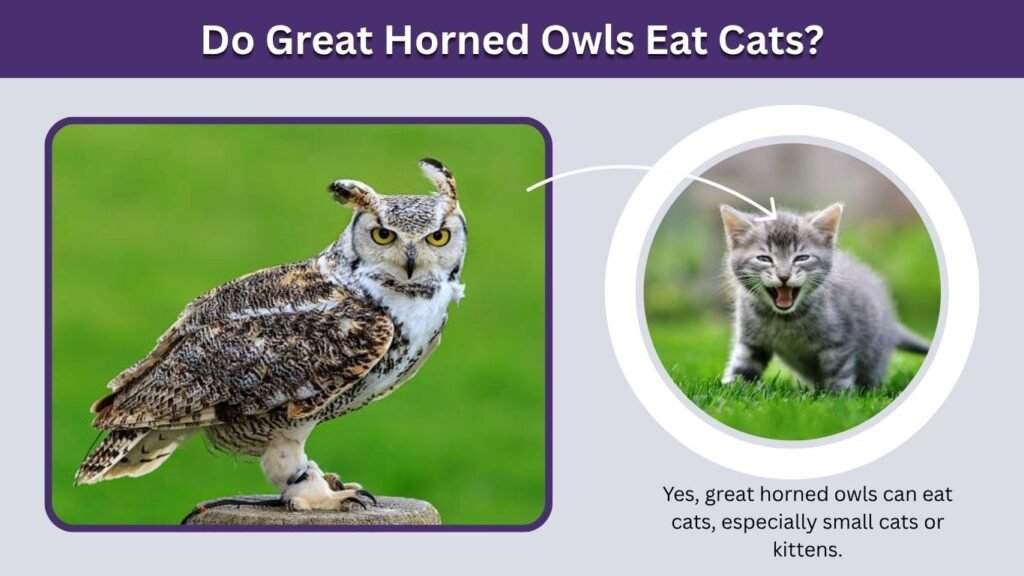
Yes, great horned owls can eat cats, especially small cats or kittens. However, cats are not their main food. Most great horned owls prefer wild prey such as rabbits, rodents, squirrels, skunks, and birds.
The risk is higher for small outdoor cats, especially at night, dawn, or dusk. A large owl may see a small pet as possible prey if it is alone in an open yard. Adult cats are not easy prey, but attacks can happen.
How to Protect Cats from Great Horned Owls
- Keep cats indoors, especially at night.
- Do not leave kittens outside unattended.
- Avoid feeding pets outdoors after dark.
- Use covered outdoor cat enclosures if needed.
- Keep outdoor lights and human activity near pet areas.
- Remove rodent attractants that may bring owls close.
Great horned owls are native predators, so the safest solution is prevention rather than harming the bird.
Will a Great Horned Owl Eat a Small Dog?
A great horned owl may attack a very small dog, but this is uncommon. Tiny dogs, puppies, or toy breeds are at greater risk than medium or large dogs. Most dogs are too heavy for an owl to carry, but an owl can still injure a pet with its talons.
The risk is highest when a small dog is outside alone at night or in an open area near woods, fields, or desert habitat. Supervision is the best protection.
Great horned owls are strong, but they do not normally hunt large dogs. They usually focus on prey that is easier to catch and control, such as rabbits, rats, squirrels, and birds.
Do Great Horned Owls Eat Rabbits and Squirrels?
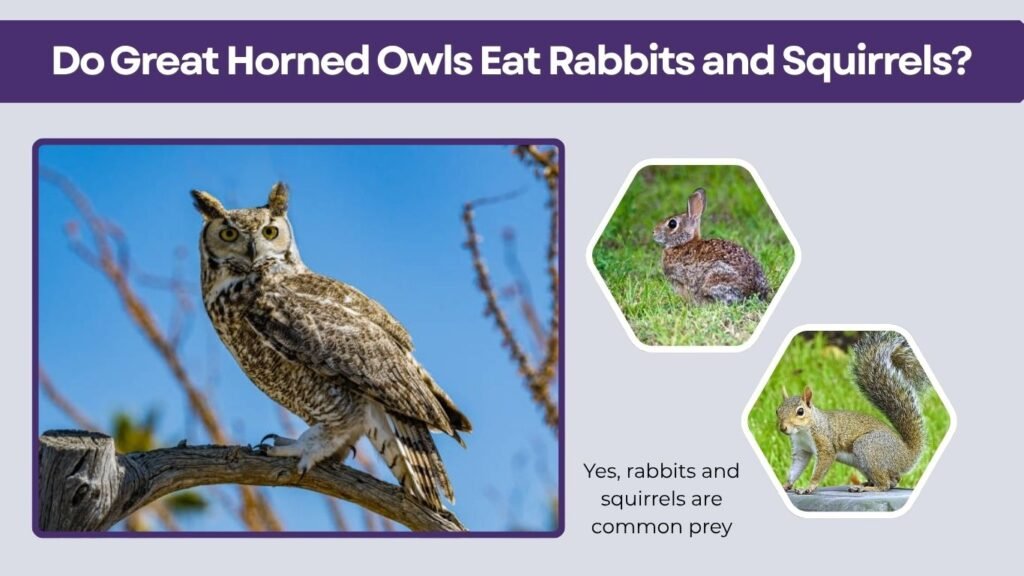
Yes, rabbits and squirrels are common prey for great horned owls. Rabbits are especially important in many areas because they are large enough to provide a good meal. Squirrels are also taken, especially when they are active near dawn or dusk.
Great horned owls can catch prey on the ground, in trees, or near open areas. Their silent flight helps them surprise animals before they can escape.
Common Mammal Prey
- Cottontail rabbits
- Jackrabbits
- Tree squirrels
- Ground squirrels
- Rats
- Mice
- Voles
- Gophers
- Opossums
- Skunks
Skunks are a notable prey item because many predators avoid them. Great horned owls have a weak sense of smell compared with mammals, so skunk spray does not stop them as easily.
Do Great Horned Owls Eat Birds?
Yes, great horned owls eat birds. They may catch small birds, medium birds, waterfowl, and even other birds of prey. Their bird prey can include crows, pigeons, ducks, geese, hawks, falcons, and smaller owls.
They often hunt birds at night while the birds are roosting. This gives the owl an advantage because many daytime birds are less alert in darkness.
Birds Great Horned Owls May Eat
- Crows
- Pigeons
- Doves
- Ducks
- Geese
- Blue jays
- Sparrows
- Turkeys, especially young birds
- Hawks
- Falcons
- Barn owls
- Barred owls
- Screech owls
Great horned owls are known to take raptors such as Ospreys, Peregrine Falcons, Prairie Falcons, and other owls.
Do Great Horned Owls Eat Chickens?
Yes, great horned owls can eat chickens. Backyard chickens are at risk if they are left outside at night or if the coop is not secure. Owls usually attack after dark, when chickens are roosting and less able to escape.
A great horned owl may kill a chicken and eat part of it on the ground or carry away smaller birds. Larger chickens may be too heavy to carry far, but they can still be killed.
How to Protect Chickens
- Lock chickens in a secure coop before dusk.
- Use strong wire mesh, not loose netting.
- Cover the top of outdoor runs.
- Remove gaps around doors and vents.
- Avoid leaving dead birds or feed outside.
- Use motion lights as a mild deterrent.
Chicken owners should also remember that owls are protected wildlife in many places. Prevention is the best and legal approach.
Do Great Horned Owls Eat Snakes, Frogs, and Fish?
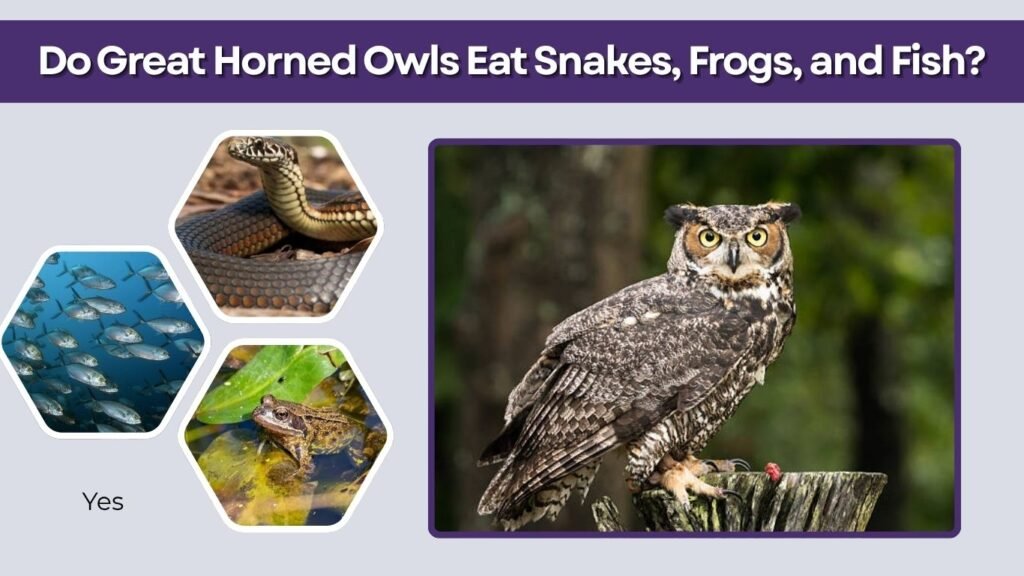
Yes, great horned owls can eat snakes, frogs, lizards, and rarely fish. These foods are not always their main prey, but they may be important in certain habitats.
In warmer regions, reptiles can be more available. Great horned owls may catch harmless snakes and sometimes venomous snakes, including rattlesnakes. They can also take frogs and large insects near wetlands.
Fish are less common in the diet, but they may be eaten when available. Great horned owls are not specialized fish hunters like ospreys, but they are opportunistic.
Do Great Horned Owls Eat Other Owls?
Yes, great horned owls eat other owls. They are dominant predators and may kill barn owls, barred owls, screech owls, long-eared owls, and other smaller owl species. In some areas, the presence of great horned owls can affect where smaller owls choose to roost or nest.
They may also take hawks and falcons. This makes them one of the top avian predators in many ecosystems.
How Do Great Horned Owls Hunt?
Great horned owls are mostly nocturnal hunters. They often begin hunting around dusk and continue through the night. They sit quietly on a perch, listen and watch for movement, then fly silently toward prey.
Their flight feathers reduce noise, helping them approach without warning. Their talons are extremely strong and can crush or grip prey tightly. Cornell notes that a great horned owl’s clenched talons require about 28 pounds of force to open.
Hunting Methods
- Perch-and-pounce hunting
- Silent flight from trees or poles
- Ground strikes on rabbits and rodents
- Roost attacks on sleeping birds
- Nest raids on birds and mammals
- Opportunistic hunting near farms and wetlands
Great horned owls usually swallow small prey whole. Later, they cough up pellets made of bones, fur, feathers, and other indigestible parts.
How Often Do Great Horned Owls Eat?
Great horned owls do not always eat the same amount every day. Their food needs depend on prey size, weather, breeding season, and whether they are feeding young. One large rabbit may feed an owl for longer than several small mice.
During nesting season, adults must hunt more often to feed chicks. When young owlets are growing, the parents may bring many prey items to the nest. Cornell’s Bird Cams notes that nesting great horned owls may bring small- to medium-sized mammals, reptiles, fish, and birds of many sizes to the nest.
What Eats a Great Horned Owl?
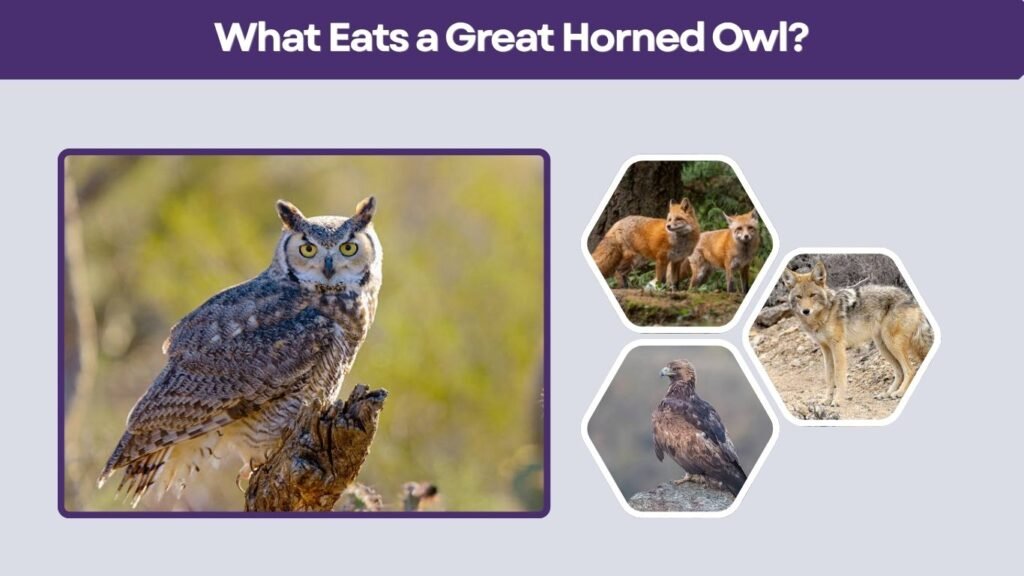
Adult great horned owls have very few natural predators. They are large, strong, and dangerous to attack. However, eggs and young owlets are more vulnerable.
Predators or threats may include other great horned owls, eagles, large hawks, foxes, coyotes, raccoons, bobcats, and humans. Nestlings can be taken if a predator reaches the nest.
Animals That May Threaten Great Horned Owls
- Eagles
- Large hawks
- Other great horned owls
- Coyotes
- Foxes
- Bobcats
- Raccoons
- Crows and ravens near nests
- Humans through habitat loss, vehicles, and poisons
Rodenticides are also a serious indirect threat. Owls may eat poisoned rodents and become sick or die from secondary poisoning.
Do Great Horned Owls Eat Carrion?
Great horned owls usually hunt live prey, but they may eat carrion in some situations. This is more likely when food is scarce or when they find a fresh dead animal. Still, they are primarily active hunters, not scavengers.
They are built for catching prey, with sharp talons, strong feet, a hooked bill, and excellent senses. Carrion is only a backup food source.
Are Great Horned Owls Good for the Environment?
Yes, great horned owls play an important role in ecosystems. They help control populations of rodents, rabbits, and other animals. They also influence the behavior of other predators and prey species.
Although they may sometimes take chickens or small pets, they are valuable native predators. Their presence often shows that an area has enough habitat and prey to support wildlife.
FAQs
What do great horned owls eat the most?
Great horned owls eat mostly mammals in many regions, especially rabbits, rats, mice, voles, squirrels, skunks, and opossums. They also eat birds, reptiles, amphibians, insects, scorpions, and rarely fish. Their diet changes depending on habitat and prey availability.
Do great horned owls eat cats?
Yes, great horned owls can eat cats, especially kittens or small cats left outside at night. However, cats are not their main prey. Keeping cats indoors, particularly from dusk to dawn, is the best way to reduce the risk.
Do great horned owls eat dogs?
Great horned owls may attack very small dogs or puppies, but this is uncommon. Most dogs are too large to be normal prey. Small pets should be supervised outdoors at night, especially near woods, fields, deserts, or open hunting areas.
Do great horned owls eat chickens?
Yes, great horned owls can eat chickens if they are left outside at night. They may attack roosting birds after dark. A secure coop with covered runs, strong wire, and locked doors is the best protection for backyard chickens.
What animals eat great horned owls?
Adult great horned owls have few predators, but eggs and young owls may be taken by raccoons, foxes, coyotes, bobcats, eagles, hawks, crows, or ravens. Other great horned owls may also fight or kill them in territorial conflicts.