
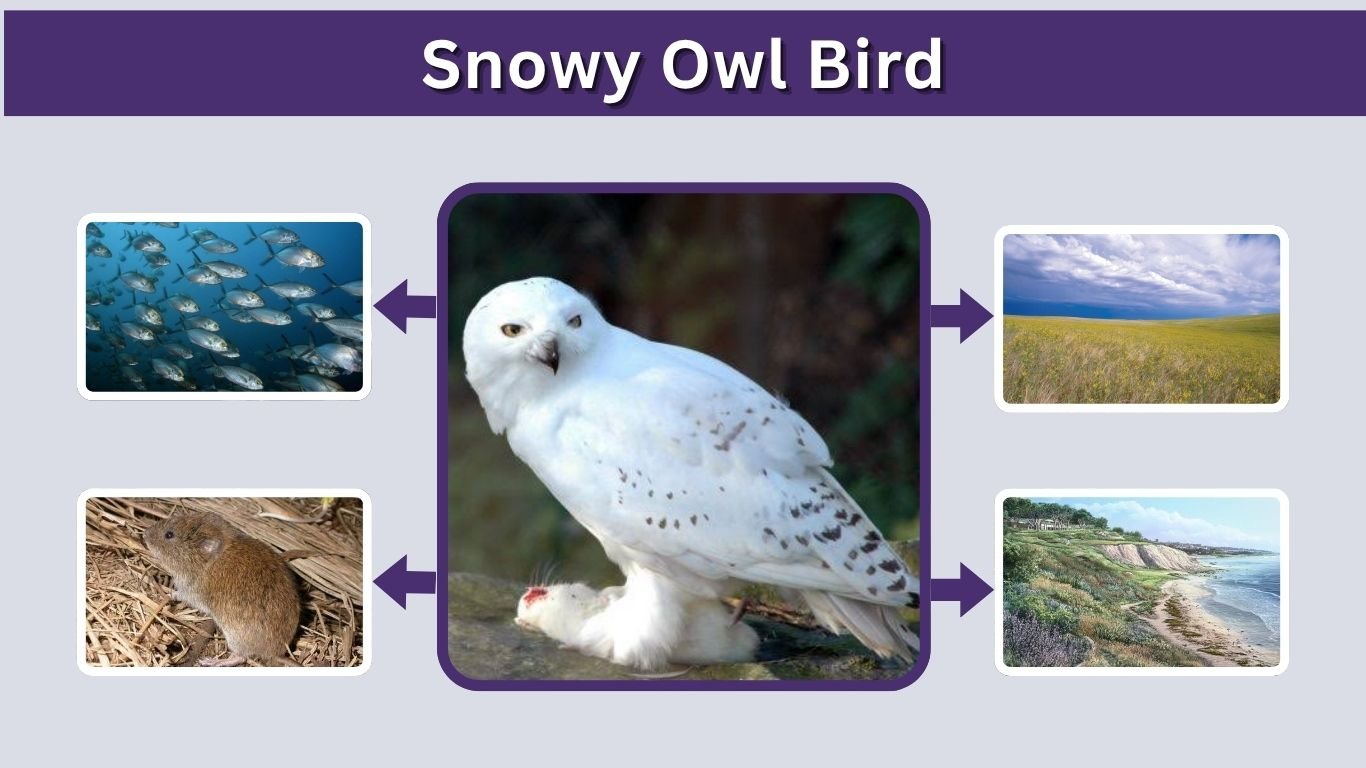
The snowy owl bird is one of the most striking birds of prey in the world. With its white feathers, yellow eyes, powerful body, and Arctic lifestyle, it looks very different from many other owls. Snowy owls are famous for living in cold northern regions, but they sometimes travel far south during winter, exciting birdwatchers with rare sightings. This article explains snowy owl identification, habitat, diet, call, behavior, migration, and why it is the provincial bird of Quebec.
What Is a Snowy Owl Bird?
The snowy owl is a large owl species adapted to life in the Arctic. It is a true bird, not a mammal, and belongs to the owl family. Like other owls, it has sharp talons, excellent eyesight, strong wings, and a hooked bill for catching prey.
Snowy owls are also birds of prey, meaning they hunt and eat other animals. They mainly feed on small mammals, especially lemmings, but they may also eat birds, rabbits, fish, and other prey when available.
Unlike many owls that stay hidden in forests, snowy owls often live in open landscapes. They can be seen sitting on the ground, low posts, dunes, rocks, fence lines, or open fields.
Basic Snowy Owl Facts
- Common name: Snowy owl
- Scientific name: Bubo scandiacus
- Bird type: Owl and bird of prey
- Size: Large owl
- Color: Mostly white with dark markings
- Eyes: Bright yellow
- Habitat: Arctic tundra, open fields, dunes, coastal areas
- Diet: Lemmings, rodents, birds, rabbits, and other small animals
- Activity: Often active during the day, especially in Arctic summer
Snowy Owl Identification
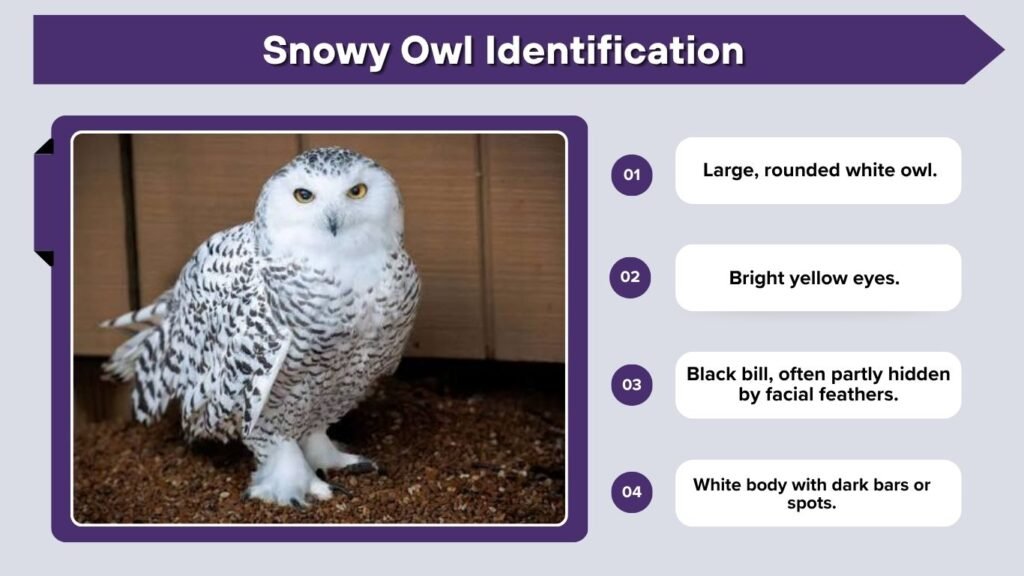
Snowy owls are among the easiest owls to recognize because of their pale color. Adult males can be almost completely white, while females and young birds usually have more dark bars and spots. This dark barring helps them blend into tundra rocks, snow patches, and low vegetation.
They have rounded heads, yellow eyes, black bills, and thick feathering that protects them from extreme cold. Their legs and feet are heavily feathered, which helps keep them warm in freezing Arctic conditions.
Key Identification Marks
- Large, rounded white owl
- Bright yellow eyes
- Black bill, often partly hidden by facial feathers
- White body with dark bars or spots
- Broad wings and strong flight
- Thick feathering on legs and feet
- Usually seen in open habitats rather than dense forests
Female snowy owls are usually darker and more heavily marked than adult males. Juveniles also show more barring, making them look grayish or speckled from a distance.
Male vs Female Snowy Owl
Male and female snowy owls look similar in shape, but their markings can be different. Adult males are often whiter, especially as they age. Females usually keep more dark barring on the wings, back, and belly.
This difference is useful, but it is not always perfect. Some males may still show dark markings, and some females may appear fairly pale. Age also affects appearance.
| Feature | Male Snowy Owl | Female Snowy Owl |
|---|---|---|
| Color | Often whiter, especially older males | Usually more dark barring |
| Size | Slightly smaller | Usually larger and heavier |
| Markings | Fewer dark marks | More bars and spots |
| Role | Defends territory and hunts | Incubates eggs and protects nest |
| Appearance as juvenile | More marked when young | More marked when young |
Females being larger is common in many birds of prey. The larger size may help them protect nests and young in harsh environments.
Snowy Owl Habitat
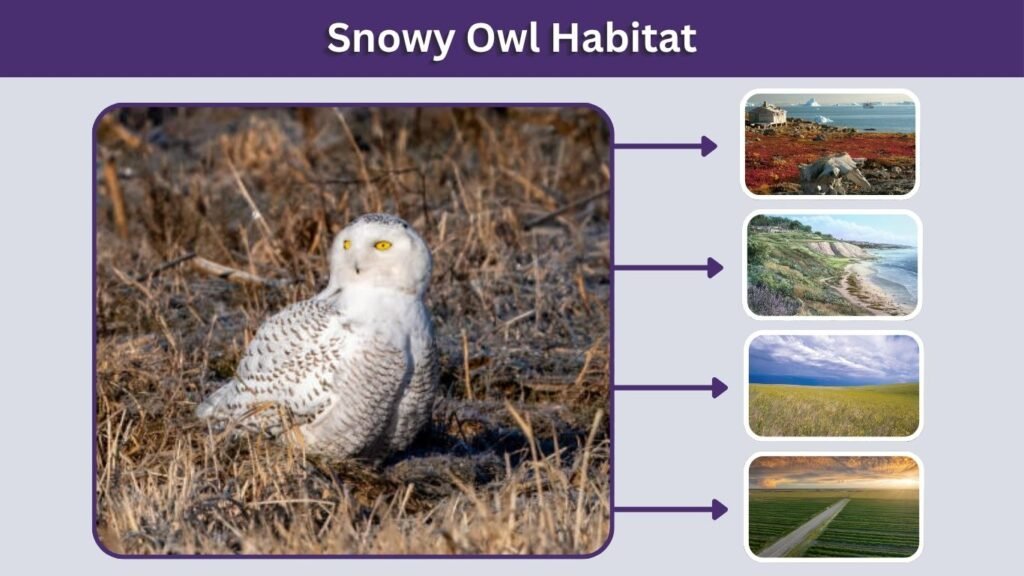
Snowy owls are strongly connected to the Arctic tundra. During breeding season, they prefer wide, open areas with low vegetation, few trees, and good visibility. This habitat helps them spot prey and watch for danger.
They do not nest in tree cavities like some owls. Instead, snowy owls usually nest on the ground, often on a raised mound or slight ridge where they can see the surrounding area.
In winter, some snowy owls move south into open landscapes that resemble tundra. These may include farmland, beaches, airport fields, marsh edges, dunes, grasslands, and coastal flats.
Common Snowy Owl Habitats
- Arctic tundra
- Open coastal areas
- Grasslands
- Farm fields
- Marsh edges
- Sand dunes
- Airport fields
- Frozen shorelines
- Open rocky areas
Snowy owls avoid dense forests because they are built for open-country hunting. Their broad wings and strong vision work best where they can scan large areas.
Snowy Owl Range and Migration
The snowy owl’s breeding range is mostly in the Arctic regions of North America, Europe, and Asia. In North America, they breed in northern Canada and Alaska. During winter, some move south into southern Canada and the northern United States.
Snowy owl migration is irregular. Some years, many snowy owls travel far south. These events are called irruptions. They often happen when young owls leave the Arctic and search for food.
Not every snowy owl migrates the same distance. Some stay close to the Arctic, while others travel hundreds or even thousands of miles.
| Season | Typical Location | Habitat Used |
|---|---|---|
| Breeding season | Arctic tundra | Open tundra, low vegetation |
| Fall migration | South from Arctic areas | Open fields, coasts, grasslands |
| Winter | Canada and northern U.S. in some years | Beaches, farms, dunes, marshes |
| Spring migration | Back toward Arctic | Stopover areas with prey |
Because their movements are irregular, snowy owl sightings can be exciting for birdwatchers. A snowy owl appearing in a city park, coastal beach, or farm field can attract many visitors.
What Do Snowy Owls Eat?
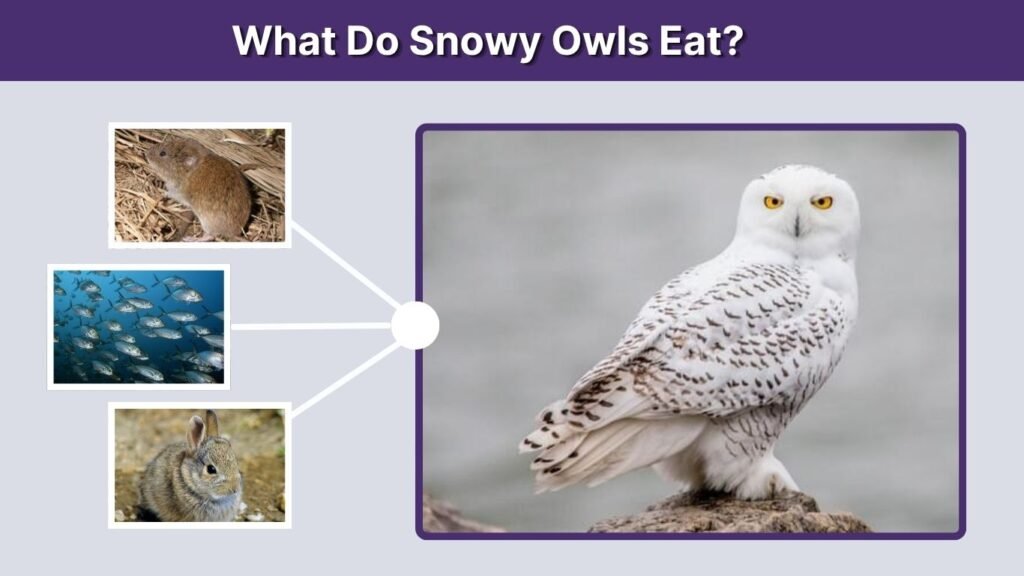
Snowy owls are carnivores. Their main food in the Arctic is lemmings. In good lemming years, snowy owls may raise more young because food is easier to find. When lemming numbers are low, they may lay fewer eggs or move more widely in search of prey.
Snowy owls are powerful hunters and can eat a variety of animals. They hunt by watching from the ground or a low perch, then flying quickly to capture prey with their talons.
Common Snowy Owl Food
- Lemmings
- Voles
- Mice
- Rats
- Rabbits
- Hares
- Ducks
- Shorebirds
- Gulls
- Ptarmigan
- Fish
- Carrion when needed
Do Snowy Owls Eat Birds?
Yes, snowy owls do eat birds. Although lemmings and other small mammals are their most important prey, they may catch birds when available. This is especially common in winter or coastal habitats where birds are easier to find than lemmings.
Snowy owls may eat ducks, gulls, shorebirds, seabirds, and other medium-sized birds. They are strong enough to catch fairly large prey, but they usually choose animals they can overpower safely.
Their diet depends heavily on location and season. A snowy owl wintering near the coast may eat more birds, while one on farmland may eat more rodents.
Snowy Owl Hunting Behavior
Snowy owls are skilled hunters. Unlike many owls that hunt mostly at night, snowy owls may hunt during the day. This makes sense because Arctic summers have long daylight hours.
They often sit quietly and scan the area. Once they spot prey, they fly low and fast, then grab it with their talons. Their silent flight helps them approach without warning.
Hunting Adaptations
- Excellent eyesight for spotting prey
- Sharp talons for gripping animals
- Strong wings for fast, direct flight
- White plumage for camouflage in snowy areas
- Feathered feet for warmth
- Ability to hunt in daylight and low light
Snowy owls can also hover briefly or walk on the ground while searching for prey. Their hunting style changes depending on the landscape and prey type.
Snowy Owl Bird Call and Sound
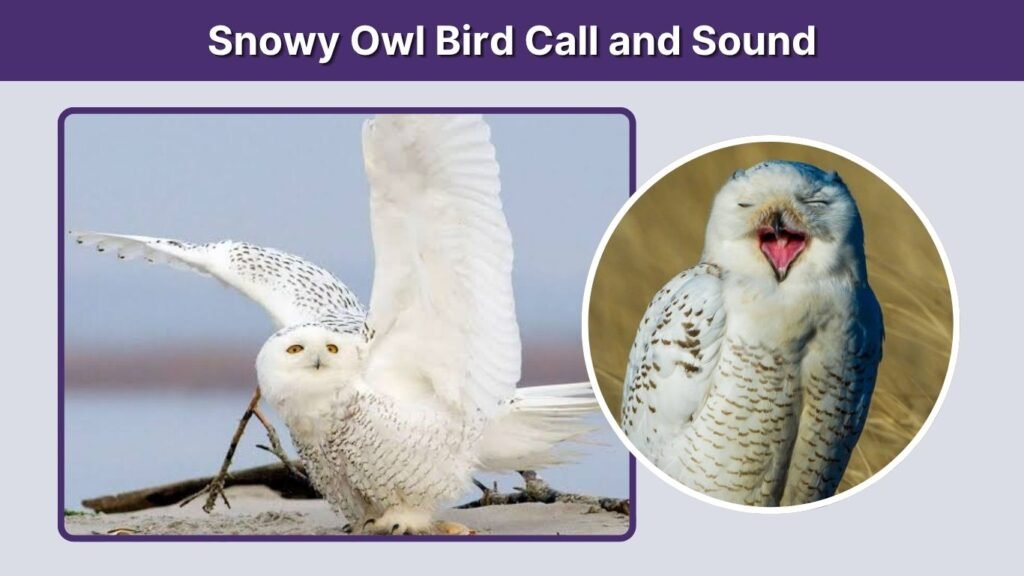
The snowy owl bird call is not usually the classic “hoot” people expect from forest owls. Snowy owls can make deep, barking, booming, or harsh sounds. Males may give low calls during the breeding season, while females and young birds may use different calls for alarm, begging, or communication.
Their calls are often heard more on breeding grounds than during winter. A wintering snowy owl may remain silent for long periods.
Snowy Owl Sounds
- Low hoots
- Harsh barks
- Rasping calls
- Hisses when threatened
- Begging calls from young owls
- Alarm sounds near the nest
Because snowy owls live in open habitats, their calls can carry across tundra landscapes.
Snowy Owl Nest and Eggs
Snowy owls nest on the ground. The female usually scrapes a shallow depression in the tundra, often on a raised spot with good visibility. They do not build a complex nest with sticks like some large birds.
The number of eggs depends strongly on food supply. When lemmings are abundant, snowy owls may lay more eggs. When prey is scarce, they may produce fewer young or may not nest successfully.
Nesting Facts
- Nest type: Ground scrape
- Nest location: Raised tundra mound or ridge
- Egg color: White
- Clutch size: Varies with food supply
- Incubation: Mainly by female
- Male role: Brings food and defends territory
- Young: Downy, helpless chicks at hatching
Snowy owl parents can be very protective near the nest. They may dive at predators or humans that come too close.
Are Snowy Owls Endangered?
Snowy owls are not usually described as common backyard birds, but they are still found across a wide Arctic range. However, their population faces threats from climate change, habitat changes, collisions, human disturbance, and changes in prey availability.
Their conservation status may vary depending on the organization or region. In some places, they are considered vulnerable or of conservation concern because long-term population trends are uncertain or declining.
The best way to protect snowy owls is to respect their space, especially during winter sightings and nesting season. Birdwatchers should observe from a distance and avoid flushing or chasing them.
Snowy Owl and Quebec
The snowy owl is strongly connected with Quebec. It is the official bird of Quebec, chosen because it represents northern landscapes, winter, beauty, and strength. Its white plumage fits well with Quebec’s snowy climate and northern identity.
Many people search for “snowy owl bird of Quebec” because of this symbolic role. The bird is admired not only for its appearance but also for its connection to wild Arctic environments.
Snowy Owl Meaning and Symbolism
The snowy owl often symbolizes wisdom, silence, patience, winter, mystery, and northern wilderness. Because it is white and powerful, many people also associate it with purity, watchfulness, and spiritual awareness.
In modern culture, snowy owls are also popular in art, photography, films, books, and wildlife documentaries. Their rare winter appearances often create excitement among bird lovers.
Snowy Owl Sightings and Birdwatching Tips
Seeing a snowy owl is a special experience, but it is important to watch responsibly. Snowy owls that travel south may already be stressed from migration and food searching. Getting too close can force them to fly and waste energy.
Responsible Viewing Tips
- Watch from a distance
- Use binoculars or a spotting scope
- Do not chase or flush the owl
- Avoid loud noise near the bird
- Stay out of closed areas
- Do not feed snowy owls
- Respect private property
- Limit sharing exact locations if crowds may disturb the bird
Responsible birdwatching helps protect snowy owls and allows others to enjoy them safely.
Birds Related to Snowy Owls
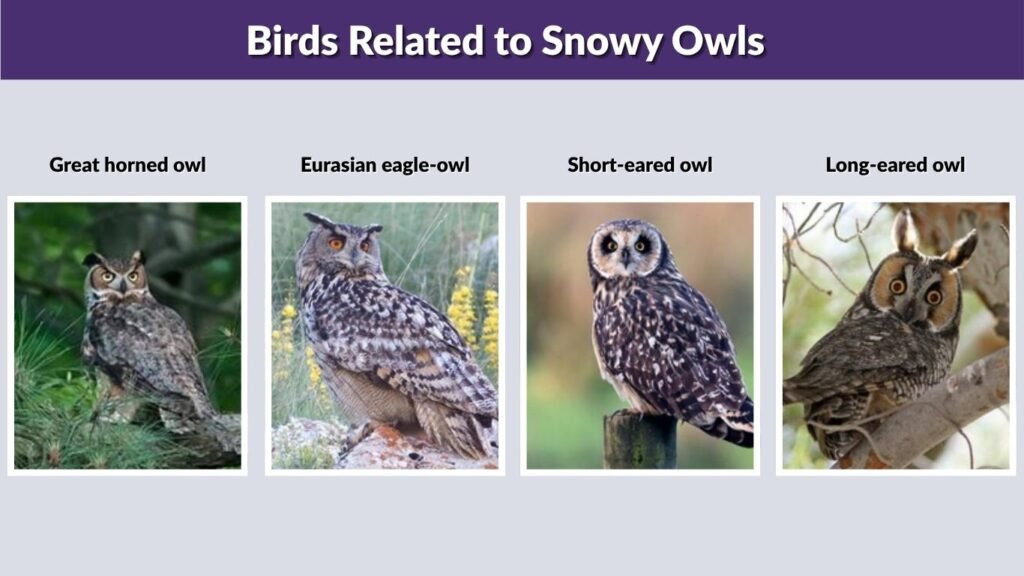
Snowy owls are part of the owl family and are related to other large owls. They share features such as sharp talons, hooked bills, excellent eyesight, and predatory behavior.
Similar or Related Owls
- Great horned owl
- Eurasian eagle-owl
- Short-eared owl
- Long-eared owl
- Great gray owl
- Northern hawk owl
- Barred owl
The snowy owl is different from many of these because it is strongly adapted to Arctic tundra and open-country hunting.
FAQs
Is a snowy owl a bird?
Yes, a snowy owl is a bird. It is also a bird of prey because it hunts animals for food. Snowy owls belong to the owl family and have feathers, wings, talons, a hooked bill, and the ability to fly.
Are snowy owls birds of prey?
Yes, snowy owls are birds of prey. They hunt and eat animals such as lemmings, voles, mice, rabbits, ducks, shorebirds, and gulls. Their sharp talons, strong body, and excellent eyesight make them powerful hunters.
Do snowy owls eat birds?
Yes, snowy owls can eat birds. Their main food is often lemmings and other small mammals, but they may also catch ducks, gulls, shorebirds, and other birds, especially in winter or coastal areas where birds are available.
Why is the snowy owl Quebec’s provincial bird?
The snowy owl is Quebec’s provincial bird because it represents the province’s northern nature, snowy landscapes, strength, and beauty. Its white plumage and Arctic lifestyle make it a fitting symbol for Quebec’s climate and wildlife identity.
What does a snowy owl sound like?
A snowy owl can make low hoots, harsh barks, rasping calls, hisses, and alarm sounds. It does not always sound like the classic owl hoot. Many snowy owls are quiet during winter but more vocal on breeding grounds.
