
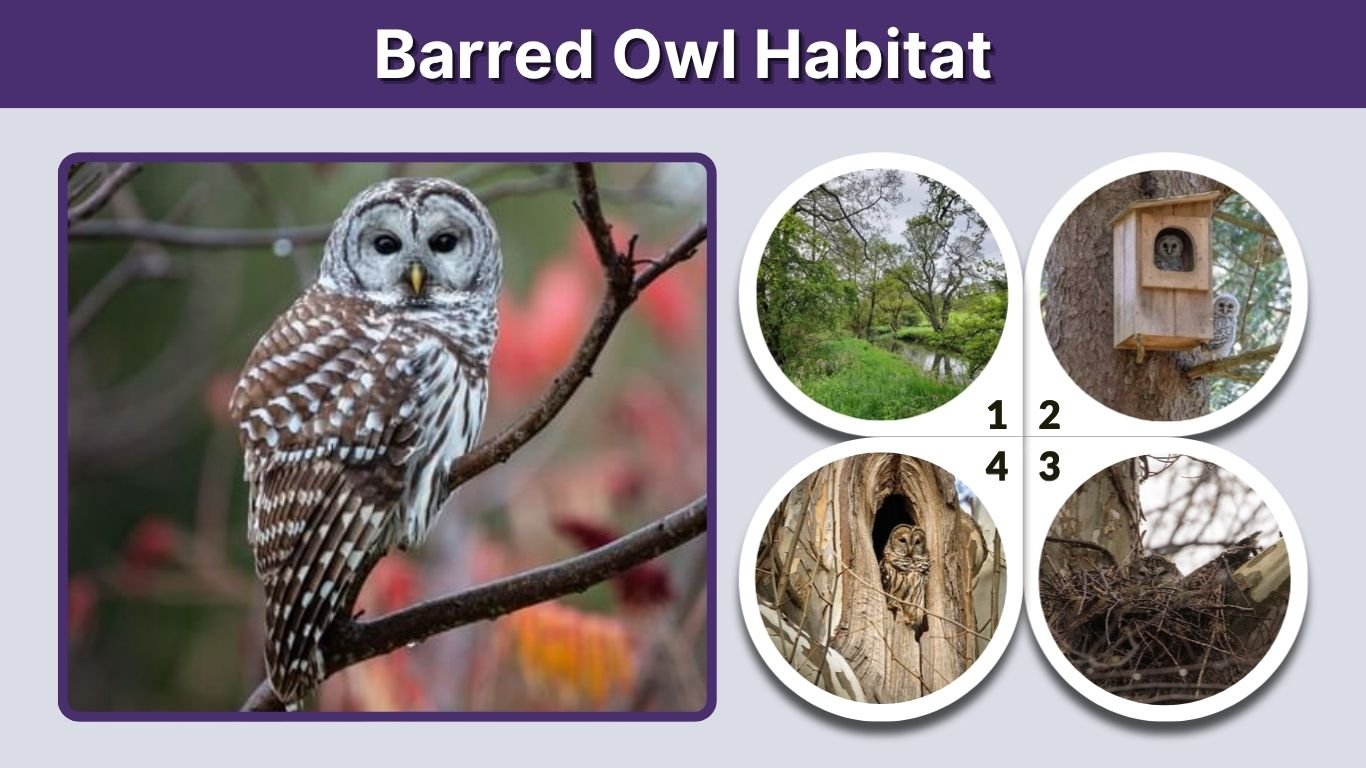
The typical barred owl habitat consists of mature, densely wooded areas with large trees, shaded roosting sites, and nearby water. These adaptable owls occupy deciduous, coniferous, and mixed forests, but they are especially associated with wooded swamps, river bottoms, lakeshores, and other moist environments. Their habitat must provide suitable nesting cavities, daytime shelter, and enough prey for year-round survival. Although Barred Owls originated in eastern North America, their range now extends across southern Canada and into forests of the Pacific Northwest.
What Is the Natural Habitat of a Barred Owl?
Barred Owls are primarily woodland birds. They are most comfortable in established forests containing a layered canopy, large trees, broken limbs, natural cavities, and a productive forest floor. Water is not required at every nest, but many occupied territories include streams, wetlands, ponds, or swampy ground.
Mature Forests
The preferred habitat of a Barred Owl is generally a mature or older forest. Large trees offer broad branches for roosting and cavities spacious enough for nesting. Mature stands also provide a shaded environment where the owl’s brown-and-white plumage blends with tree bark.
Barred Owls may inhabit deciduous forests dominated by oak, maple, beech, or other hardwoods. They also live in coniferous and mixed forests containing pines, firs, spruces, and hardwood trees. Their ability to occupy several forest types has helped them expand into new regions.
Wooded Wetlands and River Corridors
Wooded swamps, floodplain forests, lake margins, and stream corridors are particularly attractive. These areas often support frogs, crayfish, fish, rodents, and other potential prey. Moist forests also tend to contain old trees, fallen logs, dense vegetation, and natural cavities.
In the southeastern United States, the Barred Owl is strongly associated with forested wetlands and southern swamps. Farther north, it may inhabit mixed woodlands surrounding lakes, creeks, muskegs, and marshes.
Barred Owl Habitat Range and Map
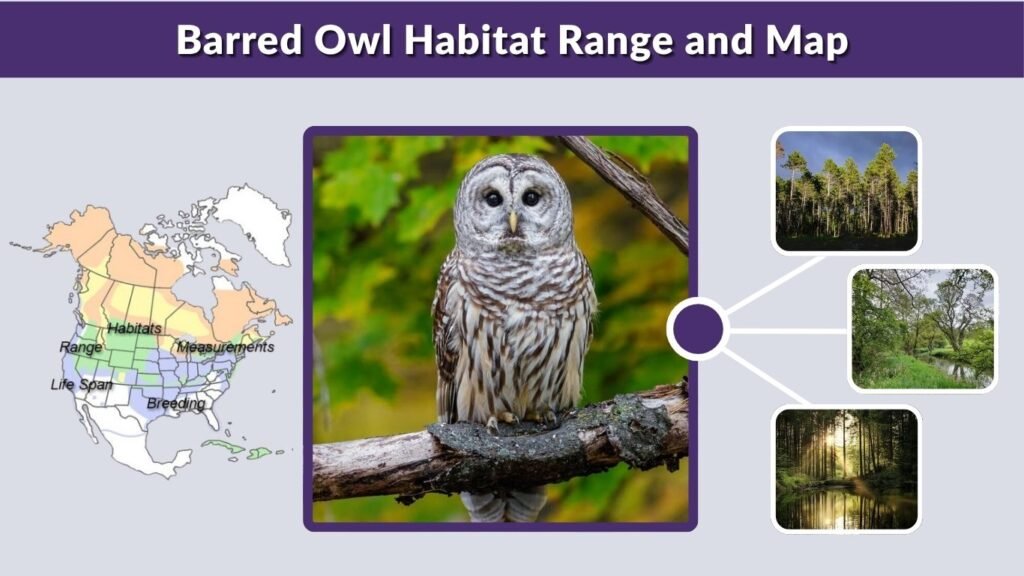
The Barred Owl’s geographic range has changed considerably. It was historically an eastern species but has gradually moved across parts of central and western North America.
| Region | Typical habitat | Range status |
|---|---|---|
| Eastern United States | Mature forests, swamps and river bottoms | Native and widespread |
| Southern Canada | Boreal, mixed and lakeside forests | Native resident |
| Great Plains | Wooded waterways and planted tree corridors | Expanded range |
| Pacific Northwest | Moist coniferous and mixed forests | Expanded, non-native range |
| Northern California | Coastal and mountain forests | Expanding range |
Native Eastern Range
The Barred Owl is native to eastern North America. Its traditional range extends from southeastern Canada through much of the eastern United States, reaching the Gulf Coast and Florida. It is especially widespread where continuous forests are mixed with rivers, lakes, and wetlands.
Most adults are permanent residents rather than long-distance migrants. Once they establish a territory, they may remain in the same general location throughout the year and potentially for much of their lives.
Expansion Into Western Forests
Barred Owls began expanding west of the Mississippi River around the beginning of the twentieth century. Environmental changes, including tree planting, fire suppression and altered landscapes across the Great Plains and boreal forest, may have created wooded pathways that helped the species move west.
They reached the Pacific Northwest during the twentieth century and are now established in Washington, Oregon and parts of California. In these western forests, Barred Owls compete with native Northern and California Spotted Owls for space, food and nesting locations.
Preferred Barred Owl Habitat Requirements
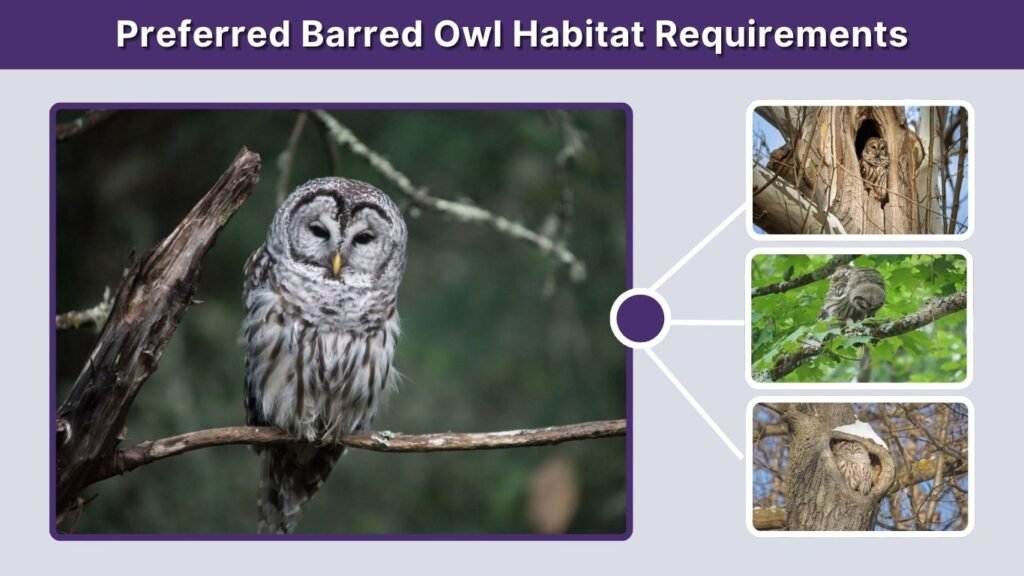
Suitable habitat must meet several needs at the same time. An owl requires safe daytime cover, an appropriate nest location and productive hunting areas within its territory.
Large Trees and Natural Cavities
Large living trees, declining trees, and standing dead trees are important habitat features. Cavities may form when a limb breaks, the center of a tree decays, or a former woodpecker hole becomes enlarged.
Not every forest containing Barred Owls is ancient or untouched. However, forests with large-diameter trees are more likely to offer the nesting and roosting structures that breeding pairs require. Removing every damaged tree or snag can reduce the number of available sites.
A Dense but Varied Forest Structure
Barred Owls benefit from a relatively closed canopy for daytime shelter. They also need openings beneath the canopy where they can fly between perches and descend on prey.
A good territory may contain mature forest, small clearings, wetland edges, streams and younger patches of vegetation. This mixture supports a greater variety of prey than a uniform stand of trees. The owl usually hunts from a branch, listening and watching before making a short flight to the ground or water.
Territory and Habitat Size
There is no single habitat size required by every Barred Owl. Territory dimensions vary according to forest quality, prey abundance, season, region and competition with neighboring owls.
One study in eastern Washington estimated average annual home ranges of approximately 194 hectares for females and 288 hectares for males—about 480 and 710 acres. These figures describe one studied population rather than a universal requirement. Owls in highly productive wetlands or prey-rich forests may use space differently.
Barred Owl Nesting Habitat
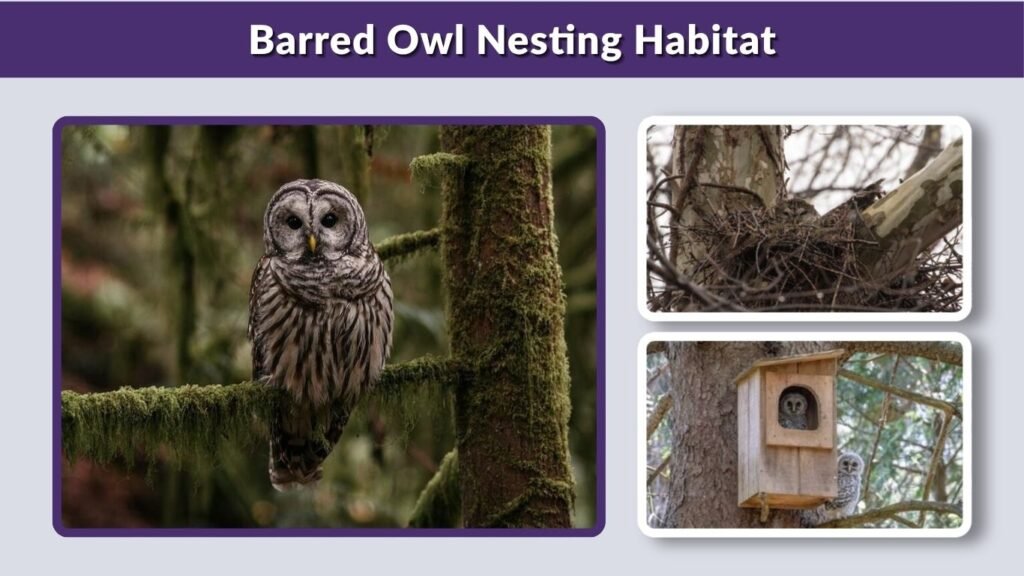
Nesting habitat is usually found in mature woodland with large trees and limited disturbance. Barred Owls do not construct a conventional nest from twigs and grasses.
Natural Tree Cavities
A natural hollow in a large tree is the preferred nest site. Cavities are commonly positioned about 20 to 40 feet above the ground, although nest heights vary. The female lays her eggs directly on wood debris or other material already present inside the hollow.
Pairs may also occupy a broken tree trunk or an old platform nest originally constructed by a hawk, crow, raven, or squirrel. Suitable sites may be inspected long before they are finally used.
Nest Boxes
Barred Owls sometimes accept properly designed nest boxes placed in mature forests. A box should be installed well before the breeding season and protected with a predator guard. However, a nest box cannot replace the other components of suitable habitat. The surrounding area must still provide forest cover, quiet roosting sites, and adequate prey.
Barred Owl Foraging Habitat
Barred Owls are opportunistic predators, which allows them to use a wider range of foraging environments than many other forest owls. They commonly hunt along forest floors, wetland edges, shallow water, streams and woodland clearings.
Their prey can include:
- Mice, voles, rats and squirrels
- Rabbits and other small mammals
- Frogs, salamanders and snakes
- Small birds
- Crayfish, fish and large insects
Forested wetlands are valuable because they support both terrestrial and aquatic prey. Fallen logs, leaf litter, brush, ground vegetation and undisturbed streambanks help maintain the animals on which these owls feed. Their varied diet has also contributed to their success in newly occupied western forests.
Winter and Regional Habitat Use
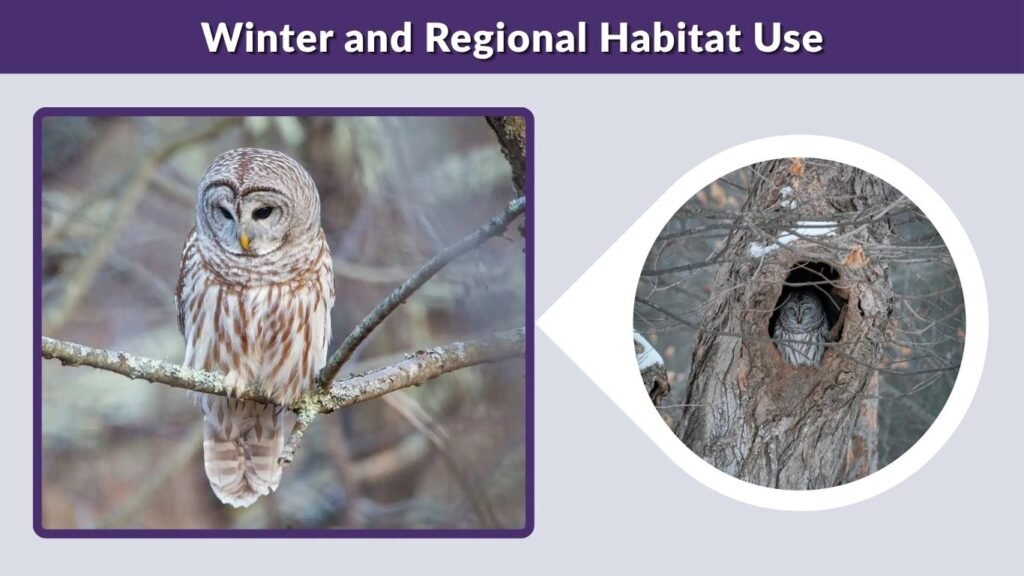
Barred Owls generally remain within their established range during winter. Adults continue using wooded territories, although individuals may occasionally wander when local prey becomes scarce. Dense evergreens and sheltered tree cavities can offer protection from wind, snow and cold weather.
In Michigan, Minnesota and similar northern regions, Barred Owls are frequently associated with mature hardwood or mixed forests near lakes, rivers, swamps and lowland woodland. Wet areas may freeze during winter, but forest-dwelling rodents and birds continue to provide hunting opportunities.
How to Create Barred Owl Habitat
In the species’ native eastern range, landowners can support Barred Owls by retaining mature trees, natural cavities and safe standing snags. Forested buffers should be preserved around streams, ponds and wetlands. Reducing unnecessary nighttime lighting, pesticide use and disturbance near an active nest can also improve habitat quality.
Nest boxes may be installed where mature forest already exists, but occupied nests should be observed from a respectful distance. Pets should be kept away from nest trees, especially when young owls begin leaving the cavity.
Different guidance applies in the Pacific Northwest and parts of California. Barred Owls are considered non-native competitors within the range of threatened Spotted Owls. People in these western areas should consult their state wildlife agency before installing a Barred Owl nest box or intentionally attracting the species.
FAQs
What habitat do Barred Owls live in?
Barred Owls live mainly in mature deciduous, coniferous and mixed forests. They frequently occupy wooded wetlands, swamps, river bottoms and forests near lakes or streams. Large trees, sheltered roosting branches, nesting cavities and productive hunting areas are important habitat features.
Do Barred Owls need to live near water?
They do not always live directly beside water, but many territories contain wetlands, ponds, rivers or streams. Aquatic and moist environments support frogs, crayfish, fish and small mammals, giving the owls additional feeding opportunities.
Where do Barred Owls nest?
They usually nest in natural cavities inside large trees. They may also use broken trunks, abandoned stick nests made by other animals, or appropriately sized nest boxes. Natural cavity nests are often located approximately 20 to 40 feet above ground.
Do Barred Owls live in suburban areas?
Barred Owls can occupy wooded suburbs, parks and large residential properties when mature trees and sufficient prey remain available. They are less likely to establish territories in heavily developed areas lacking connected forest cover, cavities and quiet daytime roosts.
Do Barred Owls migrate during winter?
Most Barred Owls are nonmigratory and remain within the same general territory throughout the year. An individual may travel farther during a winter food shortage, but regular long-distance seasonal migration is not typical of the species.
