
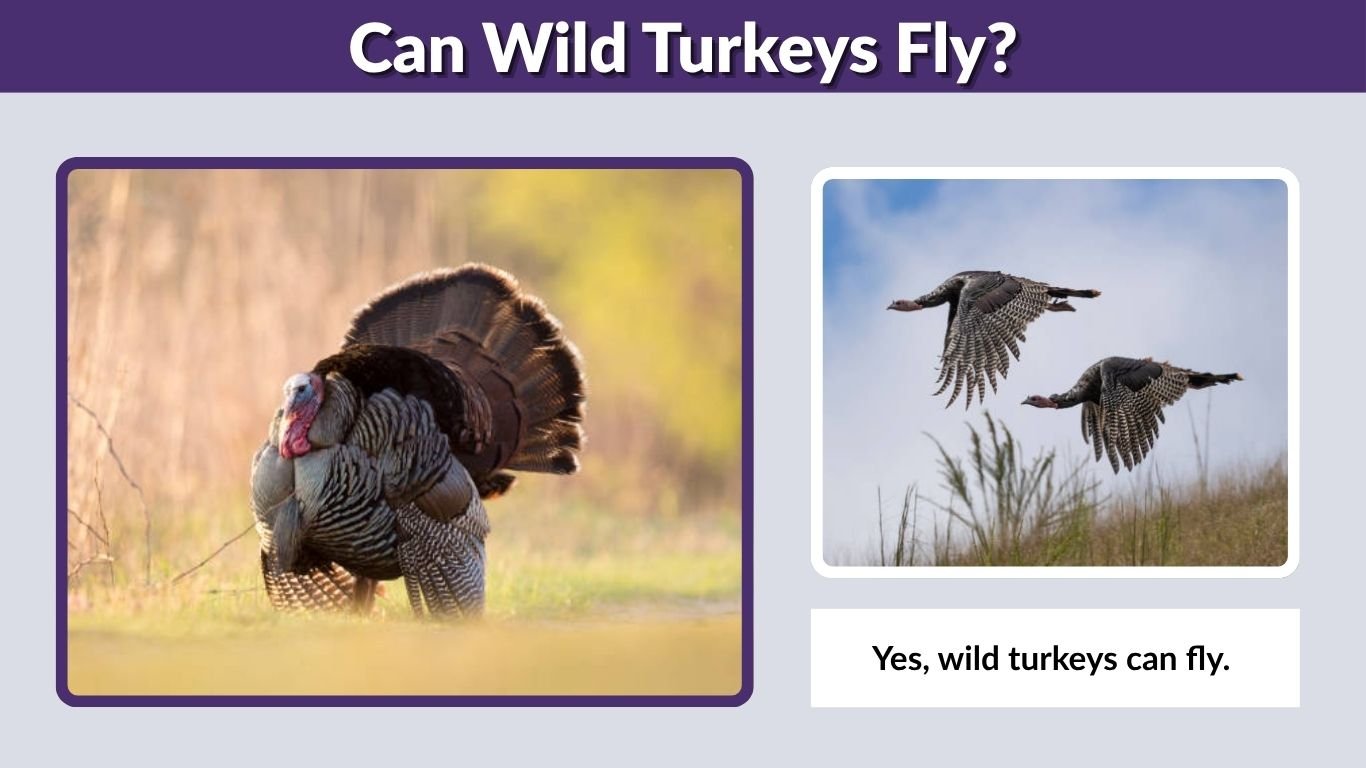
Yes, wild turkeys can fly. Although their heavy bodies and ground-feeding habits make them appear flightless, they have strong wings that produce fast, powerful bursts of flight. They usually take off to escape predators, cross barriers, or reach trees where they sleep at night. Unlike many domestic turkeys, healthy wild turkeys are capable runners, swimmers, and short-distance flyers.
How Well Can Wild Turkeys Fly?
Wild turkeys are not built for long, sustained journeys like geese, eagles, or migratory songbirds. Their broad, rounded wings are designed for explosive takeoffs and short, rapid flights.
When frightened, a turkey may first attempt to run into nearby cover. When the danger is too close, it spreads its wings, pushes off with its powerful legs, and launches into the air with loud wingbeats. Flights are generally used to escape danger or reach a tree branch for roosting.
Wild Turkey Flight Facts
| Ability | Typical Performance |
| Flight speed | Approximately 40–55 mph |
| Usual flight distance | Short bursts |
| Maximum documented distance | More than one mile is possible |
| Running speed | Up to about 18 mph |
| Roosting height | Often 20–30 feet above the ground |
| Swimming | Yes, when necessary |
How Fast Can a Wild Turkey Fly?
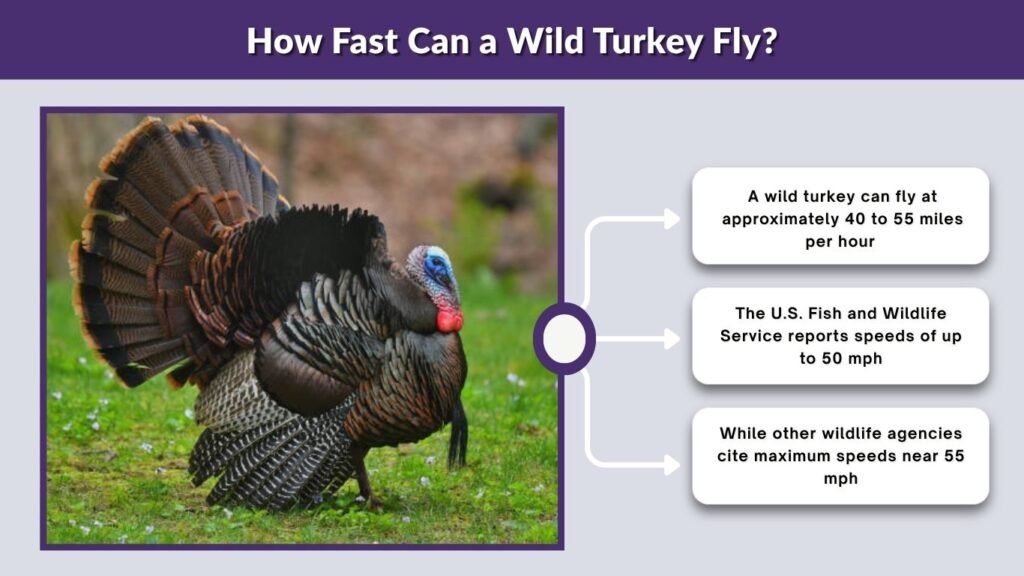
A wild turkey can fly at approximately 40 to 55 miles per hour during a short burst. The U.S. Fish and Wildlife Service reports speeds of up to 50 mph, while other wildlife agencies cite maximum speeds near 55 mph.
This speed is especially useful when escaping coyotes, bobcats, foxes, dogs, or other threats. However, a turkey cannot maintain its top speed for the same length of time as a bird adapted for long-distance flight.
Why Are Their Flights So Noisy?
A wild turkey’s rounded wings must beat rapidly to lift its heavy body. Its feathers push a large amount of air during takeoff, producing a noticeable flapping sound.
Turkeys are particularly noisy when flying up to their nighttime roosts or dropping from the trees shortly after sunrise. Their takeoff may look awkward, but once airborne, they can move quickly and maneuver between trees.
How Far Can a Wild Turkey Fly?
Most wild turkey flights cover relatively short distances. The birds usually fly from the ground to a nearby roost, across a river, over a road, or away from an immediate threat.
However, they are capable of flying farther when necessary. The Pennsylvania Game Commission reports that wild turkeys can cover more than a mile while airborne, and the South Carolina Department of Natural Resources also notes flights exceeding one mile.
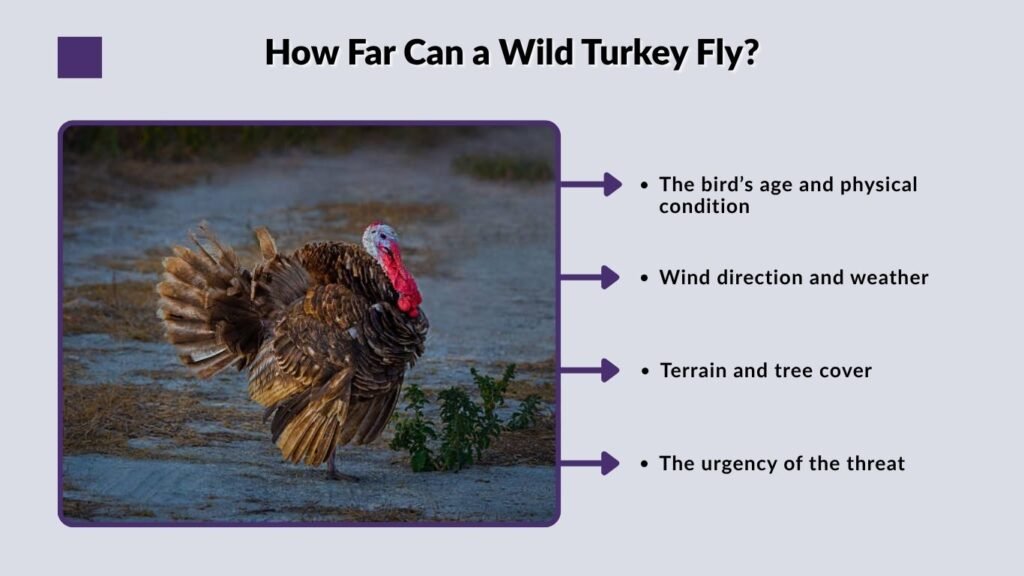
Their actual flight distance depends on:
- The bird’s age and physical condition
- Wind direction and weather
- Terrain and tree cover
- The urgency of the threat
- The availability of safe landing areas
A turkey normally prefers running because walking and running require less energy than lifting its heavy body into the air.
How High Can Wild Turkeys Fly?
There is no widely established maximum flight altitude for wild turkeys. They normally fly only as high as necessary to reach a tree, clear an obstacle, or escape danger.
Wild turkeys commonly sleep on branches approximately 20 to 30 feet above the ground, although they may select considerably taller trees when suitable branches are available. Their ability to reach treetops does not mean they regularly soar at high altitudes.
Why Do Wild Turkeys Fly Into Trees?
Wild turkeys roost in trees at night because elevated branches provide protection from many ground predators. Around sunset, they may fly directly onto a suitable branch or land on a lower limb and move upward.
At sunrise, they usually glide or fly back to the ground before beginning their daily feeding activities. Several turkeys may share one large tree or use neighboring trees within the same roosting area.
How Fast Can a Wild Turkey Run?
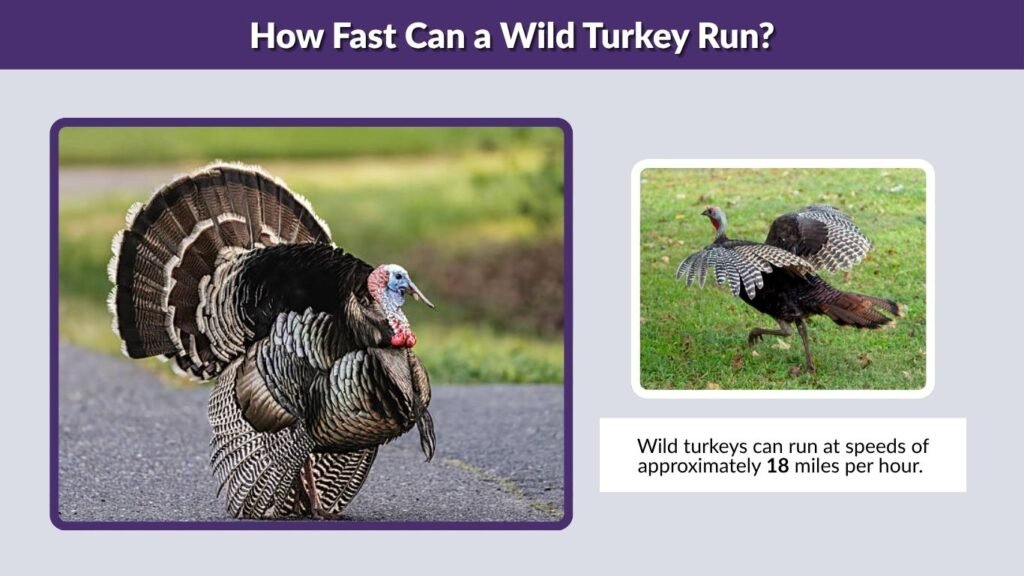
Wild turkeys can run at speeds of approximately 18 miles per hour. Their long, muscular legs allow them to move quickly through woodland, grassland, and uneven ground.
Running is usually their first response to danger. A turkey may sprint toward dense vegetation and fly only when a predator gets too close or blocks its escape route.
Young poults cannot fly immediately after hatching, making speed, camouflage, and their mother’s protection especially important. They generally become capable of short flights within their first two or three weeks.
Can Wild Turkeys Smell Humans?
Wild turkeys have a sense of smell, but it is poorly developed compared with their eyesight and hearing. Their small olfactory lobes indicate that smell is one of their least important senses. Therefore, they are unlikely to detect a distant person primarily through human scent.
However, their weak sense of smell does not make them easy to approach. Their excellent vision allows them to notice small movements, while their sharp hearing helps them locate unfamiliar sounds.
Can Wild Turkeys See Color?
Yes. Wild turkeys can see colors and detect visual details extremely quickly. Their eyes are positioned on the sides of their heads, giving them a broad field of view. By moving their heads, they can observe nearly everything around them.
Their ability to see color and movement is an important defense against predators. It also helps them recognize other turkeys, find food, and navigate through forests.
Can Wild Turkeys Swim?
Wild turkeys can swim when necessary. They hold their wings close to their bodies, spread their tails, and propel themselves through the water with their legs.
Swimming is not their normal method of travel, but it can help them cross a pond, creek, or narrow river. In most situations, they are more comfortable walking, running, or making a short flight over the water.
Can Wild Turkeys Hurt You?
Wild turkeys generally avoid people, but some birds can become bold or aggressive. Adult males may chase, peck, follow, or threaten people while establishing dominance, particularly during the spring breeding season.
Feeding wild turkeys can cause them to lose their natural fear of humans and increase the likelihood of aggressive encounters. Wildlife agencies therefore recommend keeping a safe distance and never intentionally feeding them.
Can You Eat Wild Turkey?
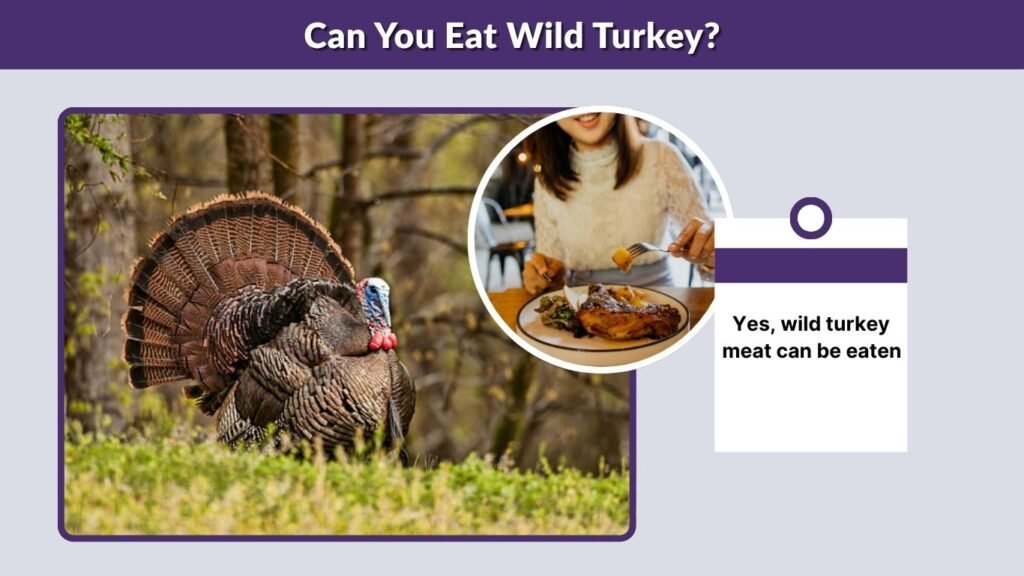
Yes, wild turkey meat can be eaten when the bird is legally harvested under applicable hunting regulations. The meat is leaner and often firmer than commercially raised turkey because wild birds are active and obtain their food naturally.
Wild turkey should be handled hygienically and cooked thoroughly. Poultry must reach a minimum internal temperature of 165°F (74°C) in its thickest portions to reduce the risk of foodborne illness.
Should You Feed Wild Turkeys?
Wild turkeys obtain suitable food from their natural environment and do not need regular human feeding. They consume acorns, seeds, berries, plant material, insects, snails, and other small animals.
Feeding can attract large flocks, spread disease, create conflicts, and cause turkeys to become comfortable approaching people. Bread and processed human foods are especially inappropriate. It is better to protect native trees, shrubs, and natural ground cover than to leave food in the yard.
FAQs
Can domestic turkeys fly?
Some lighter heritage domestic turkeys can make short flights. However, broad-breasted commercial turkeys are usually too heavy to fly effectively. Selective breeding has produced large breast muscles and heavy bodies, while wild turkeys remain slimmer, stronger, and better adapted for flight.
Can wild turkeys fly over fences?
Yes. A healthy adult wild turkey can easily fly over most residential and agricultural fences. It may also jump or climb onto a low structure before taking off. Turkeys normally cross fences by flying when they cannot find an opening at ground level.
Can wild turkeys fly when scared?
Yes. A frightened wild turkey may run first and then launch into a fast, noisy flight when danger gets too close. Its powerful legs provide the initial push, while rapid wingbeats help it reach a tree, cross an obstacle, or escape into safer cover.
How long can a wild turkey fly?
Wild turkeys usually remain airborne for only a brief period because their bodies are designed for short, powerful flights rather than sustained travel. Although many flights cover only a few hundred yards, a healthy bird can occasionally travel more than one mile.
Can baby wild turkeys fly?
Newly hatched poults cannot fly because their wing feathers are not fully developed. They remain on the ground with their mother during their earliest days. Most become capable of short flights and begin roosting above ground at approximately two to three weeks old.
