
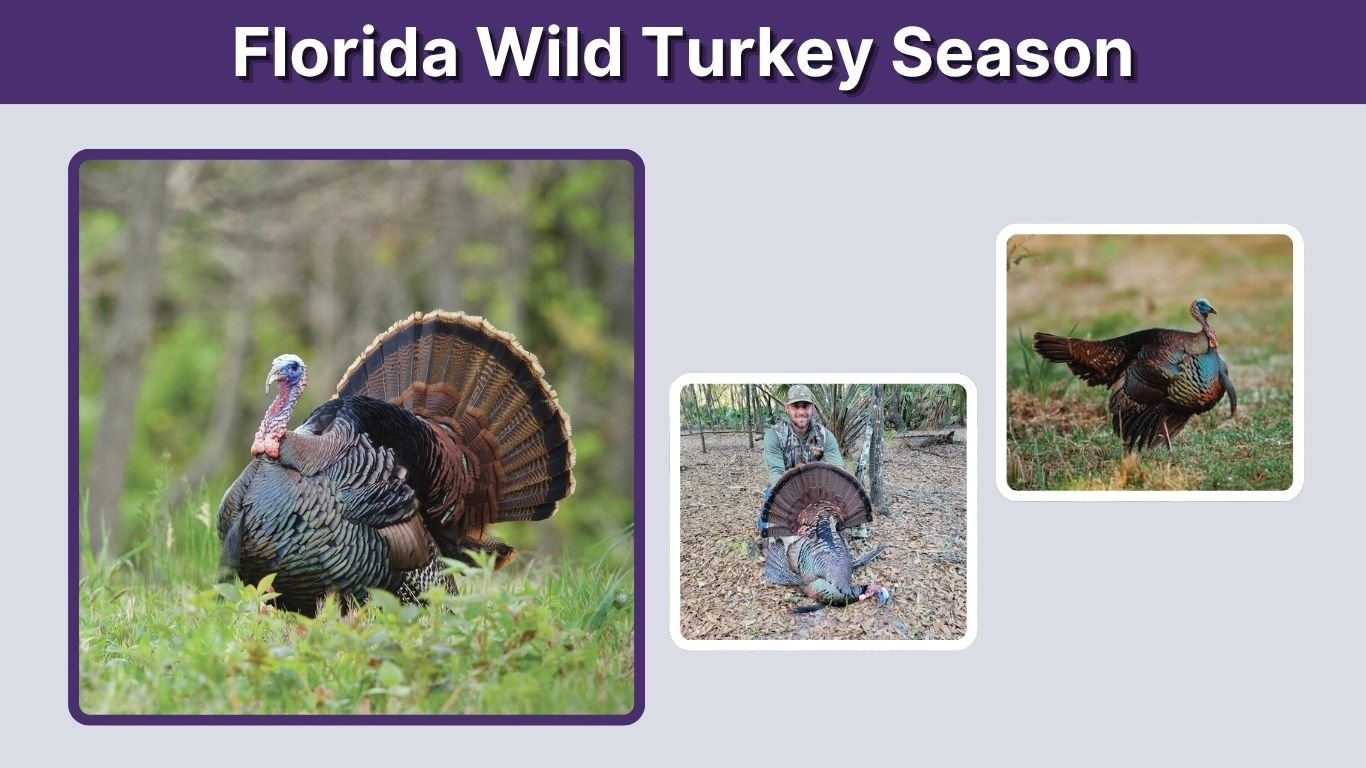
Florida offers both fall and spring wild turkey hunting, with dates that vary by hunting zone and location. The state supports two turkey subspecies: the Eastern wild turkey in northern Florida and the Osceola wild turkey across the peninsula. For the 2026–2027 season, fall opportunities begin as early as August 2026, while the 2027 spring season opens first south of State Road 70. Hunters must follow current bag limits, licensing requirements, shooting hours, harvest-reporting rules, and property-specific regulations. Wildlife management areas may have different dates or require quota permits, so their individual brochures must always be checked before hunting.
Florida Wild Turkey Season Dates
Florida’s statewide dates apply to lands outside the Wildlife Management Area system. WMA dates, bag limits, shooting hours, permitted equipment, and access requirements may differ.
Spring Turkey Season 2027
Florida divides its spring turkey season at State Road 70 rather than using the four general hunting zones. Southern Florida opens earlier because turkey breeding activity begins sooner in the warmer climate.
| Location | Youth hunt | Regular spring season |
|---|---|---|
| South of State Road 70 | February 26–March 1, 2027 | March 6–April 11, 2027 |
| North of State Road 70 | March 12–15, 2027 | March 20–April 25, 2027 |
During spring, hunters may take only gobblers and bearded turkeys. The daily limit on lands outside the WMA system is two, while the combined spring season and possession limit is two birds.
Fall Turkey Season 2026–2027
Fall dates depend on Florida’s four hunting zones. In addition to the general fall turkey periods below, turkey hunting opportunities may occur during the applicable archery, crossbow, and muzzleloading seasons. Hunters must use equipment permitted for the particular season.
| Hunting zone | General fall turkey season |
| Zone A | October 5–18, 2026; November 21, 2026–January 3, 2027 |
| Zone B | December 5, 2026–January 31, 2027 |
| Zone C | November 7, 2026–January 3, 2027 |
| Zone D | November 26–29, 2026; December 12, 2026–January 17, 2027 |
The daily fall limit is two turkeys, and the season and possession limit is two birds for all fall seasons combined. Only gobblers and bearded turkeys are included in the current statewide schedule.
Florida’s Turkey Hunting Zones
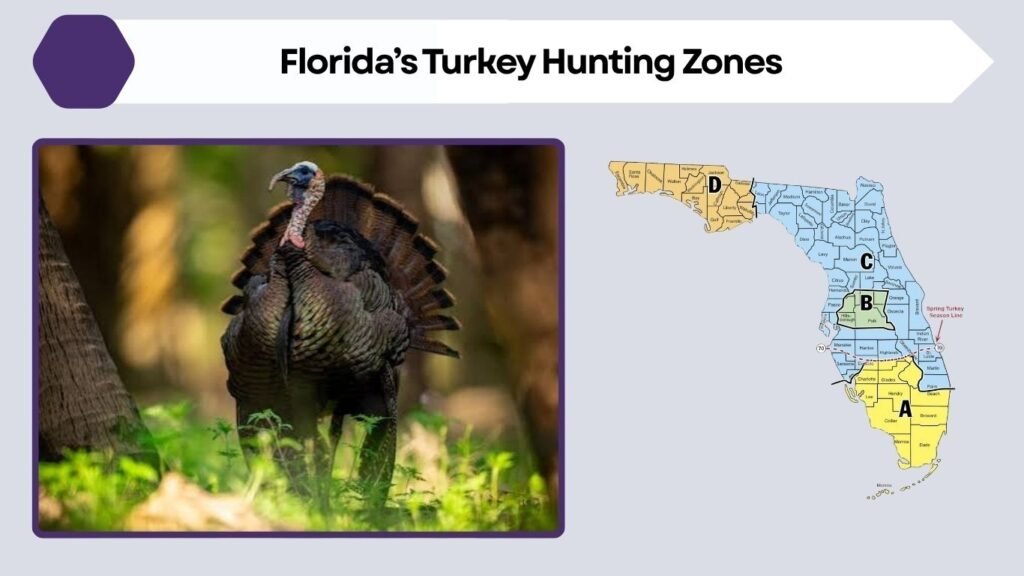
Florida uses Zones A, B, C, and D to establish fall hunting dates. These zones should not be confused with the State Road 70 boundary used for spring turkey hunting.
Zone A
Zone A covers much of southern Florida. Its earlier schedule reflects the region’s warmer climate and earlier seasonal wildlife activity. The general fall turkey season begins in October, with another period running from late November into early January.
Zone B
Zone B includes a smaller section of central Florida. Its general fall turkey season runs from early December through the end of January.
Zone C
Zone C covers a large part of northern and central peninsular Florida. The general fall season begins in early November and continues through early January.
Zone D
Zone D covers much of the Florida Panhandle. Its general fall season is divided into a late-November period and a second period from December into January. Hunters should confirm their zone using the current FWC hunting-zone map before planning a trip.
Florida Youth Spring Turkey Hunts
Youth turkey hunts occur before the regular spring opener. They are available to hunters 15 years old and younger, who must be supervised by an adult at least 18 years old.
Only the youth may shoot or harvest a gobbler or bearded turkey. A harvested bird counts toward the youth’s spring limit of two. The youth and a nonparticipating supervisor generally do not need hunting licenses or turkey permits. However, an adult who calls the turkey or otherwise participates must possess the required hunting license and turkey permit. A management-area permit may also be required on a WMA.
Many youth hunts on WMAs require quota permits, although some areas provide non-quota opportunities. Dates and rules can differ by property.
Florida Wild Turkey Species
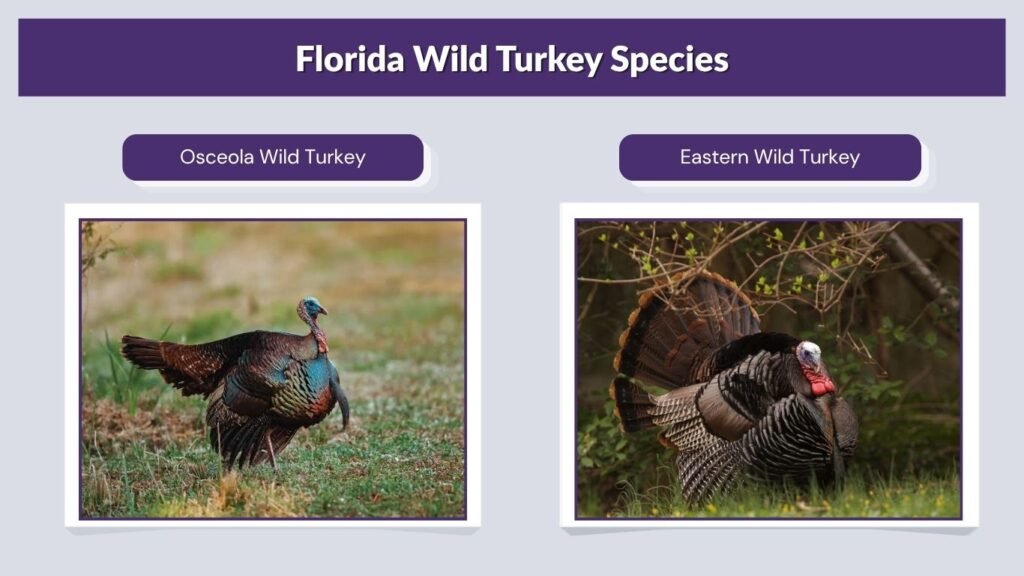
Florida is home to the Eastern wild turkey and the Osceola, or Florida, wild turkey. Both have similar body shapes and behavior, but their ranges and wing patterns differ.
Osceola Wild Turkey
The Osceola turkey occurs only on the Florida peninsula. Its primary wing feathers have narrow, irregular, or broken white bars, giving the folded wings a darker overall appearance.
The FWC and National Wild Turkey Federation recognize a harvested turkey as an Osceola when it comes from within or south of Dixie, Gilchrist, Alachua, Union, Bradford, Clay, and Duval counties.
Eastern Wild Turkey
Eastern wild turkeys occur mainly across northern Florida and the Panhandle. Their primary wing feathers generally have broader and more regular white bars than those of Osceola turkeys.
The two subspecies interbreed in parts of northern peninsular Florida, so some birds may display a combination of physical characteristics.
Florida Turkey Mating and Nesting Season
Florida turkeys begin breeding during late February and early March. Gobblers become more vocal and perform courtship displays by strutting, spreading their tail fans, lowering their wings, and gobbling to attract hens.
Egg Laying and Incubation
Egg laying normally begins in mid- to late March, although Florida nesting activity may occur from early March through June. A hen scratches a shallow depression into the ground and commonly lays between nine and twelve eggs.
Producing a full clutch takes approximately 12–13 days. The hen then incubates continuously for about 26–28 days. She is solely responsible for incubation and brood care.
After hatching, poults can walk and feed themselves, but they cannot fly for approximately two weeks. During this vulnerable period, they roost on the ground beneath the hen.
Florida Turkey Bag Limits
On lands outside the WMA system, hunters may take up to two gobblers or bearded turkeys in one day during spring, but the entire spring season limit remains two.
The combined limit for all fall turkey seasons is also two. A hunter who takes two legal birds during an early fall period has filled the fall season limit and cannot take additional turkeys during later fall dates.
On WMAs, the spring daily bag limit is generally one turkey, and individual areas may impose additional restrictions. Always use the specific WMA brochure as the final guide for public-land limits.
License and Permit Requirements
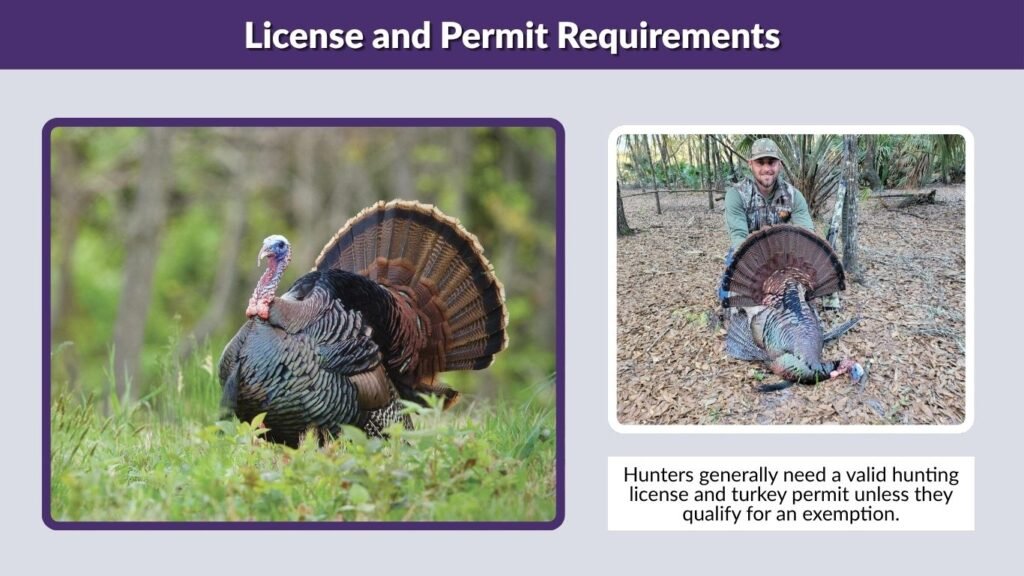
On lands outside Florida’s WMA system, hunters generally need a valid hunting license and turkey permit unless they qualify for an exemption. Public-land hunting may also require a management-area permit, quota permit, daily permit, or special-opportunity permit.
Beginning with the 2026 spring season, nonresident turkey hunters cannot hunt during the first nine days of the zonal spring season on the non-quota units of Big Cypress, Herky Huffman/Bull Creek, Jumper Creek, Three Lakes, and J.W. Corbett. Nonresidents must also hold an annual nonresident hunting license because a 10-day license cannot be used for spring turkey hunting.
Legal Hunting Methods and Hours
On lands outside the WMA system during spring, legal equipment includes rifles, shotguns, pistols, muzzleloaders, bows, crossbows, and pre-charged pneumatic air guns of at least .20 caliber.
Spring shooting hours on private lands and most WMAs extend from one-half hour before sunrise until sunset. Some WMAs close spring hunting at 1 p.m., making the area brochure essential.
Prohibited Turkey-Hunting Methods
Florida does not allow hunters to use dogs to take wild turkeys. Recorded turkey calls and sounds are prohibited, and turkeys cannot be shot while on the roost.
A wild turkey also cannot be taken when the hunter is less than 100 yards from a game-feeding station while feed is present. Manual calls and legal decoys may be used unless a particular public area states otherwise.
Harvest Reporting Requirements
Every hunter who takes a wild turkey in Florida must log and report the harvest, including hunters exempt from normal license requirements.
The turkey must be logged before it is moved from the location where it was recovered. The hunter must then report the harvest within 24 hours.
Reporting can be completed through the Fish|Hunt Florida mobile app, the Go Outdoors Florida system, or by using a paper harvest log followed by telephone reporting. The head and beard must remain with the turkey when required as evidence that it was legally harvested.
Hunting on Florida Wildlife Management Areas
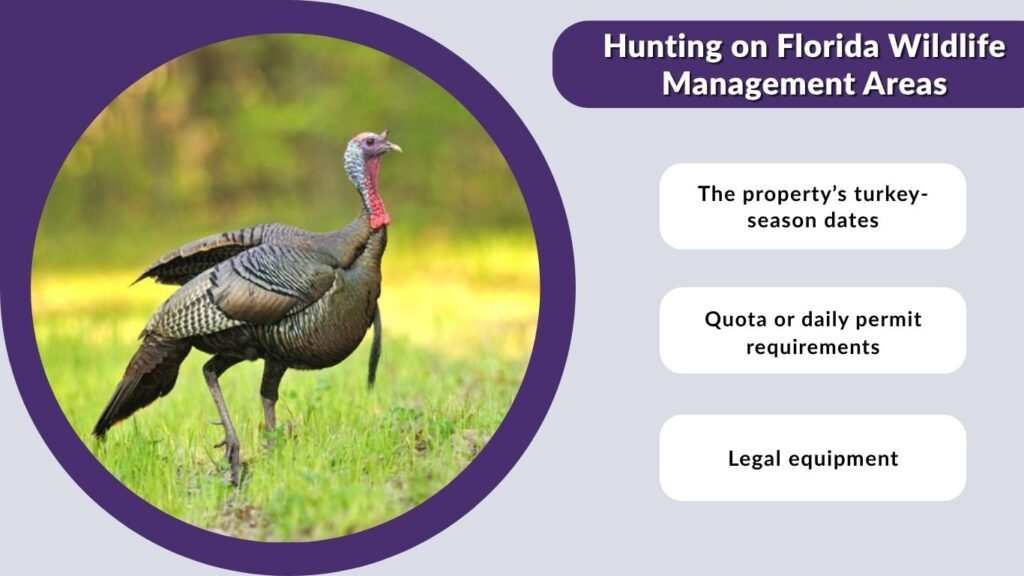
Statewide dates do not automatically apply to WMAs. Some public areas have shorter seasons, limited hunt days, earlier closing hours, separate bag limits, or quota-permit requirements.
Before entering a WMA, hunters should confirm:
- The property’s turkey-season dates
- Quota or daily permit requirements
- Legal equipment
- Shooting hours
- Check-station requirements
- Camping and vehicle-access rules
- Temporary closures or road restrictions
The current WMA brochure takes priority over general statewide summaries. Florida’s official hunting regulations are guidance, while the Florida Wildlife Code remains the final legal authority.
FAQs
When does Florida’s spring turkey season begin?
For 2027, the regular season begins March 6 south of State Road 70 and March 20 north of State Road 70. Youth hunts begin February 26 in the south and March 12 in the north.
How many wild turkeys can you hunt in Florida?
The statewide spring season and possession limit is two gobblers or bearded turkeys. The combined fall limit is also two. Some wildlife management areas have a daily limit of one or stricter property-specific rules.
Can you hunt hens during Florida turkey season?
The current statewide schedule allows only gobblers and bearded turkeys during both spring and fall seasons. A bearded hen may technically meet that definition, but the bird must have a clearly visible beard.
When is wild turkey mating season in Florida?
Breeding generally begins in late February or early March. Gobbling and strutting become prominent during this period, while hens commonly begin laying eggs during mid- to late March.
Do you need a permit to hunt turkey in Florida?
Most hunters need a Florida hunting license and turkey permit. WMA hunters may also need a management-area or quota permit. Exemptions exist, but harvest logging and reporting apply even to exempt hunters.
